Bluebell season is in full swing right now. Anywhere I go at the moment there are swathes of bluebells, whether that’s in gardens, along the verges of the Brighton Main Line, or – yes – even along the heritage railway named after them. I love the bluebells. There is little I love more than seeing a massive carpet of them in a field or across the floor of a forest.
For Christmas my wife bought me an assortment of photography experience days. I’ve already been on one – the photos of which are waiting patiently to be posted – but for my second I discovered that a bird of prey centre near me holds photography workshops of owls amongst bluebells. The idea of beautiful owls – especially any with gloriously contrasting orange eyes – amongst a sea of bluebells was hard to resist. So last week I headed over to the UK Owl and Raptor Centre for a morning of owls and bluebells.
The setup for the day was pretty simple. There were only three of us attending the session, as well as a bird handler or two, and a professional photographer who was on hand to help out with settings and guidance. We saw four birds, each of which did a mixture of flying and posing, depending on their temperament. And, almost as if they knew me, after the session was over they sent details of the birds with their names and species, which means for once I can state confidently what these birds are. Given the nature of what we were shooting, I exclusively used my super telephoto lens. A quick note on that – throughout this post you will see my aperture changing a lot. Sometimes that was a manual choice, but most of the time it’s because this lens doesn’t have a constant aperture – it’s f/4.5 at the widest zoom, and f/7.1 and the maximum zoom.
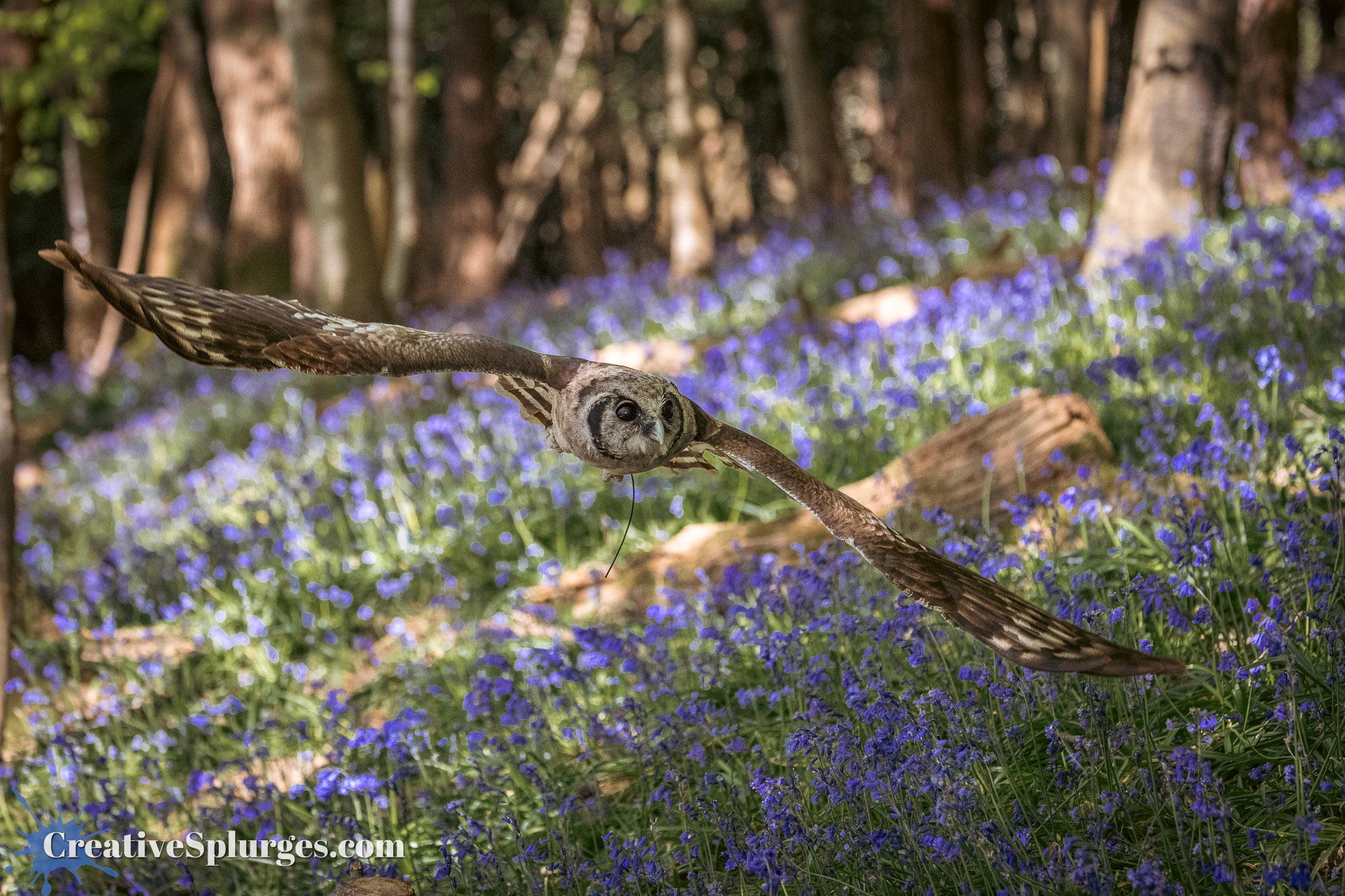
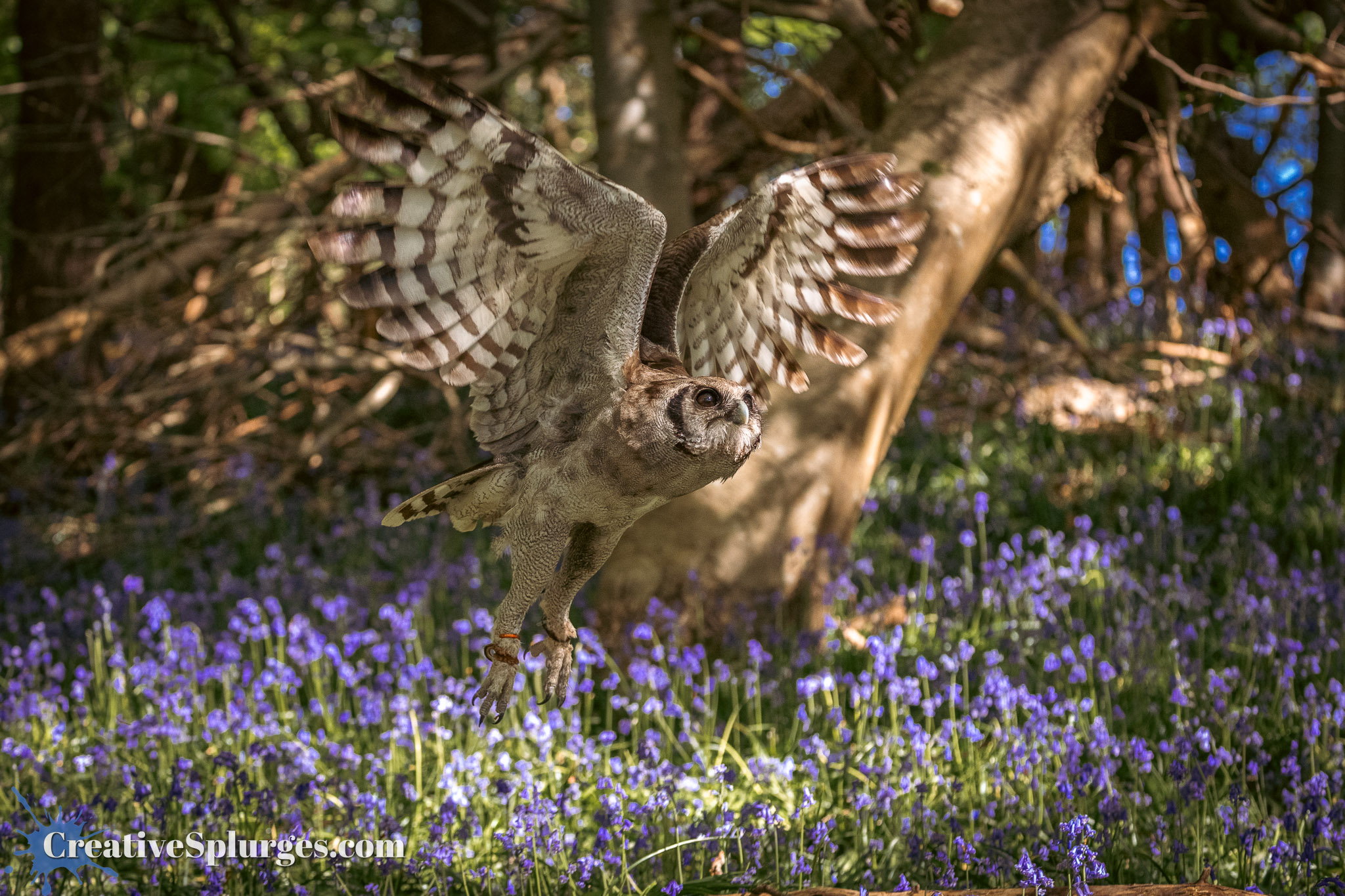
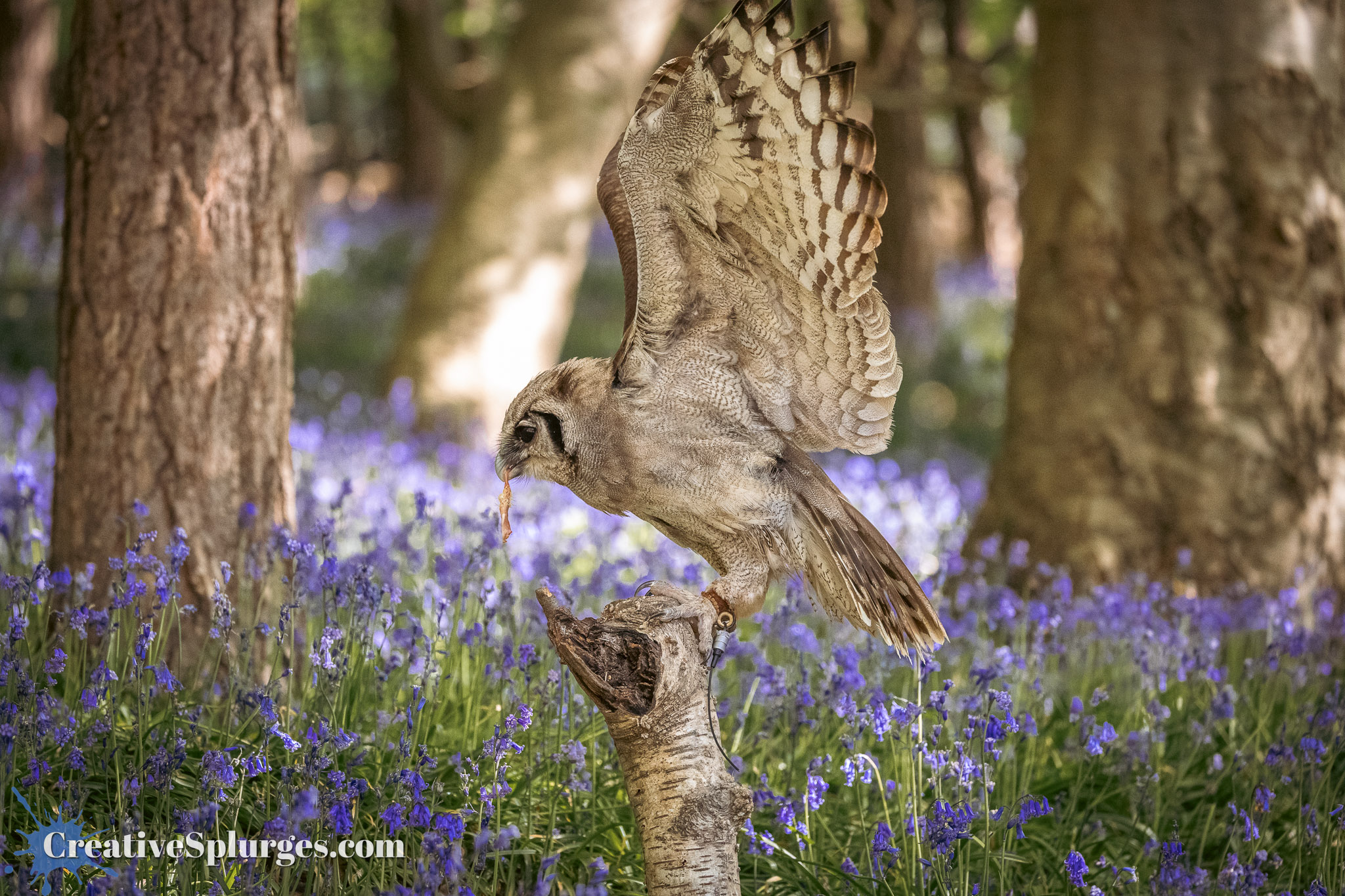
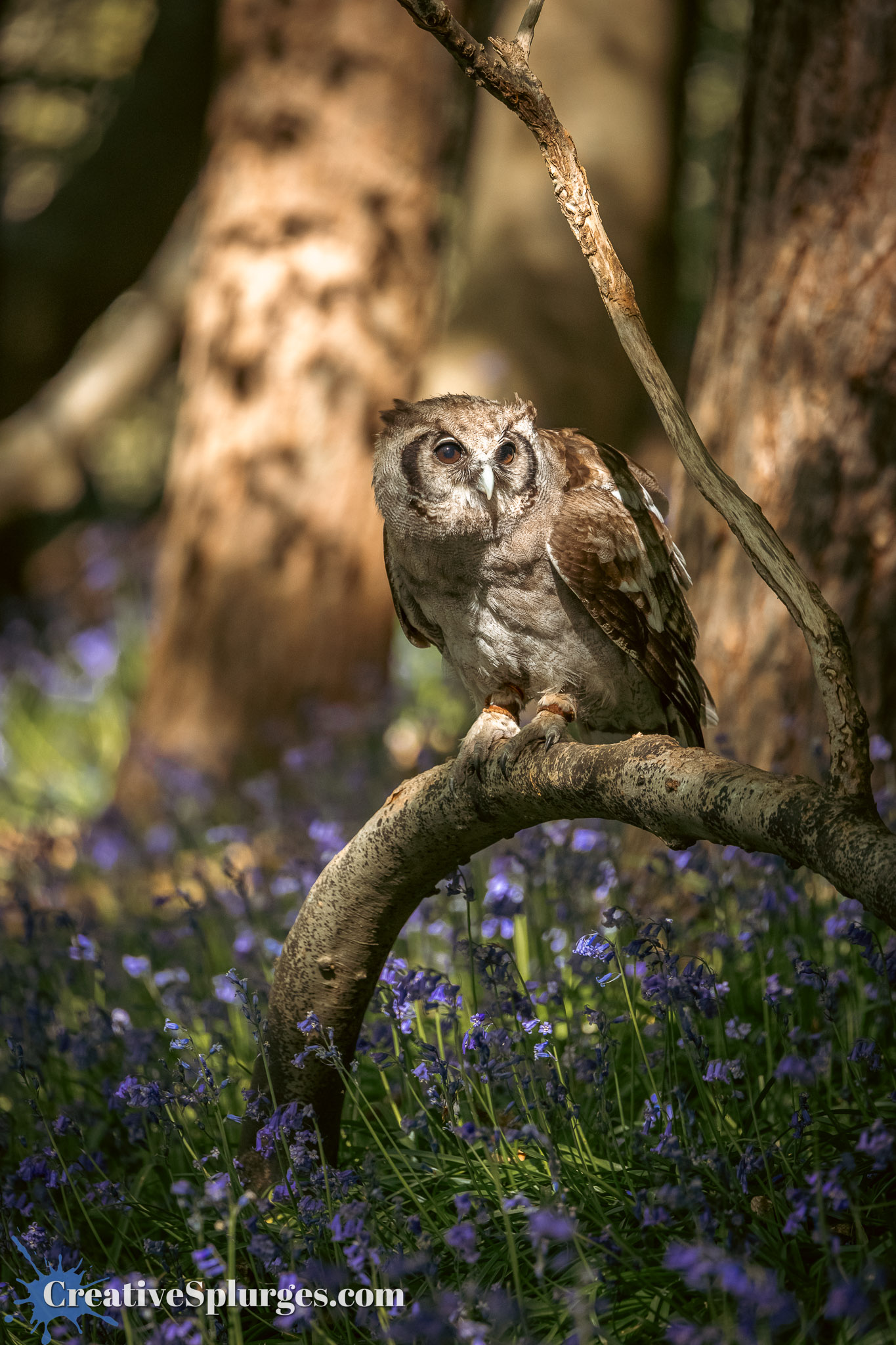
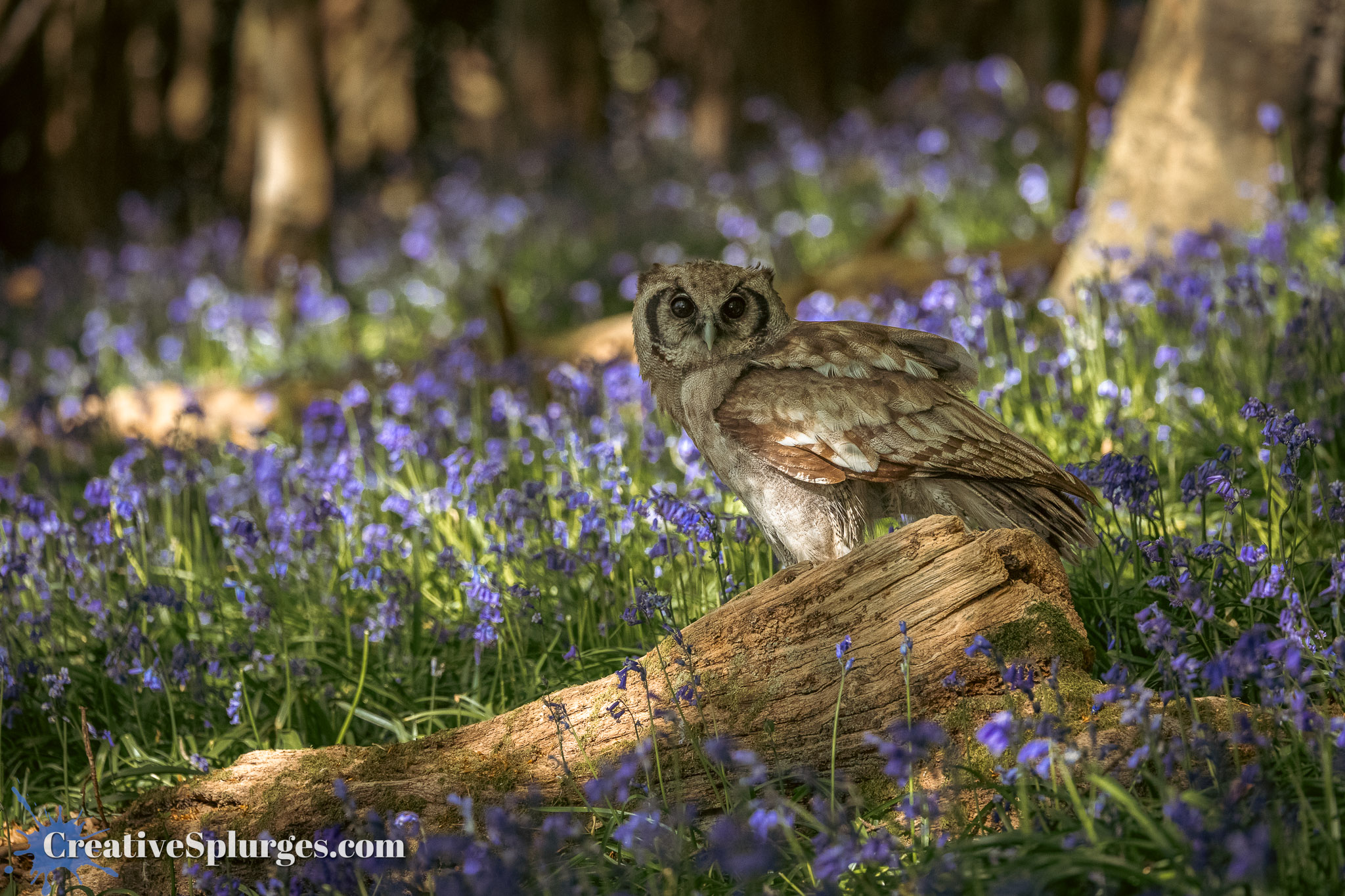
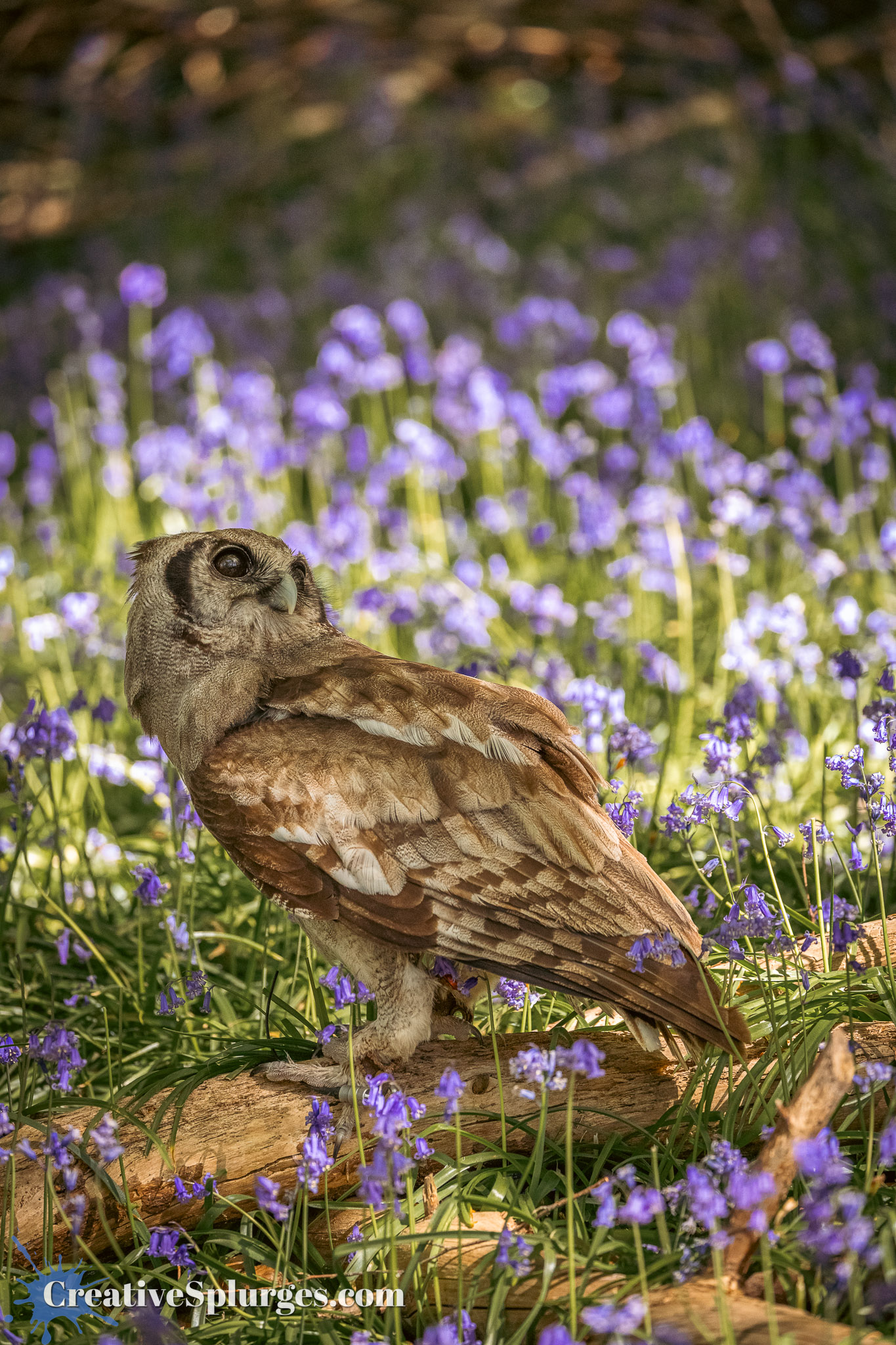
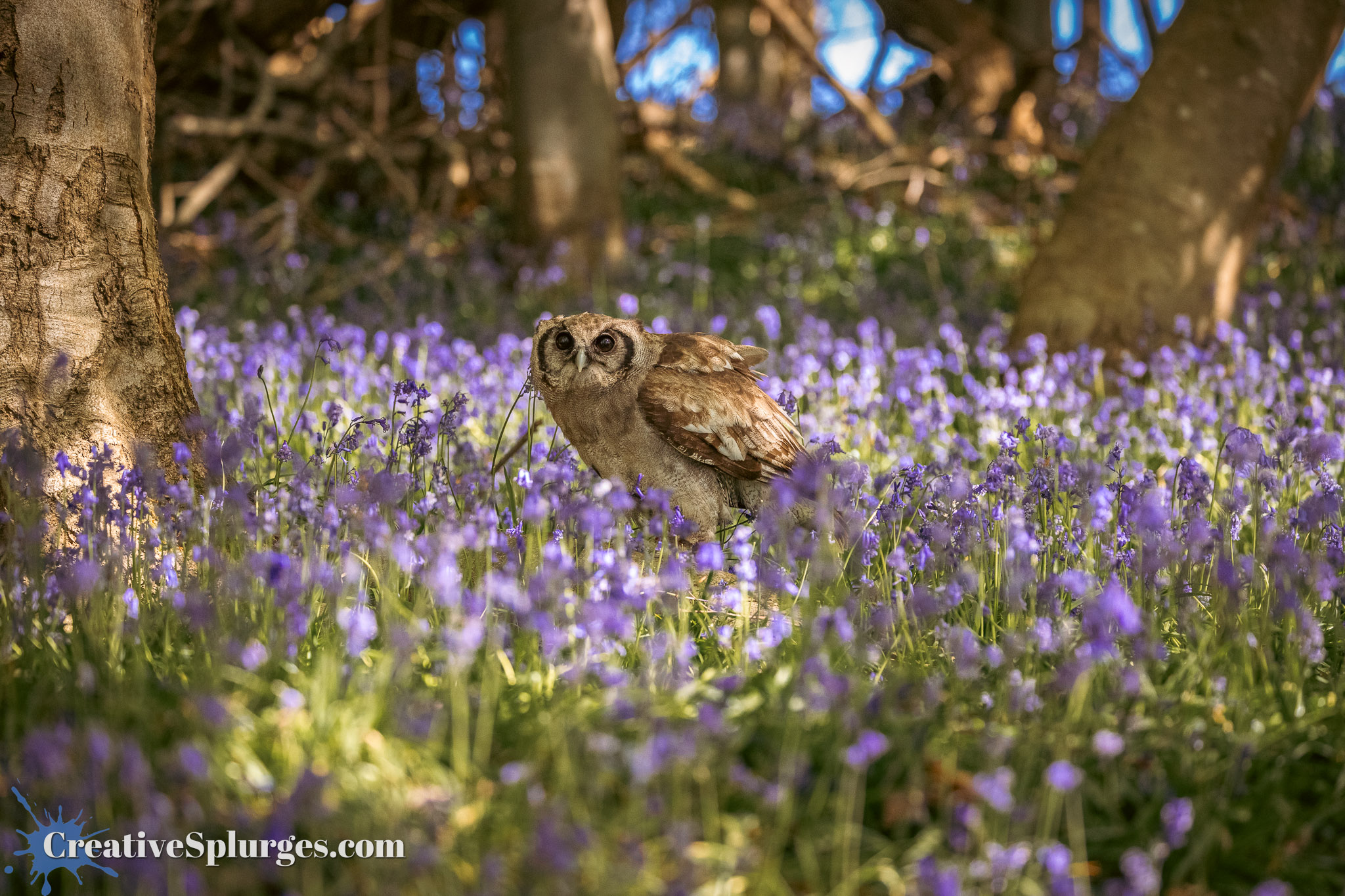
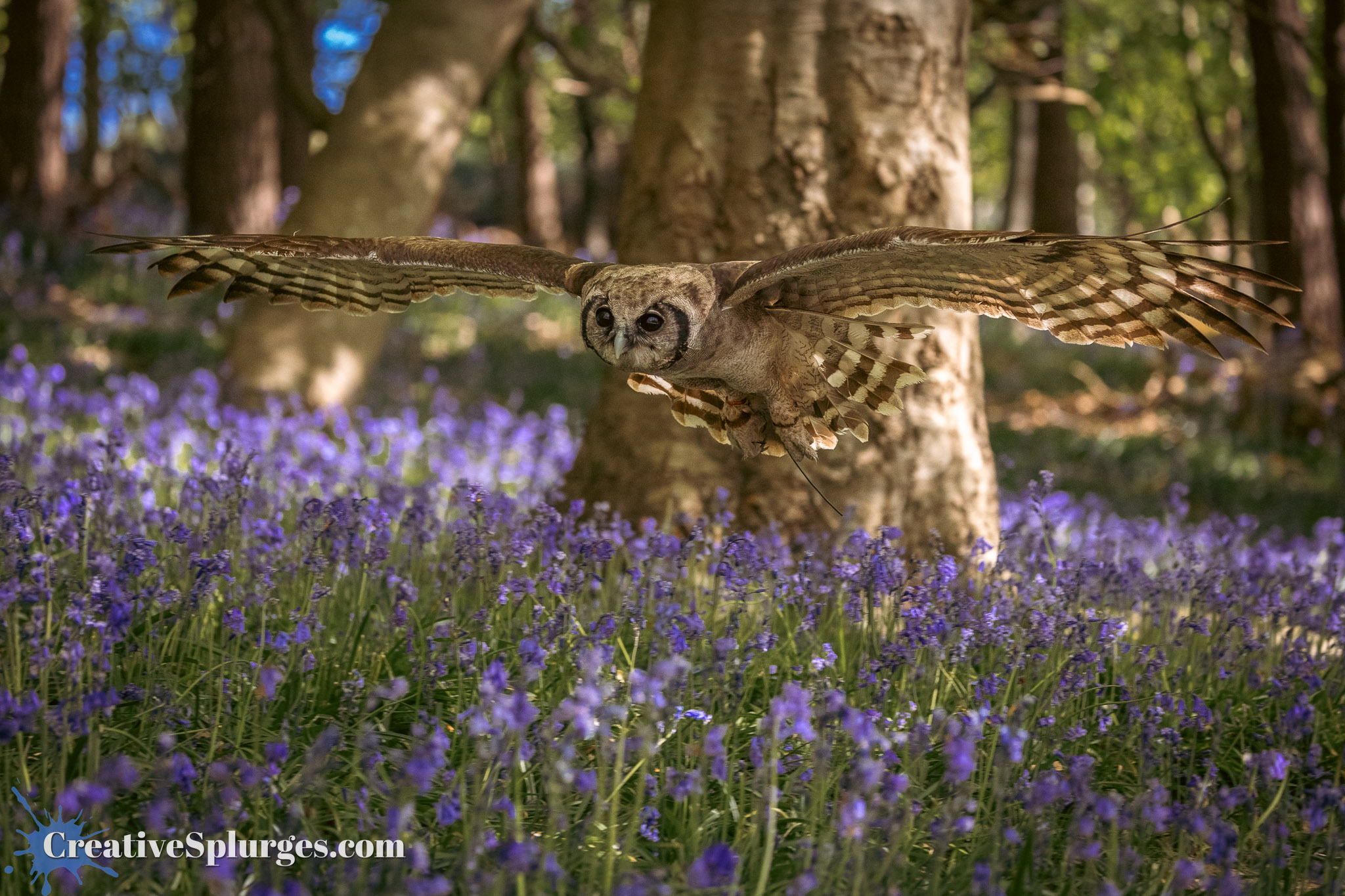
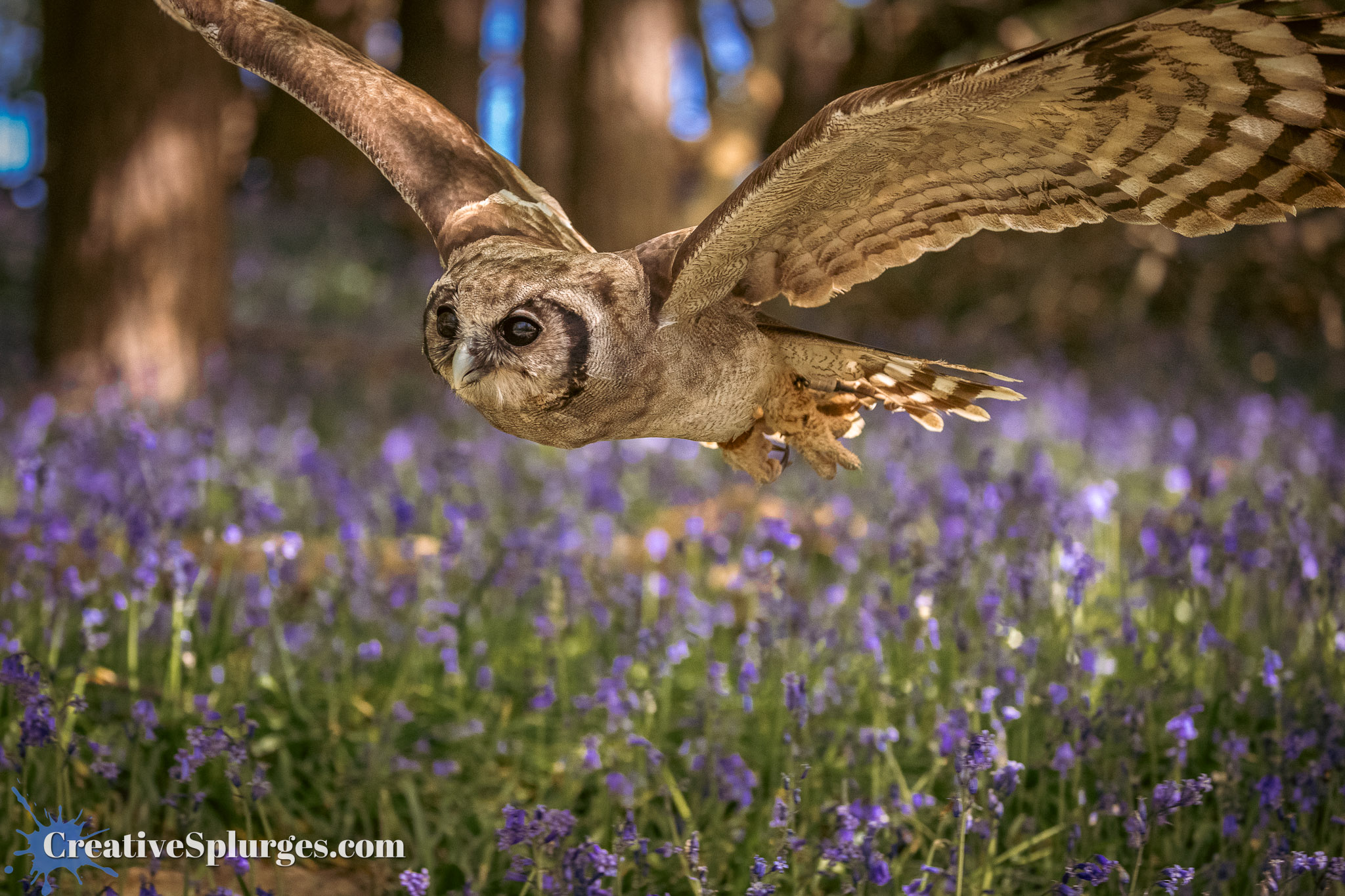
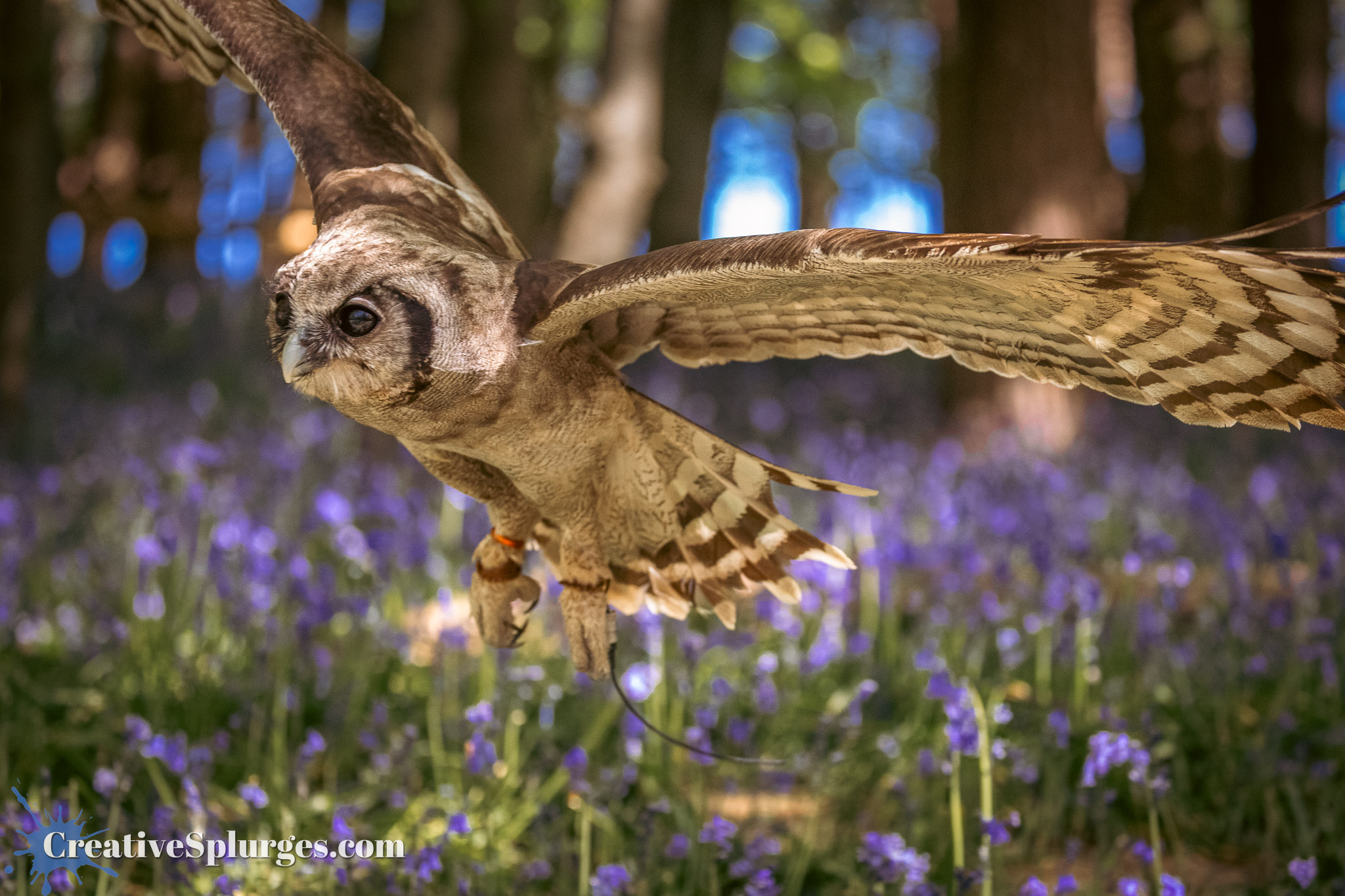
We started with Kofi, a Verreaux’s eagle owl. With them we started out posing.
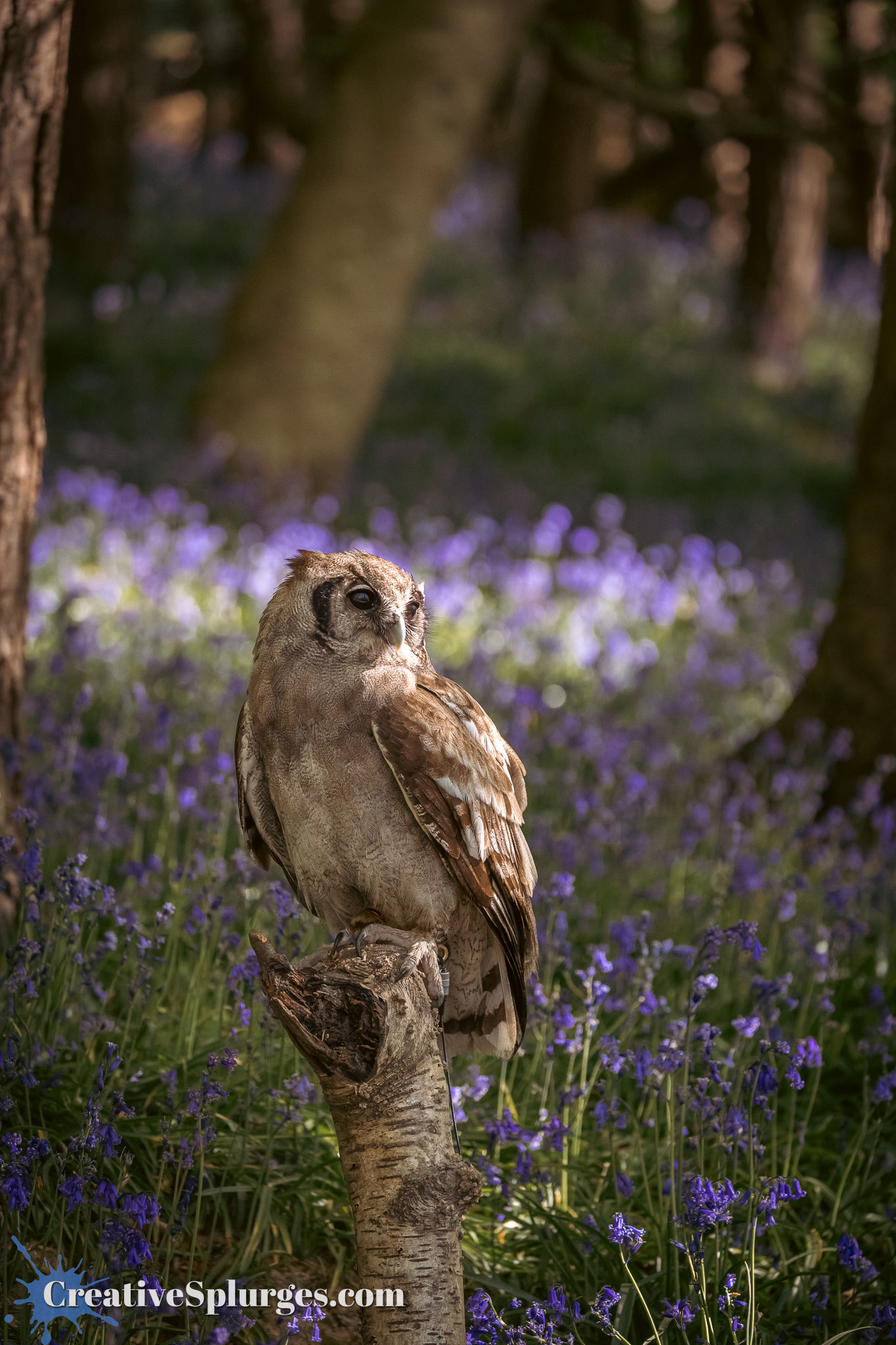
The main piece of general advice we were given was to set our shutter speeds pretty high – in Kofi’s case, it was around 1/1600th of a second – in order to ensure that once they flew around, which they were liable to do with little warning, you’d still get a sharp image. This did lead to some reasonably high ISOs, even in daylight (although we were in the mottled light of a wooded area).
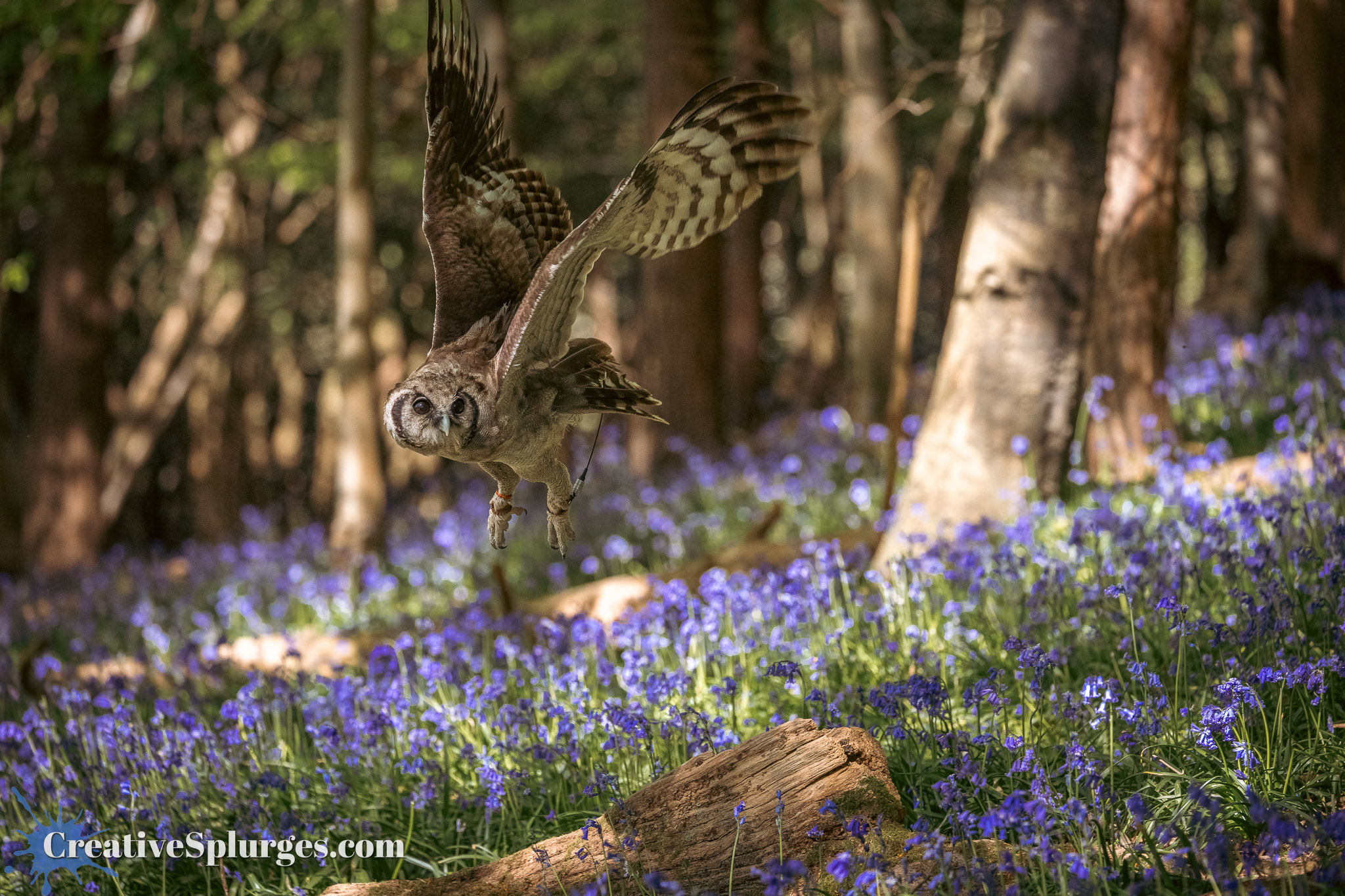
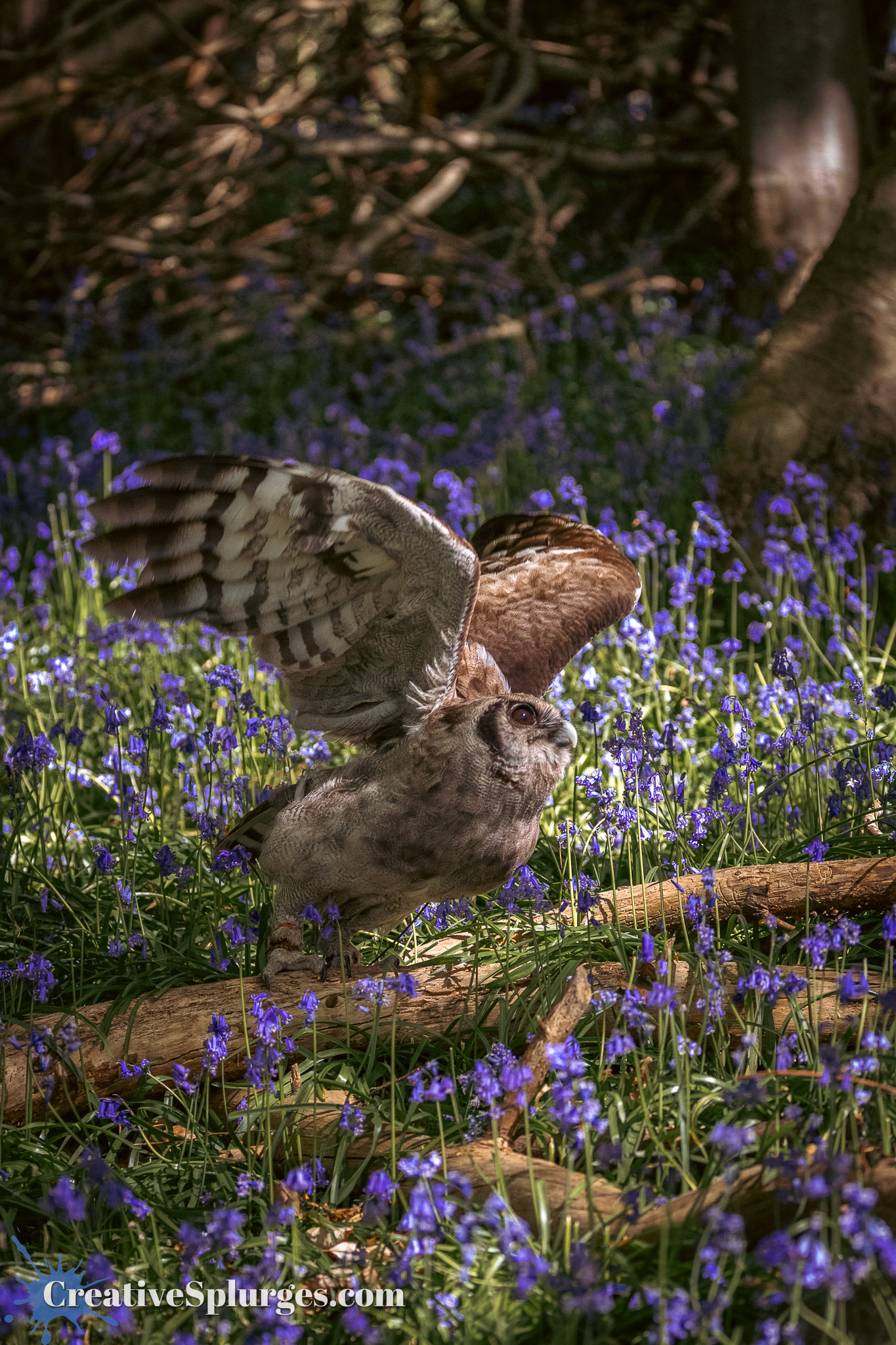
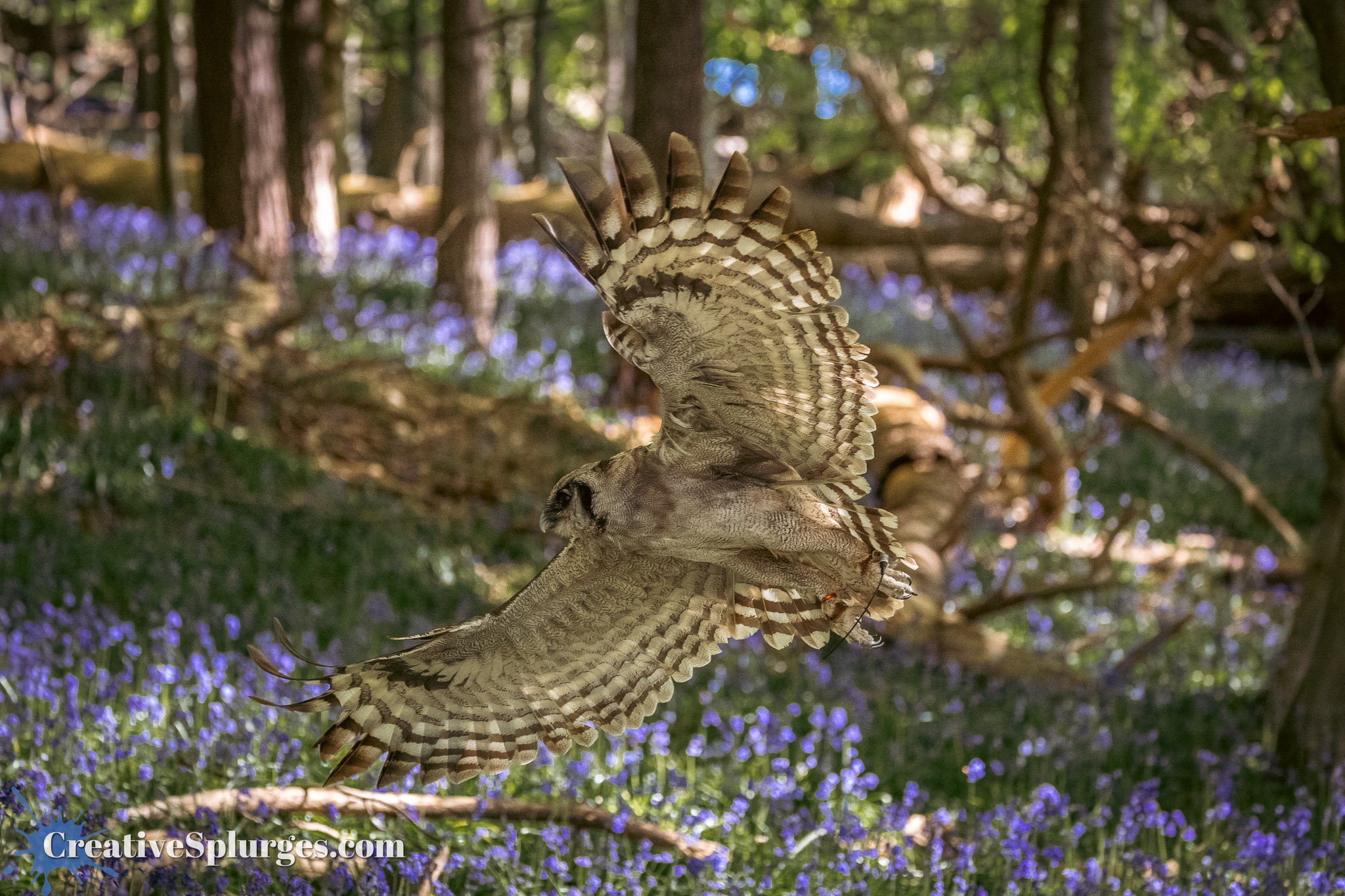
Almost on queue we got some flight.
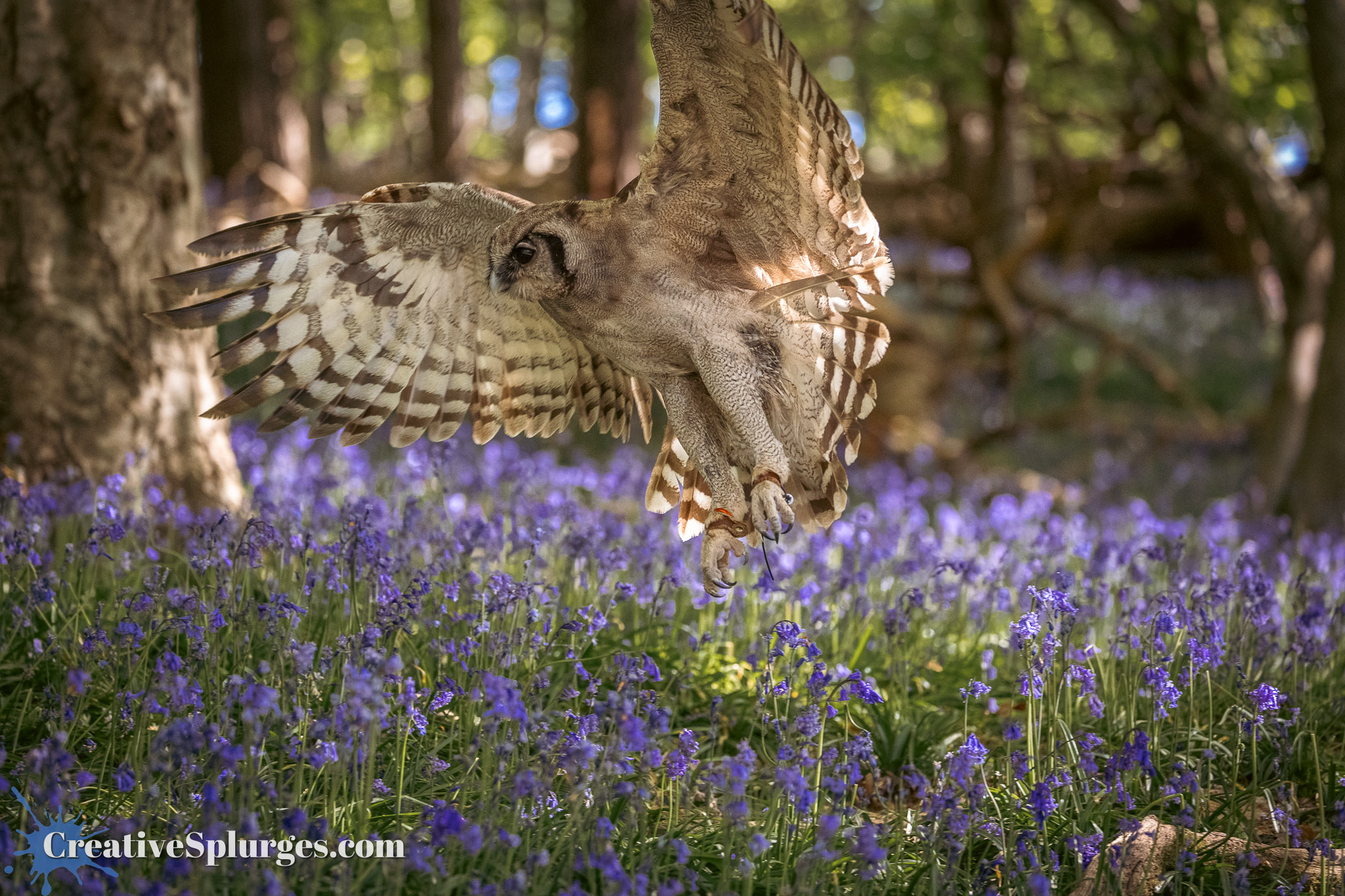
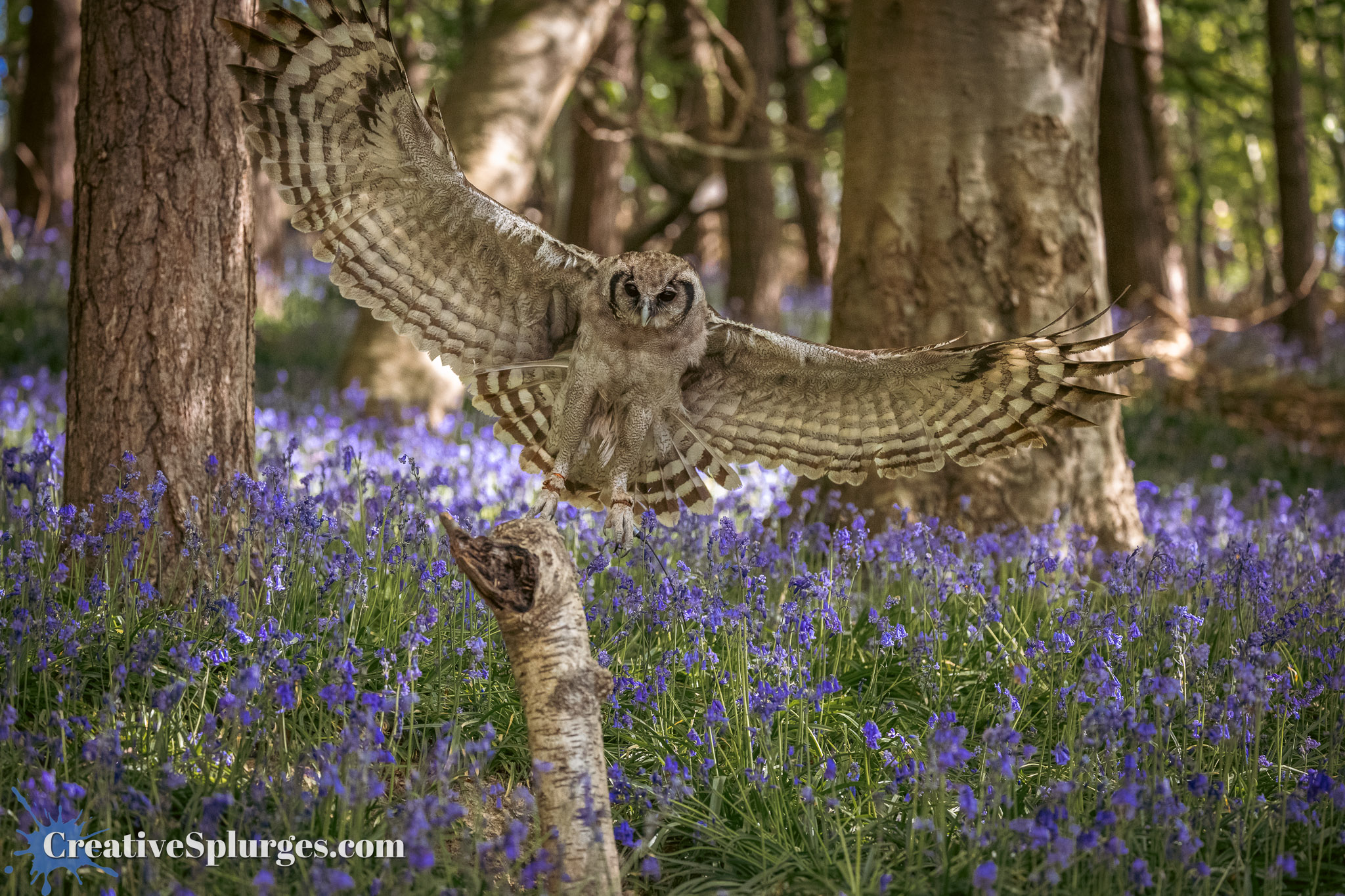
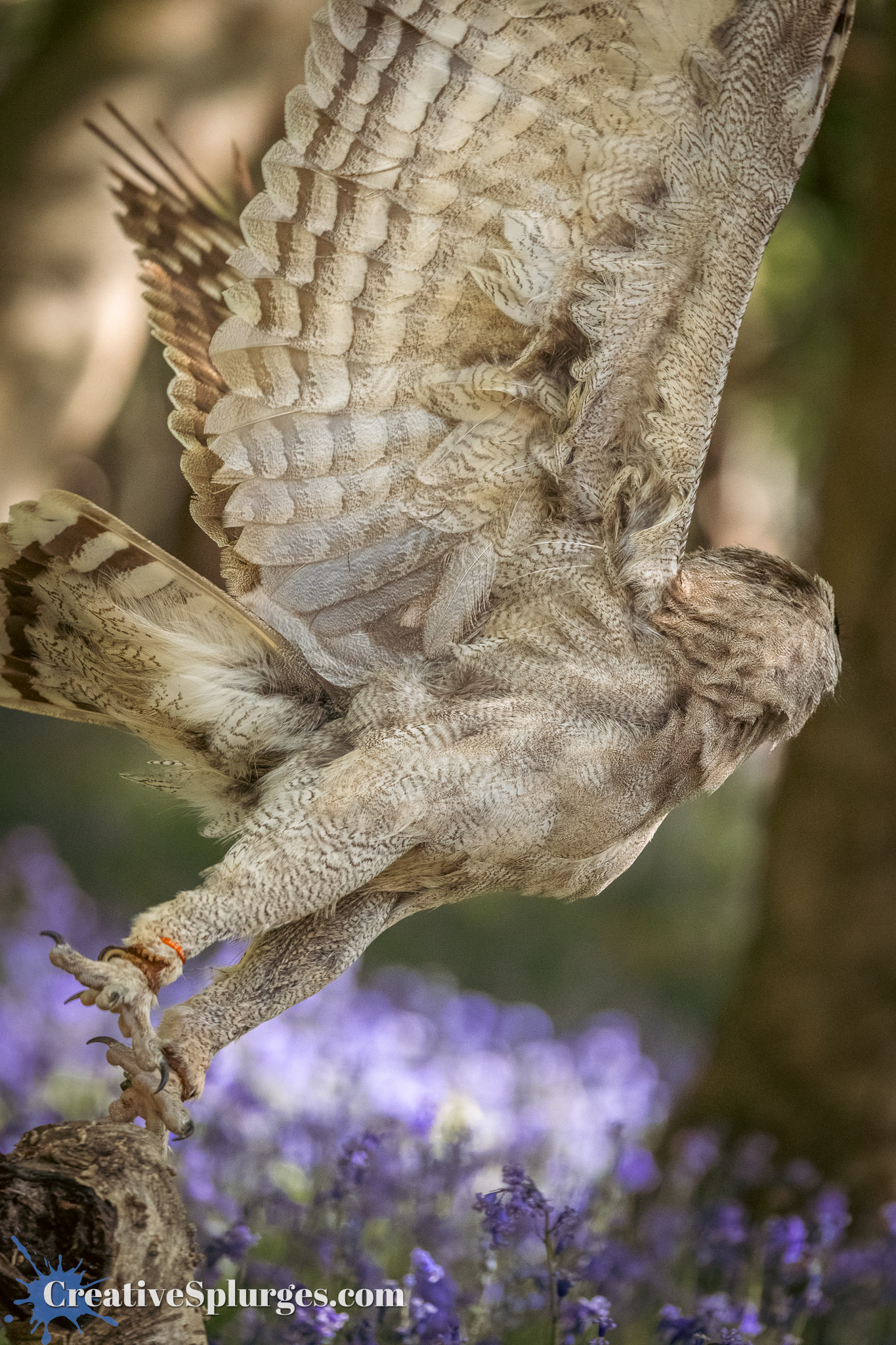
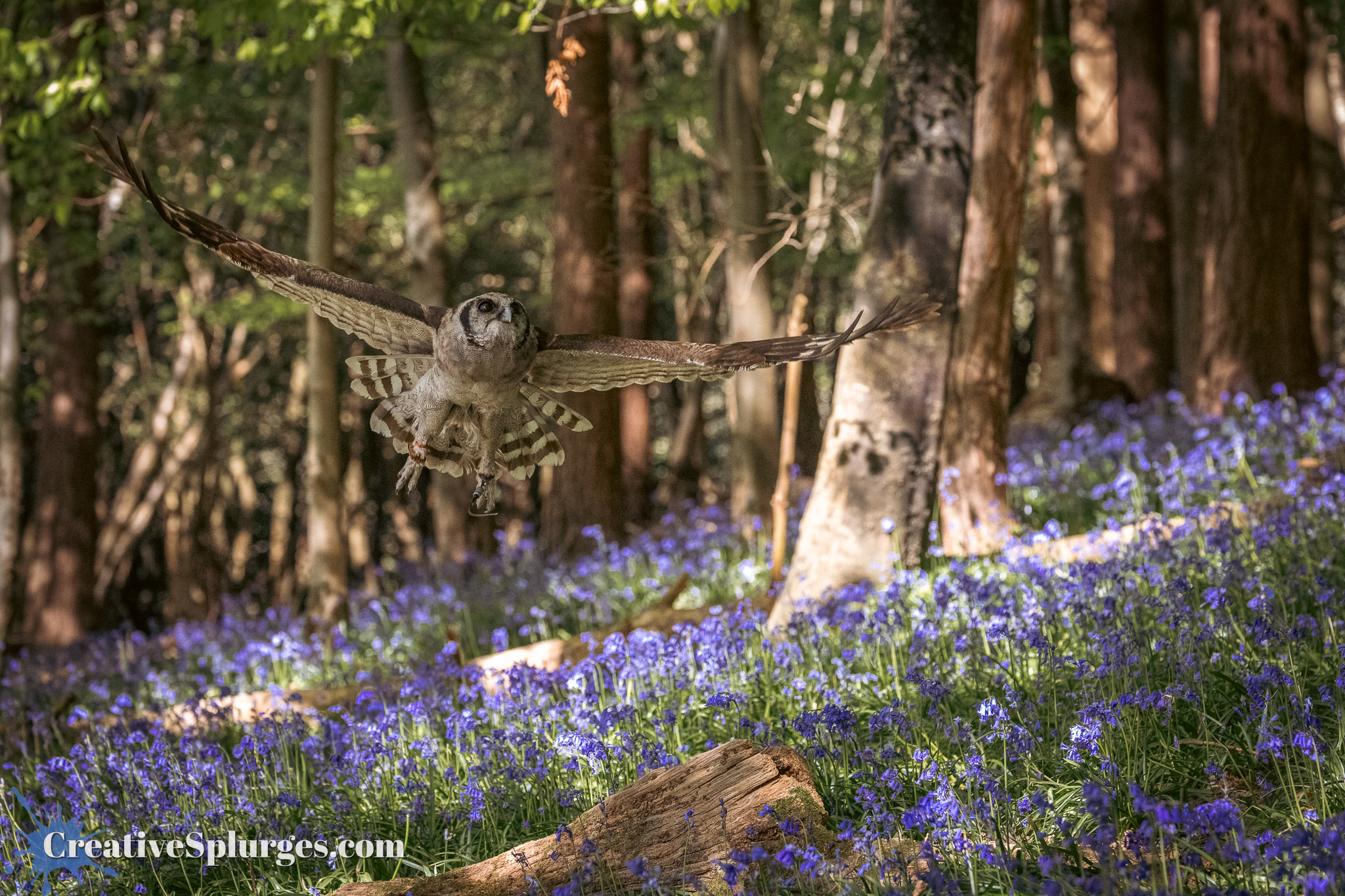
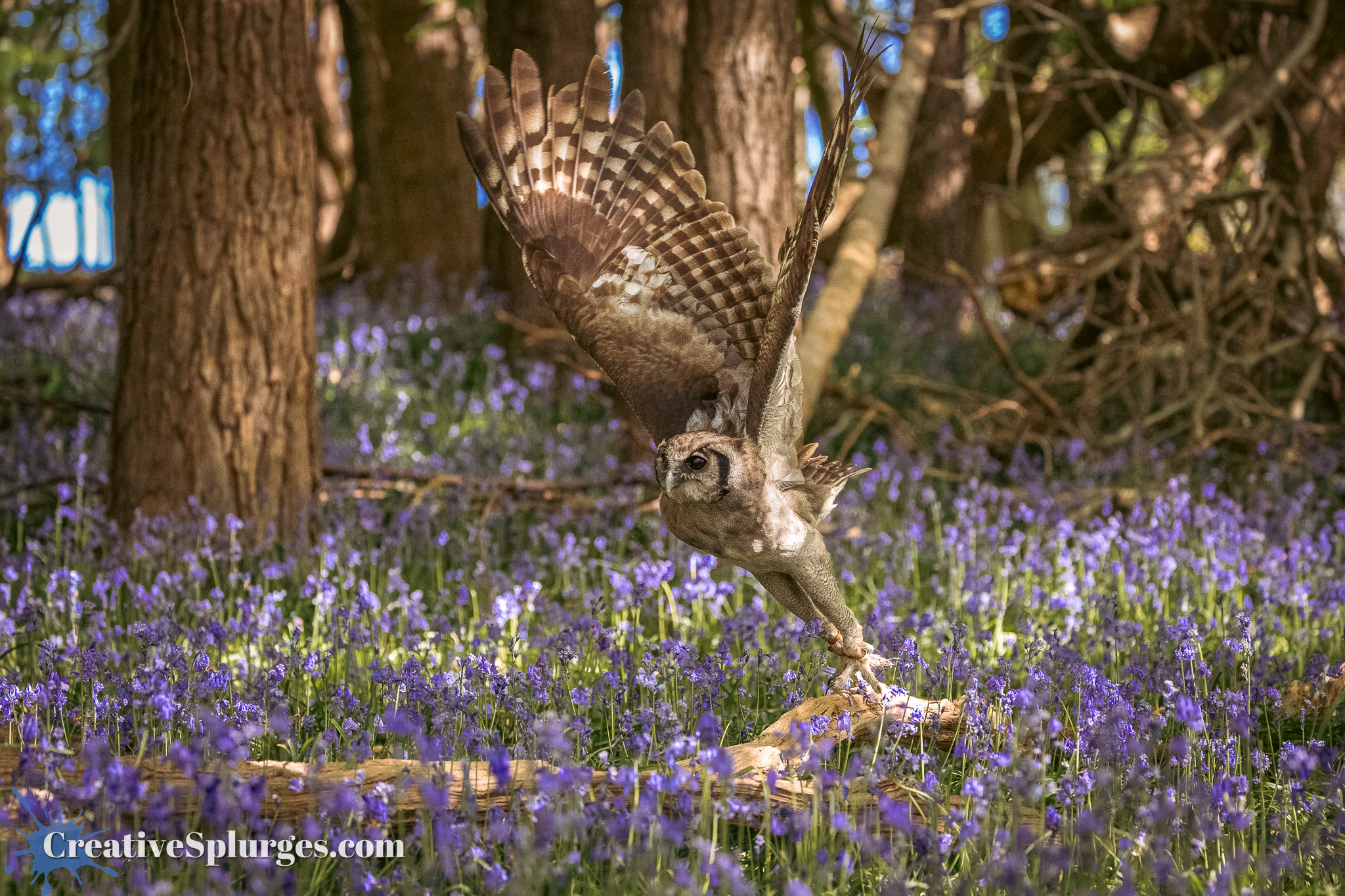
Kofi was keen to fly around, hopping between branches and fallen logs, which meant I ended up with some nice dramatic takeoff and flying shots.
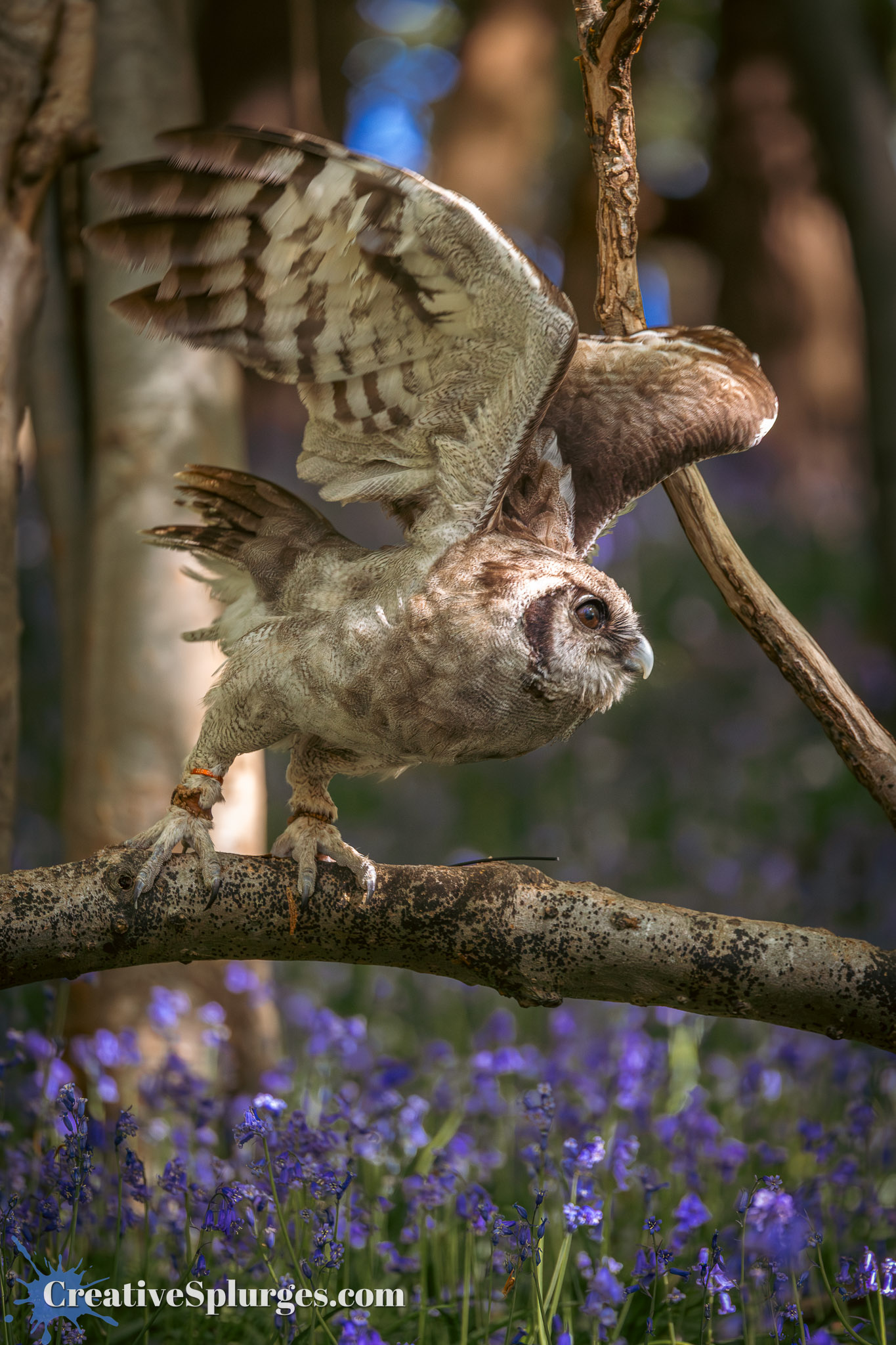
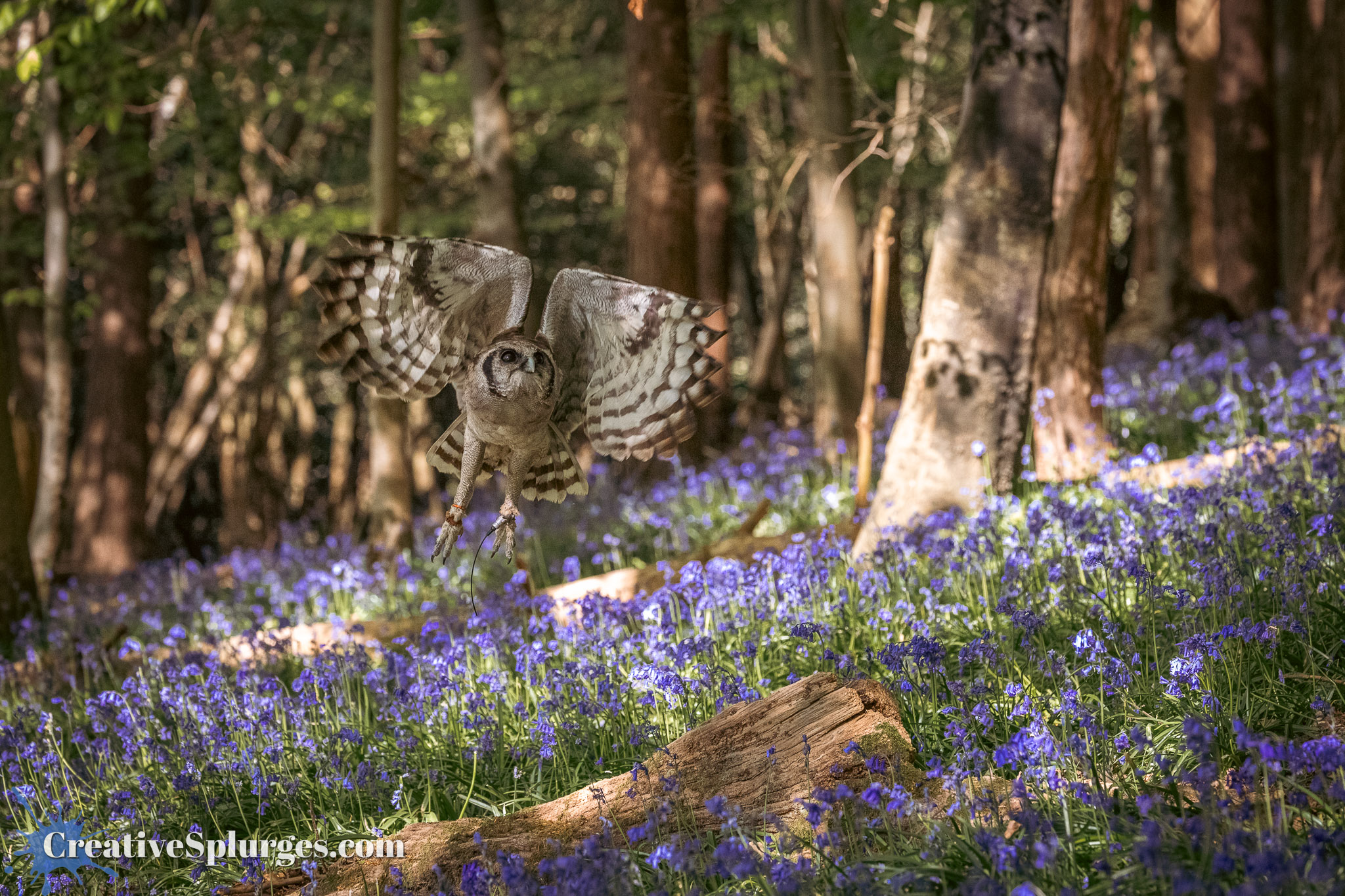
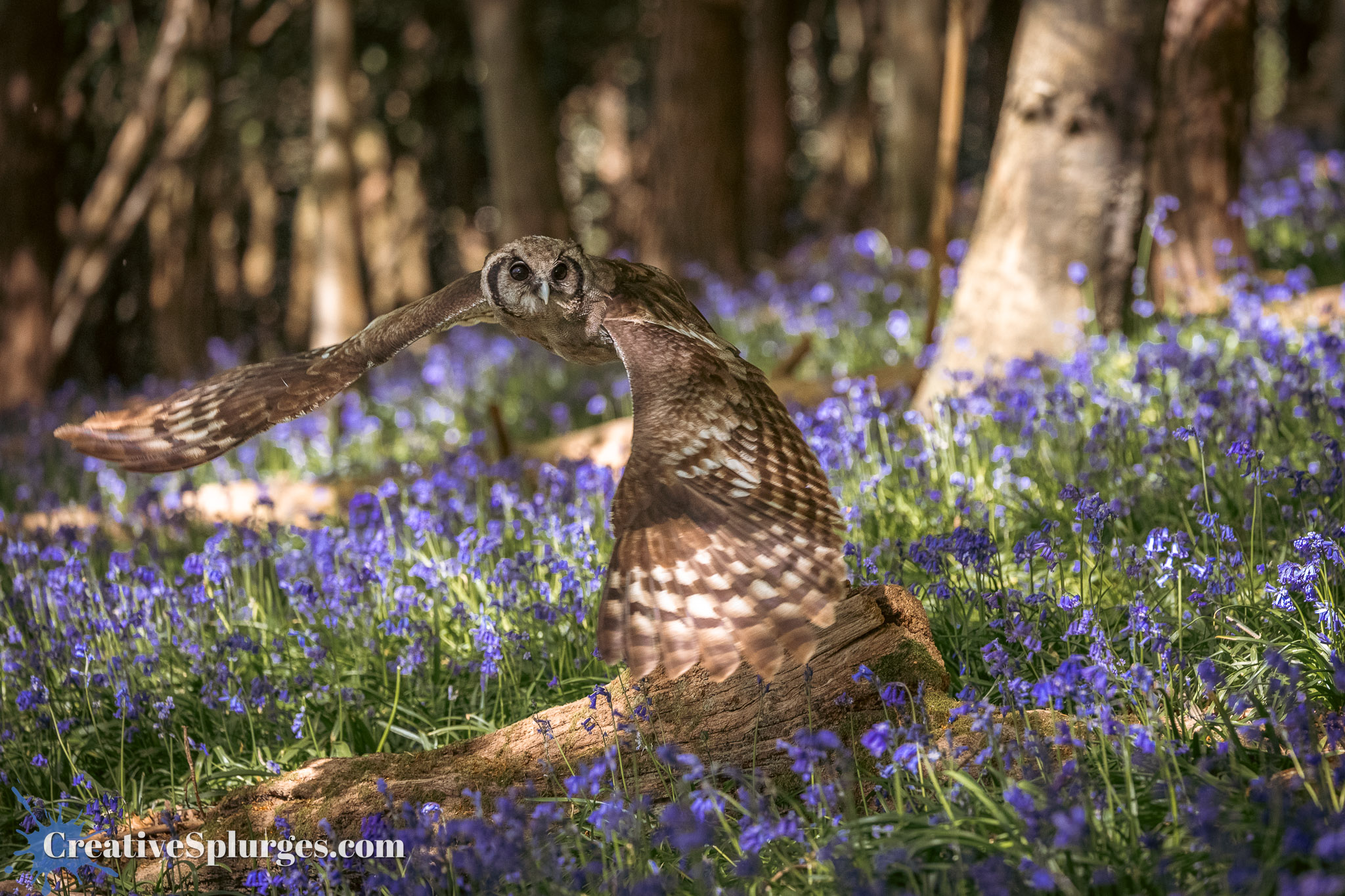
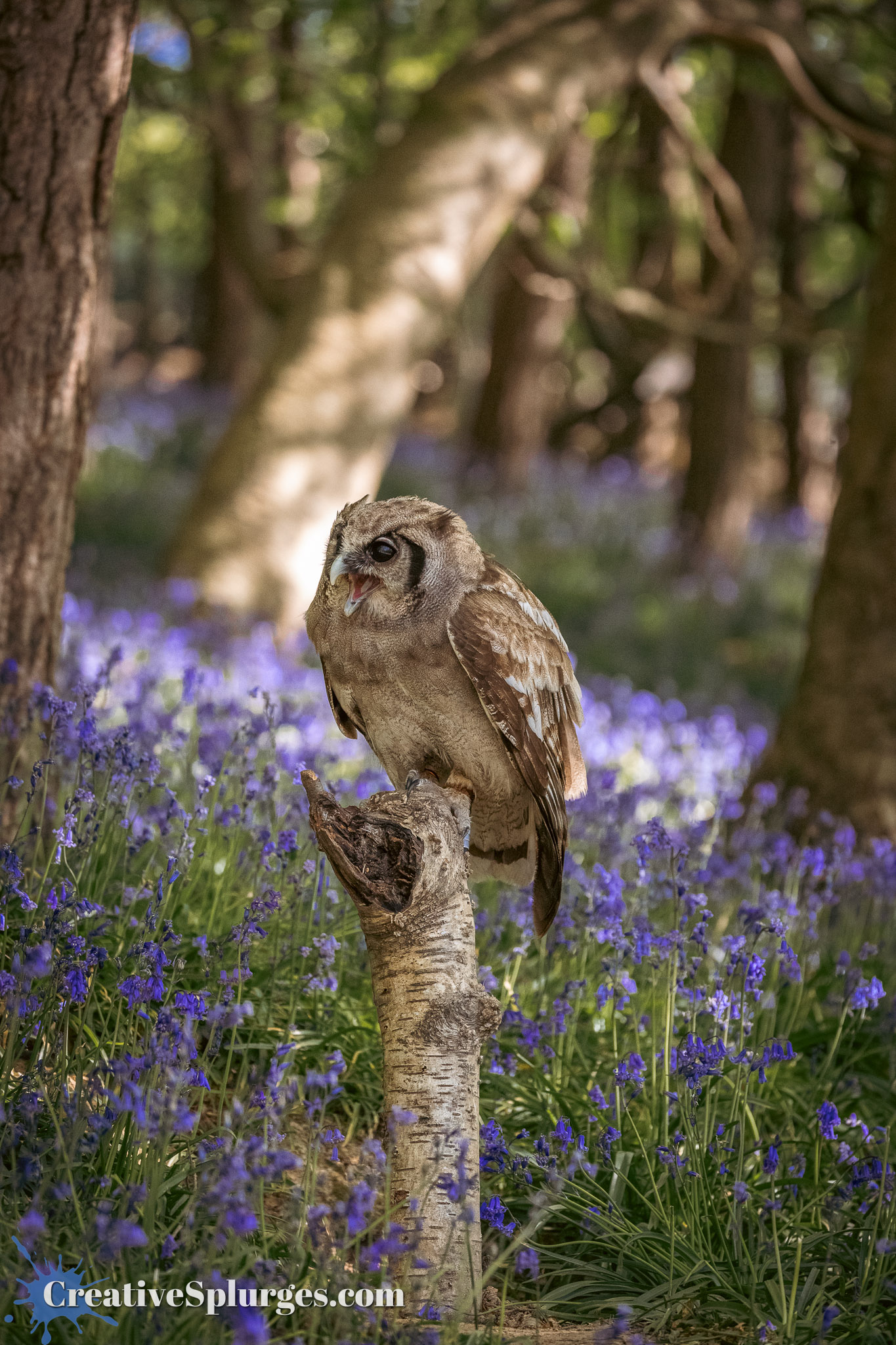
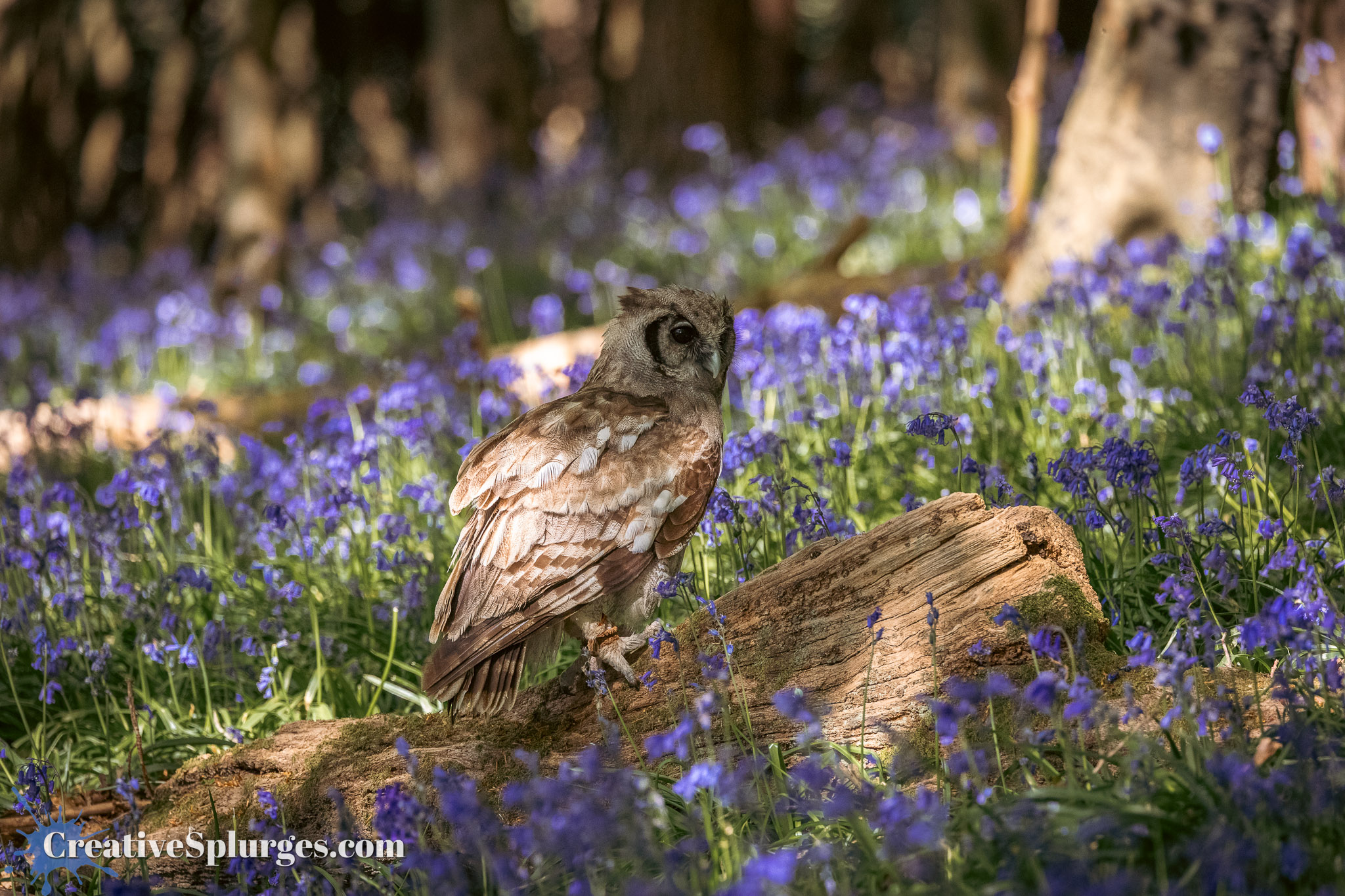
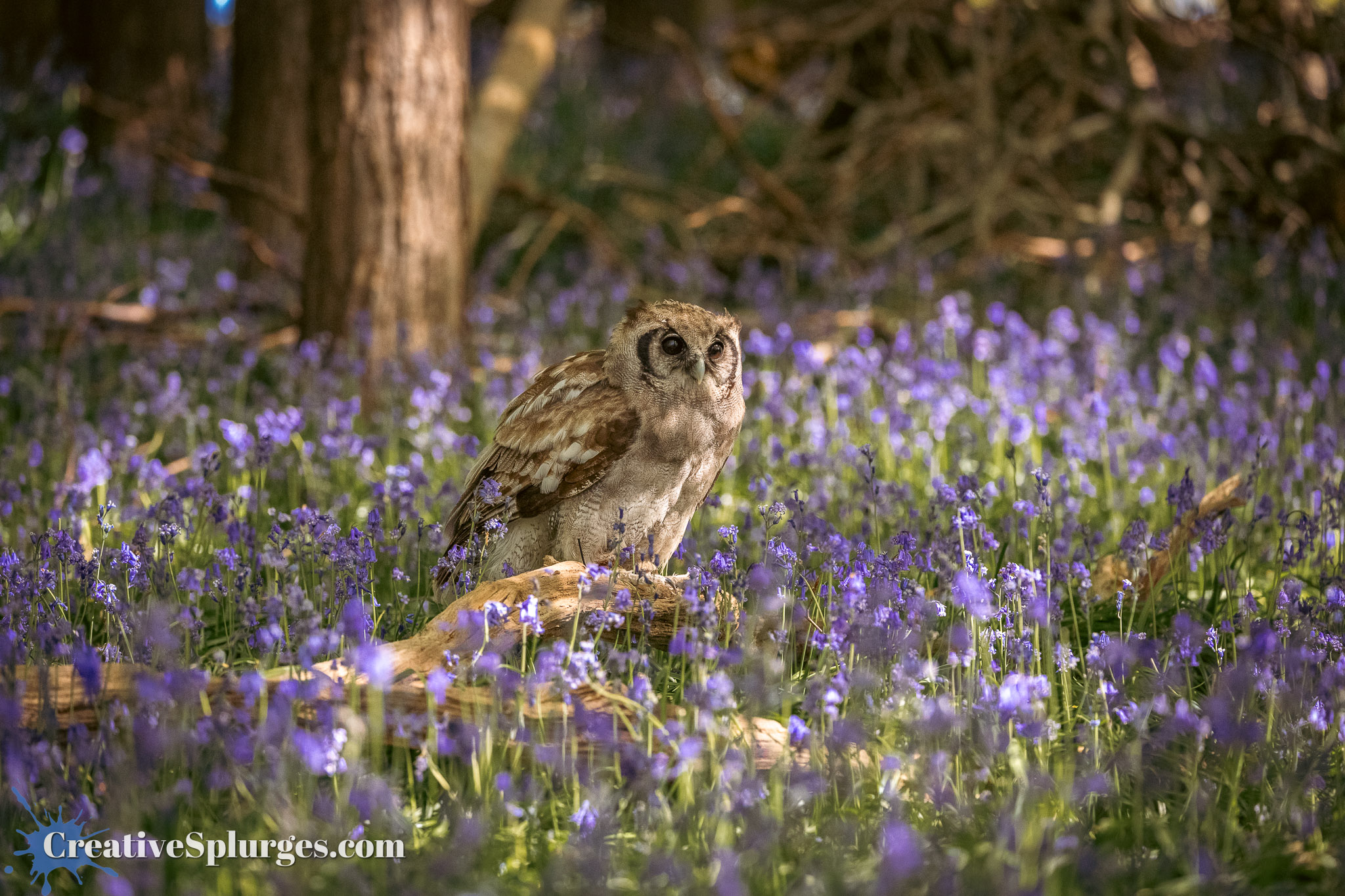
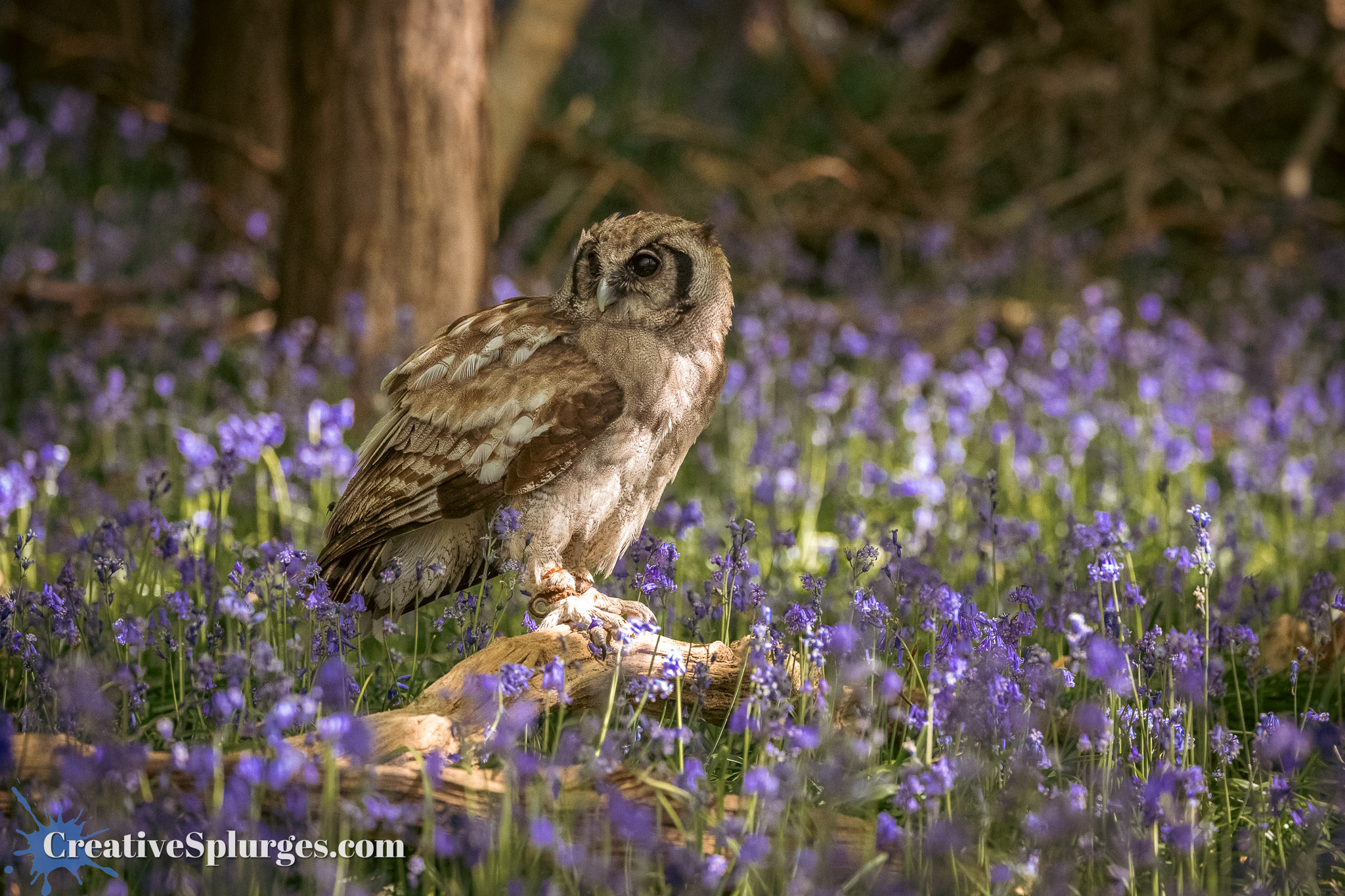
Eventually he sat still long enough for a shot of him on a log.
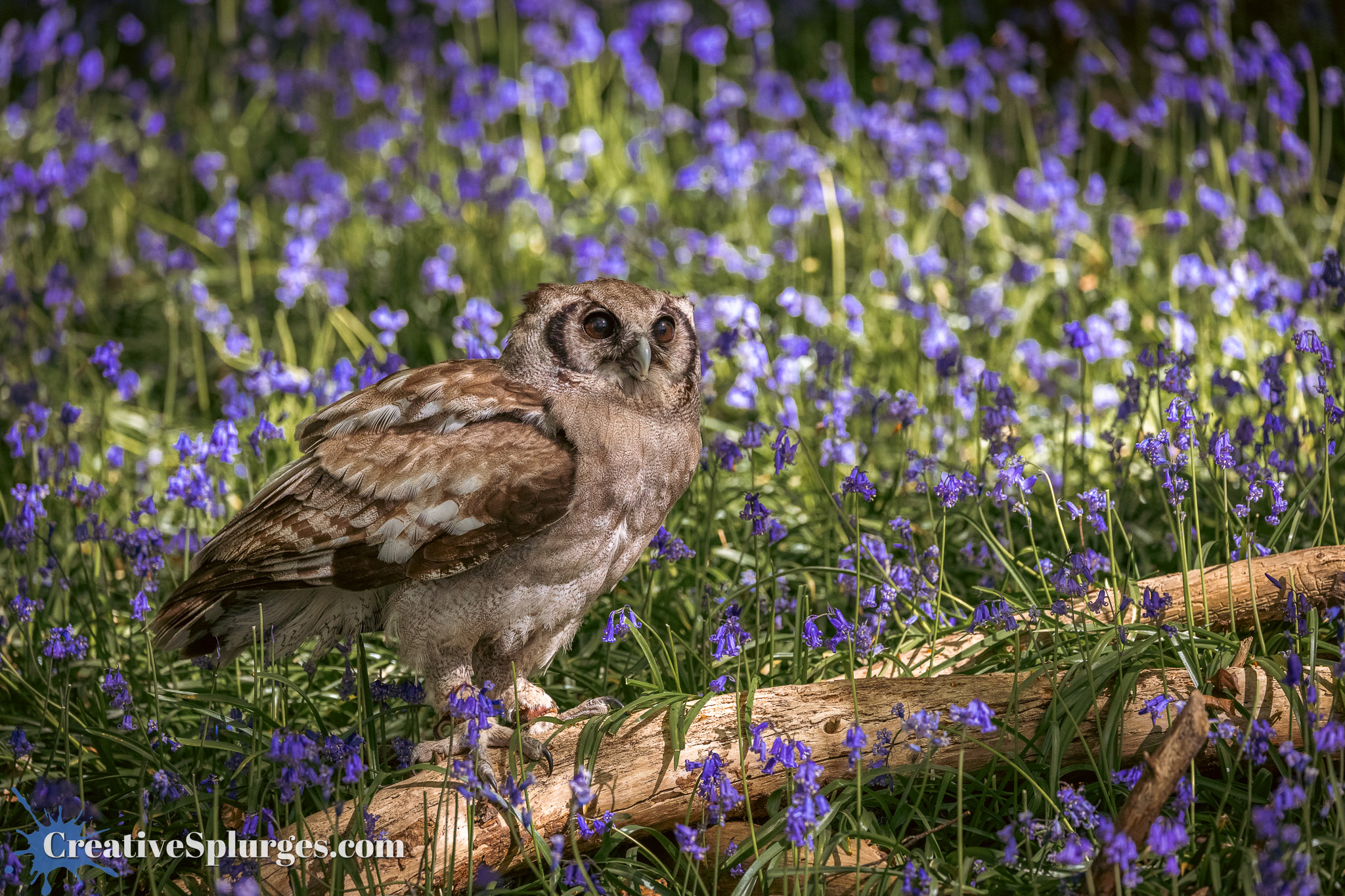
… but not for long.
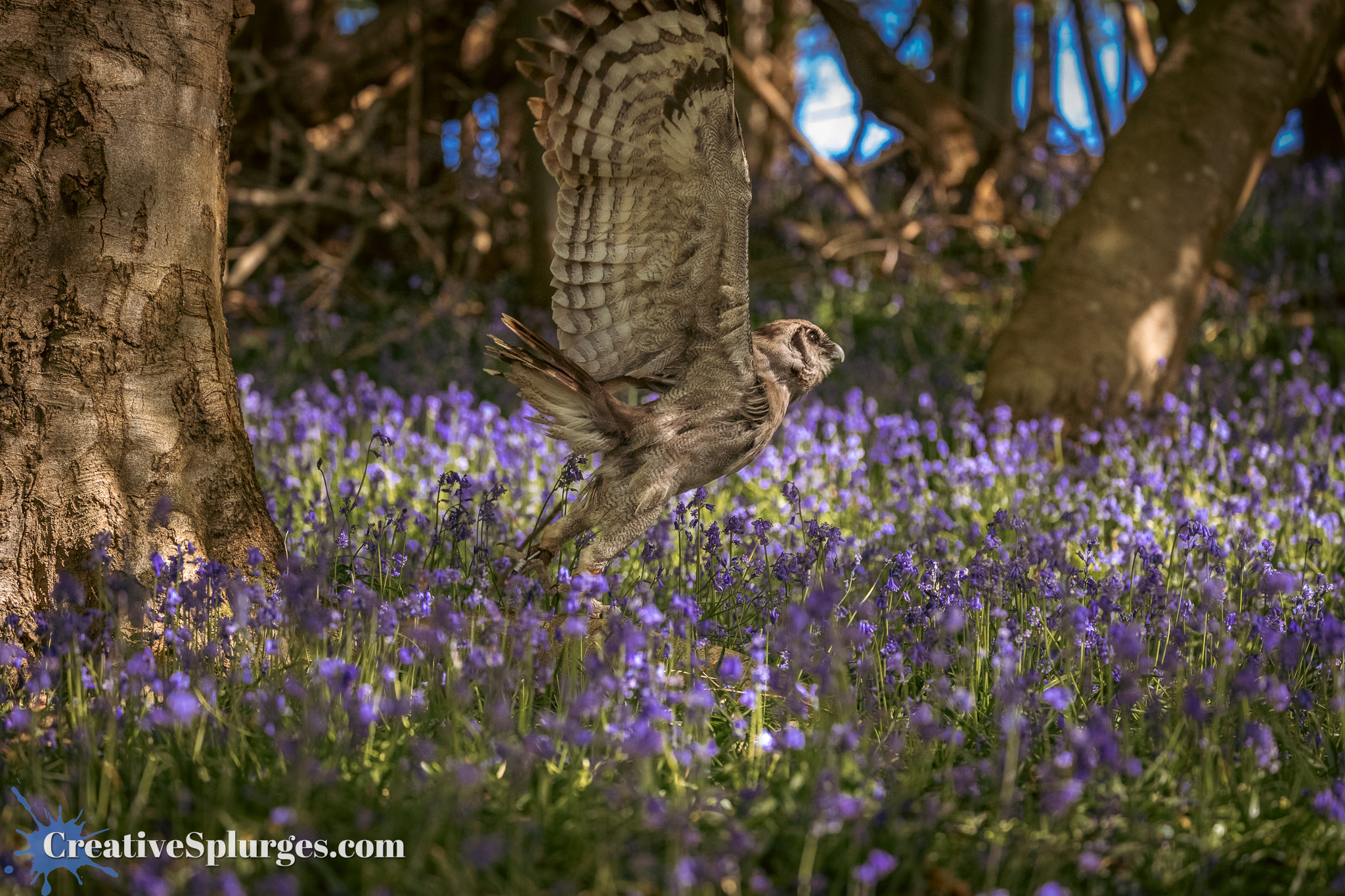
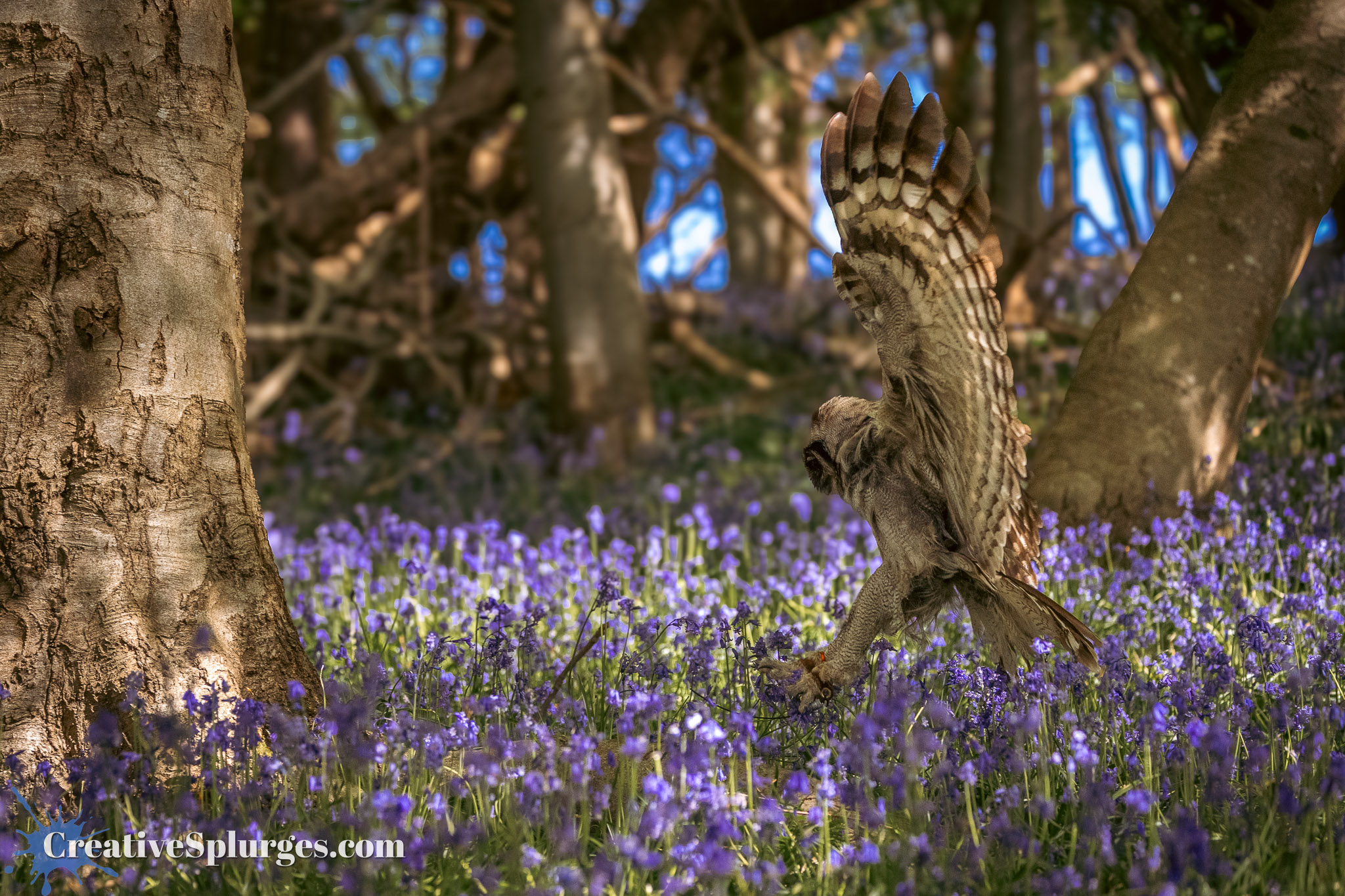
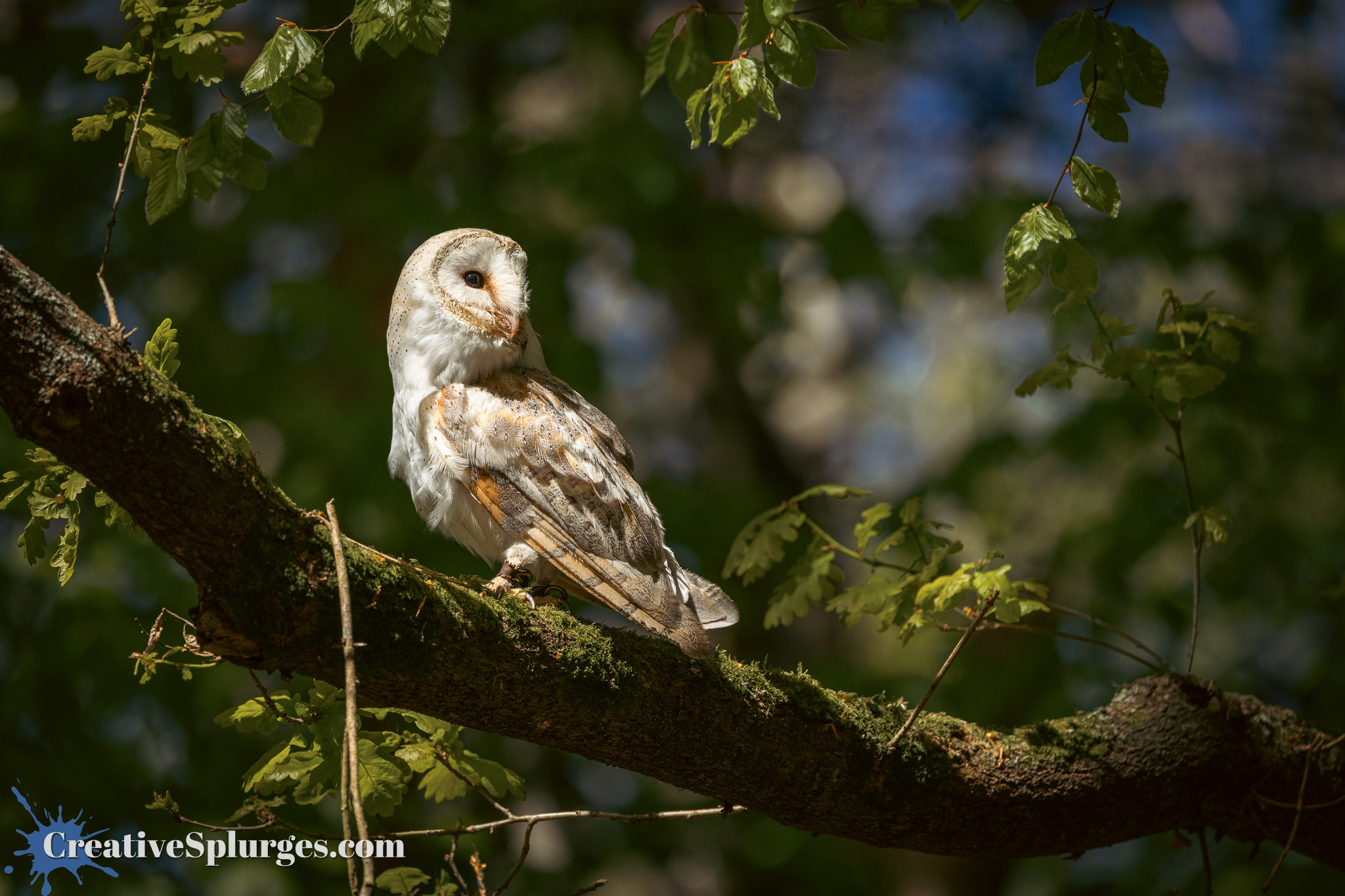
One of the challenges was the mottled light. It looked fantastic, but you had no control over when a bird would land in a patch of light or in shade – or worse, where their head was in shade but their tail was in sun.
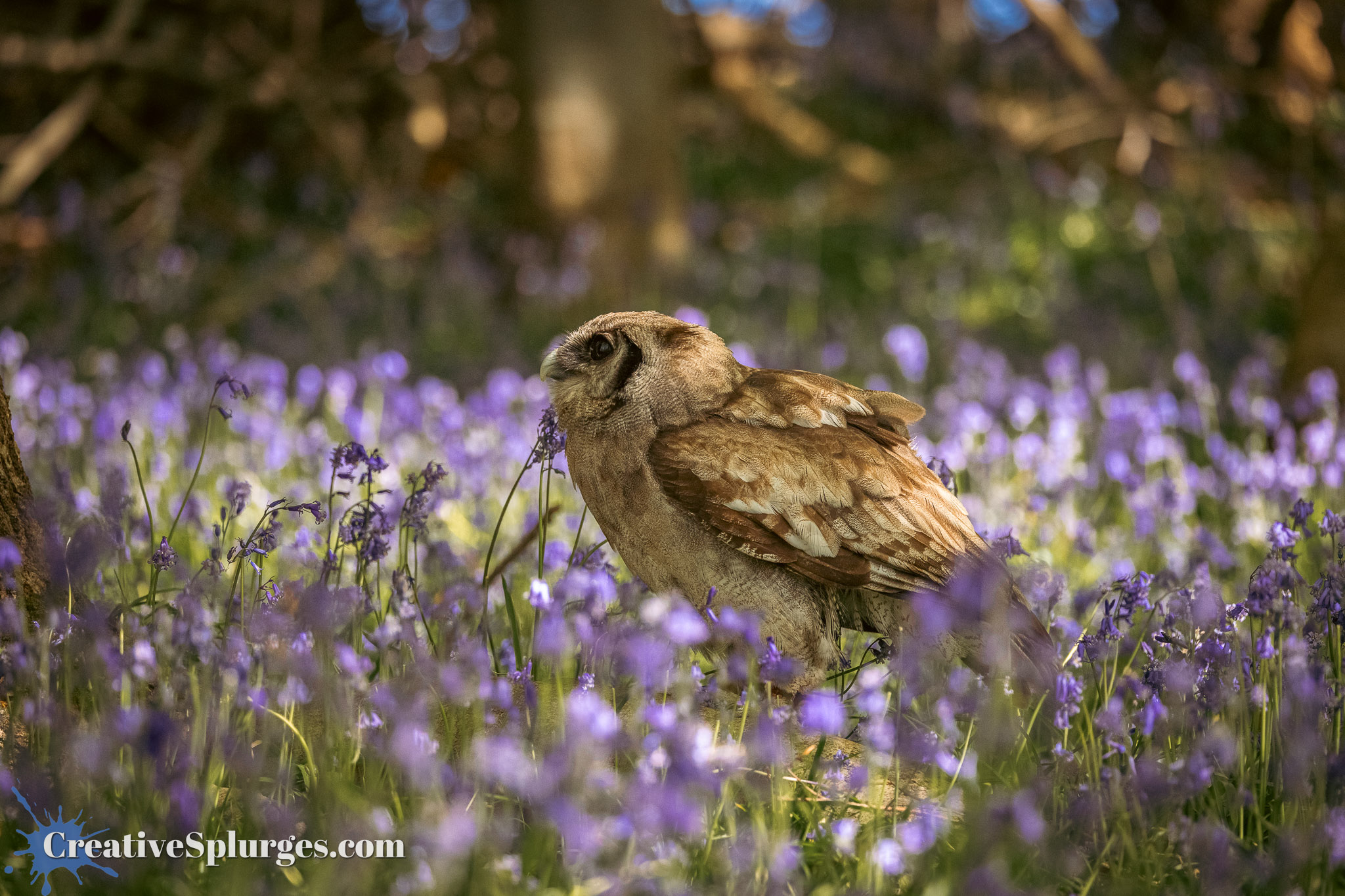
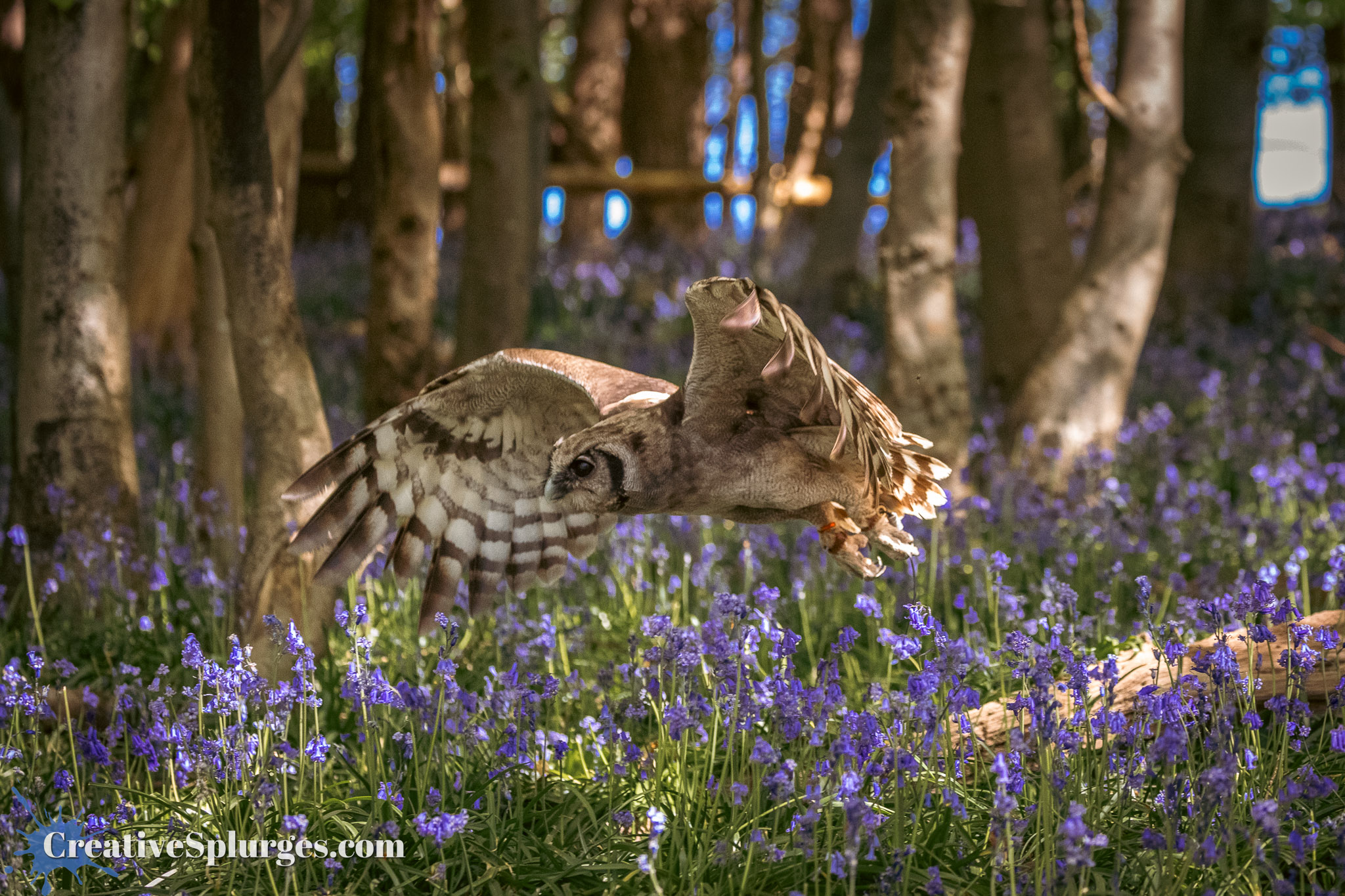
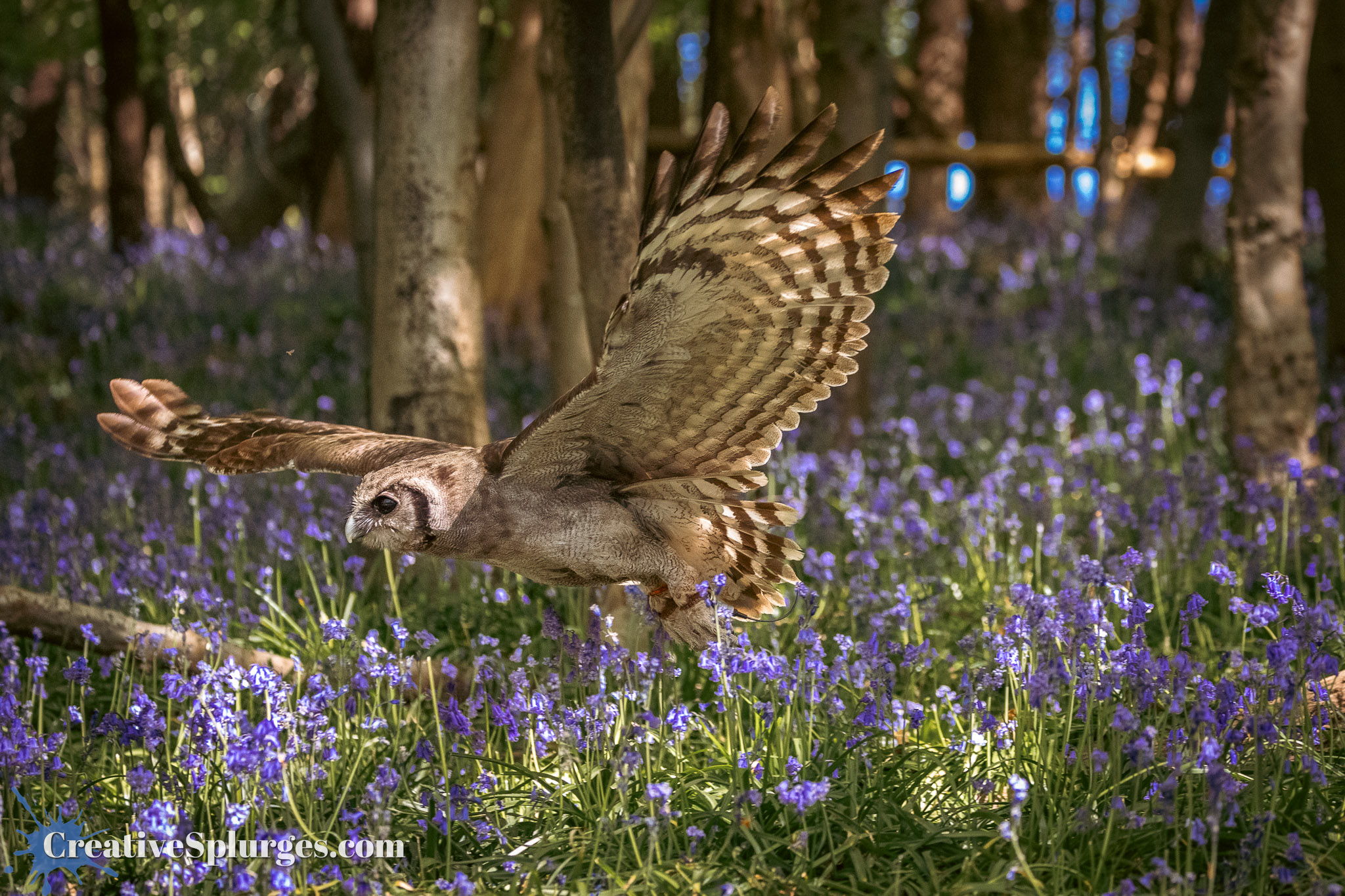
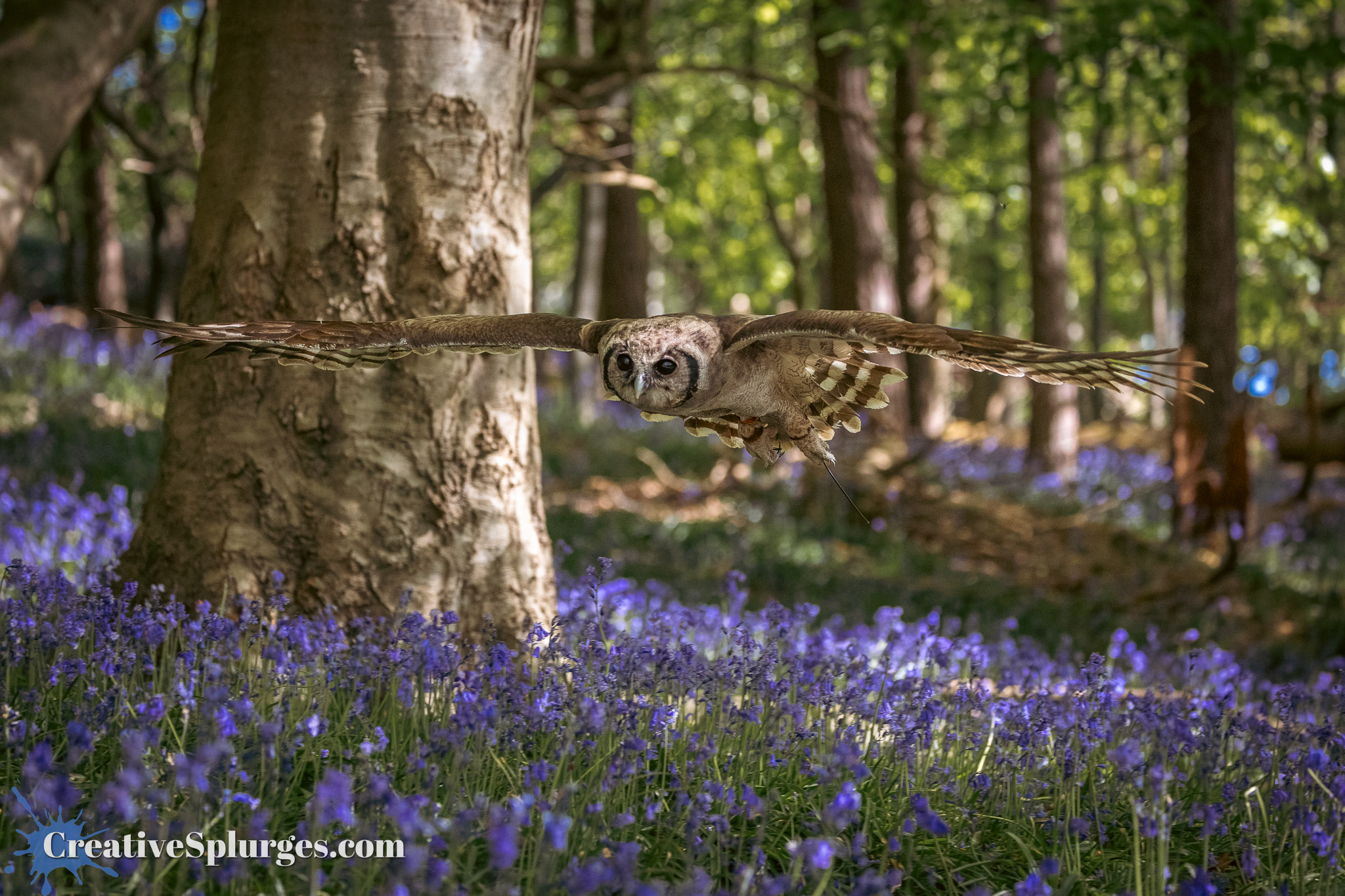
In reality though, Kofi spent most of his time flying between various perches, showing off his impressive wingspan.
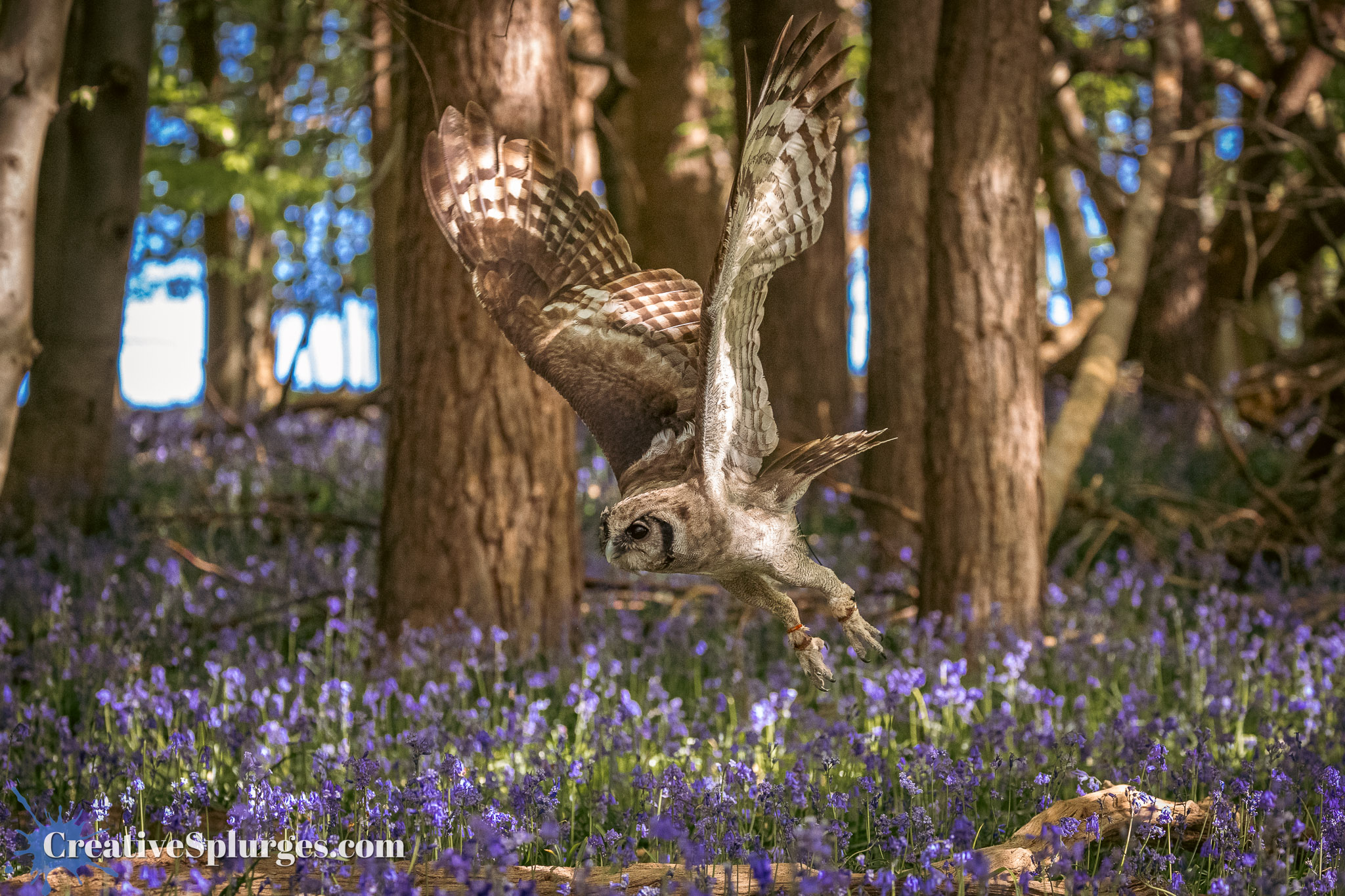
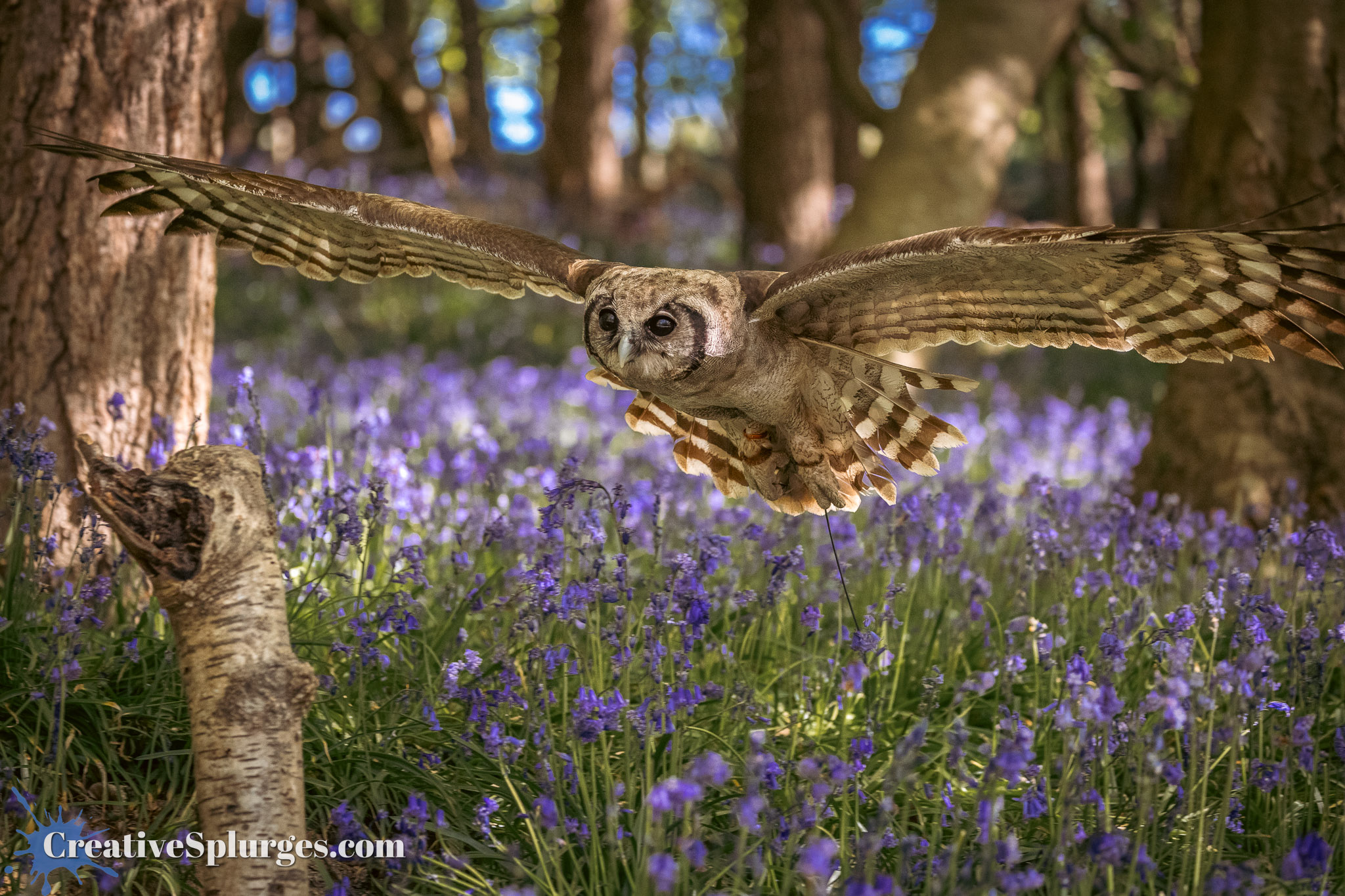
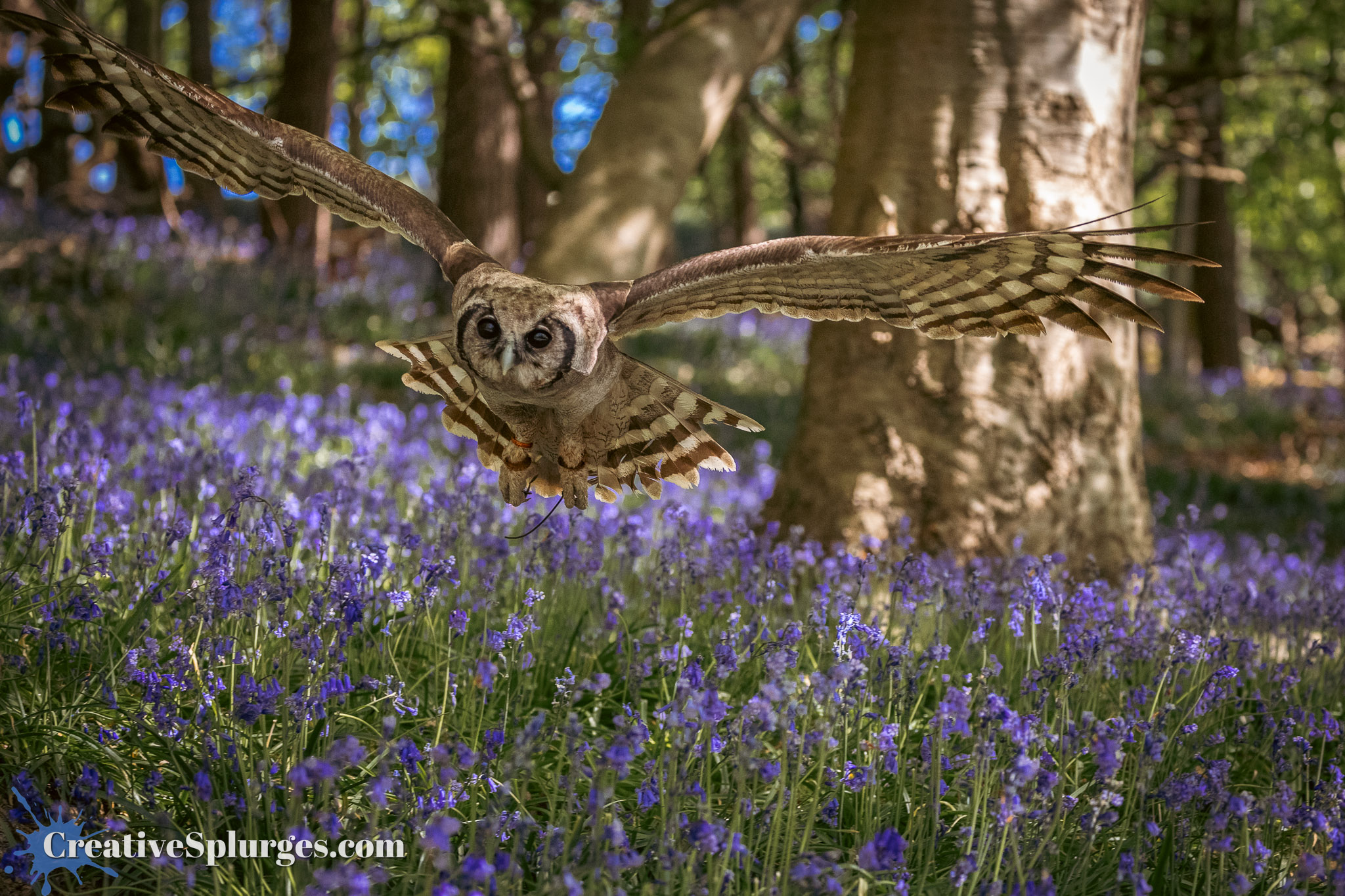
As you might expect, I found it very difficult to select shots from this bird, who gave so many impressive flybys. Sometimes it was almost a relief to get shots that were out of focus and so easy to cut. There are, admittedly, even more options in the gallery at the end of this post.
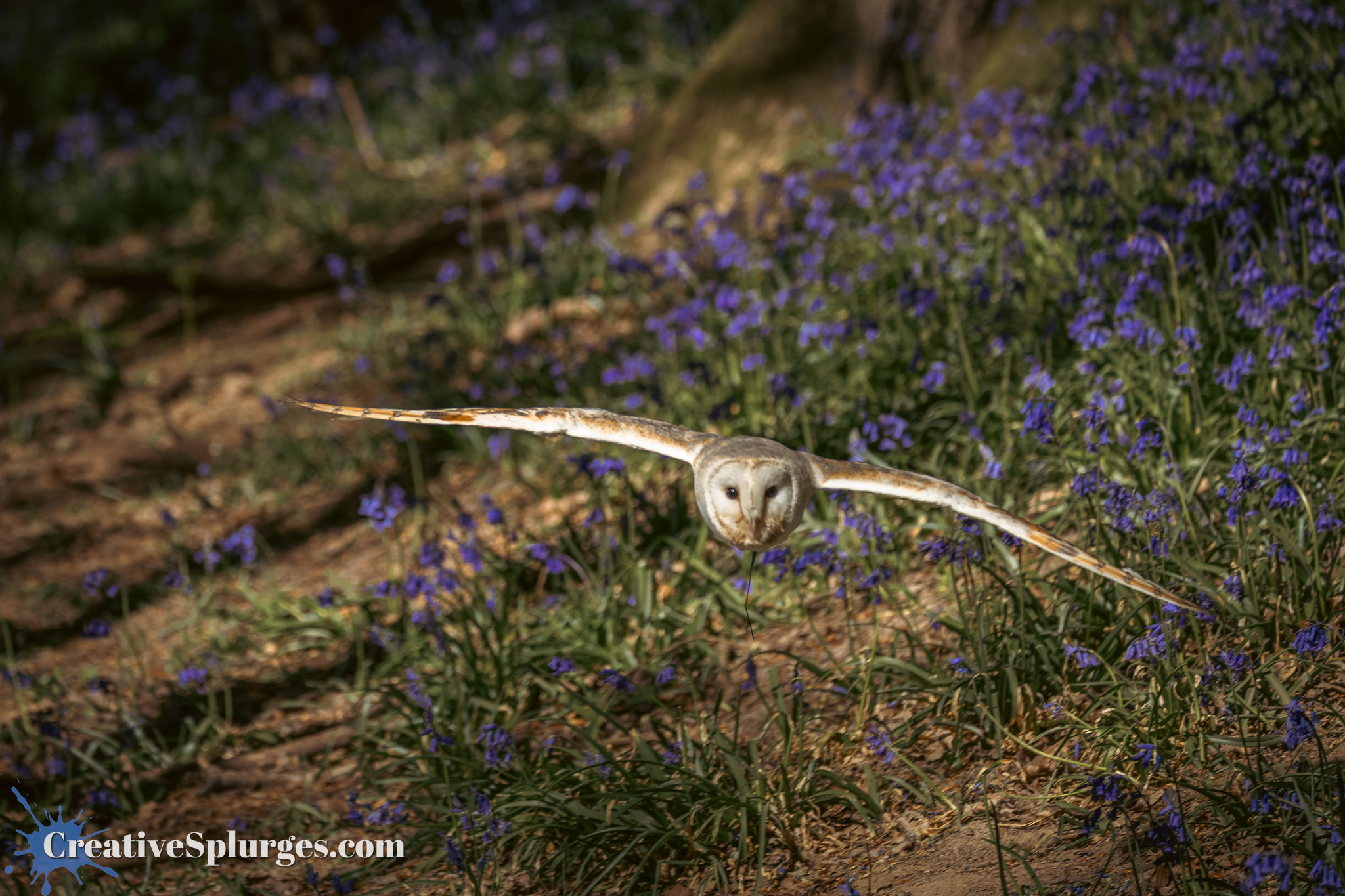
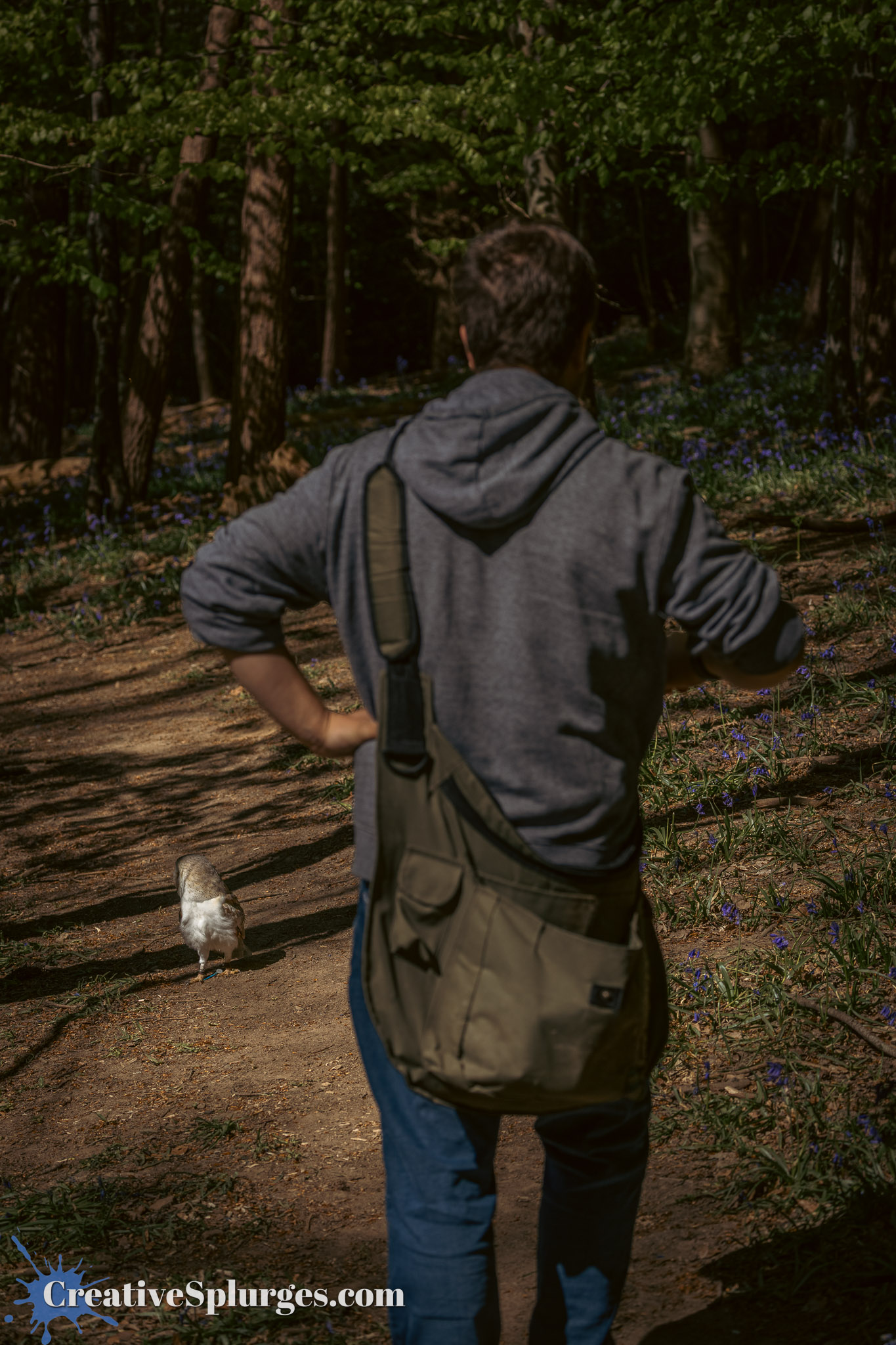
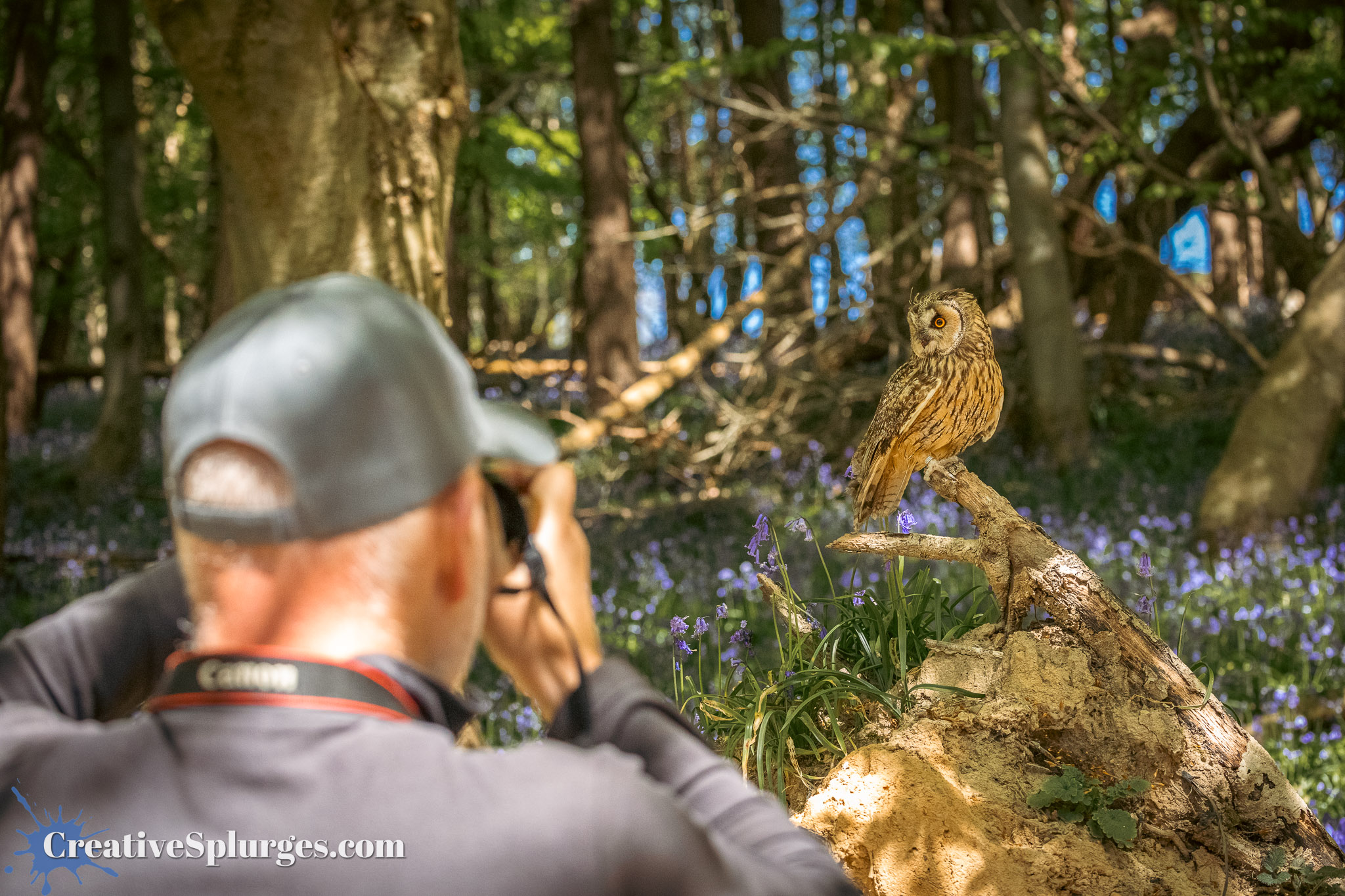
Next up was Haze, a barn owl. And, if you look really closely, you might be able to spot her handler.
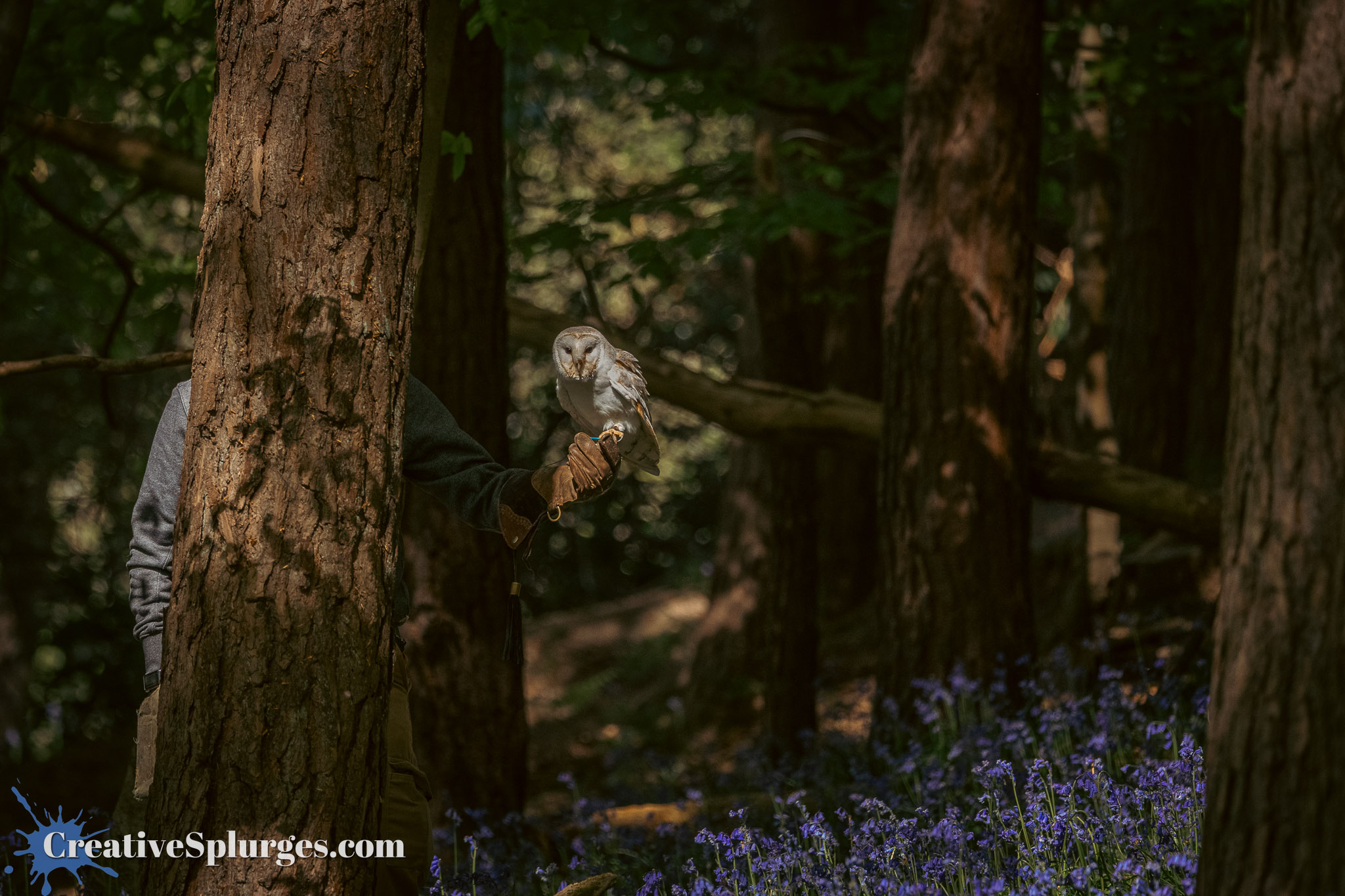
To be honest, Haze’s flybys caused me a lot more trouble. Time after time my camera struggled to focus, and really the only decent shots of her flying captured by my camera were taken by the pro photographer as she tried to help me dial in settings and figure out why I was struggling. All sorts of settings were changed to try to get the autofocus to play balls, but to little avail. It was only later on, when we were shooting the last bird of the day, that I think I figured out what I was doing wrong: I was framing too wide, giving the autofocus doubt as to what I was trying to focus on. By being overly cautious to not mess up my framing, I ended up missing the shots entirely. I’m glad I figured it out, but it was a bit annoying it happened so late in the day.
Which is in many ways a long-winded way of saying, expect more shots of this bird posing, rather than flying.
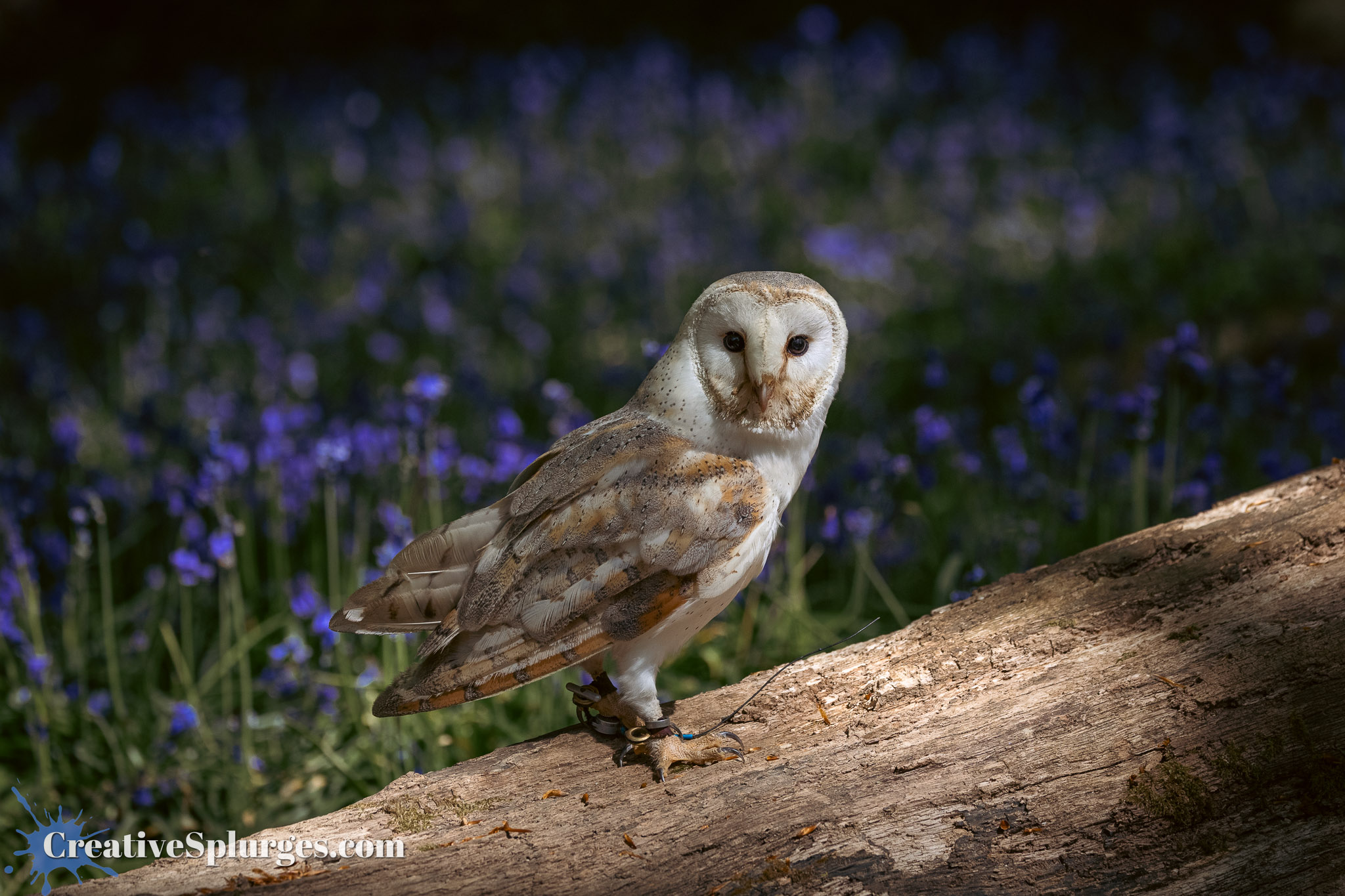
The advice we were given when shooting Haze was a faster shutter speed of 1/2000th, because as a smaller owl she moved faster, and to underexpose by at least a full stop to ensure she didn’t blow out as her white plumage moved from shade into the light.
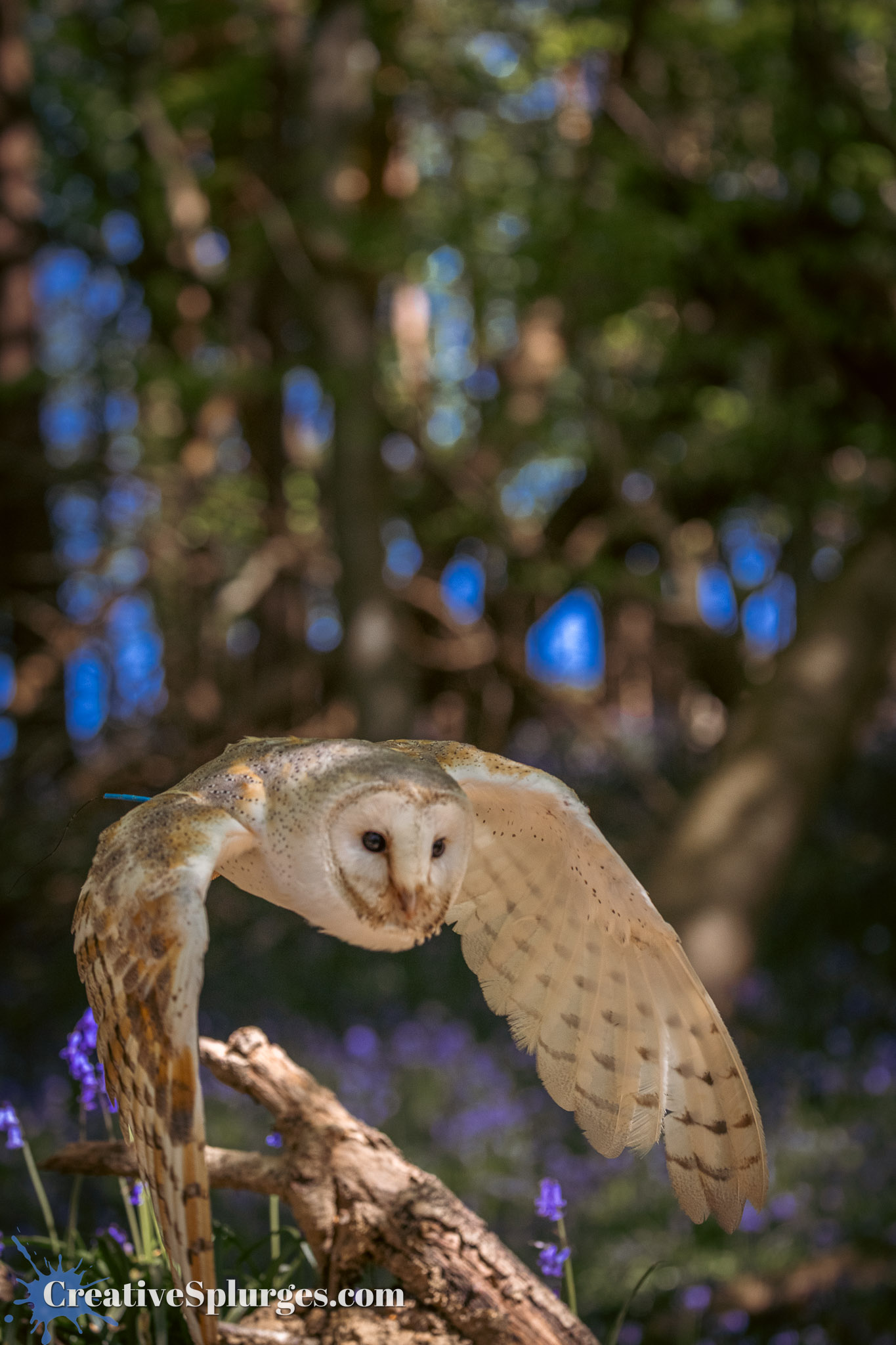
This next shot is one of the few ones I got of her in a proper flight.
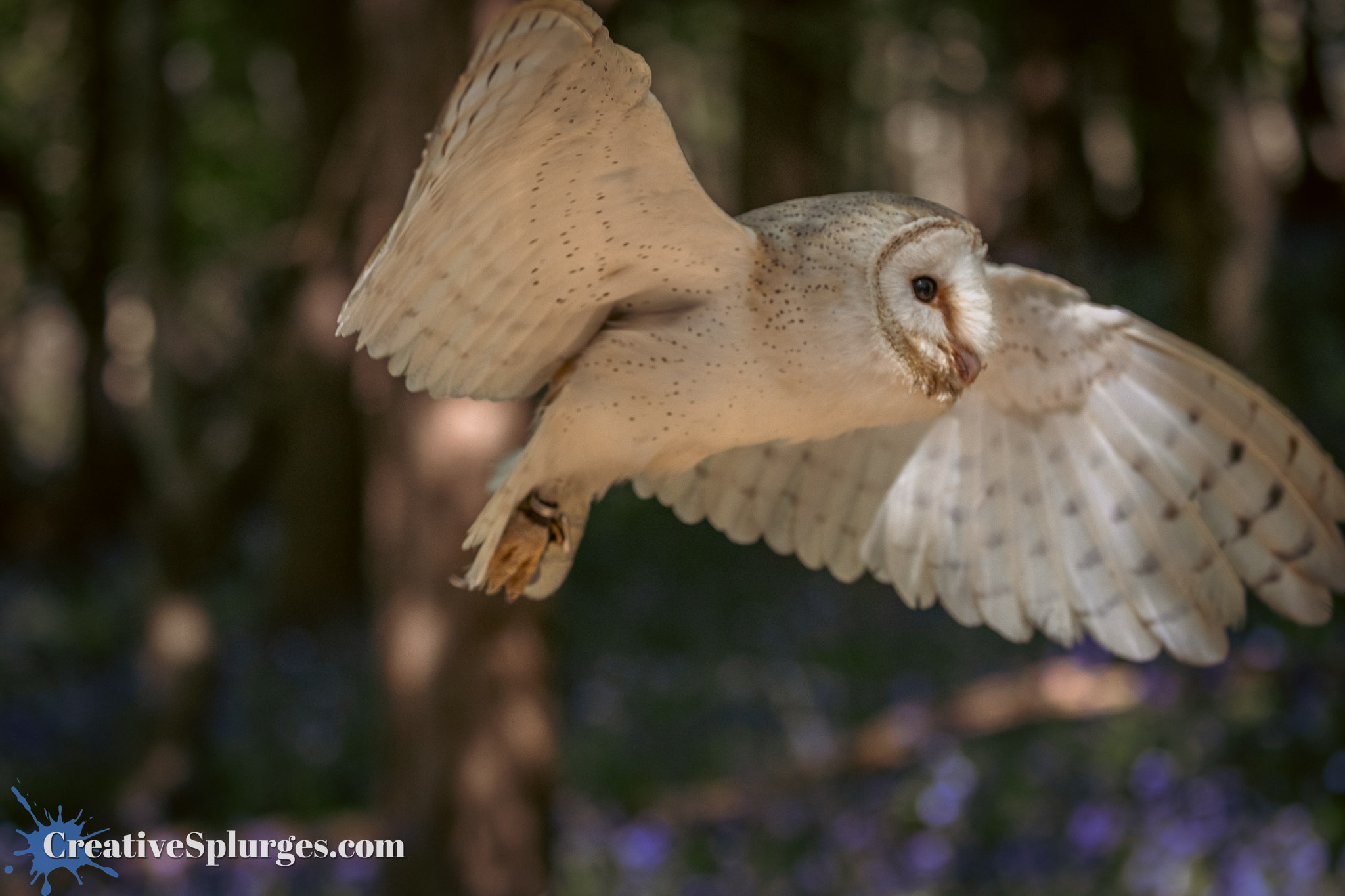
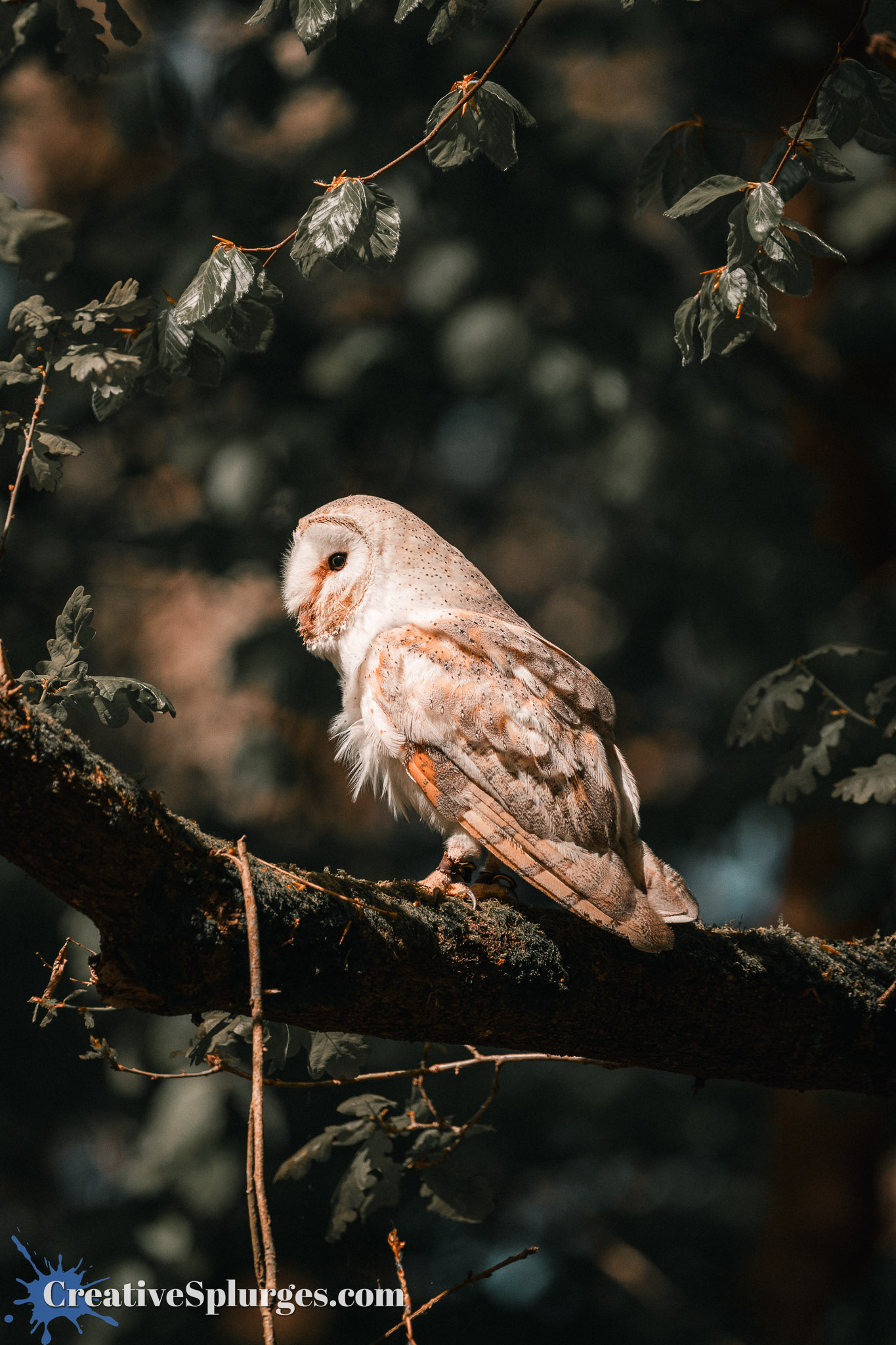
The last time I photographed a barn owl, I found a really good preset that helped bring out the brownish details in their feathers. I didn’t use it much here, because the preset emphasises brown hues whilst dialling back other colours, which robbed the bluebells and green foliage of all their beautiful colour. I did use it once or twice when she landed places where there weren’t too much colour to be lost anyway.
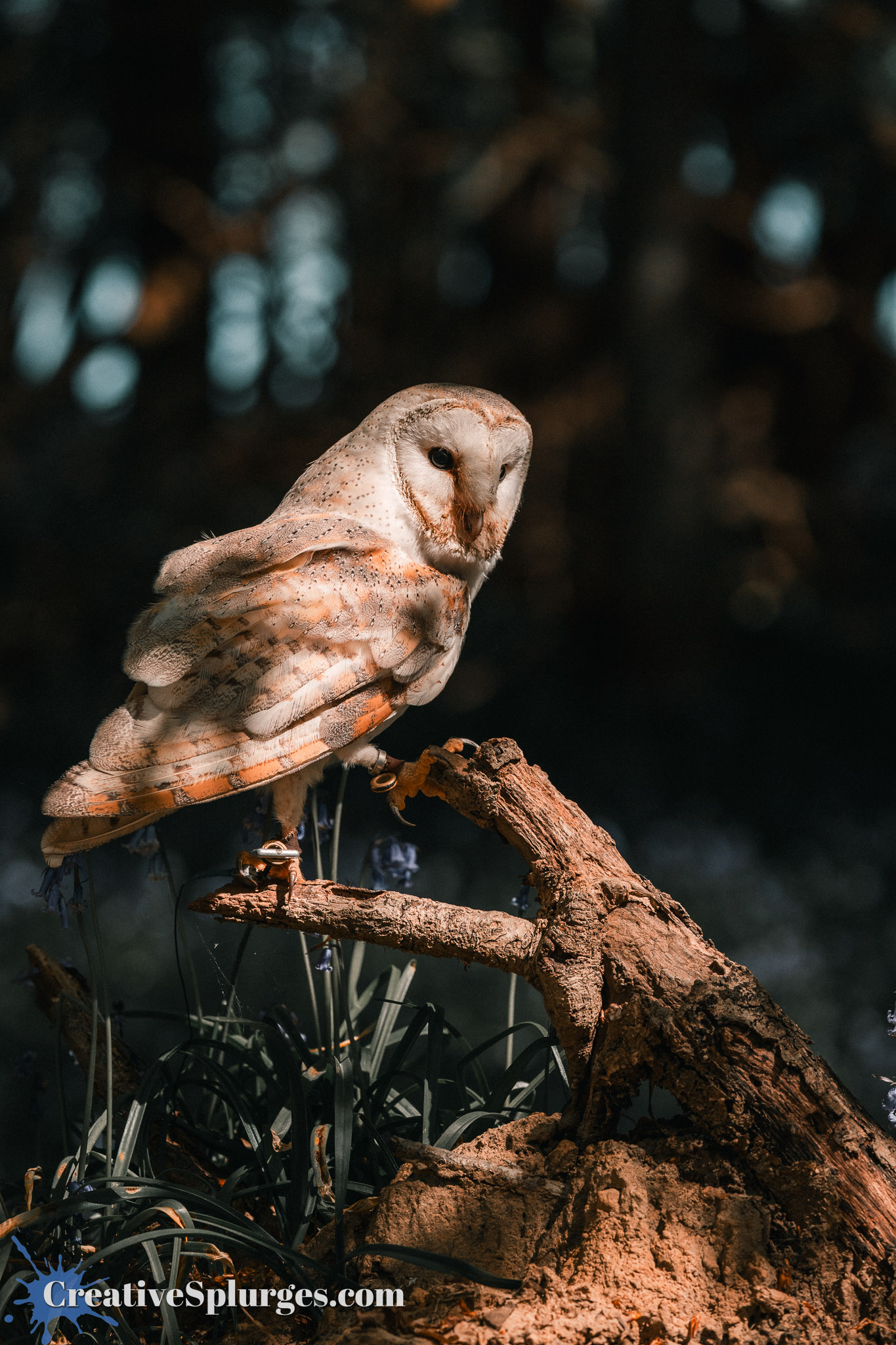
I did manage to get a few decent shots of Haze in flight as she took off from spots, including when she took off from the spot above.
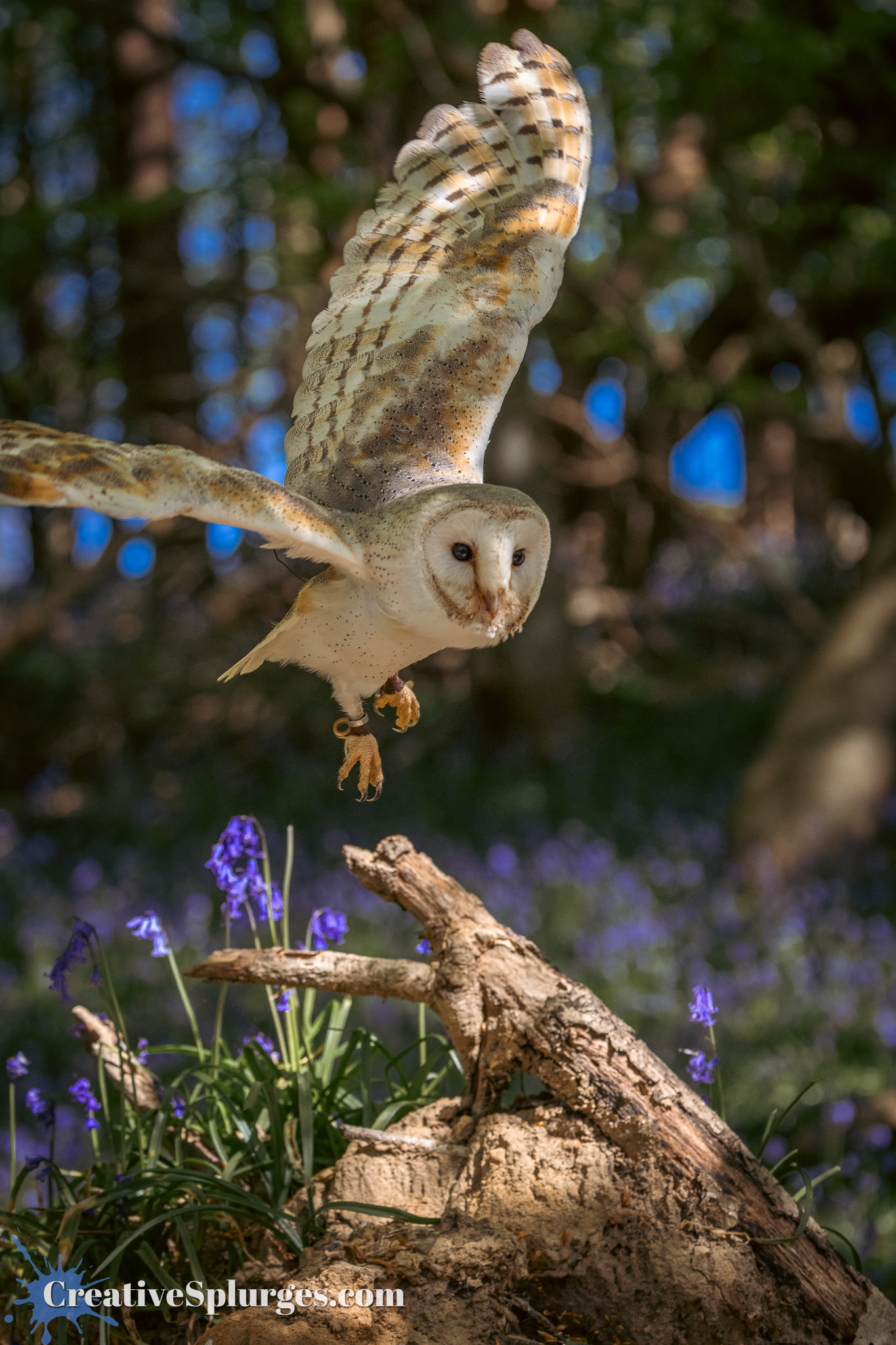
It was still tempting to use the preset, even given it turned the lovely spring leaves into something more autumnal. Definitely one that’s more use in autumn and winter. In this next shot she’d flown off into a more distant tree, requiring me to use all of my zoom range.
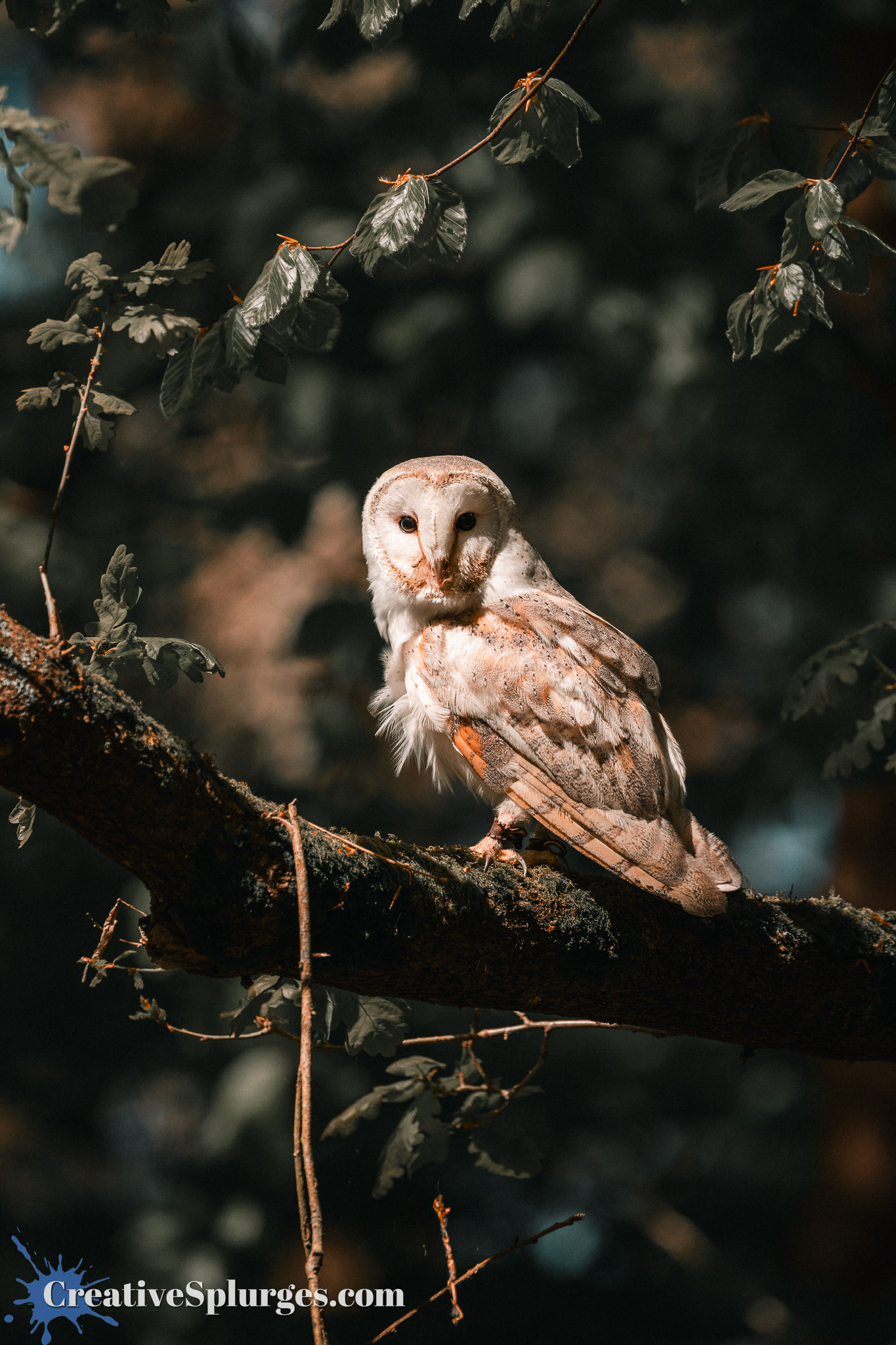
I did not end up with that many shots of Haze, on account of my issues focussing on her whilst she flew.
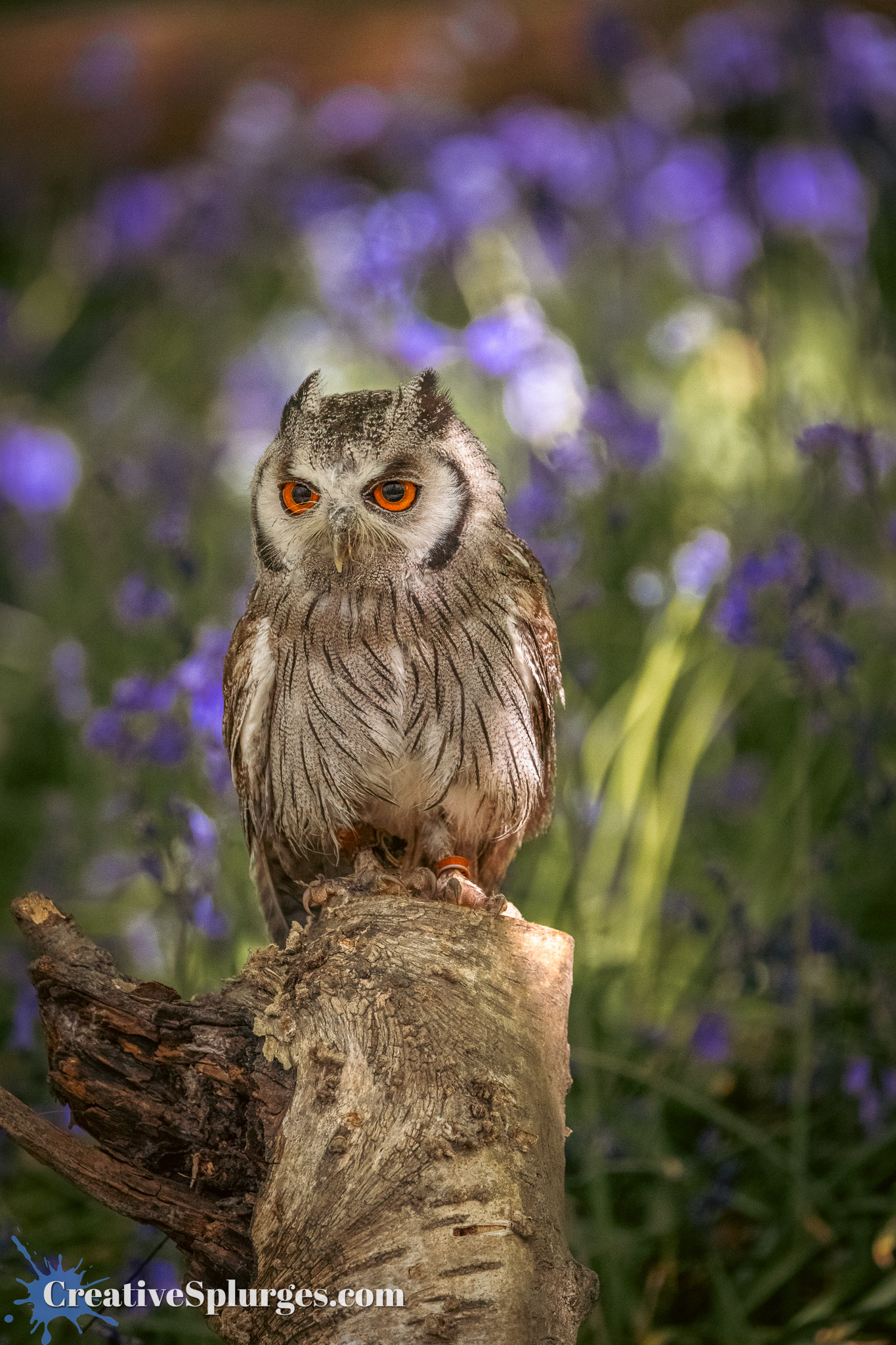
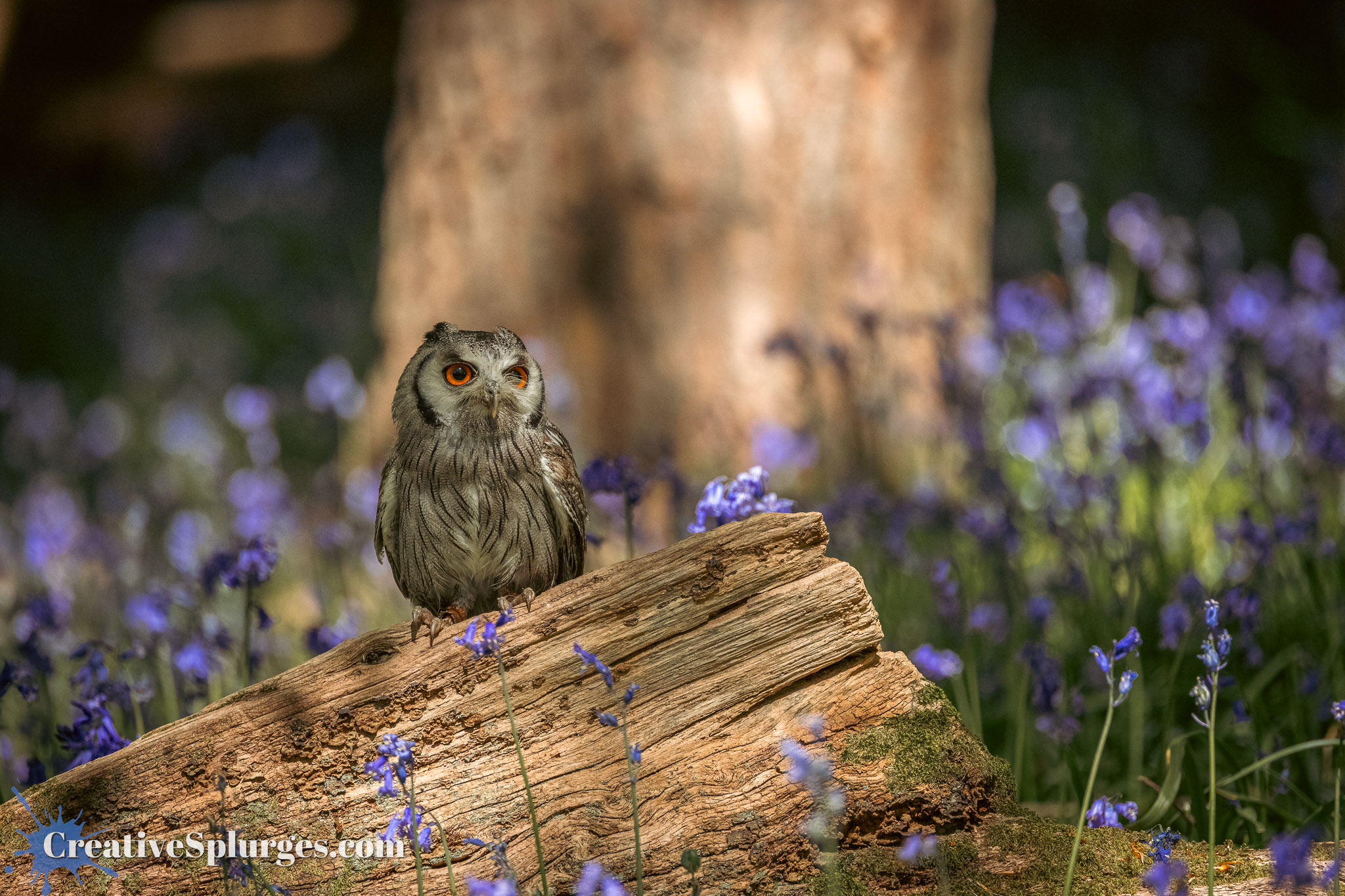
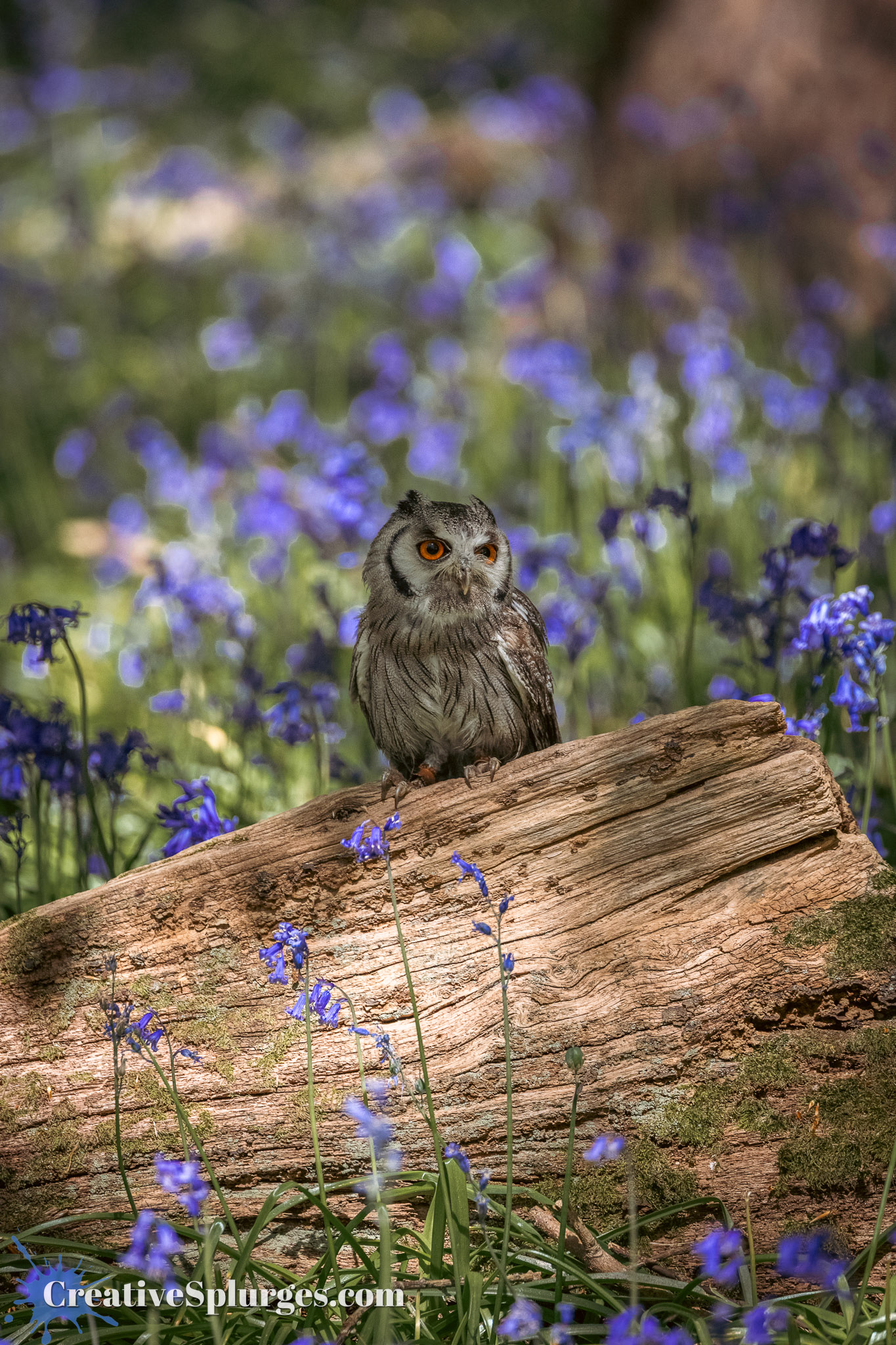
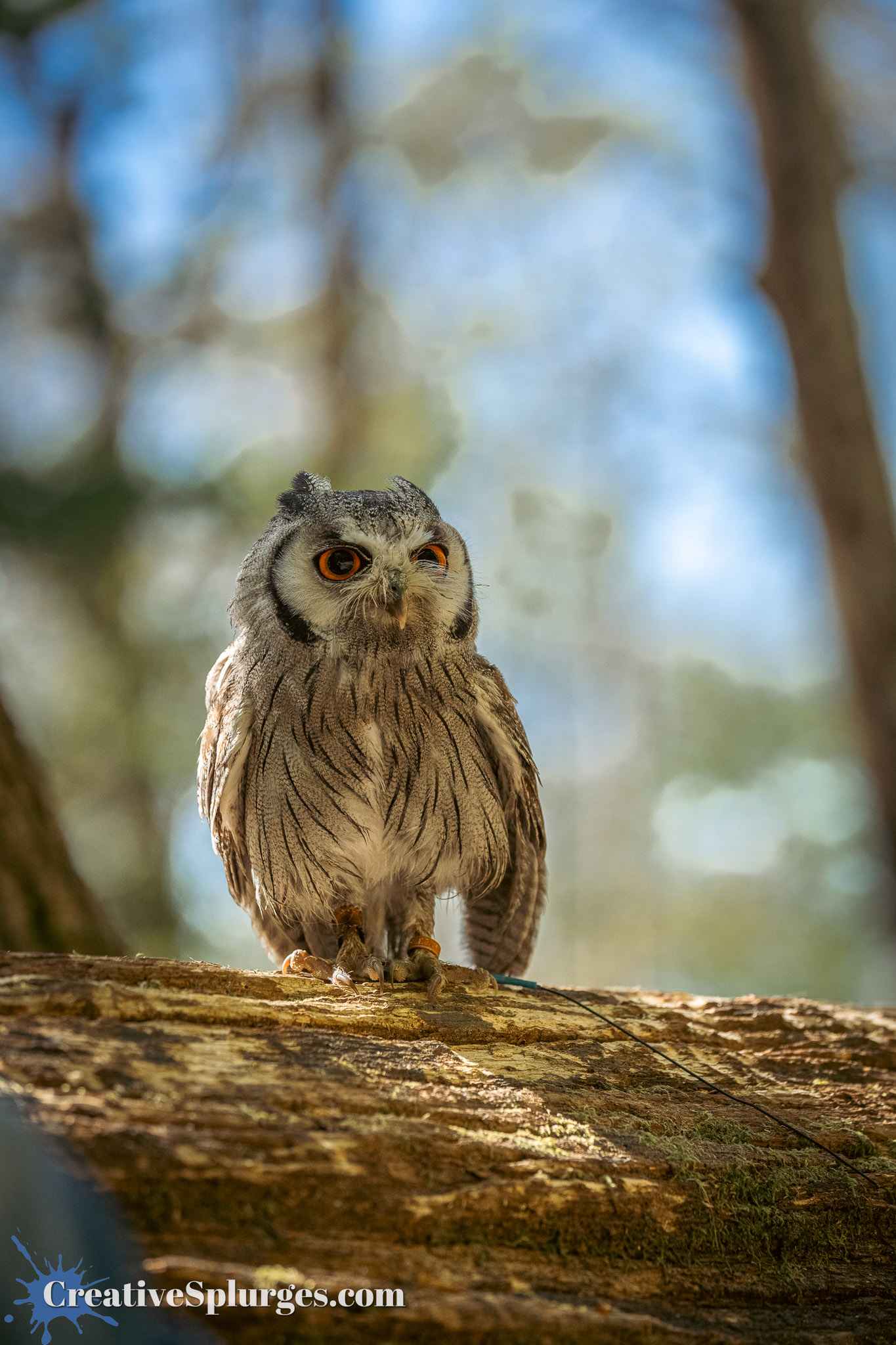
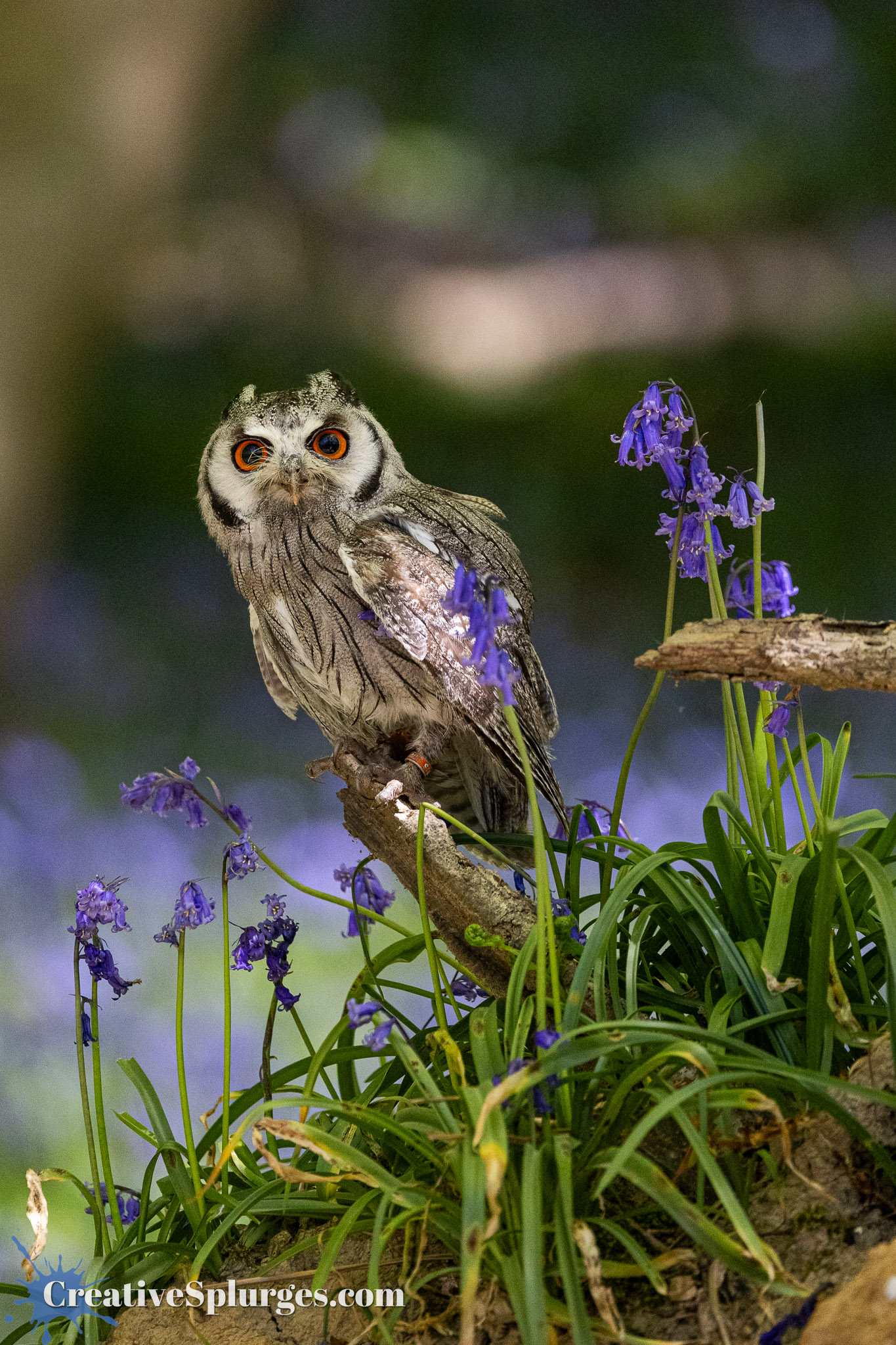
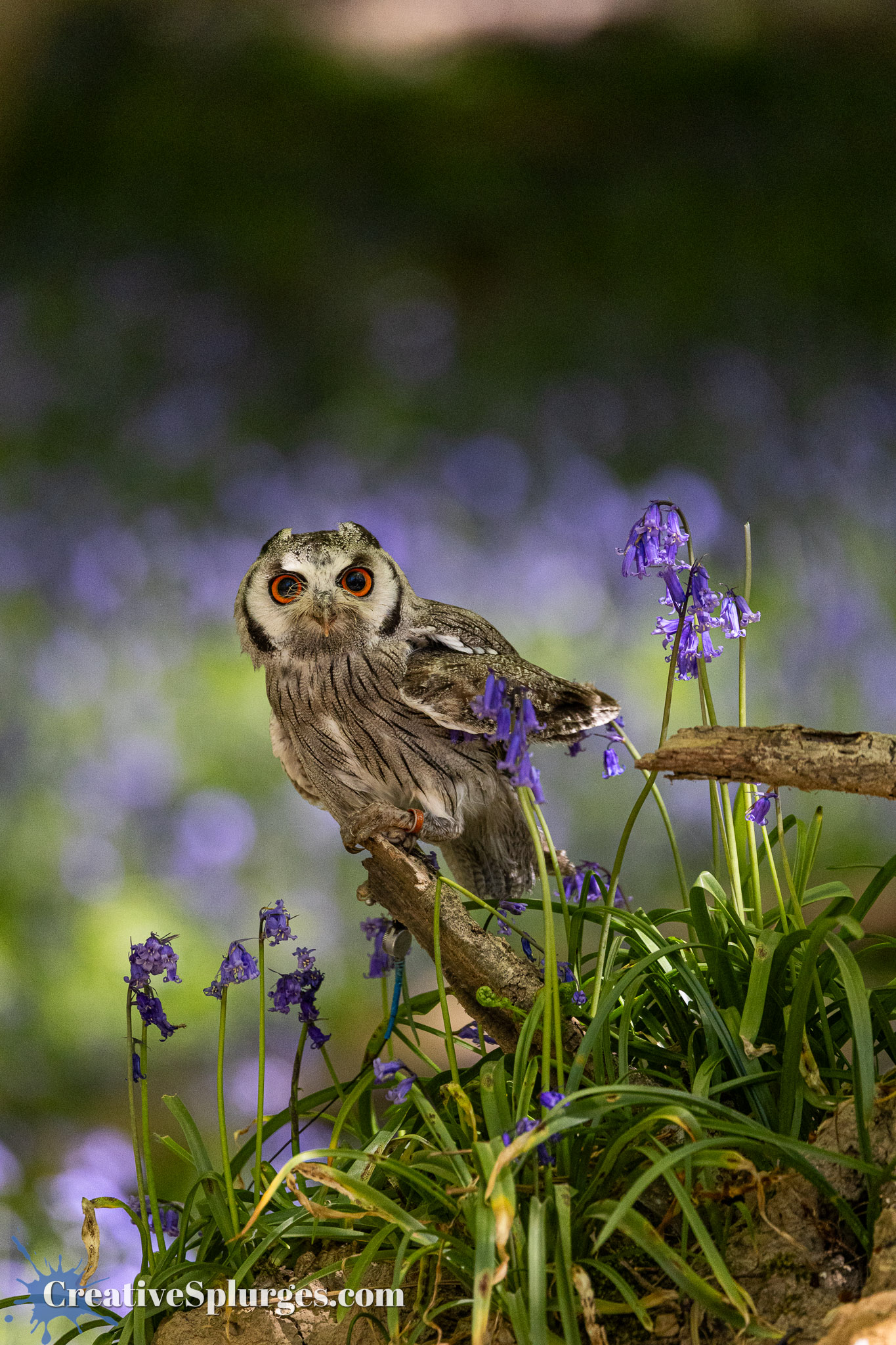
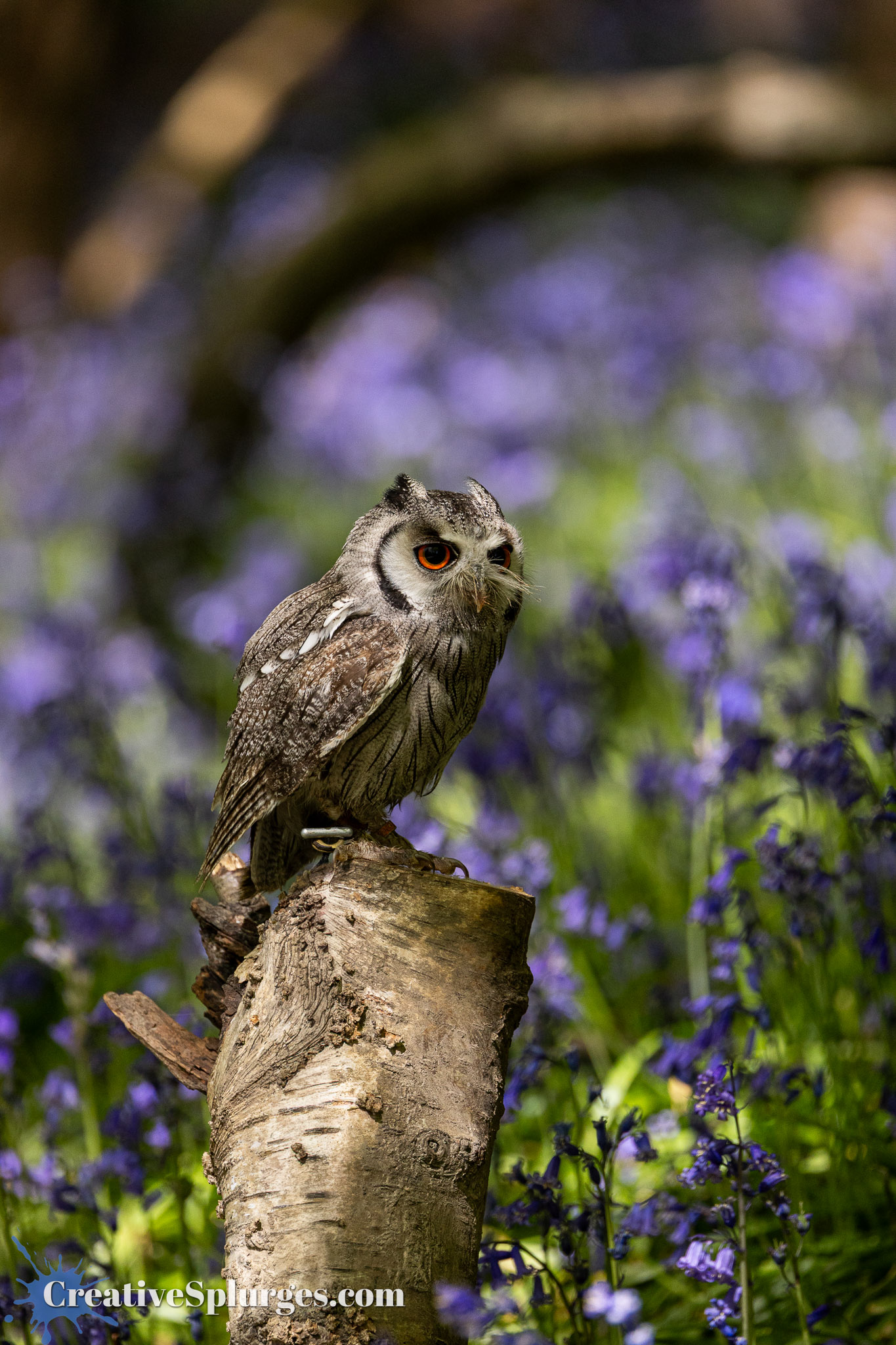
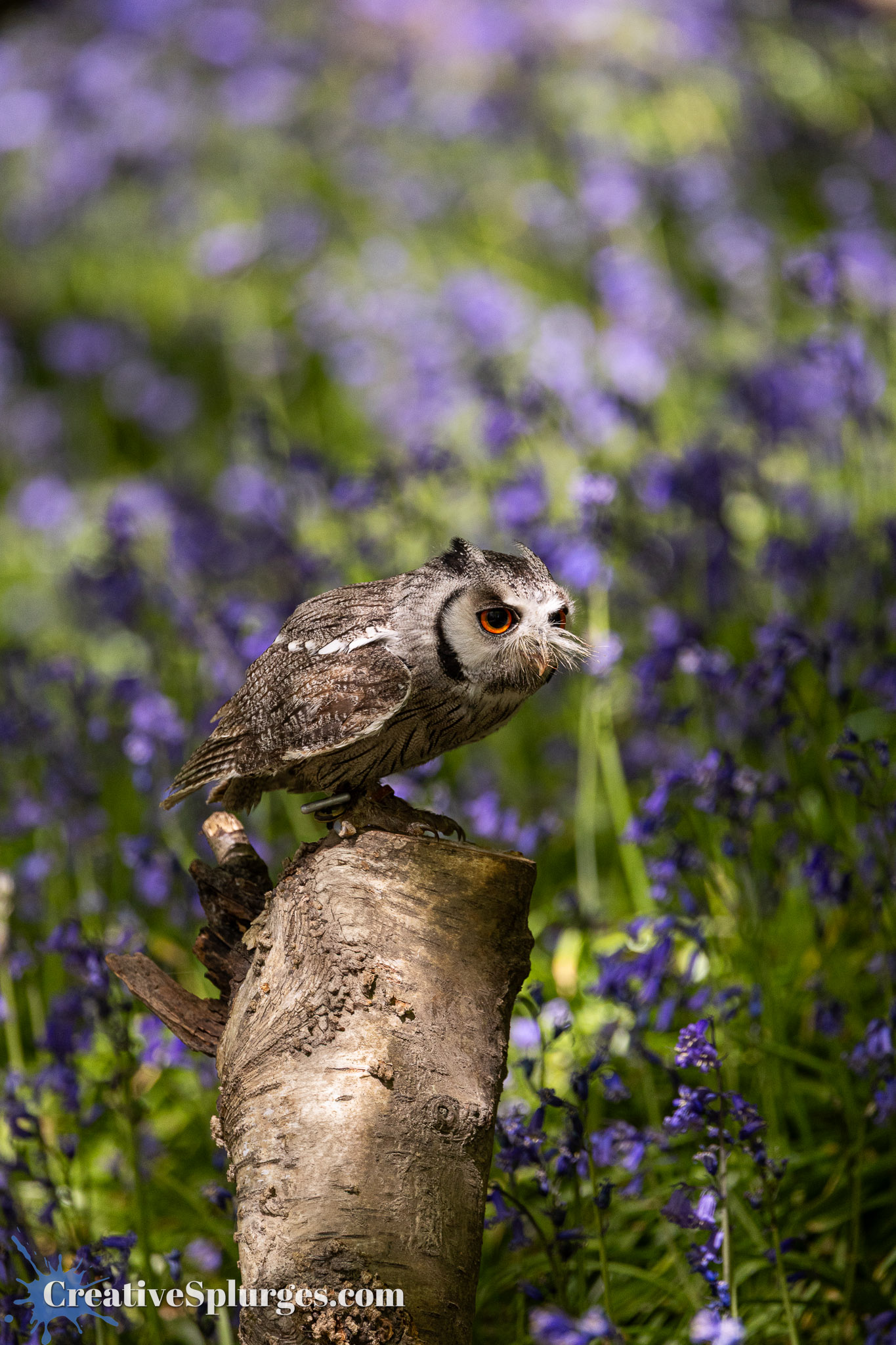
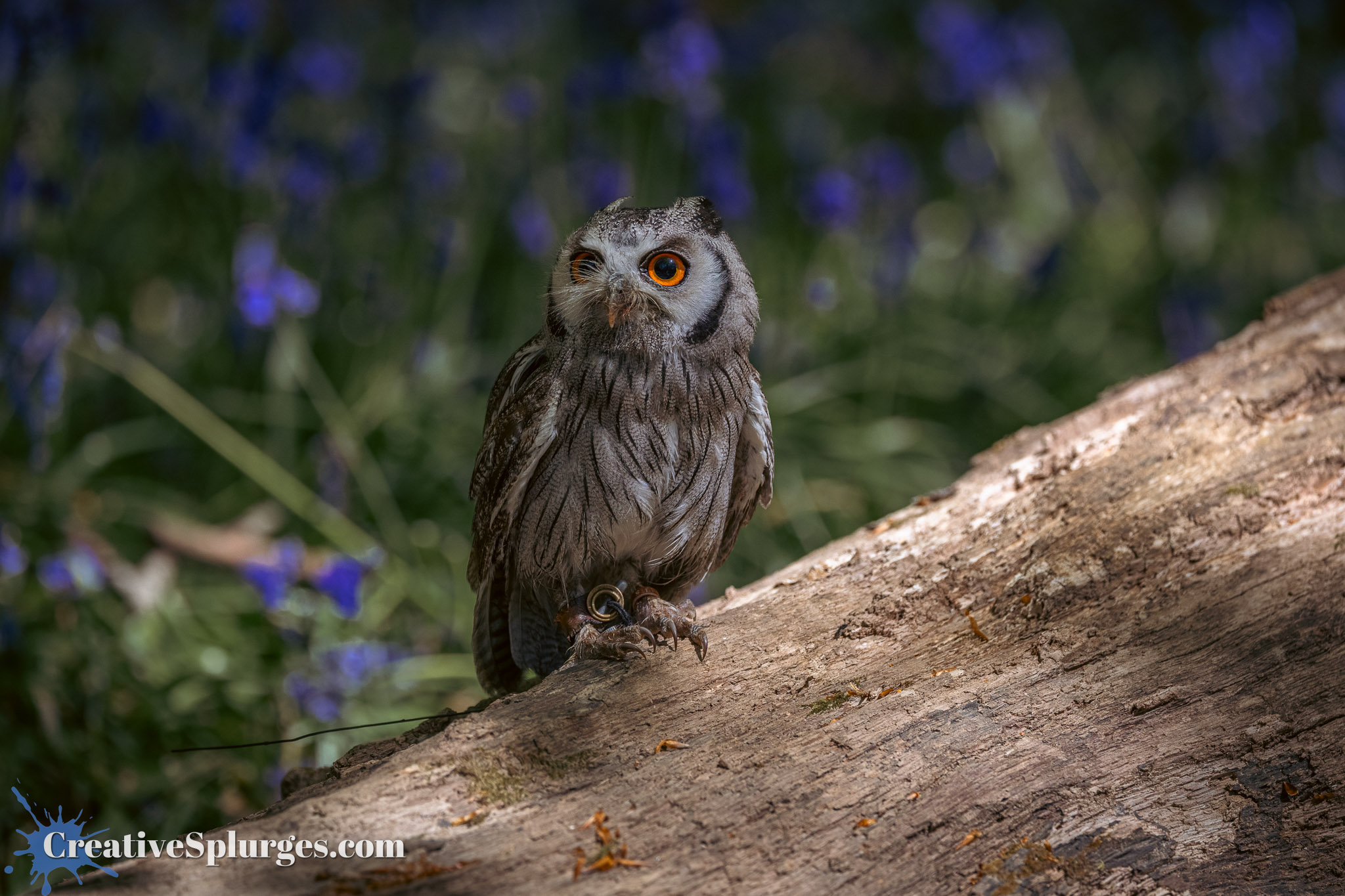
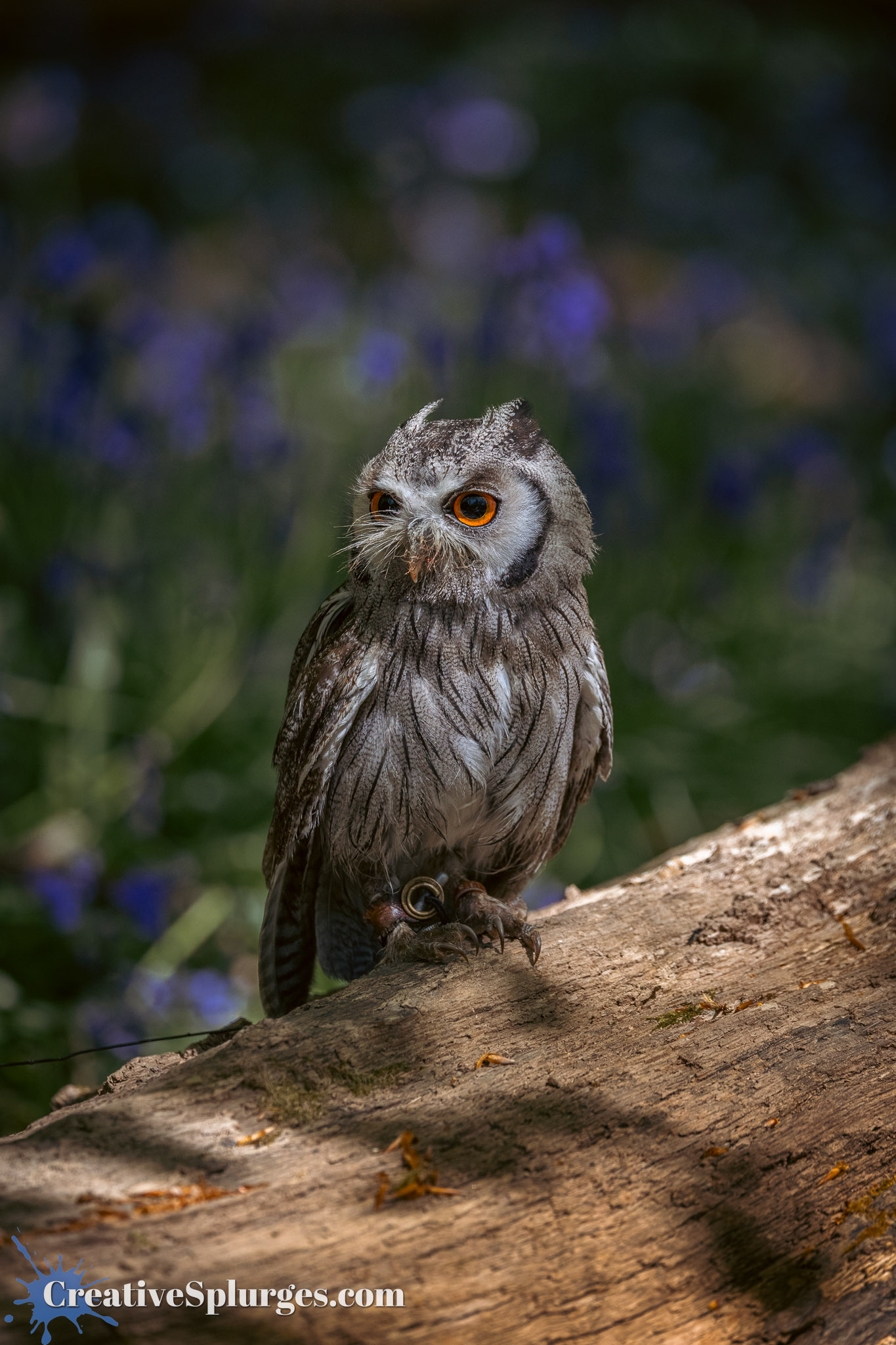
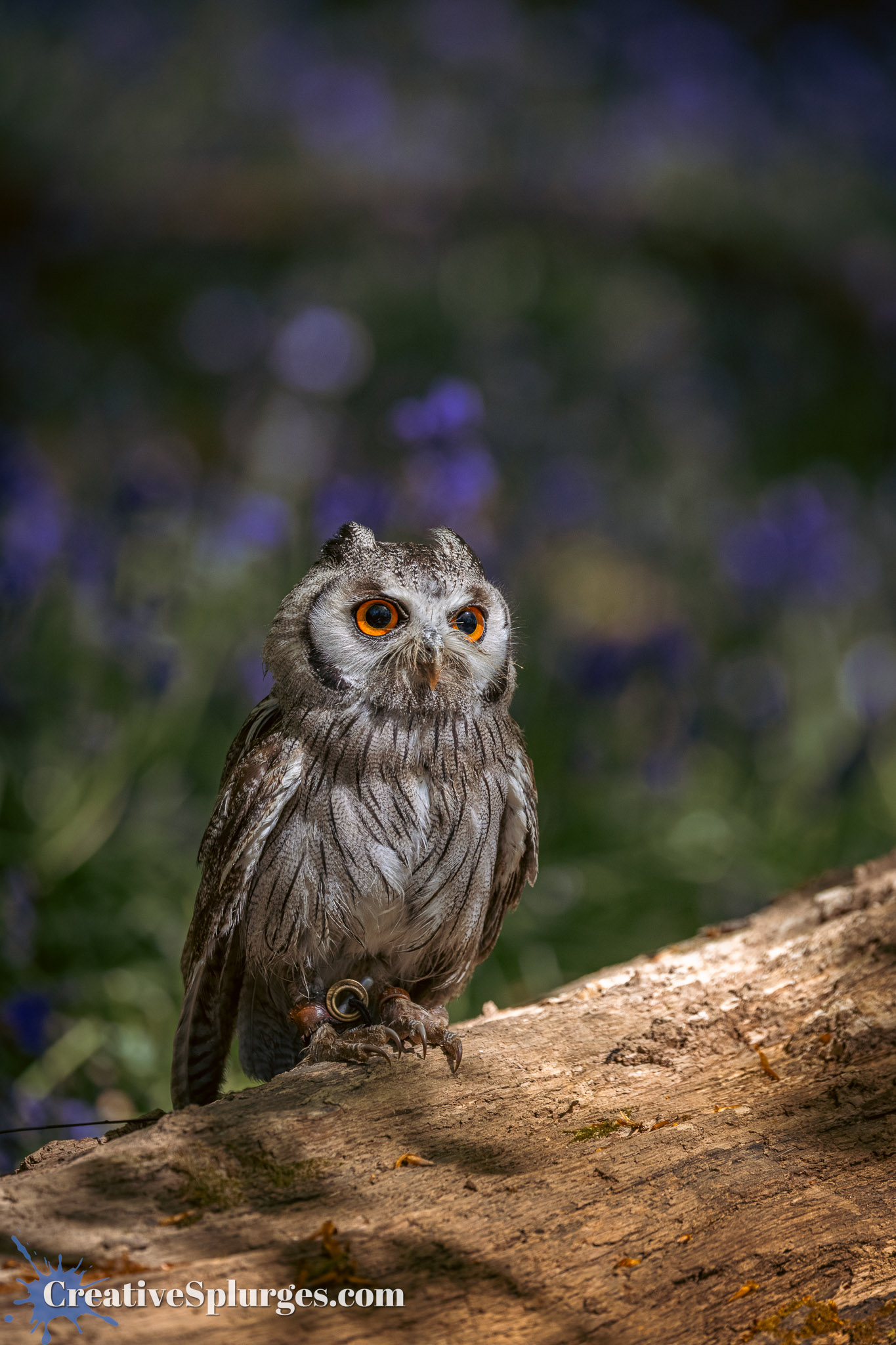
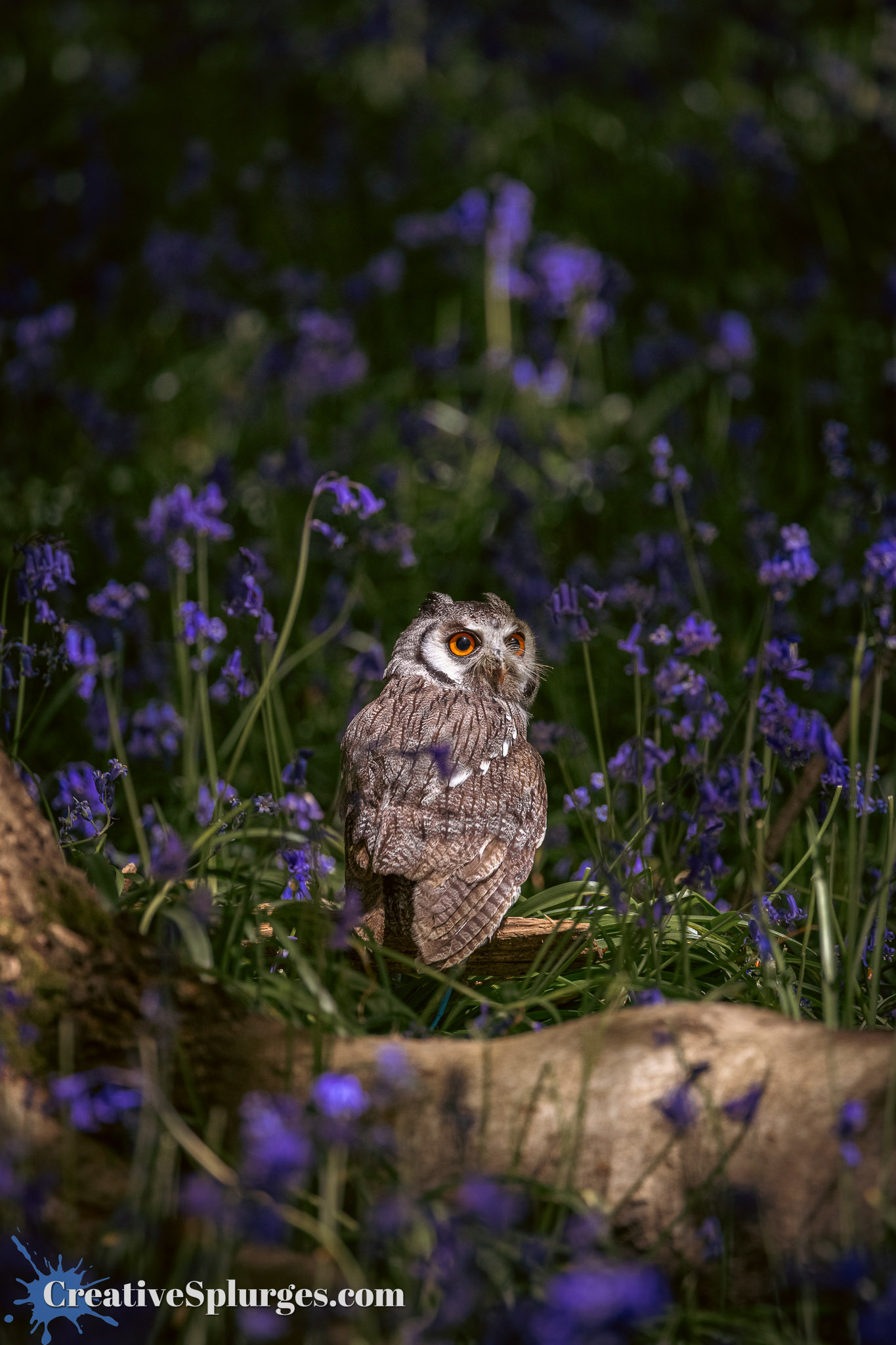
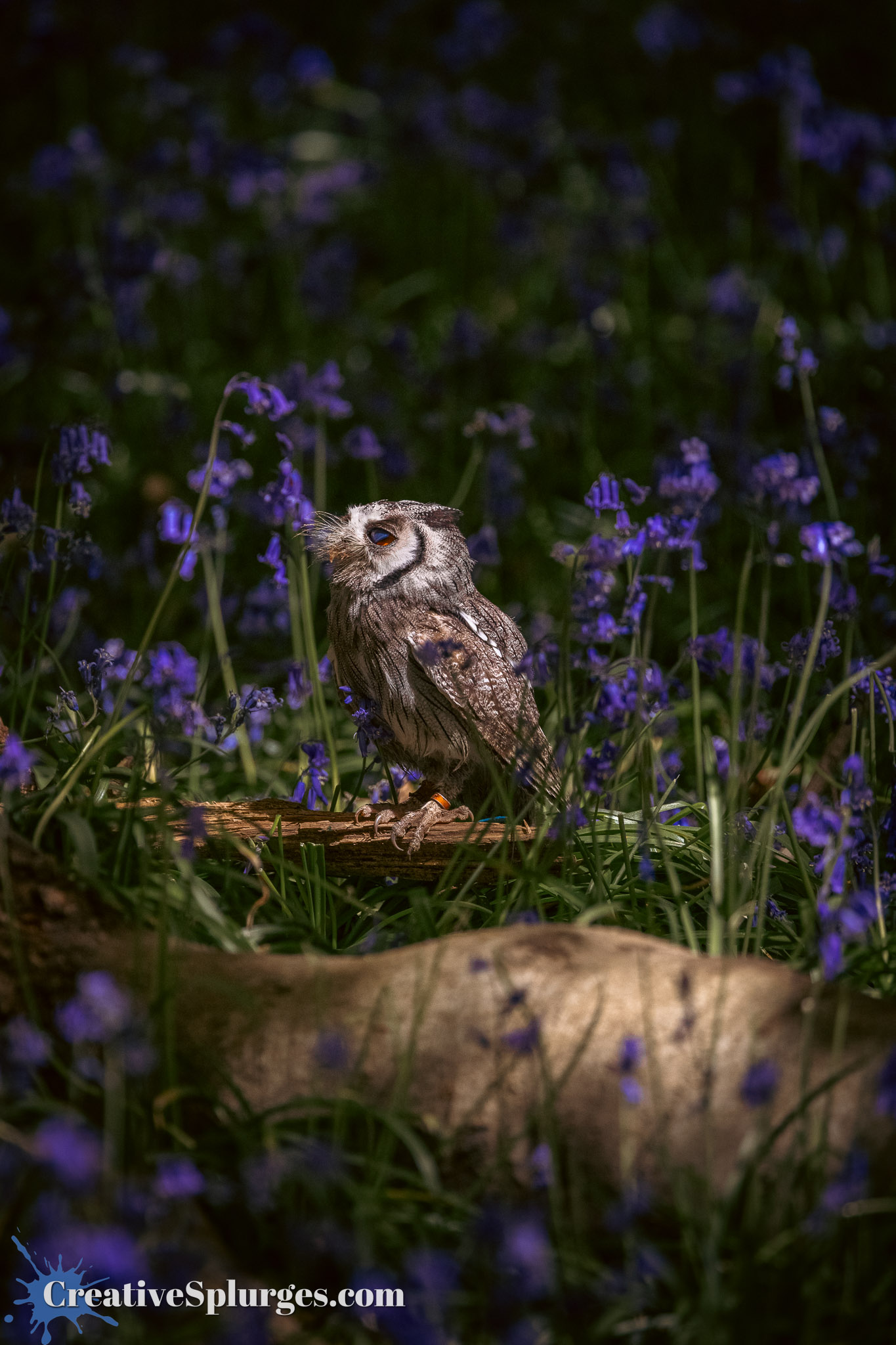
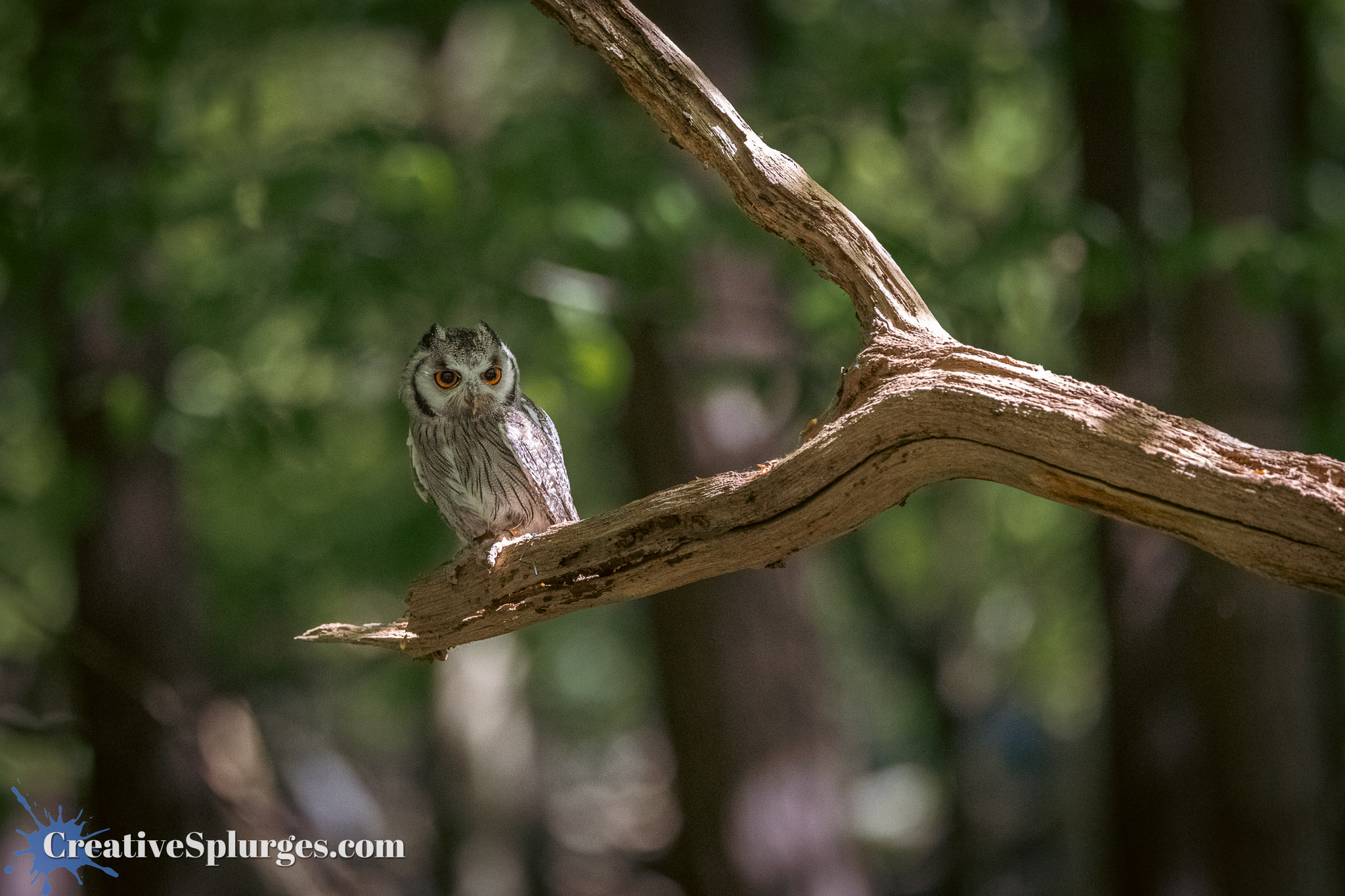
Our third bird was a southern white faced owl called Zazu.
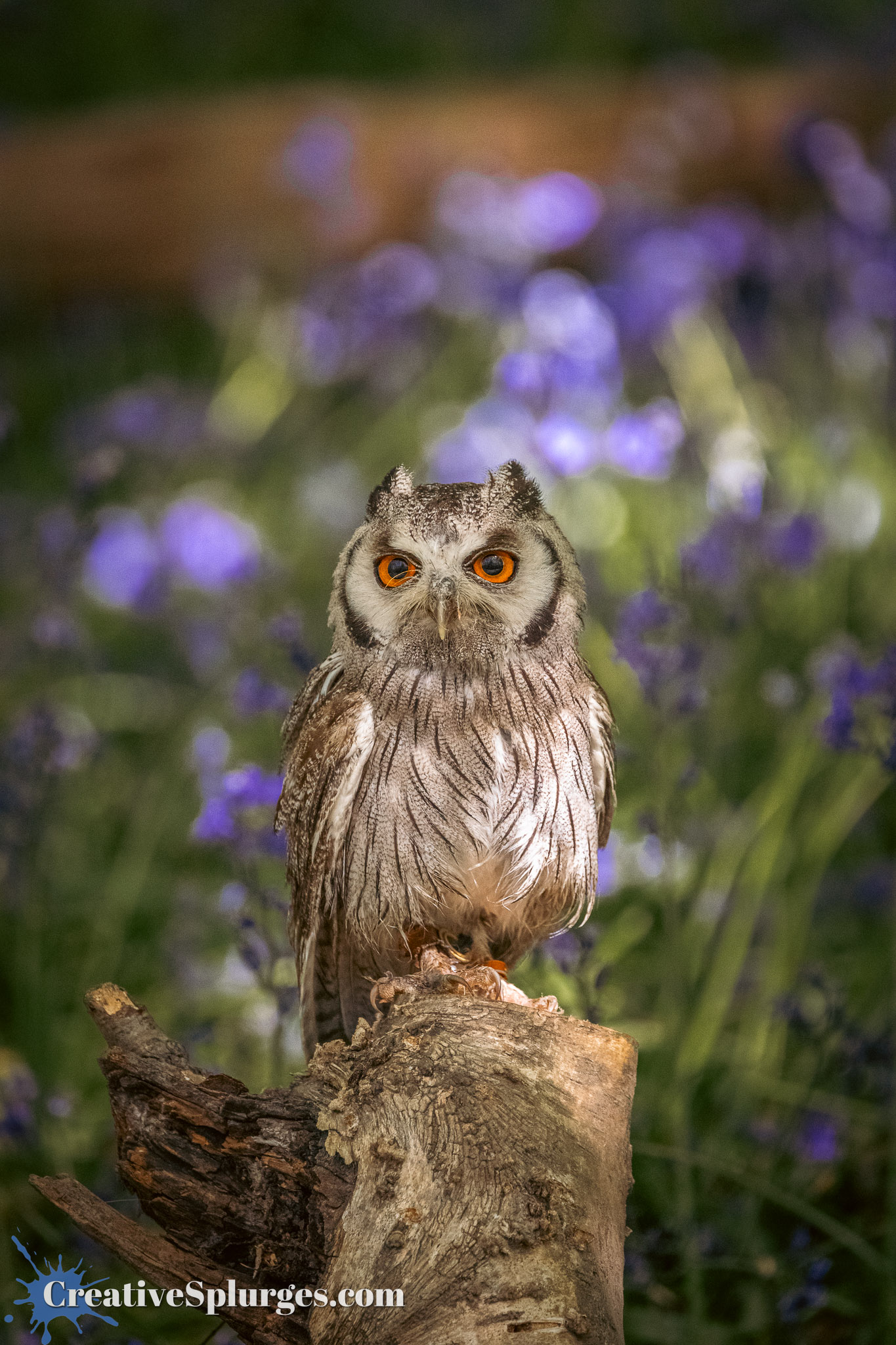
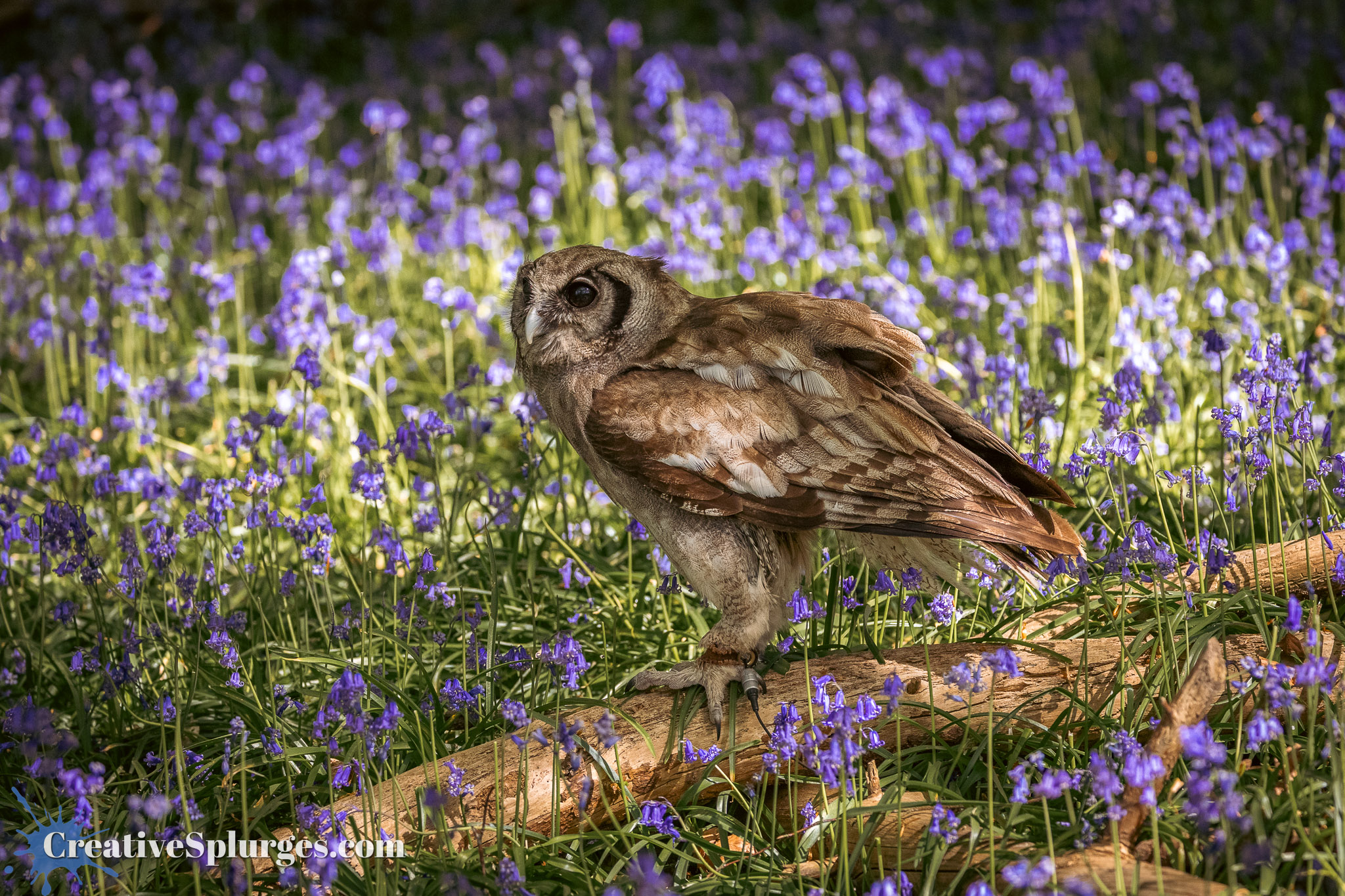
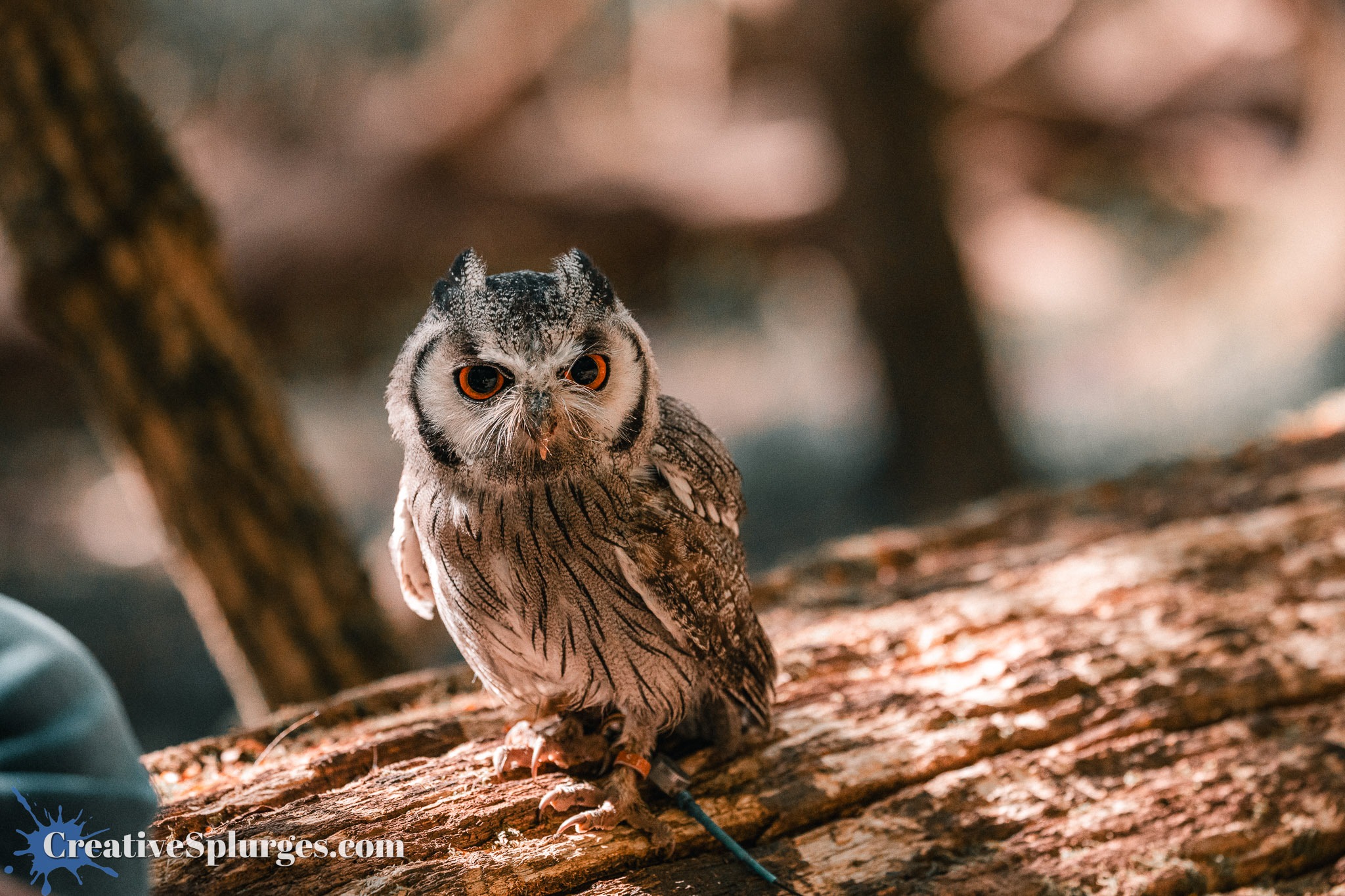
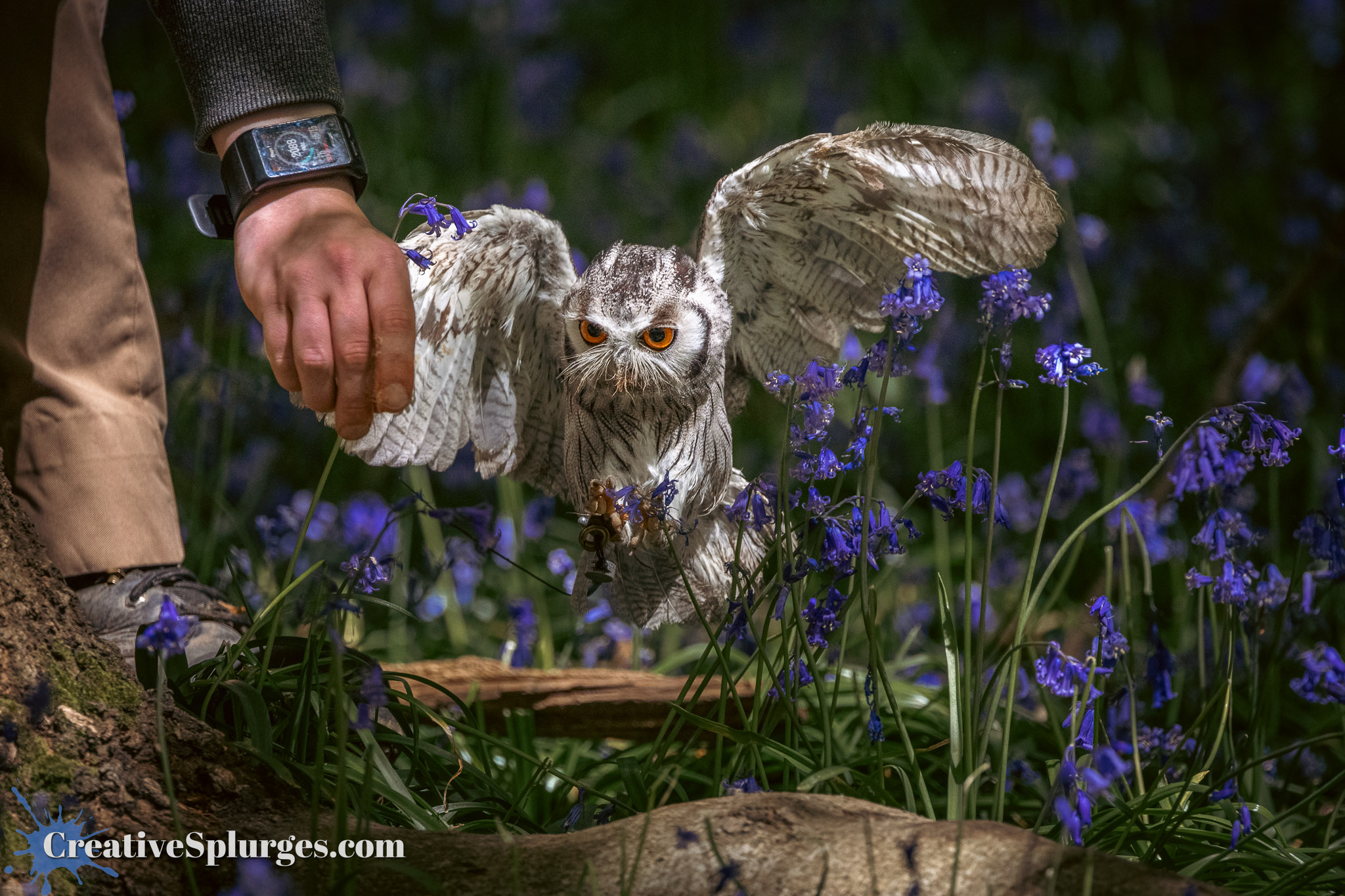
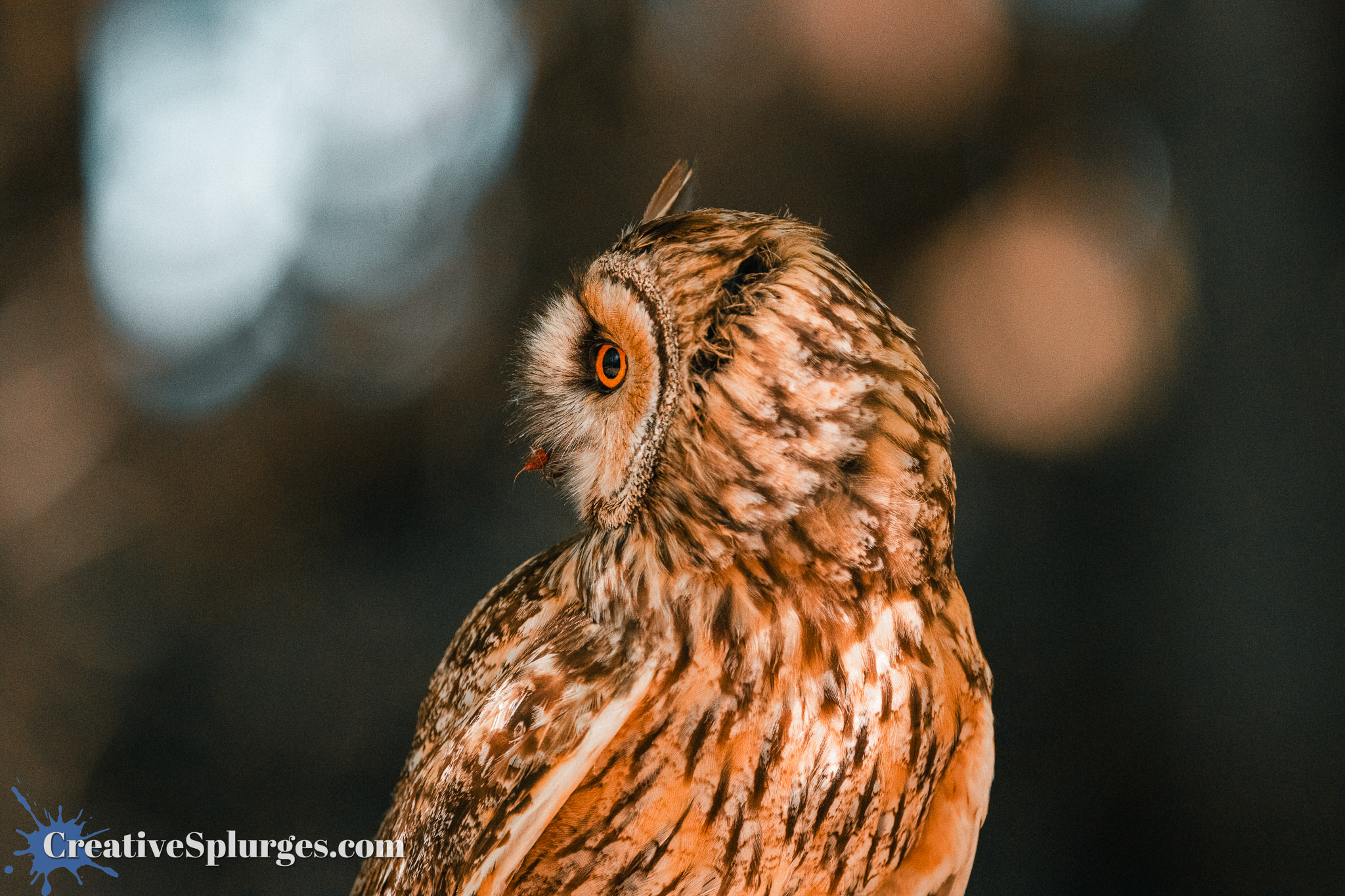
Zazu was my favourite of the birds we saw this day. She was titchy, but with light grey feathers and those glorious orange eyes. Being smaller still, the shutter speed went another notch faster, up to 1/3200th.
For a few shots I couldn’t resist using the same preset as before, sacrificing the colour of the bluebells in order to bring out those lovely eyes.
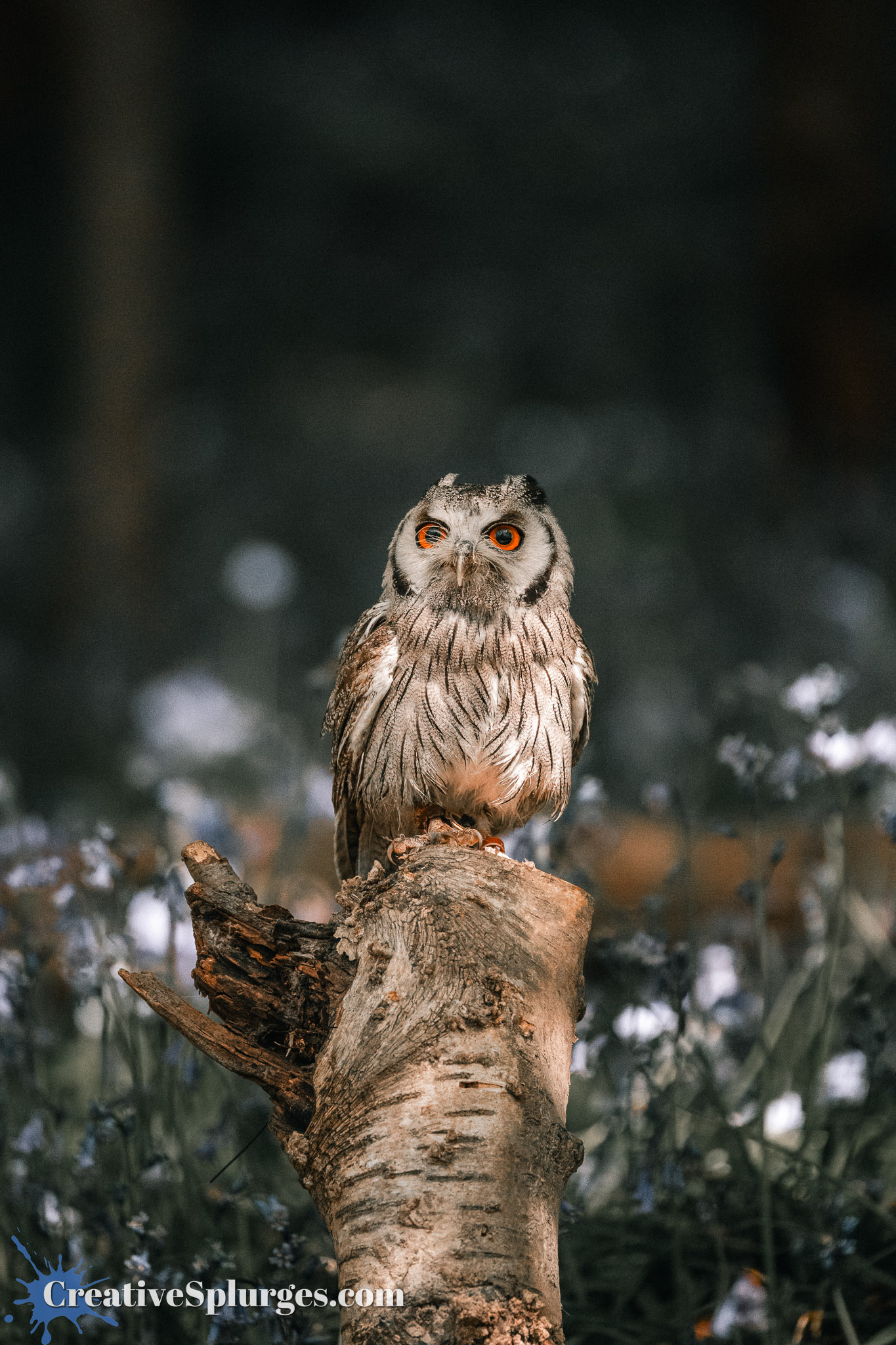
As you can see, whenever she landed in a shady spot, my ISO crept into five figures. Luckily she often landed in less-shady locations.
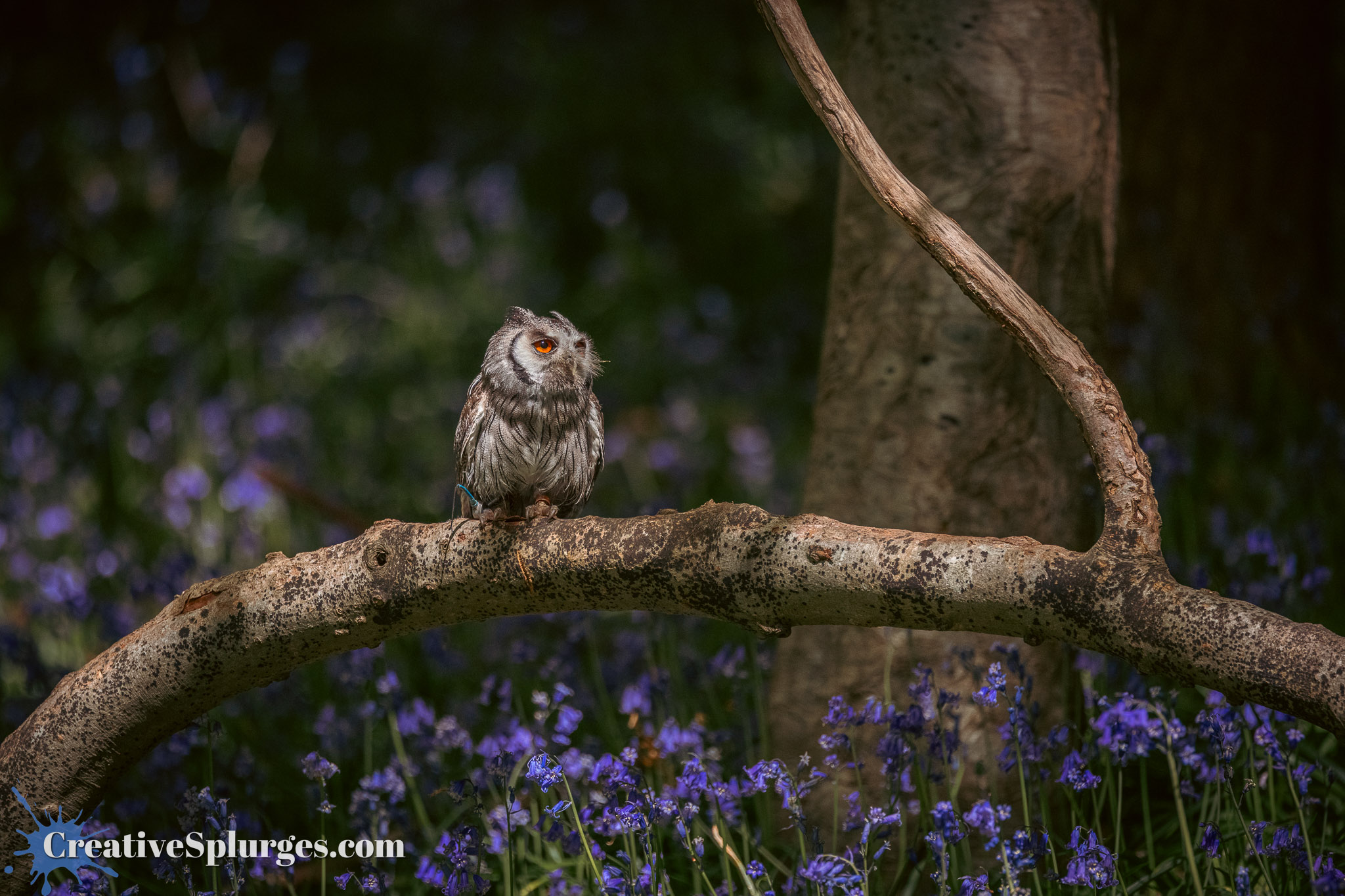
It was very easy to get carried away shooting this bird. How could you not?
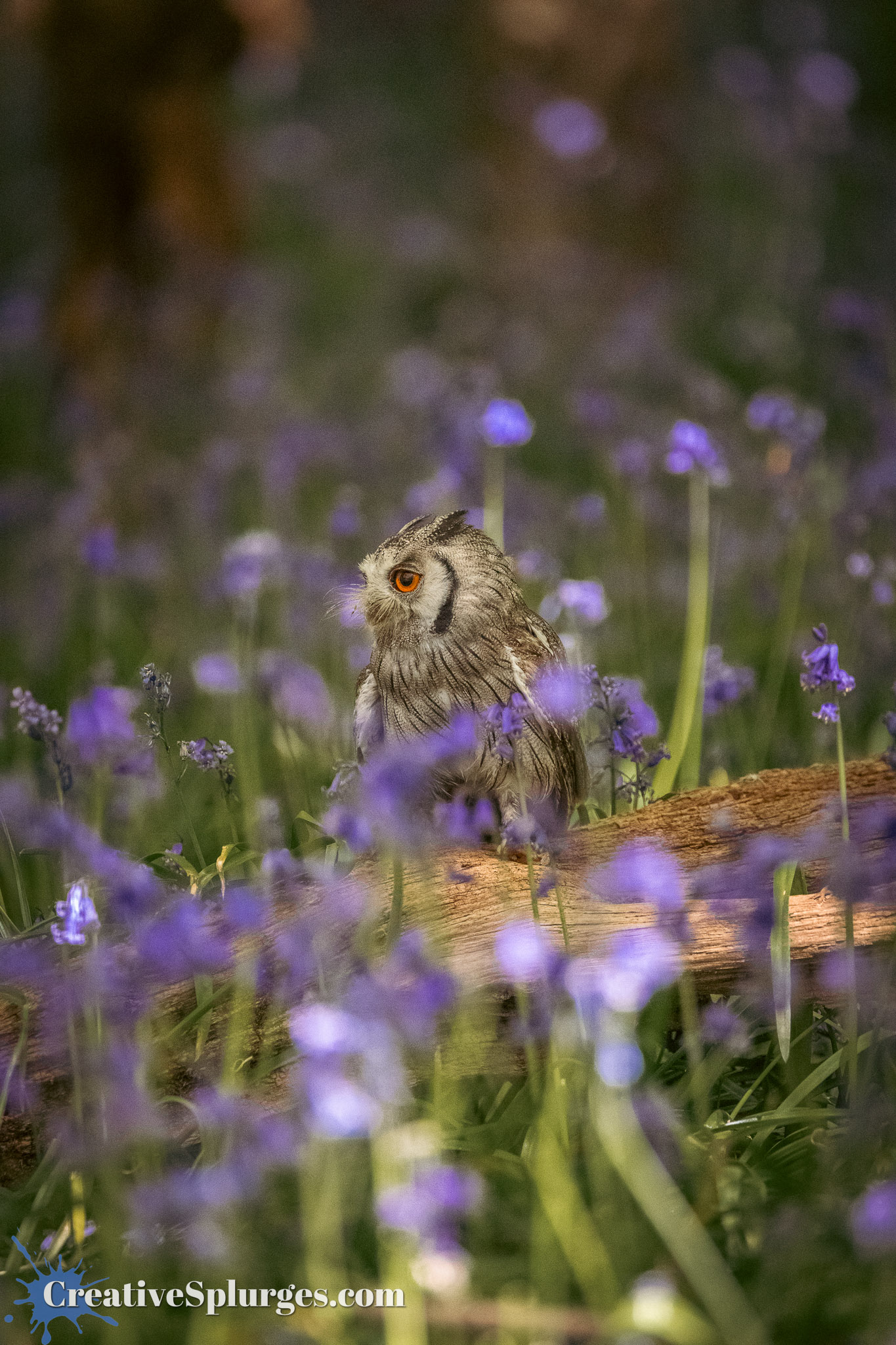
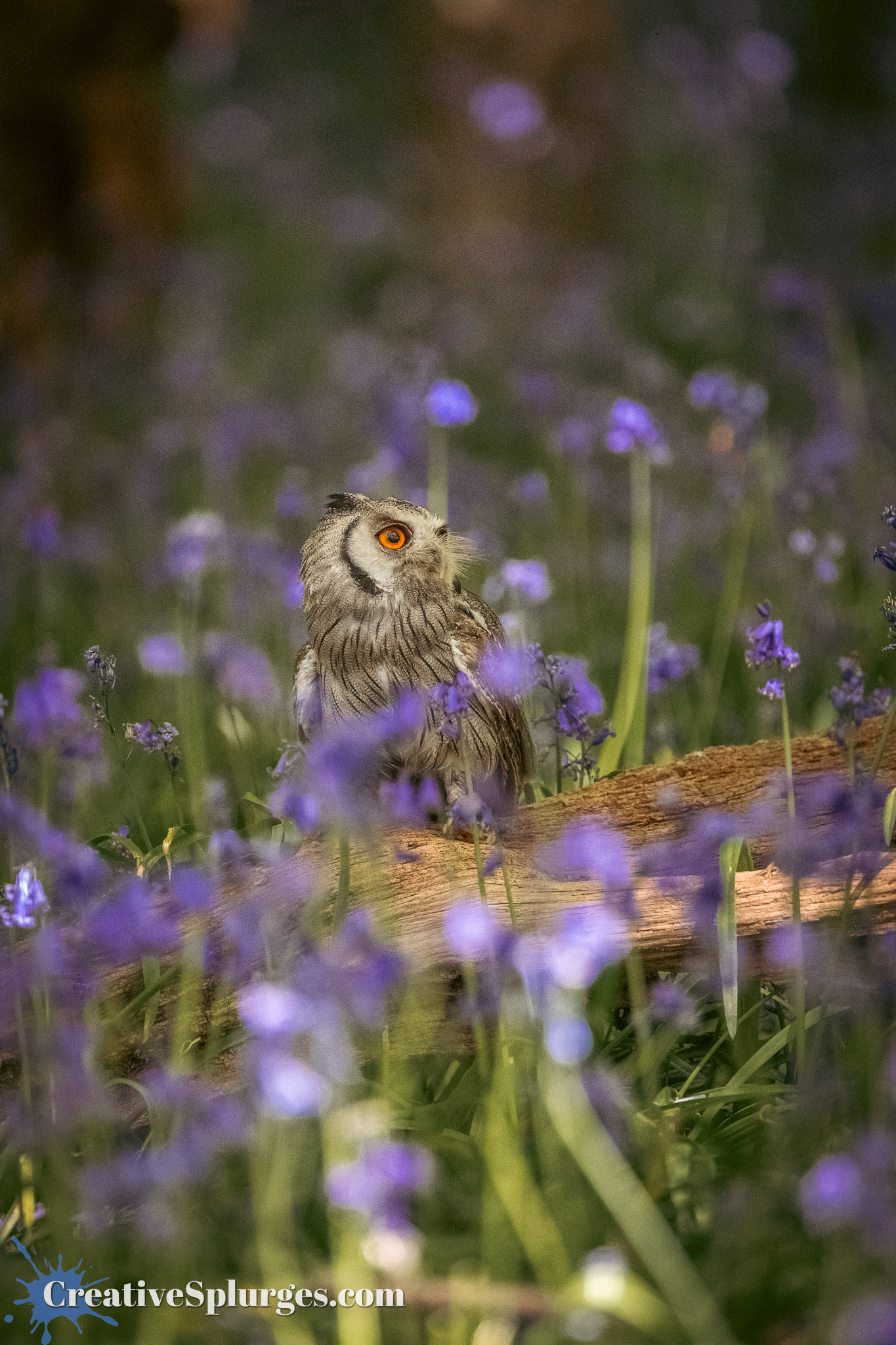
A few times when she landed on the fallen tree next to her trainer, I broke out the brown preset for some deep oranges.
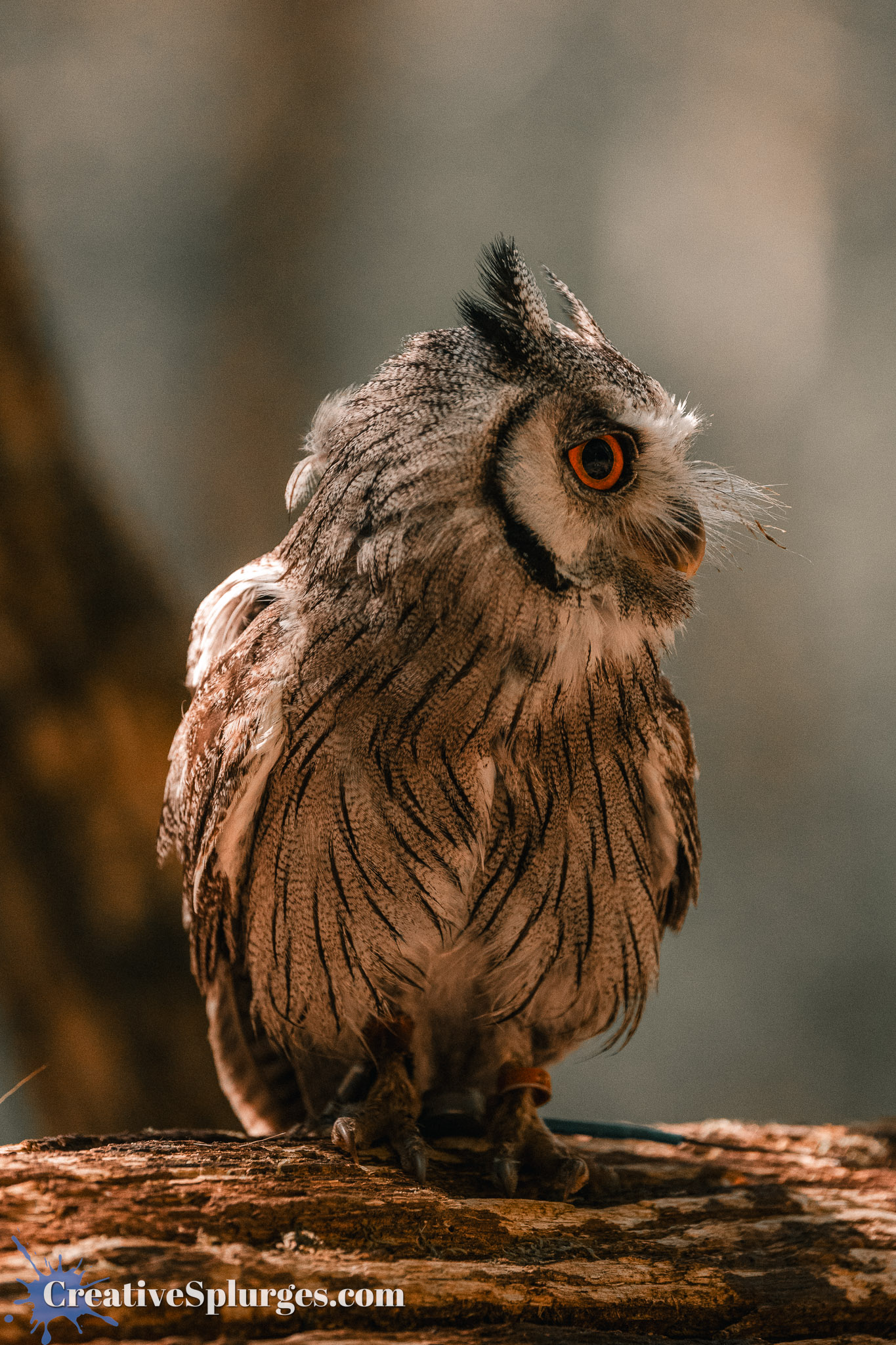
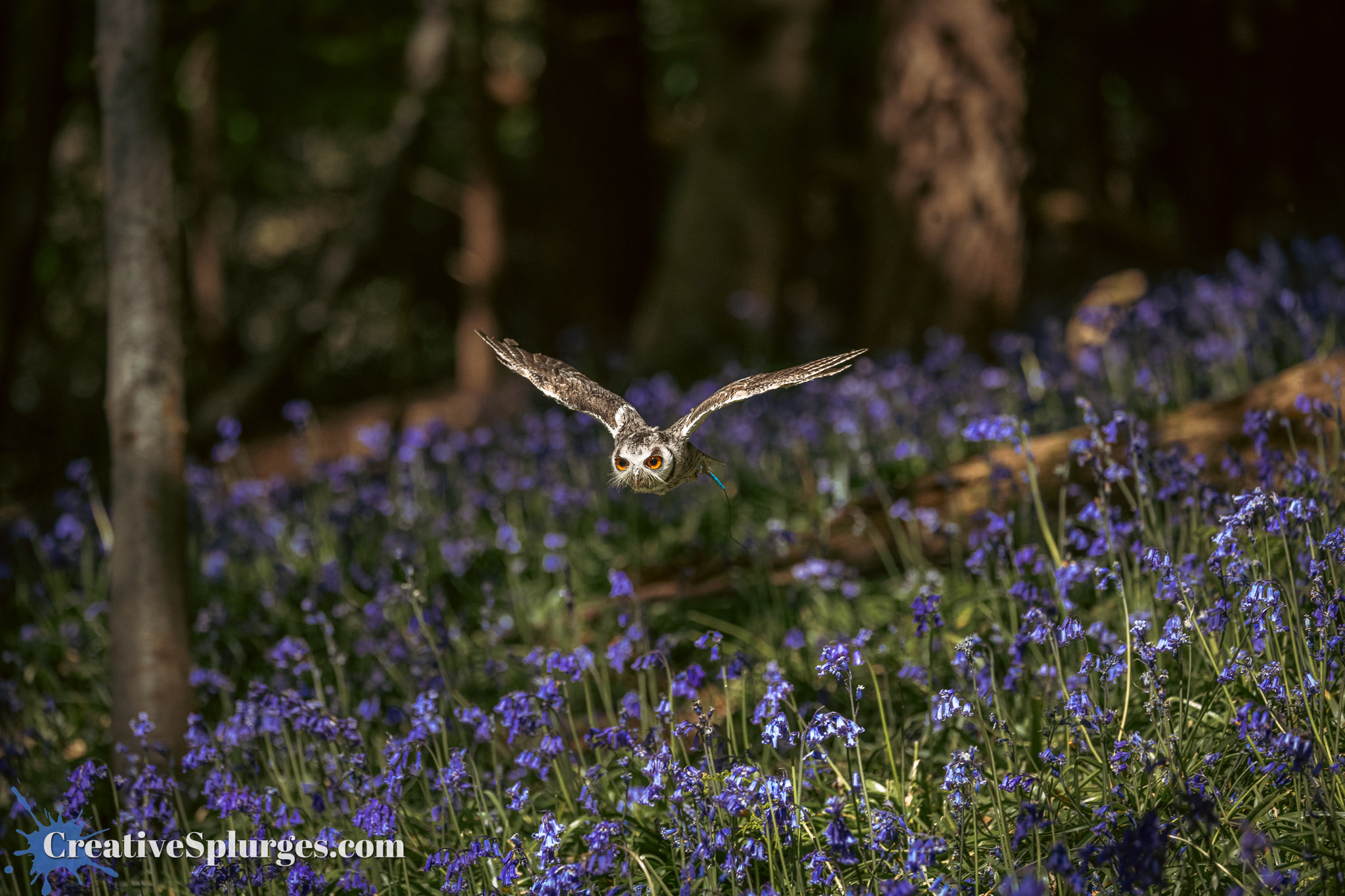
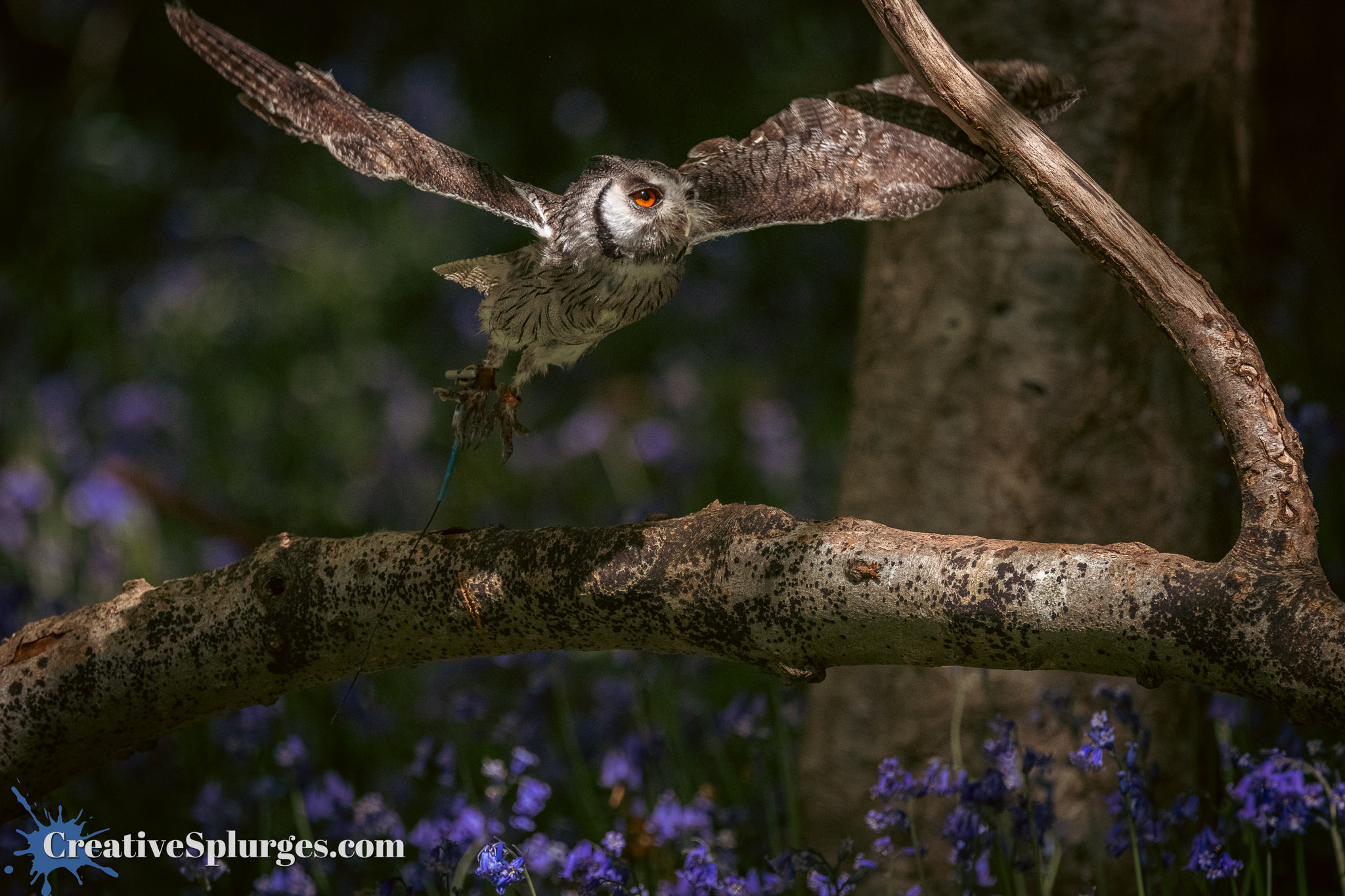
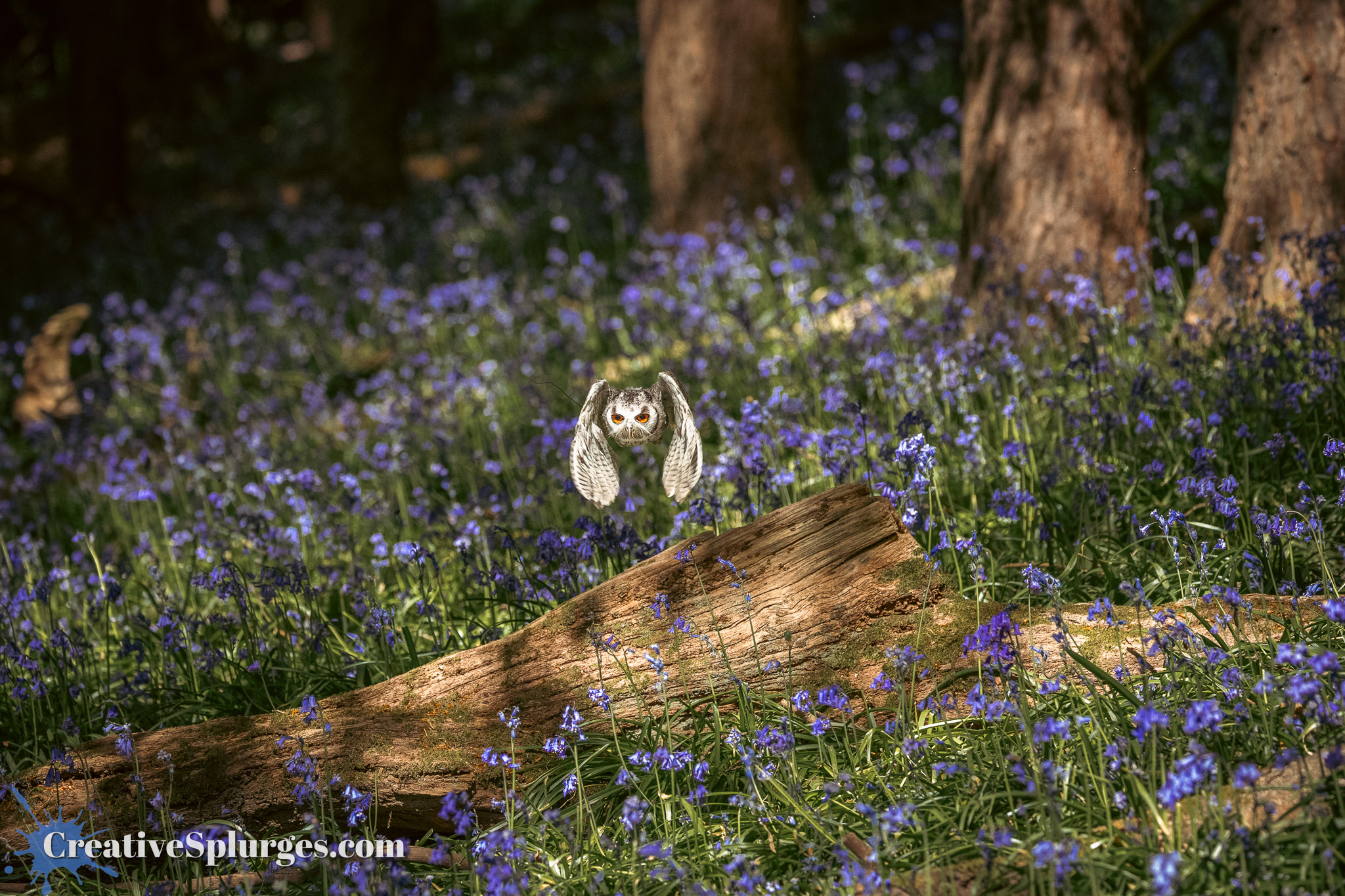
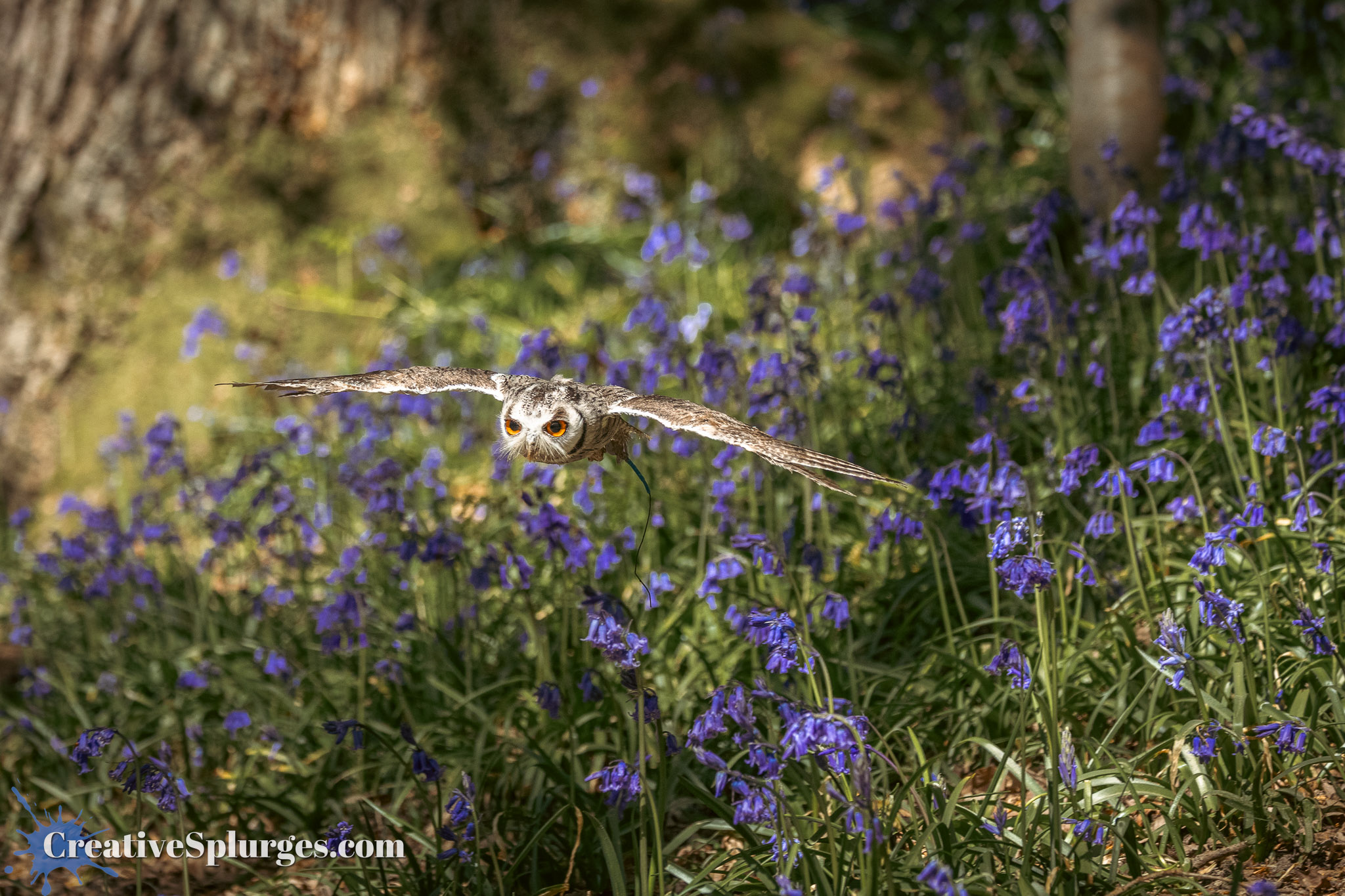
Whenever she flew, she looked like a dart.
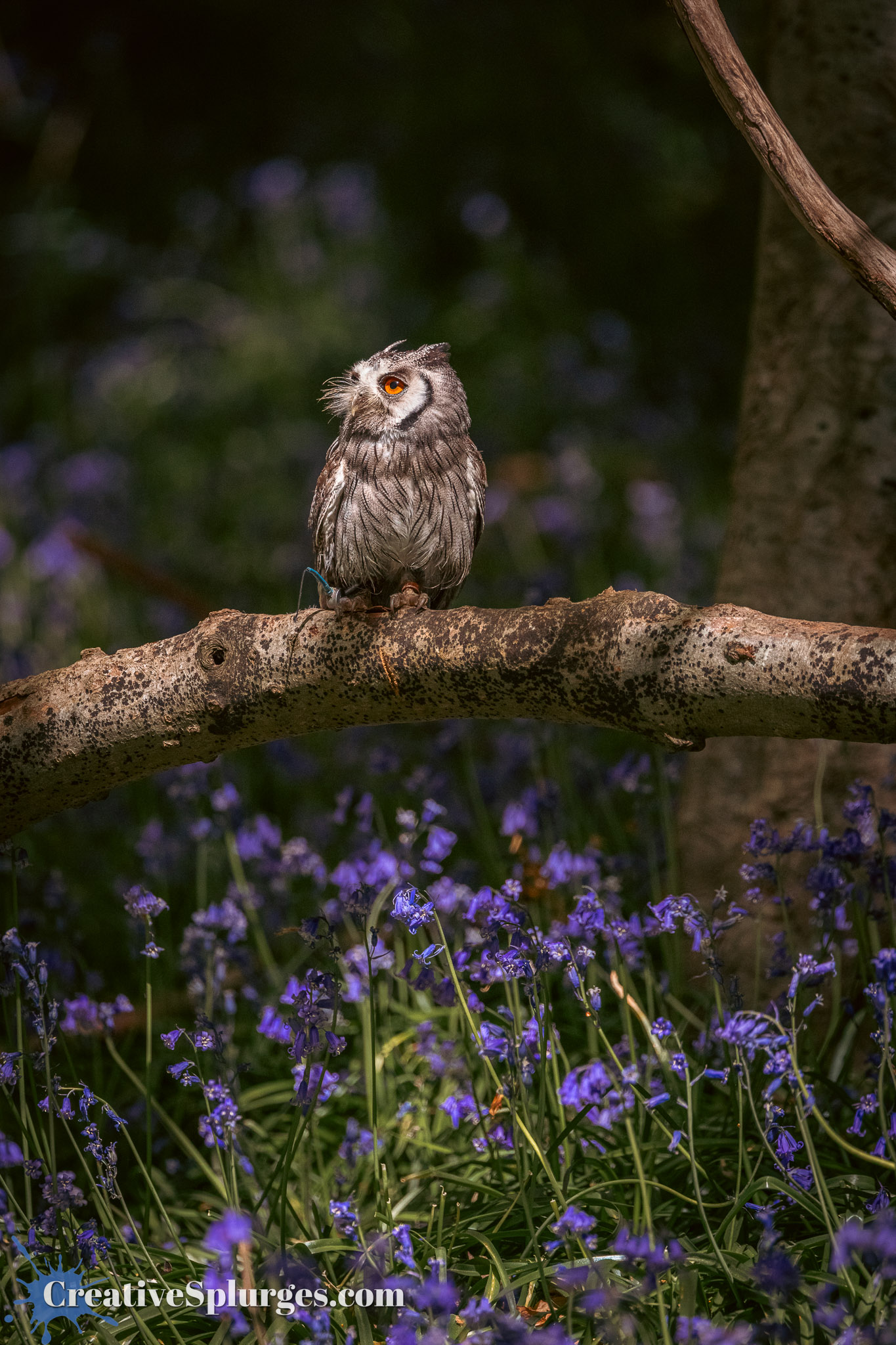
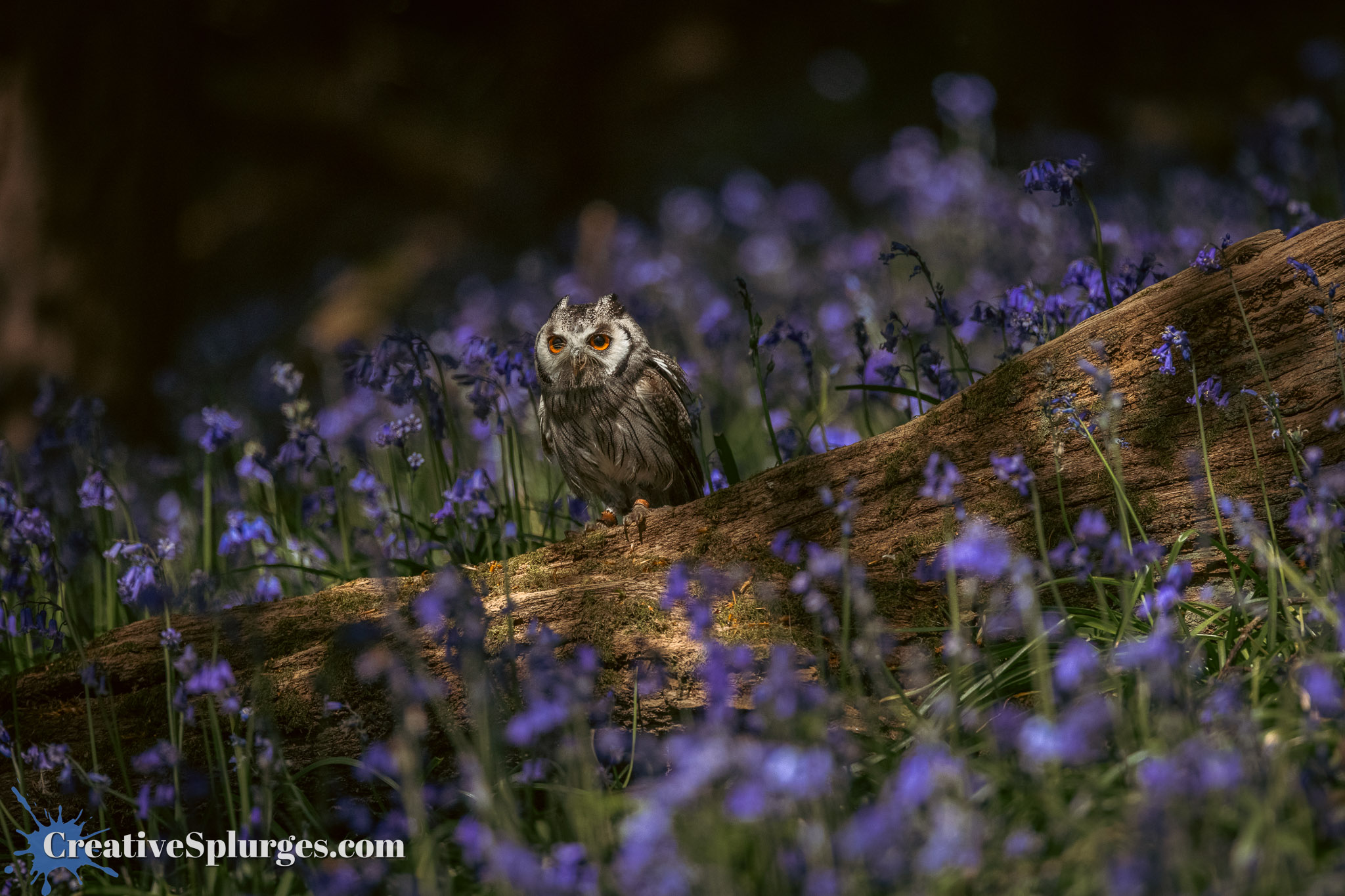
Zazu’s colours – various shades of grey with those eyes – matched perfectly with the bluebells and the brown of the logs she would land on.
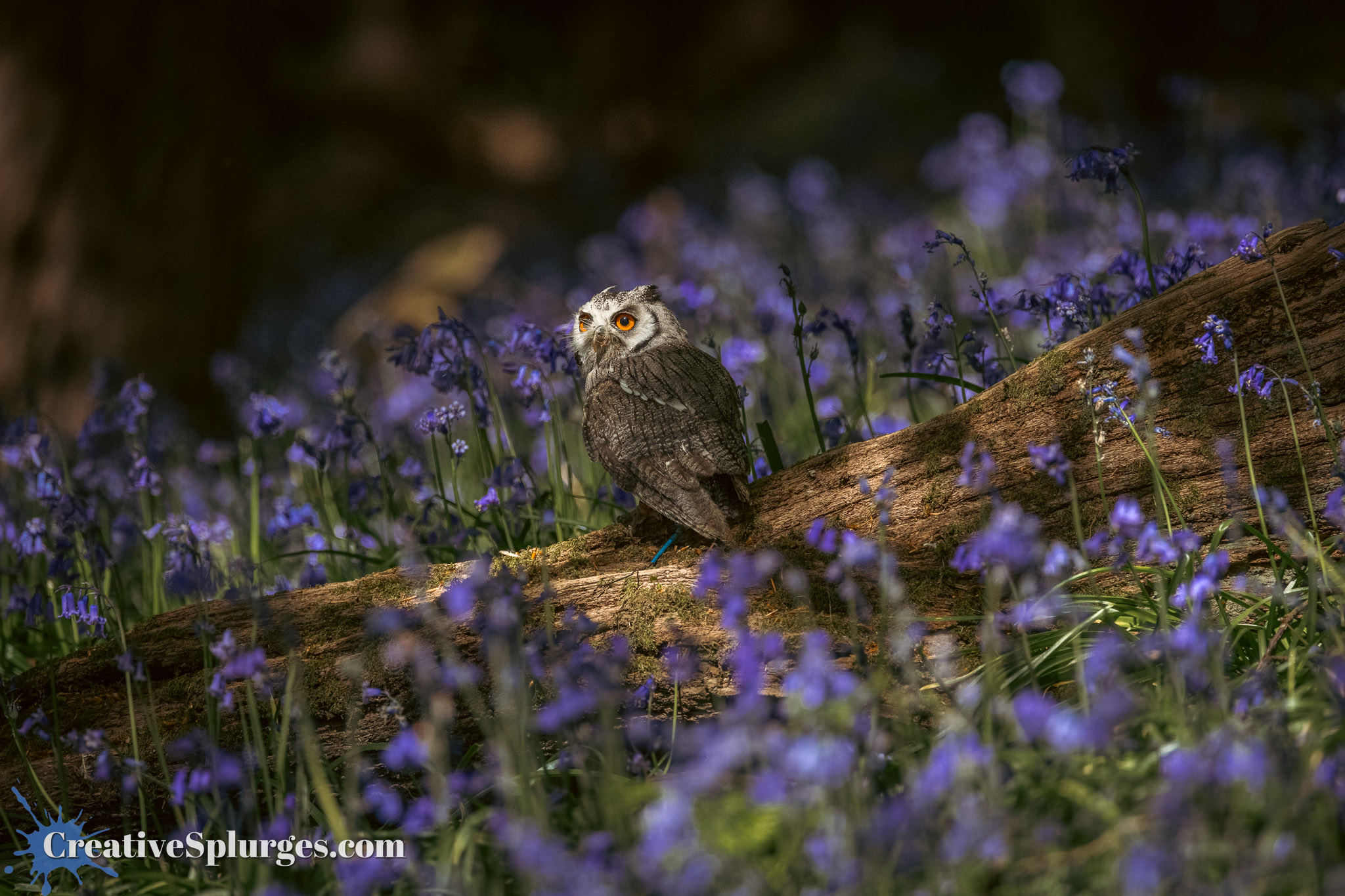
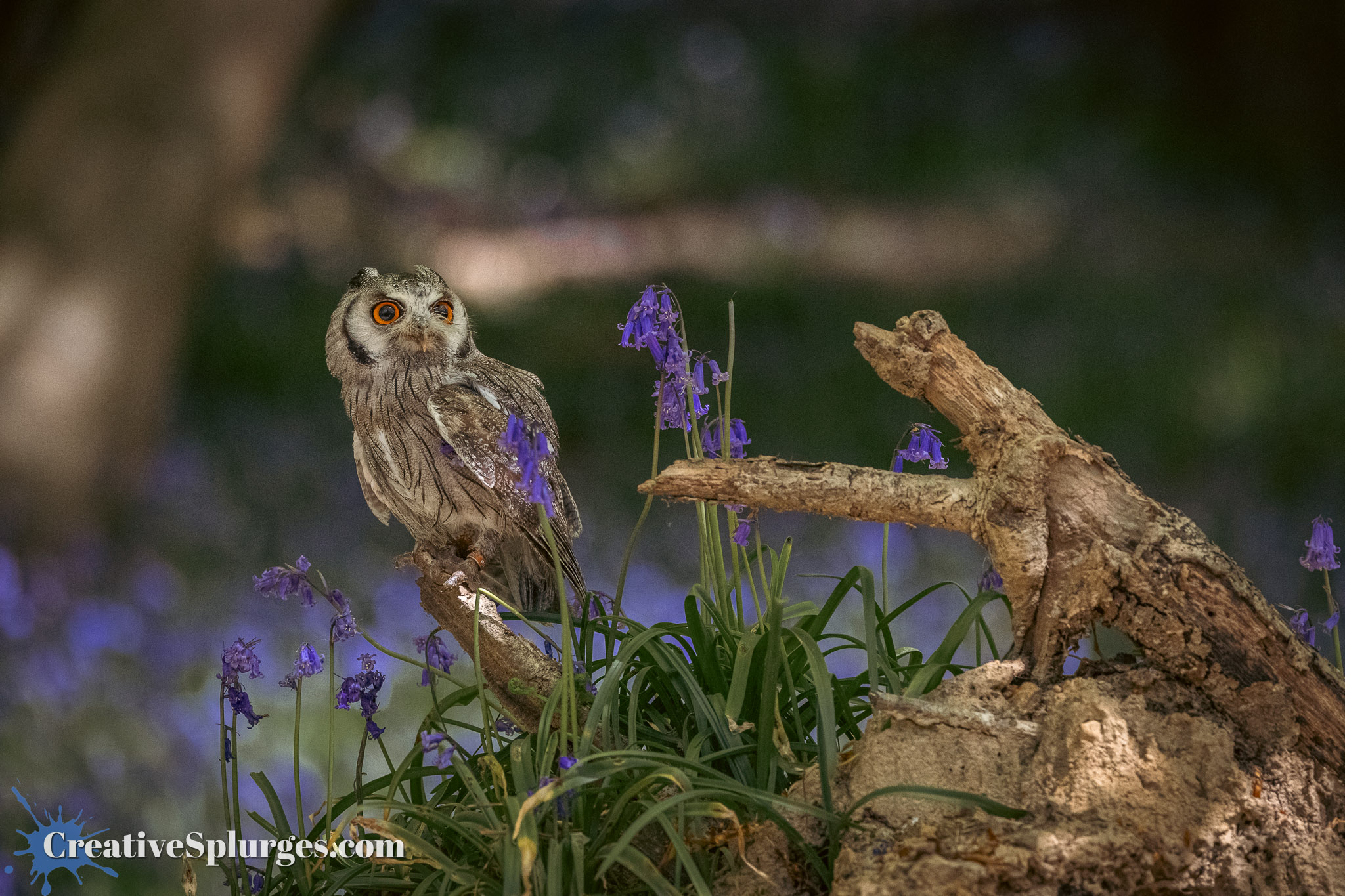
As you can see, I decided that 1/3200th wasn’t quite enough, so upped the shutter speed to 1/4000th.
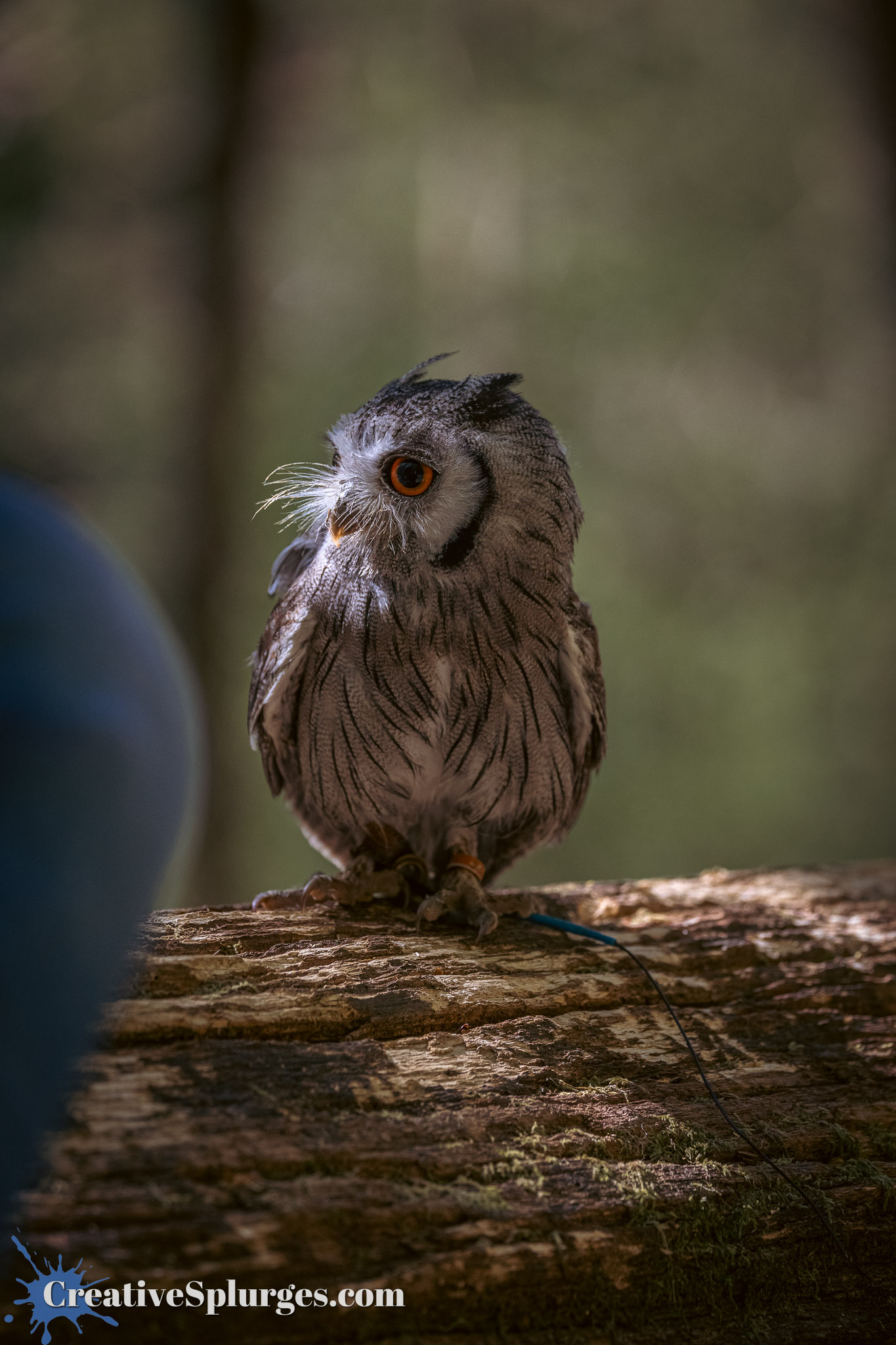
She briefly landed on her trainer’s hand within a reasonable camera range, so I can give you an idea of her diminutive size.
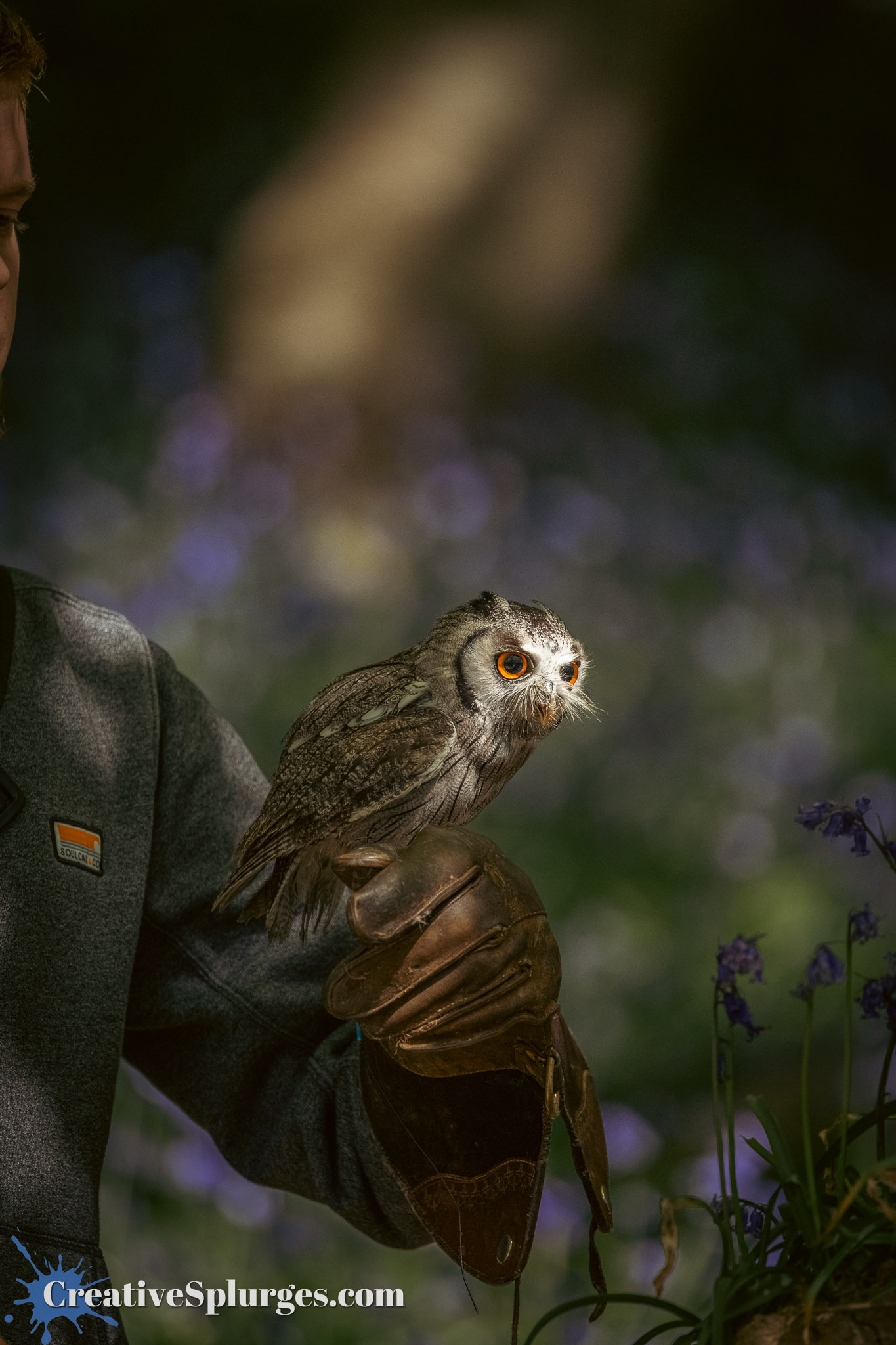
Zazu was happy to flit between several different spots, giving us some variety in our shots.
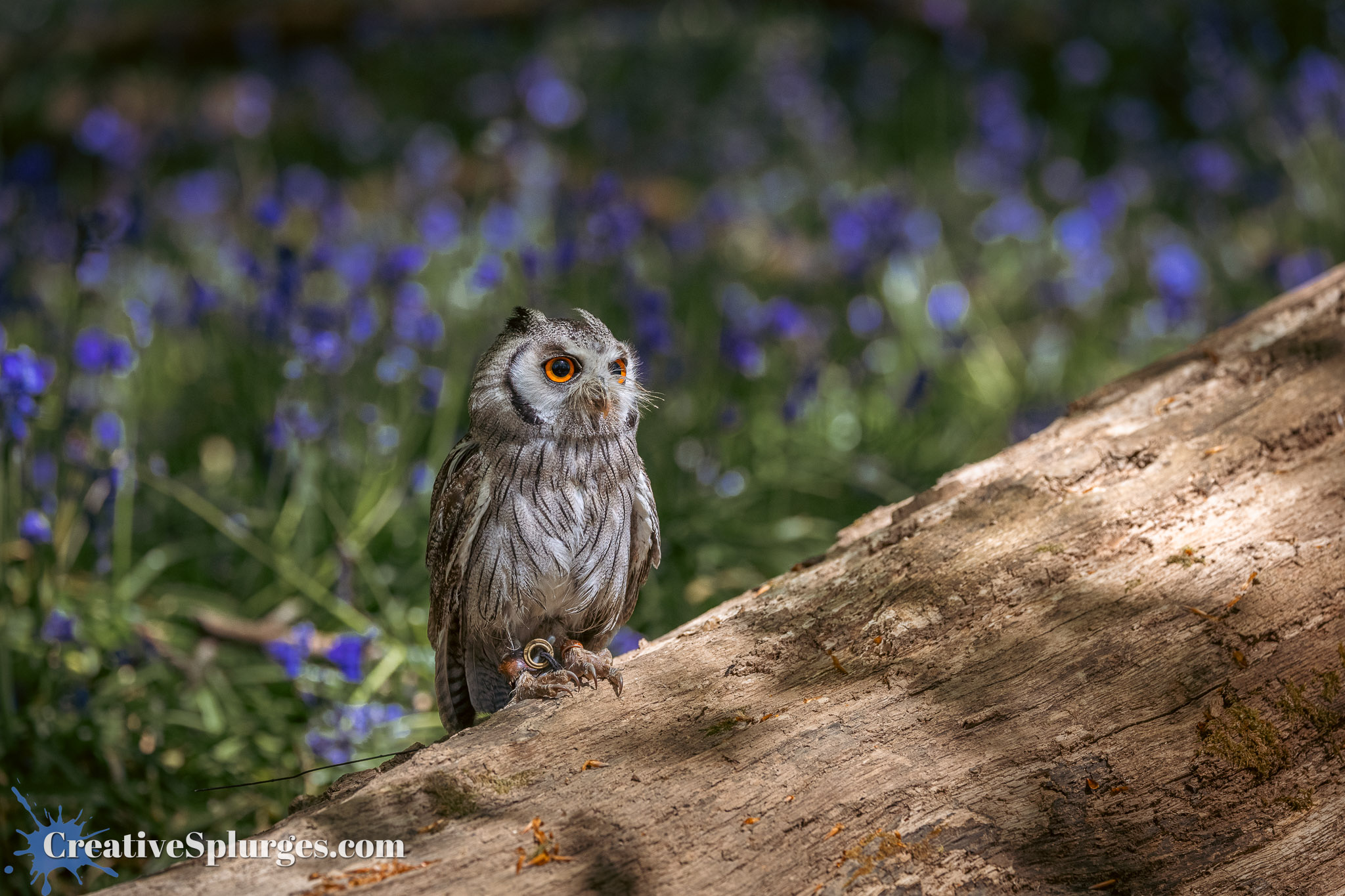
Sometimes, he landed in the only little bit of light in an otherwise shady spot.
Although I’ve mostly tried to keep the trainers out of these shots (and to be fair, they did an excellent job of staying out of the way), I couldn’t resist this one as a trainer helped Zazu find a piece of food she was missing.
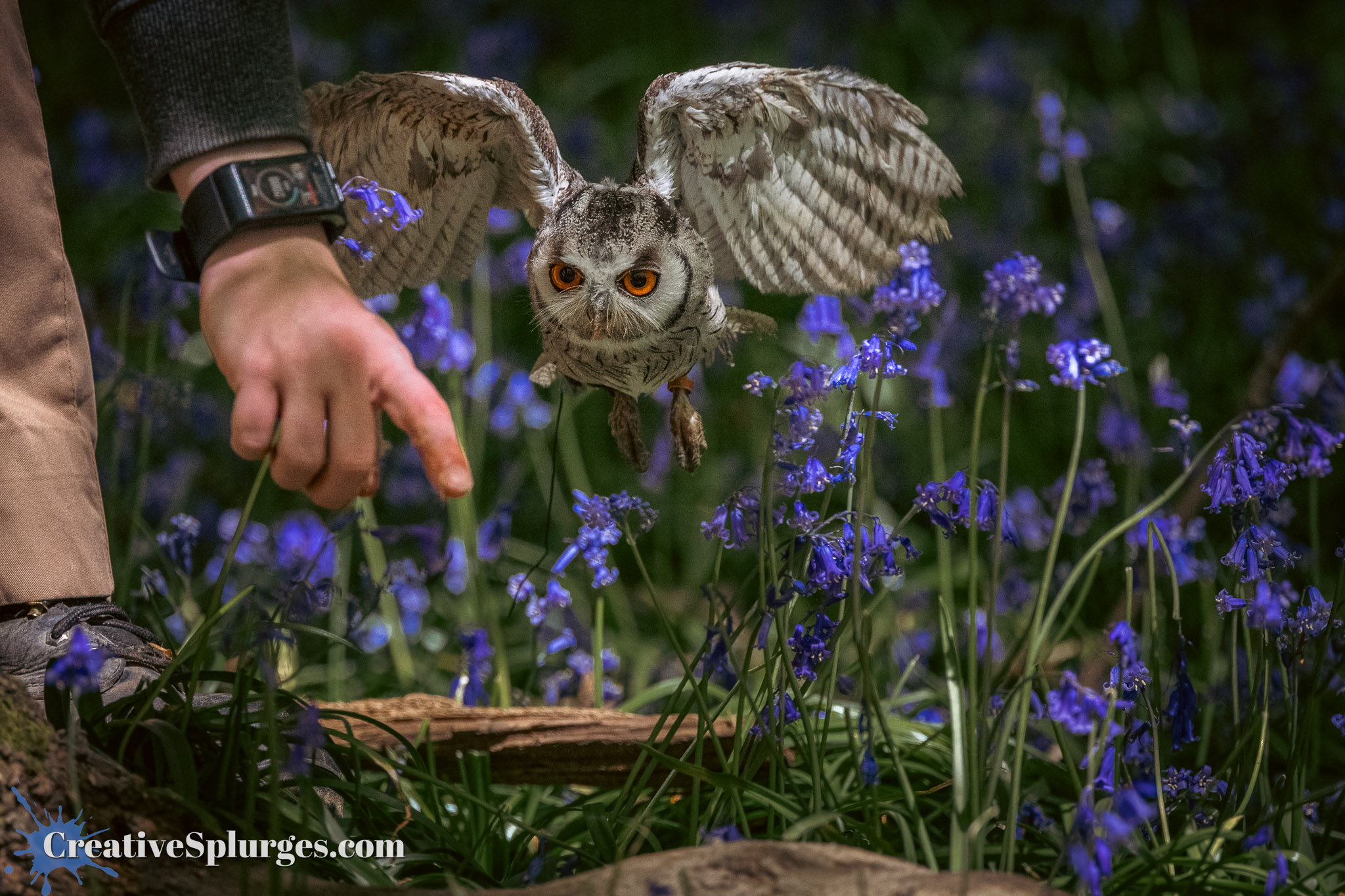
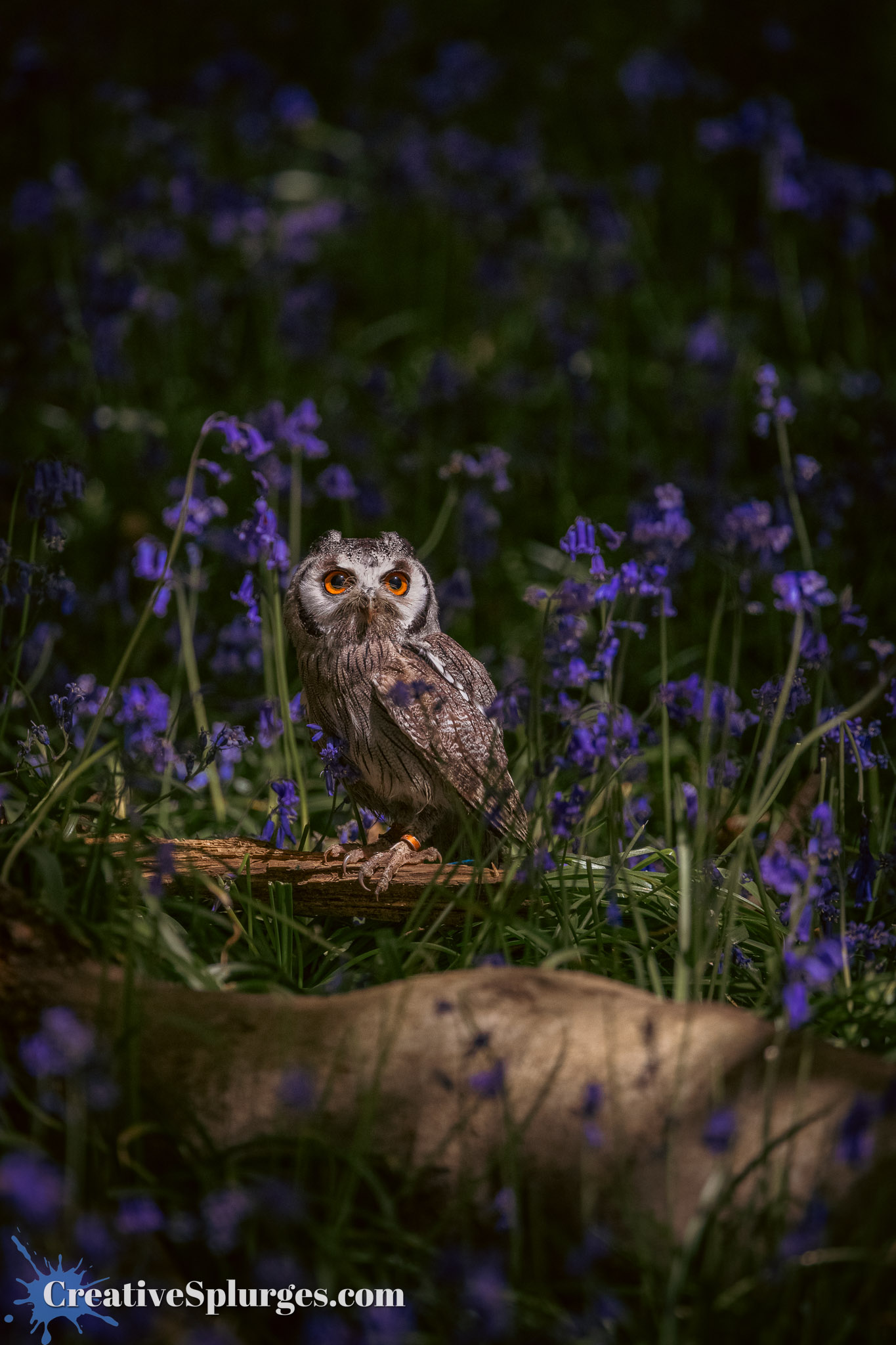
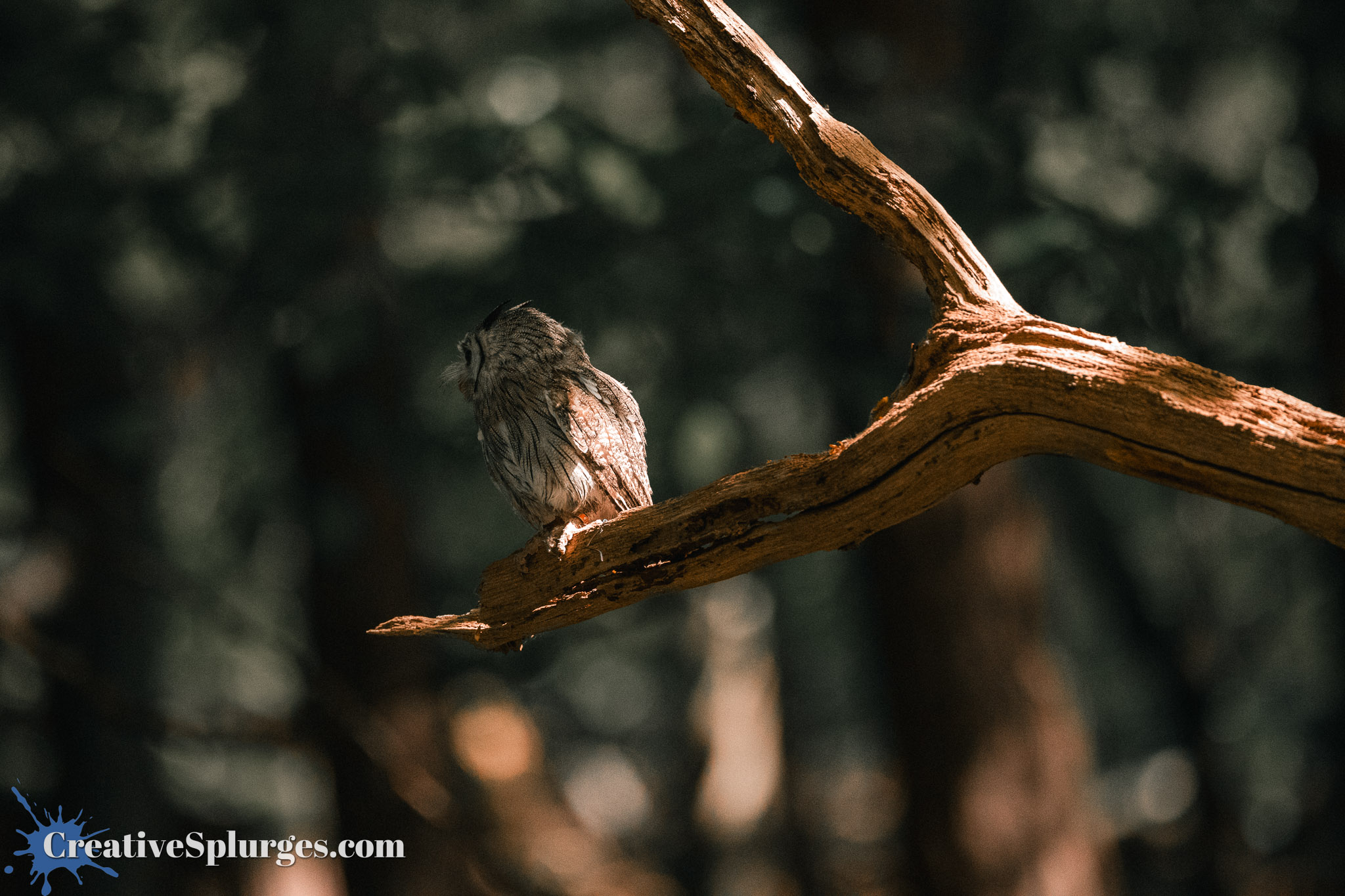
Soon, though, it was time to say goodbye to little Zazu, who stood in one last little spot of light as her swansong.
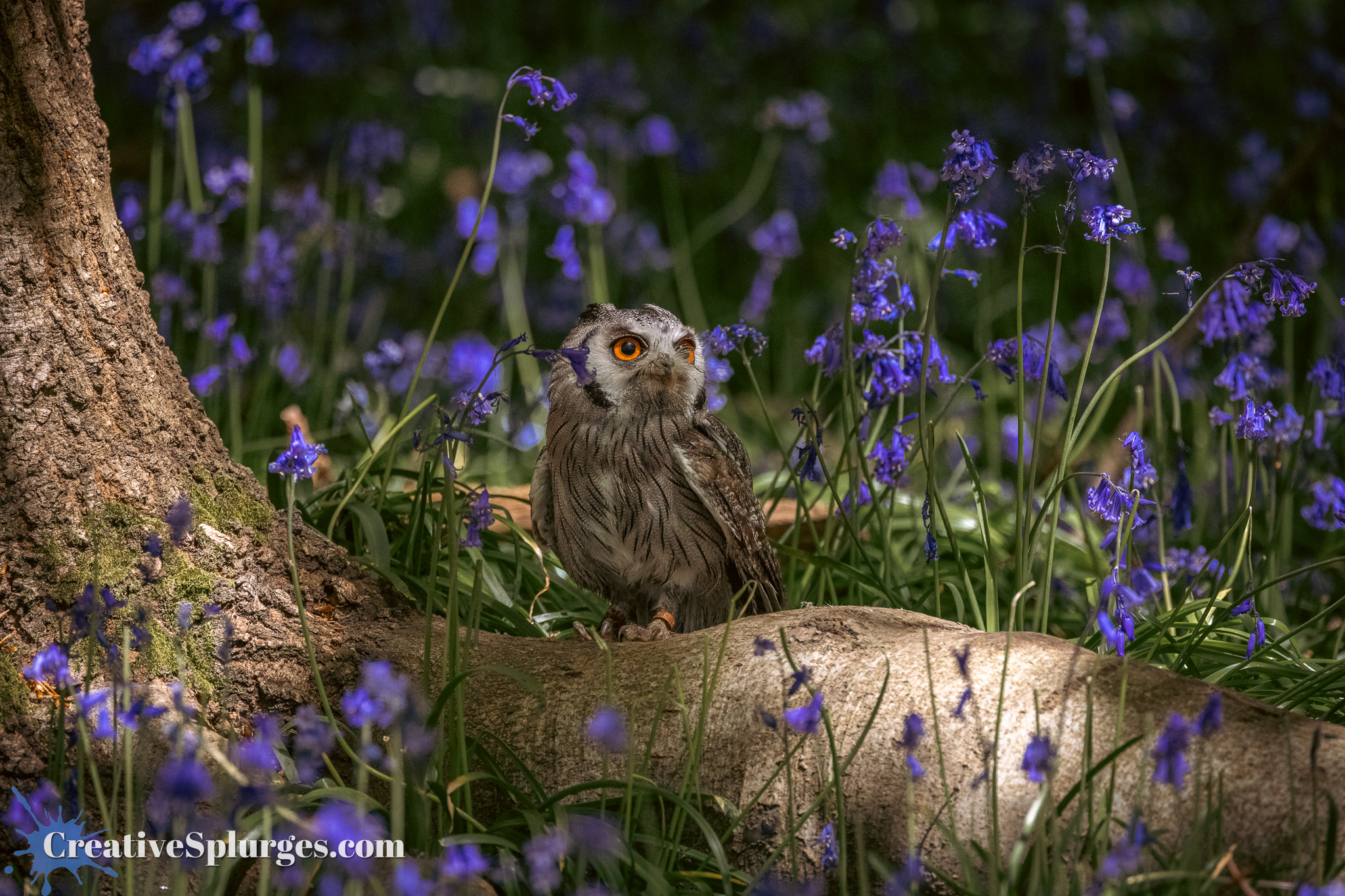
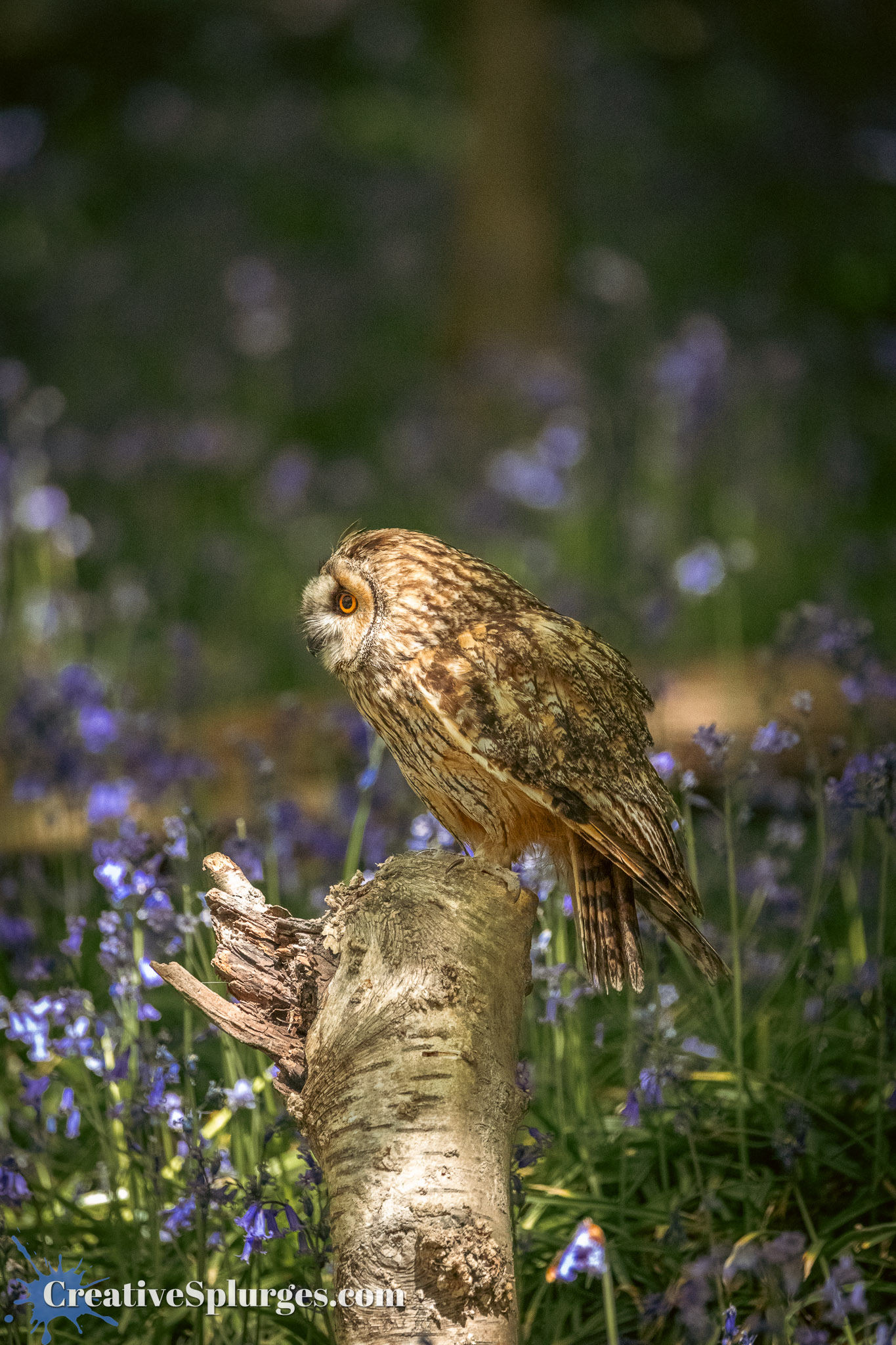
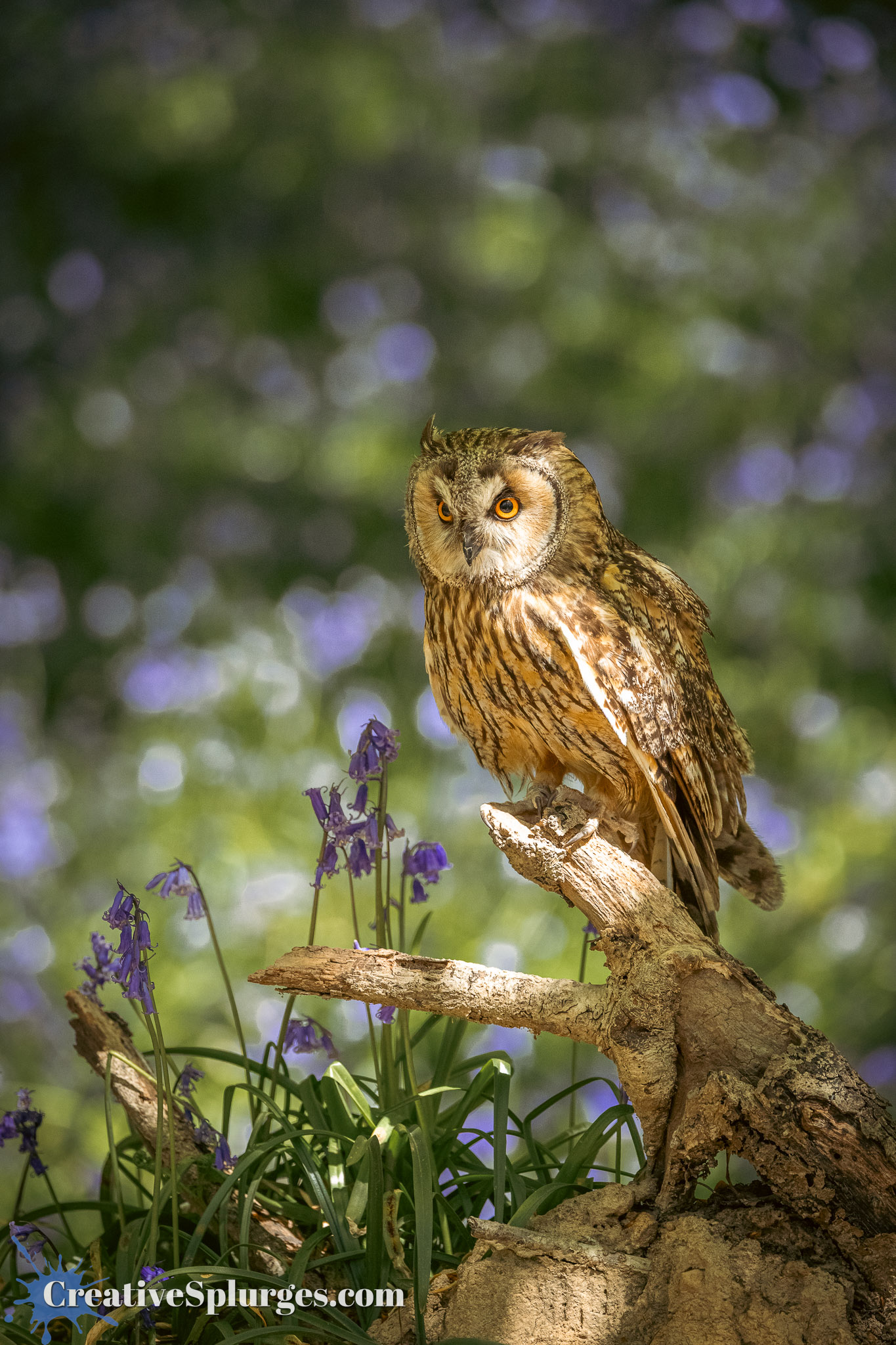
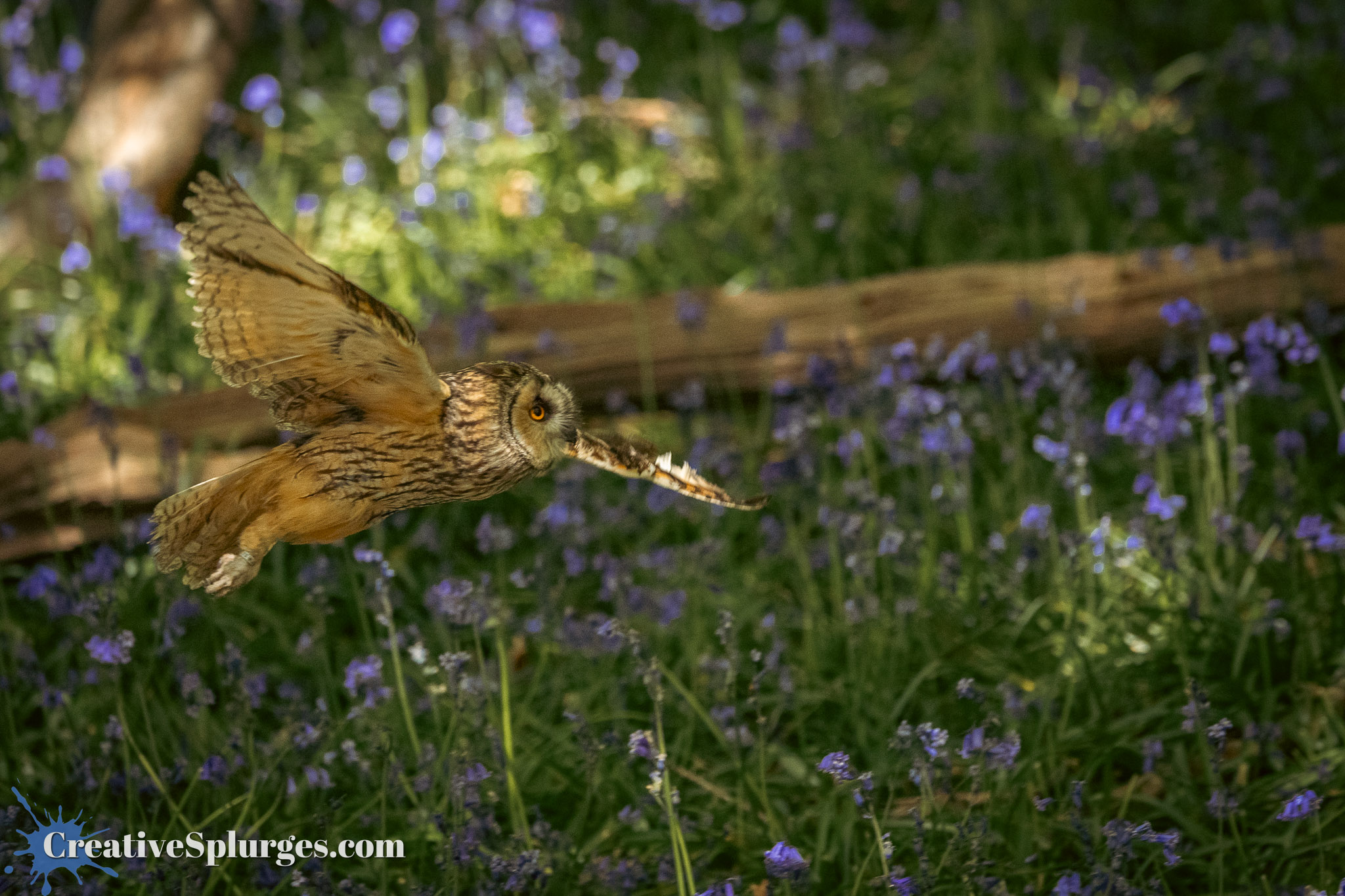
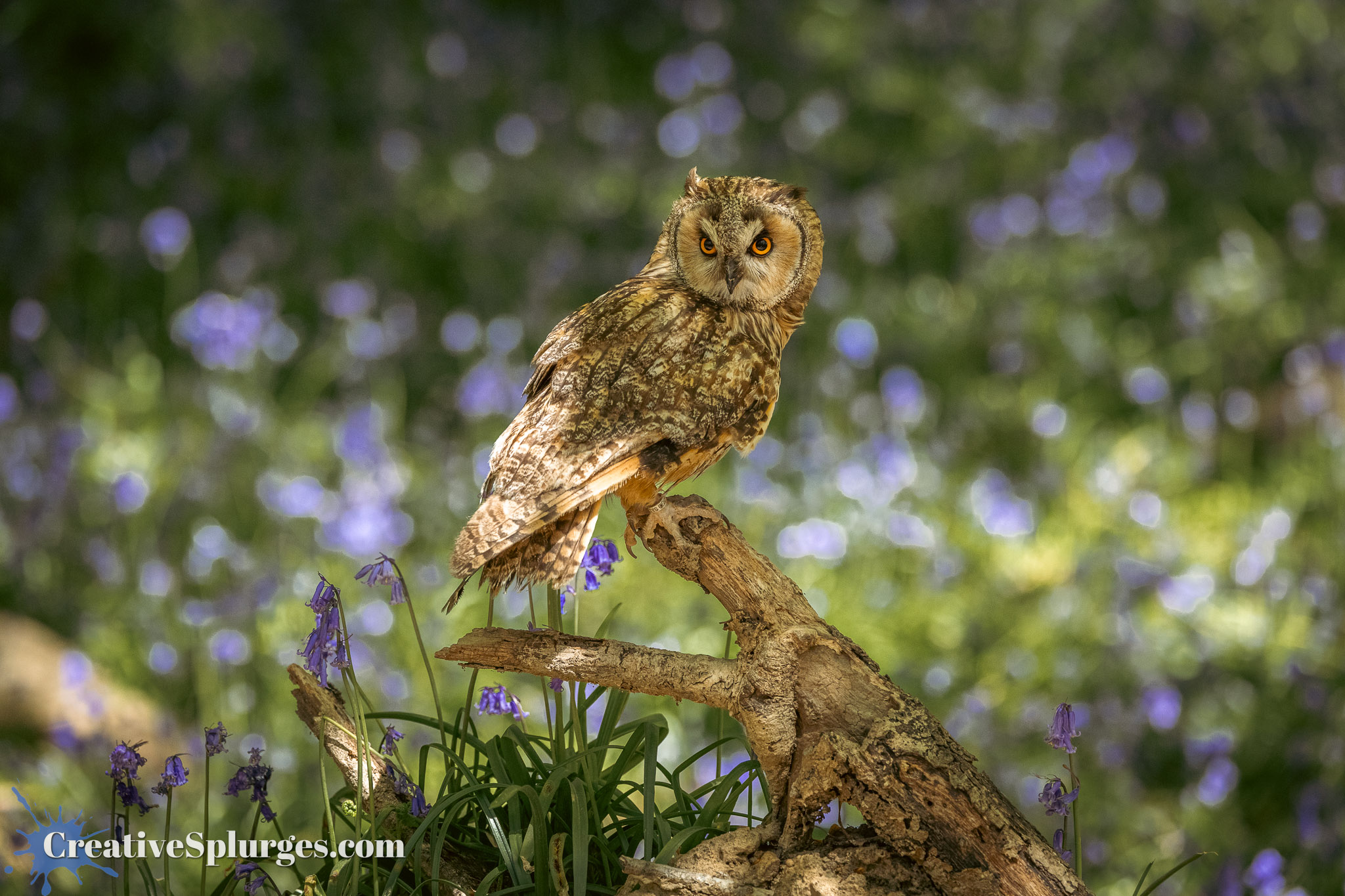
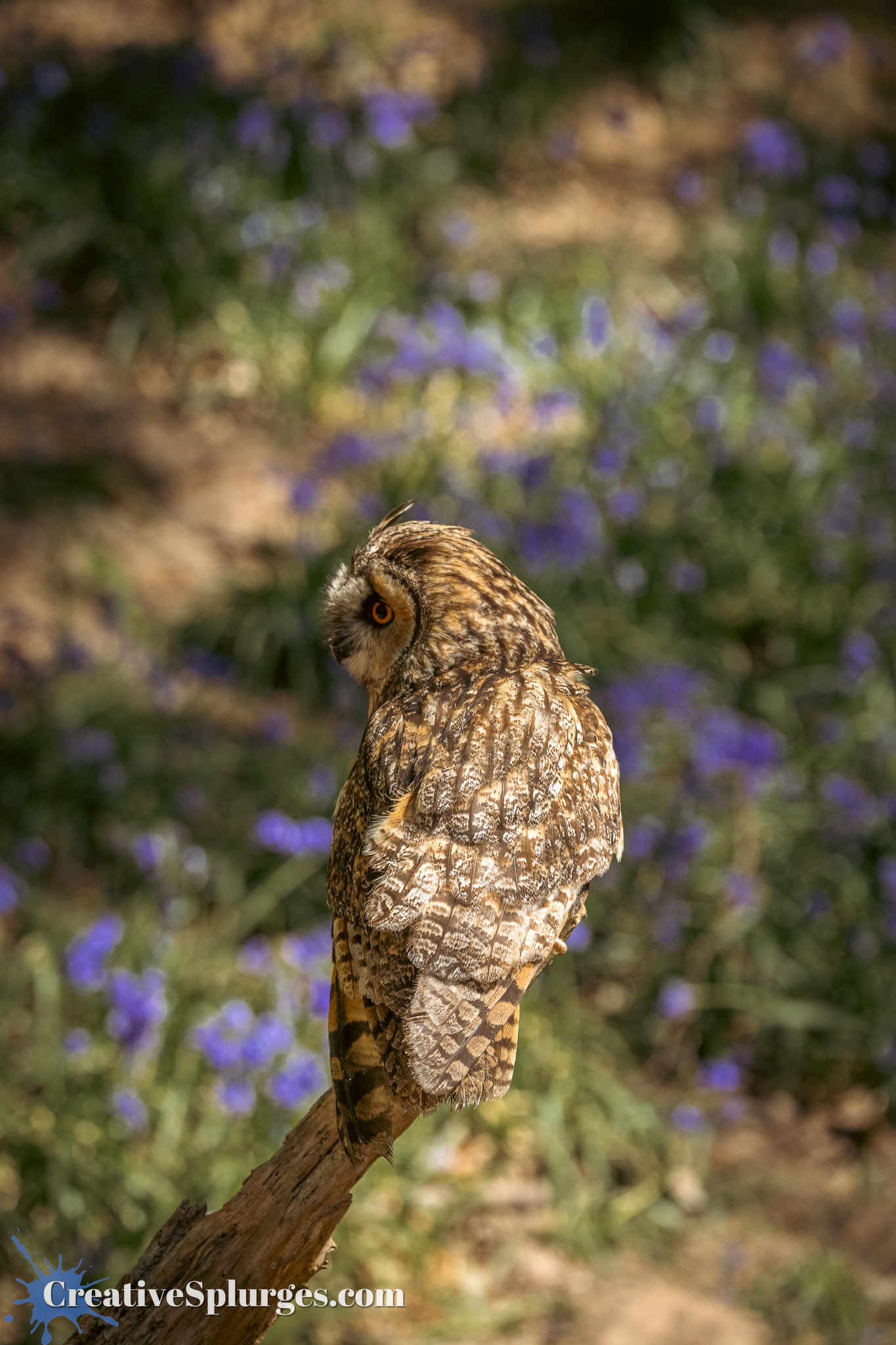
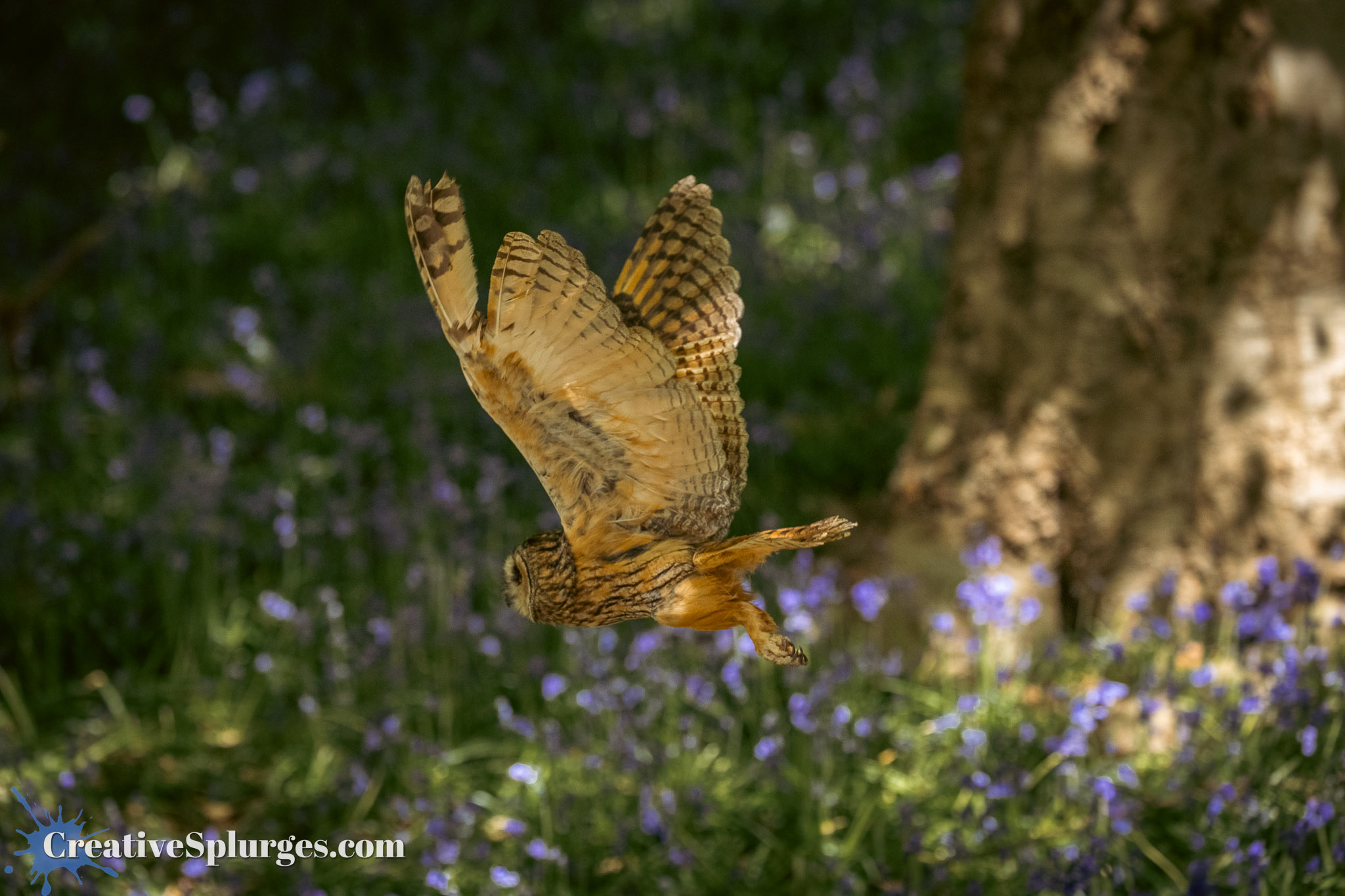
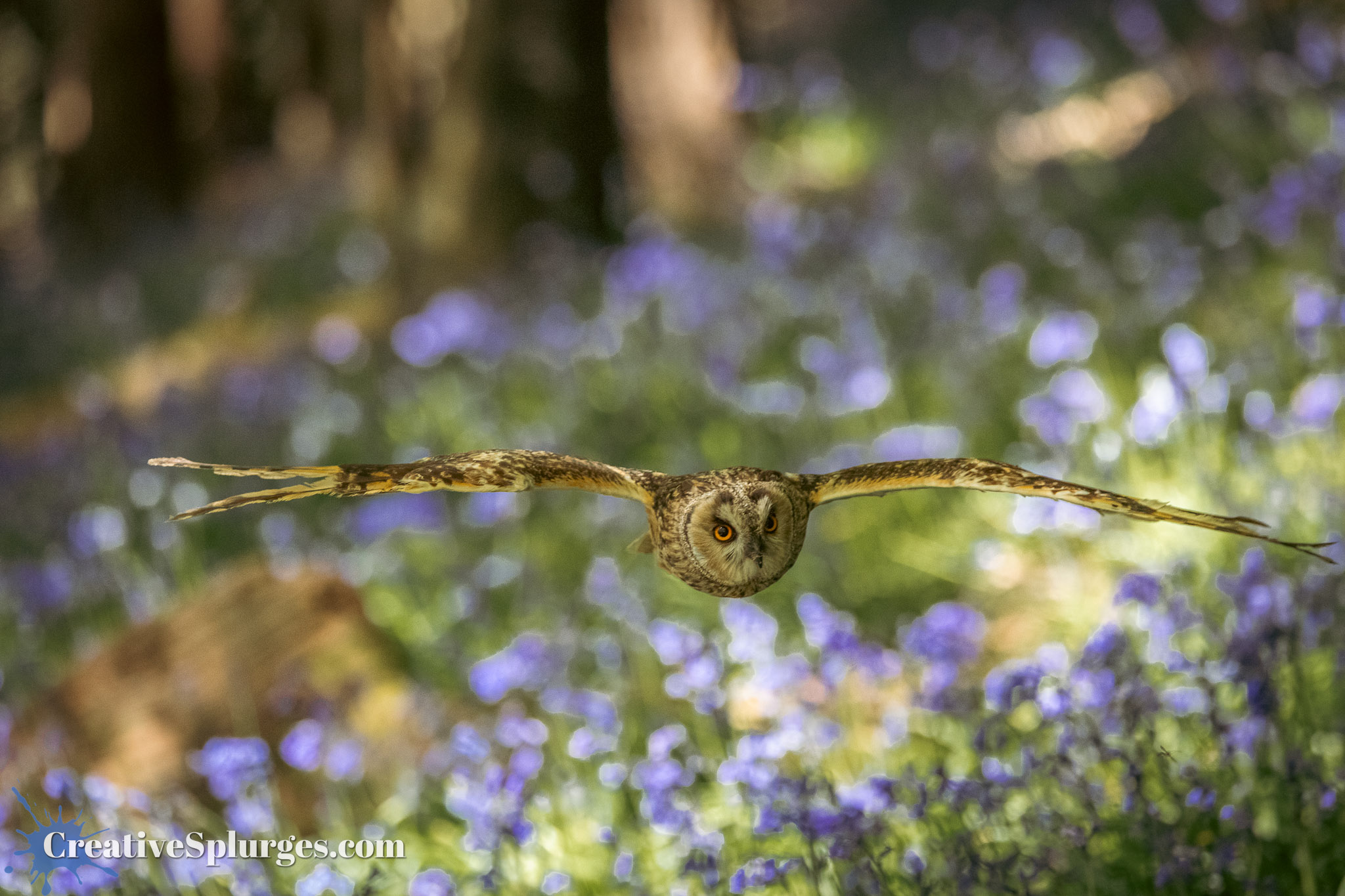
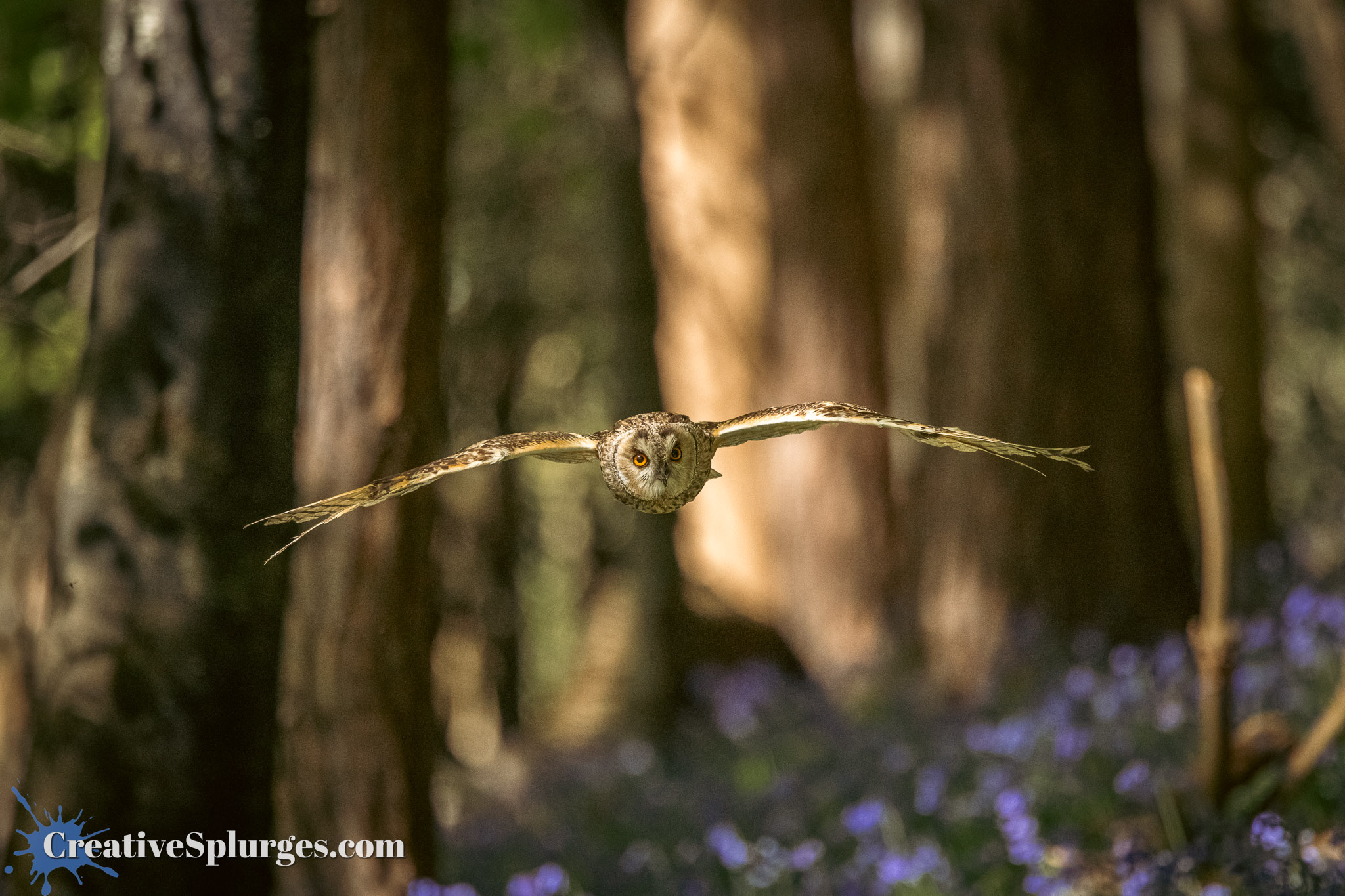
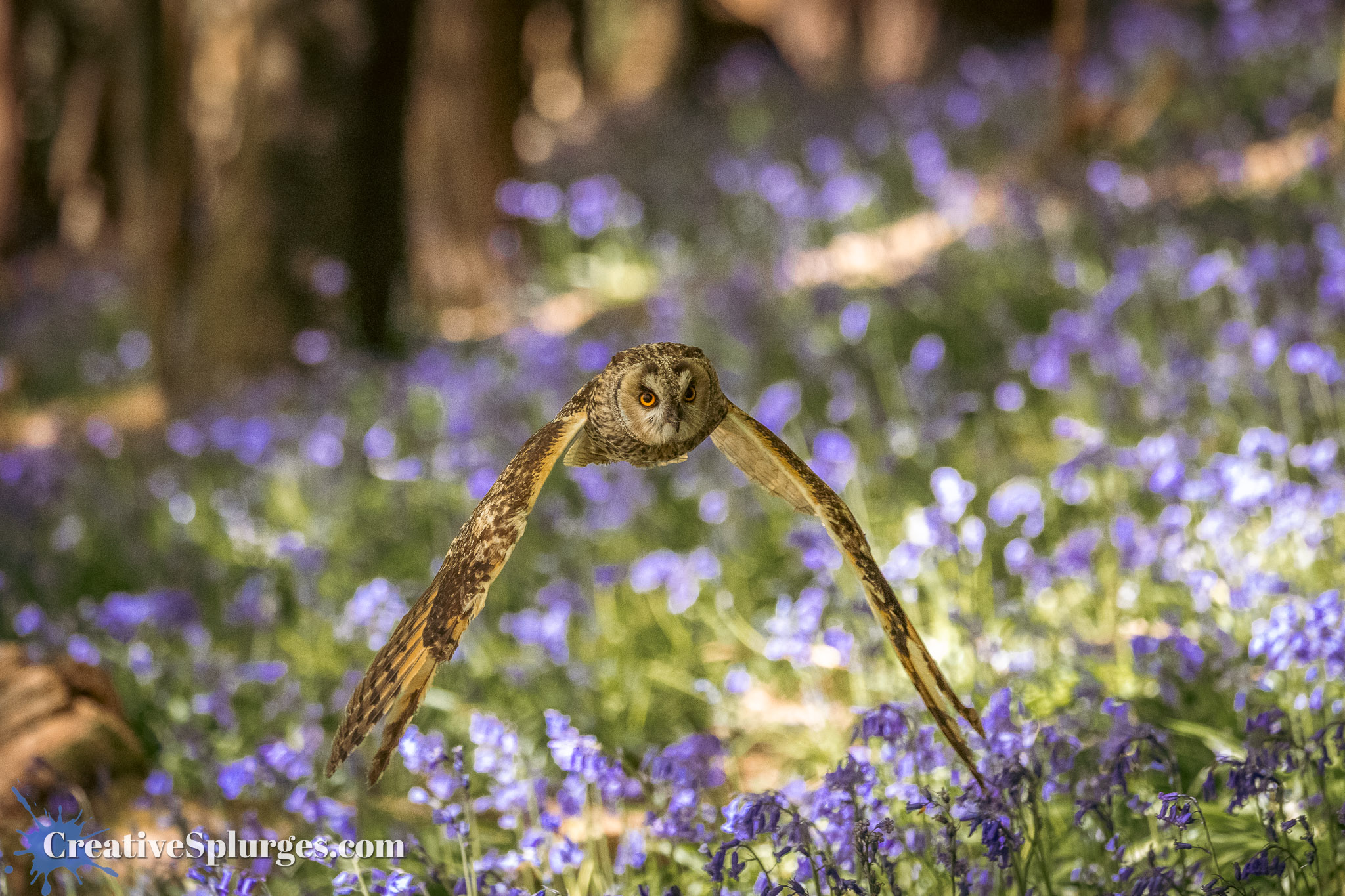
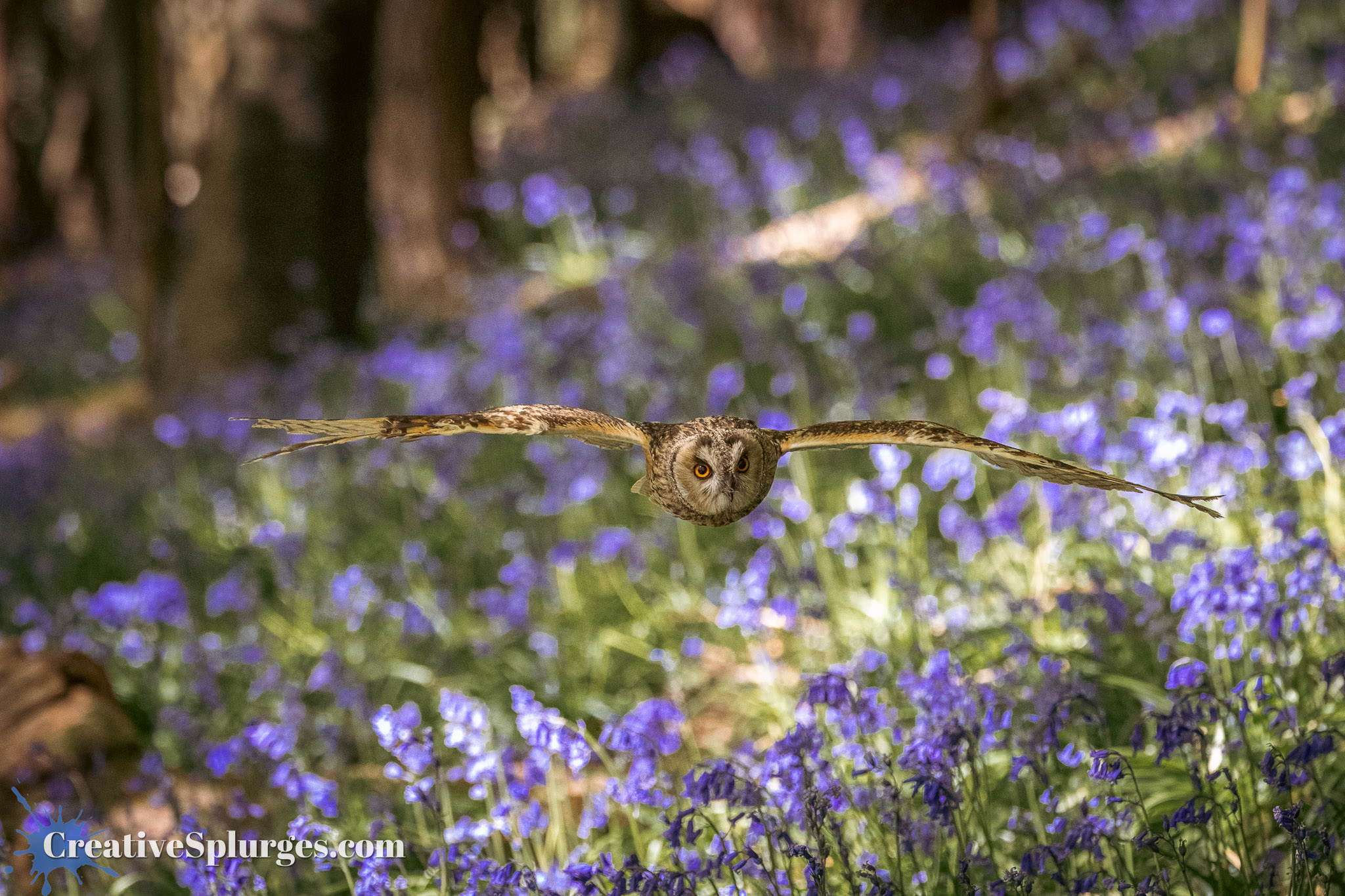
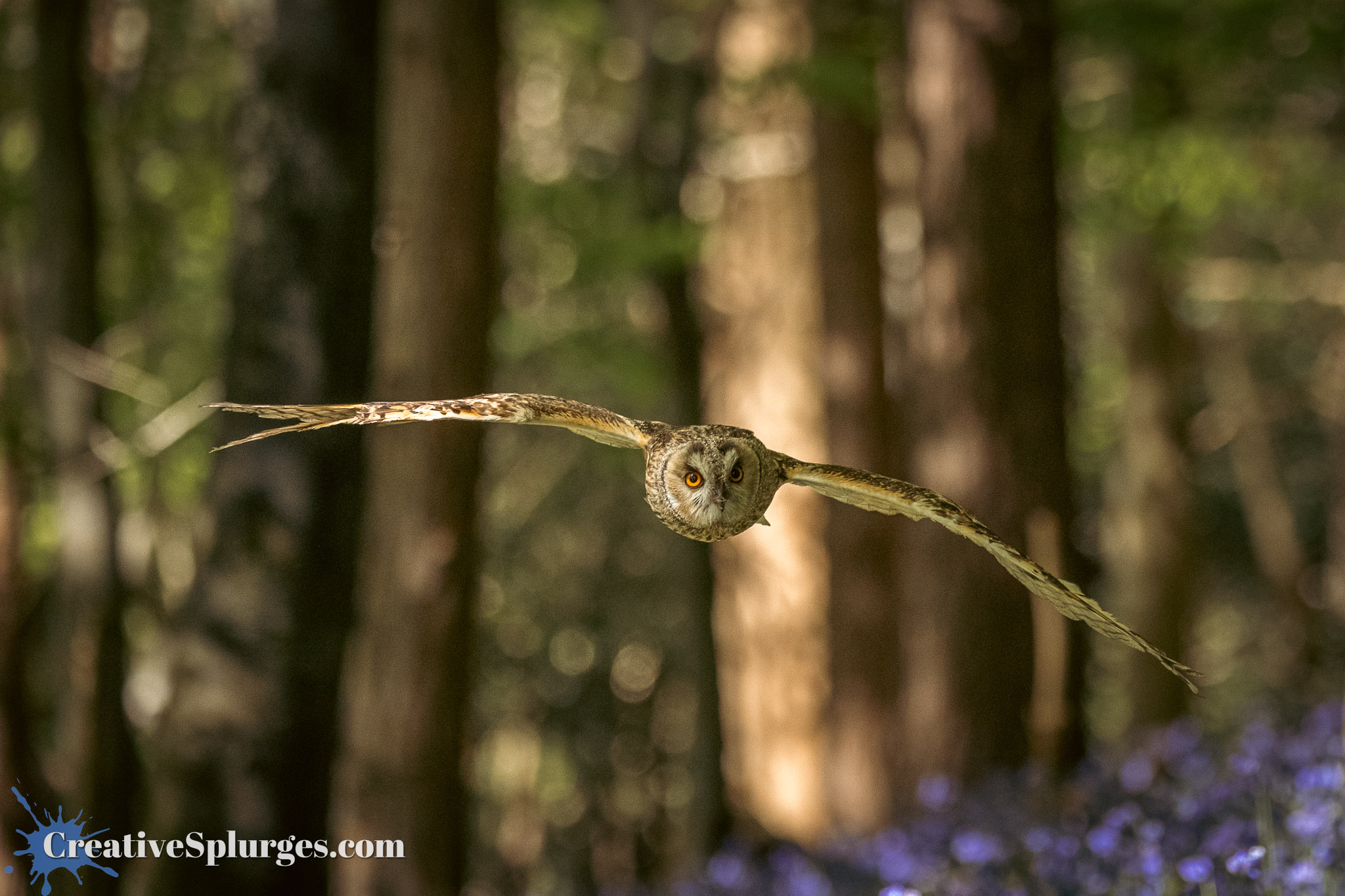
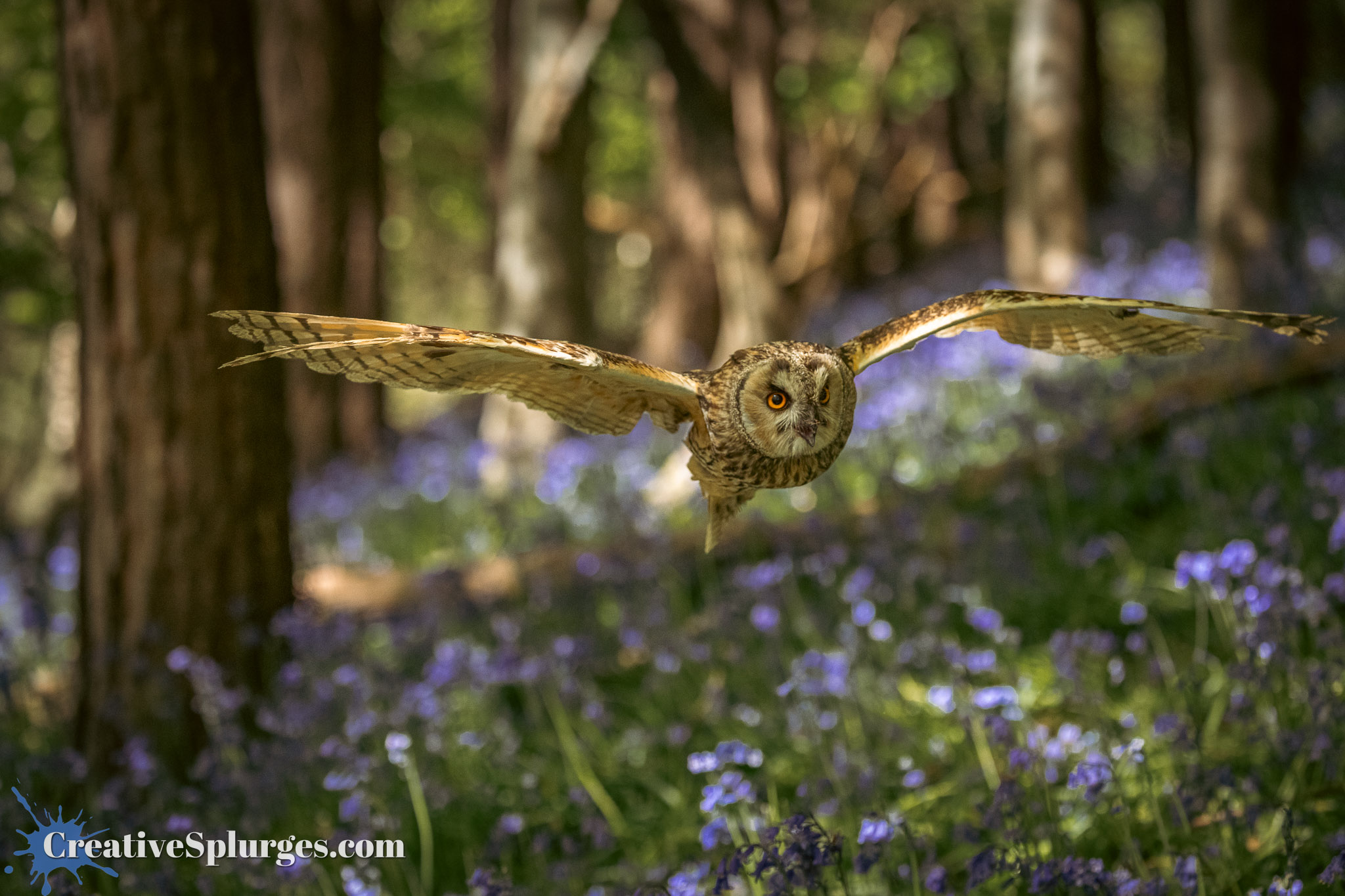
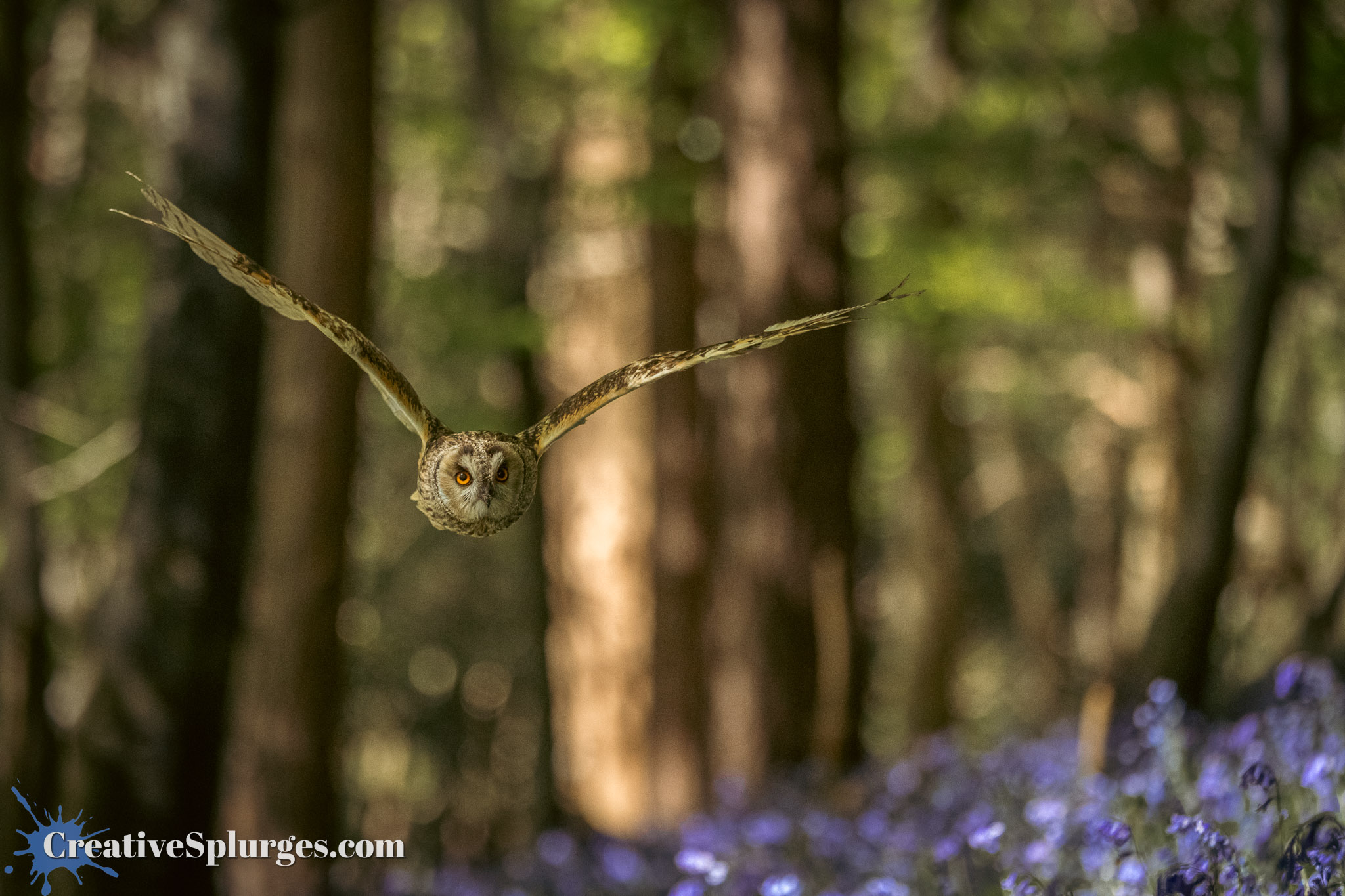
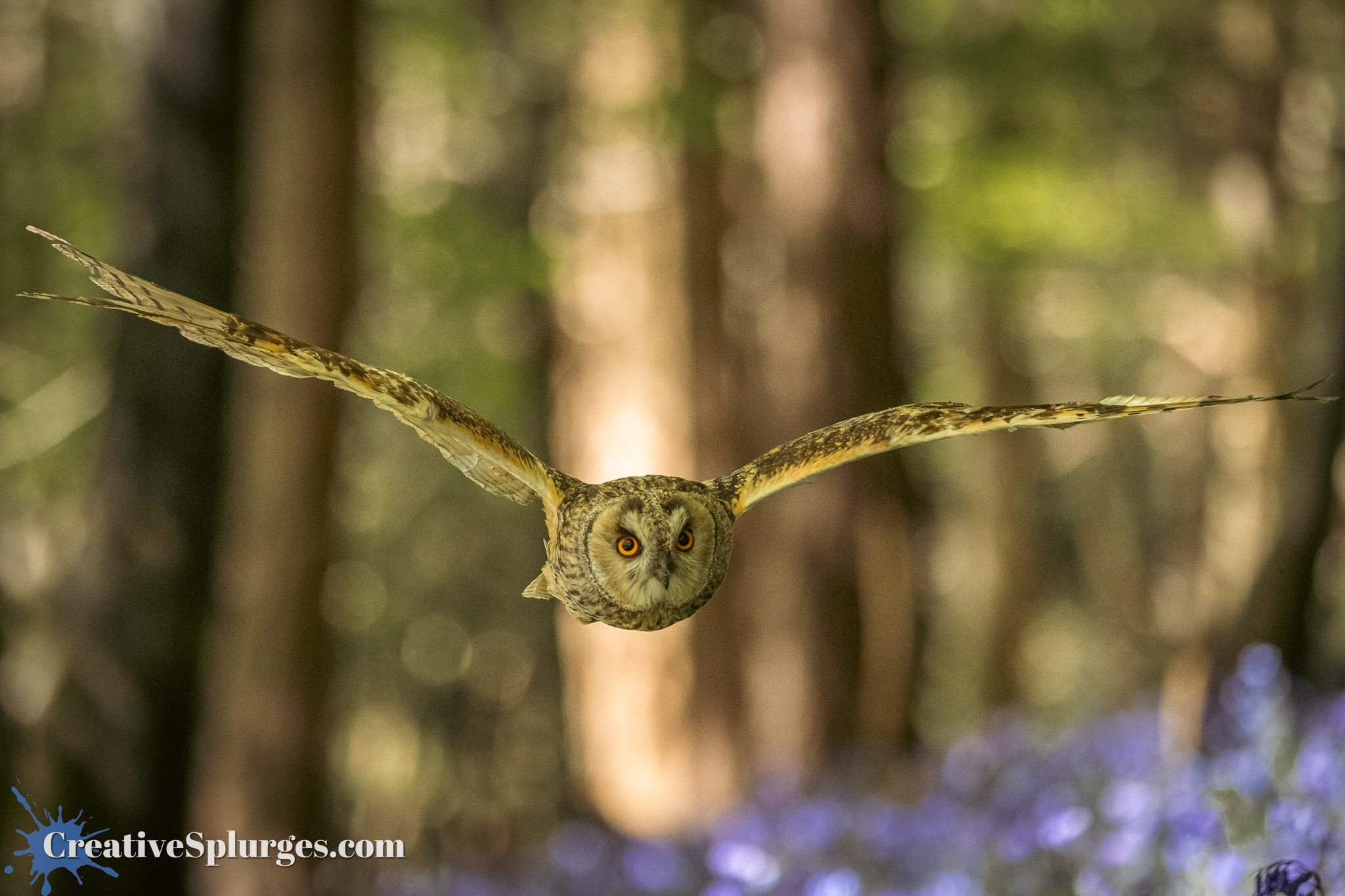
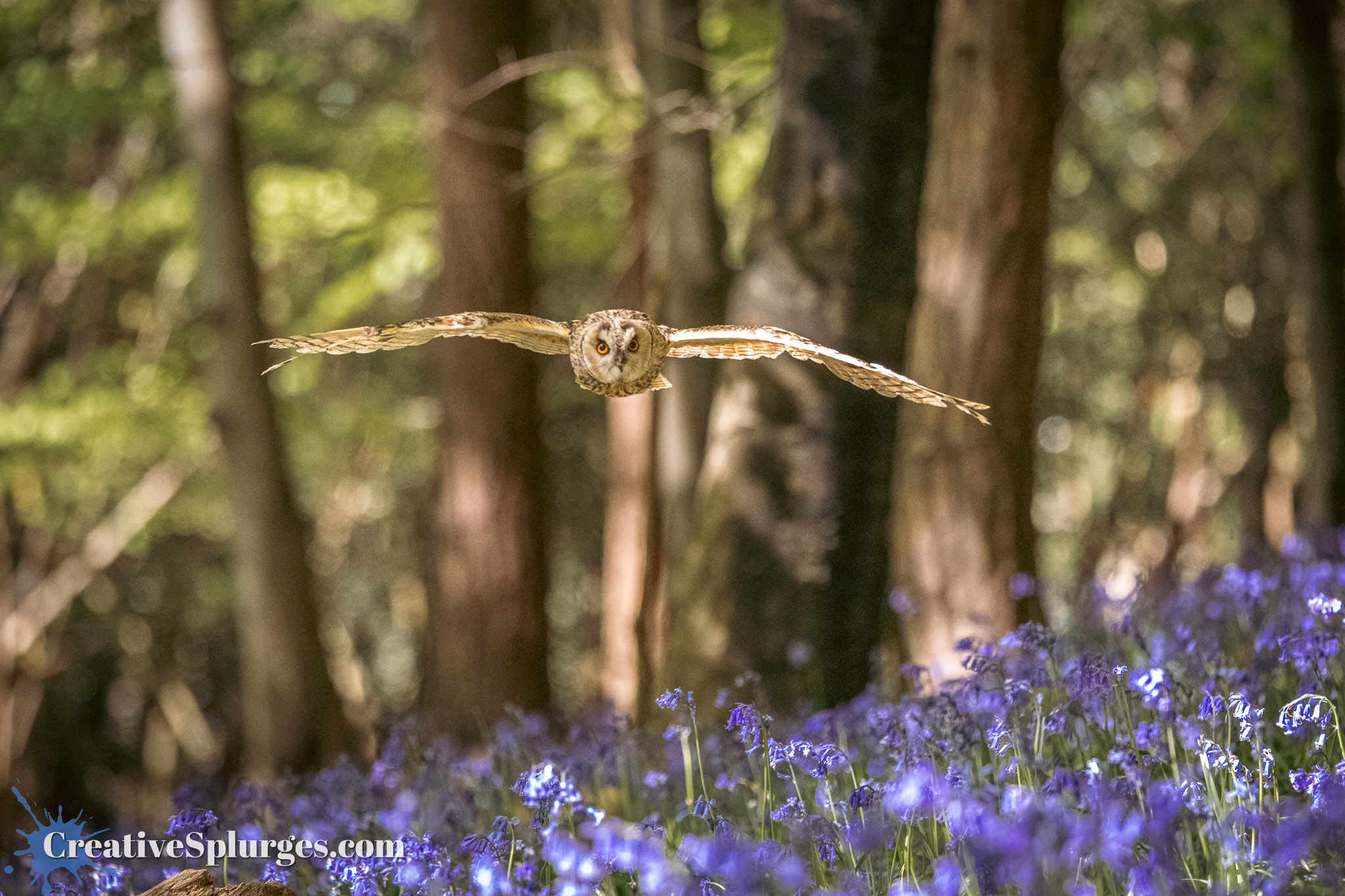
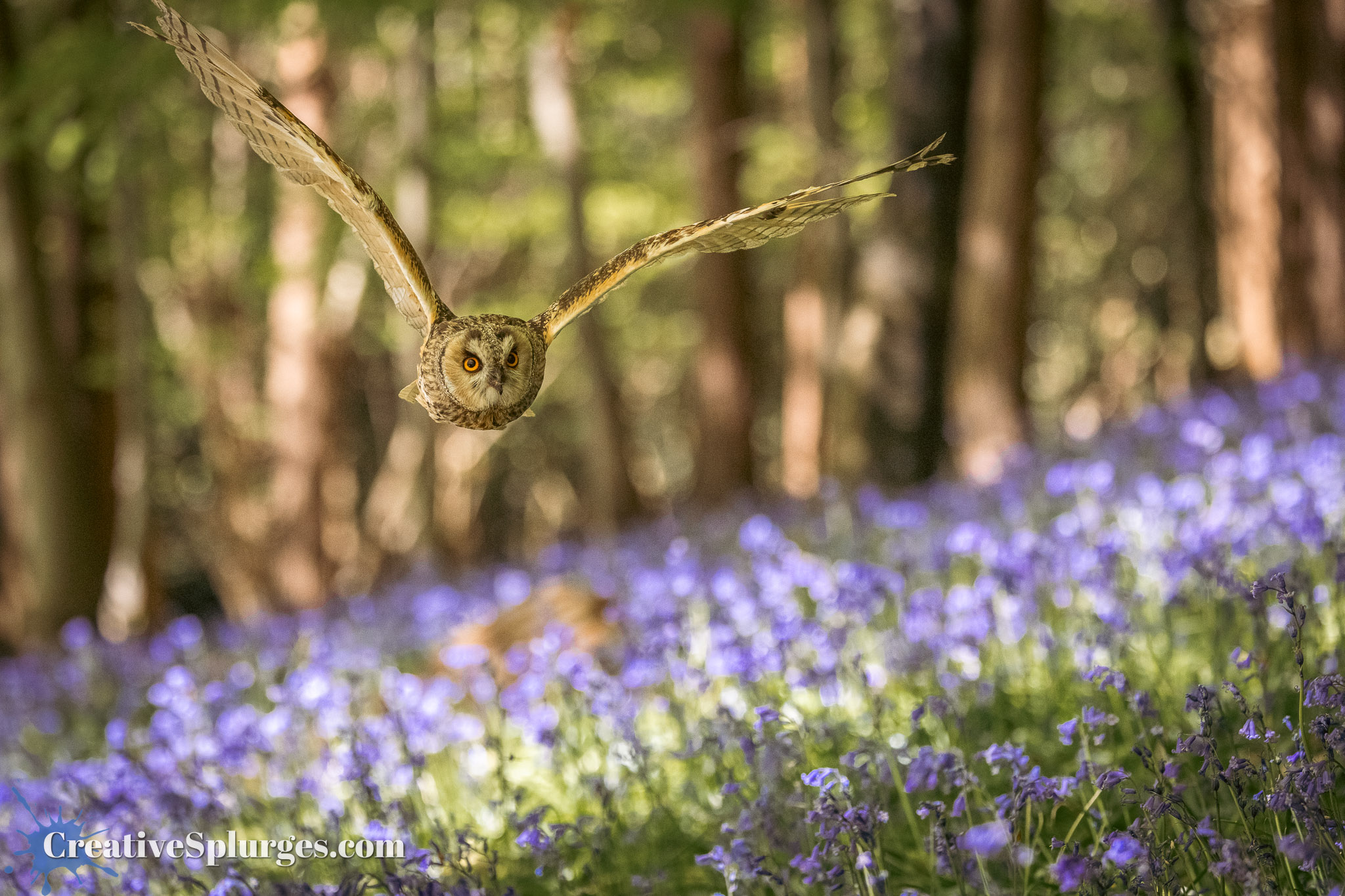
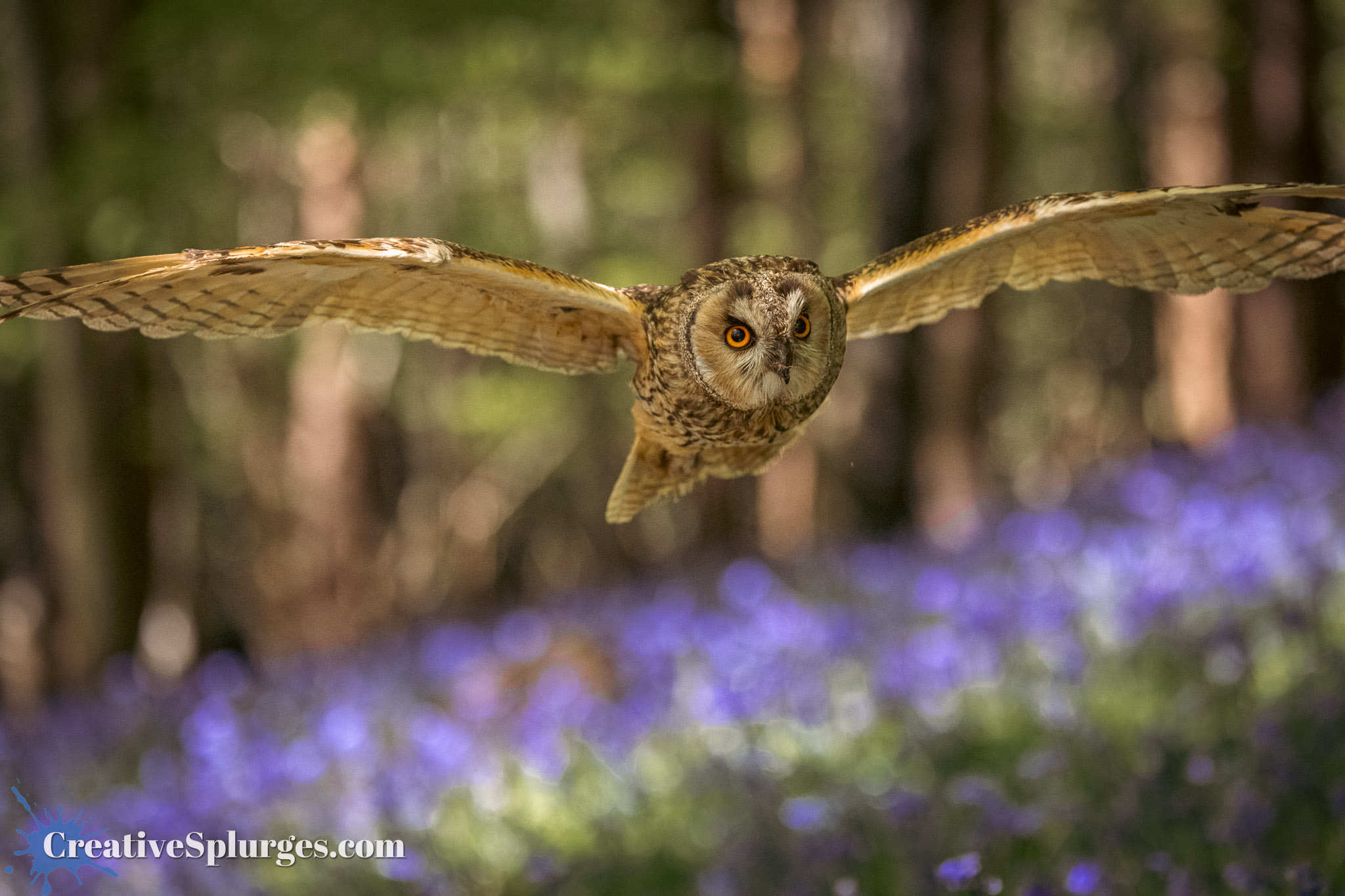
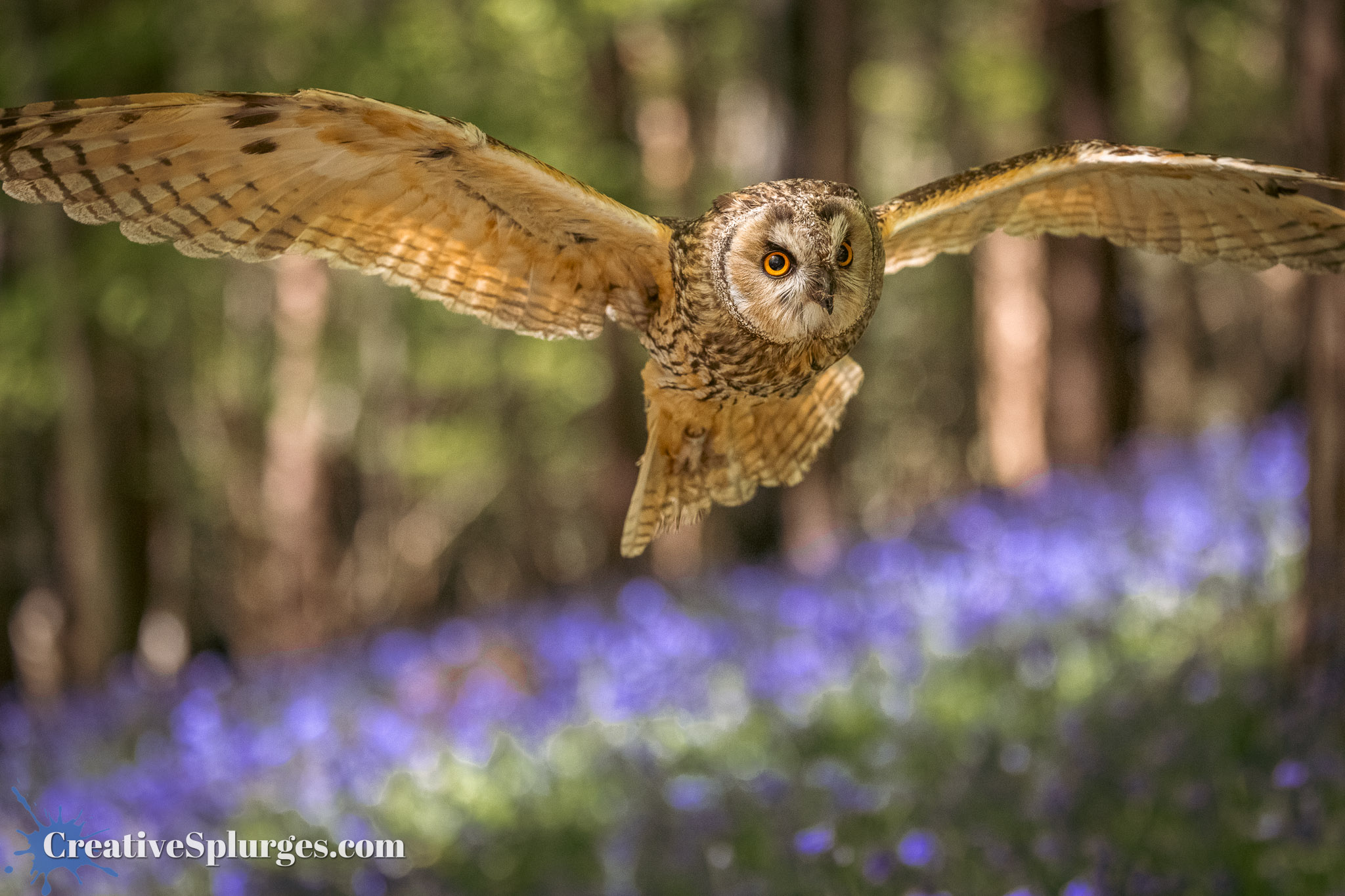
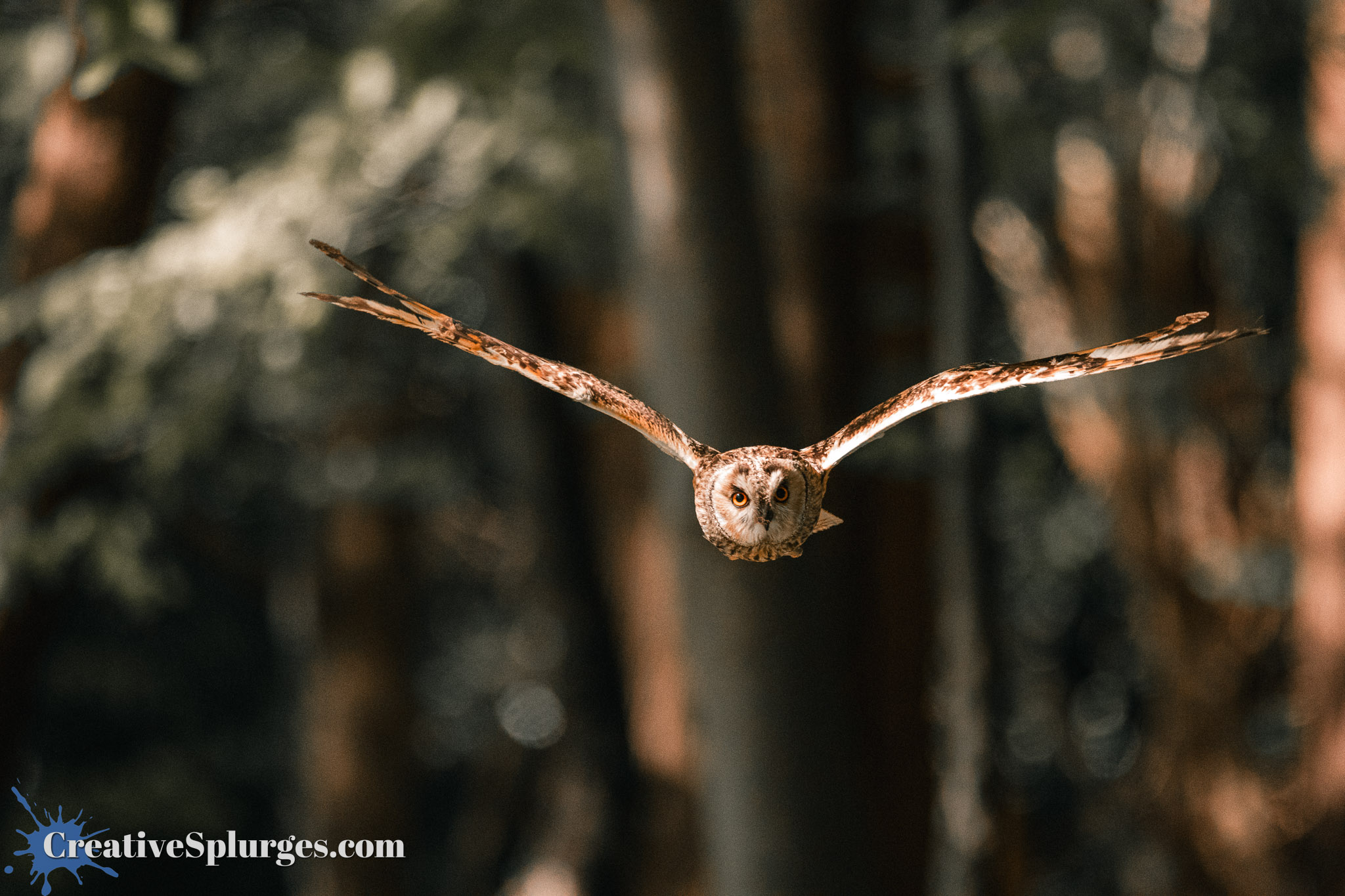
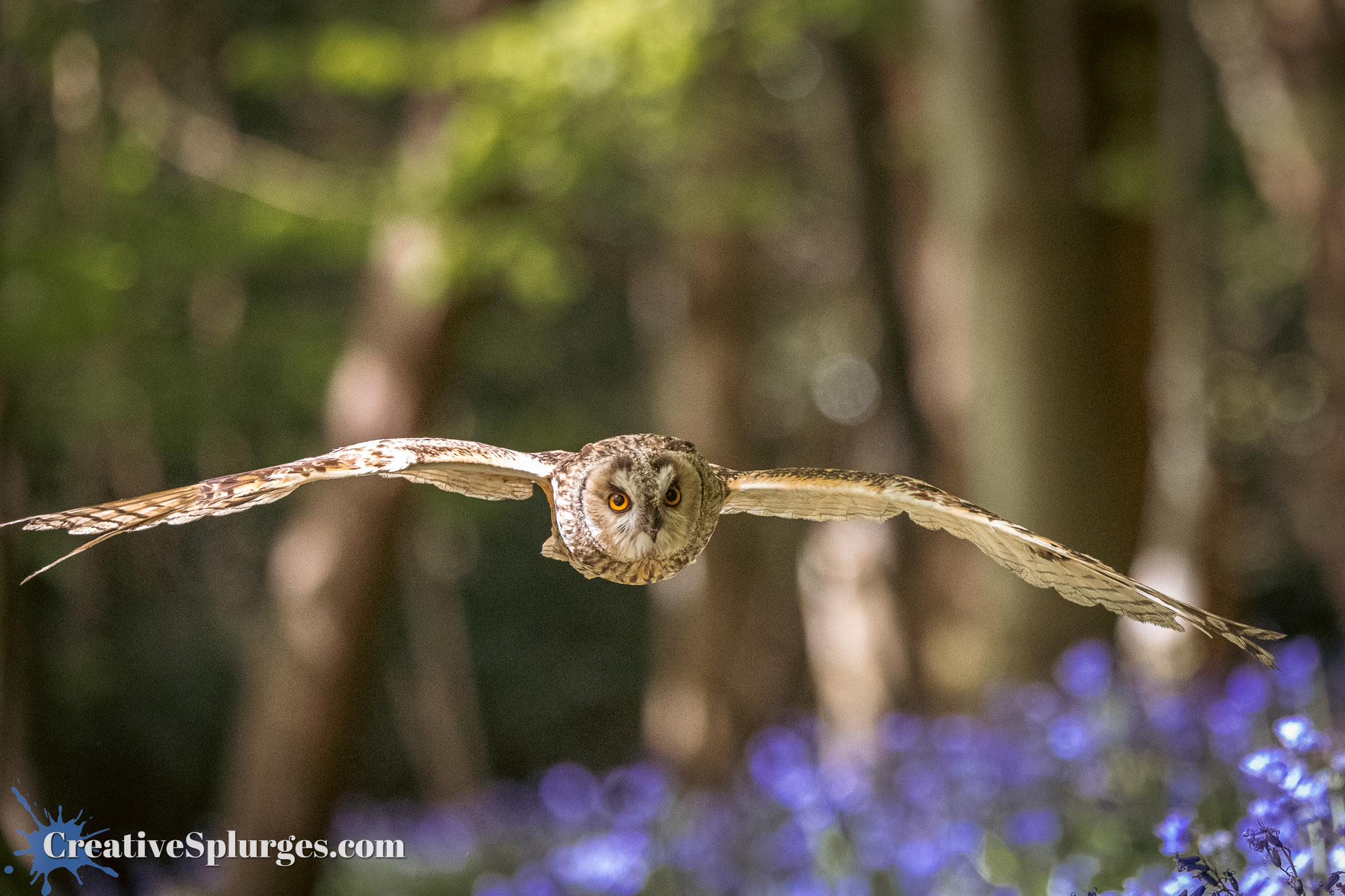
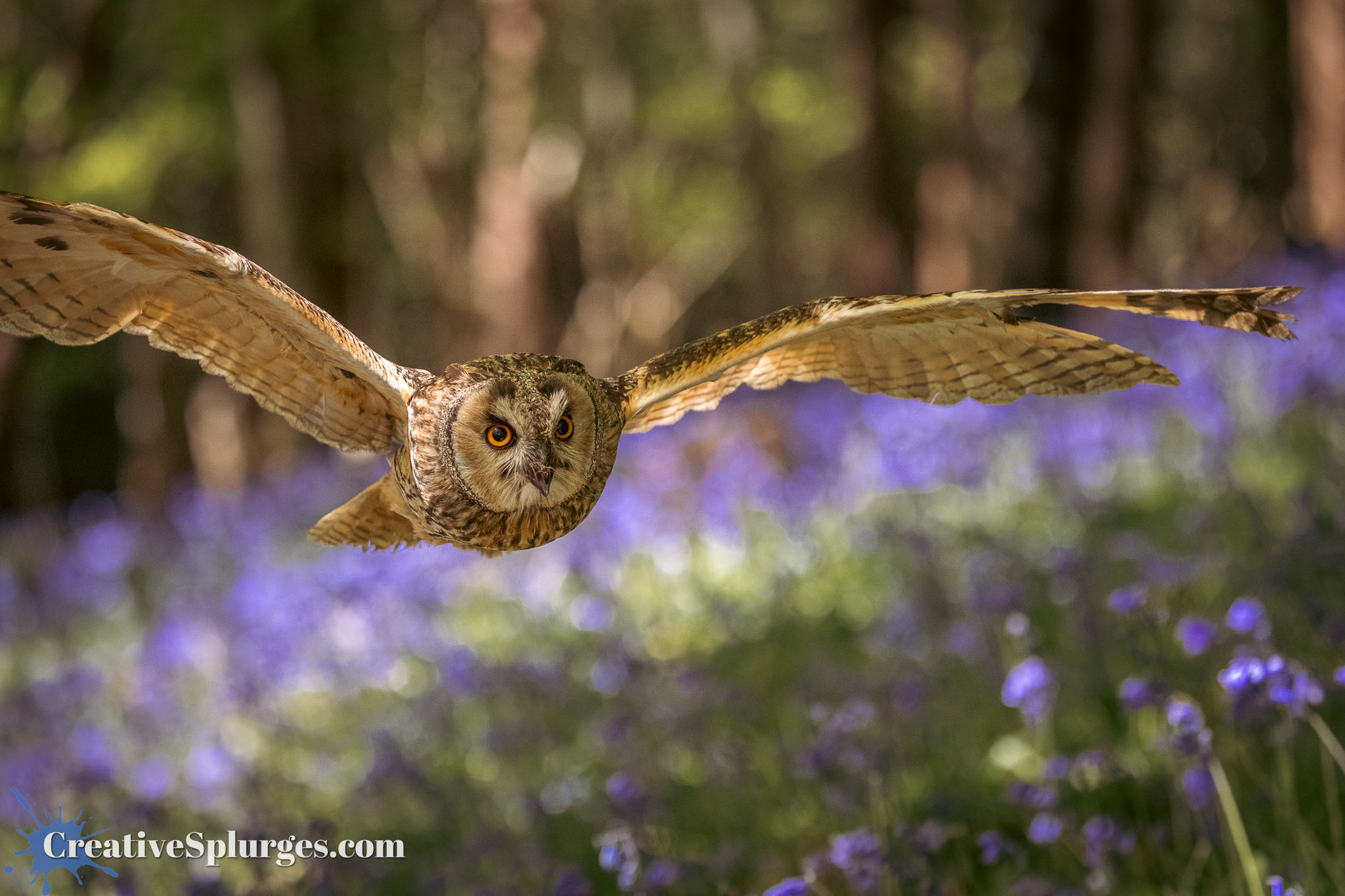
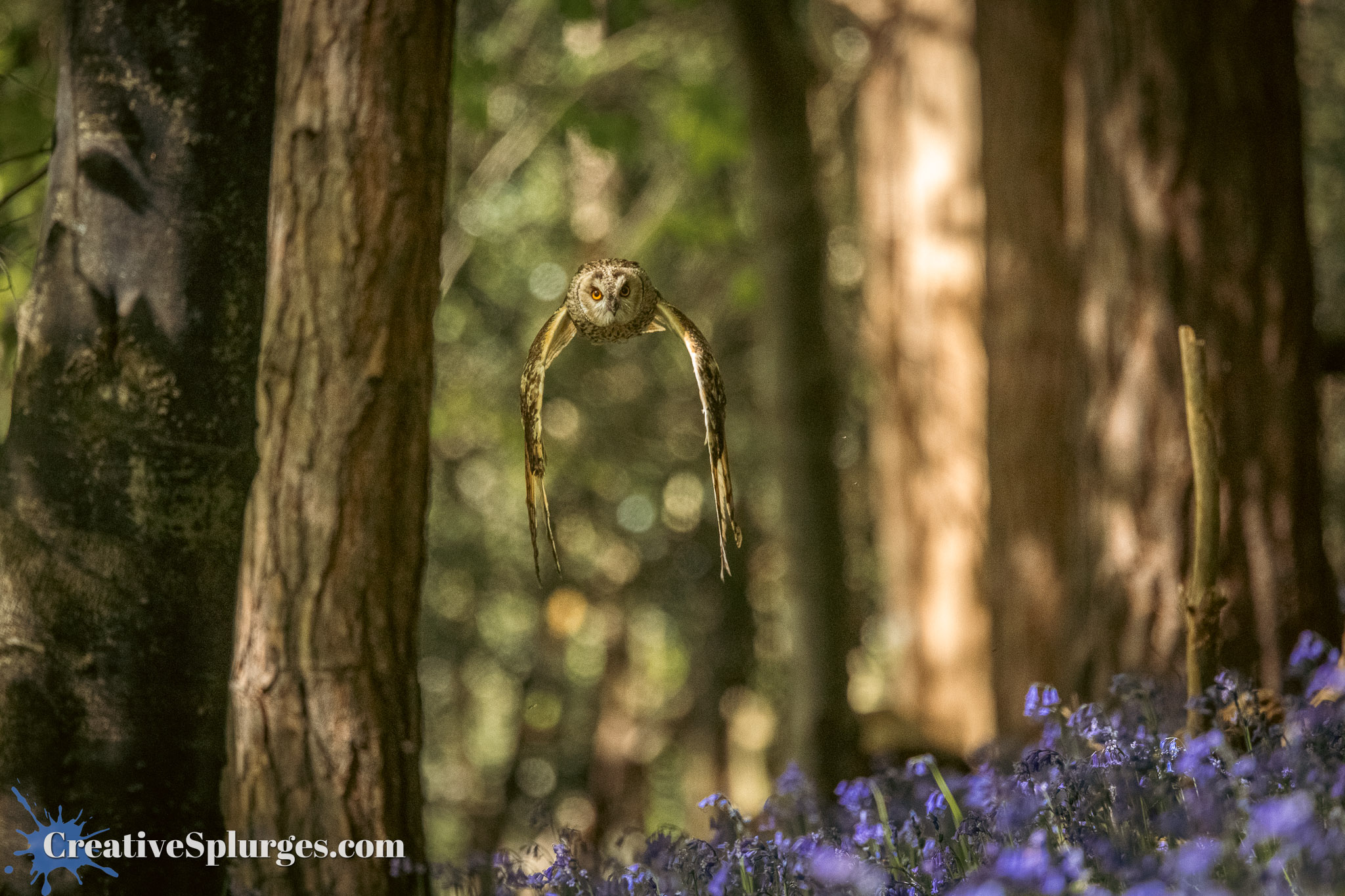
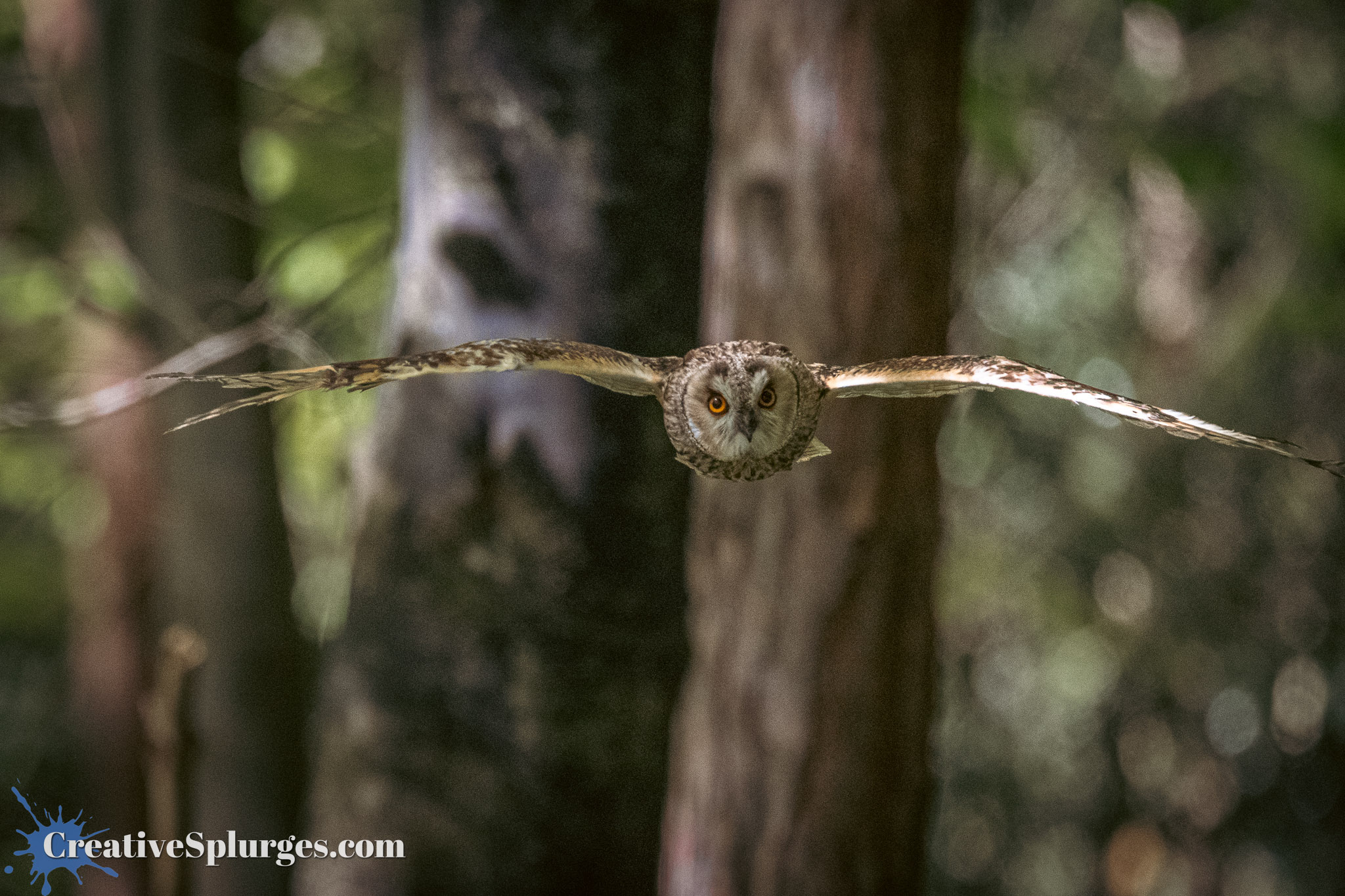
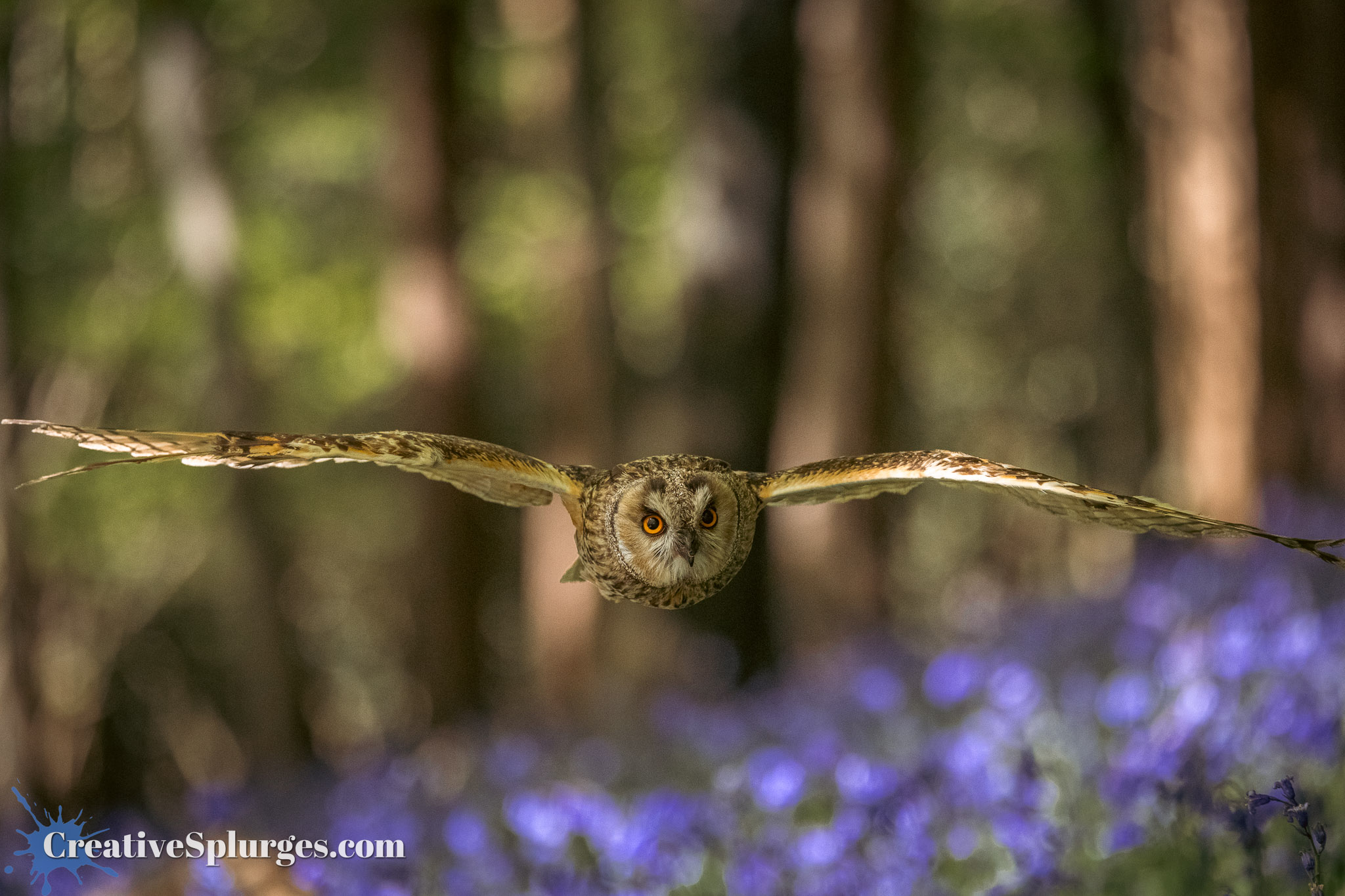
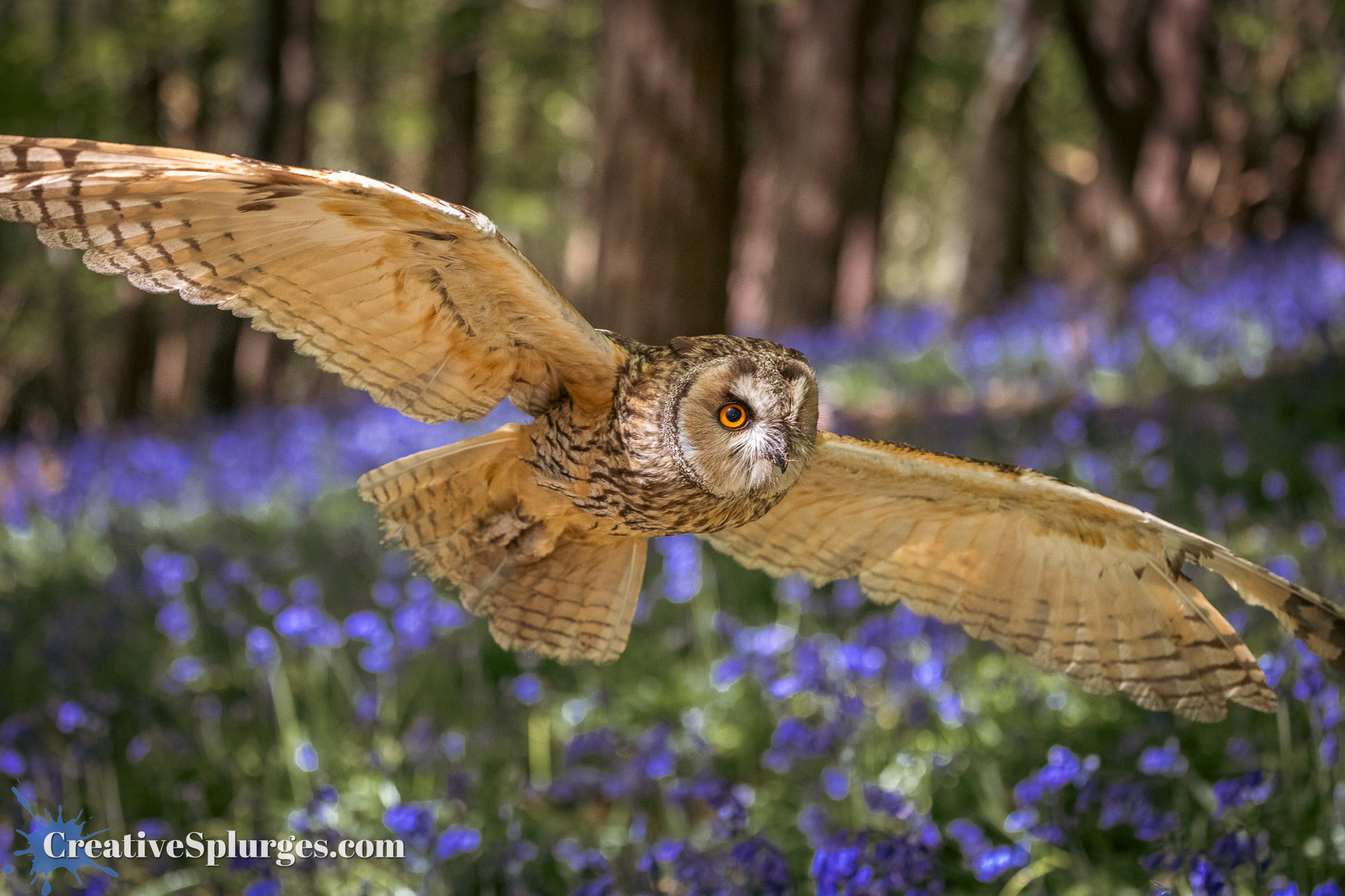
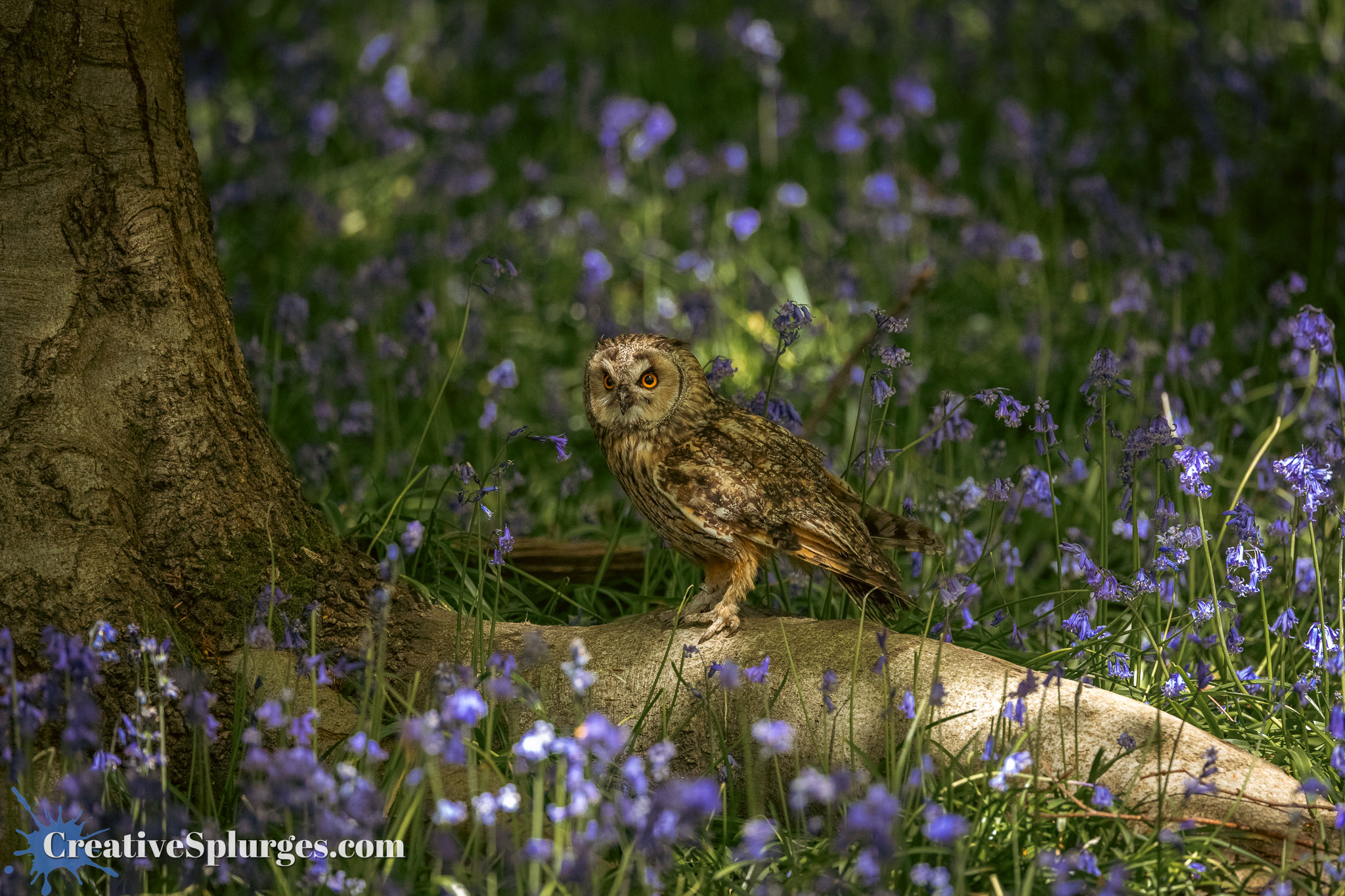
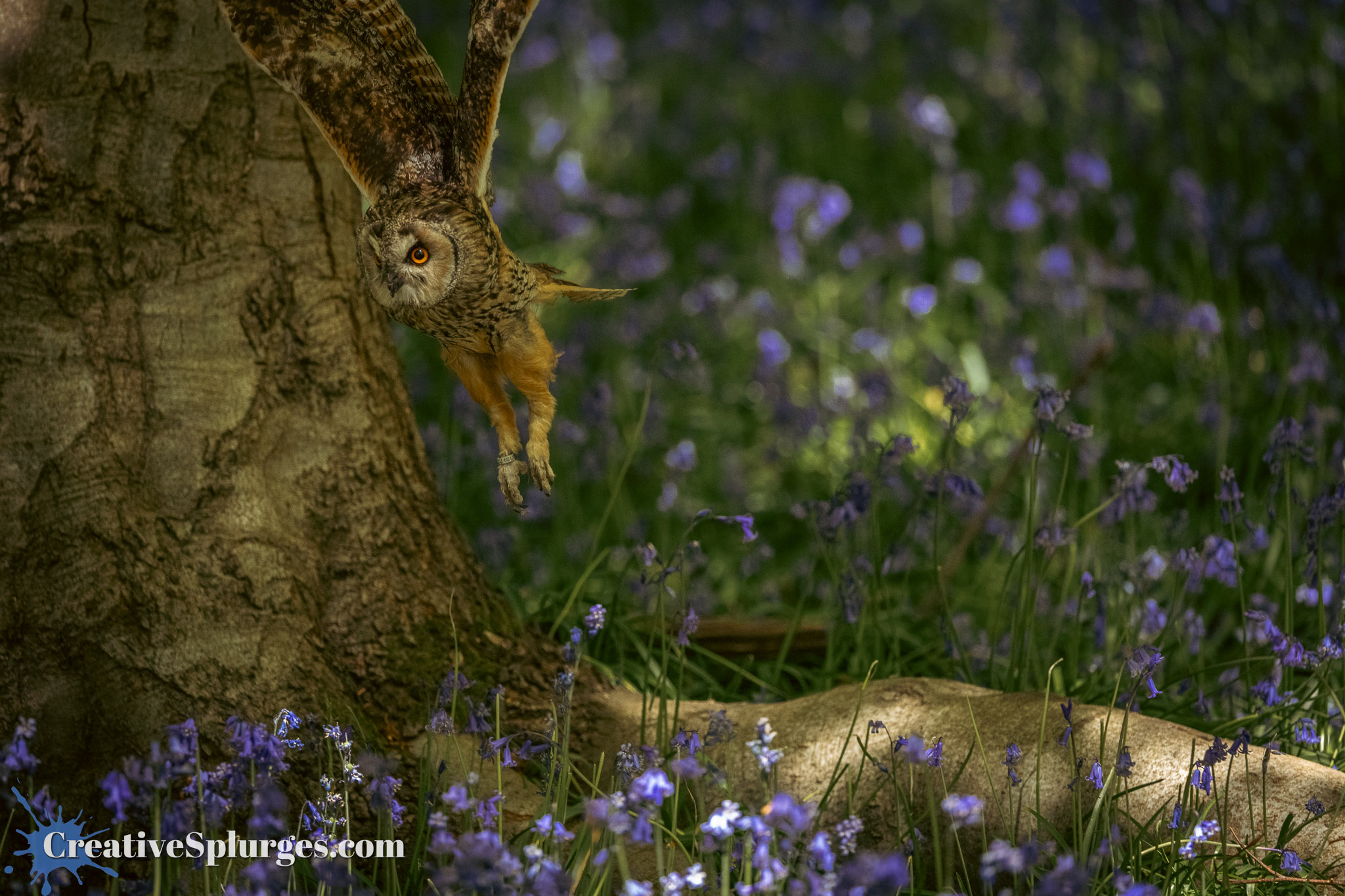
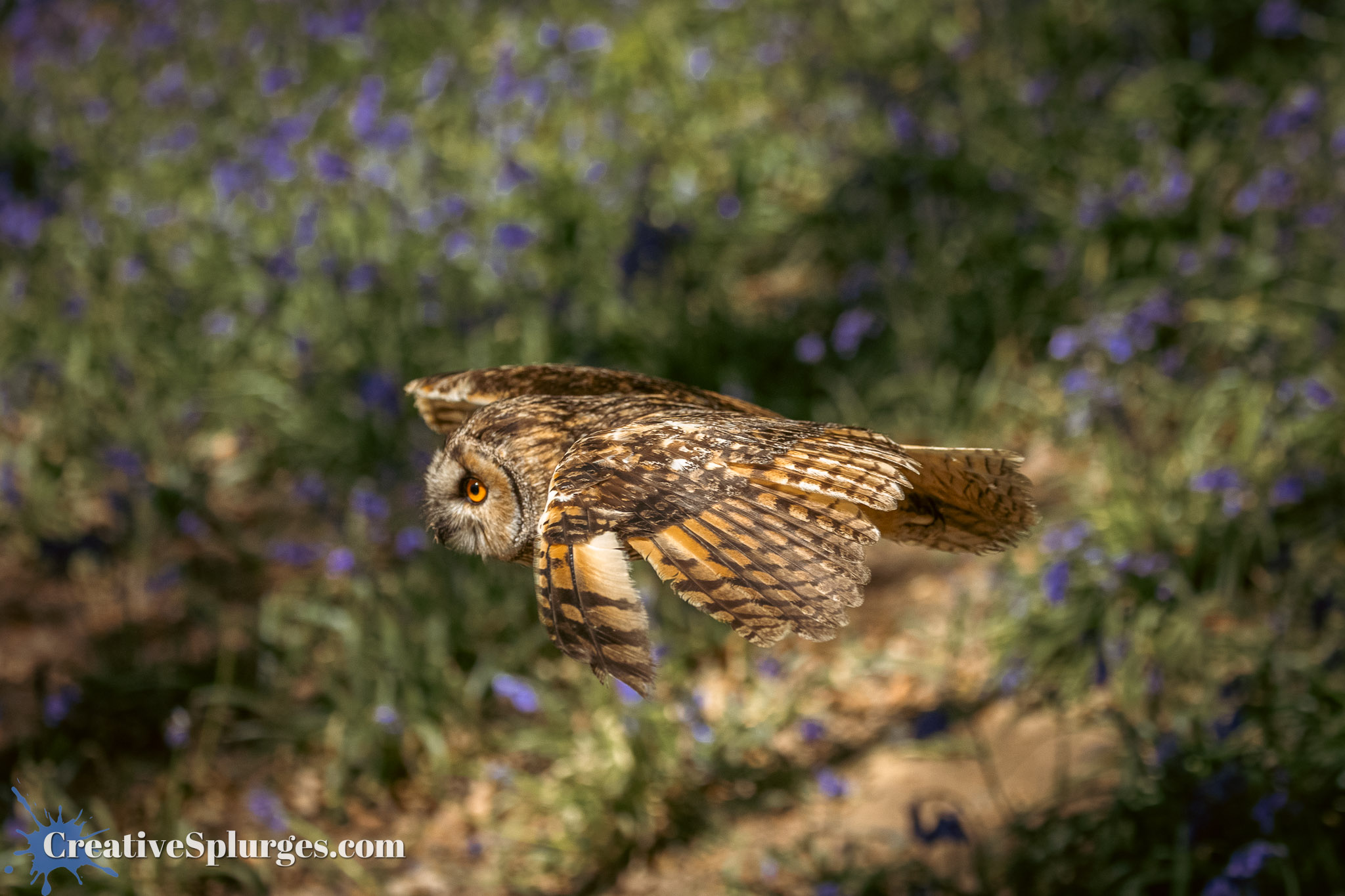
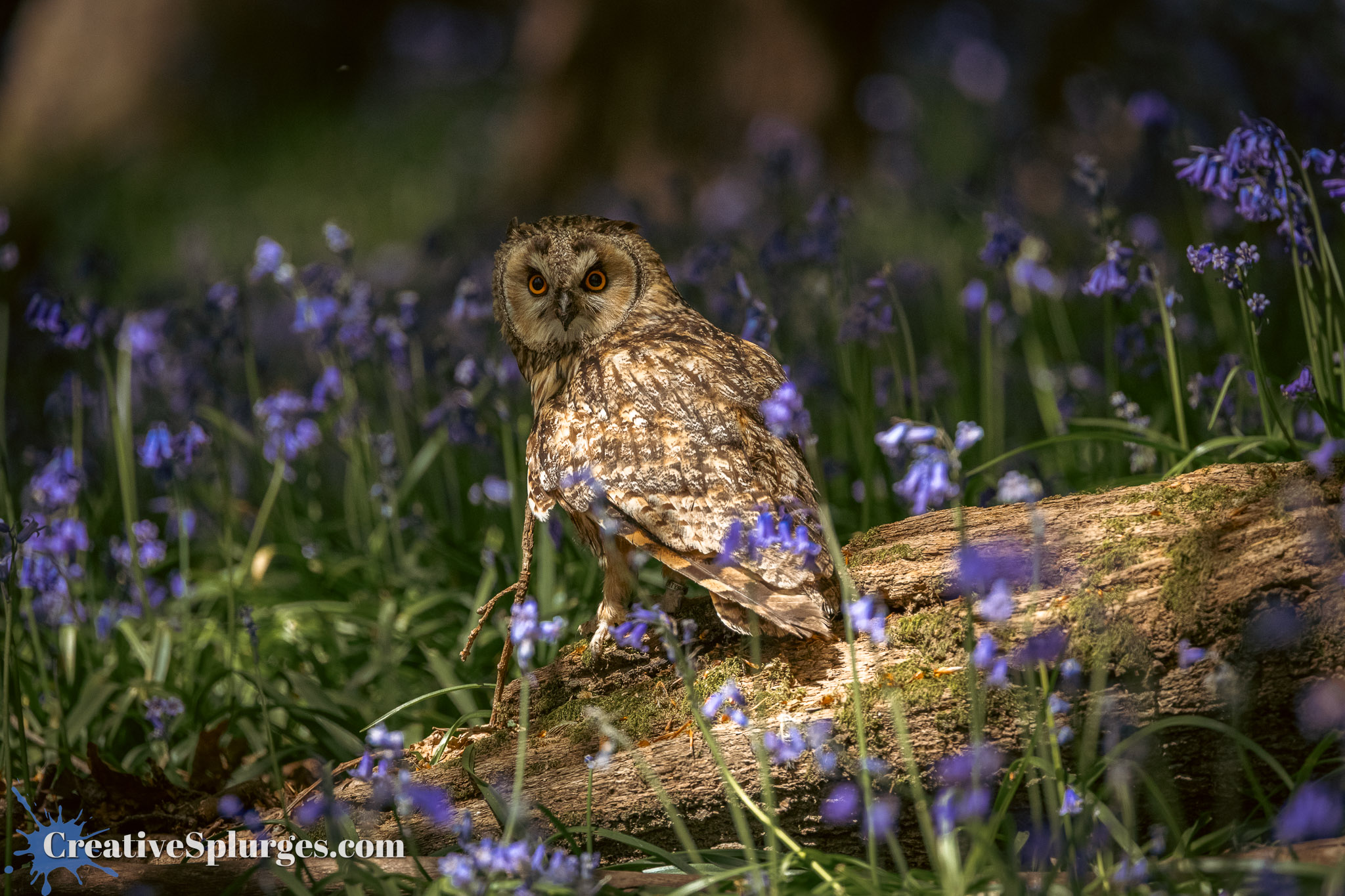
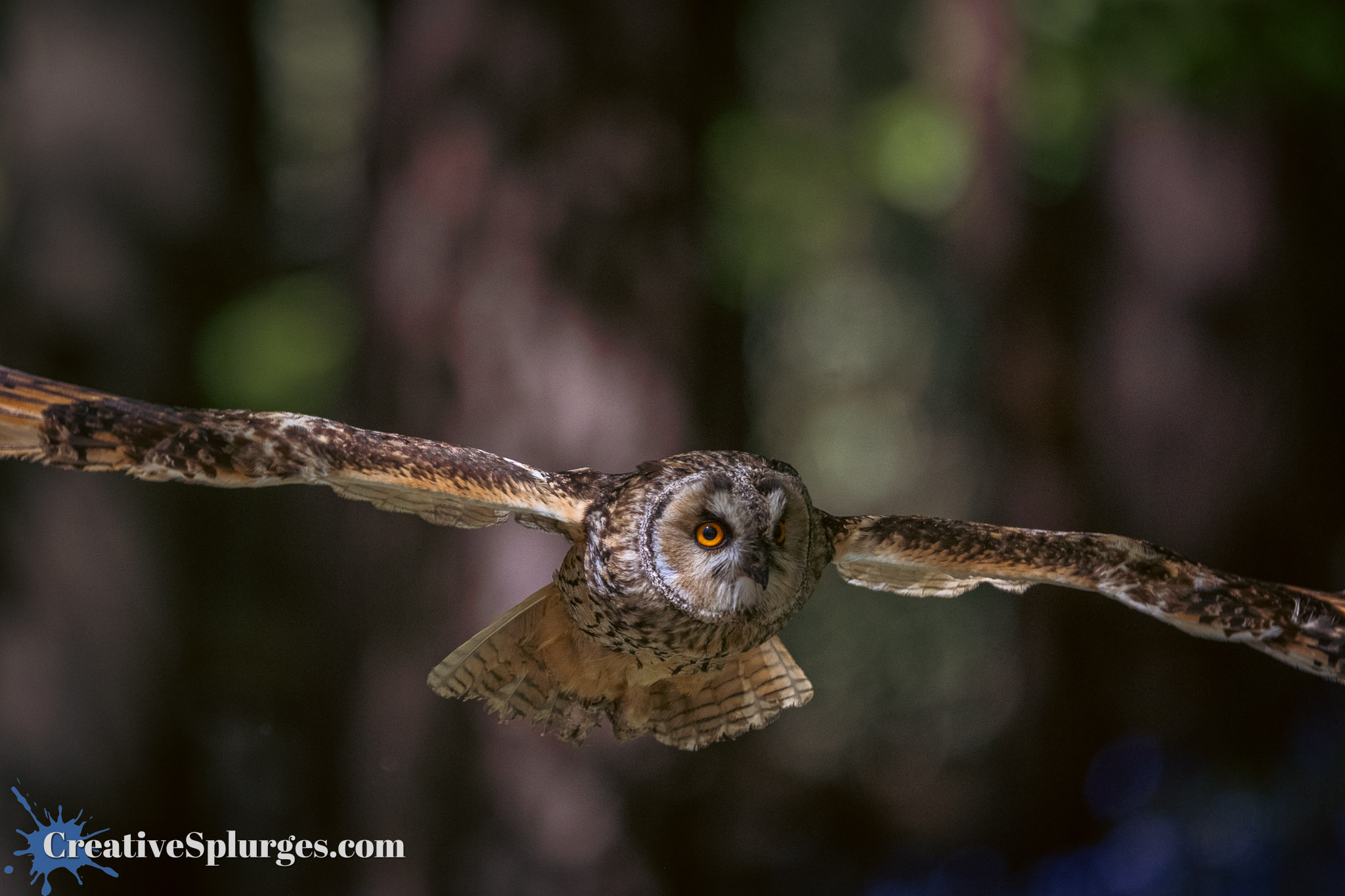
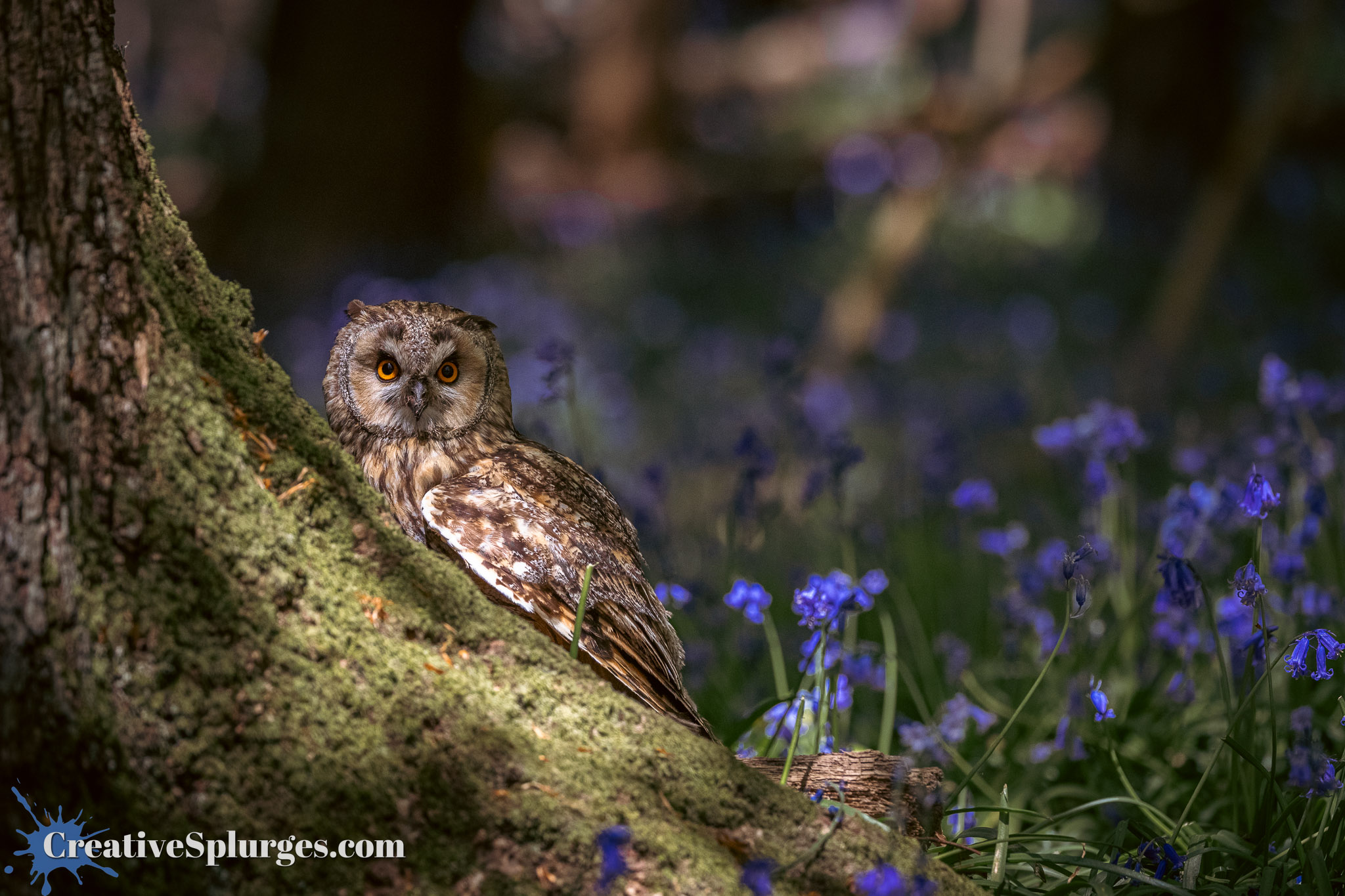
Finally it was time for the fourth and final bird, a long eared owl called Eileen.
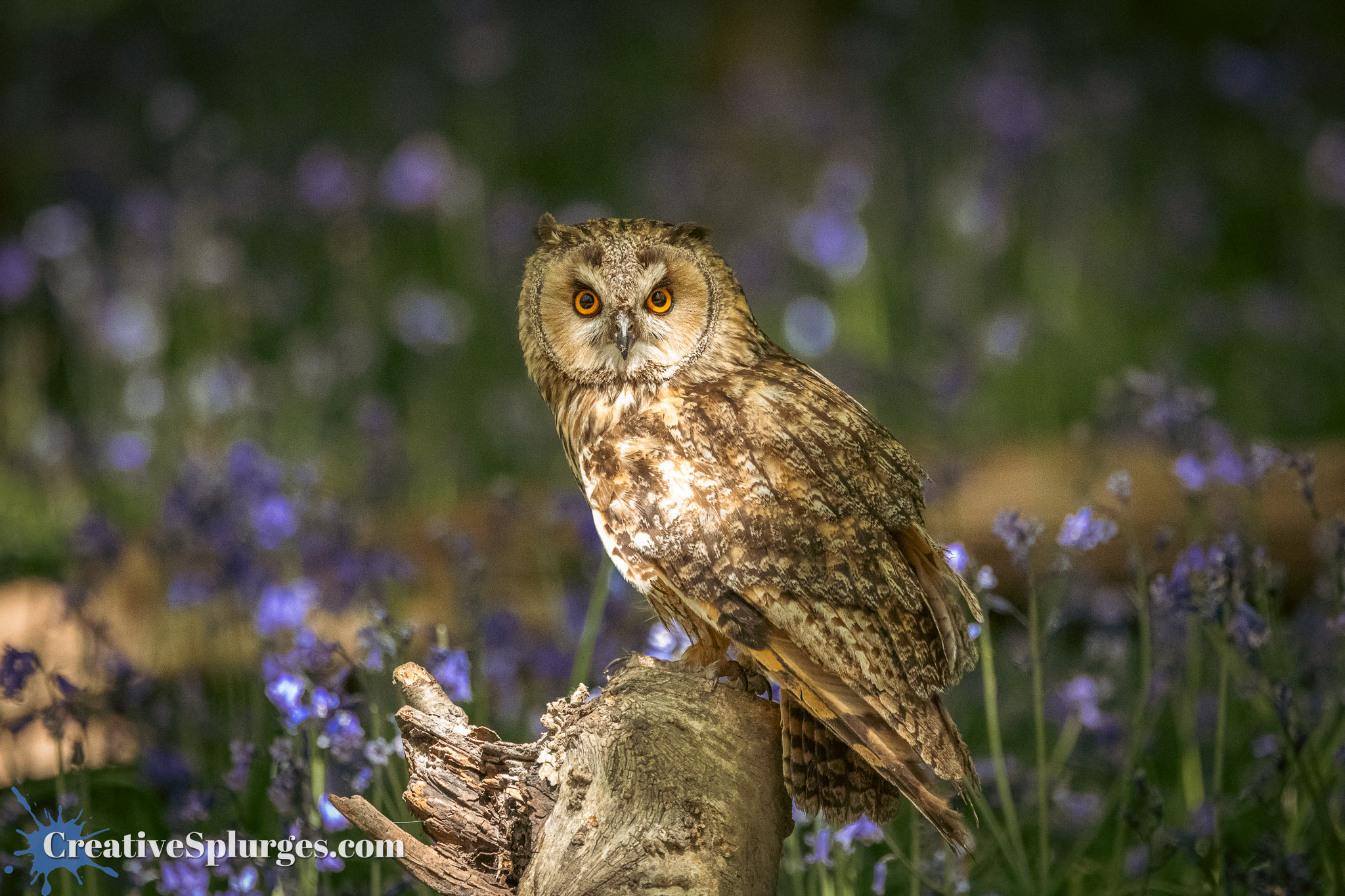
Eileen also had a decent knack of flying about and landing in patches of light.
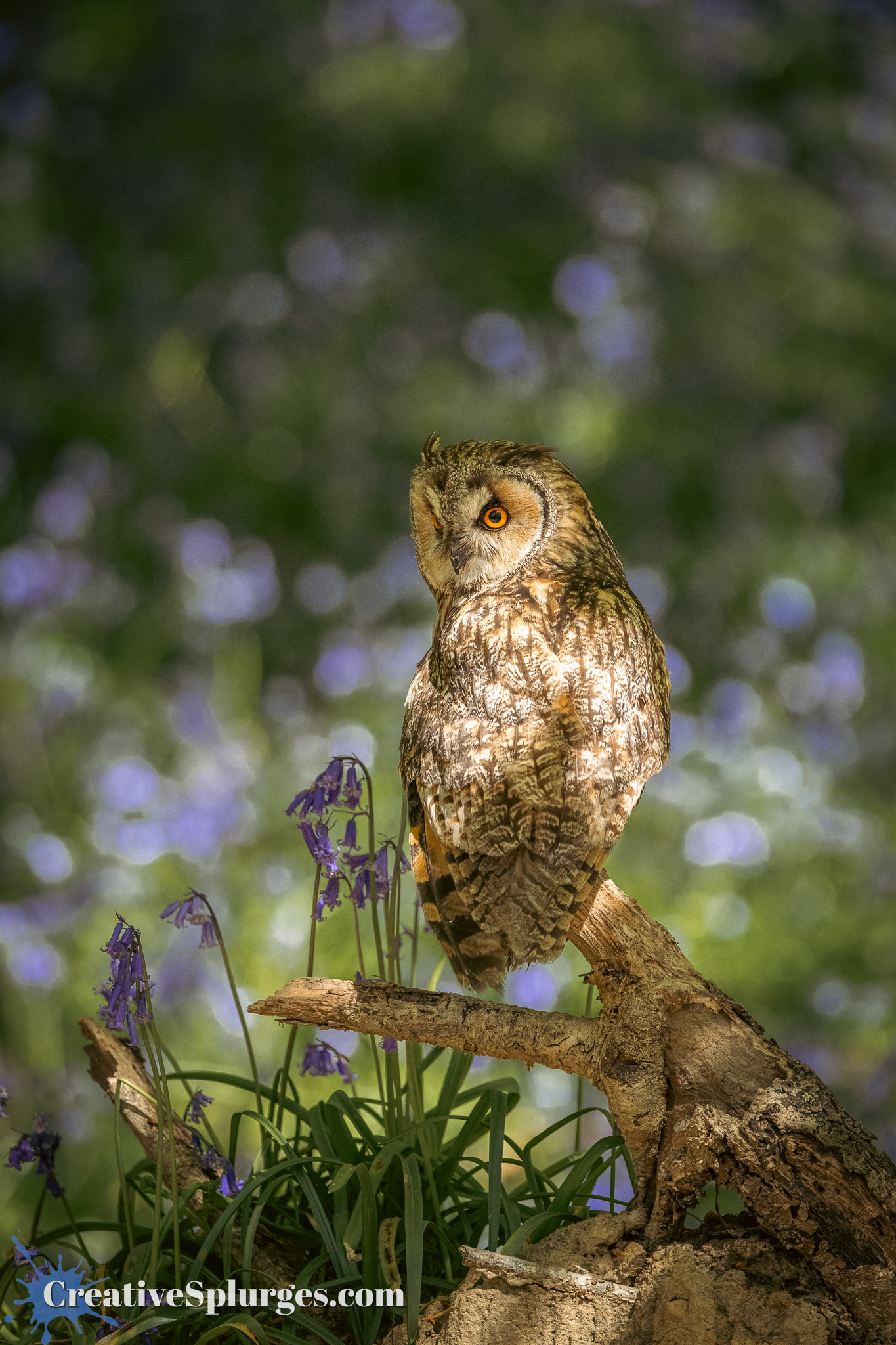
Occasionally, quite close.
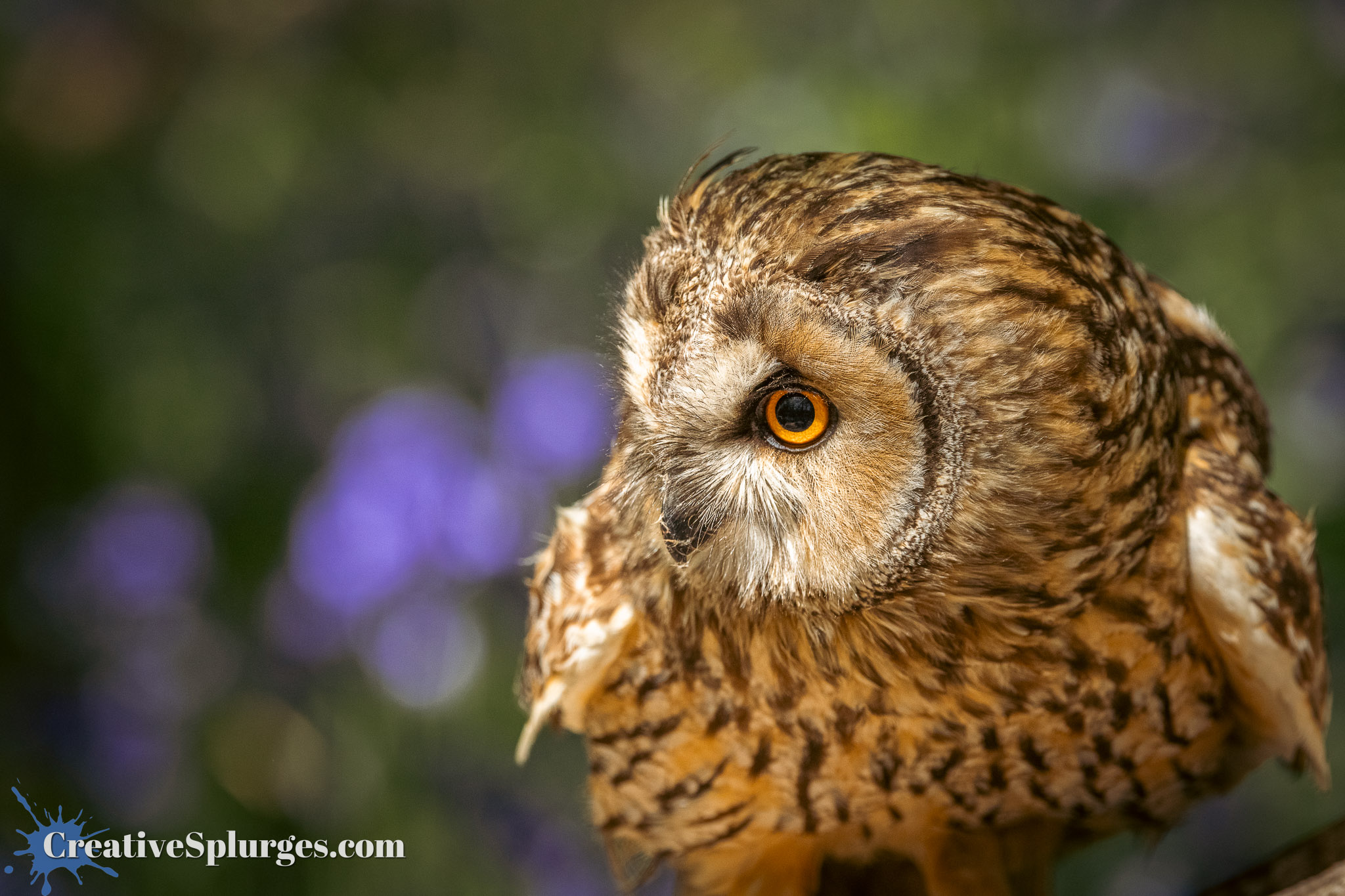
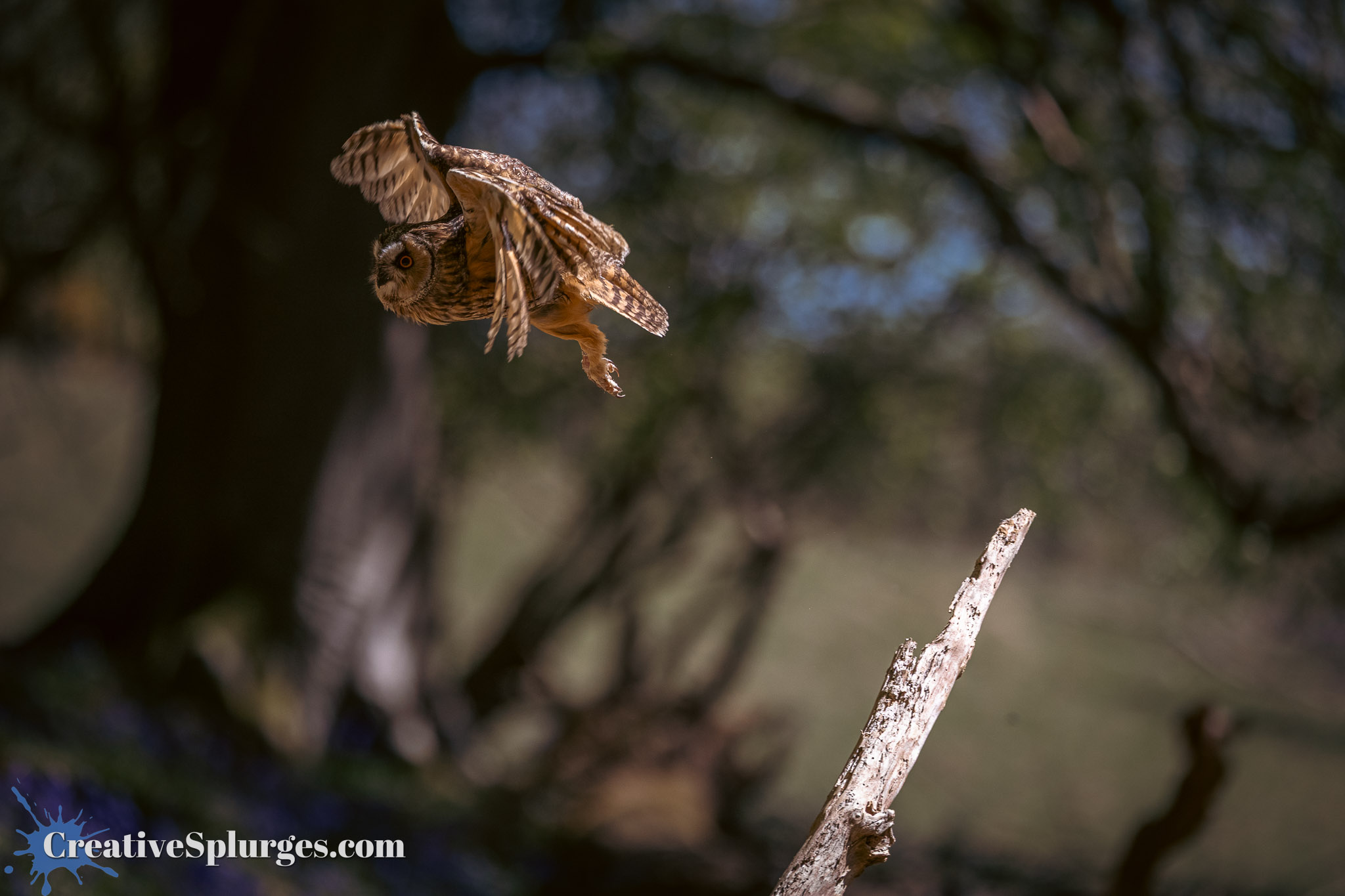
It was only when we got to Eileen that I finally got the hang of shooting the owls in flight. As I said earlier, it just required the courage to frame closer to the bird so that the autofocus knew what I was actually trying to photograph.
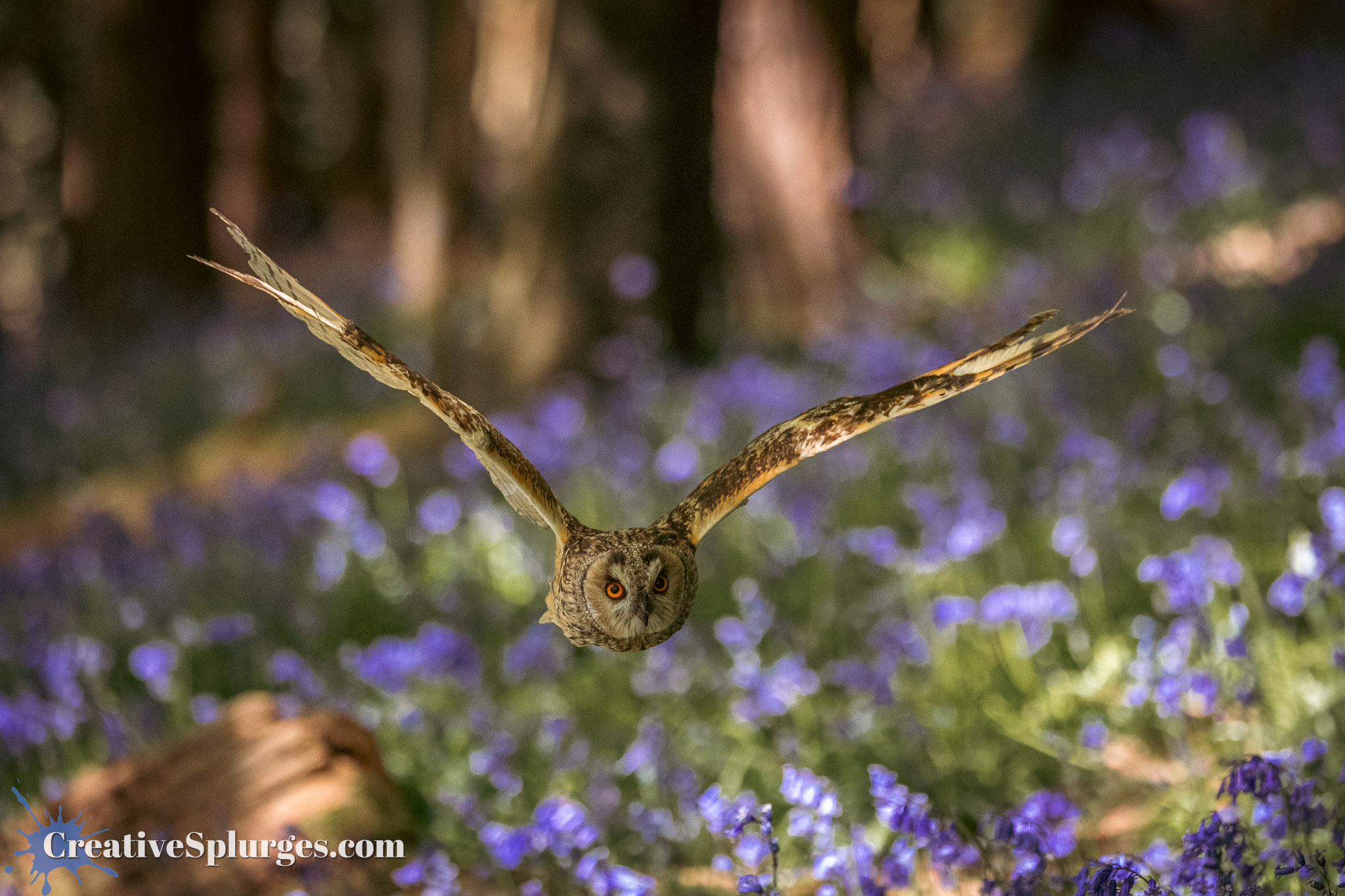
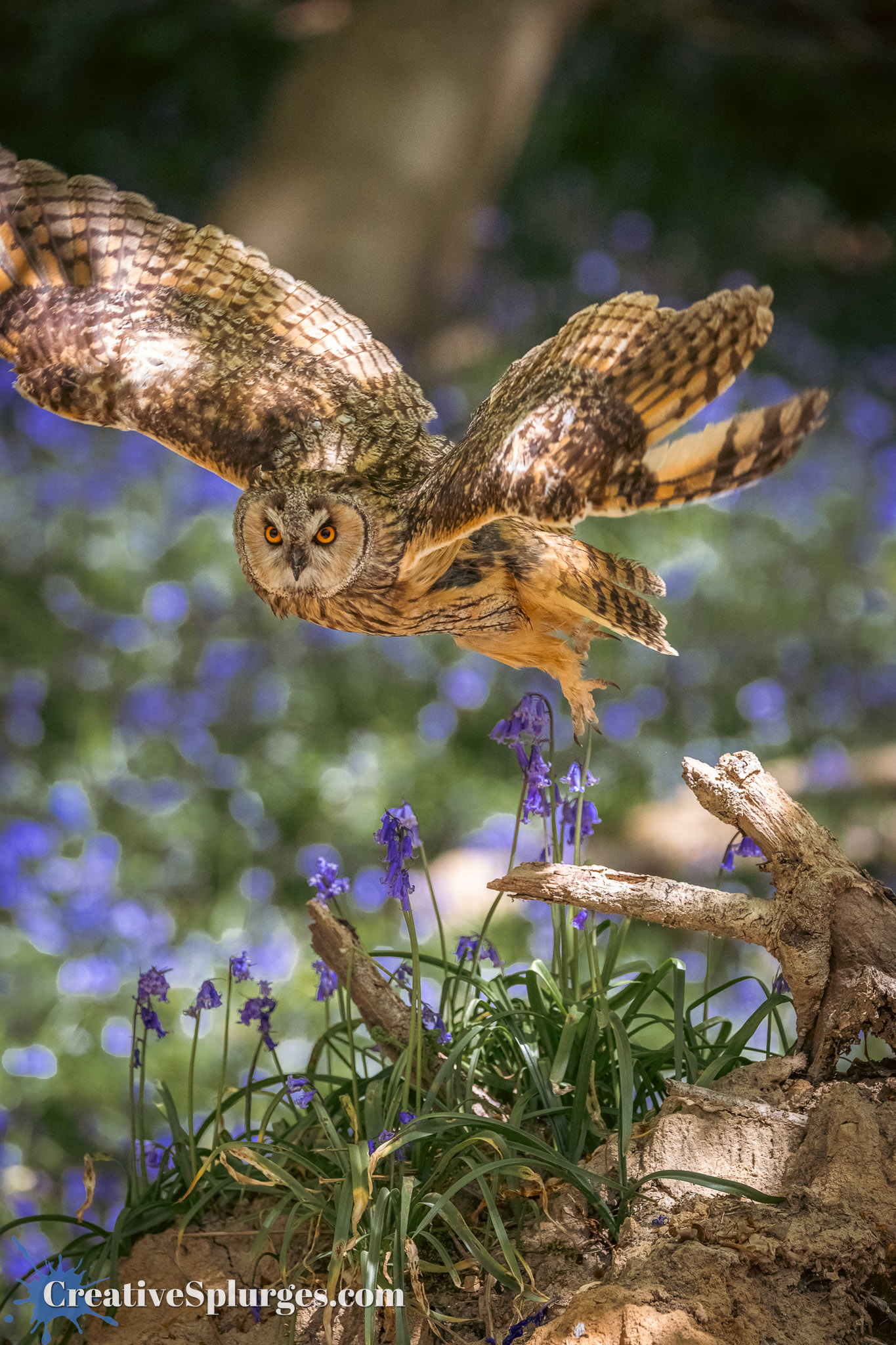
Although I was obviously mostly after shots of Eileen flying low over the bluebells, giving a nice colourful backdrop, sometimes the shots with the large trees in the background worked just as nicely.
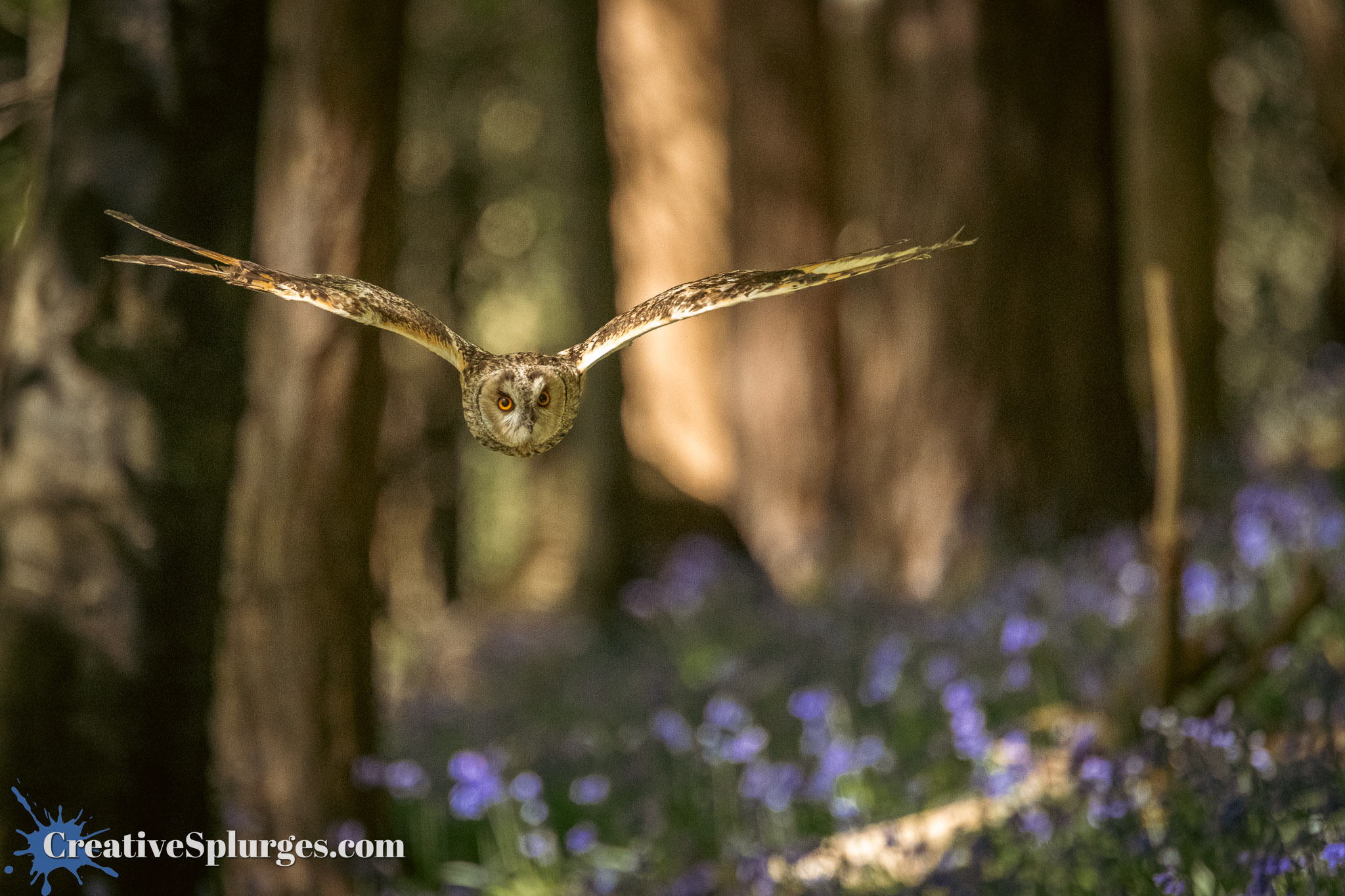
Eileen had no trouble flying. In many ways it was harder to keep her still, she had bags of energy and so was happy to constantly fly up and down the bluebell-strewn area of the wood for us to fill our memory cards. Which obviously gave me the problem in the edit of selecting which shots to keep and which to bin (not that I bin many shots unless they’re a technical write-off – that is, motion blurred, out of focus, or framed so I completely miss the subject).
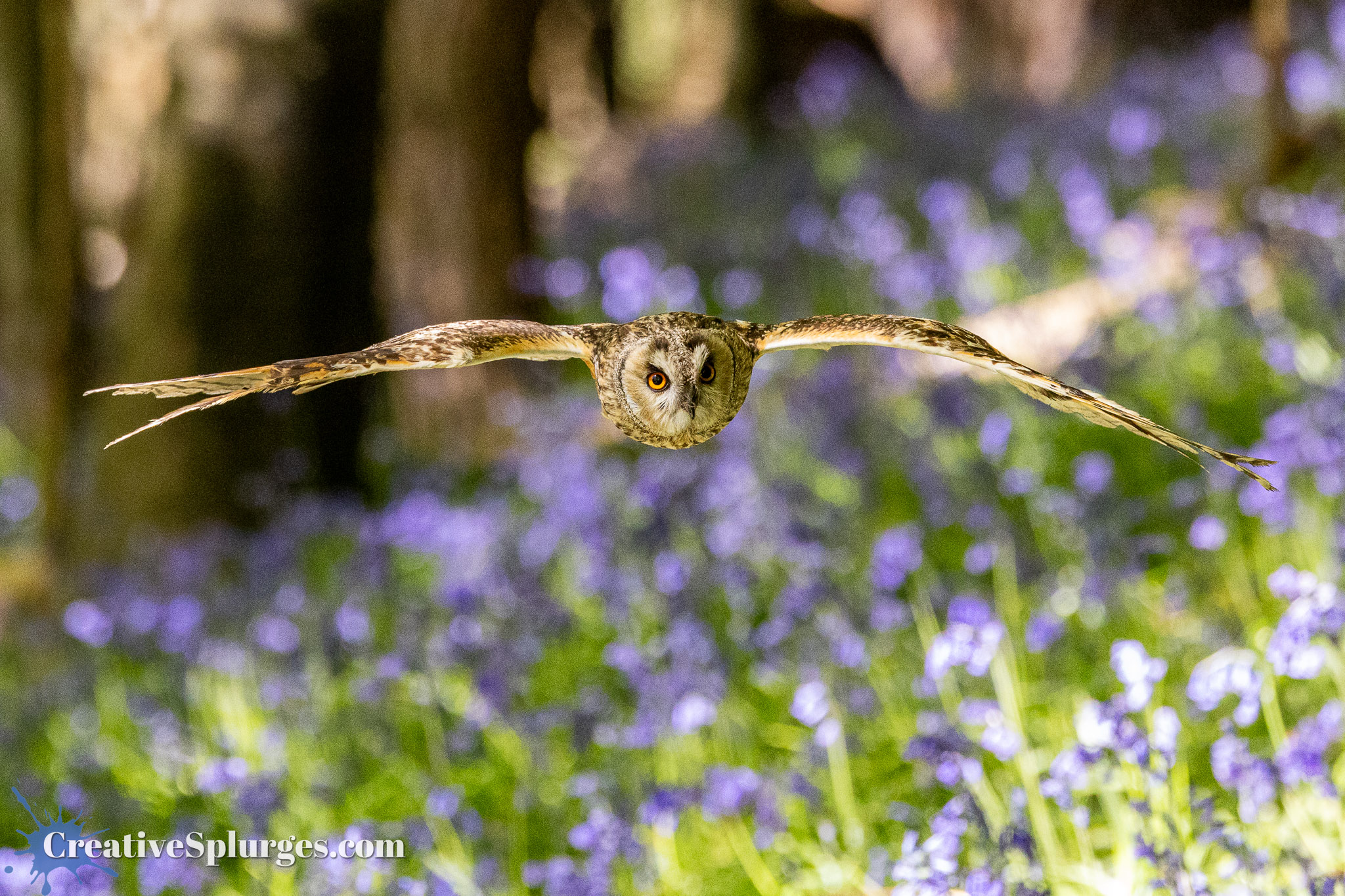
Which is to say, here’s a lot of flying photos of an owl.
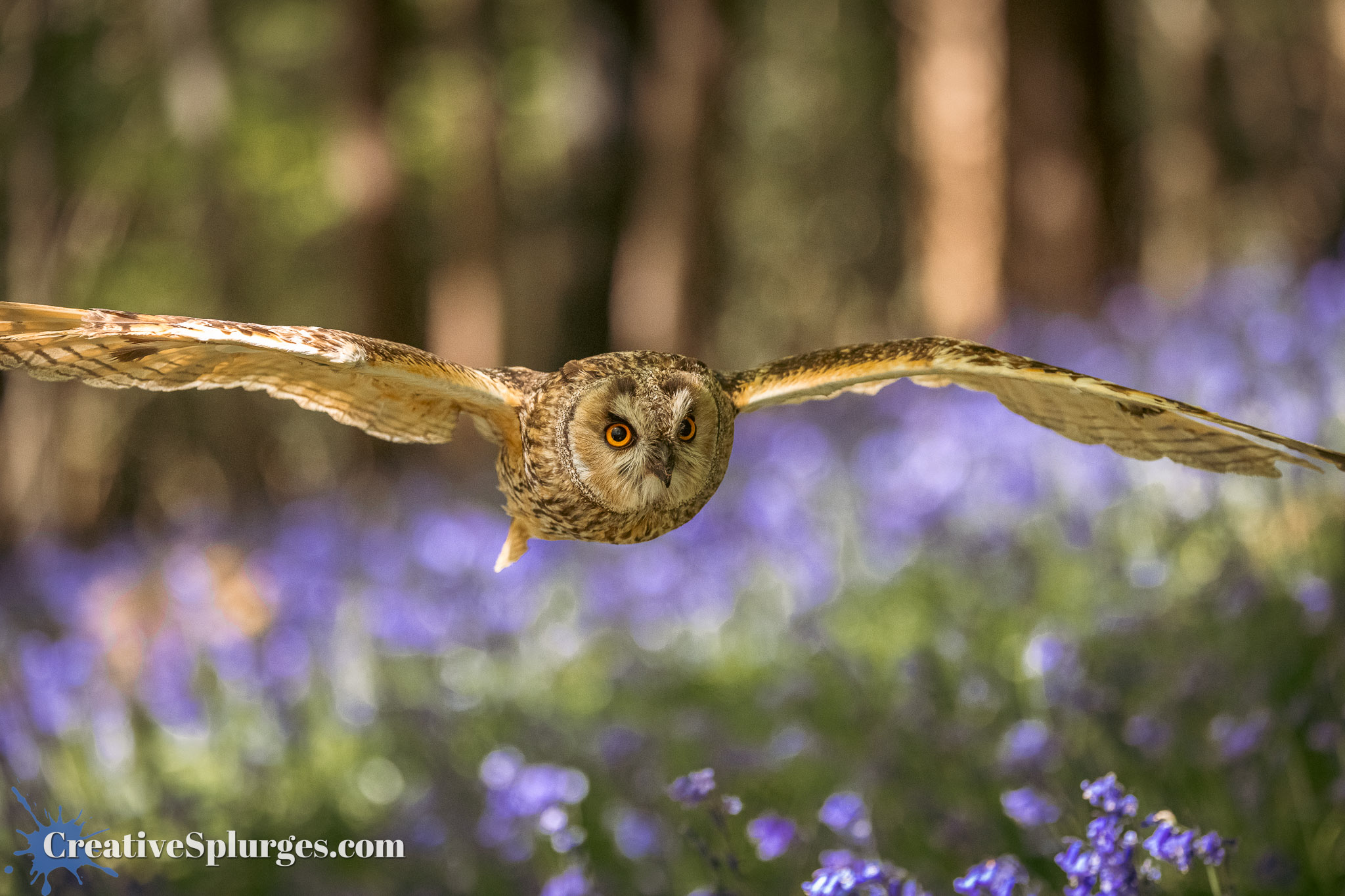
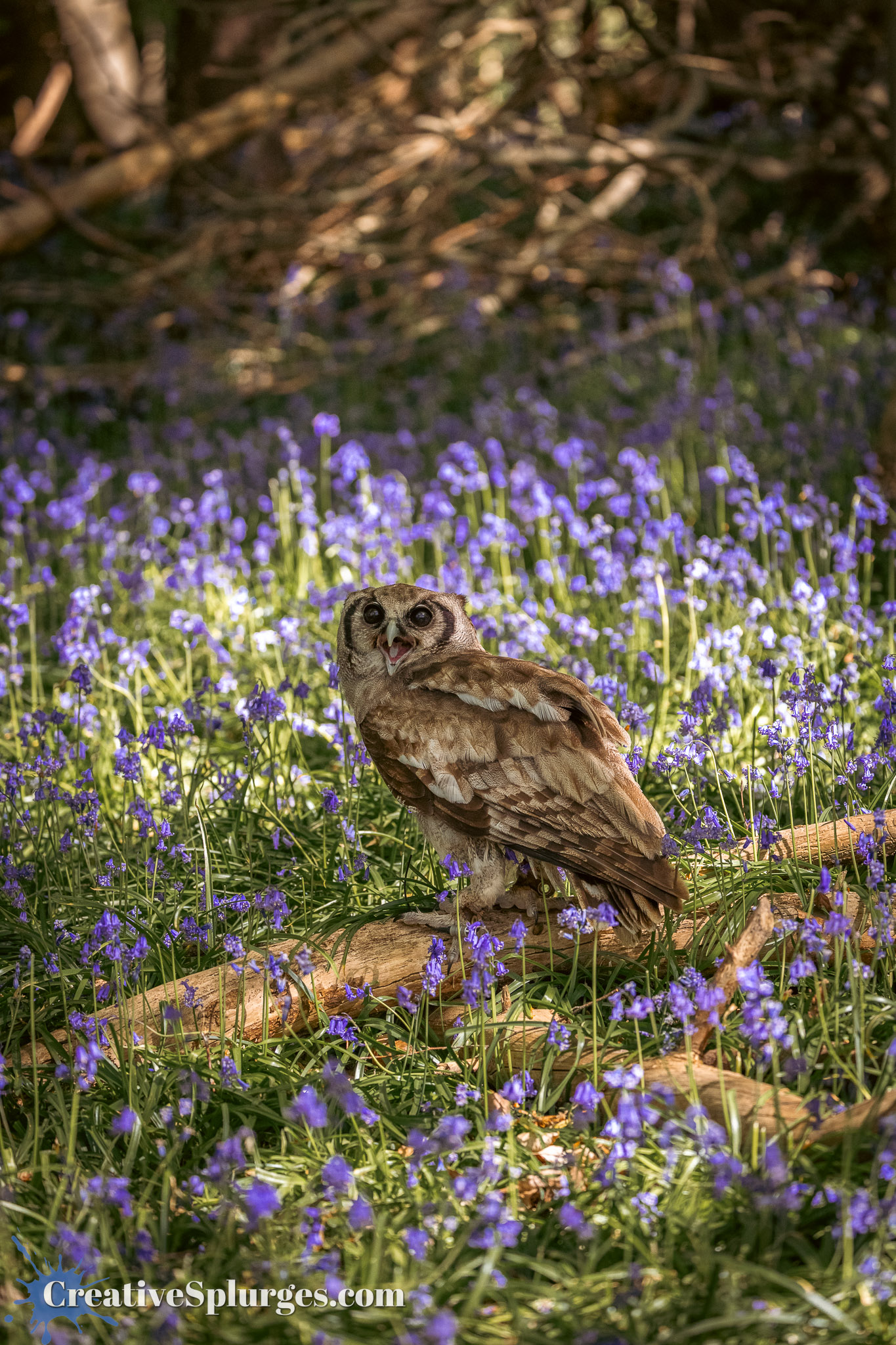
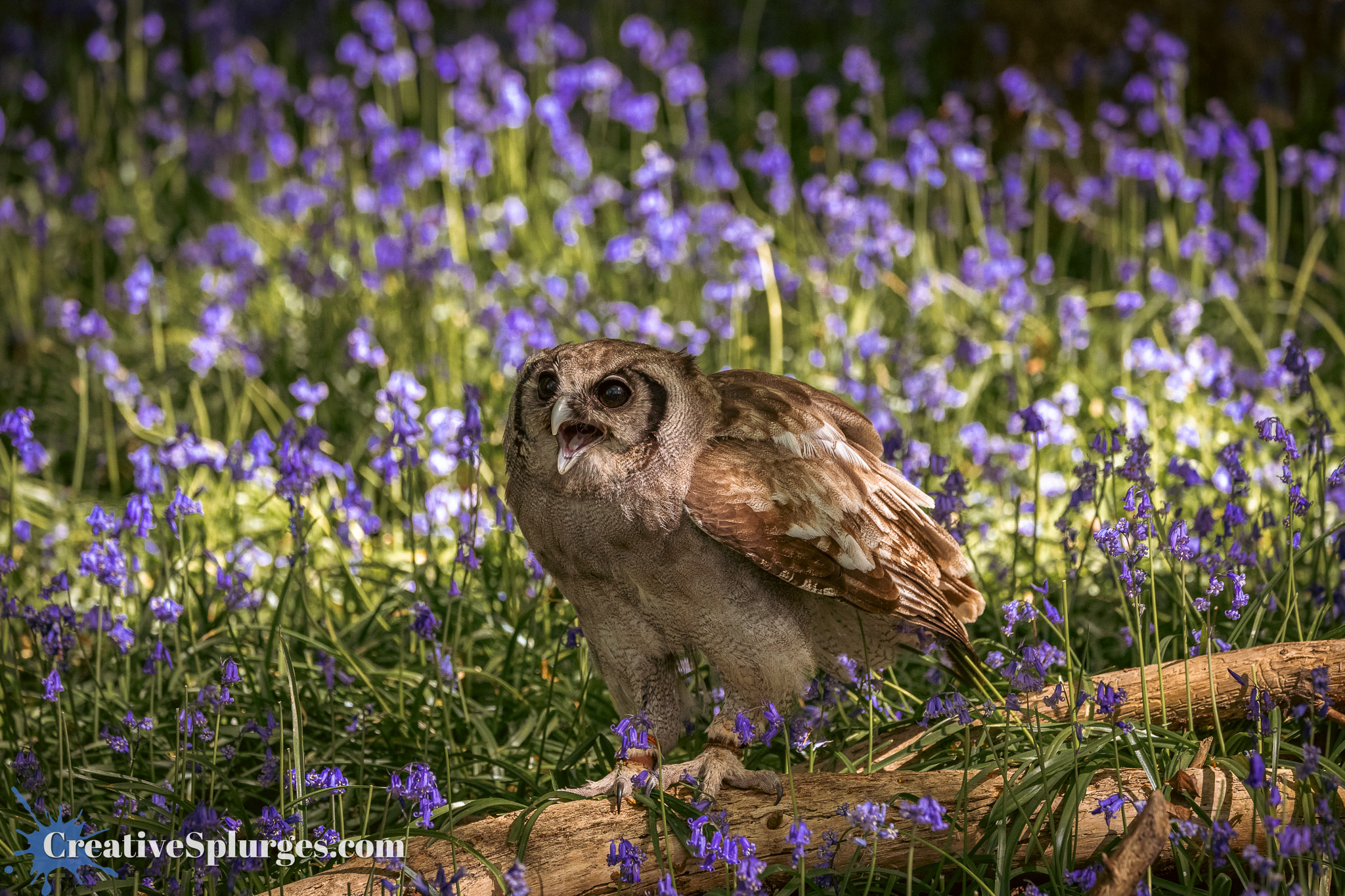
On at least one pass she let out a hoot and I captured her with her mouth open.
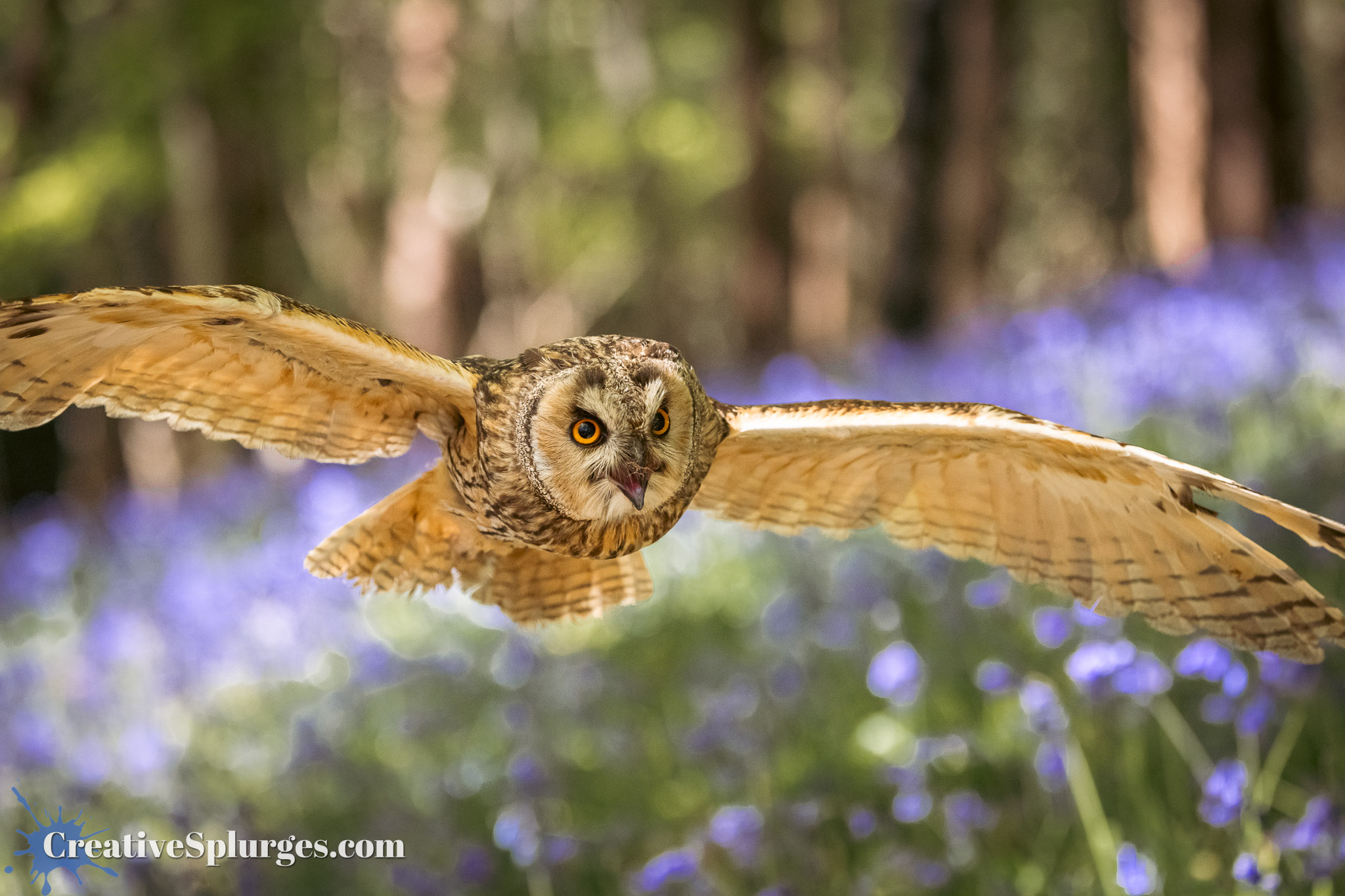
The light on Eileen was often uneven – she was probably in the shade in many of the shots above – but sometimes she caught the light.
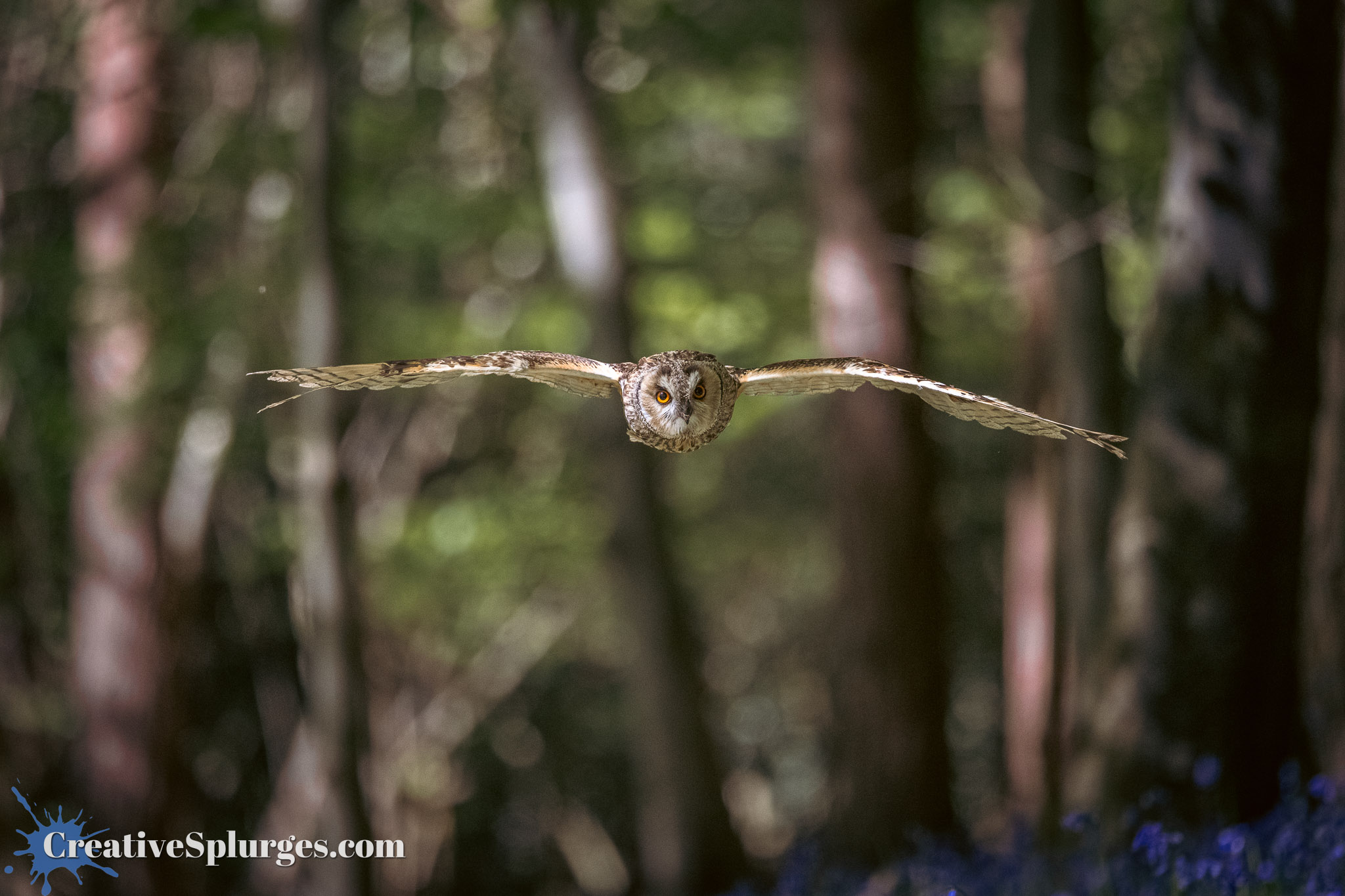
Occasionally I was able to get away with slightly wider framing to get more bluebells in the shot.
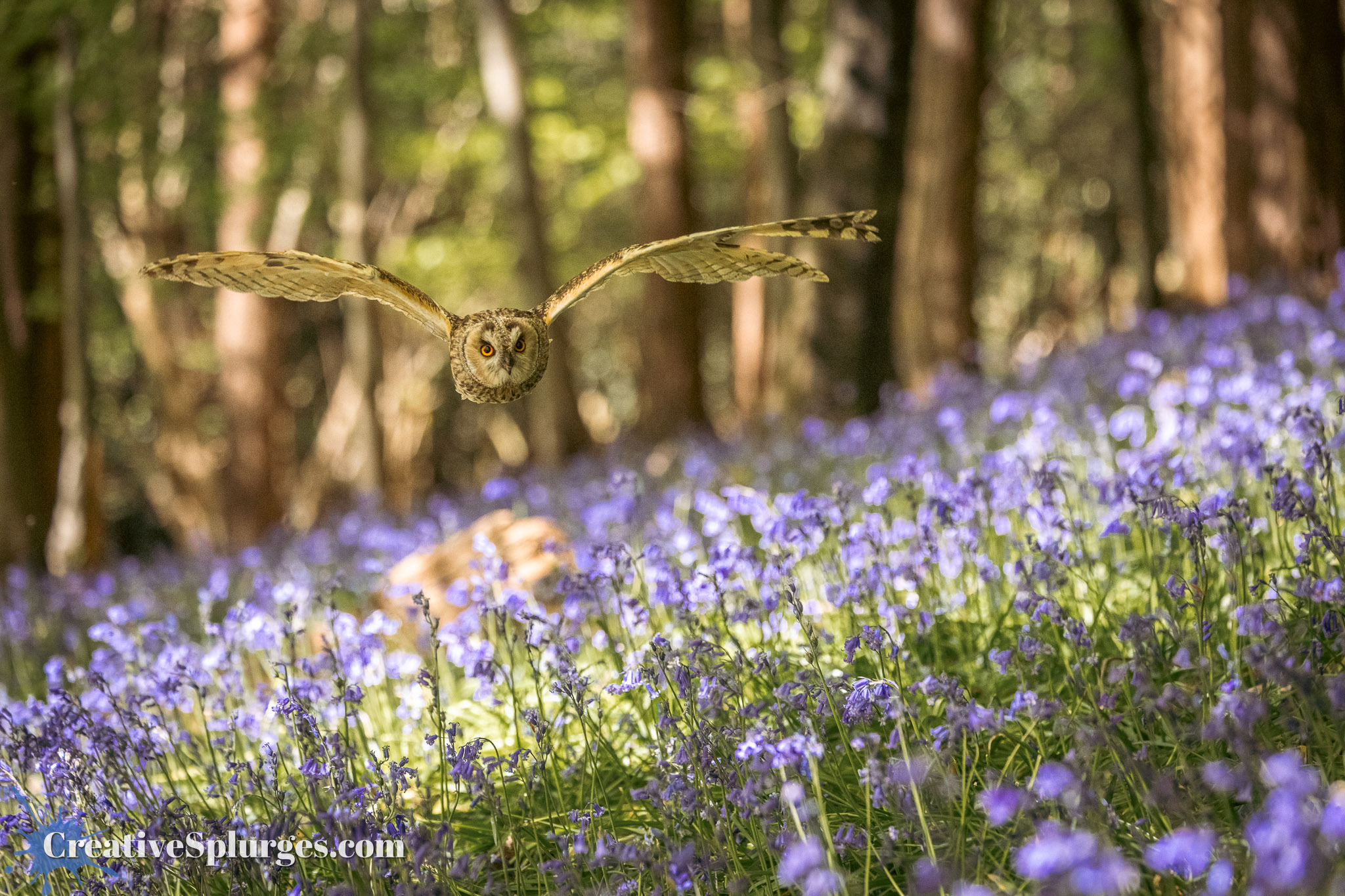
After a while, Eileen was more open to the idea of sitting still for brief moments.
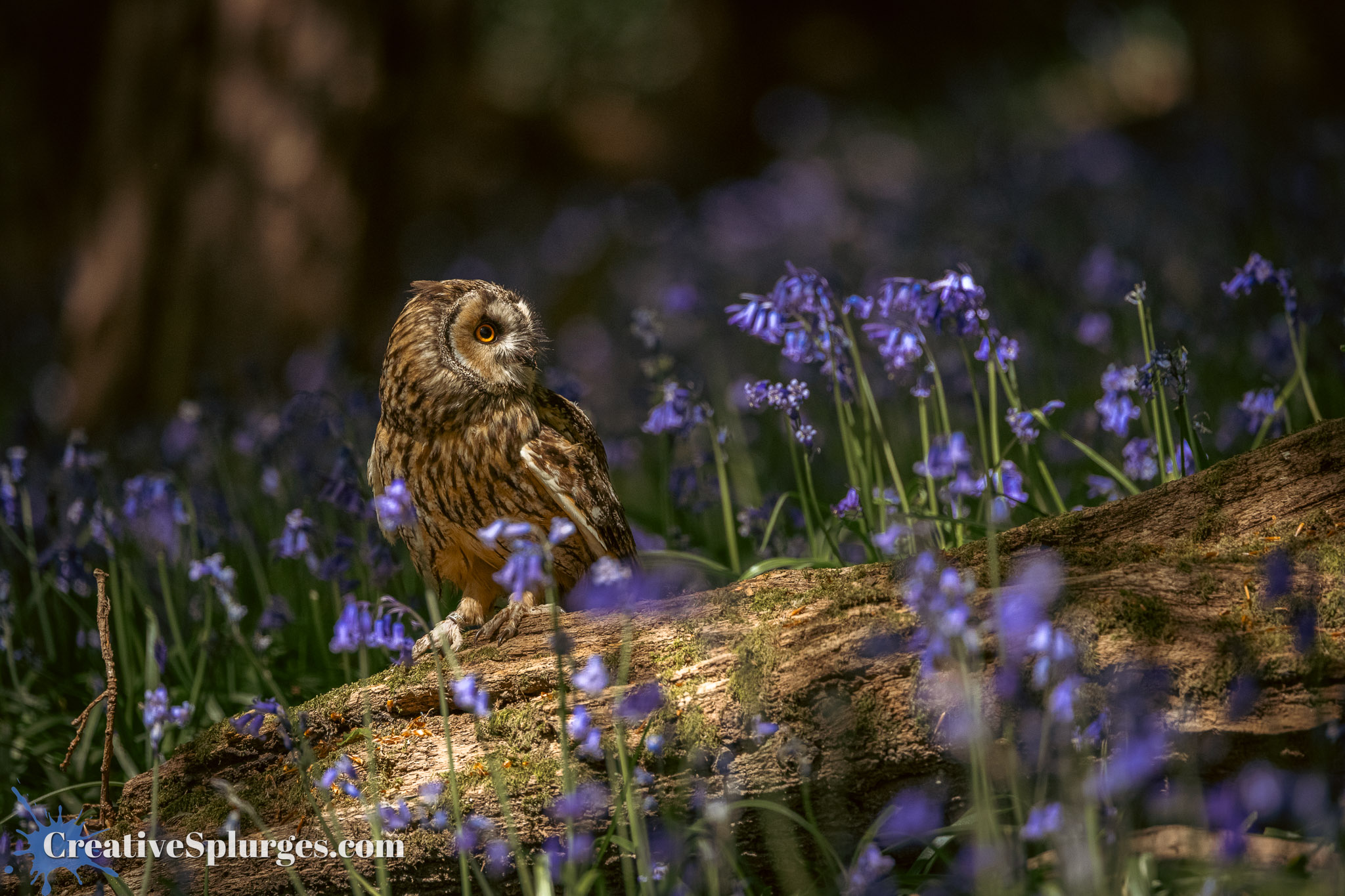
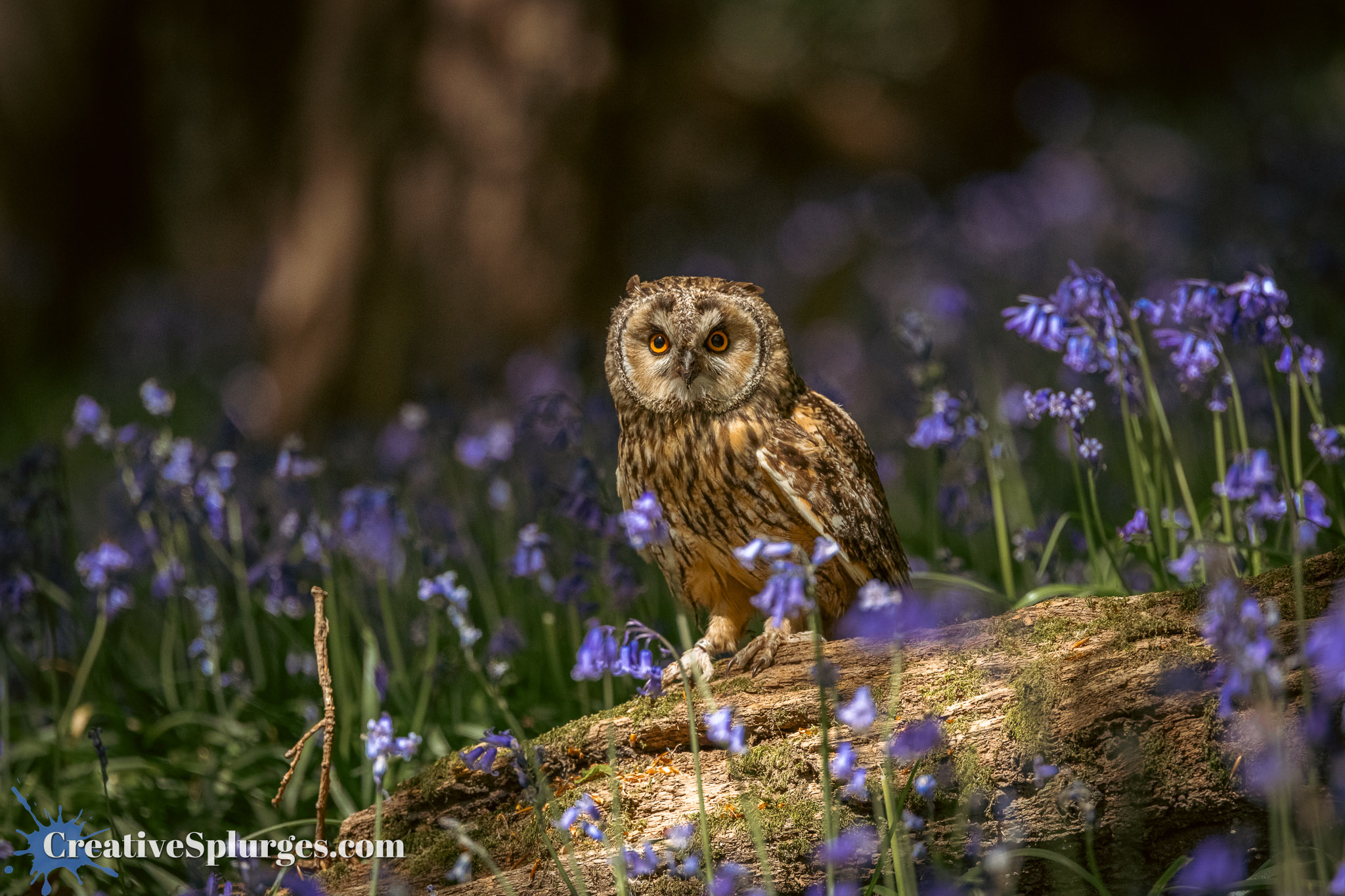
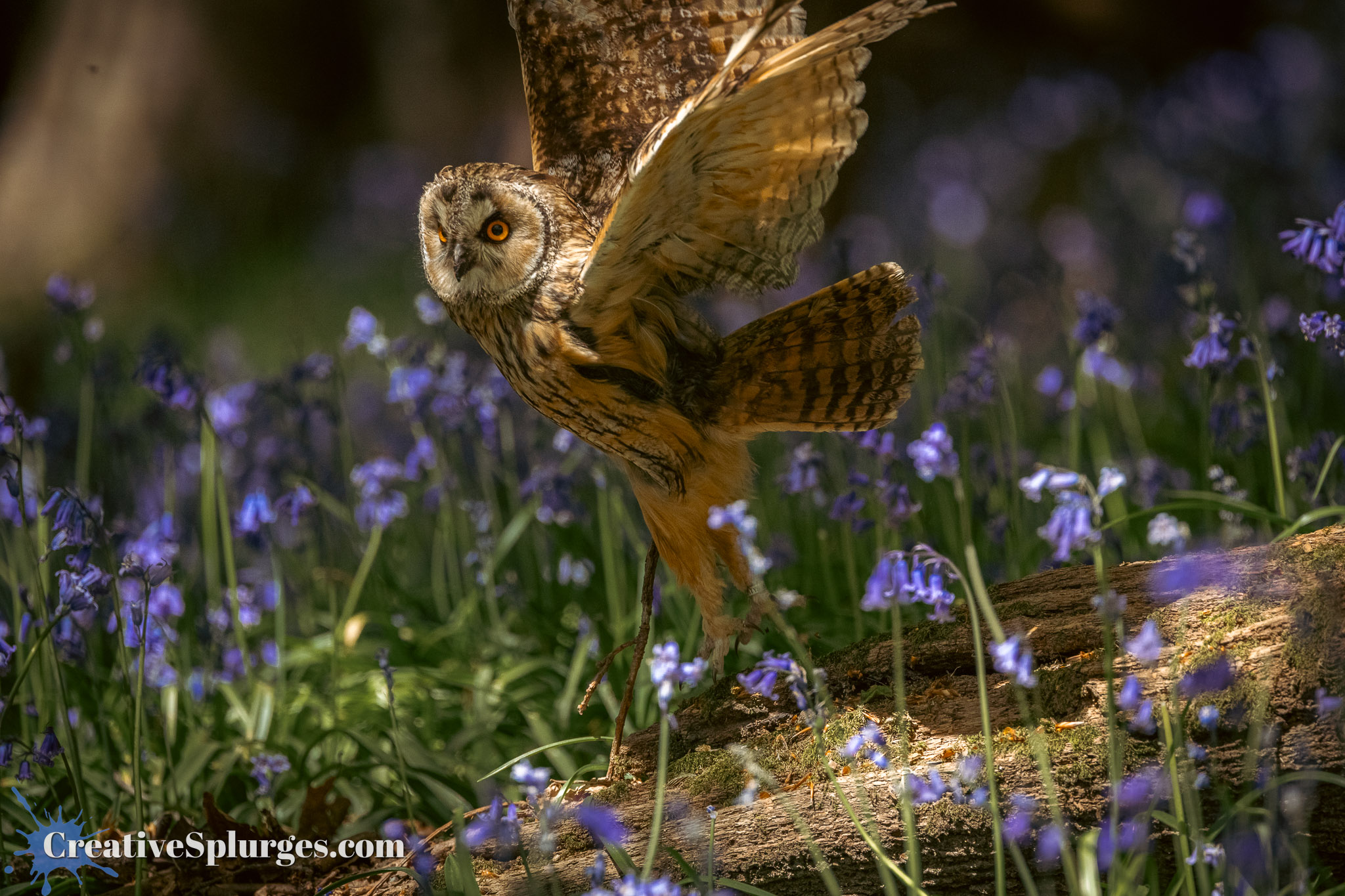
Which also led to some dramatic takeoff shots.
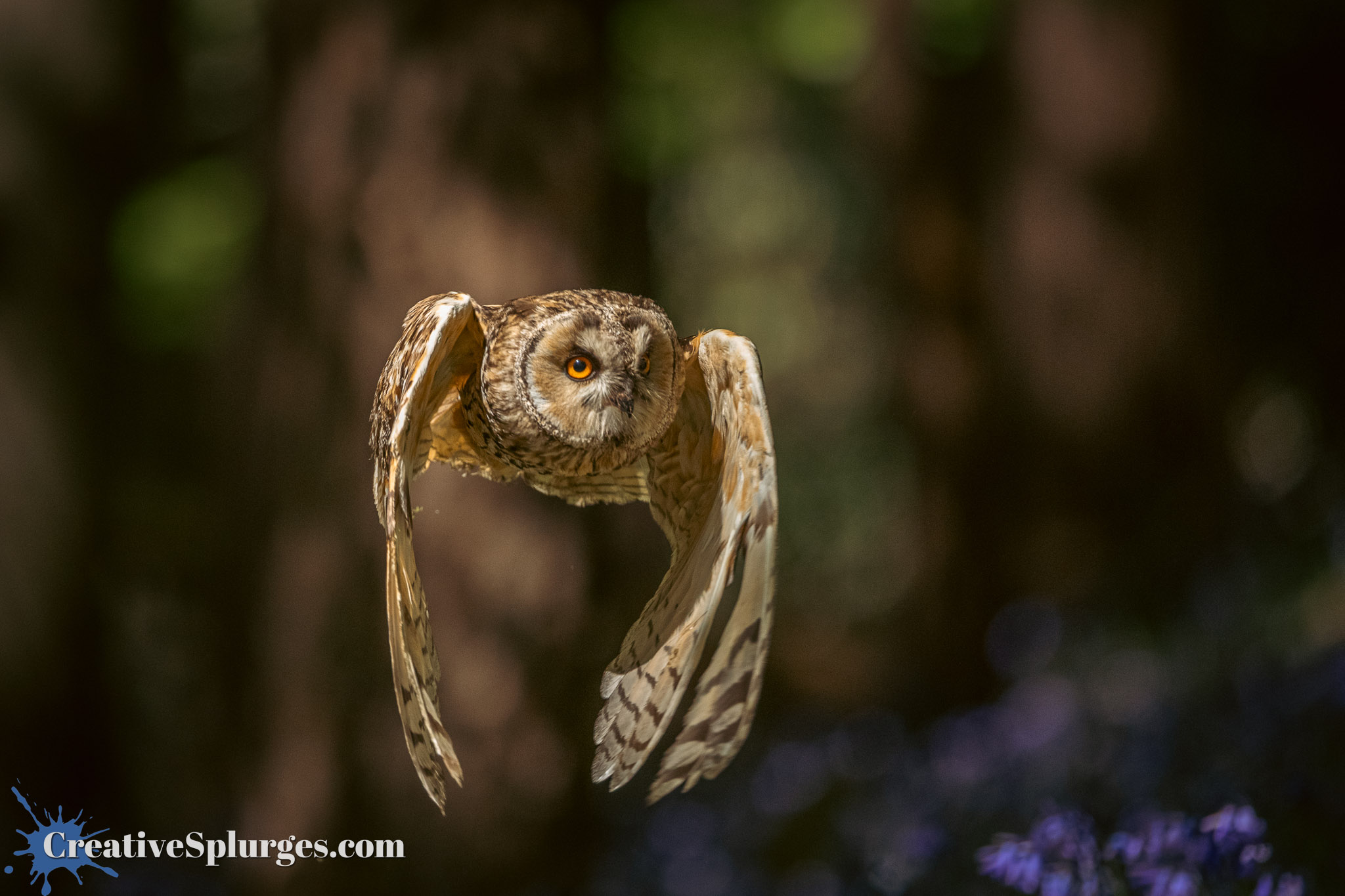
Although most of my shots of Eileen in flight are her with spread wings, because that generally looks better, there is also something quite impressive about seeing her wings in a downward position.
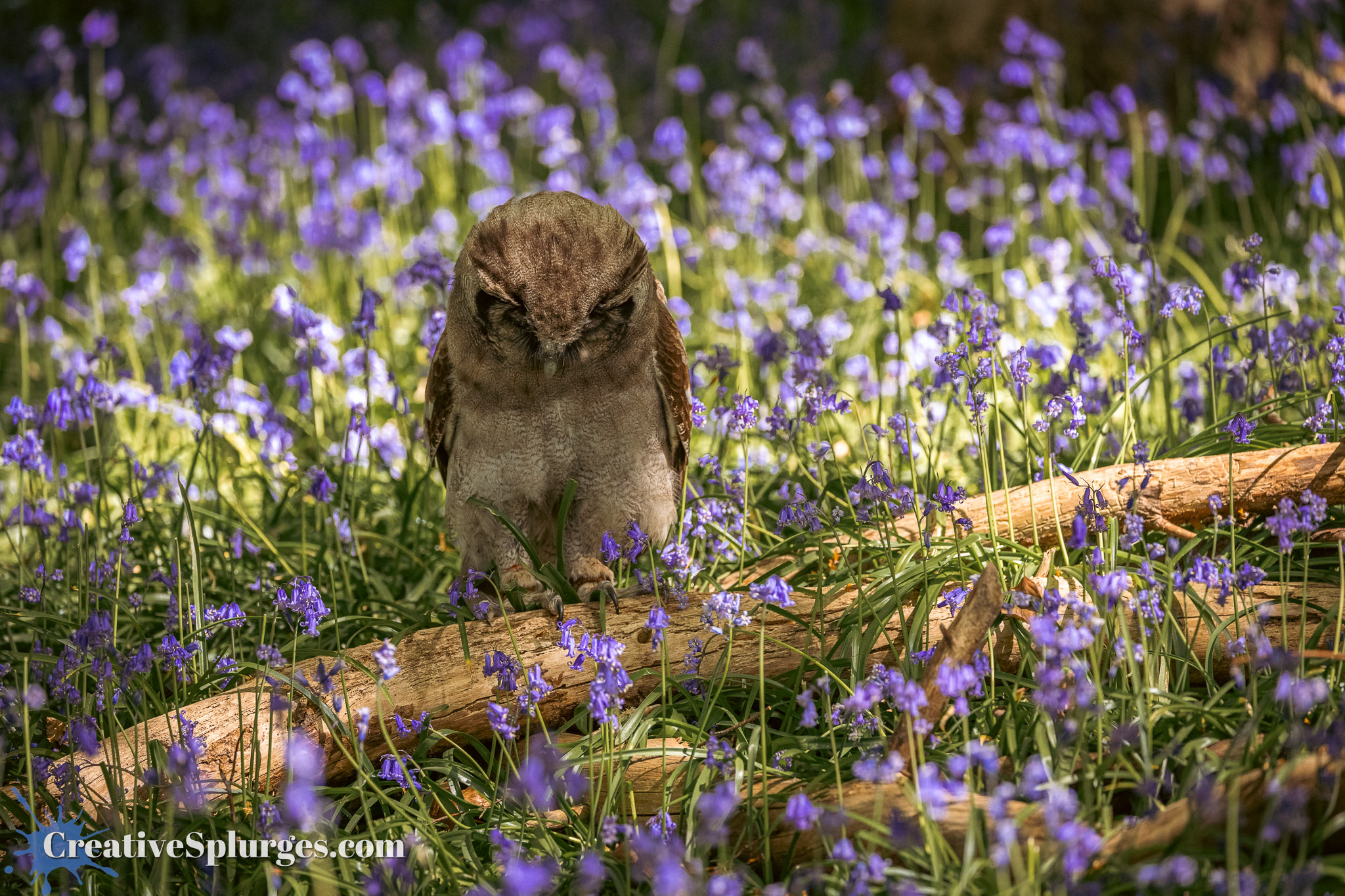
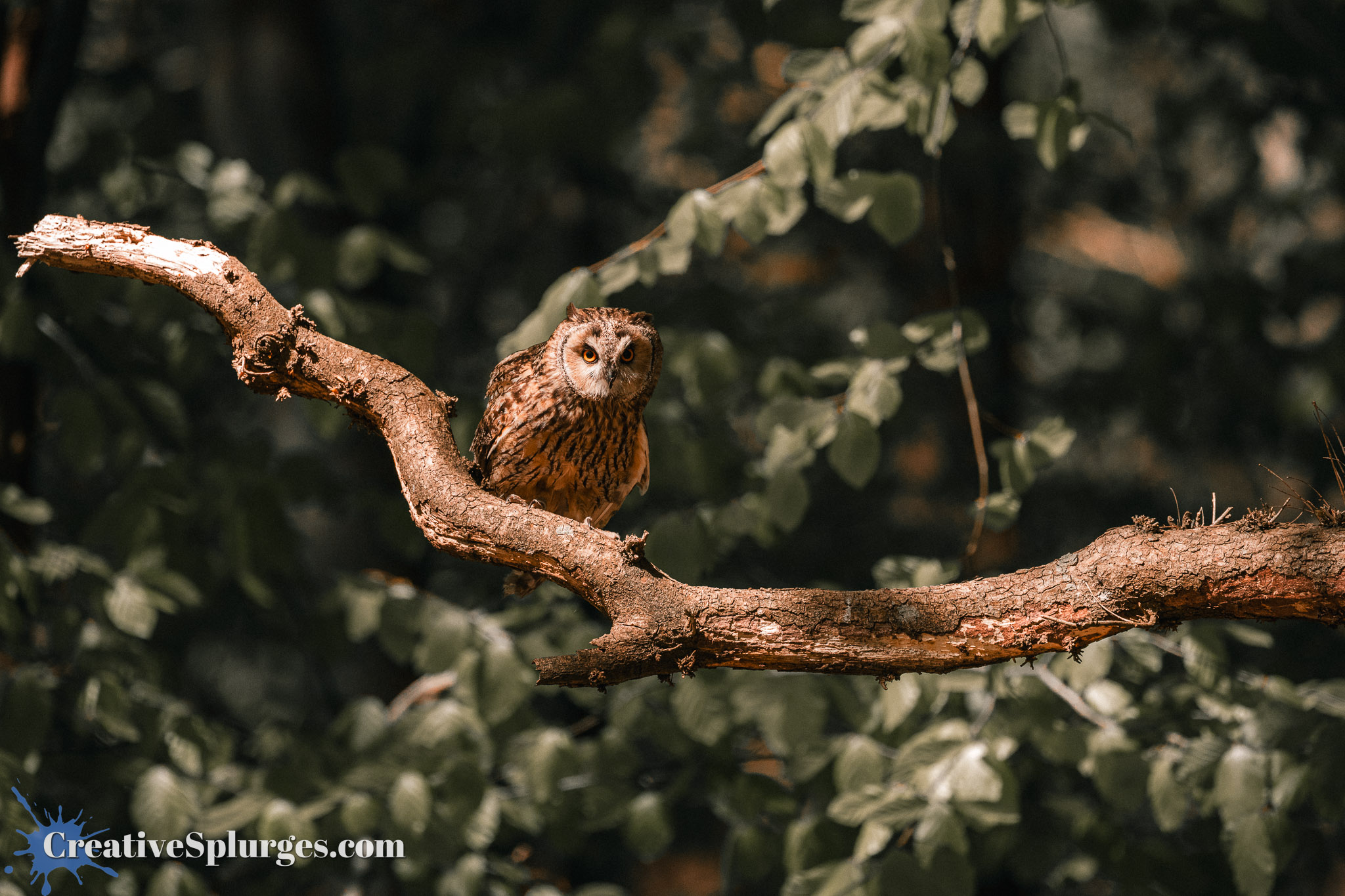
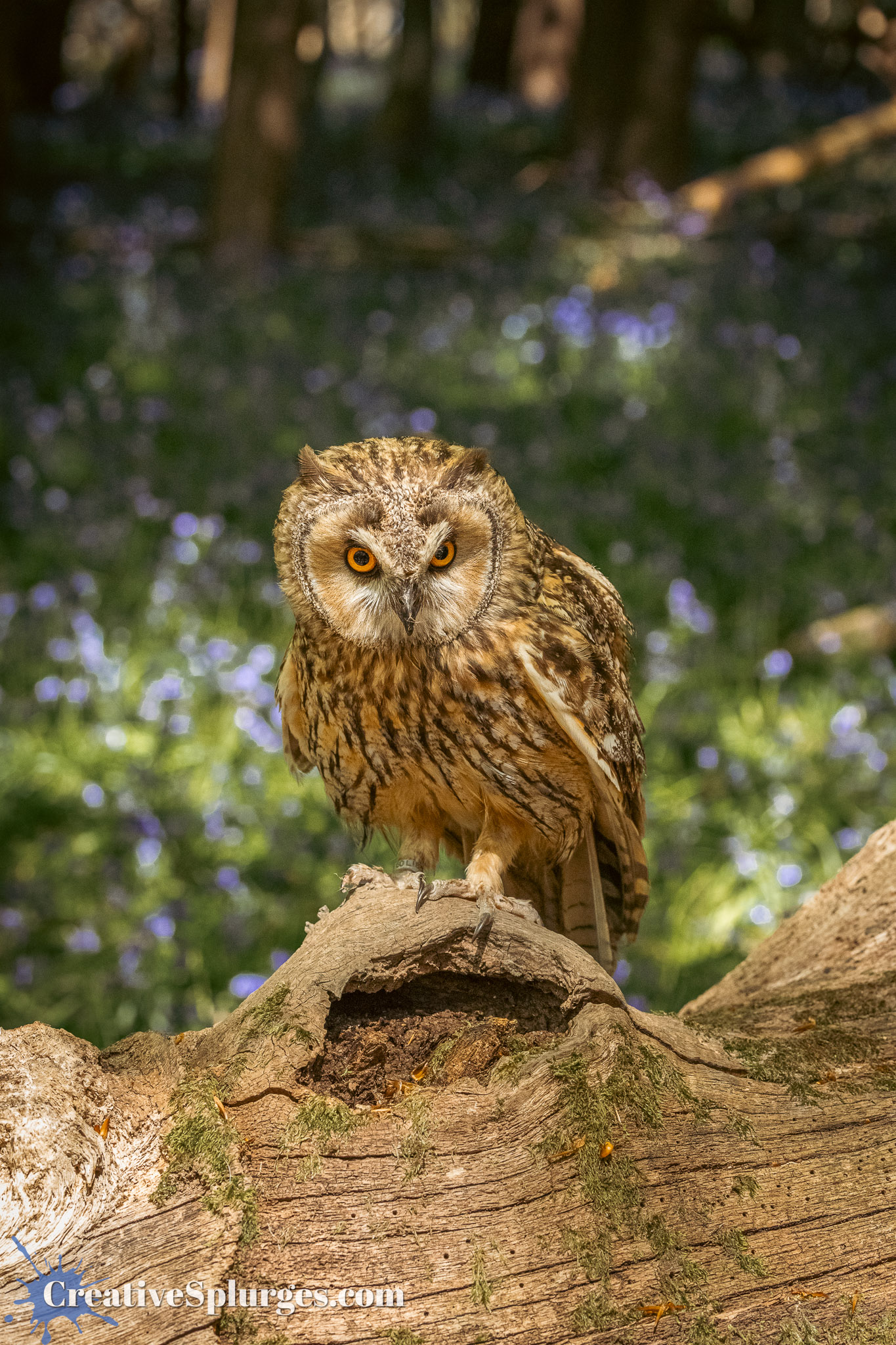
We closed the day with Eileen sitting at the base of a tree, poking her head around. She was, to be fair, a little bemused by the assignment, but eventually we got something workable.
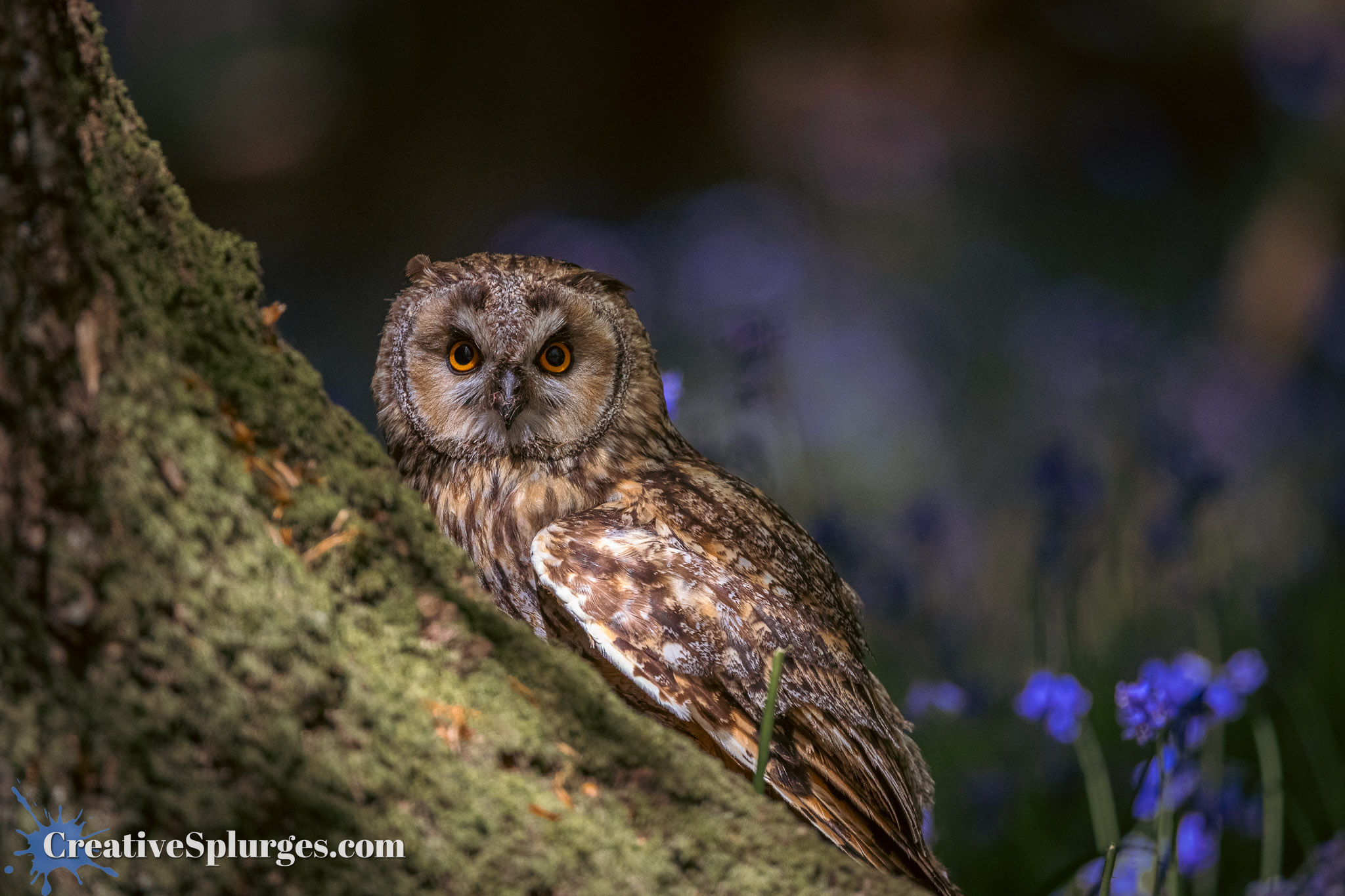
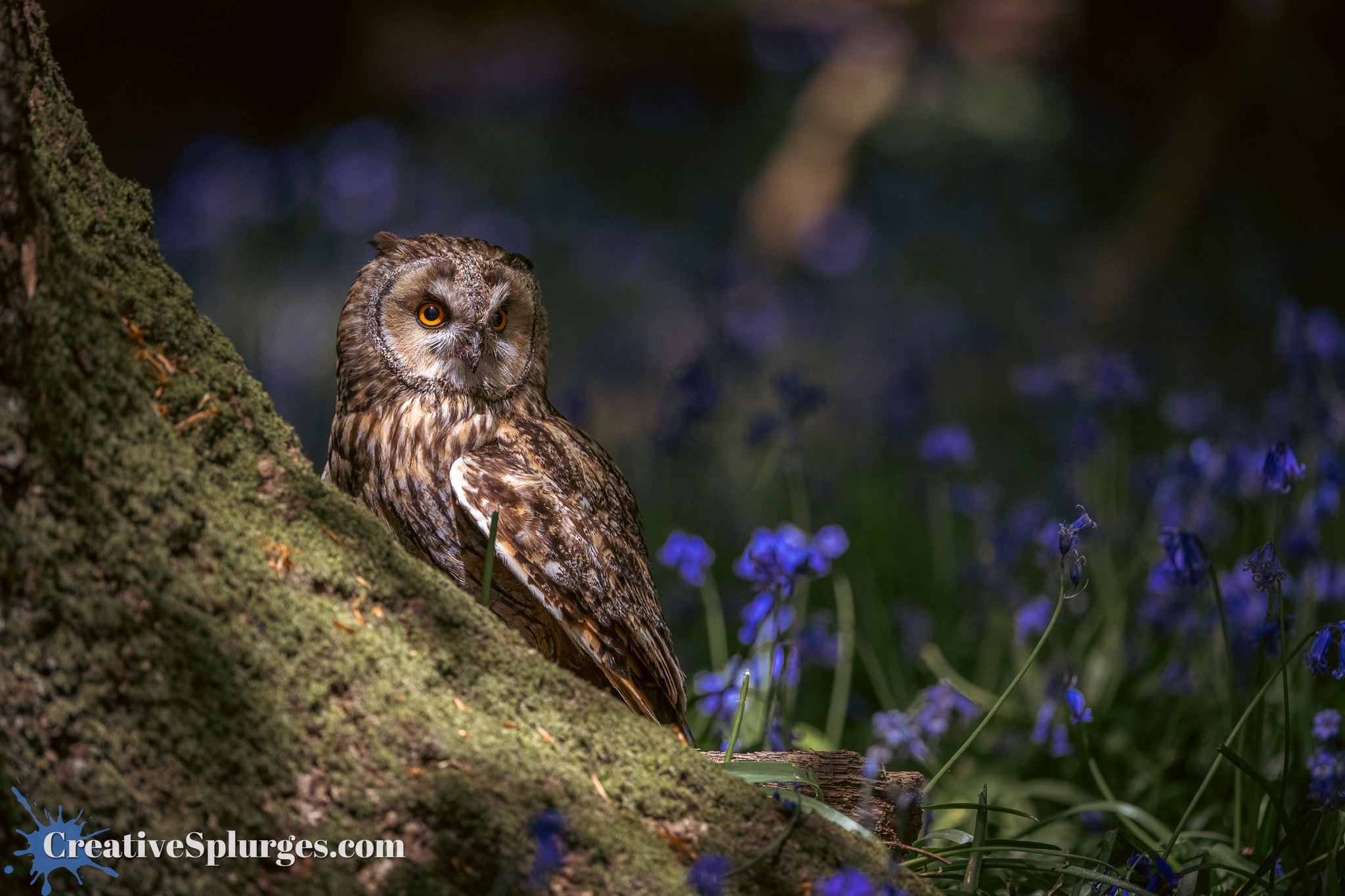
We got one last post in a spot of light and one last flyby, and then it was time to go home.
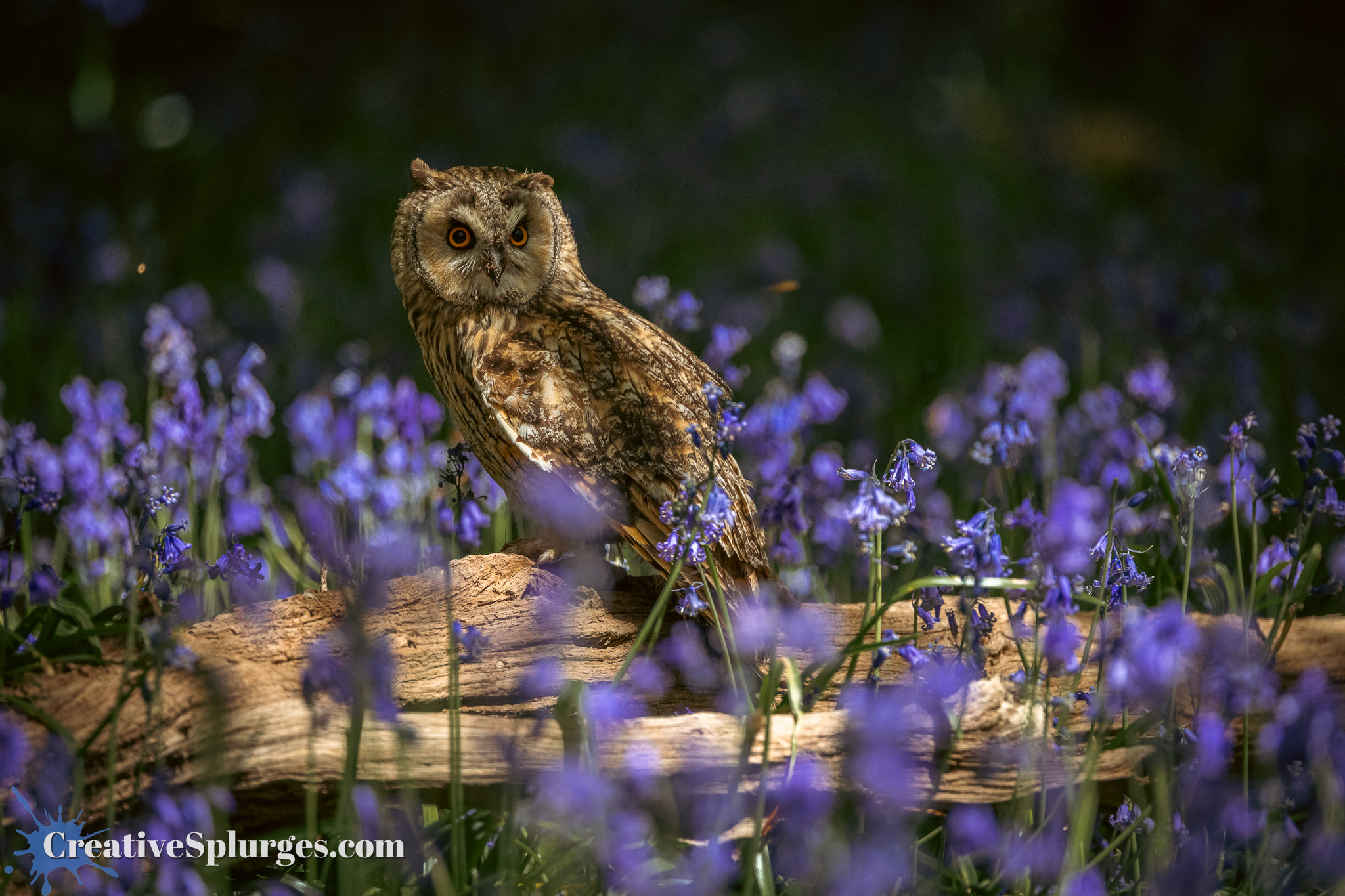
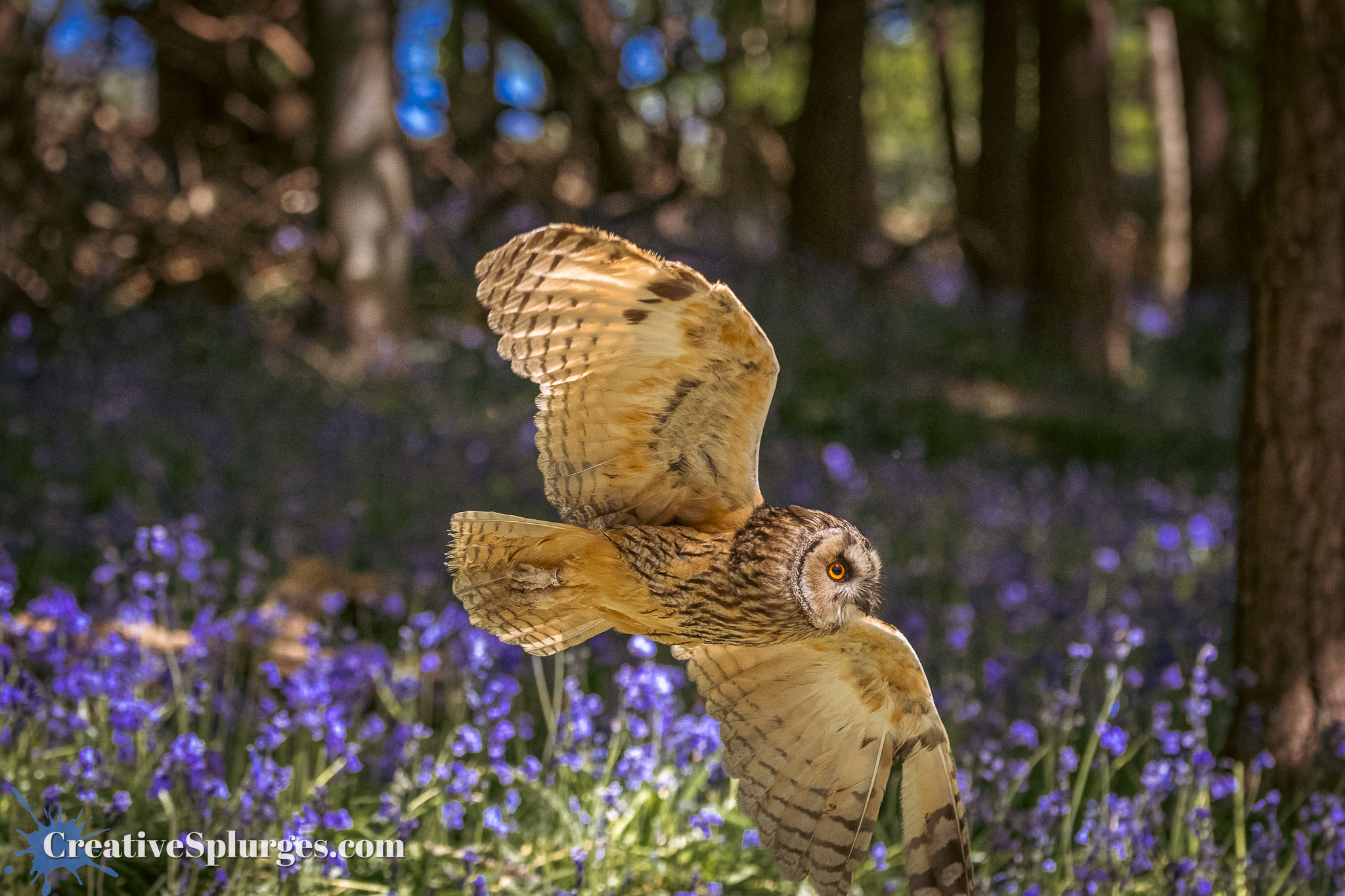
This experience suitably scratched my itch for bluebells and wildlife. It is a little frustrating that it took me a little while to warm into it but I do feel out of the photography ‘zone’ at the moment for reasons I can’t quite fathom. It did also feel nice to photograph something other than trains, because although I love doing that, I’ve not been flexing my other photography muscles much recently.
That said, I am pretty pleased with myself that I’ve been able to take the 1,100 photos I took on this day, edit them, select the best (albeit perhaps with not as much selectiveness as I should have) and post them in the space of only a week.
May is going to start out as a bit of a blue month, because my next post will also feature some sizeable patches of bluebells.
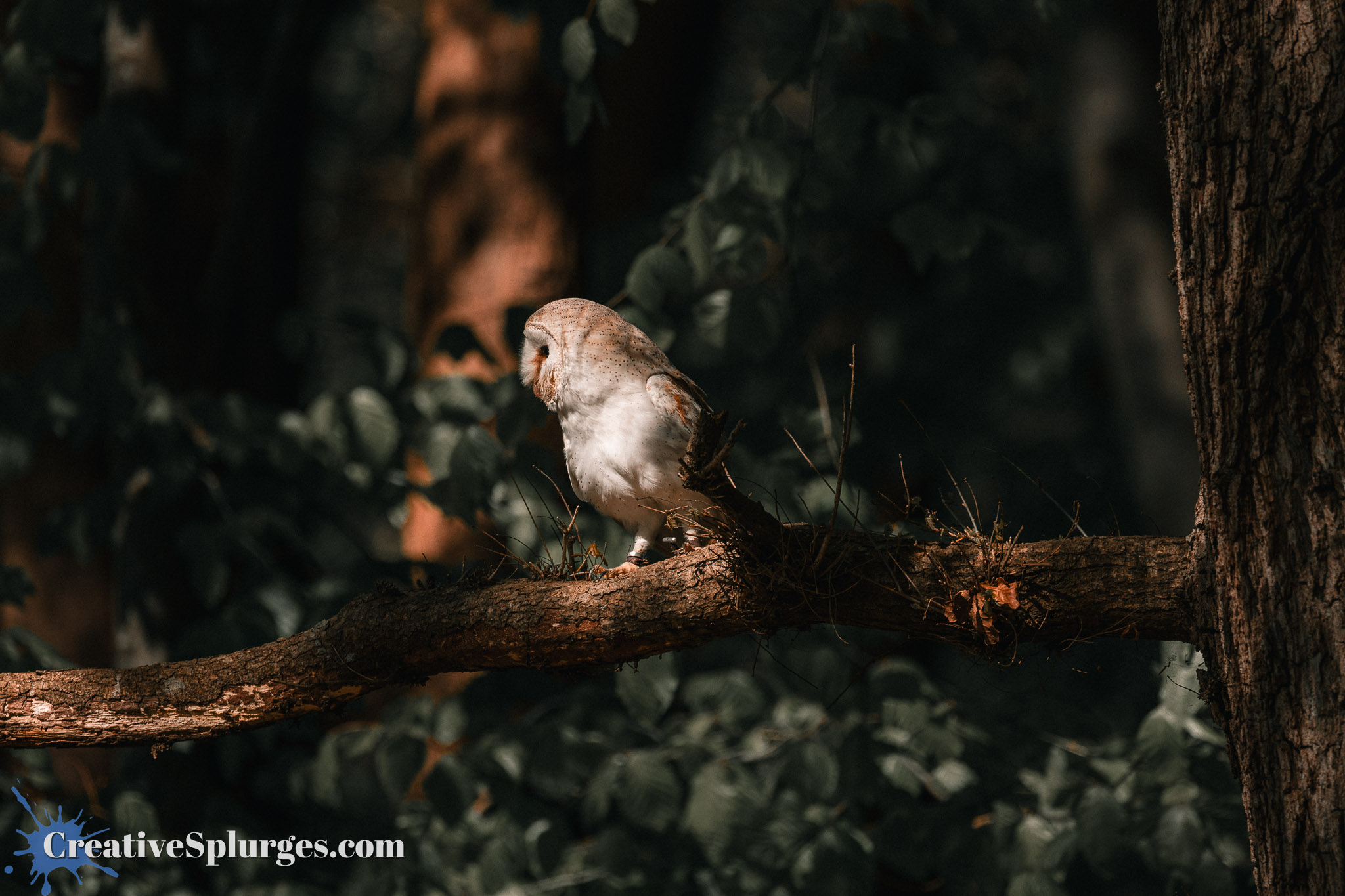
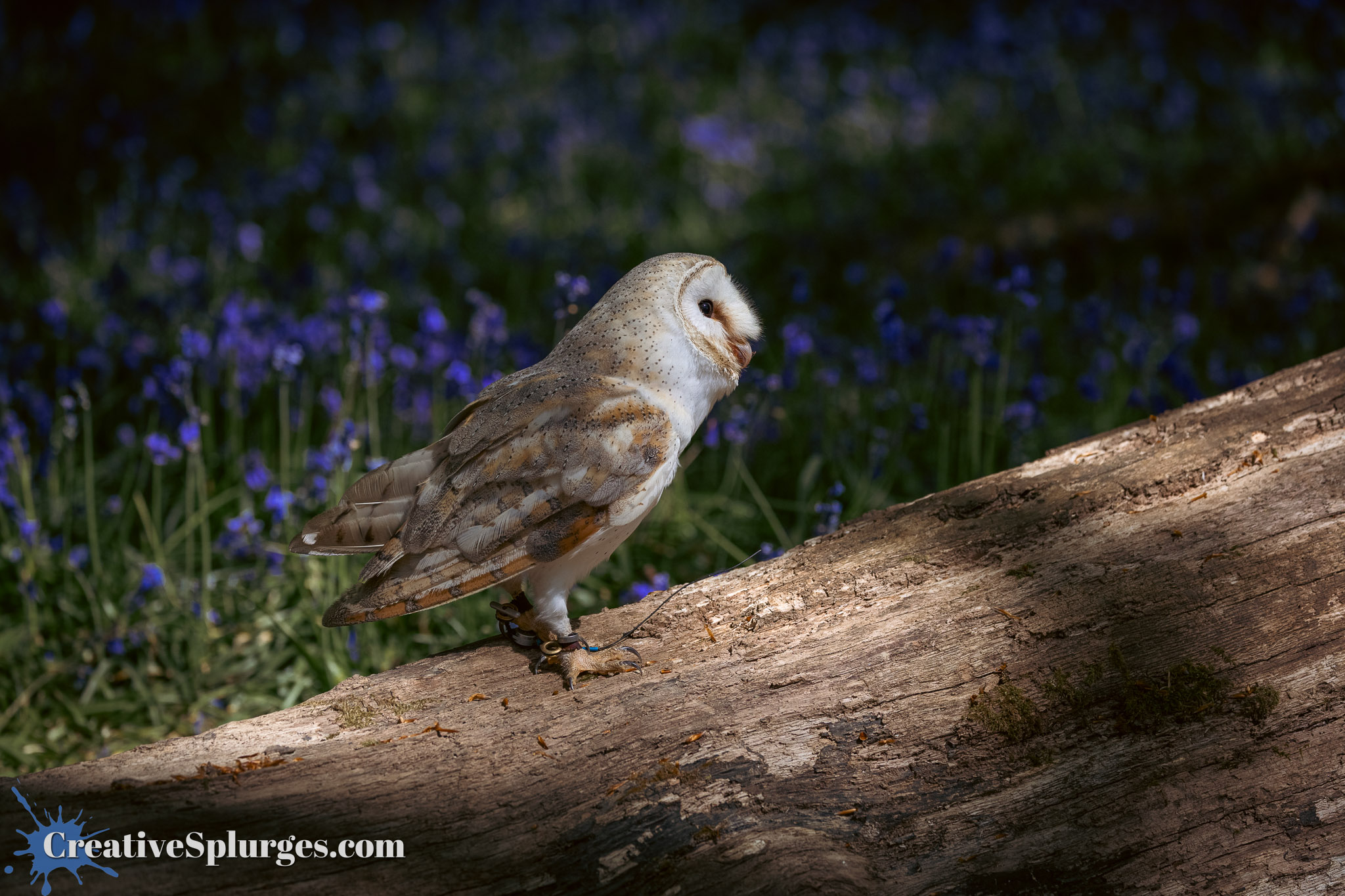
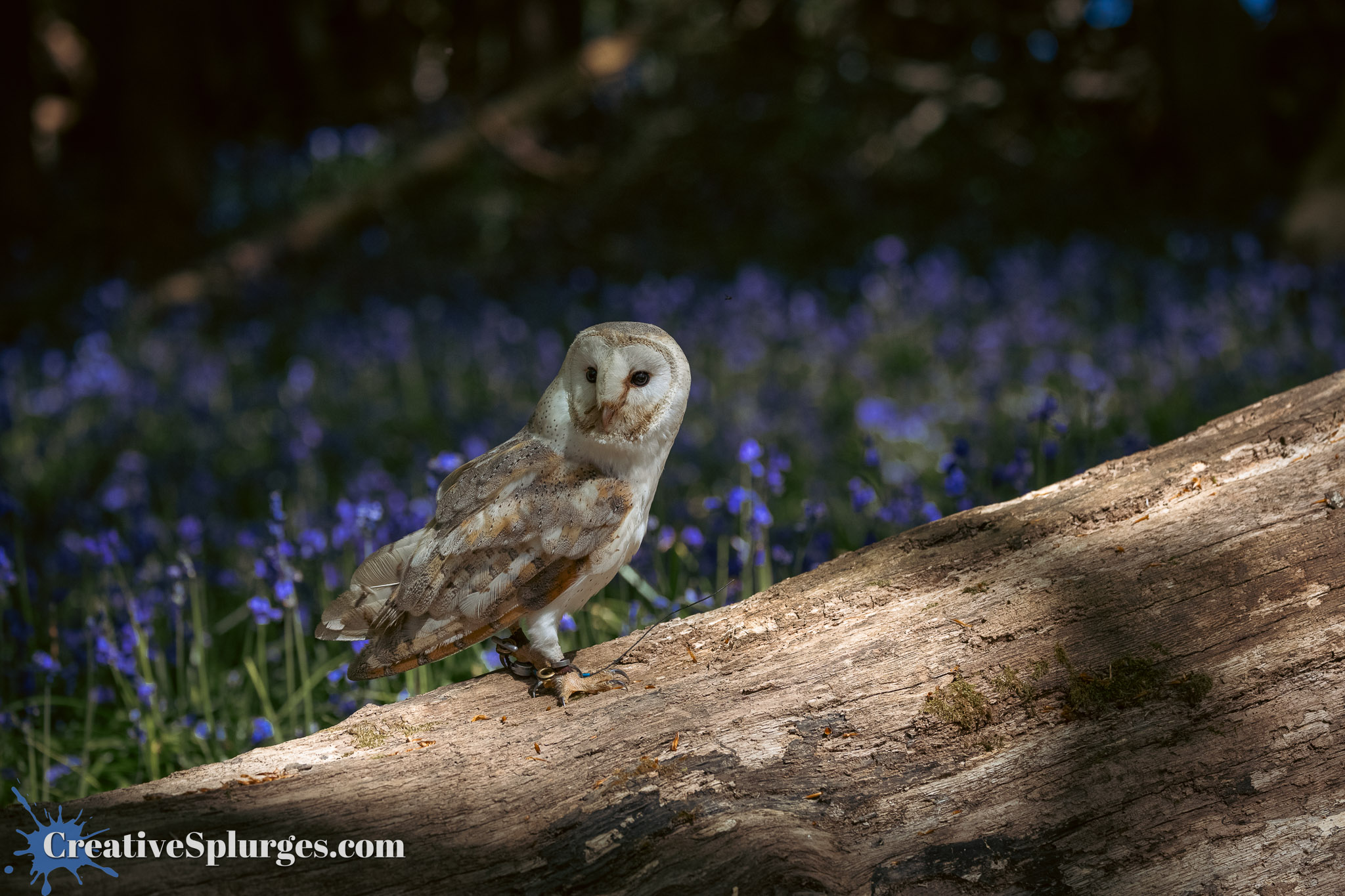
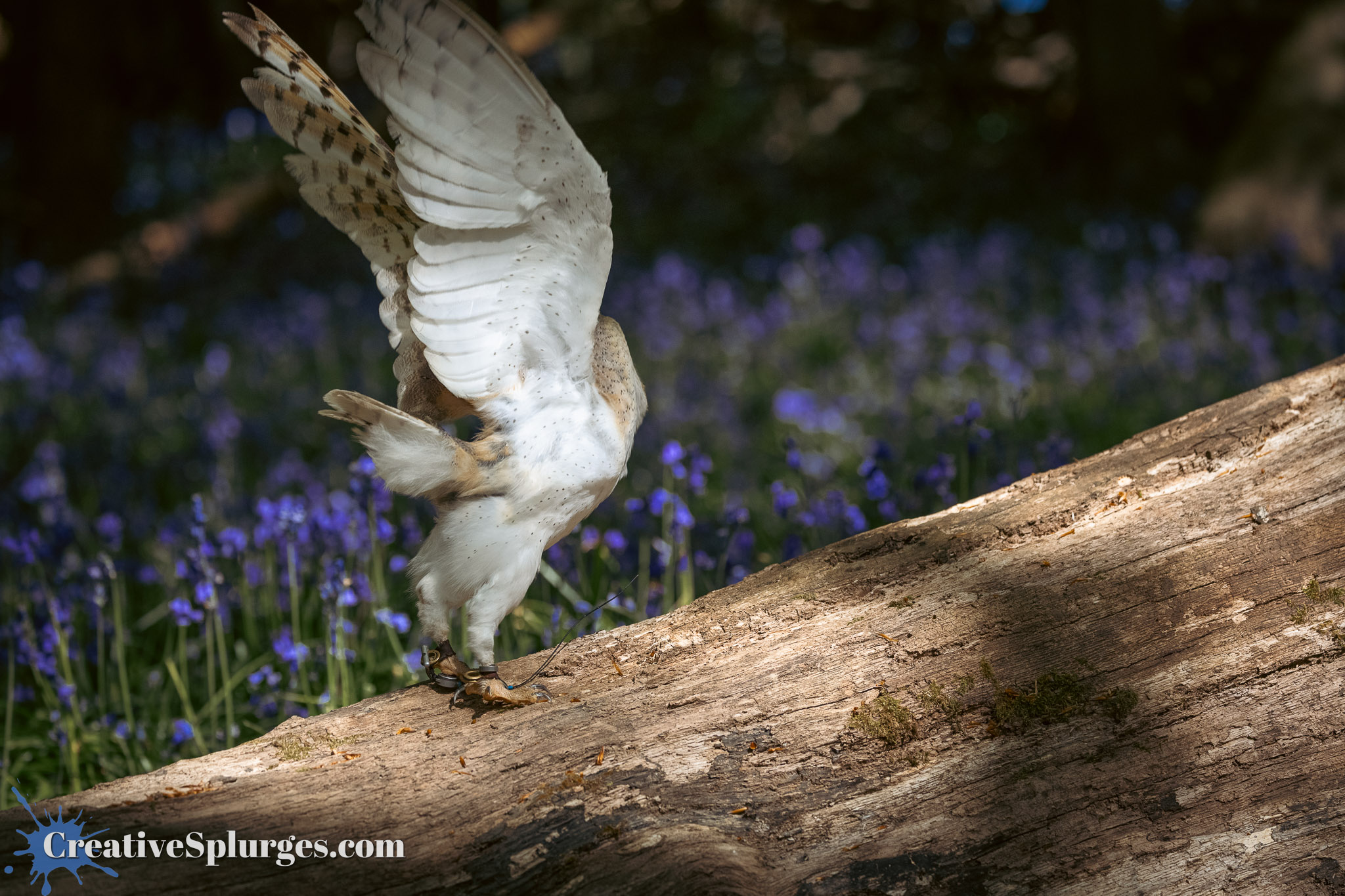
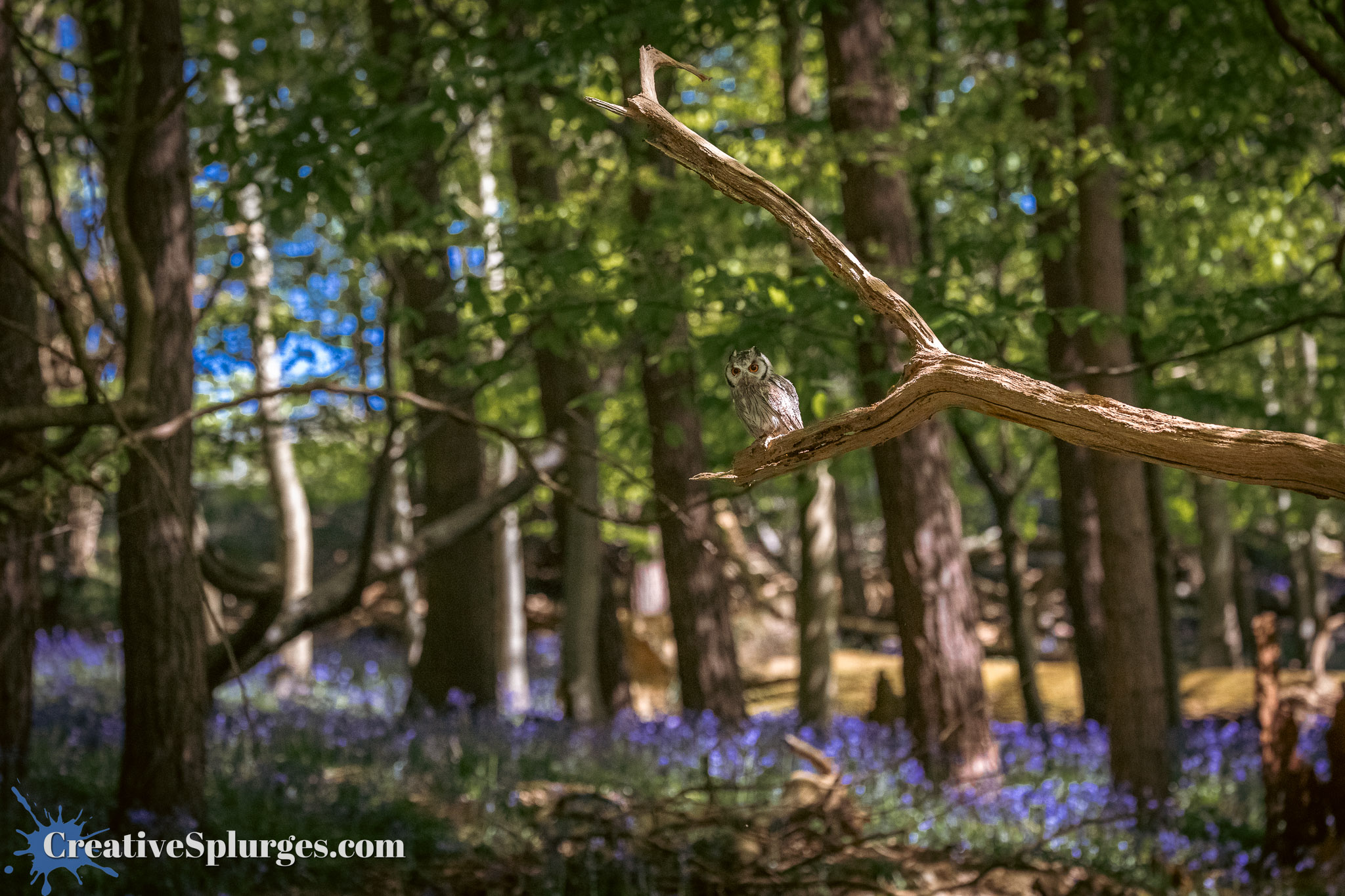
As ever, although moreso in this post than most, there are a lot more shots in the gallery below.


Amazing and beautiful. Thank you, Love, nia
LikeLiked by 1 person