
Although I had a lot of fun at the Bluebell Railway’s Branch Line Gala in May, it was a few months before I was able to find the time to get back out onto the railway to take some photos.
This last bank holiday weekend the railway ran another event, partly to welcome their new engine 32424 Beachy Head into service. The theme was Brighton Works, and as such all of the locomotives running were ones that were built in Brighton. As there’d be a slightly more intense timetable (although nothing like the Branch Line Gala), and I’d not previously seen a couple of the engines in service, it seemed like a good excuse to get back out trackside – not least because I wanted to warm up for the Diesel Gala in a couple of weeks.
I arrived in good time to see Beachy Head in steam on Platform 2, presumably taking on water before connecting up with its coaches for the day on Platform 1.

Beachy Head, unlike most locomotives you will see running on heritage railways, is a reconstruction rather than a restoration. This means it’s technically a new engine, built from salvaged or spare parts, rather than being the original engine restored.
Before long 32424’s thirst was quenched and it began to move up the line to the set of points.
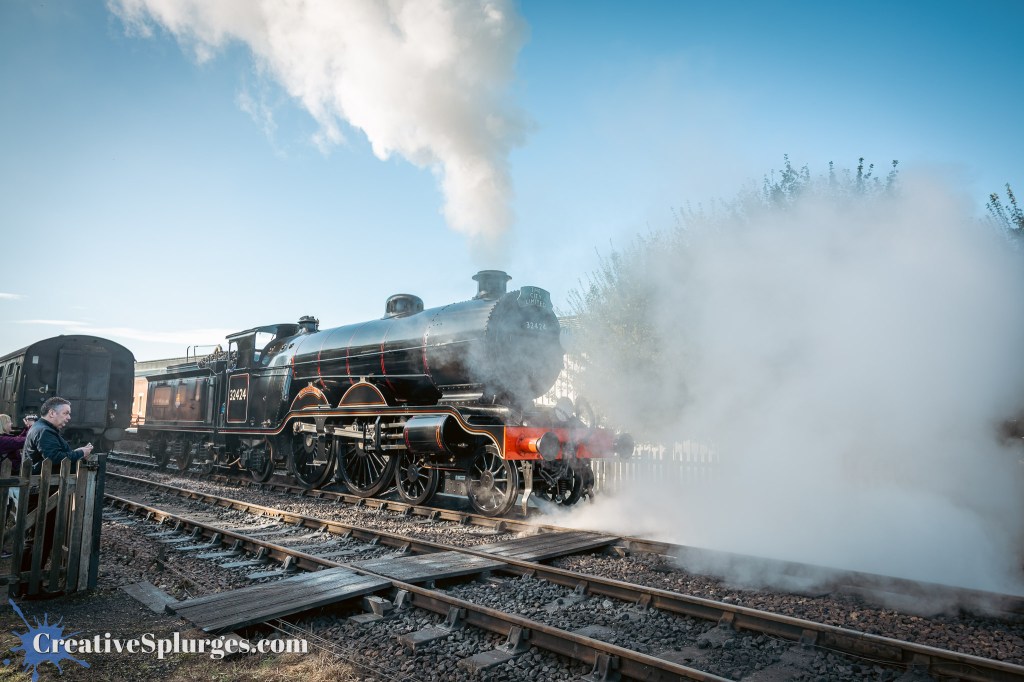
With the engine back on Platform 1, I could get an even clearer view.

The crew started to load up, giving me a spot for some decent shots of the crew.


My plan for the day was to explore a bit more of the trackside. During the Branch Line Gala I’d walked over four miles between Sheffield Park and Horsted Keynes stations. This time I’d decided I was going to head to Sharpthorne Tunnel (where I took some of my first tentative steps lineside), then walk north to Kingscote Station. This was less of a trek, being only about a mile and a half, but it was exploring another decent chunk of the track that I have access to.
So before Beachy Head set off, I made my way back to my car to make the 15-minute drive to the tunnel, aiming to get there with enough time to be set up before it got to the tunnel. I liken it to that level in Forza Horizon 4 where you race the Flying Scotsman, only you have to find a parking space, change your shoes, and don a high-visibility vest before crossing the finish line.
I couldn’t stand as close to the tunnel as the last time. Such was the interest in Beachy Head there were a few photographers in the public areas near the tunnel, and they weren’t too keen to have someone in a bright orange vest in their shots. To be fair, although I could see less of the tunnel, I had a wider, clearer view of the train.
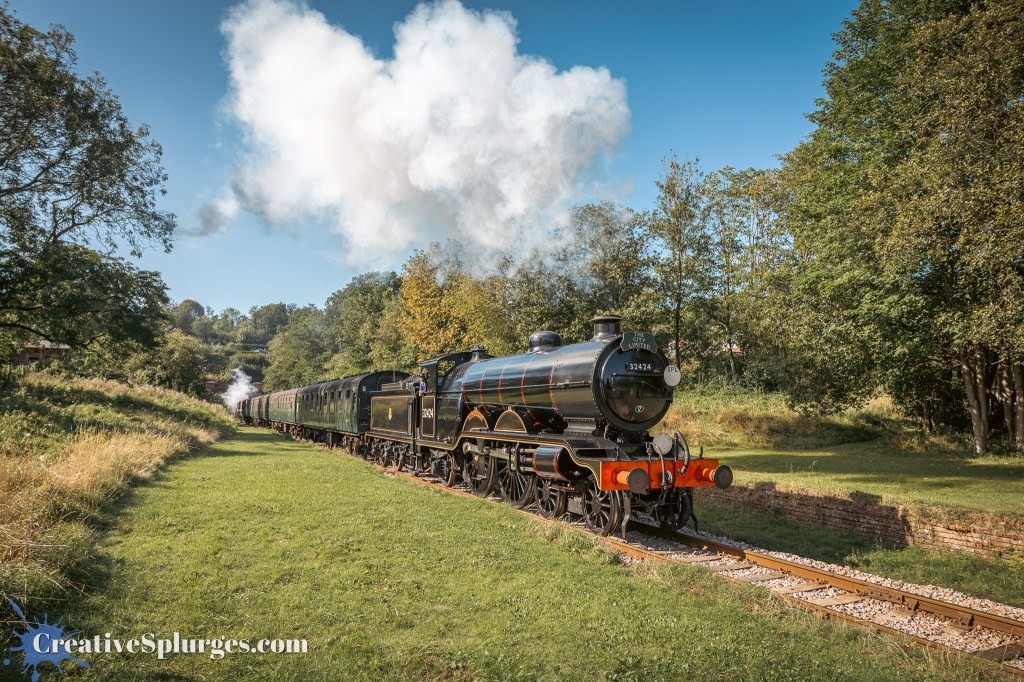
Once Beachy Head had passed, the photographers cleared off, and I started walking north. I soon encountered another lineside photographer who had shot the train a little further up the track and was making their way back. They helpfully gave me some advice of the track that lay ahead before leaving me to my journey.
Although the track area is quite wide immediately north of the tunnel, as a result of the area formerly being home to West Hoathly Station and a goods yard, you don’t have to get too far up the track for things to get a whole lot narrower.

This was not a patch I wanted to be in when a train came by. Thanks to a close fence on the left of this shot, the only position of safety if something came by was knee-deep in the overgrowth on the right. Luckily there was a decent enough gap in the timetable (and nothing unscheduled came by) for me to traverse this section safely.
The next section was slightly better, but ultimately very similar to several of the sections of track I had found between Sheffield Park and Horsted Keynes.

It was along this section that I encountered the next train, which was just Beachy Head coming back from the other end of the line. I still photographed it for practise, but in reality images of the engines running backwards aren’t anywhere near as nice to look at.
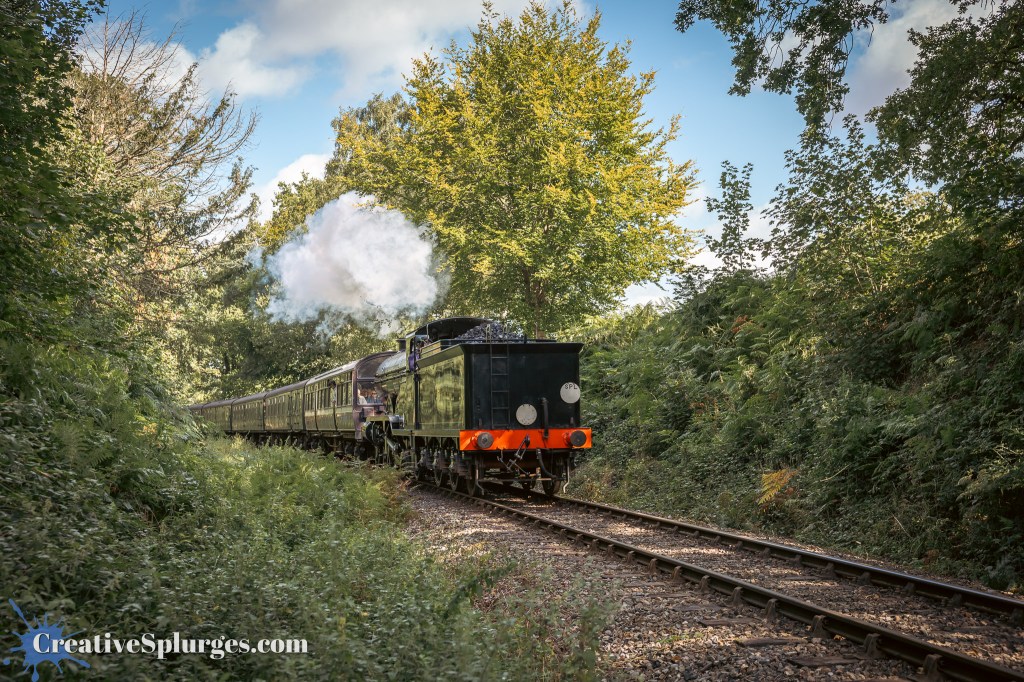
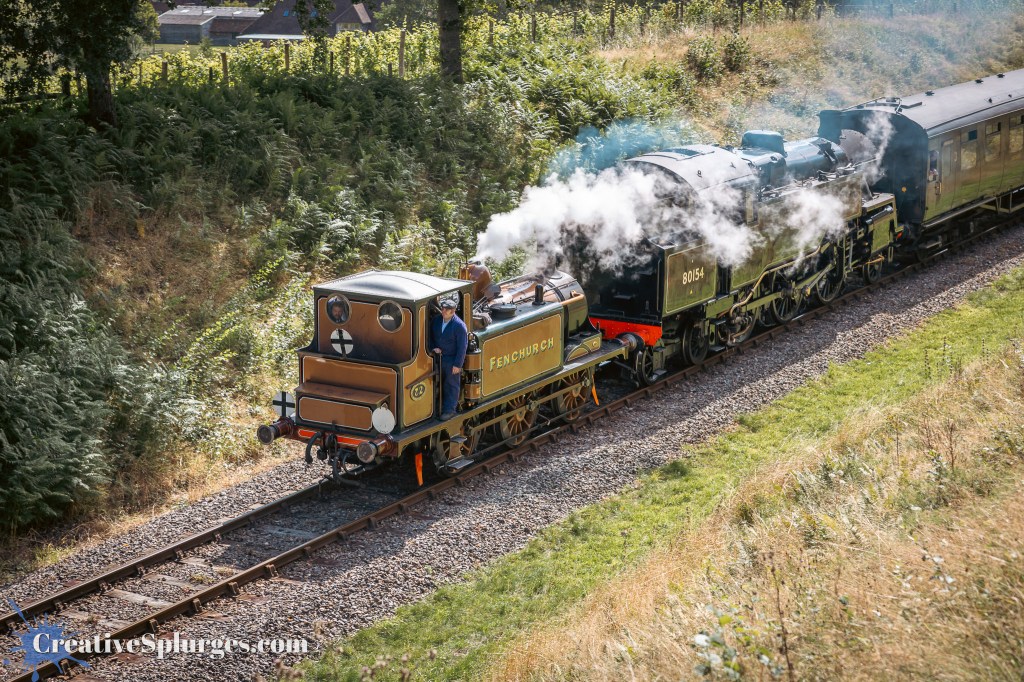
By the time the next service came along, I was past this section and had found me some higher ground. Unfortunately the next service, although travelling north, was being pulled by backwards-facing engines – 72 Fenchurch and 80151.
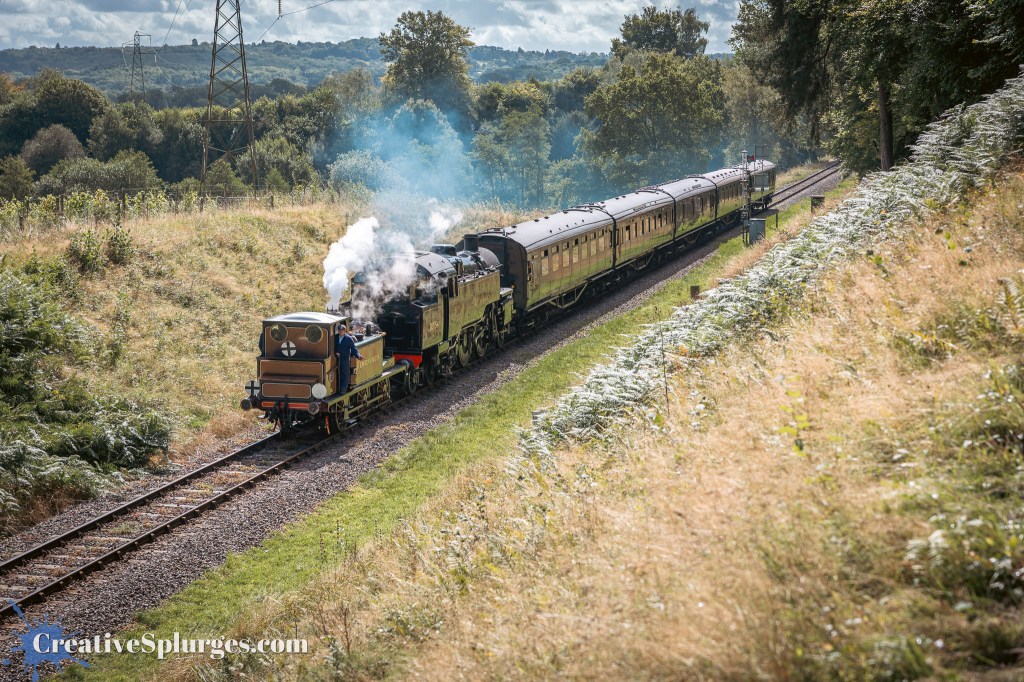
One of the things I’ve learned from my walks is that I’m not a fan of these images taken from high up. I think the engines look more impressive when they’re photographed from lower down, either on the same level or looking up at them.
I’ve also concentrated more on trying to frame the shots so that the whole train is visible. With a lot of my photographs from previous trips you can tell I’m mainly focussing on the locomotive and not its coaches.
As you might be able to see from the above image, 80151 was actually running as 80154 for the weekend. 80154 was the last train made at Brighton works, and one that the Bluebell Railway tried in vain to rescue from the scrapyard. A nice tribute, although it does mean I’ve photographed 80151 in other trains’ livery more than I have in its own.
At this point I had made it most of the way to Kingscote, and managed to make it to the outskirts of the station before Fenchurch and 80151 left to continue their journey. Kingscote is the northern limit of my trackside access, and with my car not left at a station, my only real option was to walk back. Before that I took a brief respite at the station, finding some shade and a seat for a bite to eat, before having a quick look around the station.
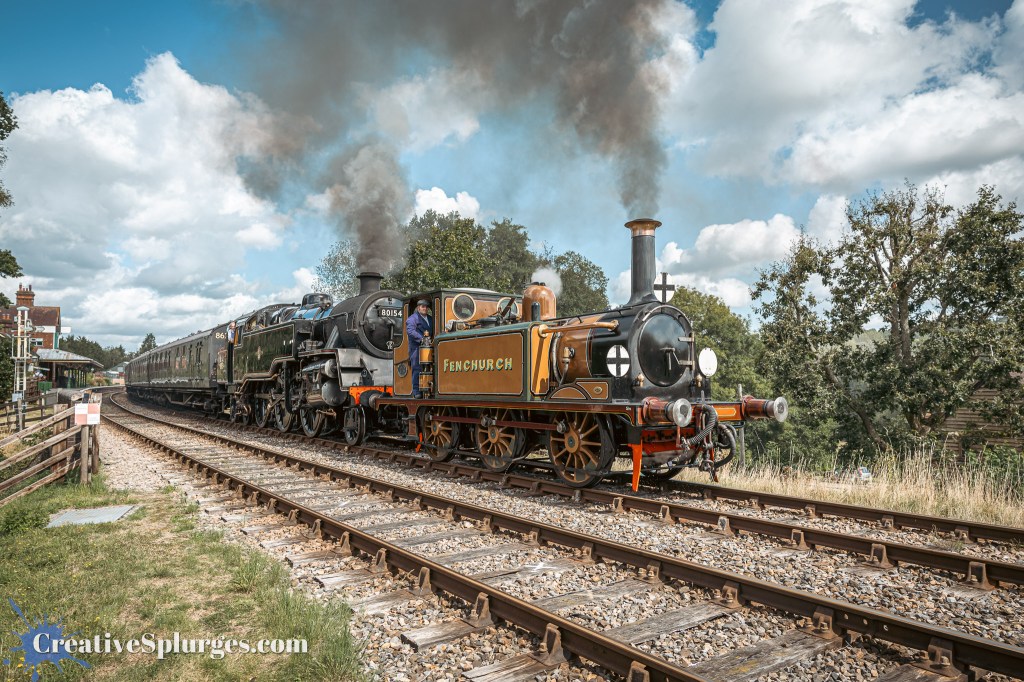
Fenchurch and 80151 were soon back, and this time they were facing in a more photogenic direction. I set myself up a little south of the station to catch them as they departed.

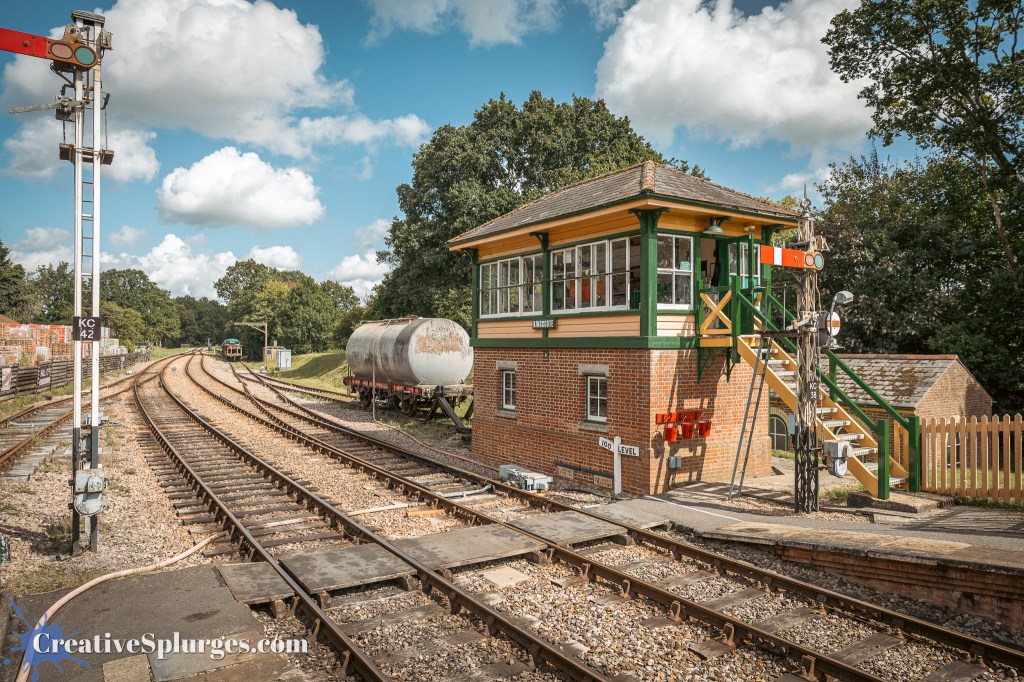
Not far south of the station is an old abandoned signal box. I decided that just past here would be a good, open spot to wait for the next train, which would be Beachy Head on its second run of the day.
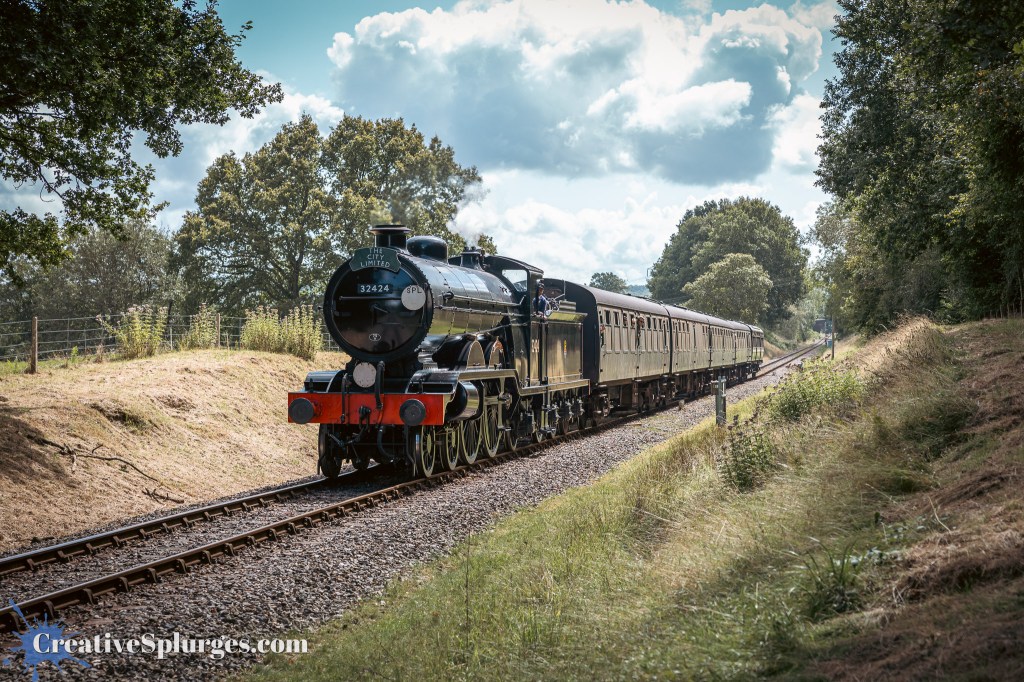
The spot looked nicely photogenic, but part of the problem with it is that it’s just where the 10mph speed limit kicks in for Kingscote, meaning the trains aren’t puffing particularly hard so there’s less of that lovely looking steam (something else I’ve learned is that trains seem to produce more smoke and steam in the morning. I’m not sure if that’s atmospheric or if it’s because the engines aren’t quite so warmed up yet).
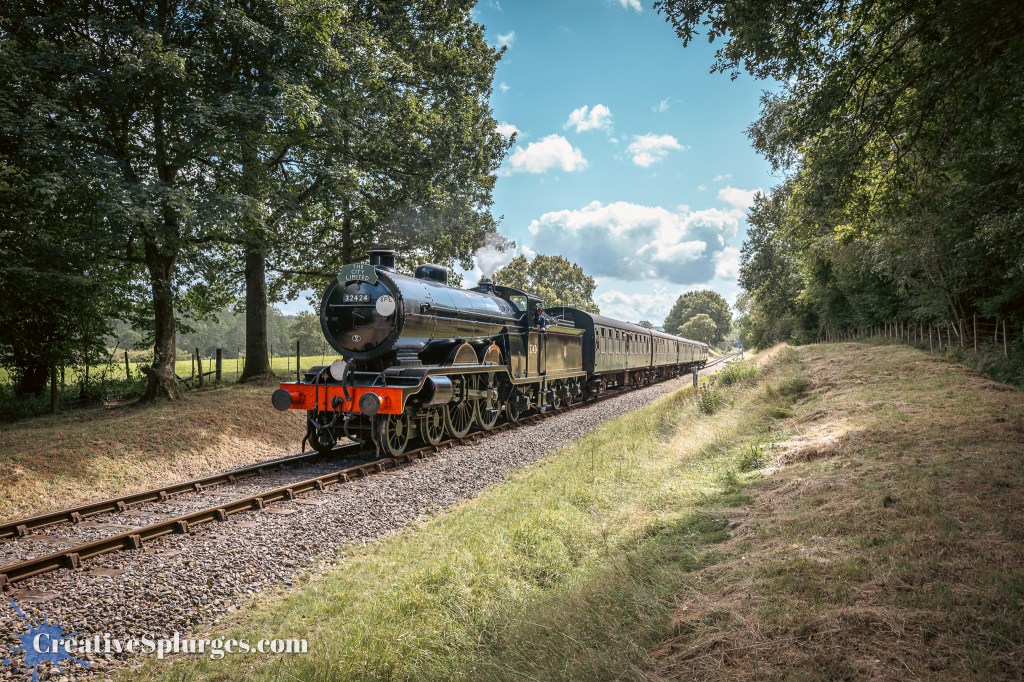
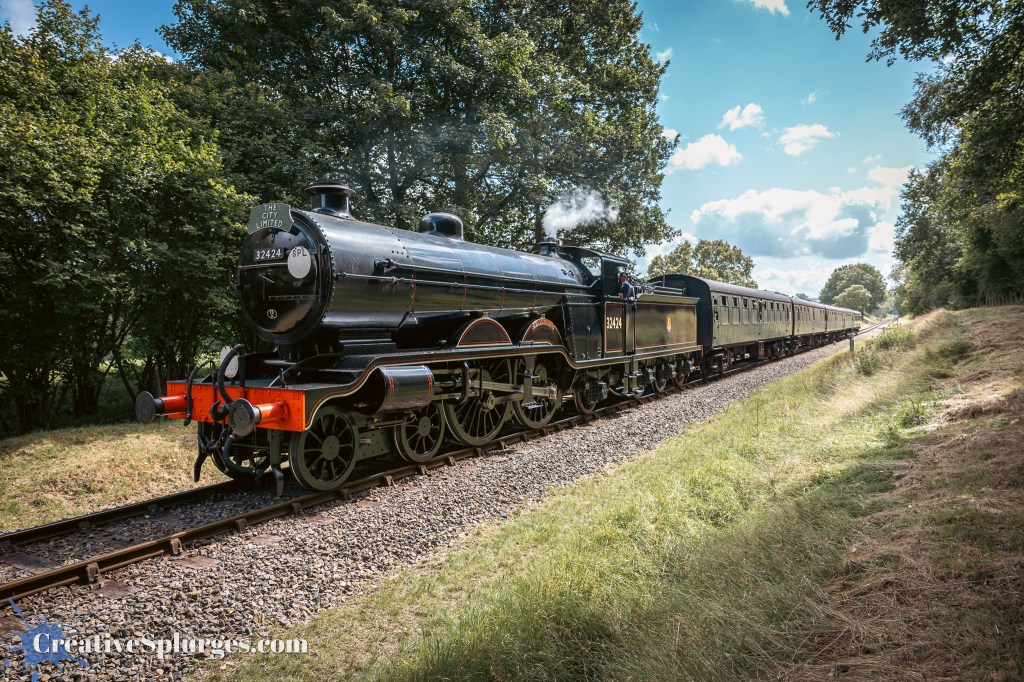
At the back of the train was the observation car, where some nice people gave me a wave.
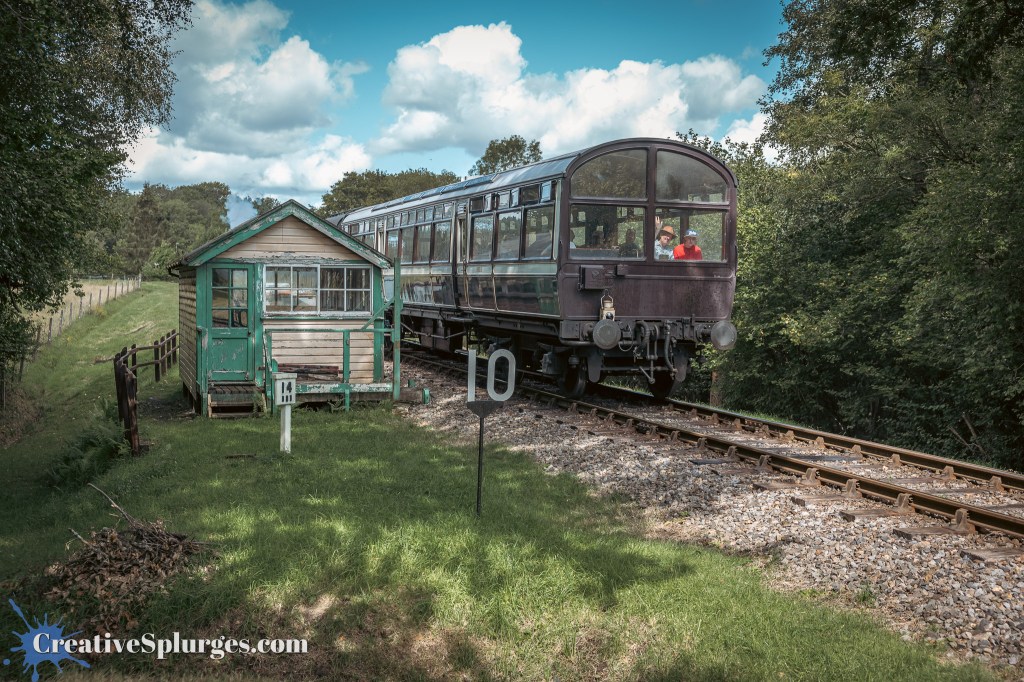
You may just be able to see my phone in the corner of the signal box. I did in fact sacrifice some of my principles in order to take some vertical video specifically to upload to Instagram (vertical video and uploading something other than a photo to Instagram? What have I become?).
I continued my wander south and soon found a bench to sit on (I don’t know if these are intended for workers or photographers, because they’re not in public areas, but they are welcome). This was another decent wide spot for photography, and I was aware of two things: first, that the next train would be the Golden Arrow service pulled by 34059 Sir Archibald Sinclair, the other train I’d not photographed before running today (which itself has only recently returned to service after an overhaul); and second, that the next section of track ahead of me was the narrow bit, that wouldn’t be ideal for photographs. So I stood my ground for a while and waited for the train to come by.
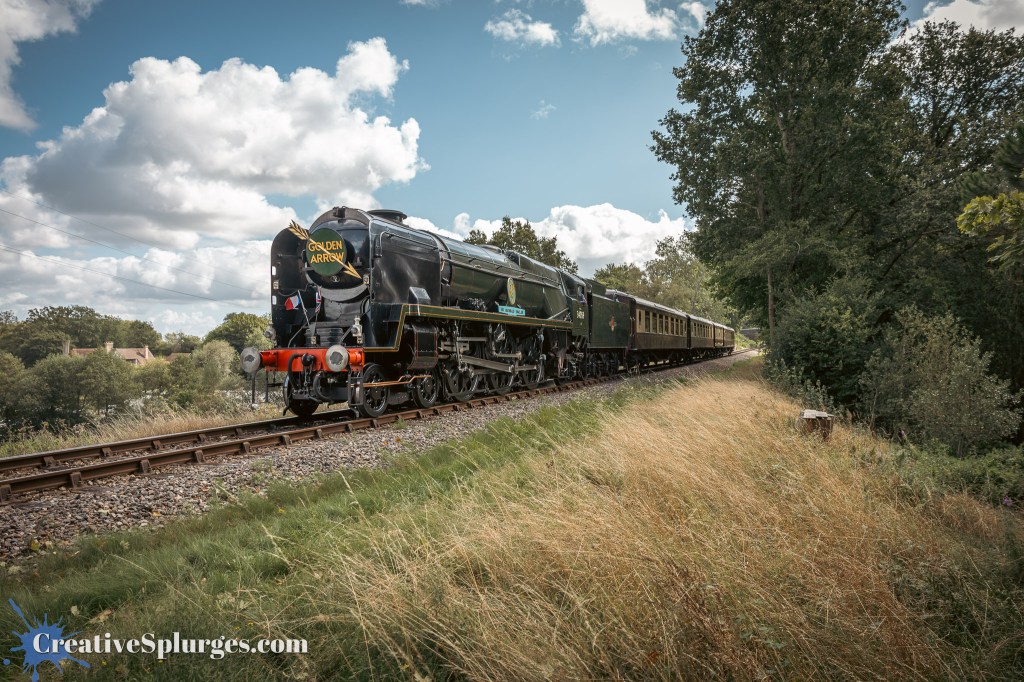
Being the Golden Arrow it was also pulling the very pretty Pullman coaches.
With the train passed I kept walking. Further along this straight bit of track was Birchstone Bridge which seemed like a nice spot to wait for the next train. Annoyingly it was Beachy Head coming tender-first, which as documented doesn’t make for the most impressive photos.
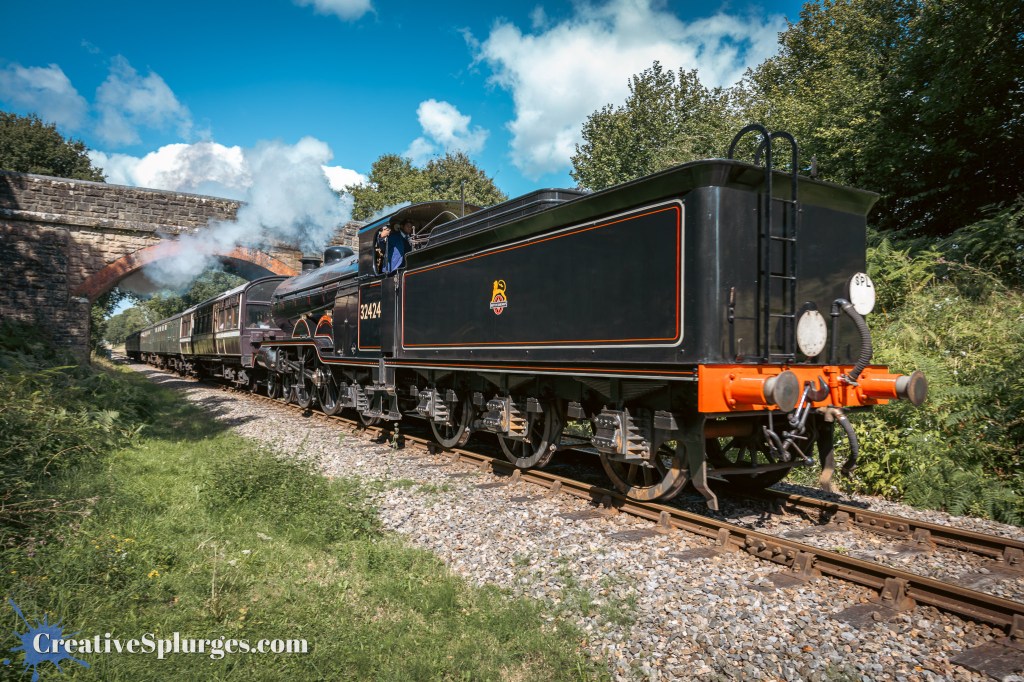
I kept walking. By the time the next train was due, I was in a slight cutting. It was Fenchurch and 80151 coming backwards again.
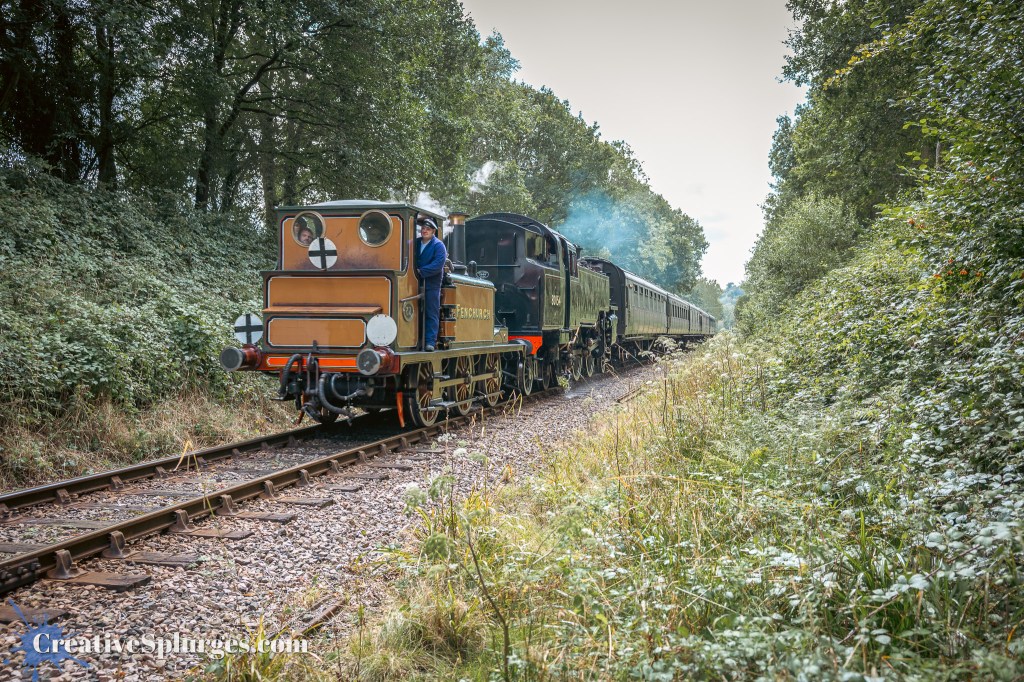
I reached the northern end of the really narrow bit I encountered earlier, My timetable said that Sir Archibald would be coming back relatively soon, and I wanted to make sure I wasn’t in the narrow bit when it came by, so I stood and waited.
And waited.
Eventually it came by a good 10 minutes later than the timetable had said, which means in hindsight I’d have had enough time to make it through the gnarly section before it arrived.
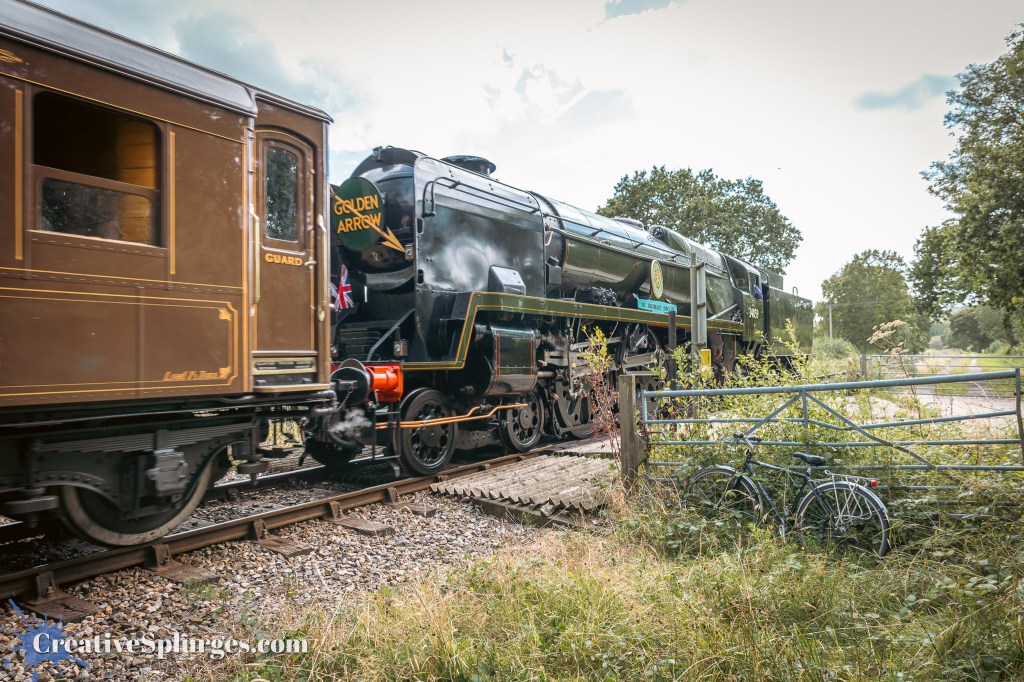
This unexpected delay also put me on the back foot when it came to getting back to Sheffield Park – I had wanted to get back in time to see Sir Archibald leaving the station front-first, and now the timing would be a bit tight.
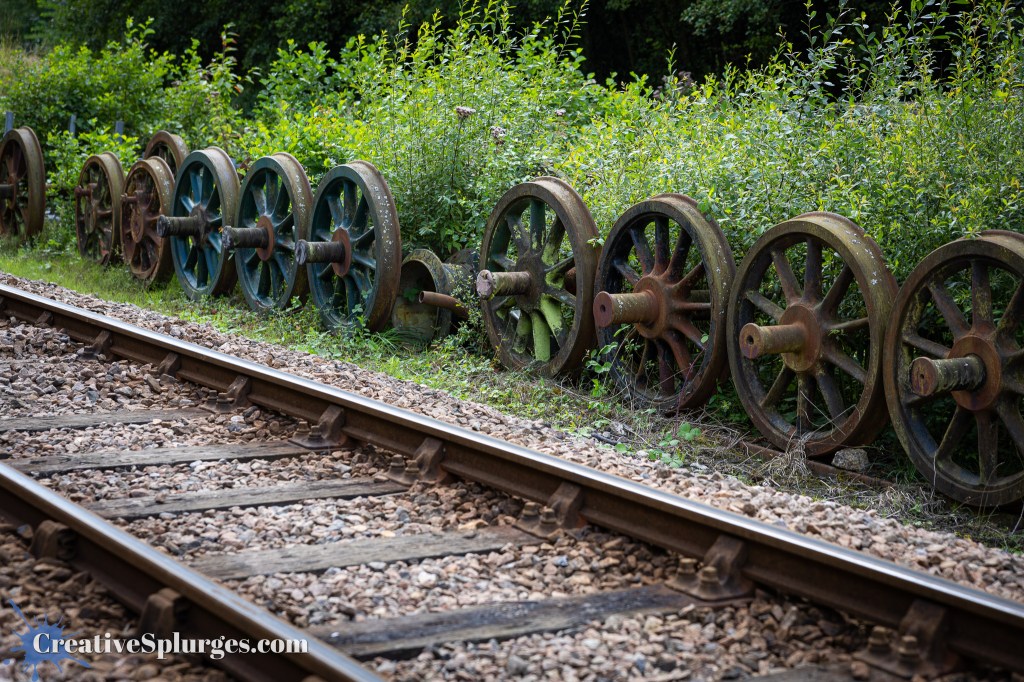
I still paused very briefly to photograph a bunch of spare axles sitting on the site of the former goods yard.
I hot-footed it to Sheffield Park to find that Sir Archibald was still in the process of running around its coaches, so I still had some time to get out and grab some shots. I fired off a quick shot just as it backed onto its coaches.

Then I realised I probably had the time to make it across the narrow bridge to get a better shot at bit further up the track, so I made haste. I soon saw the exact spot where I took the money shot of my last visit, so I decided to position myself there to see how much of the first shot was a fluke.
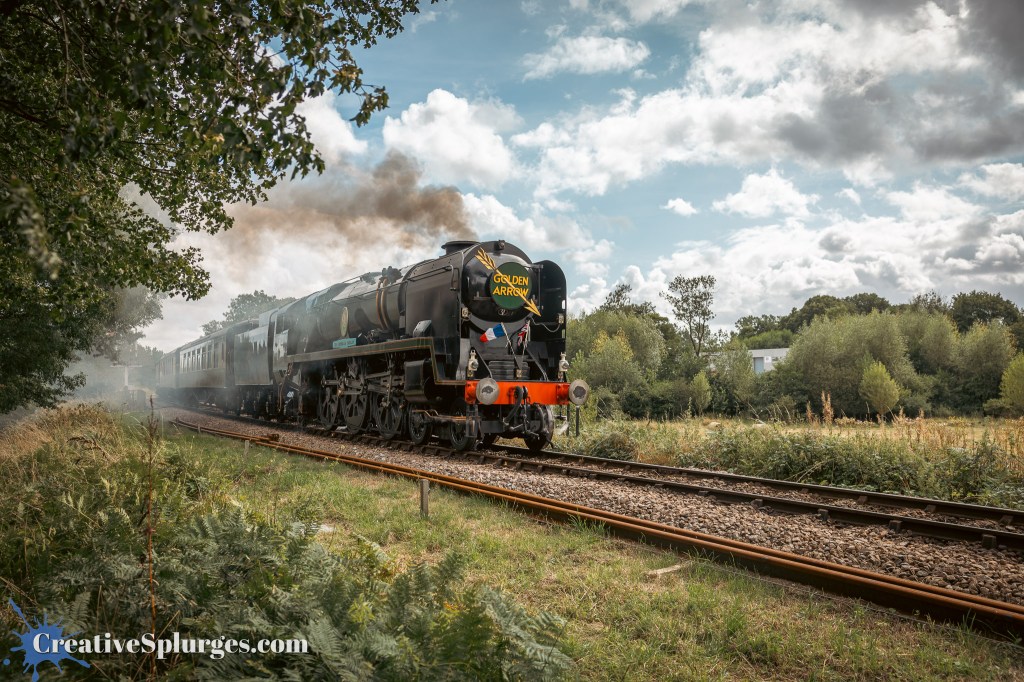
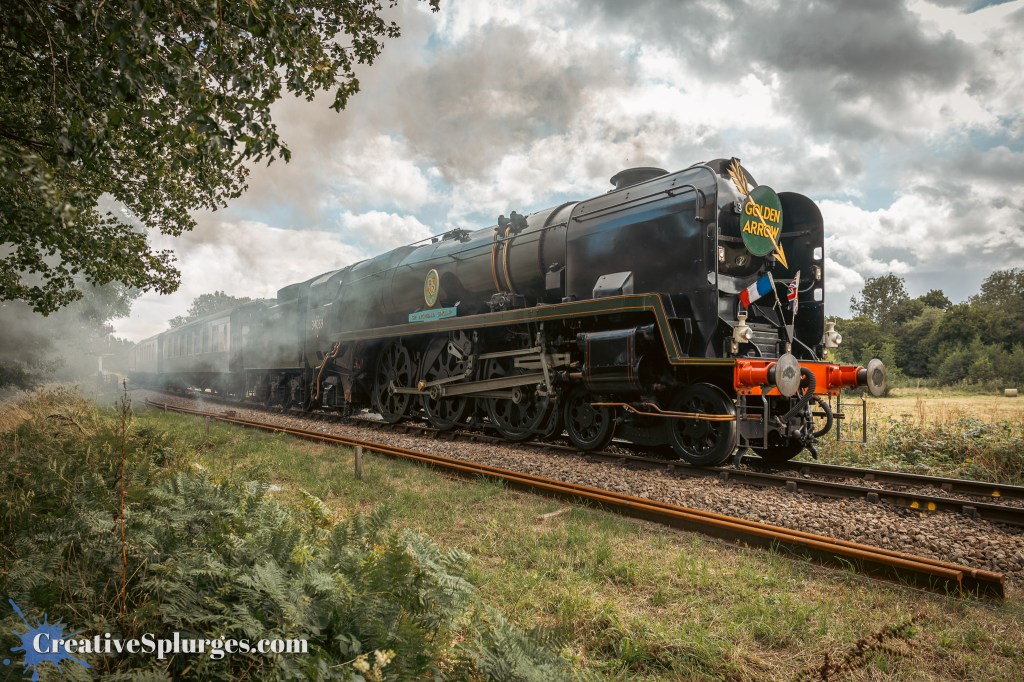
If you’re comparing, this shot isn’t quite as good as the one of 6989 Wightwick Hall from the same spot. The position is pretty good, but what makes the difference is things I don’t have control over: the sun is behind some clouds, the sky is cloudier, and Sir Archibald is producing less smoke, which make the resulting image less dramatic. The picture was also taken a good six hours later in the day, so the light was very different. It’ll be interesting to return to this spot at the same sort of time to see how things compare.
Unfortunately in my haste to get out in front of Sir Archibald, I neglected to inform the station master or signaller of my presence, something which I now know is a formality, rather than a courtesy. This meant I did get a small speaking to once I came back to the station. Frankly it was deserved, I was rushing and focussed too much on getting the shot and less on my own safety. At least this means I know for next time.
Speaking of next time, the Diesel Gala is due to happen in a couple of weeks – I just need to decide where I want to go to take pictures, because it’ll probably be my last warmup before Giants of Steam in October.
This post contains a very abridged selection of the images I took on the day; below is a more complete collection.


 Creative Splurges
I always read your blogs. I’ve always wanted to photograph a steam engine in B&W.
LikeLiked by 1 person