It’s gala season at the Bluebell Railway. Last month we celebrated the railway’s 65th anniversary, and next month, like many railways, there will be an autumn gala, in the form of Giants of Steam – which will hopefully bring some lovely brisk autumn weather and with it some great steam engine photography. September, though, is the month of the diesel gala.
For me, the 2024 Diesel Gala was a bit of a damp squib. It was a grey and wet day, and for reasons that don’t need going into I couldn’t venture too far from Sheffield Park, meaning there was very little variety in my photos – I basically photographed a locomotive on platform, walked a short way down the track to the first curve to photograph it leaving, then repeated until I had to leave. I basically photographed each locomotive once, and didn’t even get to see all of them.
With that in mind, I was determined to do a better job this year, and get a much better variety of photographs. So to that end I met up with reoccurring collaborator Sharpthorne Steam (who has a new website you really should check out) on both the Saturday and Sunday of the gala weekend to get out and photograph some diesels. We would also be joined later on by a mutual collaborator 72b Photography, who we’ve been out shooting with before (although that post hasn’t made it to print yet).
Our plan for Saturday was to start out at Sharpthorne Tunnel, then head north toward Kingscote. I’ve walked this part of the line a few times, but it would be a first for both Sharpthorne and, when he caught up, 72b.
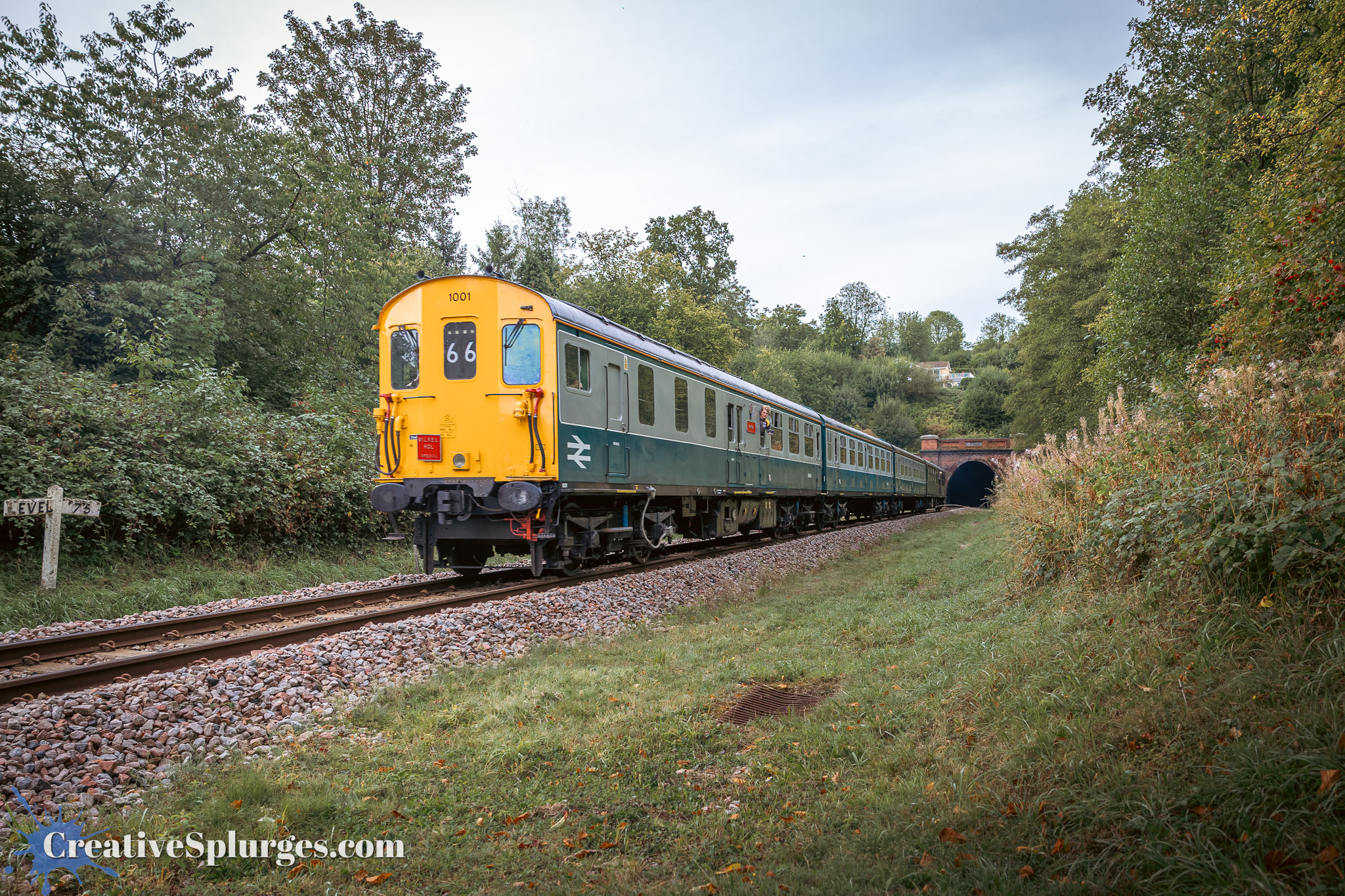
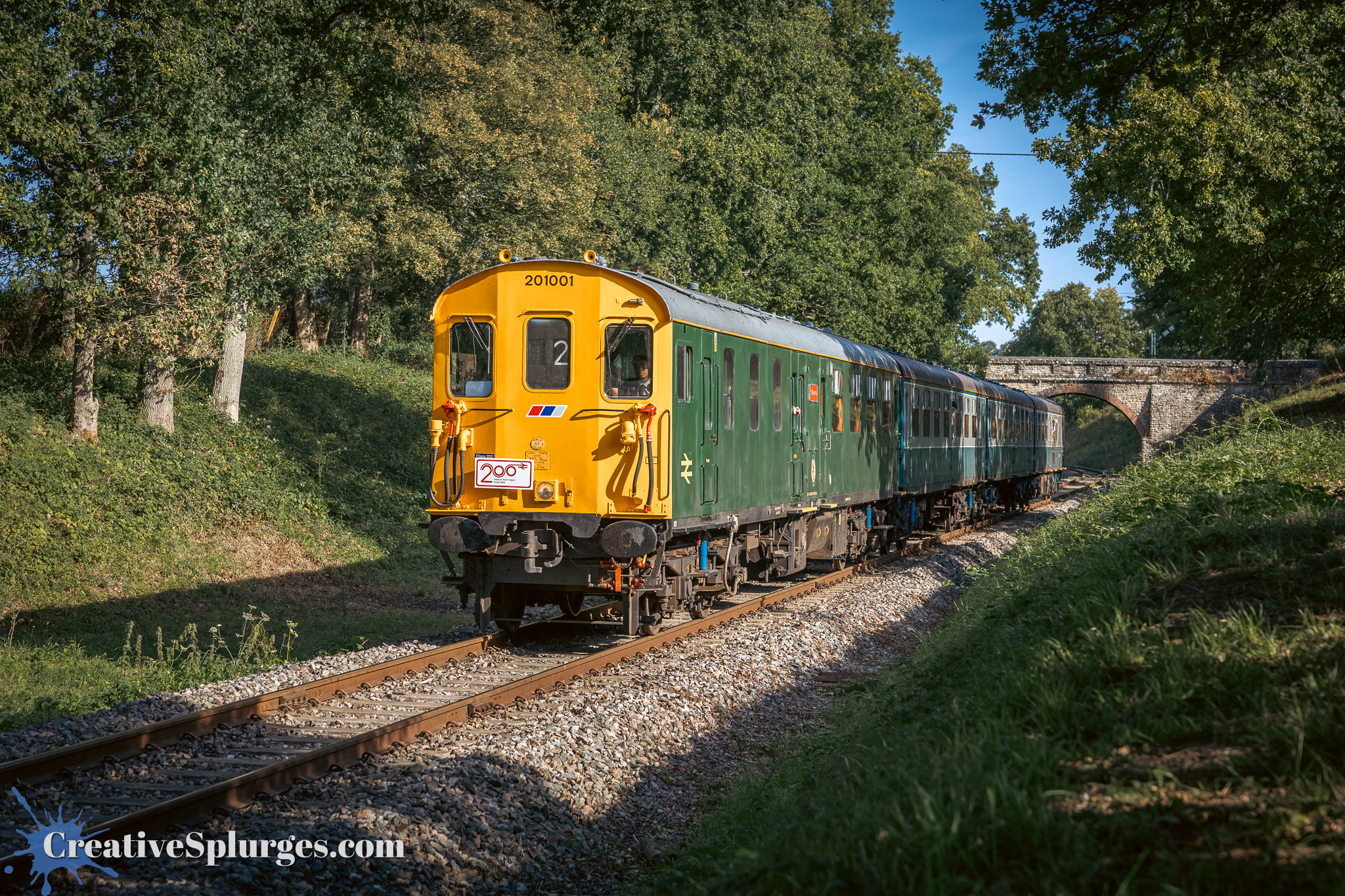
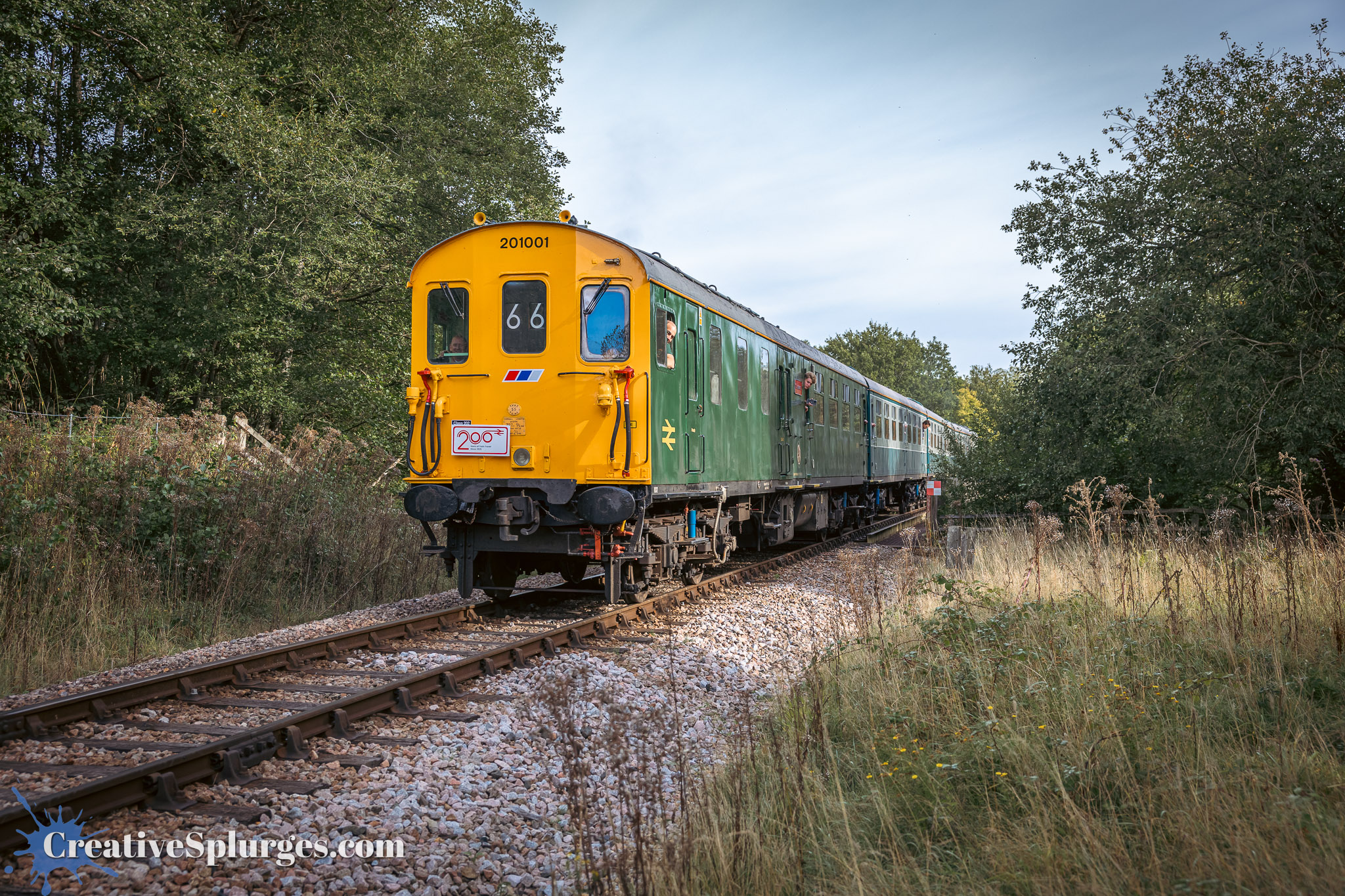
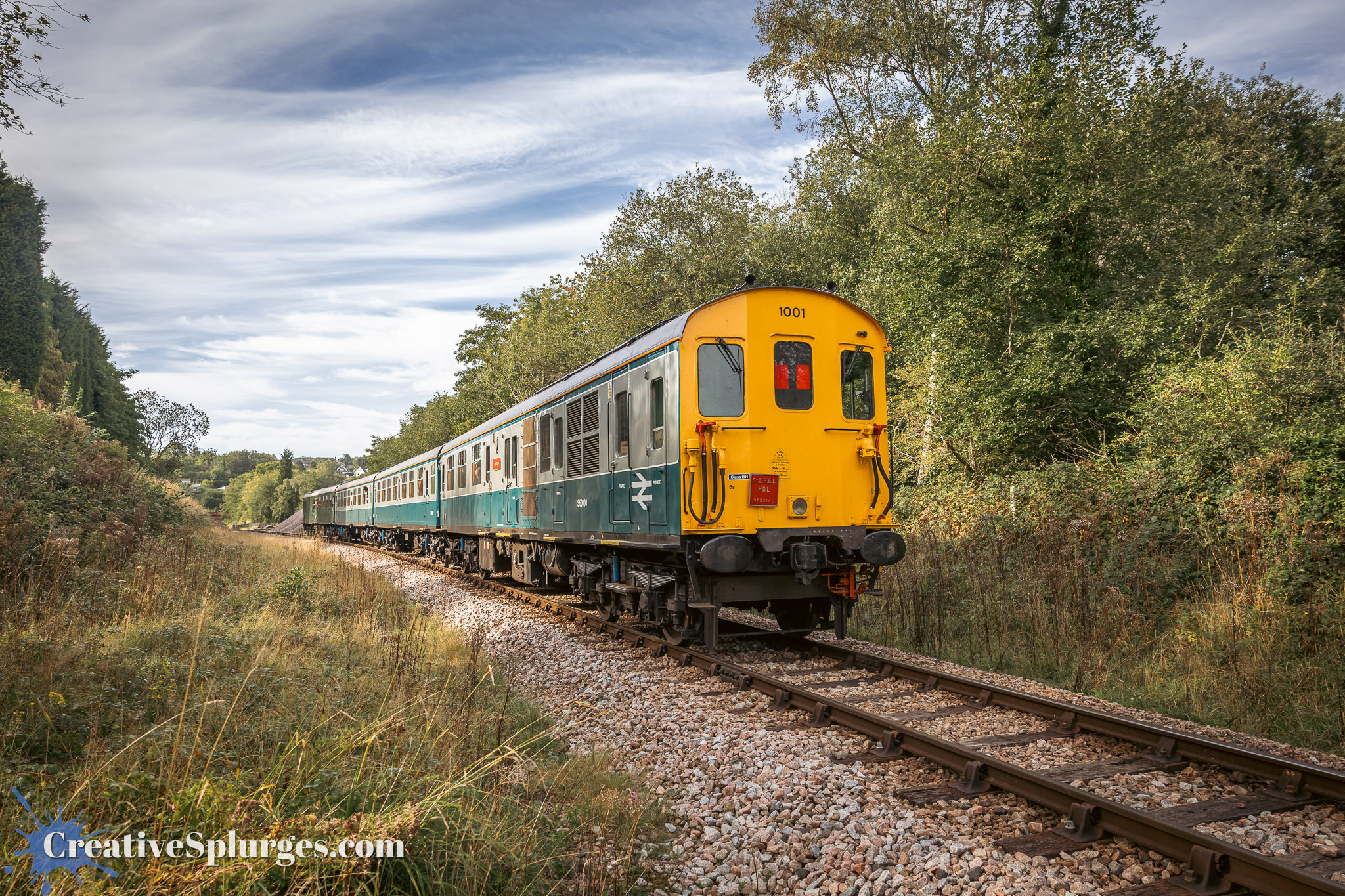
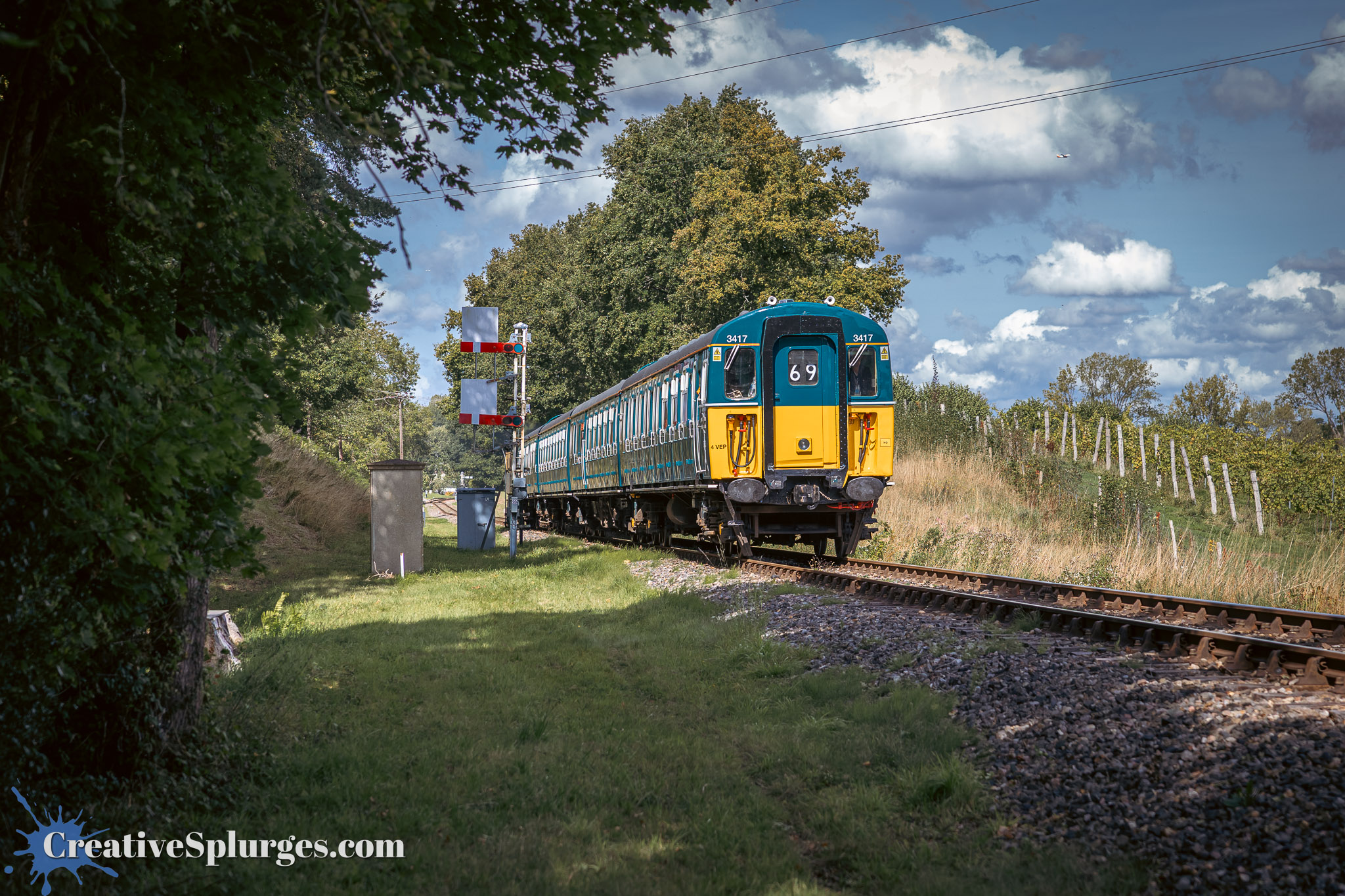
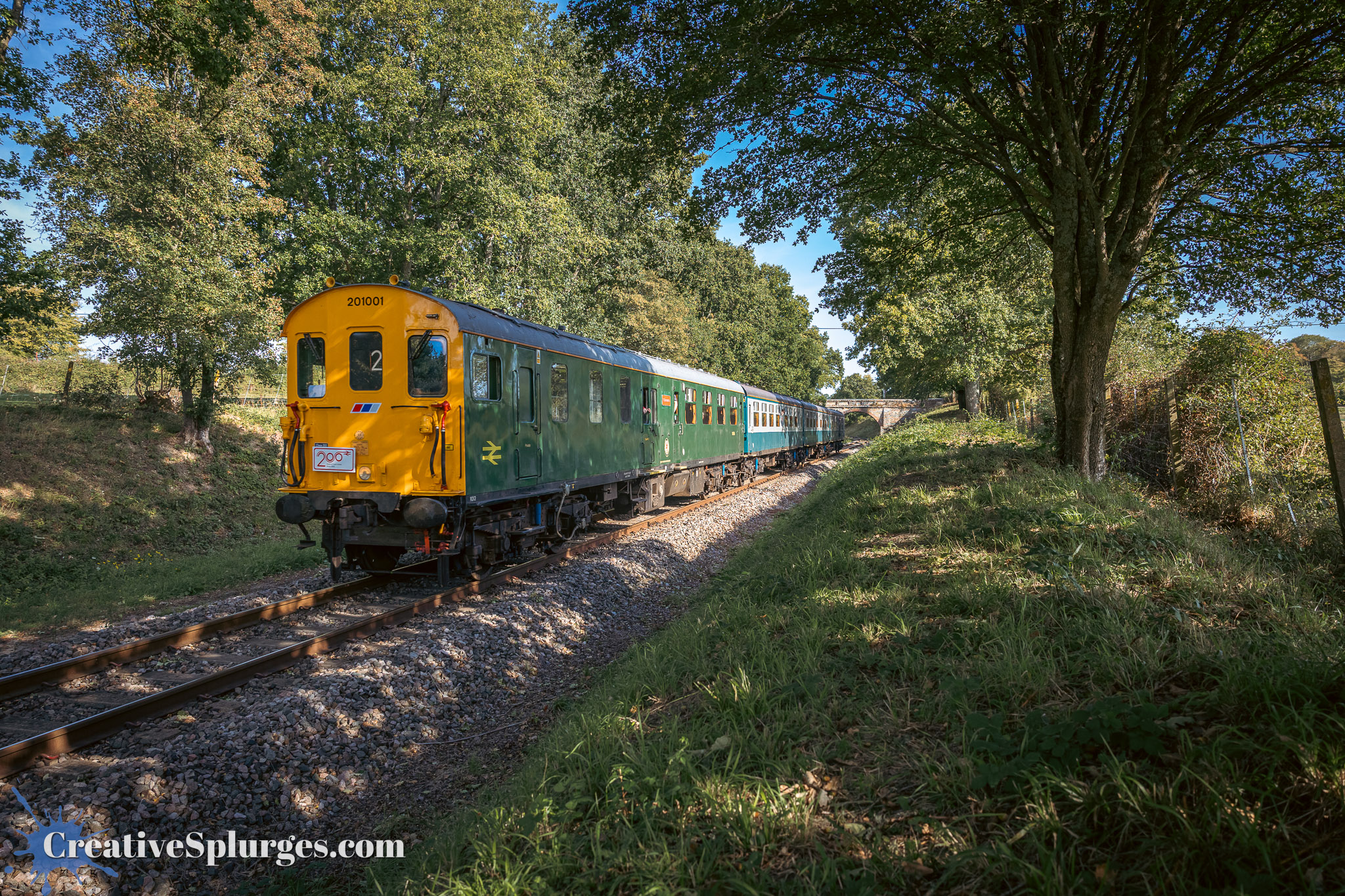
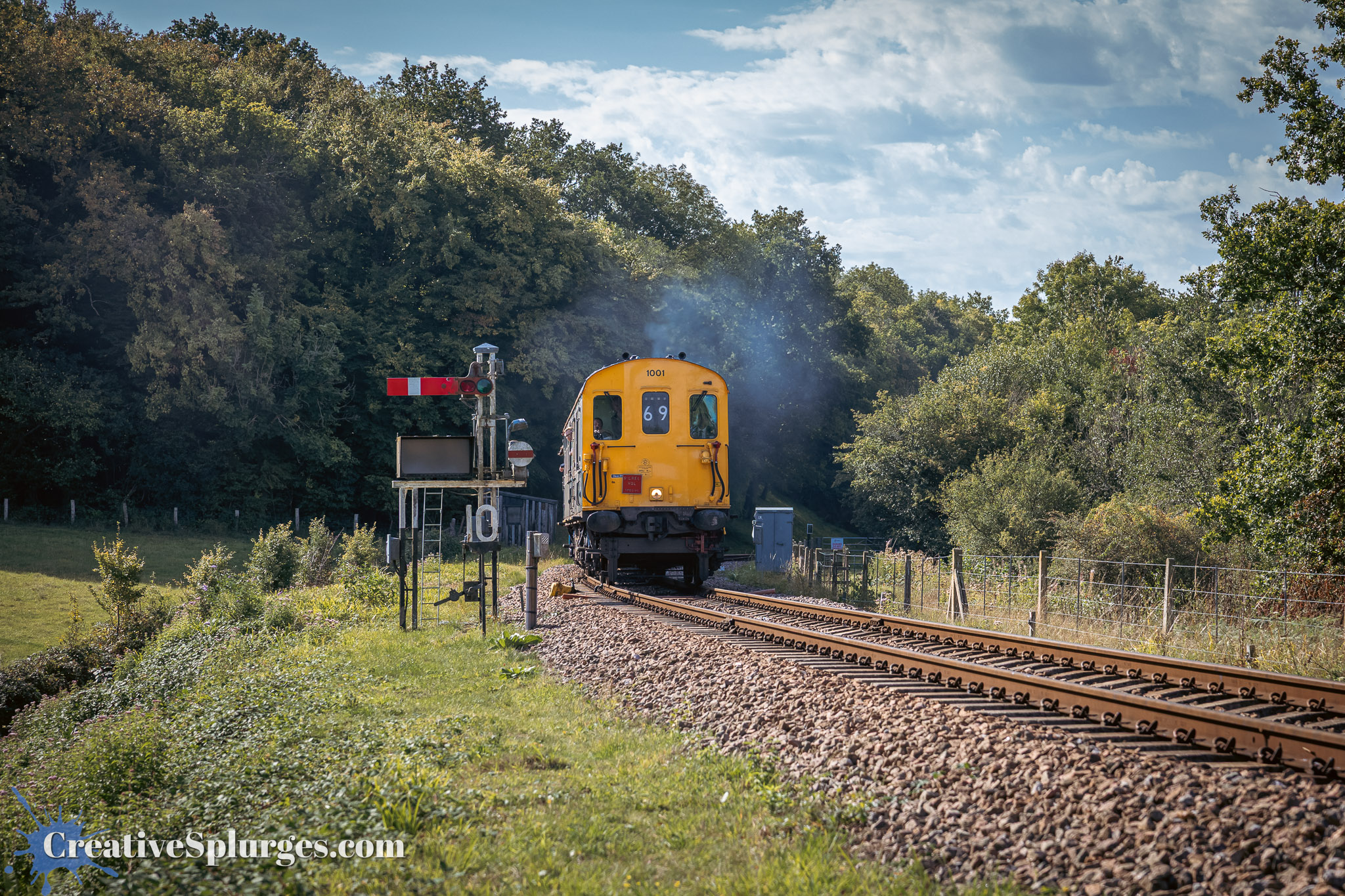
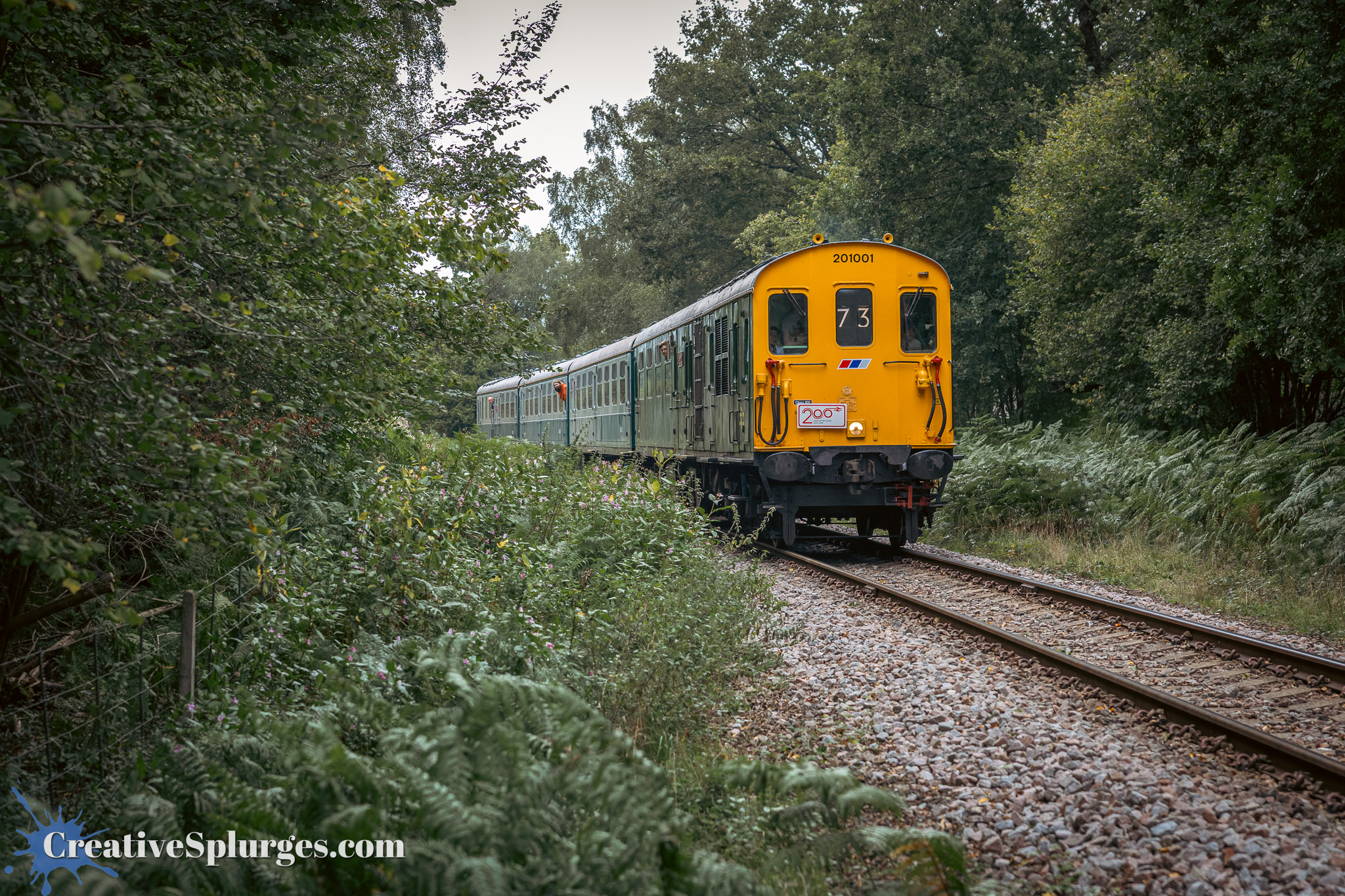
The first train to come along would be a Hastings diesel electric multiple unit – basically, self-propelled carriages.
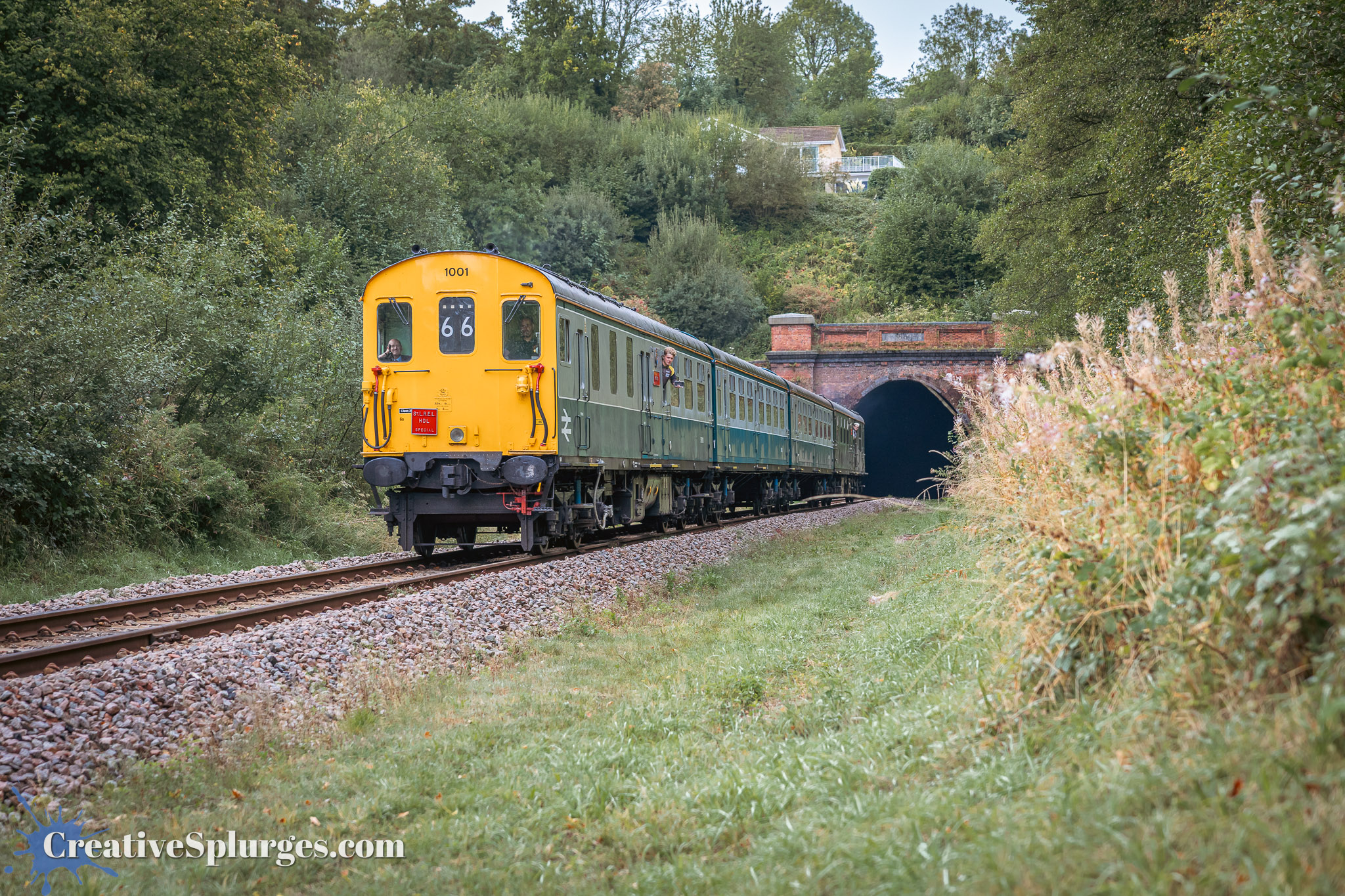
I like this train. Although everything on the rails near where I grew up was electric, they were multiple units like this, not hauled by a distinct locomotive as we’ll see for much of the rest of this post.
As it was nice and quiet at the crossing – probably because it was a diesel gala, I expect it to be a lot busier next month for Giants of Steam – Sharpthorne and I were able to get closer to the tunnel, and position ourselves on the end of what was once one of the platforms of West Hoathly station.
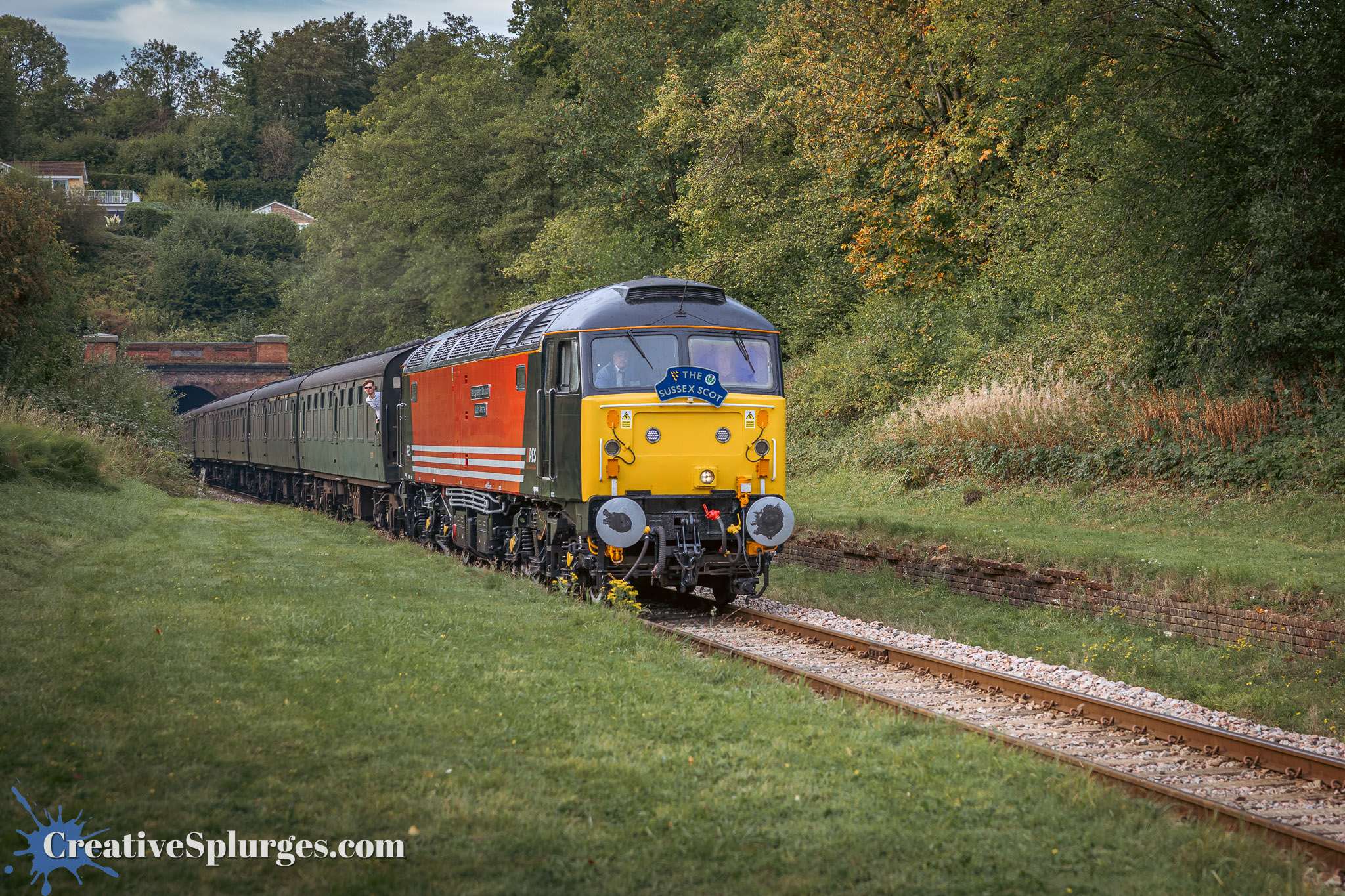
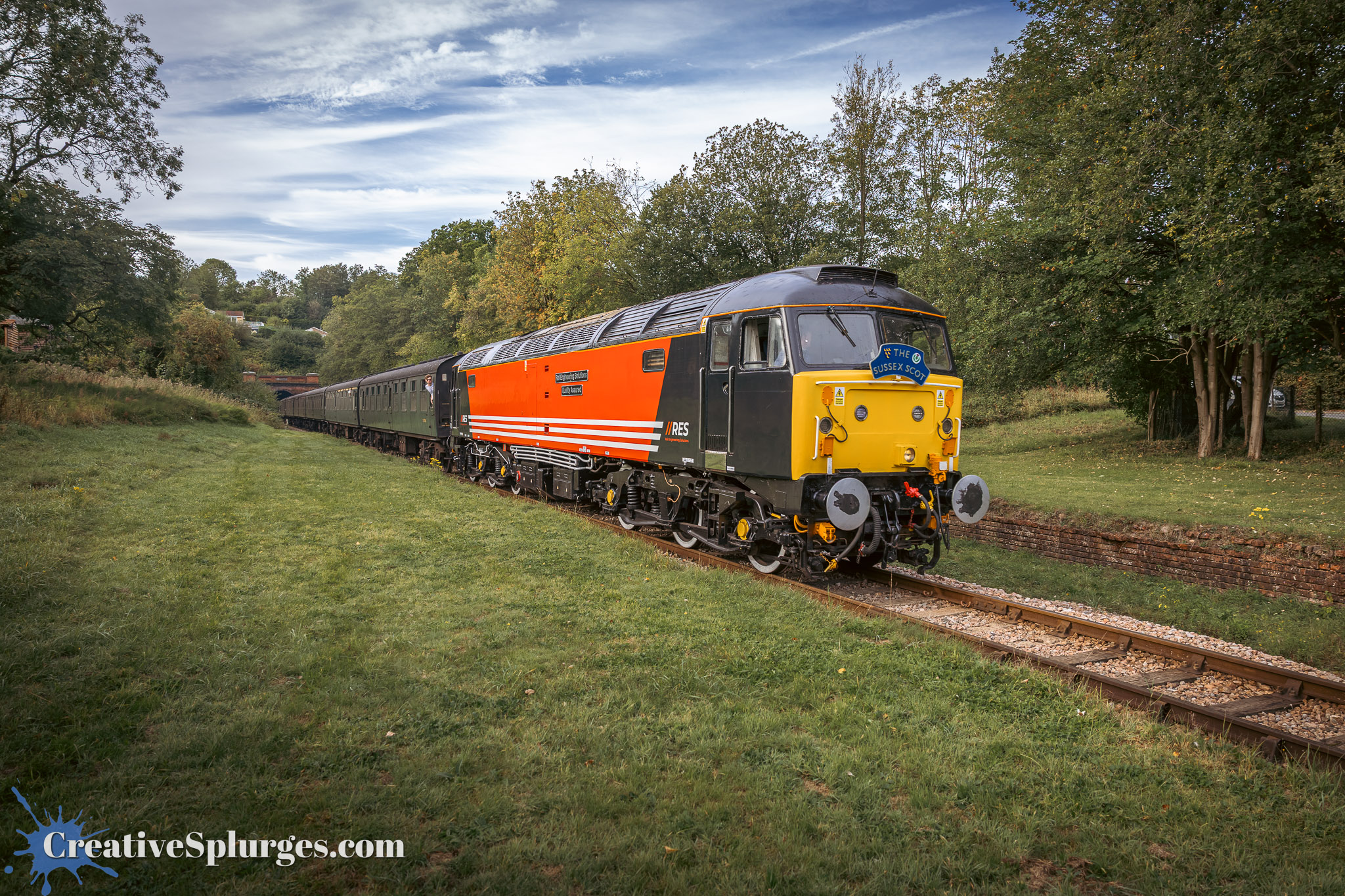
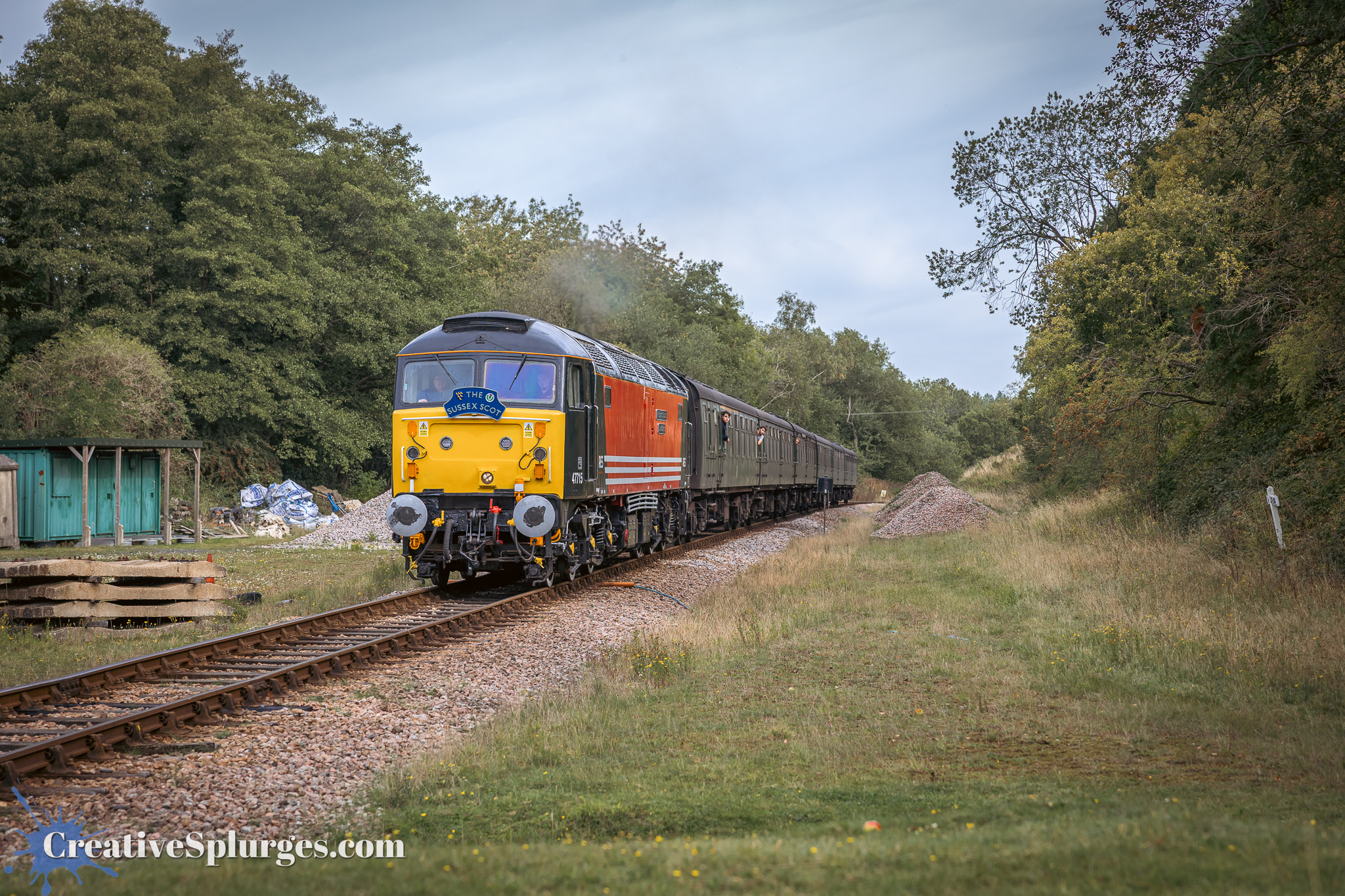
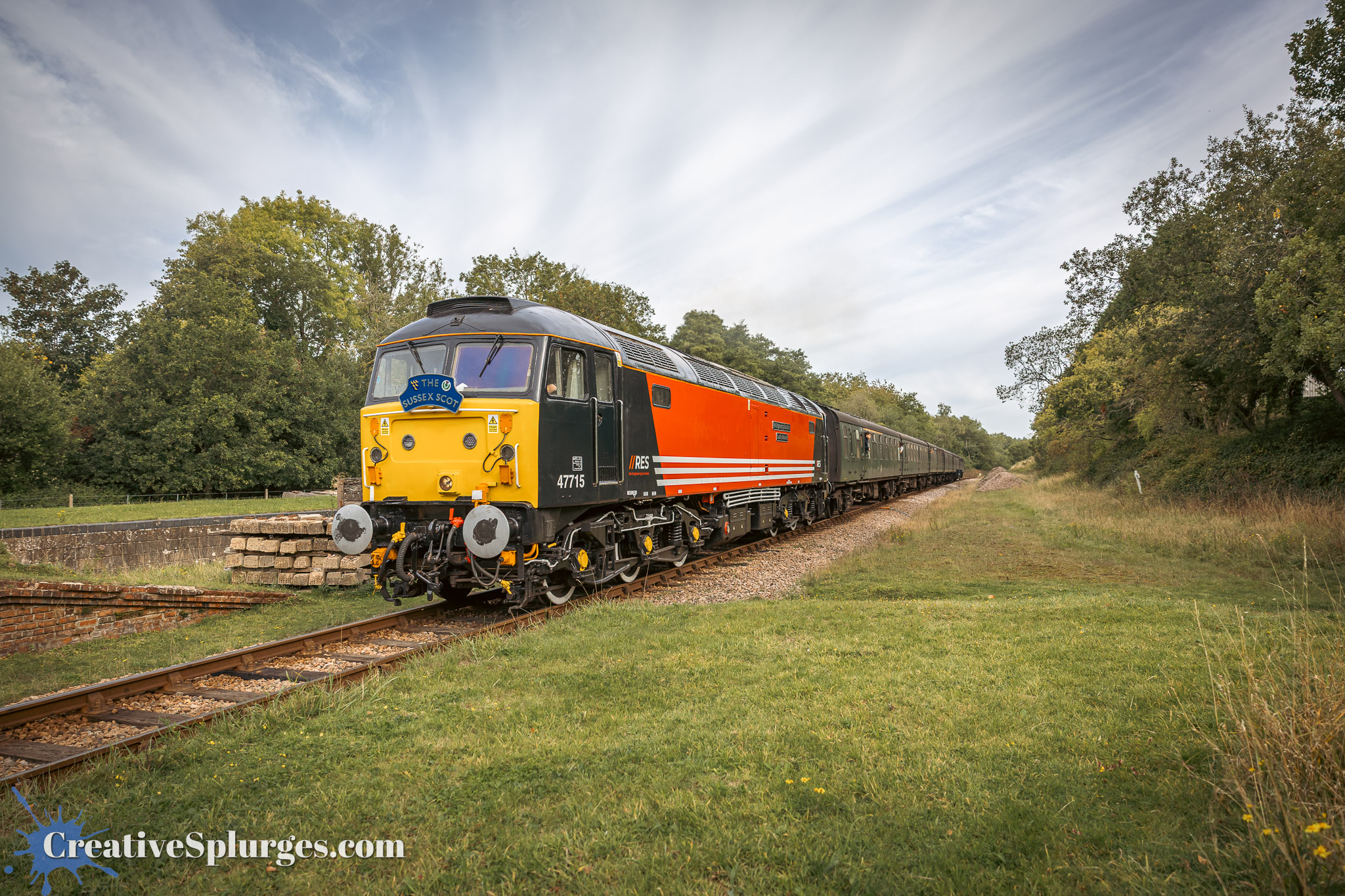
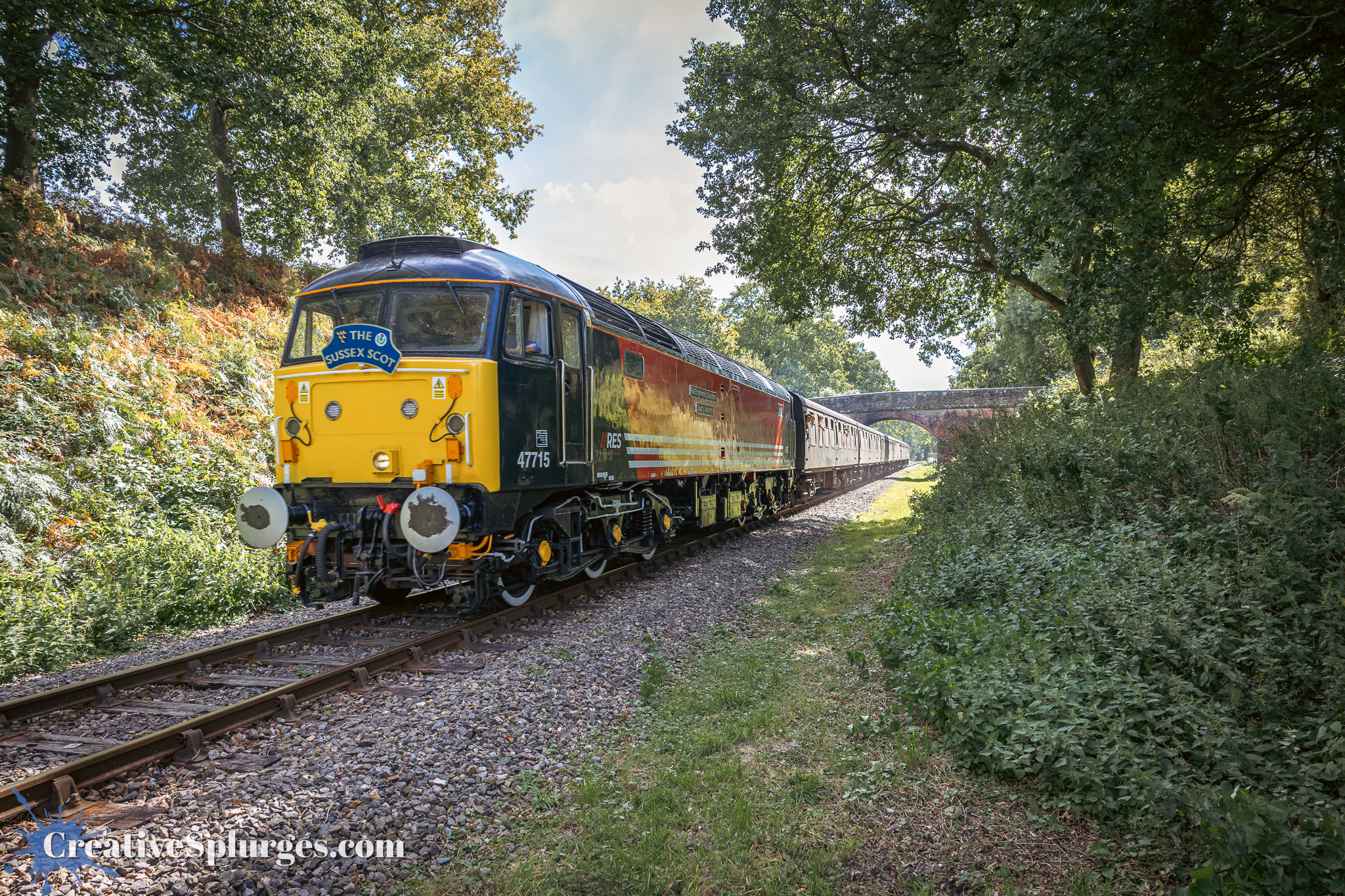
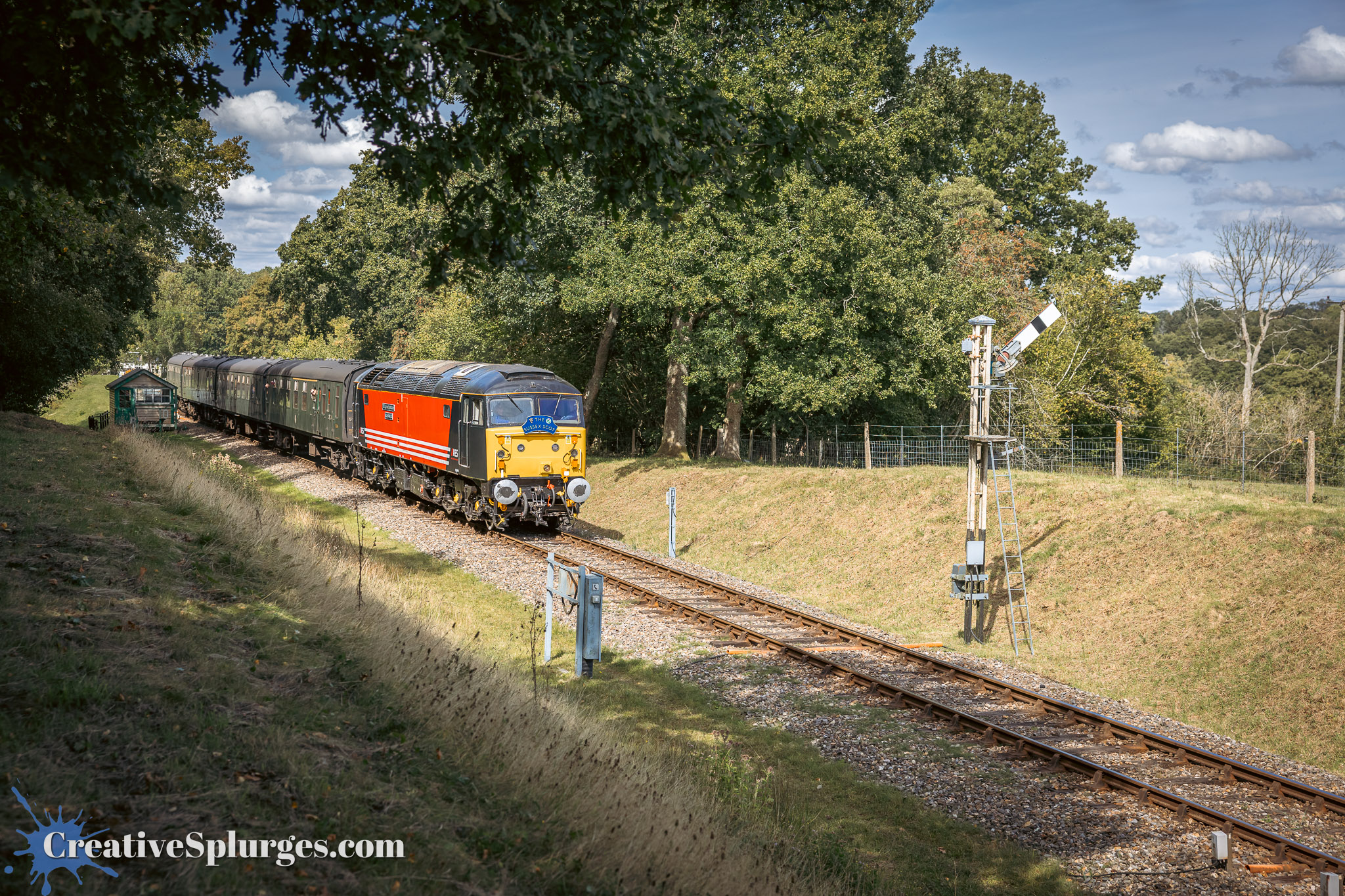
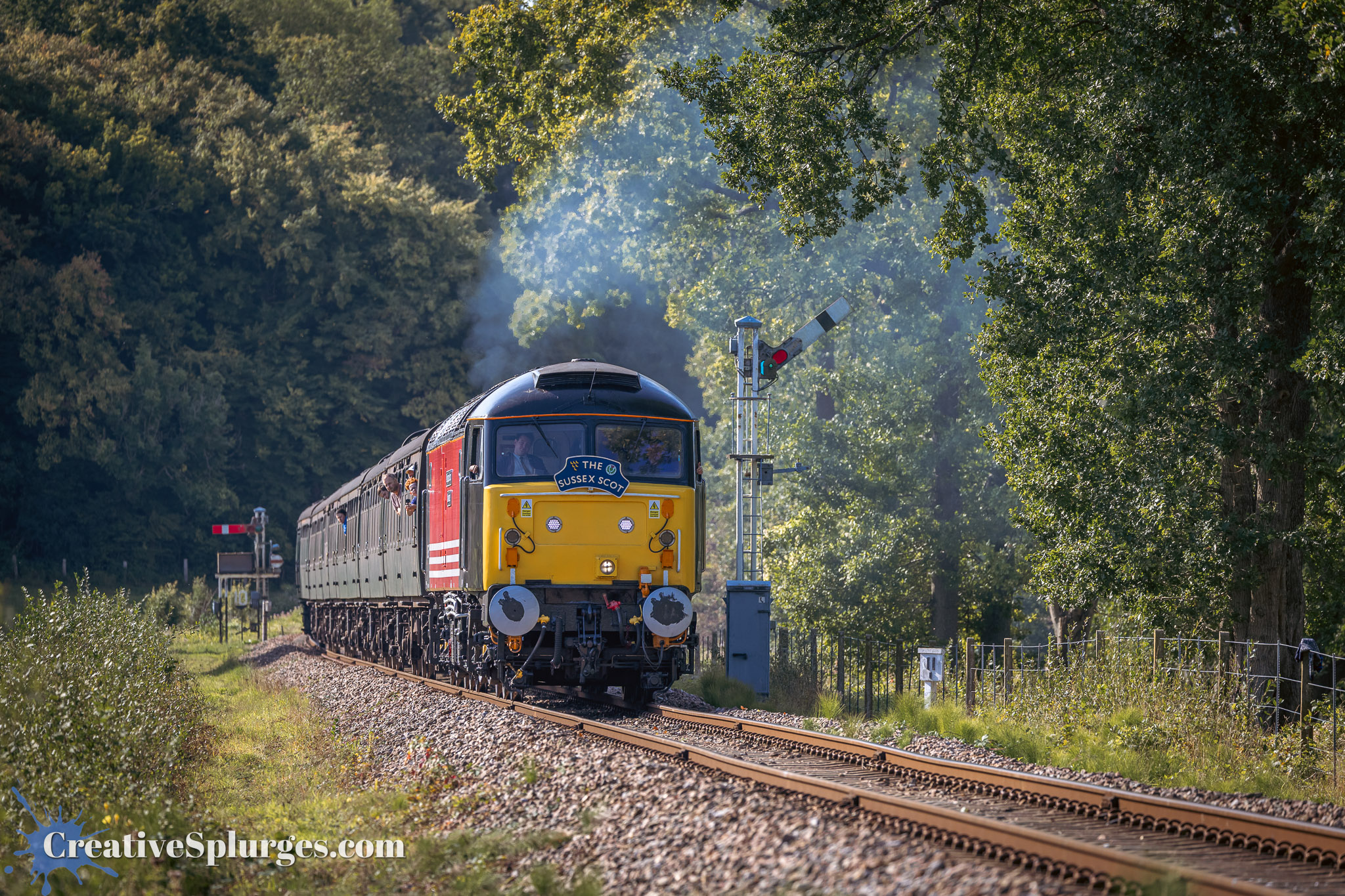
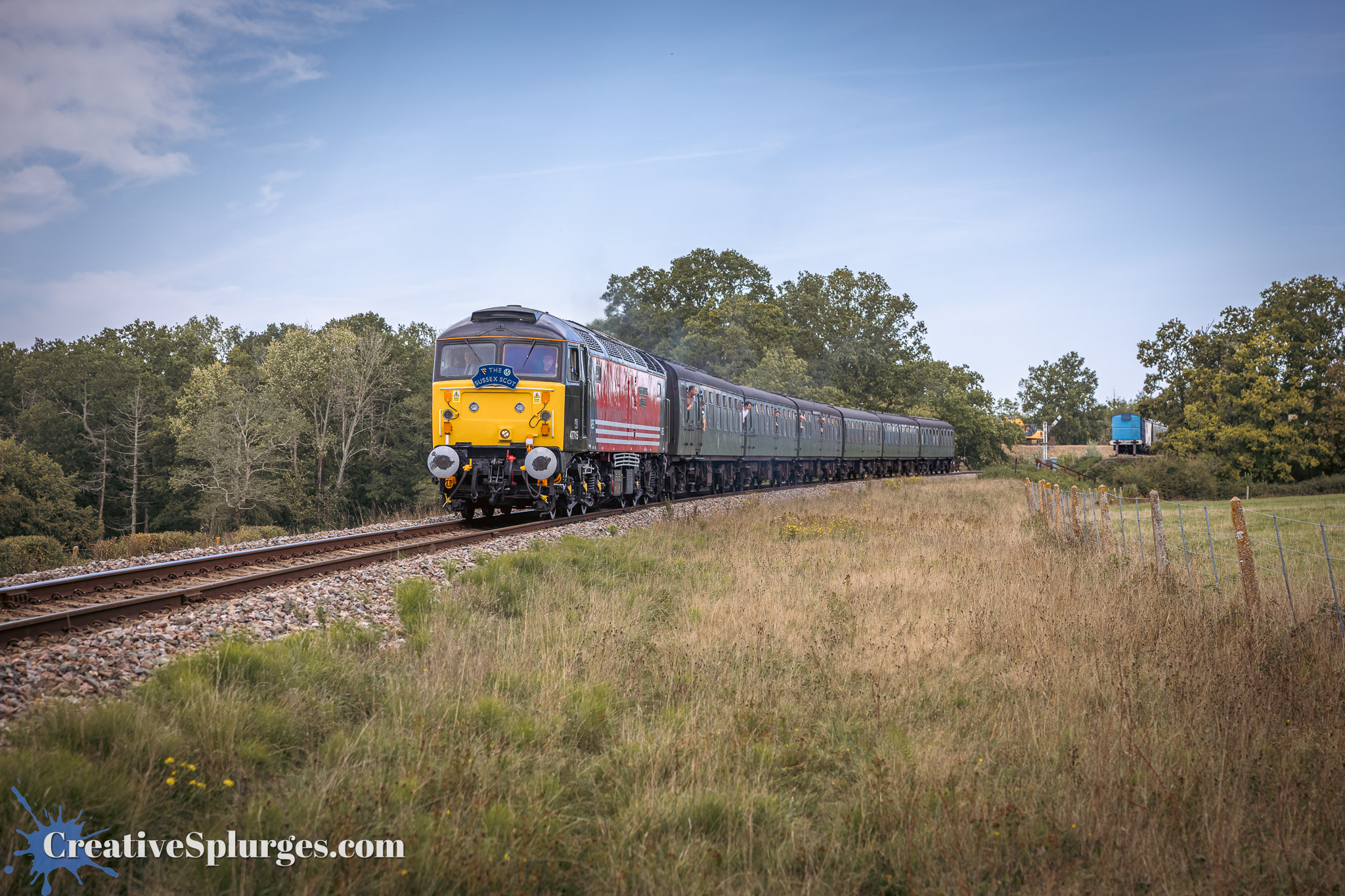
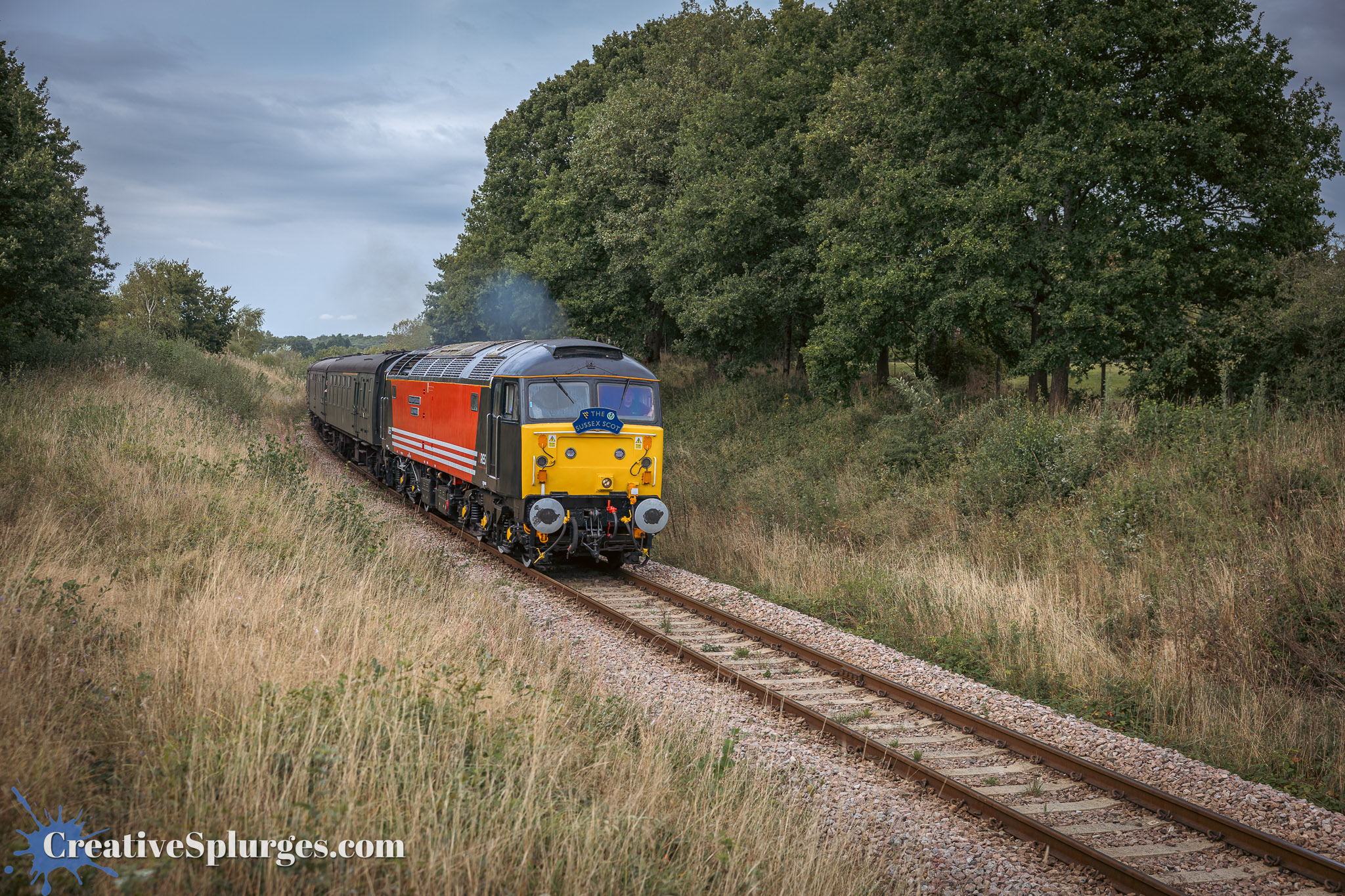
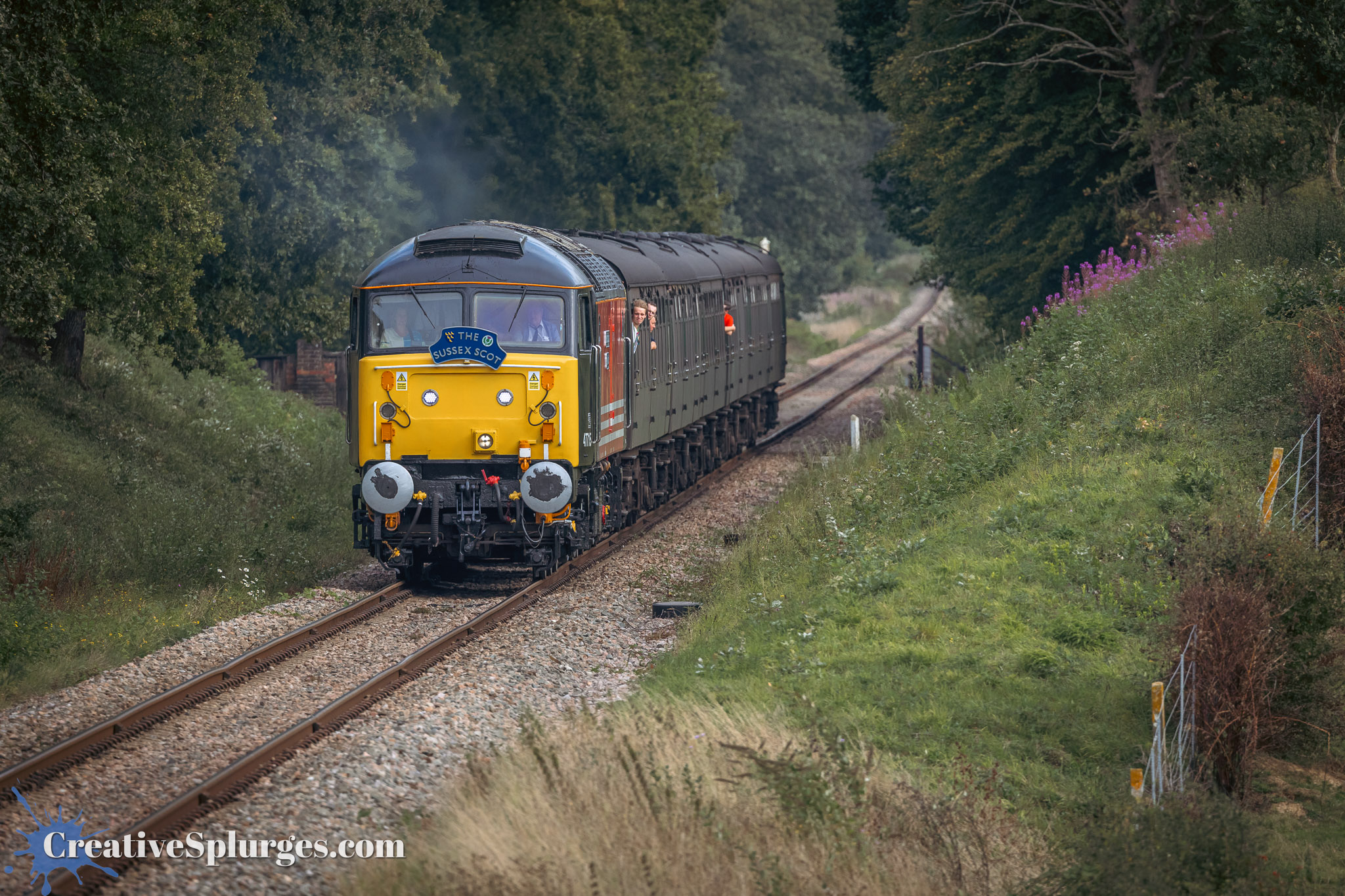
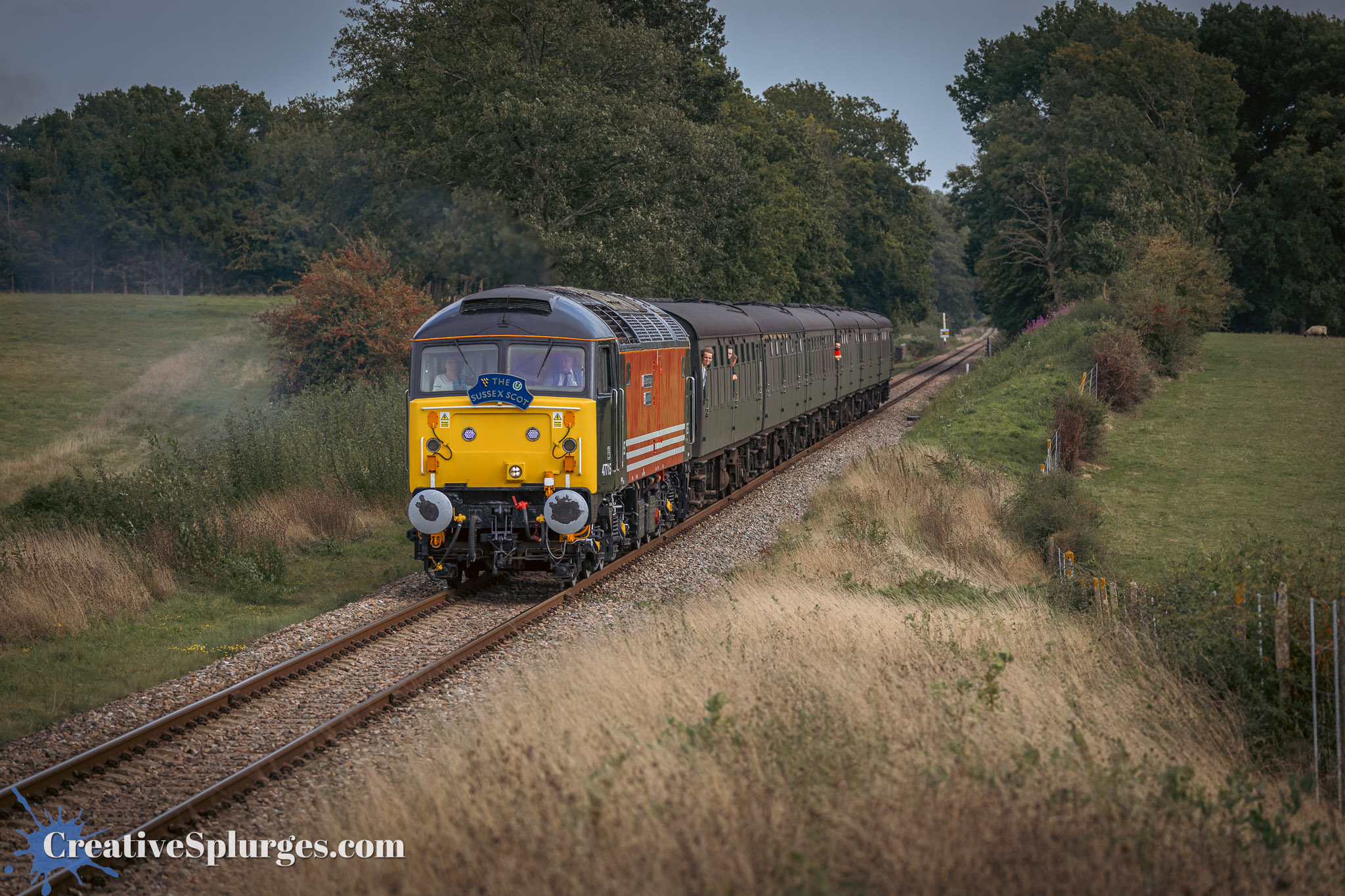
For the next train a few more people had arrived, so we positioned ourselves on the other side of the track, closer to the people where we wouldn’t be blocking any views. The next train would be Class 47 47715.

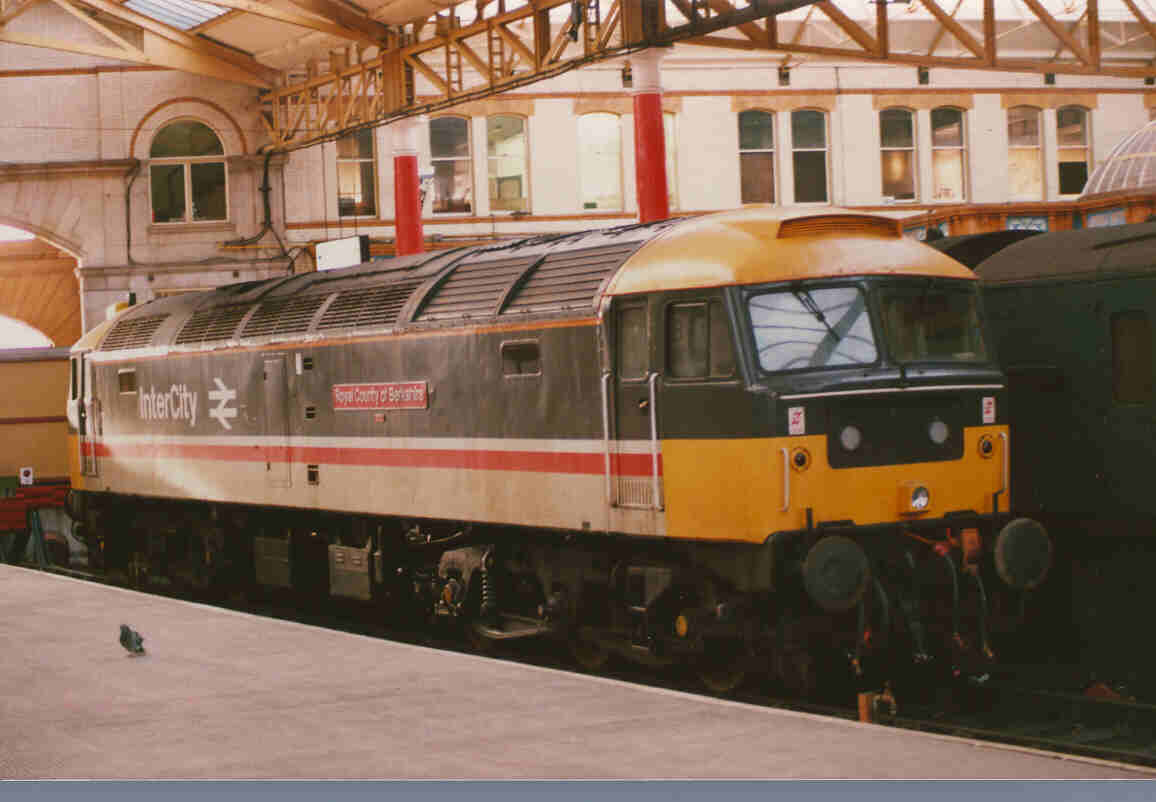
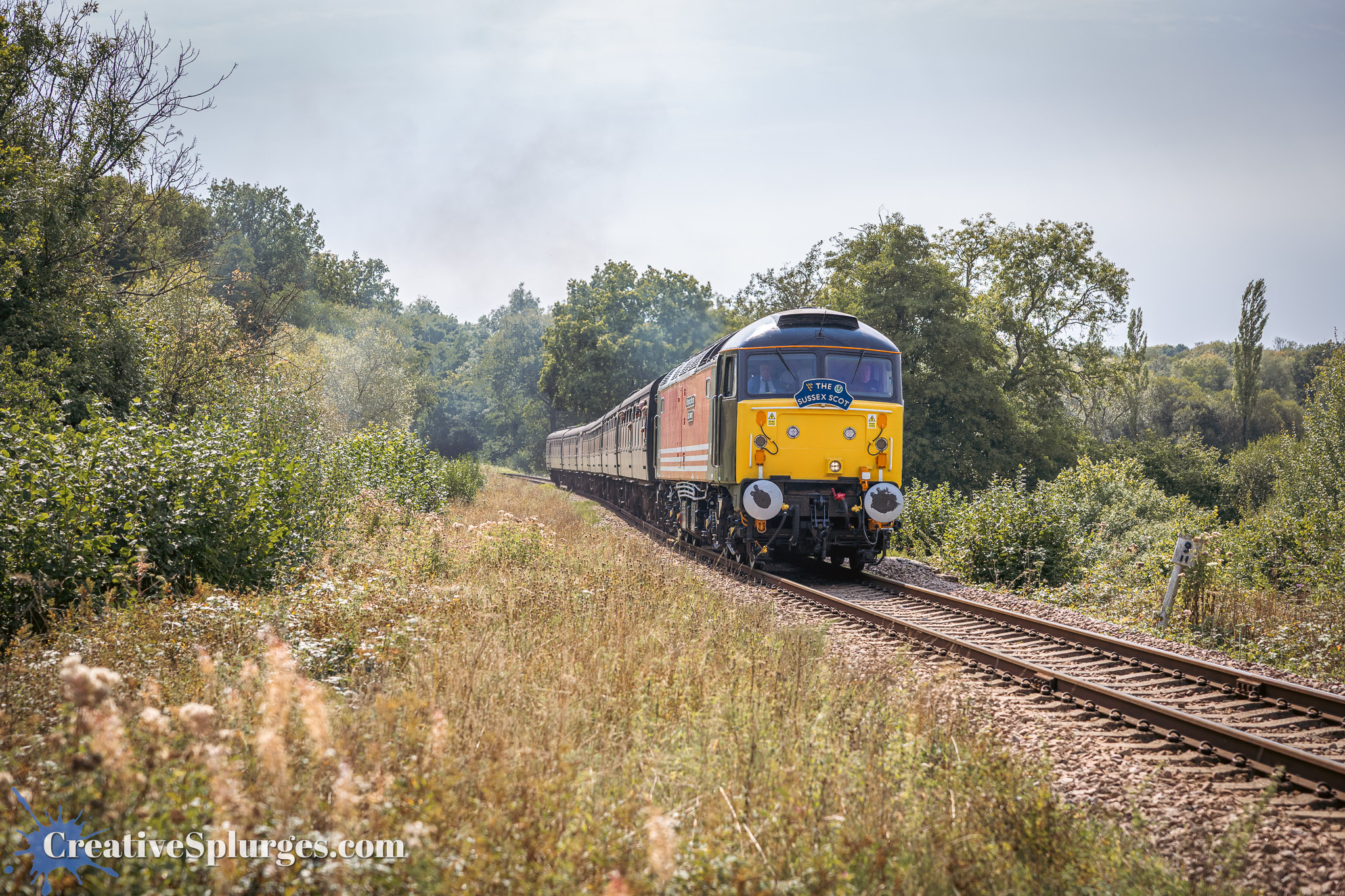
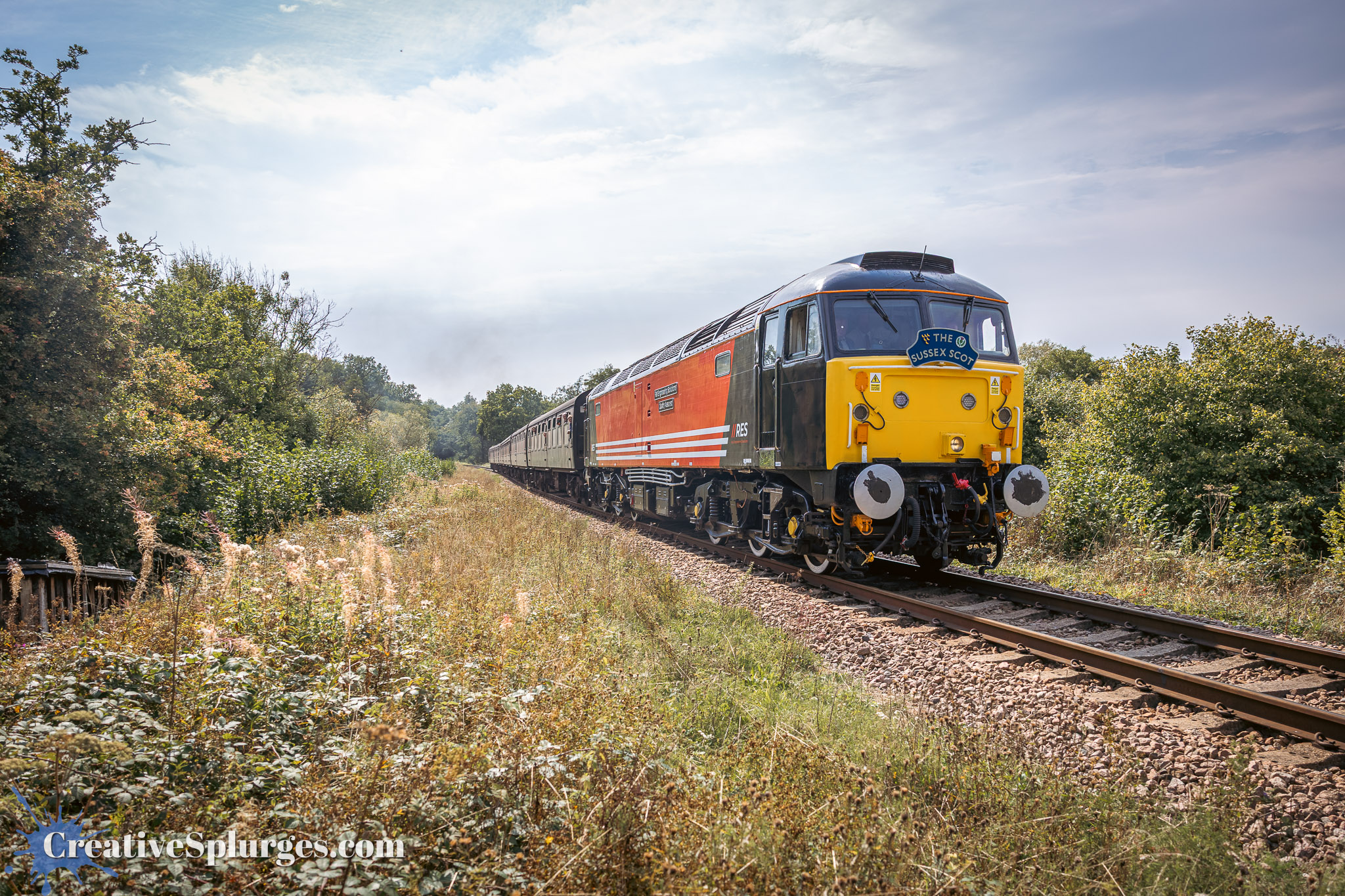
I have a real soft spot for the Class 47. My one and only model train when I was a child was a Class 47. That said, the association didn’t fully click until after I’d looked it up when I got home after the gala – I’d have noticed it a lot quicker if it had been in InterCity livery.
We headed further north to just before New Coombe Bridge to see the Hastings unit come back south.
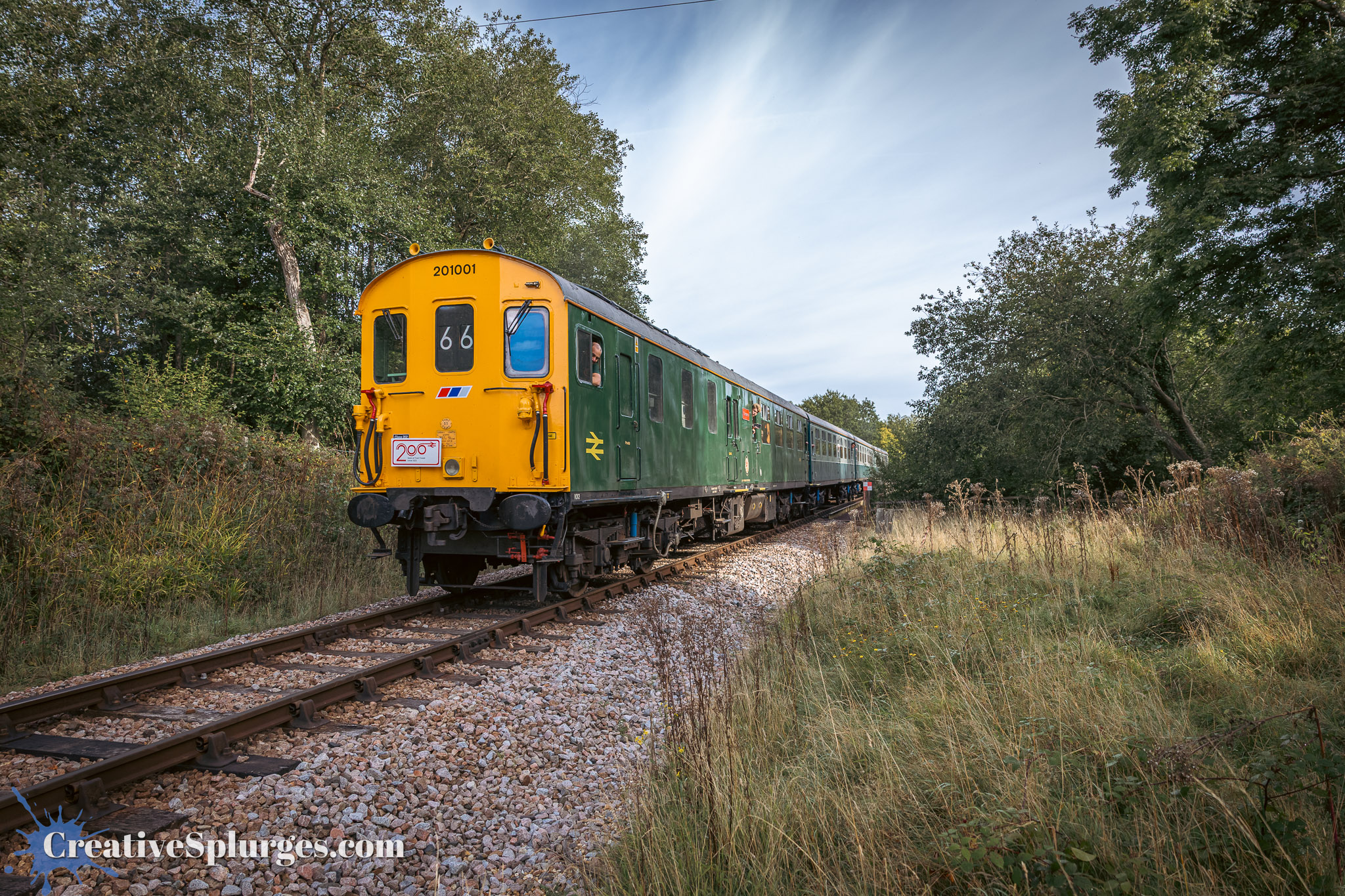
Unfortunately when it was heading in this direction, the leading coach was green and didn’t match the rest of the train’s livery, so it looks a bit lopsided.
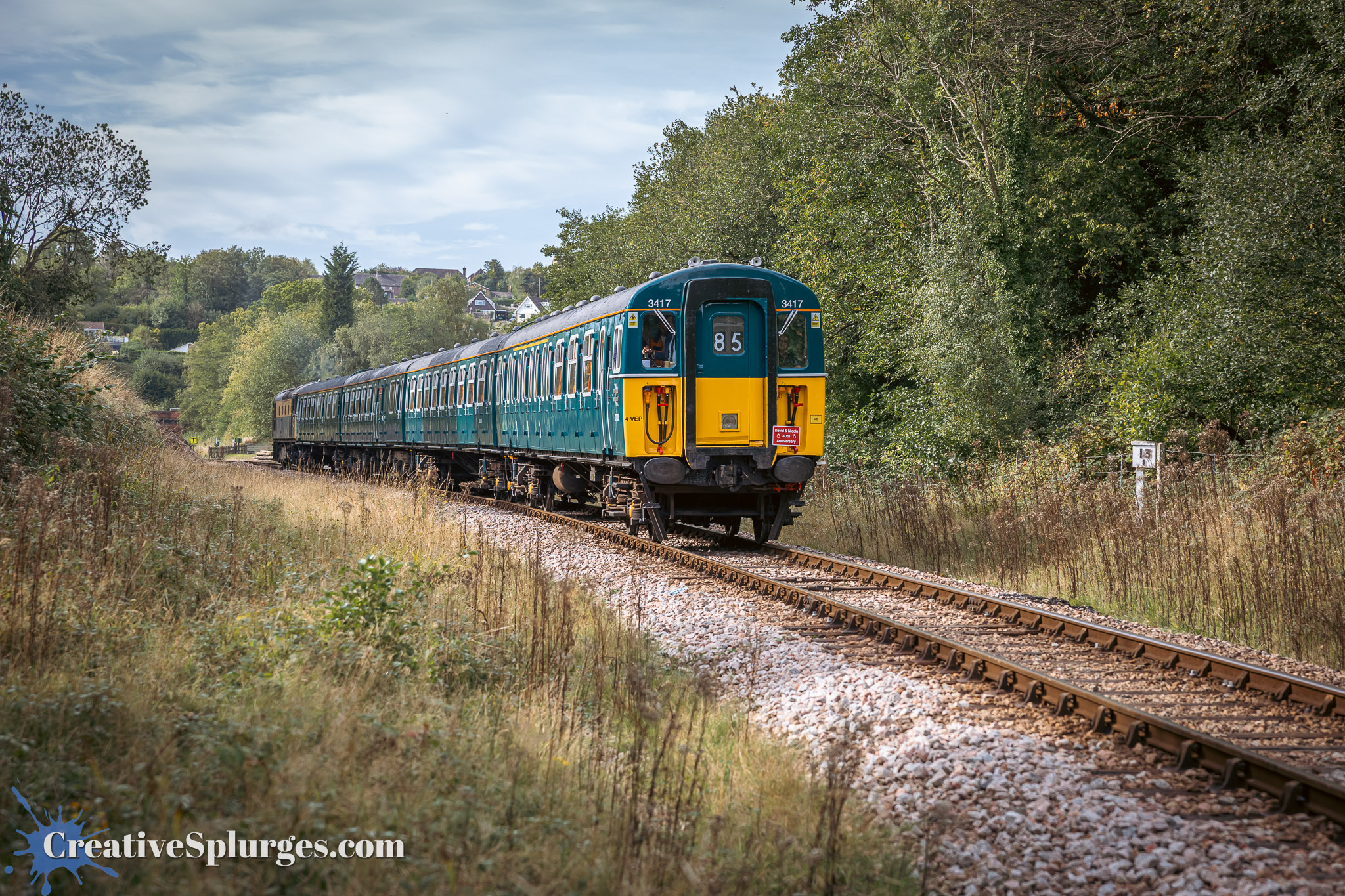
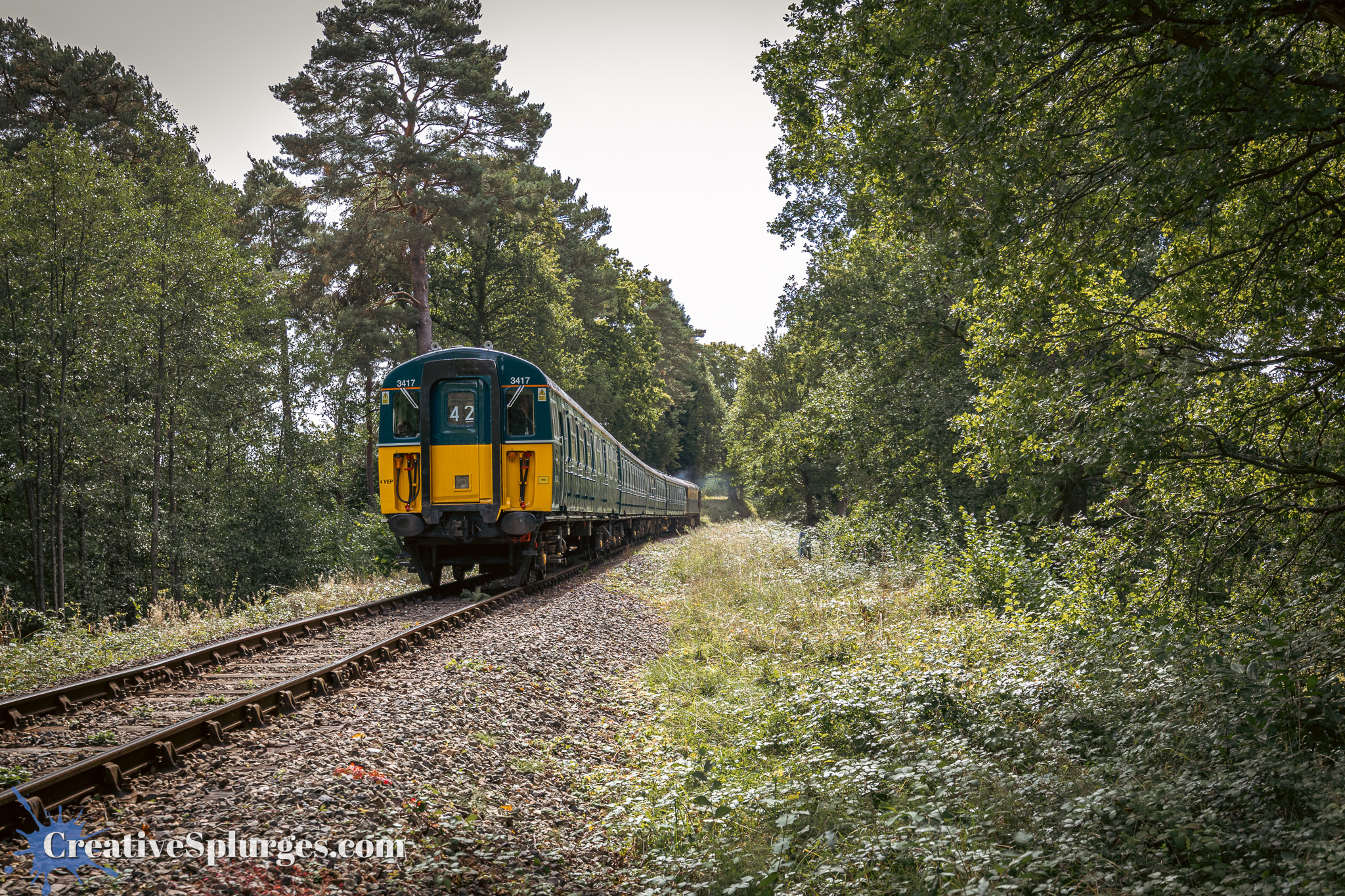
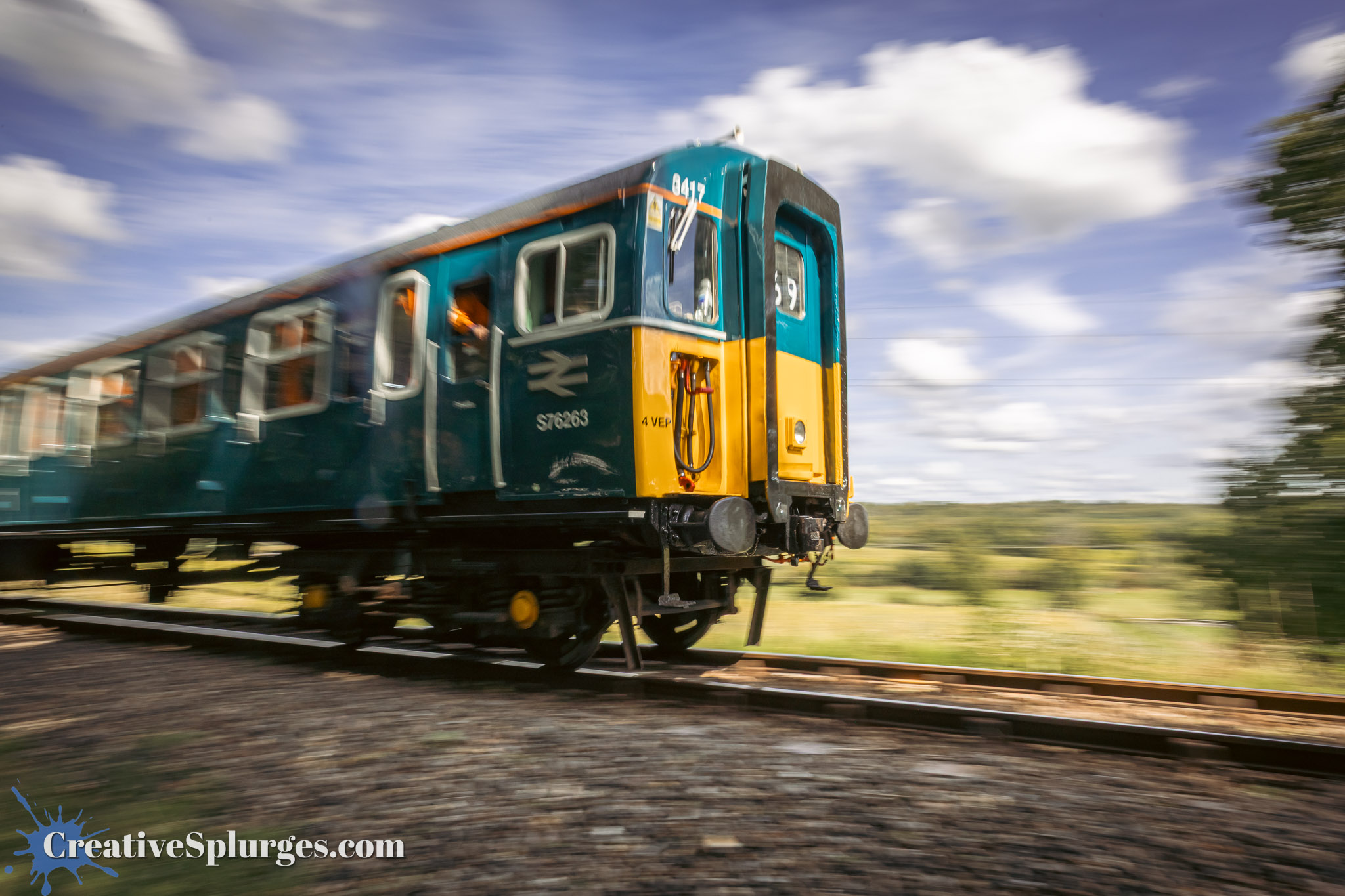
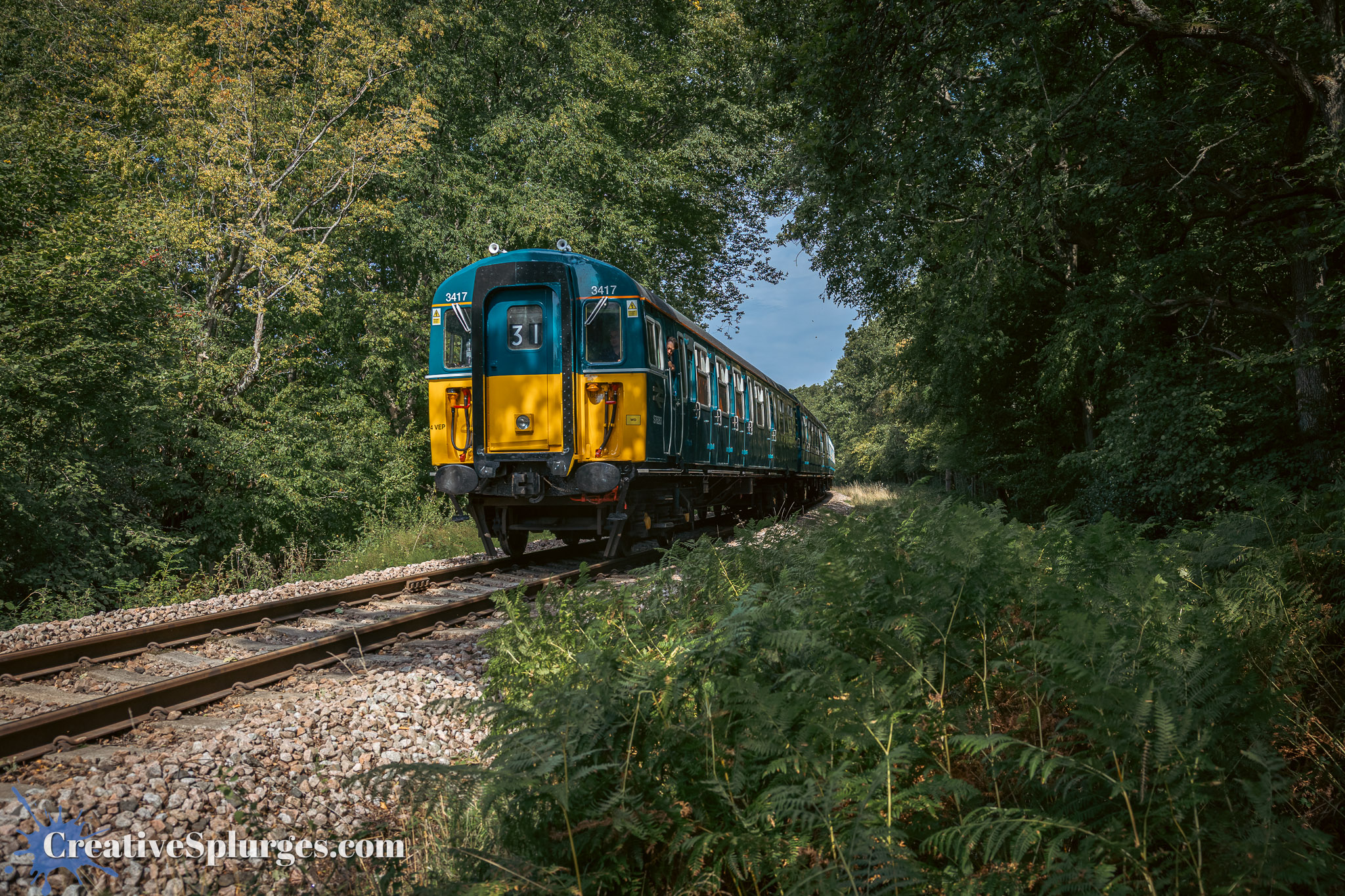
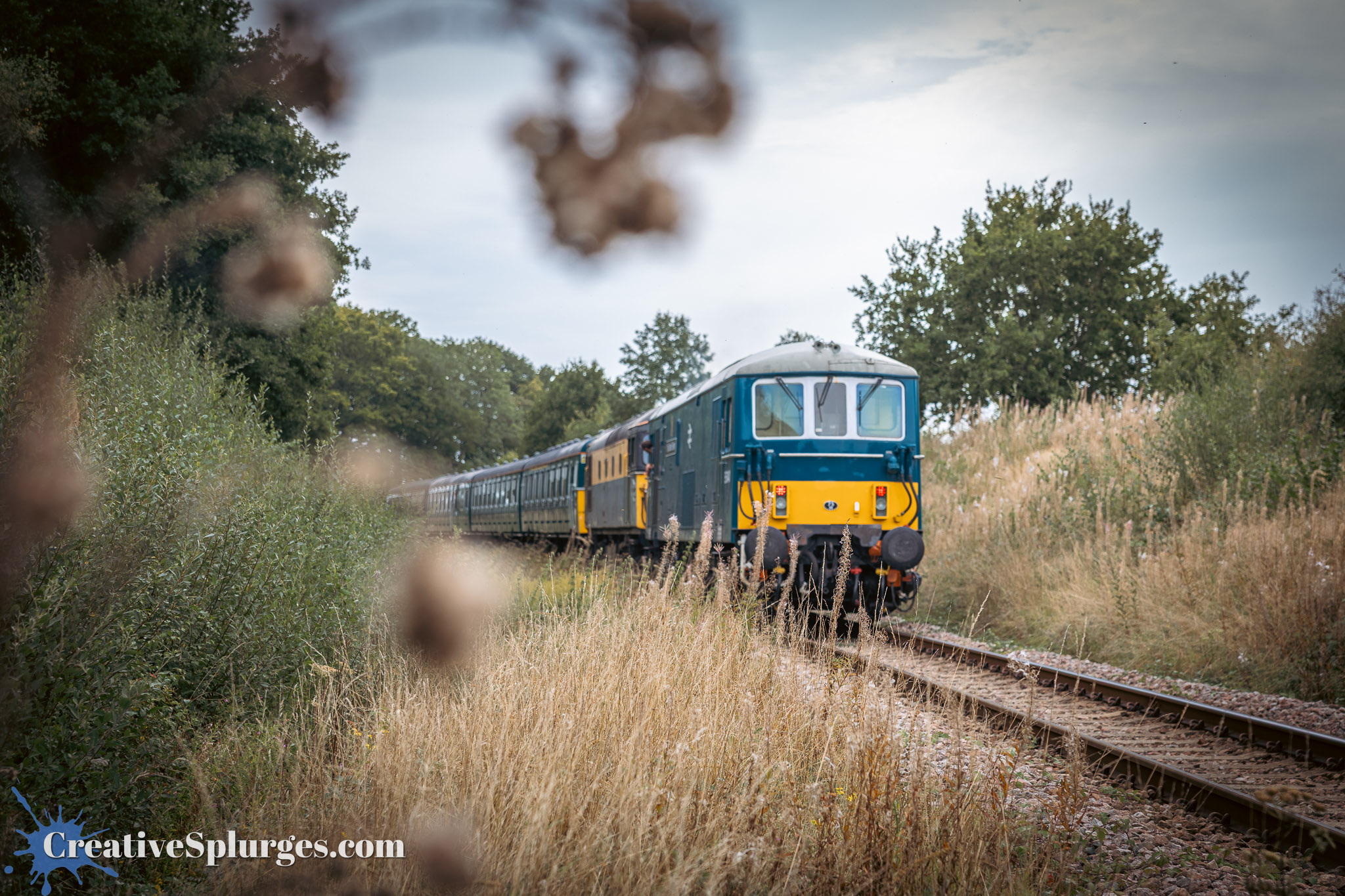
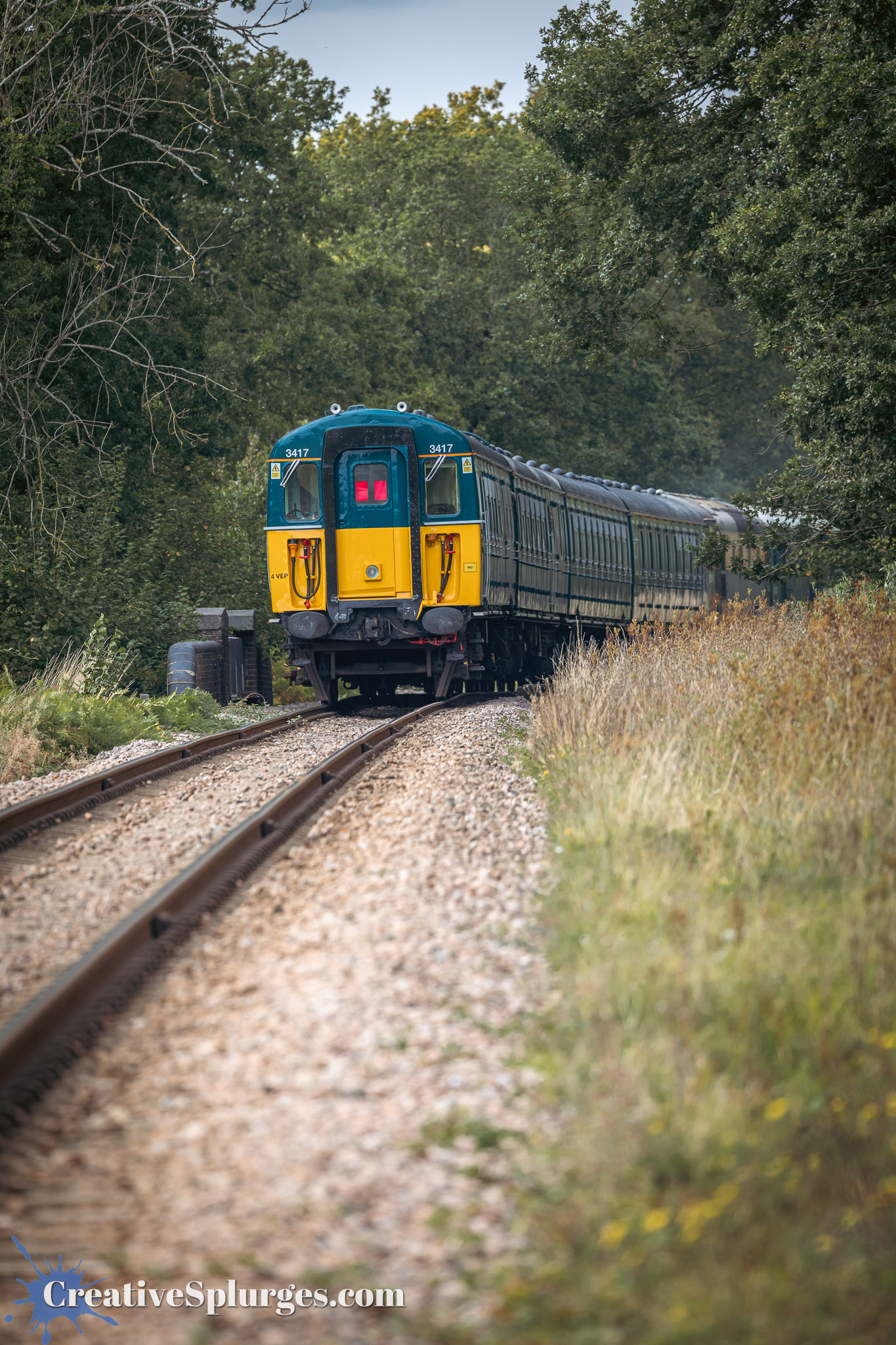
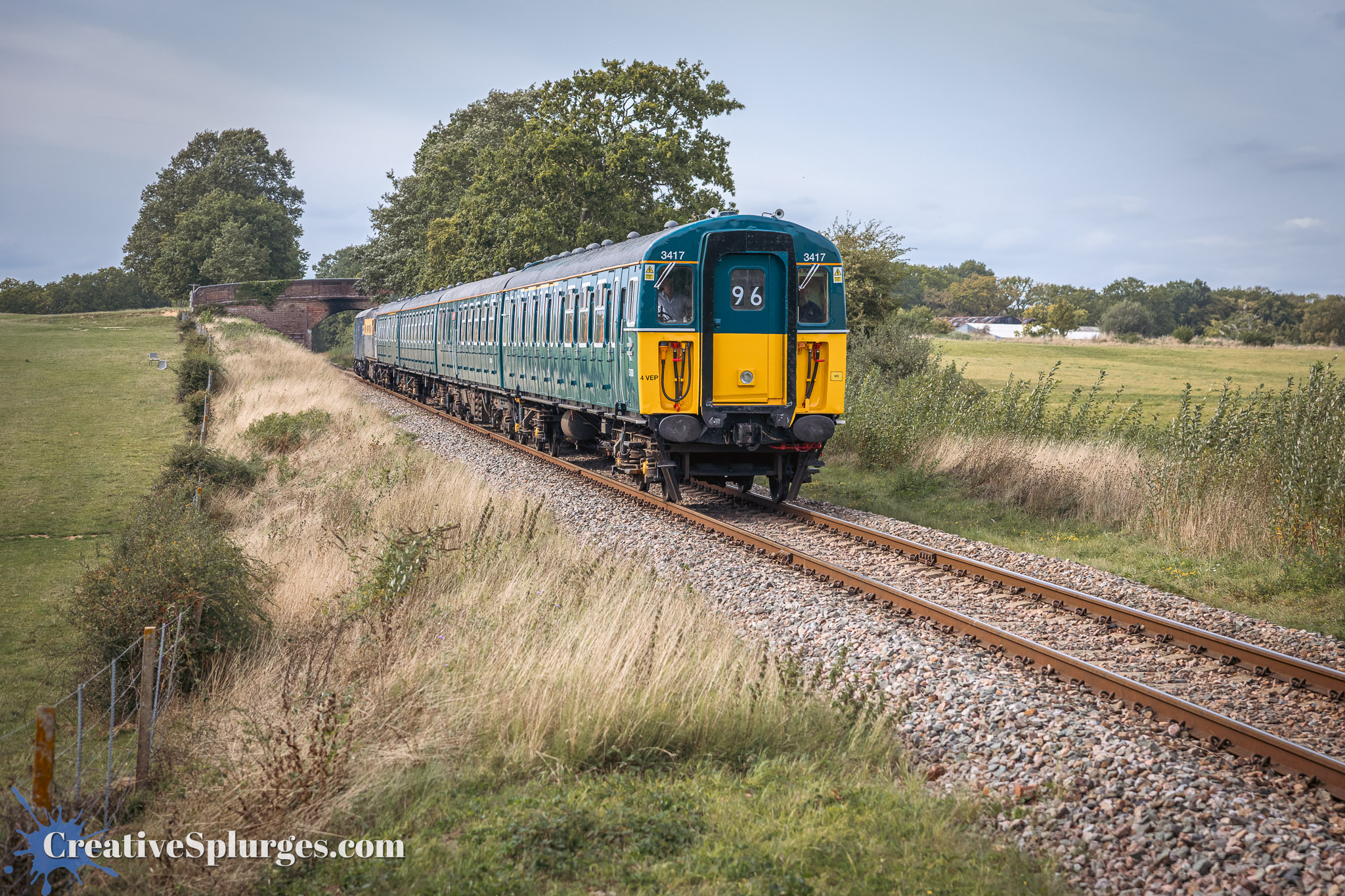
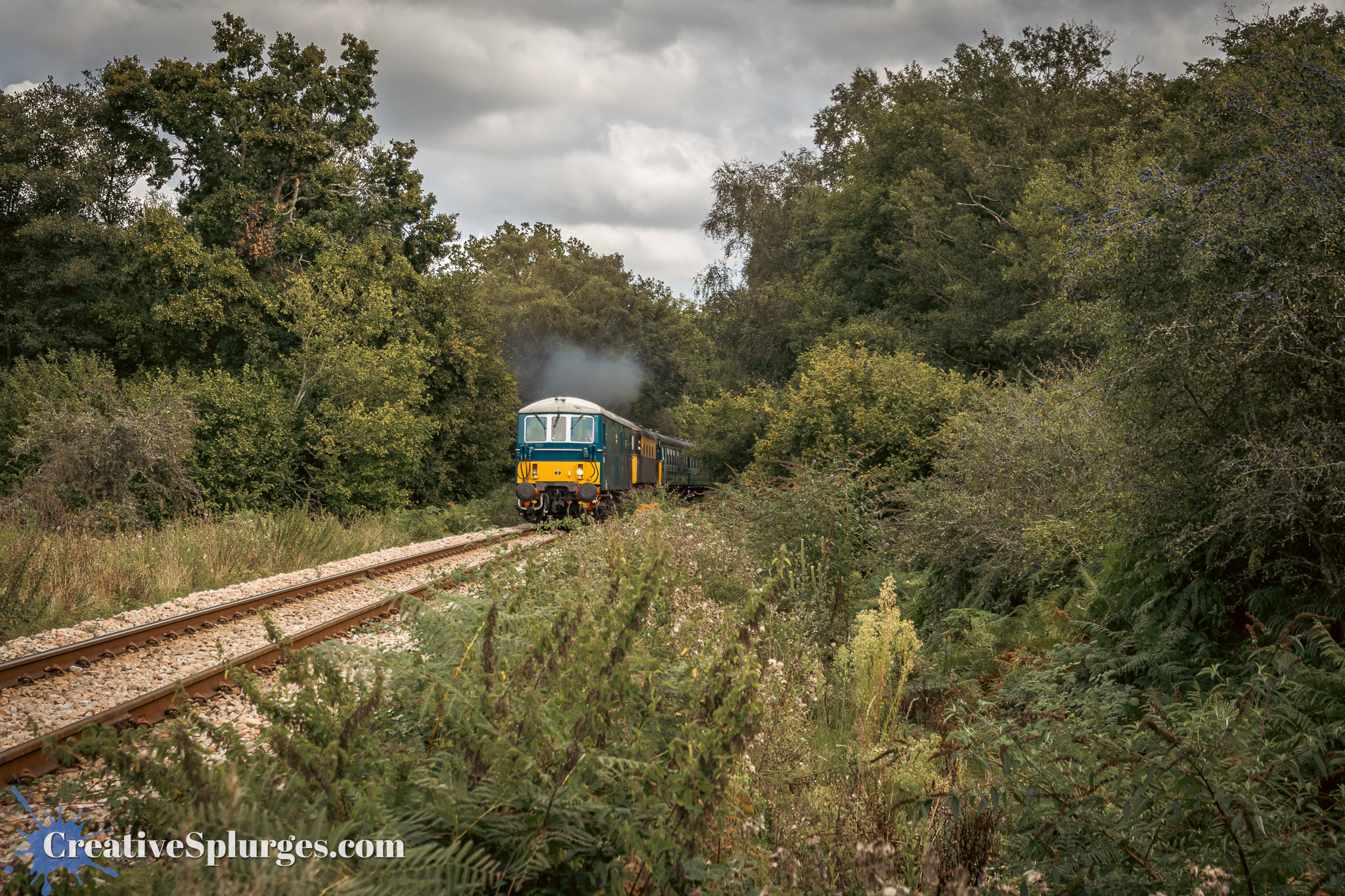
We waited in this spot for the next northbound train, which would be 4VEP electric multiple unit 3417 Gordon Pettitt. This is another train I have a soft spot for, because units like it graced the mainlines near my house when I was growing up – albeit in a completely different livery. As this is an electric train, it isn’t actually moving under its own power. At the back of the train you might be able to make out Class 33 diesel 33108 that we saw last month at the railway’s 65th Anniversary Gala, which is doing all the pushing whilst 3417 does the steering.
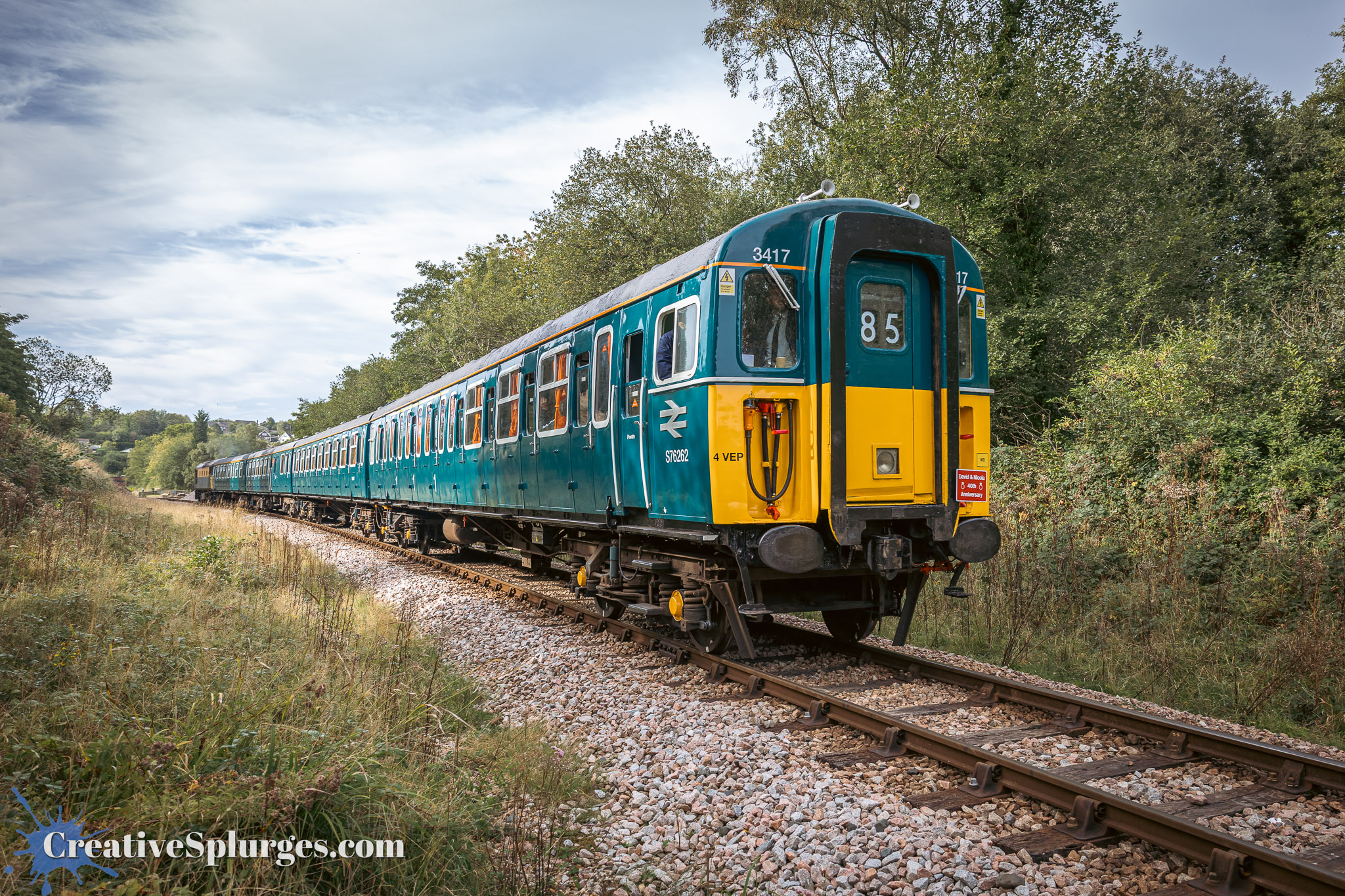
As I learned on my last outing, I was shooting in Manual mode with ISO set to auto, to make sure I was getting everything as sharp as possible.
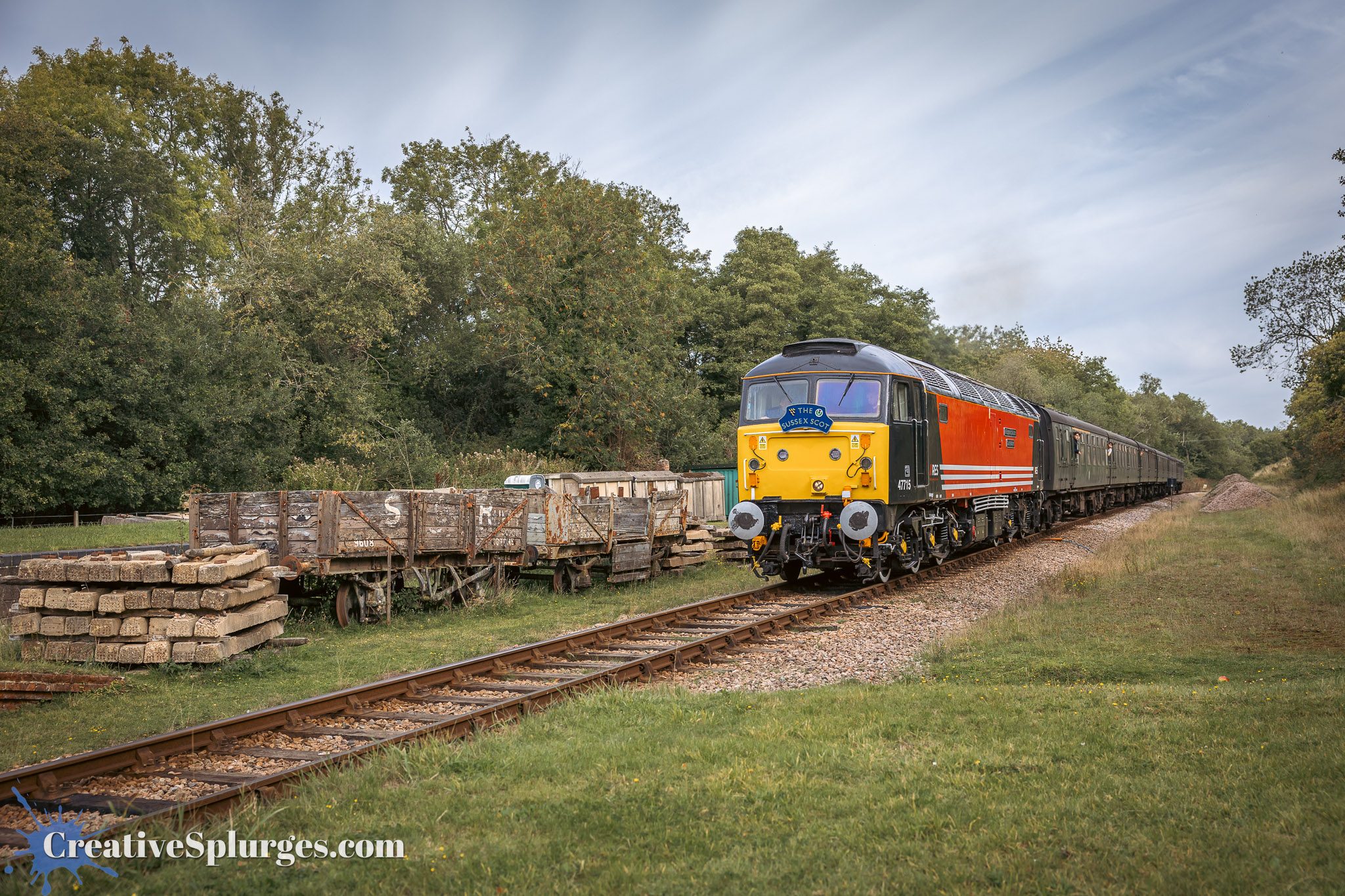
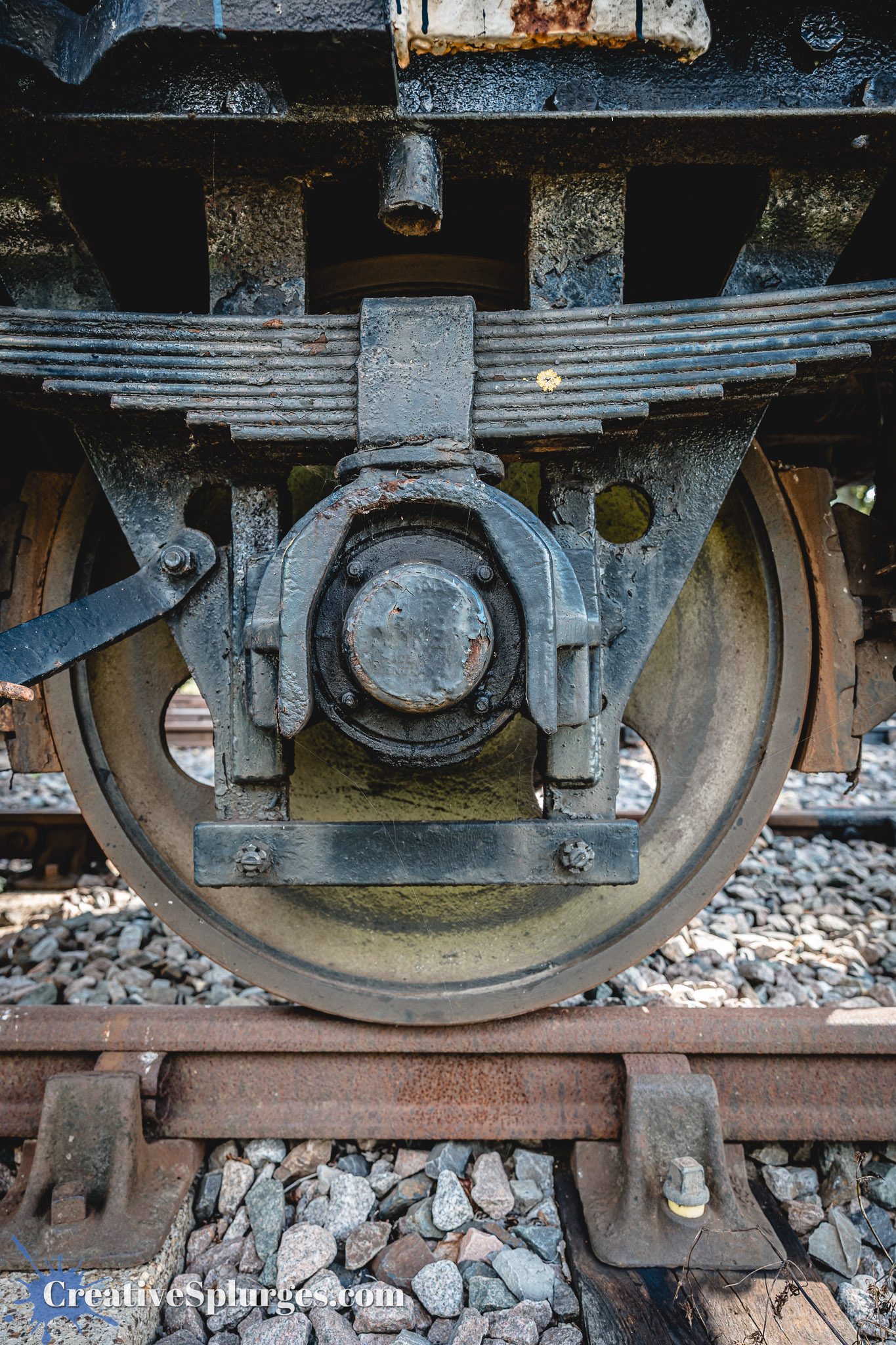
The next train would be 47715 coming back south. For this train I decided I wanted to make use of what was being stored in the former goods yard closer to the tunnel to create an industrial scene. This is a spot where a lot of ballast is being stored, as well as sleepers and a couple of old, very weathered wagons (which I photographed during my very first visit lineside). I wanted to use these as an interesting backdrop for the diesel to pass through. In the end the shot I preferred didn’t have much ballast in it.
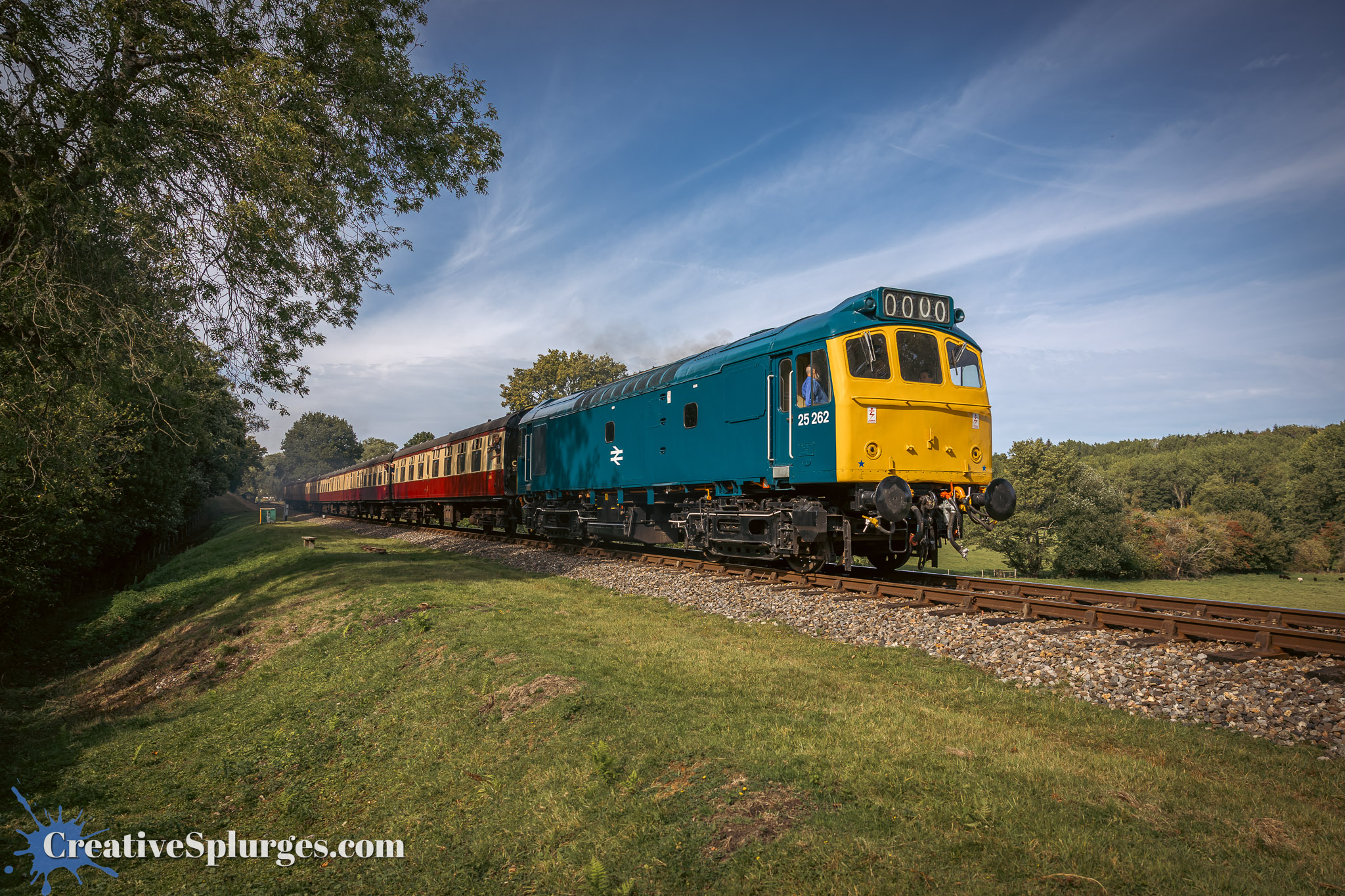
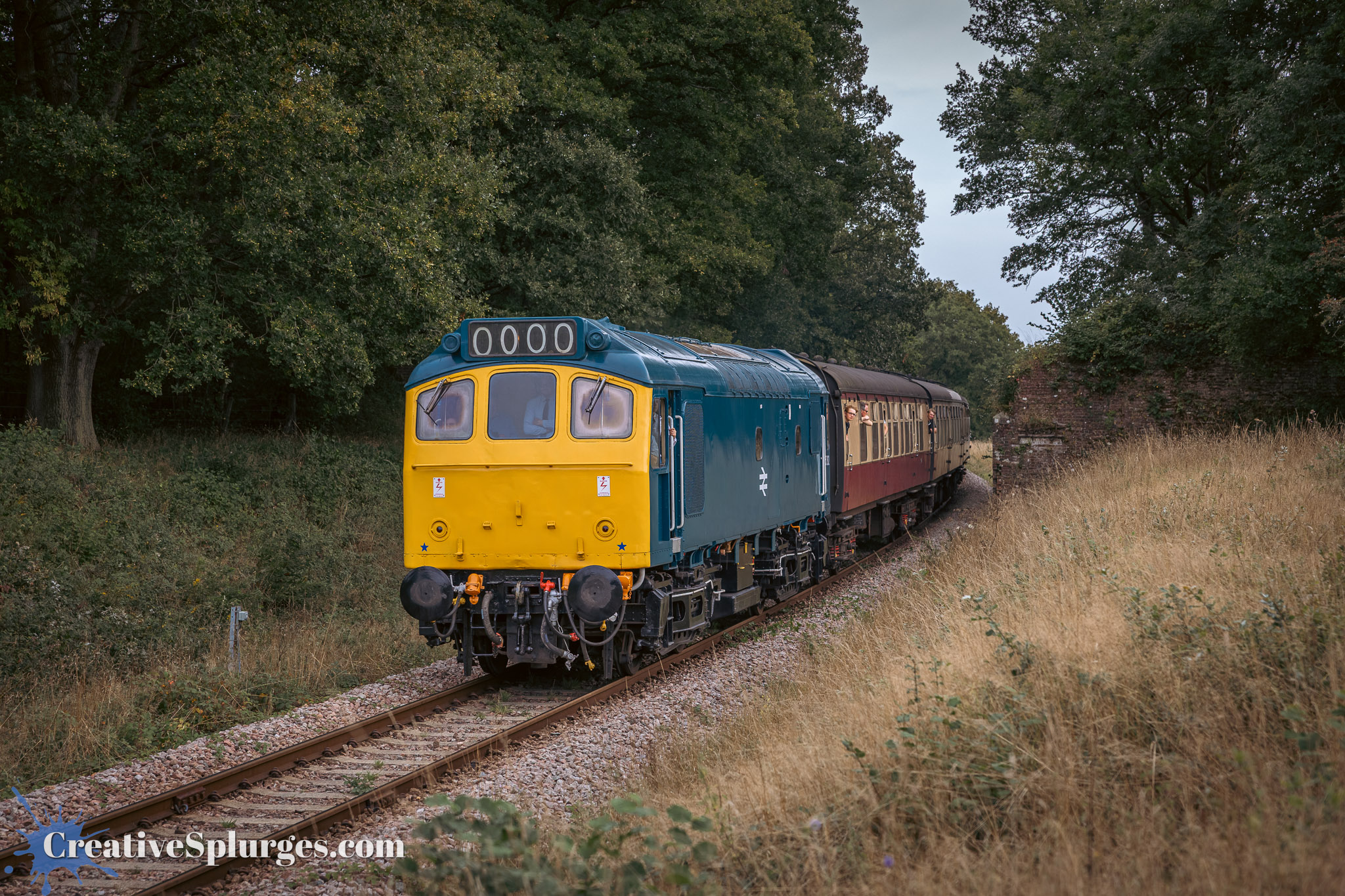
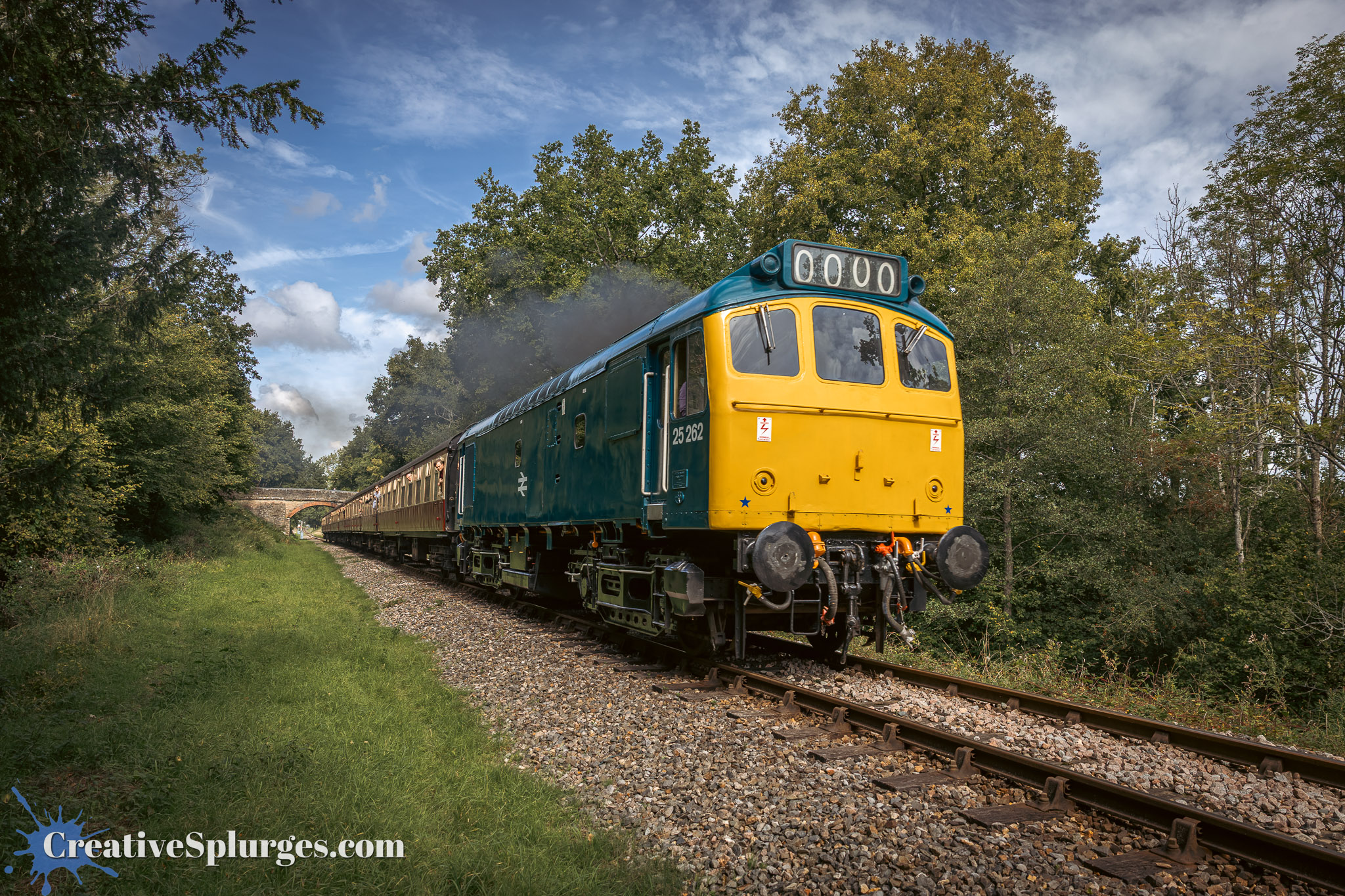
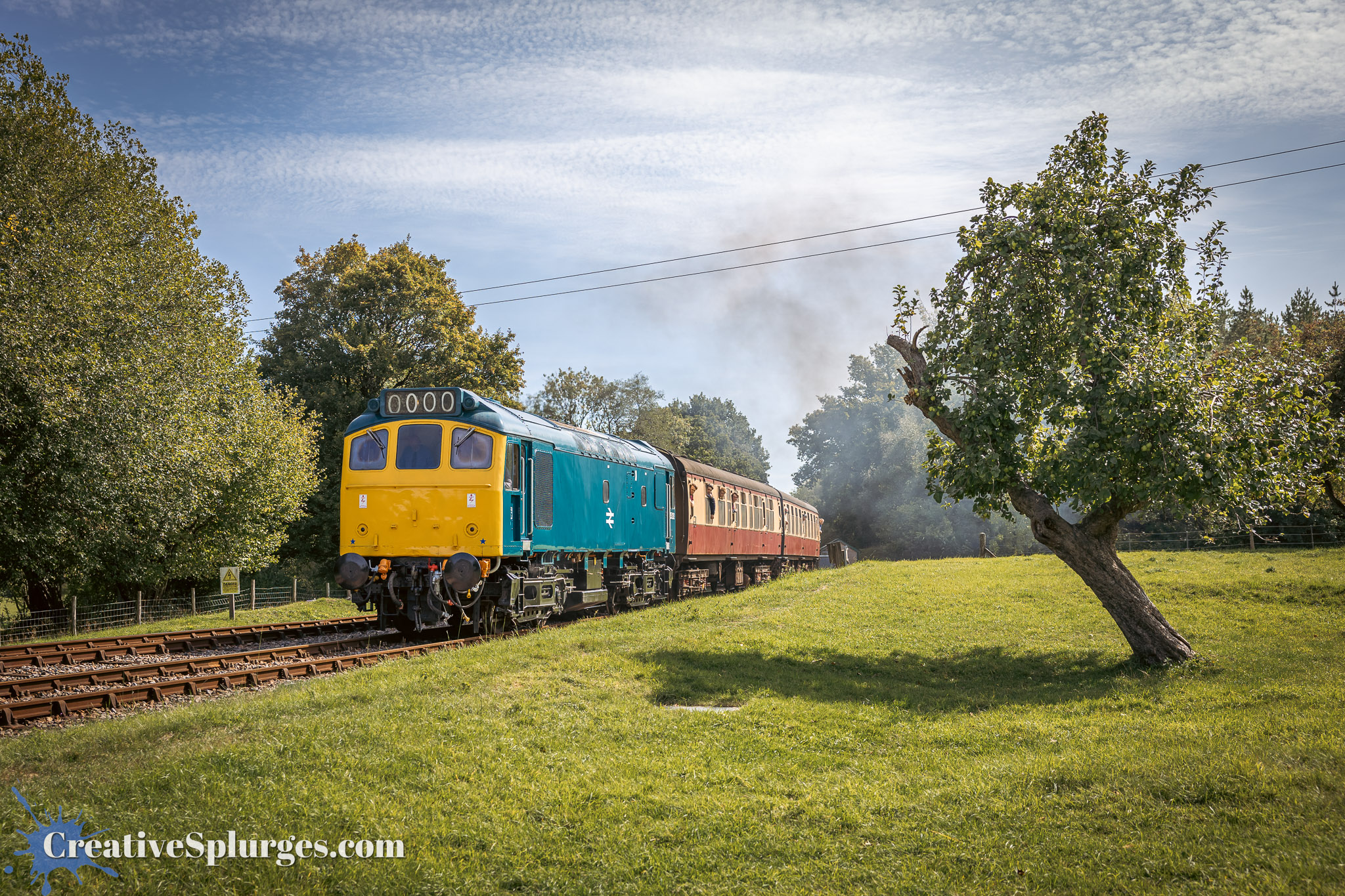
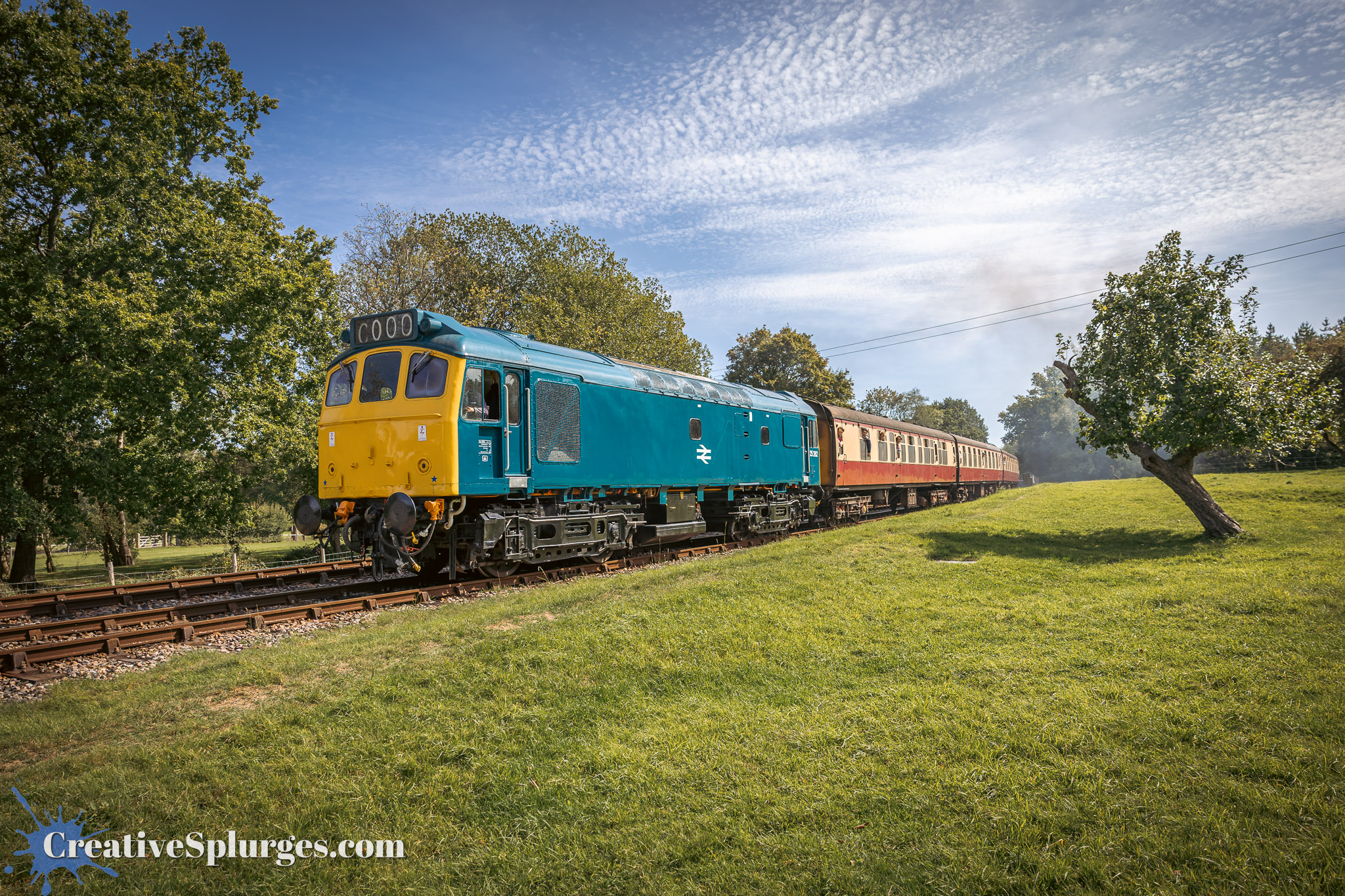
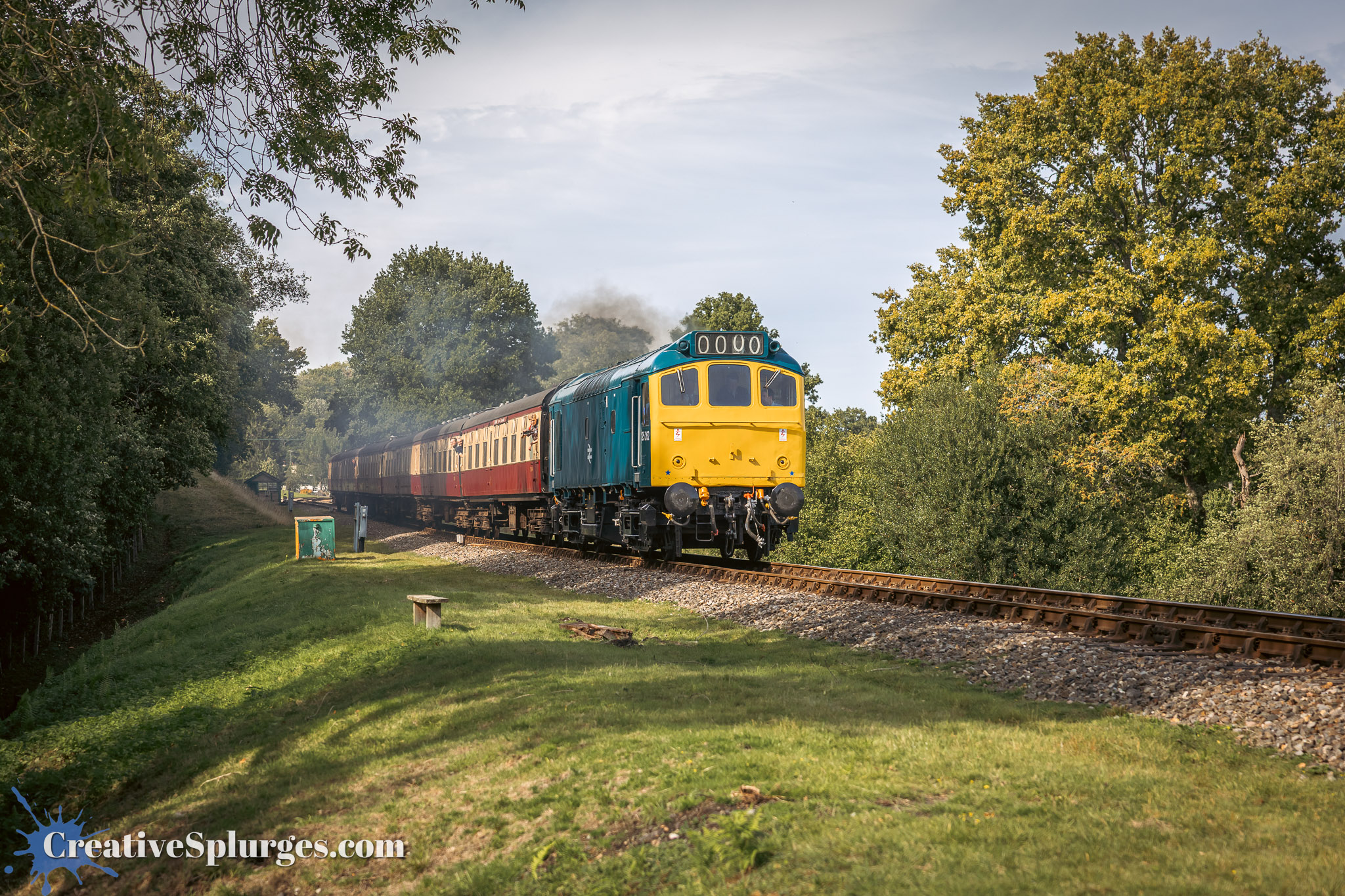
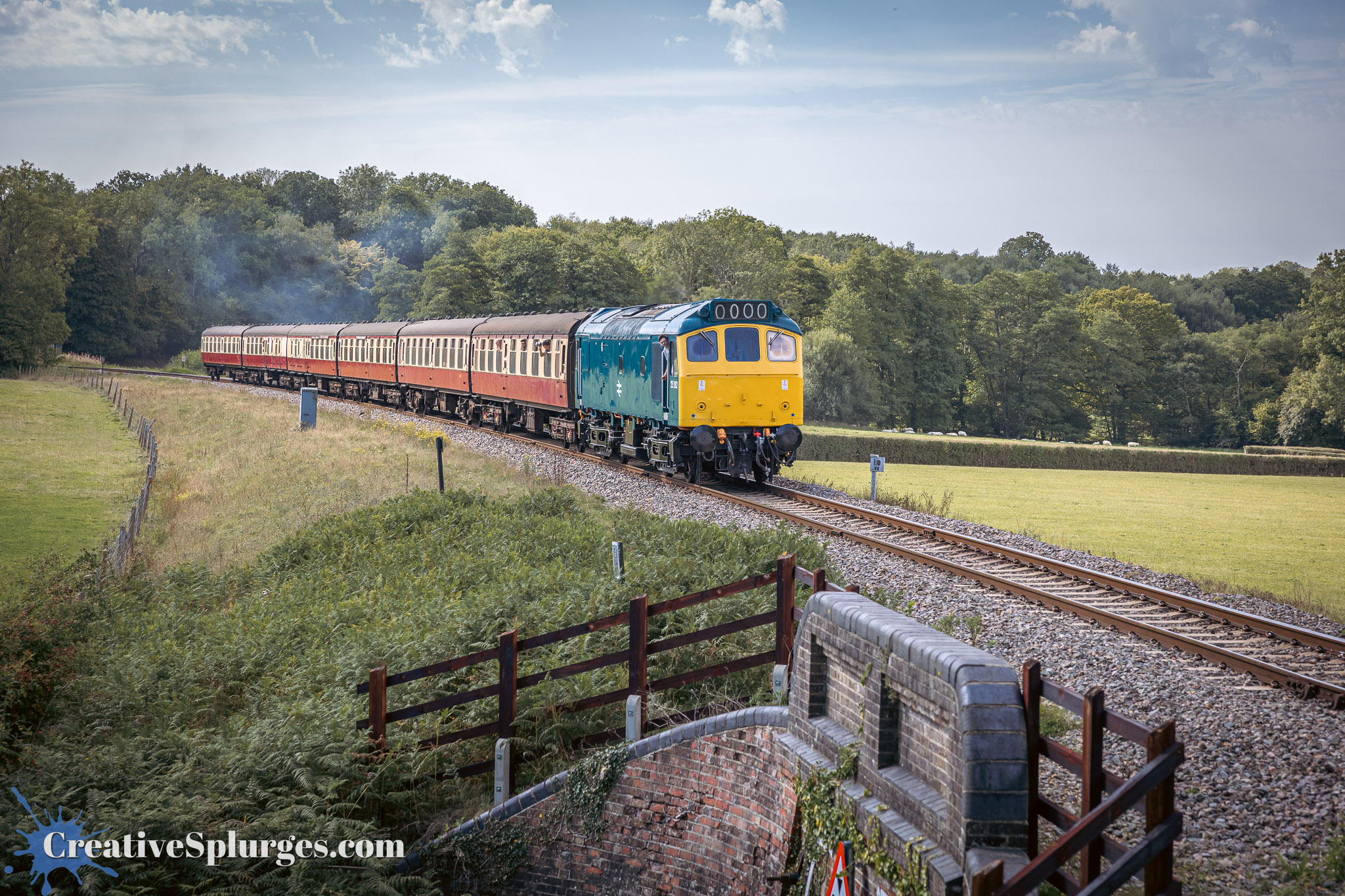
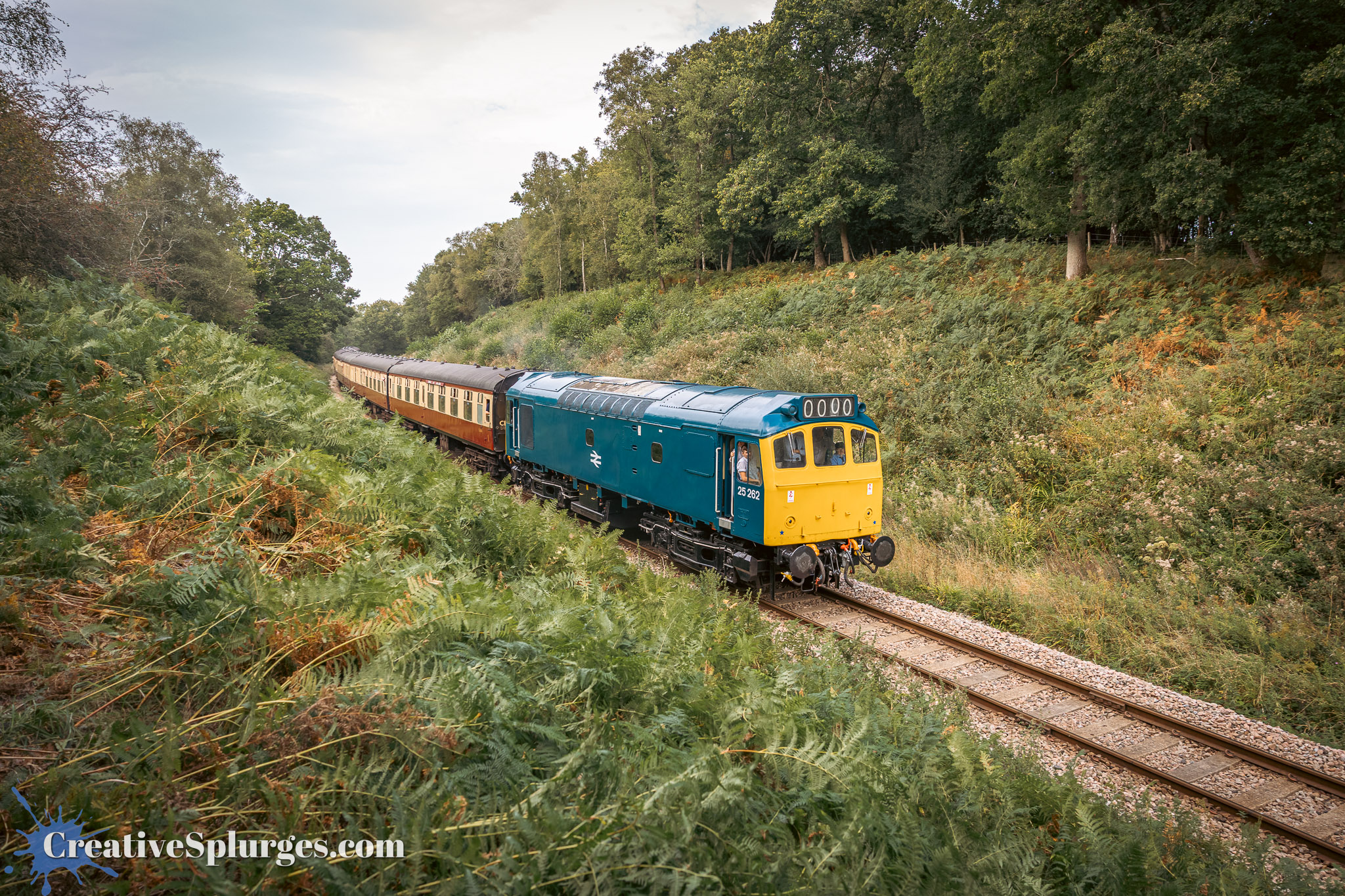
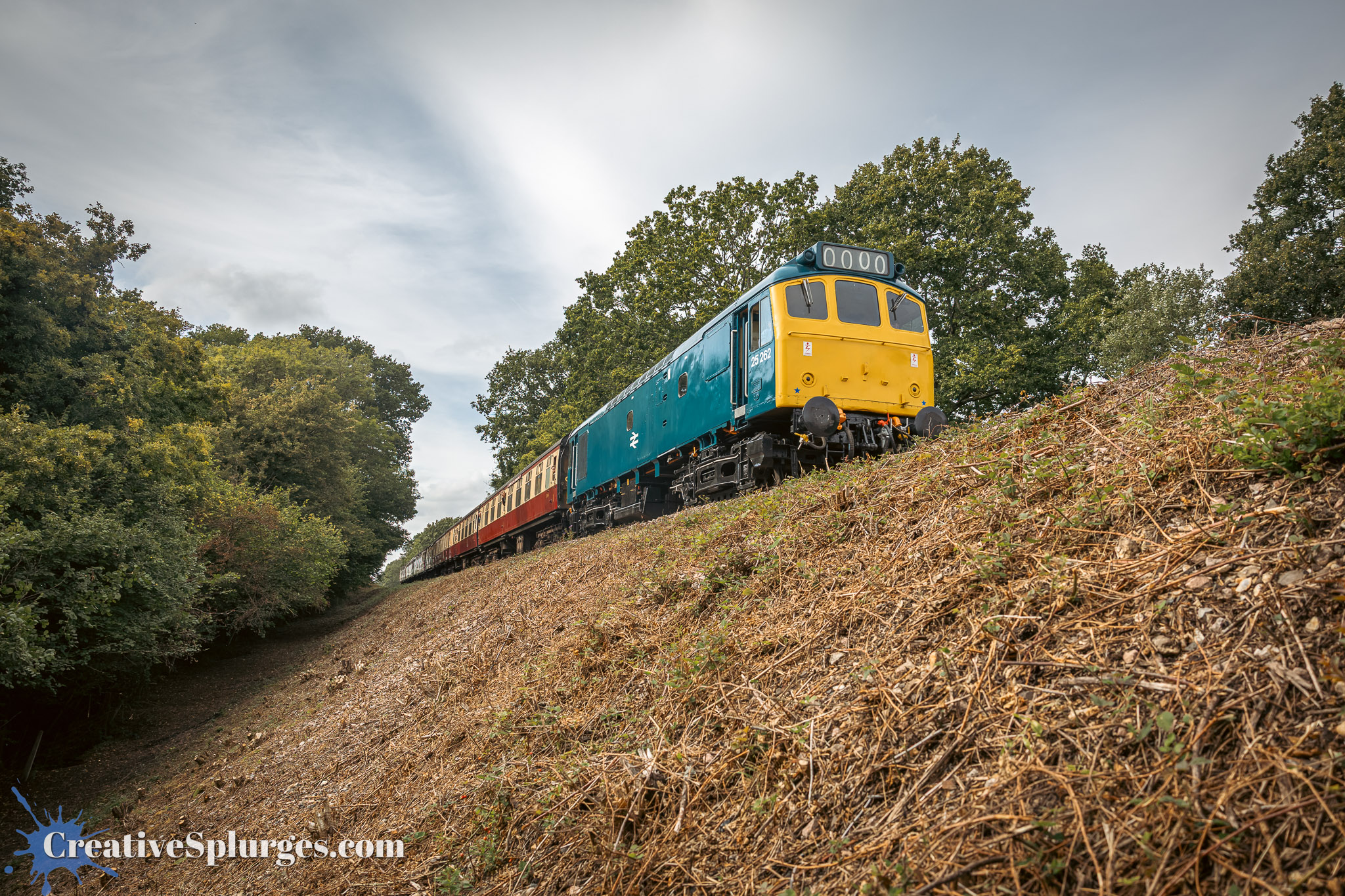
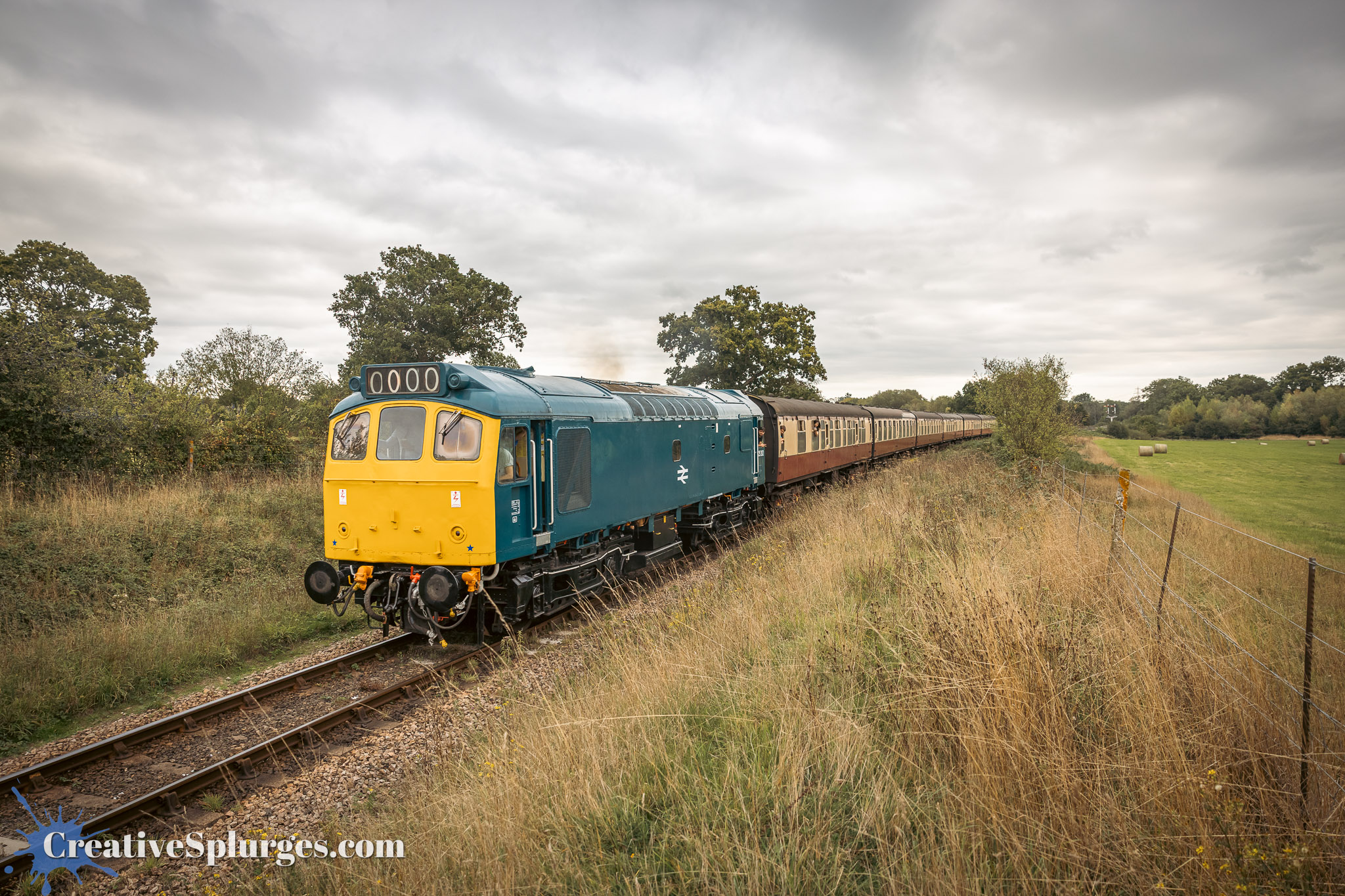
We then headed north, making sure that nothing would be coming when we passed the narrow bit that makes walking this part of the line a challenge. We then waited at the farm crossing for the next train, Class 25 25262.

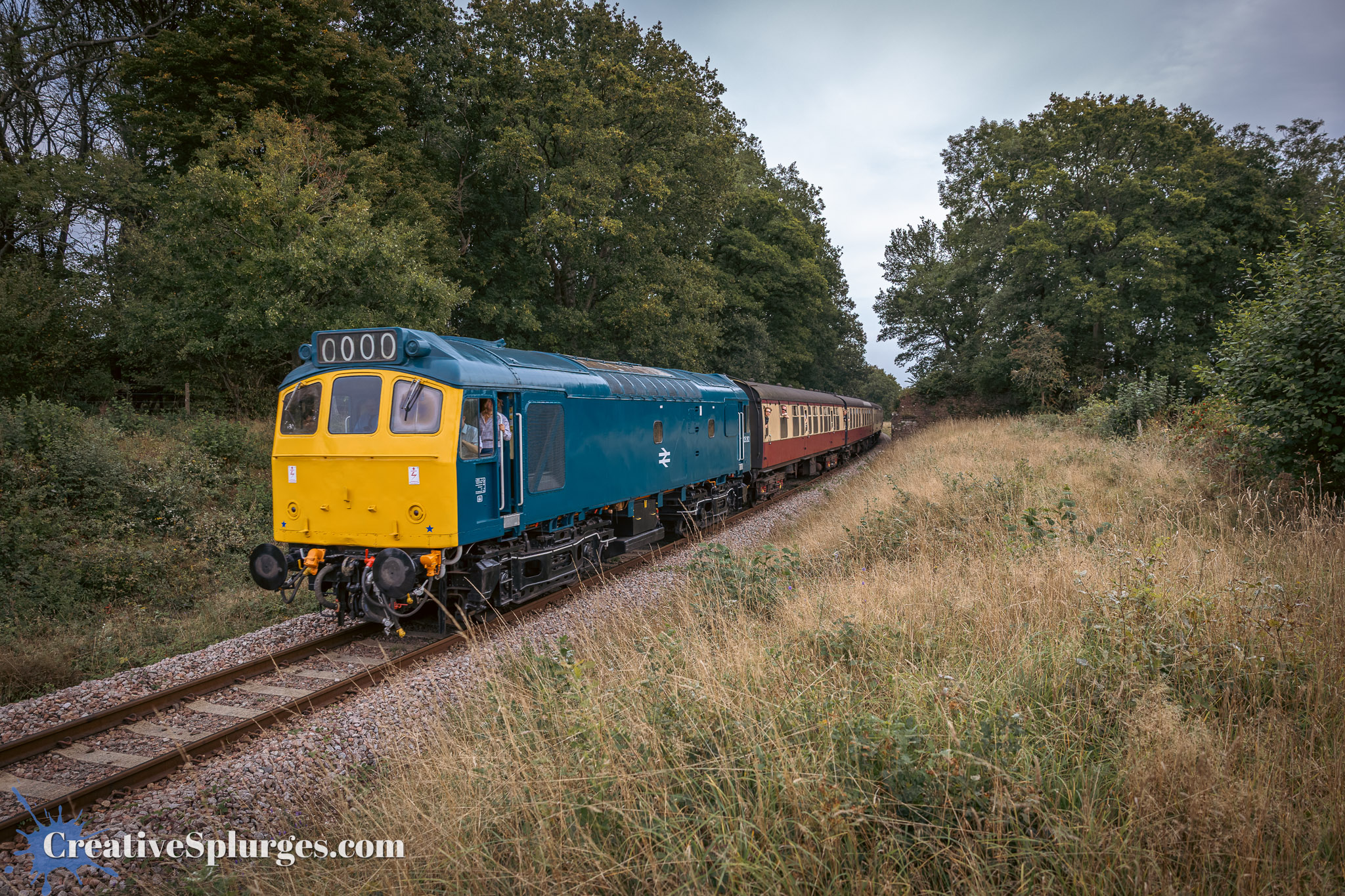
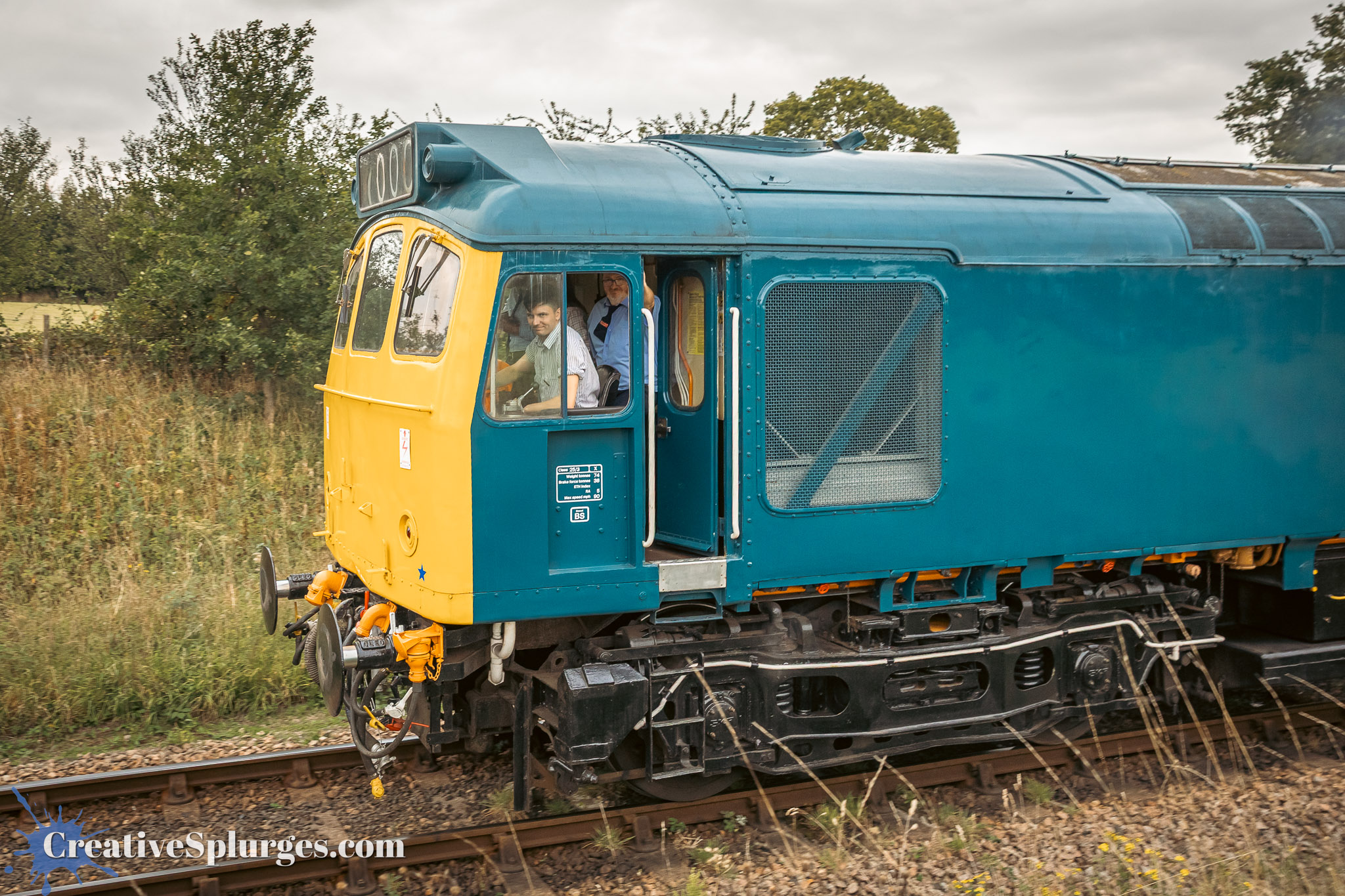
The Class 25 was pulling the Blood and Custard coaches, which was a very aesthetically pleasing combination, one that I made sure to capture often during the weekend.
We continued north. The next train would be the 4VEP coming south – this time, the Class 33 would be on the front of the train.
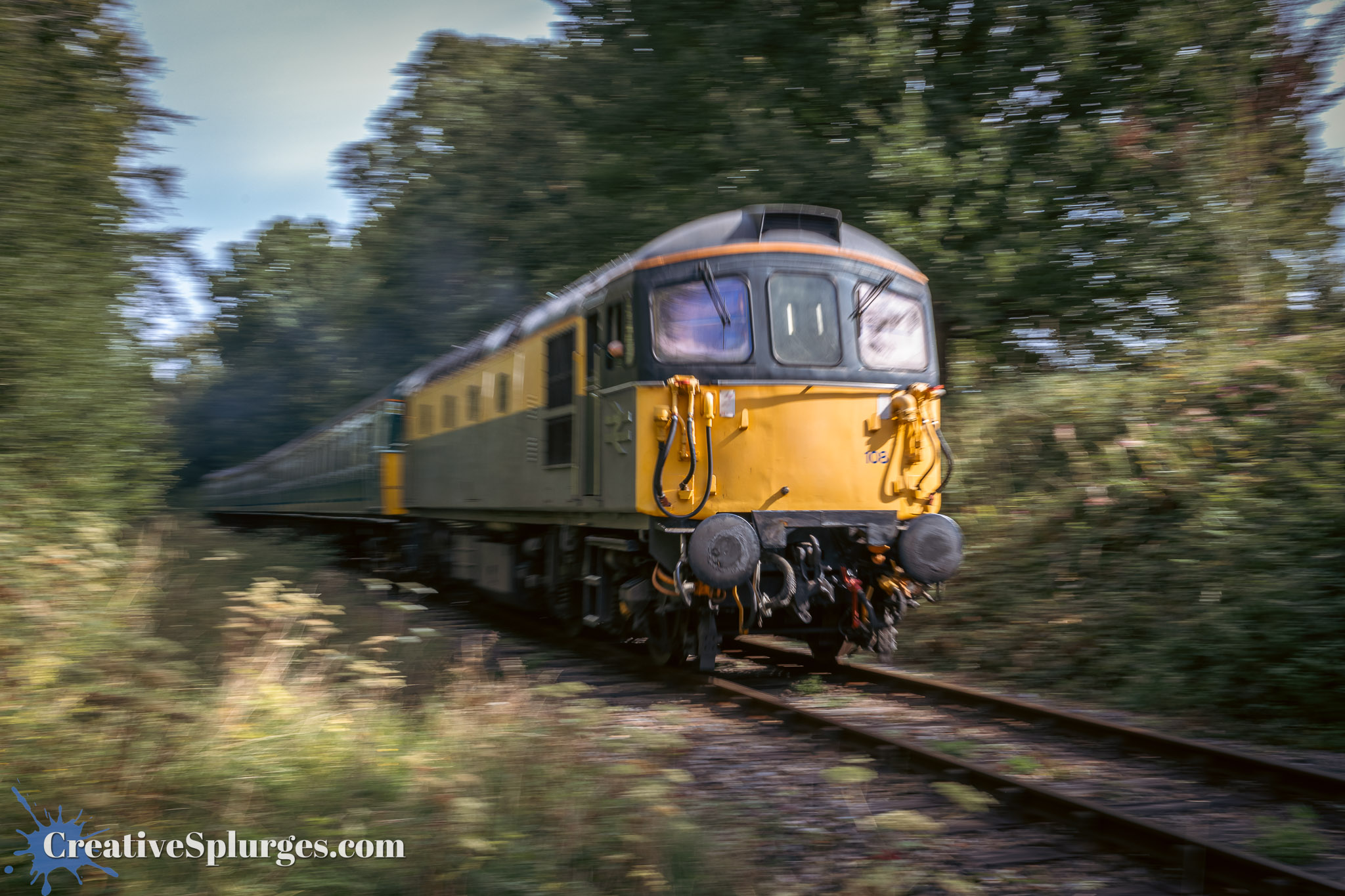
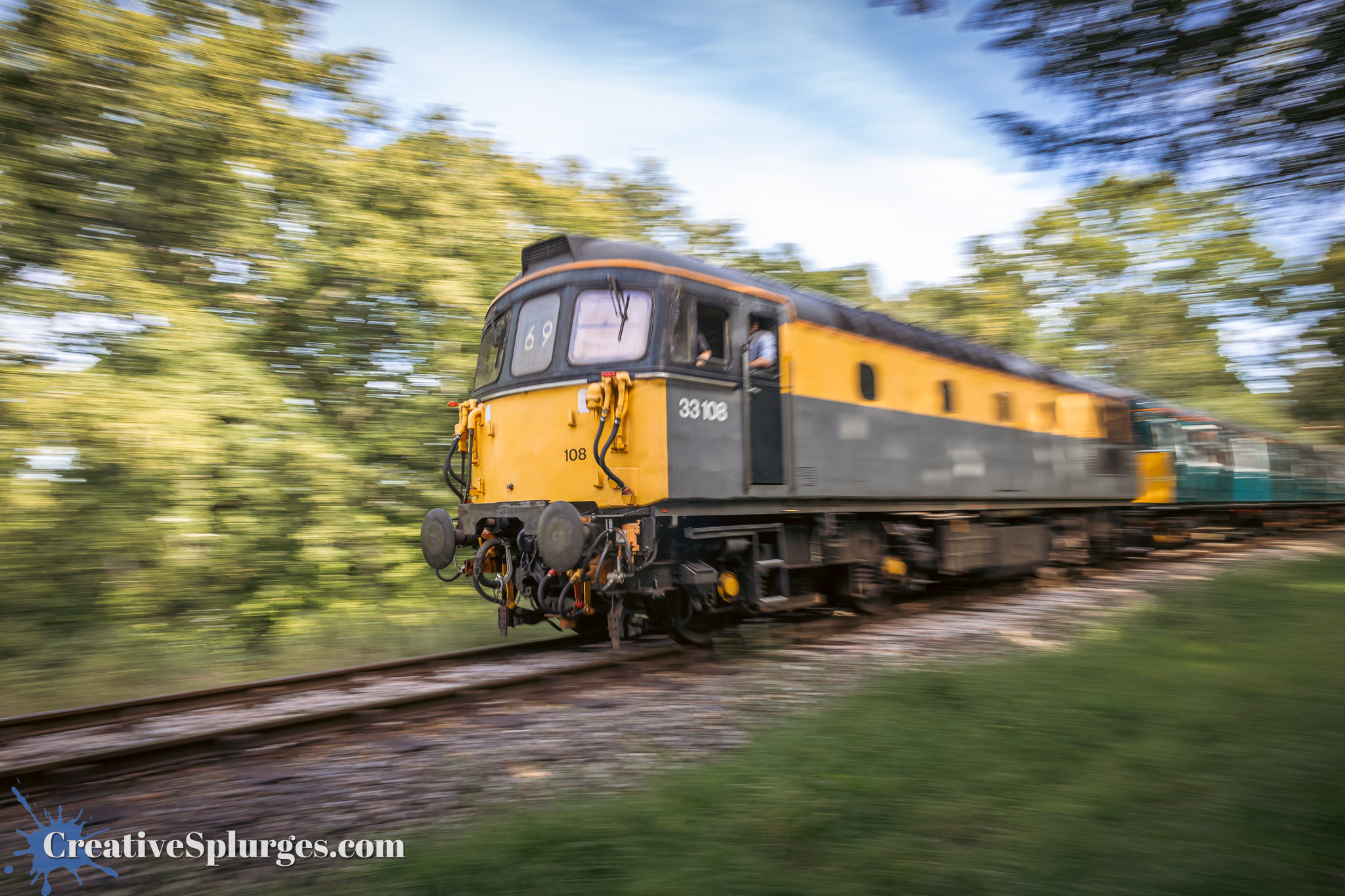
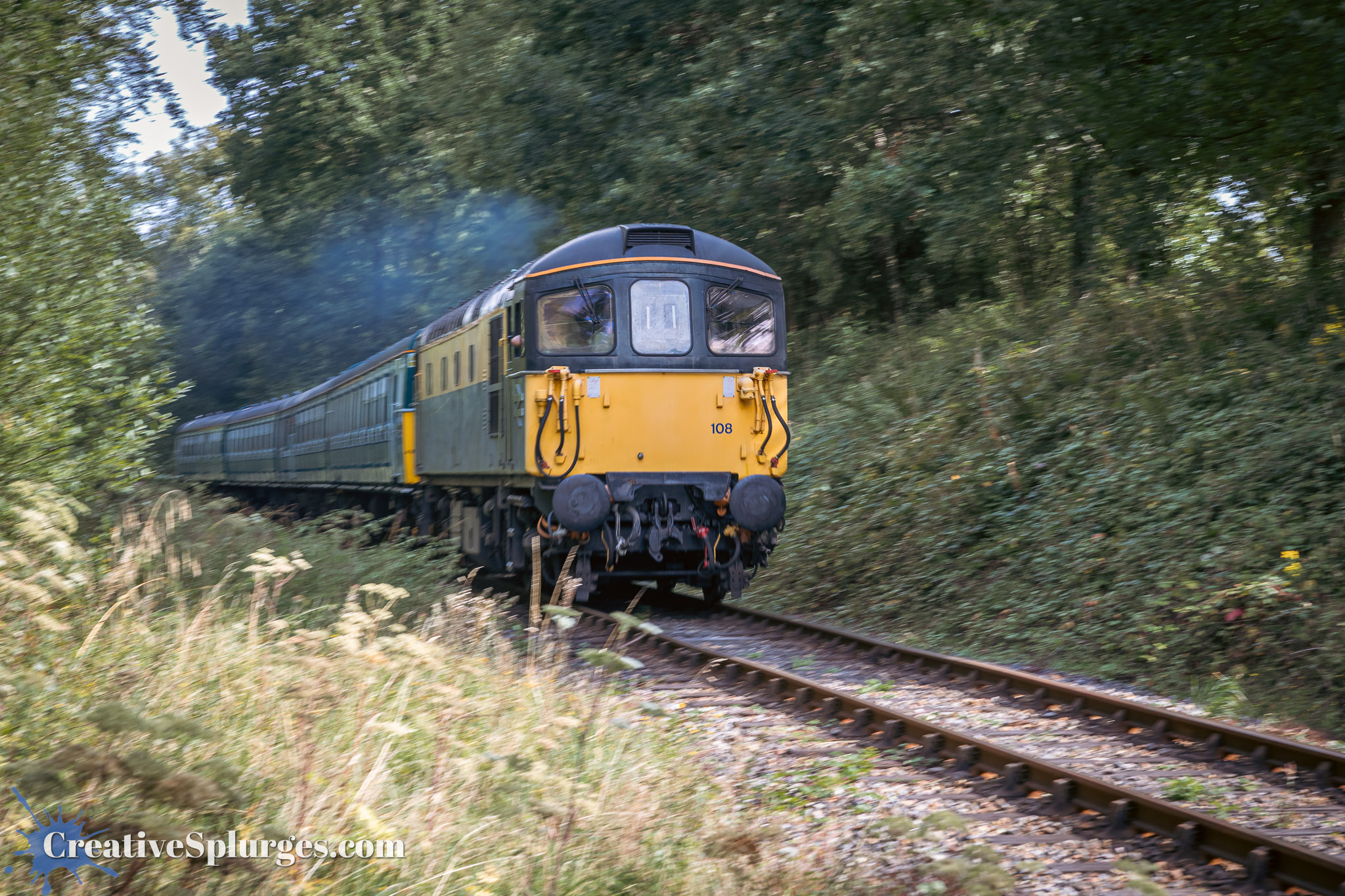
All three of us had seen a great shot on Instagram from the day before featuring the Hastings unit in a dramatic panning shot, which led to us all trying to replicate it at points during the day. I decided I would use the Class 33 passes to give it a go – no disrespect to the Class 33, but I got plenty of photographs of it during the 65th Anniversary gala the previous month, and as it was passing by so often it gave me quite a few attempts at the shot. The trick was to use a slower shutter speed and a panning movement to capture the impression of speed. For this I shot in shutter priority mode, which lets me set the shutter speed and leaves the camera to figure out everything else. I’ll be honest, most of the attempts ended up as blurry messes, but I ended up with a few examples worth sharing, including this one from the first pass.
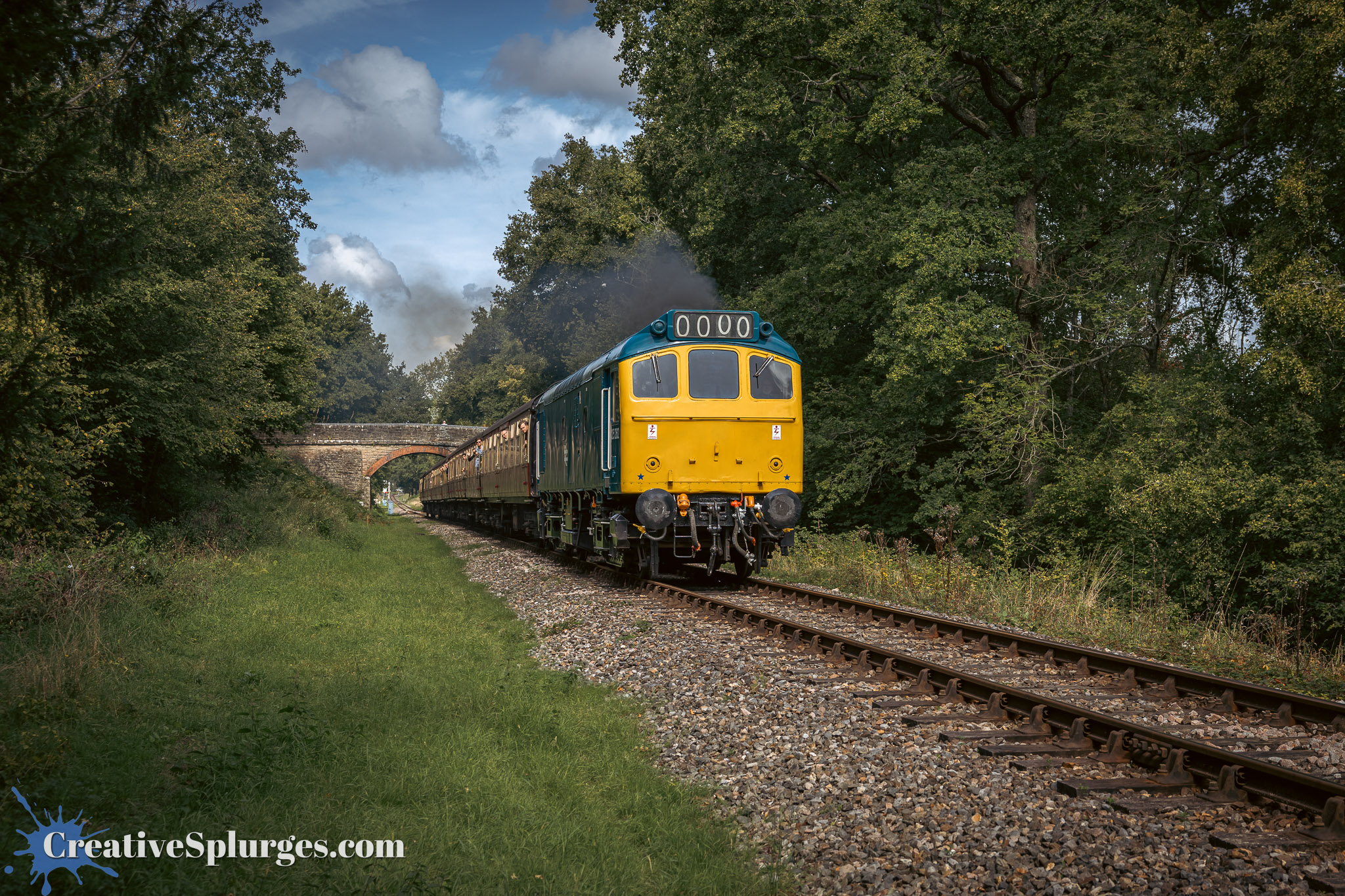
We continued heading north, and decided to use the next bridge, Birchstone Bridge, as a backdrop for the next train, which was 25262 coming back south.
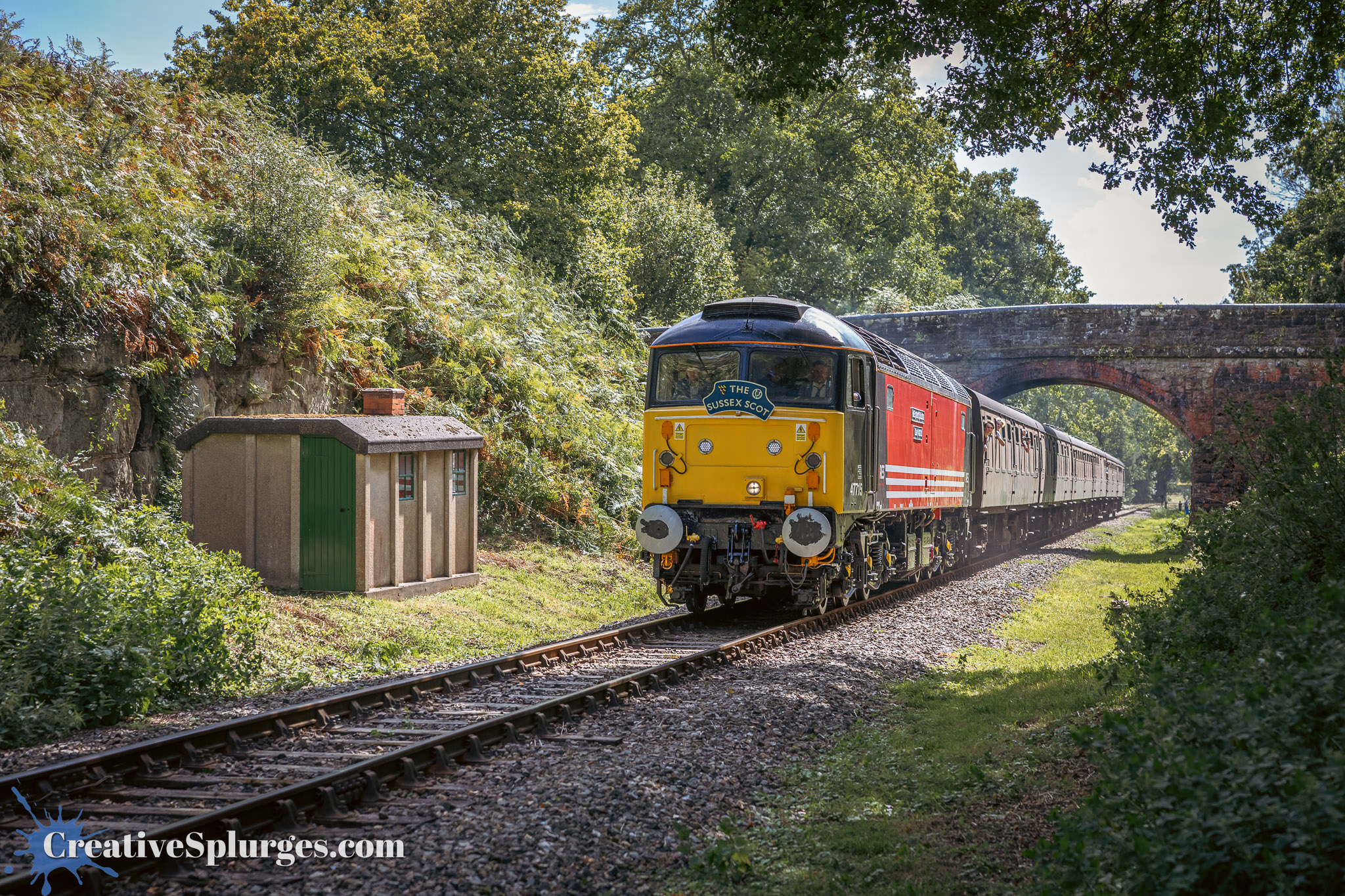
We passed under the bridge, and used a patch of light and hut as another framing device as 47715 came back north.
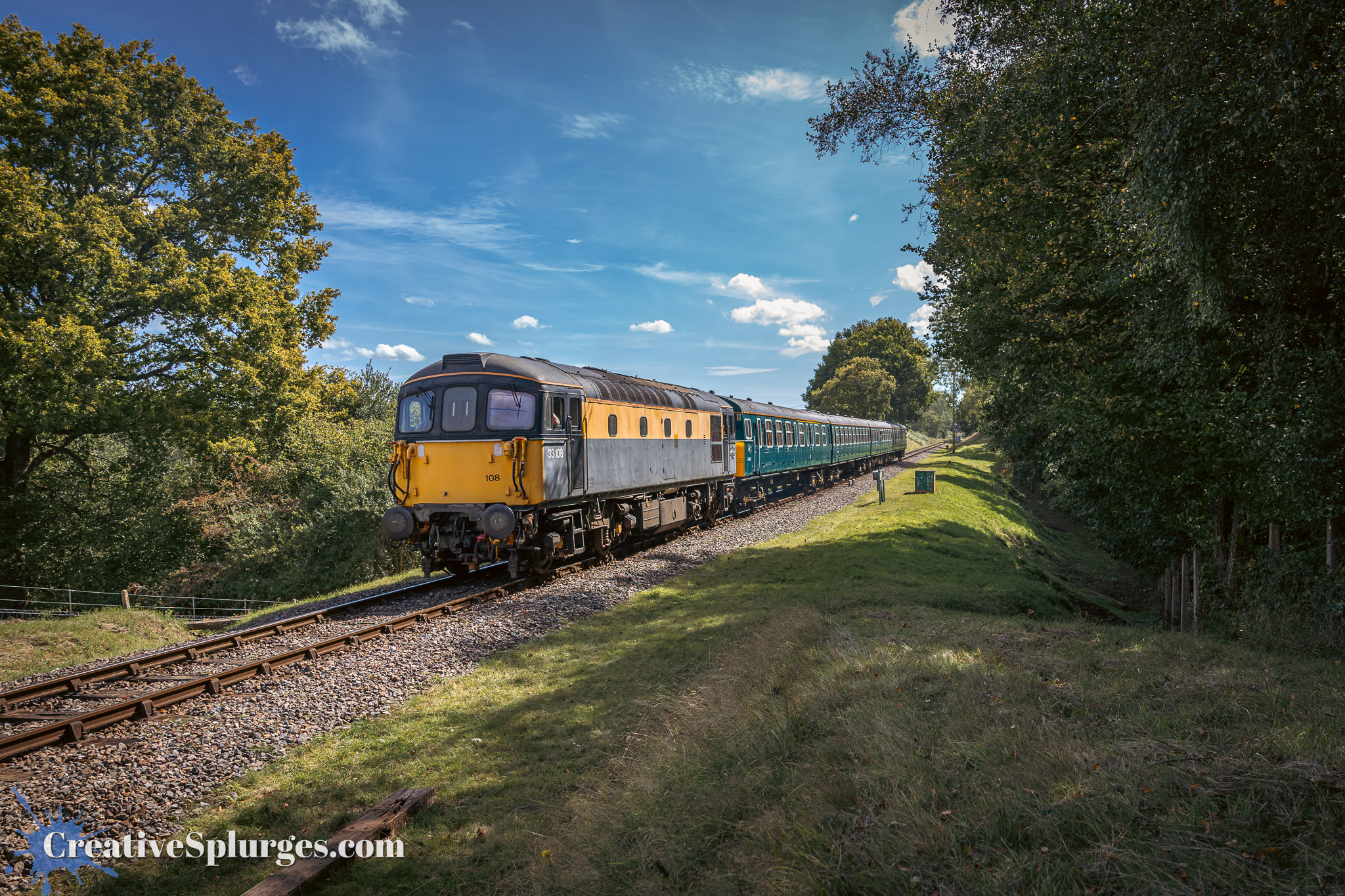
We got onto the long straight approach to Kingscote. There are a couple of embankments on this stretch of the track, and we decided to use them for a shot or two. Before that, though, 33108 was coming back north.
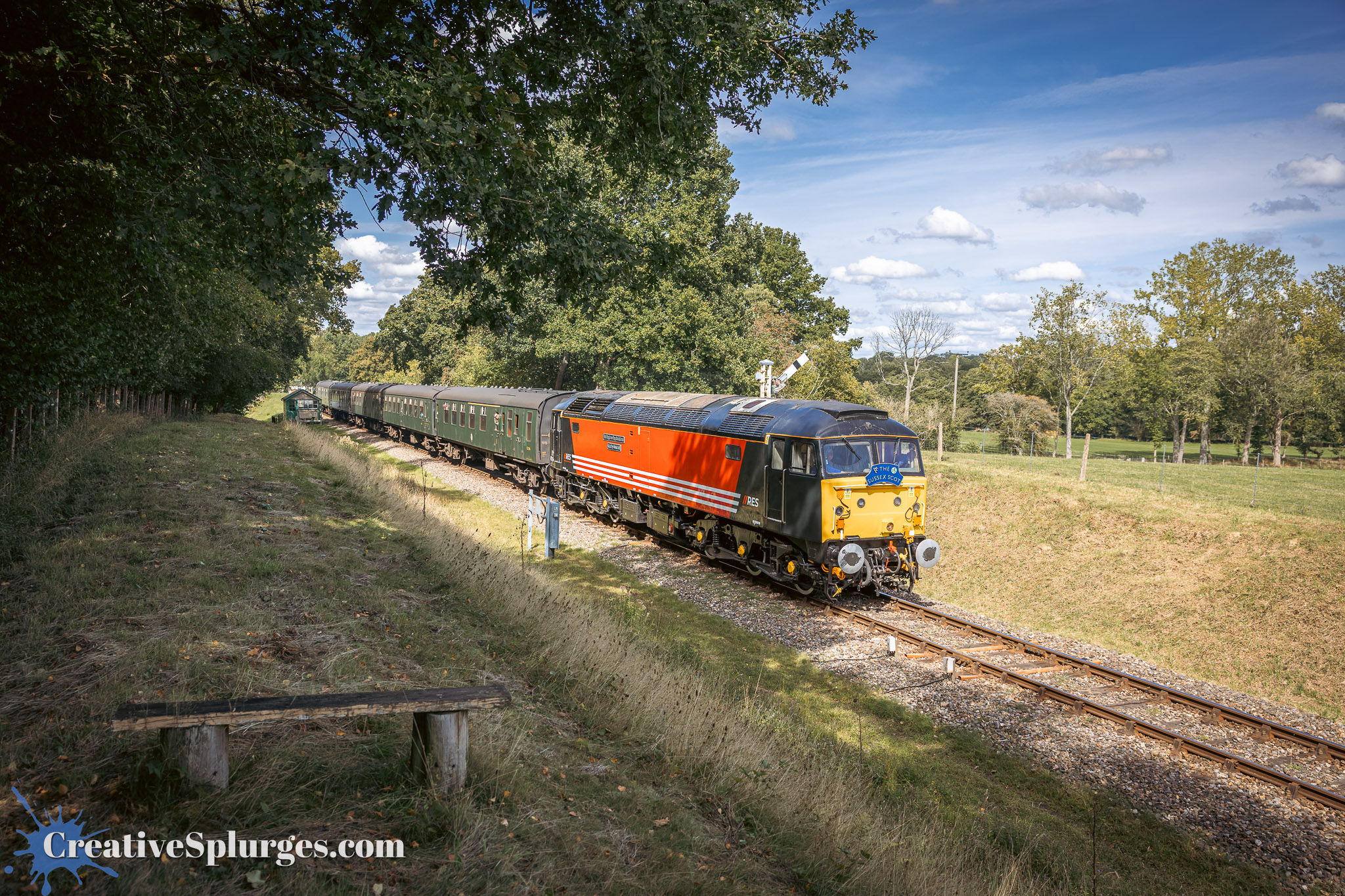
At this point 72b finally caught up with us, and we were a trio for the rest of the day. Then, 47715 came back south. I tried to frame it in the cutting, with a bench in the foreground and a signal in the background, but I’m not sure it was entirely successful.
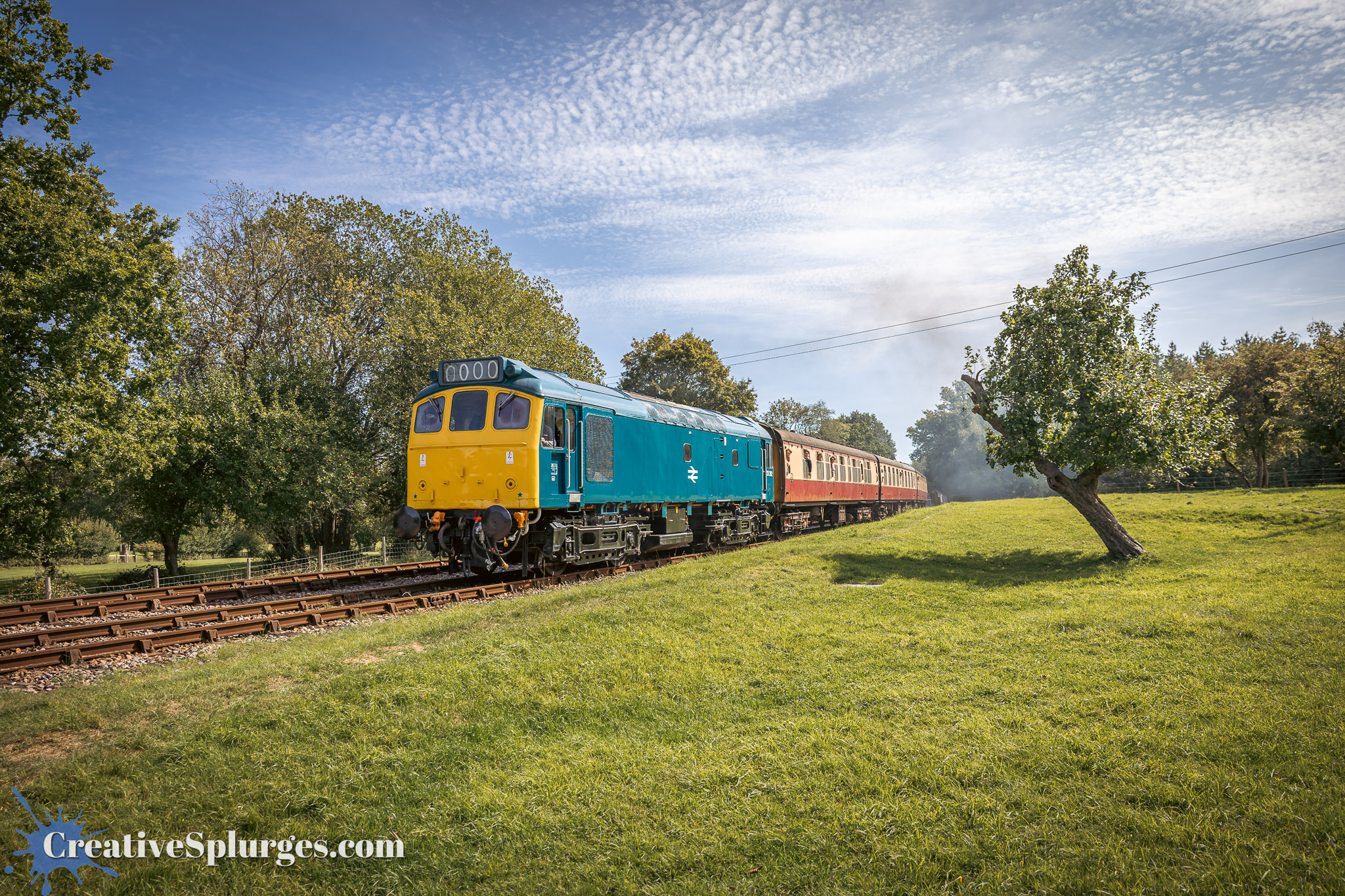
The three of us resumed our journey north, and set up position at the large green bit just south of Kingscote station. There are a next service would be 25262 coming up north.

With the Class 25 arriving in Kingscote, the line south was clear for the 4VEP to depart.
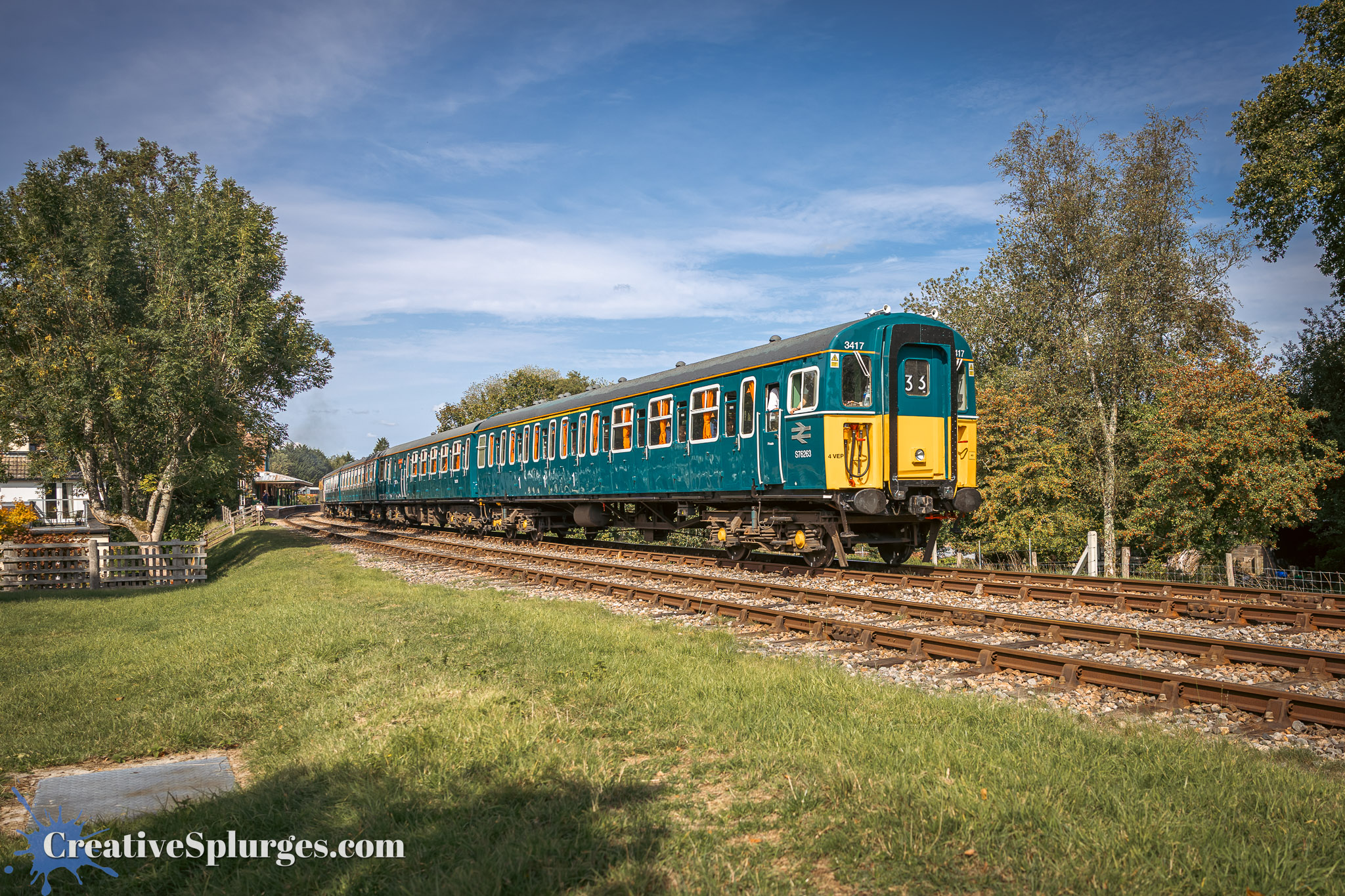
Kingscote is the northern limit of our trackside access, so we turned and started heading back south. We got back to the cutting. The next train was be the 4VEP coming back, headed by 33108. Once again I used the opportunity to try getting a decent panning shot, which worked pretty nicely.
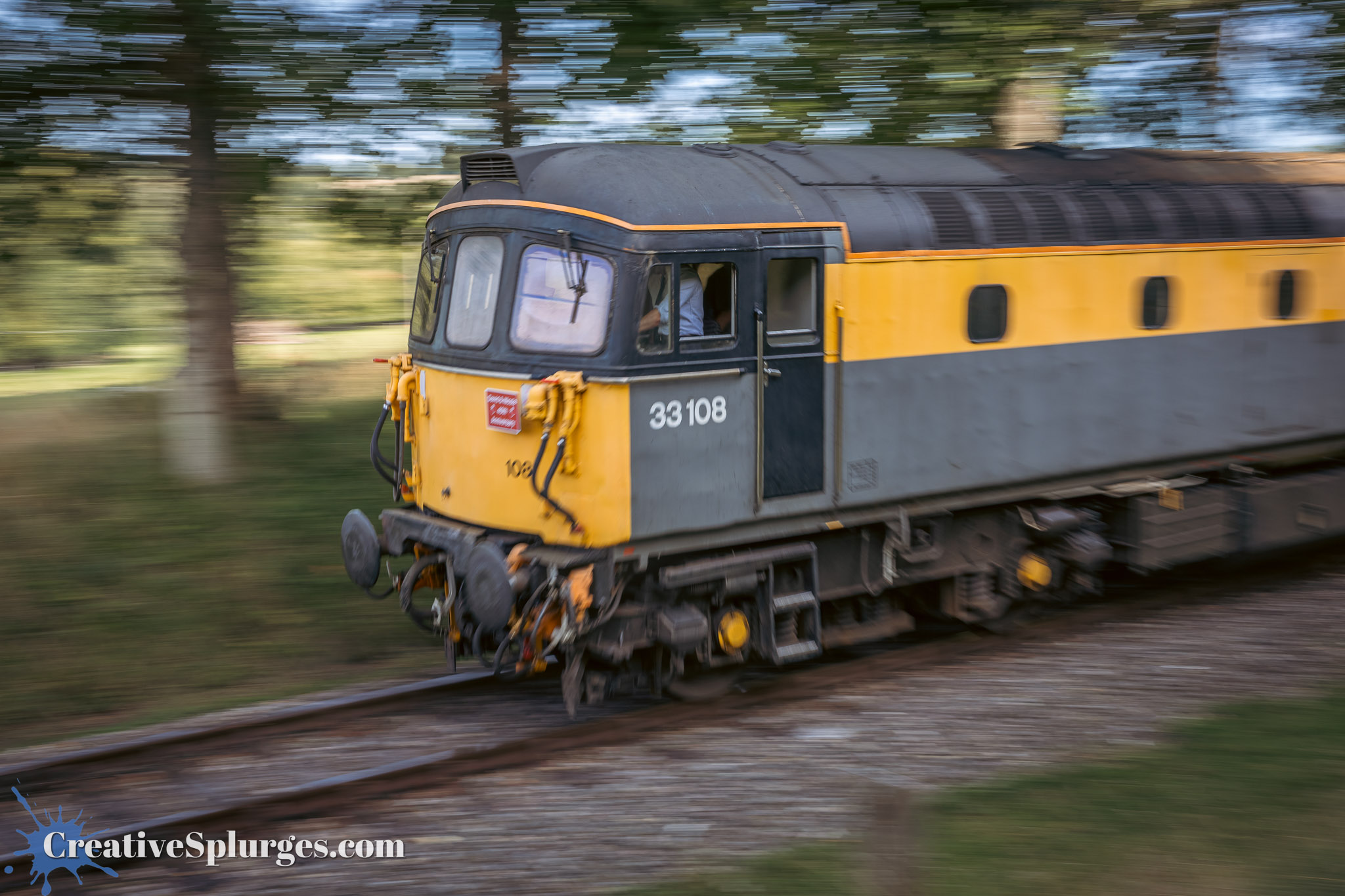
The challenge with these shots, I think, was our proximity to the line. I was panning whilst centring on the front of the train, but this led to the rest of the train being blurry because it is either moving towards or away from the camera as the pan happens. A few times later on I tried to also zoom out as the train went past instead, but ultimately I still ended up with the same results.
Before long the Class 25 was coming back south.
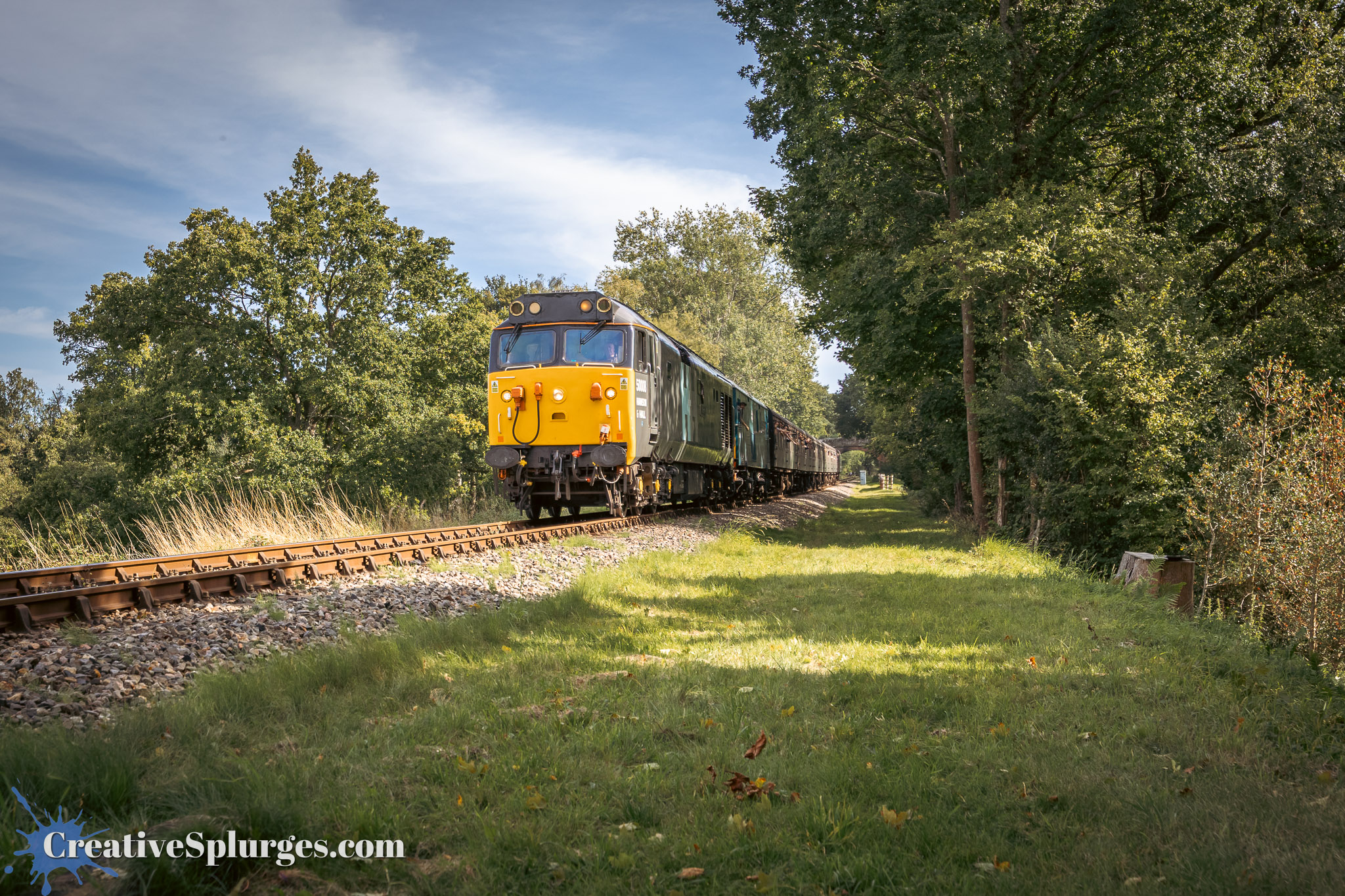
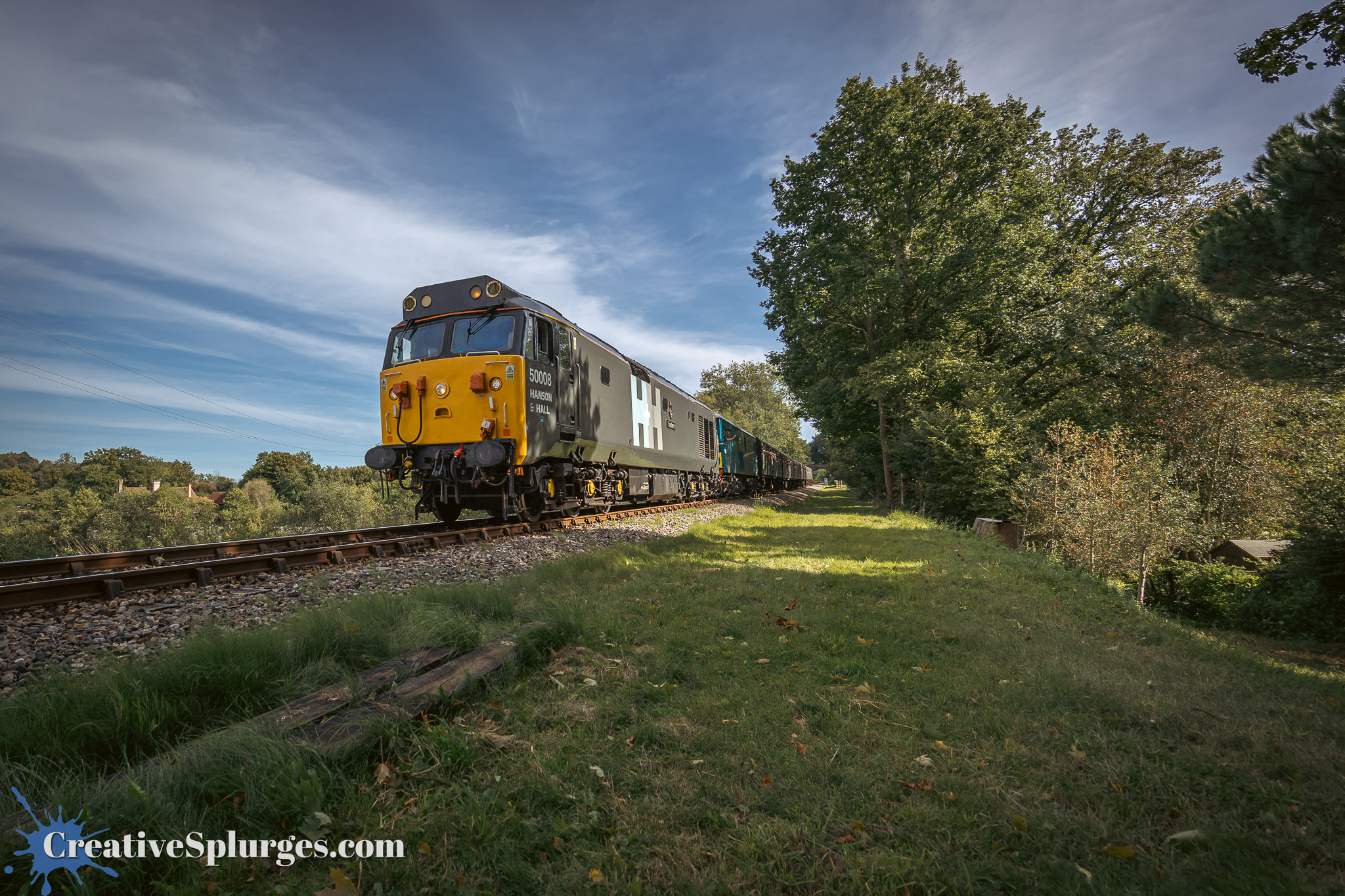
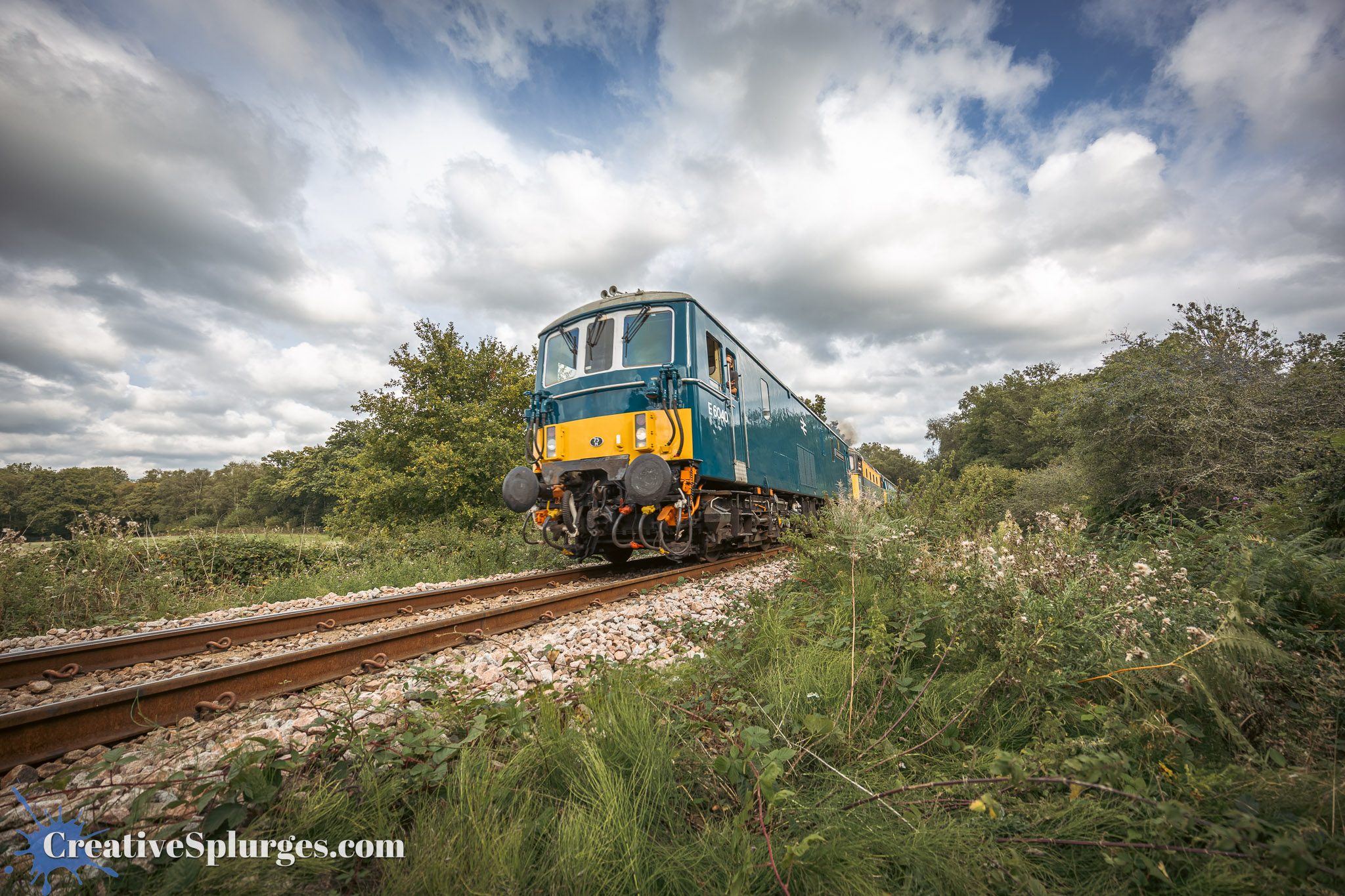
We held position around here the the next train, which would be Class 50 50008 Thunderer and the railway’s own Class 73 E6040 The Bluebell Railway coming out to play with a doubleheader.
Before long, the 4VEP came back.

We continued waiting here, because 72b wanted to photograph Thunderer coming back south. Whilst we waited I had another go at shooting the Class 33 with a dramatic pan.
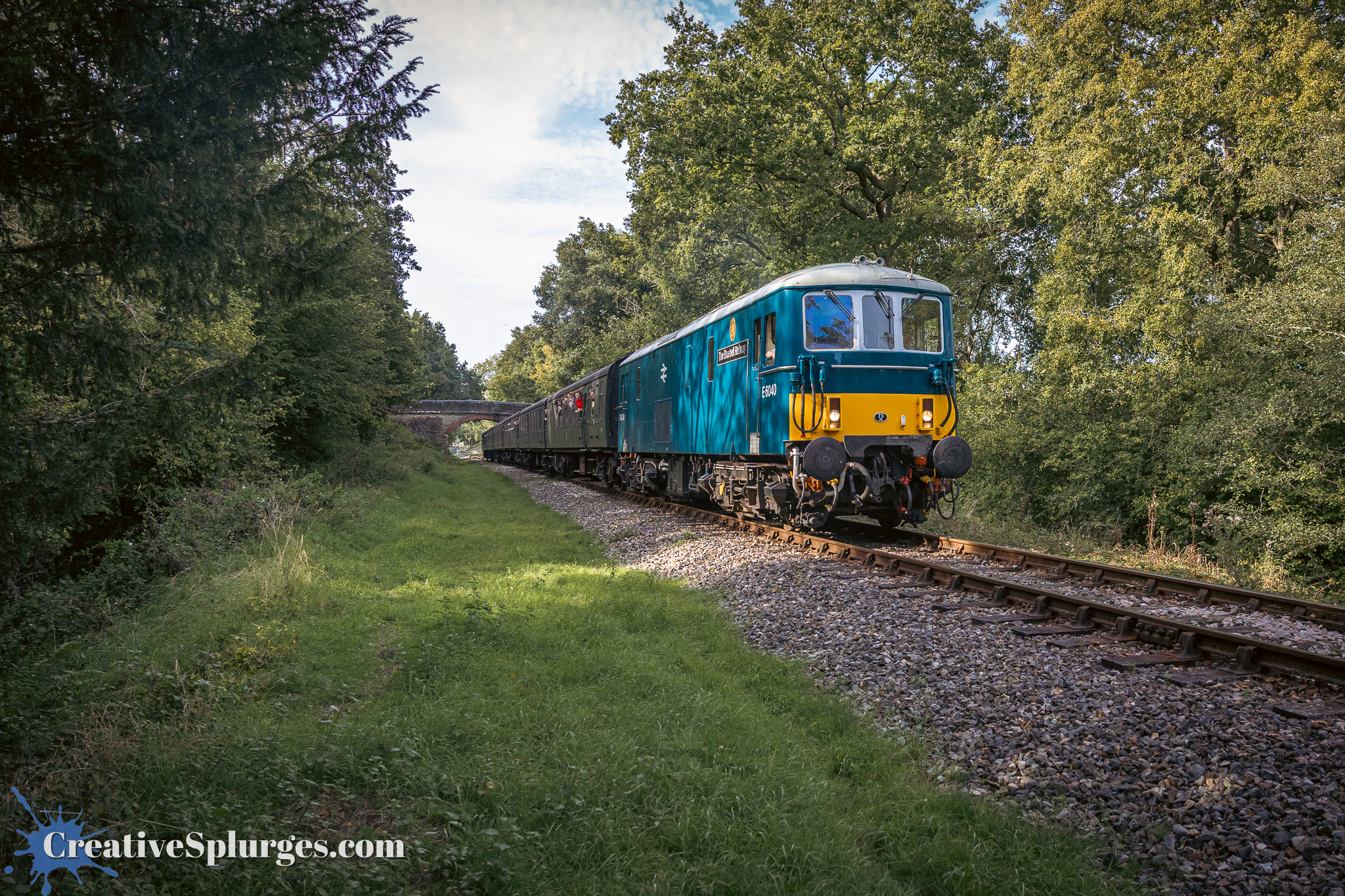
We then waited, because the next train would be Thunderer and The Bluebell Railway coming back south. After a while, however, it became apparent that something was up. Word soon reached us that Thunderer had failed, so The Bluebell Railway was pulling the train on its own, having left the Class 50 at Kingscote.
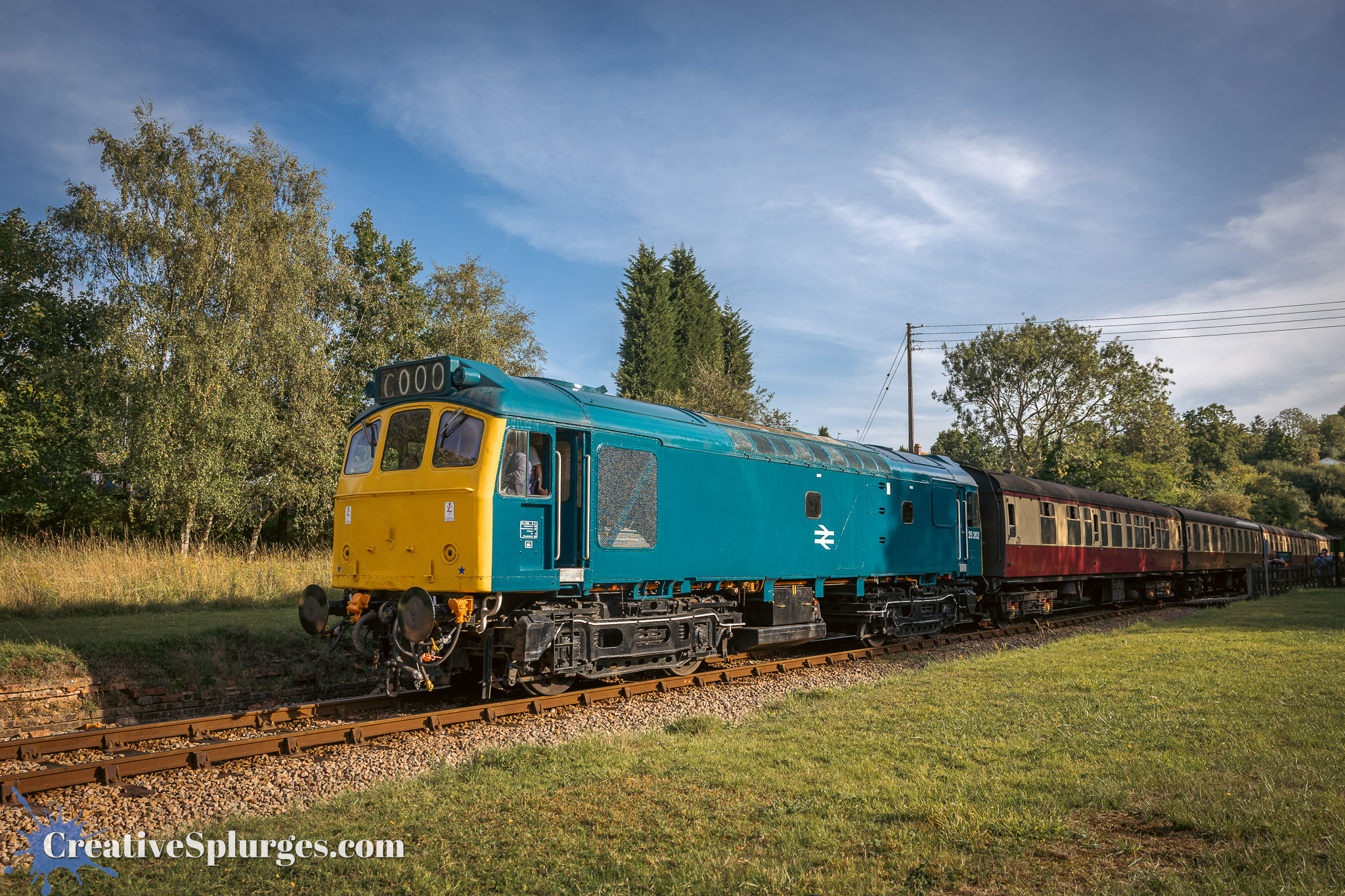
By this point the day was drawing to a close, we’d already seen most of the trains several times, and we needed to get back to Sheffield Park to turn in our high-visibility vests, so we made tracks back south towards the tunnel. I had hoped to photograph one last service at the tunnel, which was the Class 25 coming back up, but as we arrived we could see she had already entered the tunnel, so we only had the time to hop across the line to get the light, and not get closer to the tunnel as I’d originally hoped. I was still pretty pleased with the shot, even if it wasn’t what I originally planned.
We exited the lineside at the tunnel and drove back to Sheffield Park to turn in our vests. When we arrived there was a lot of hustle and bustle underway. We headed up to the front of the platform to see what was going on. There, we saw 47715 sitting at the front of the train, which was as timetabled (and Sharpthorne and 72b were planning on heading out to photograph in the sunset slightly later). In front of her, though, was The Bluebell Railway, which was not scheduled.

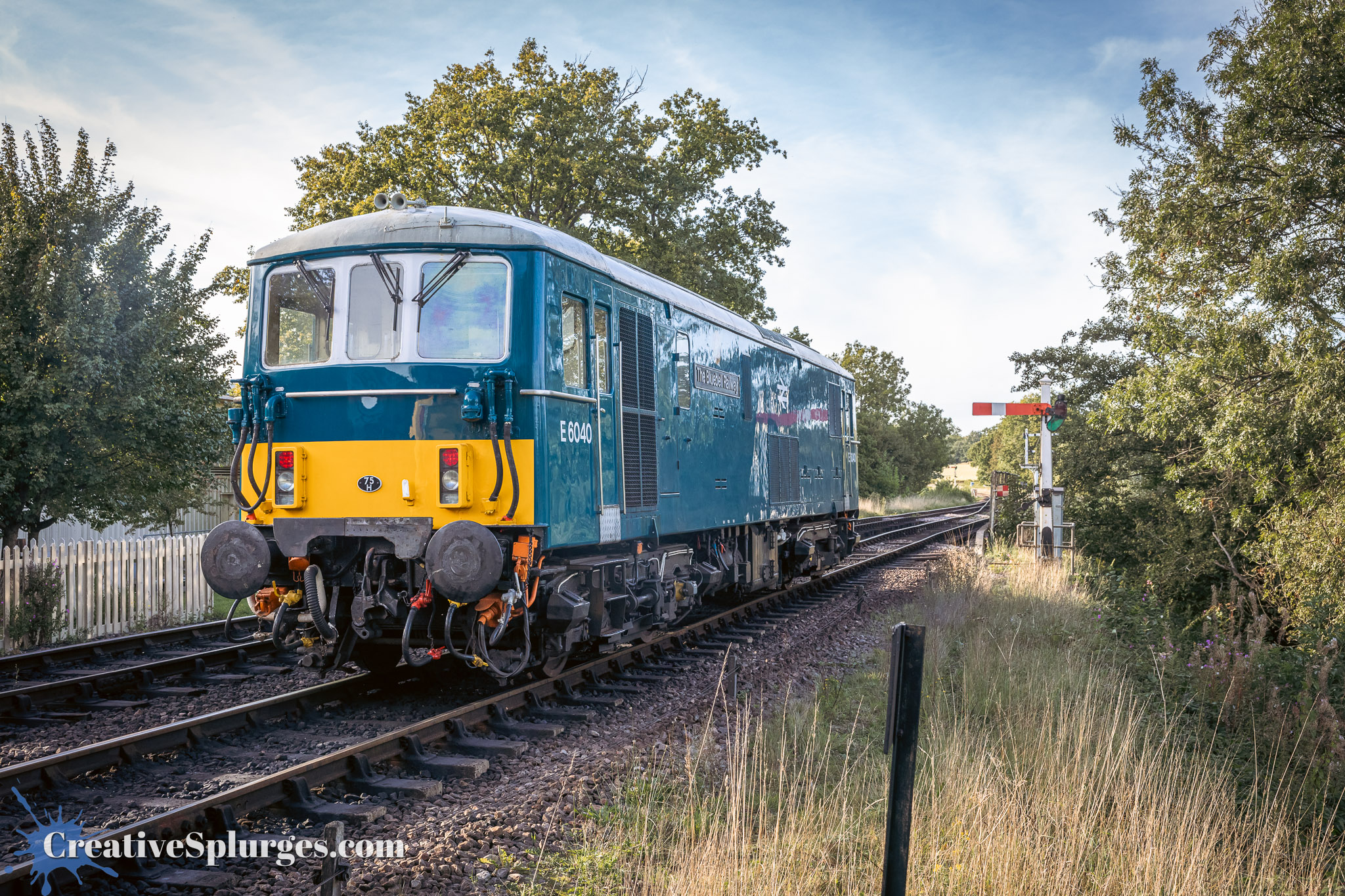
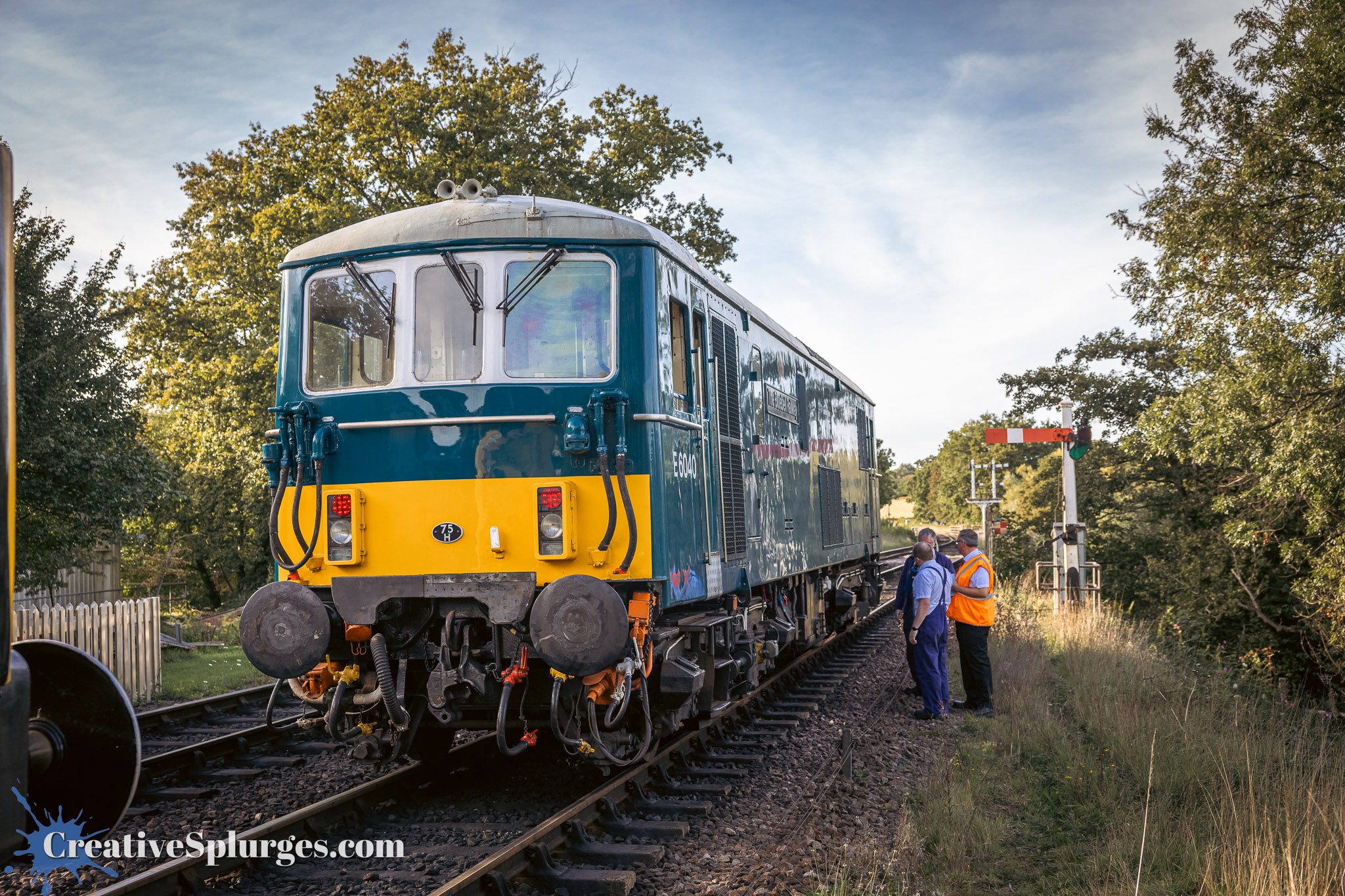
Having chatted to one of the drivers I learned that The Bluebell Railway was sitting waiting for the next train to come down the line so she could head up to Kingscote and bring Thunderer back.
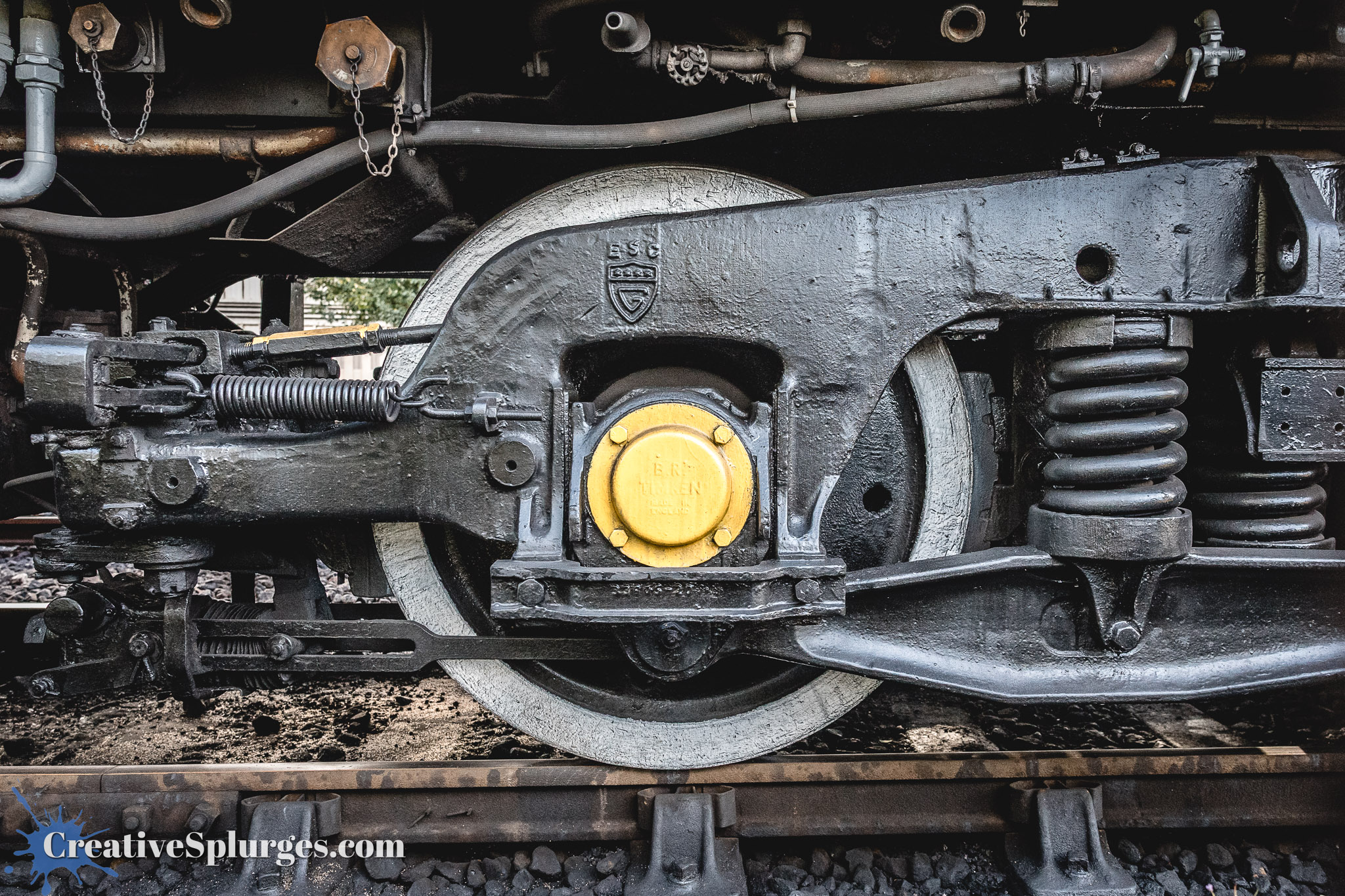
I used the opportunity to take a couple of closeups of 47715.
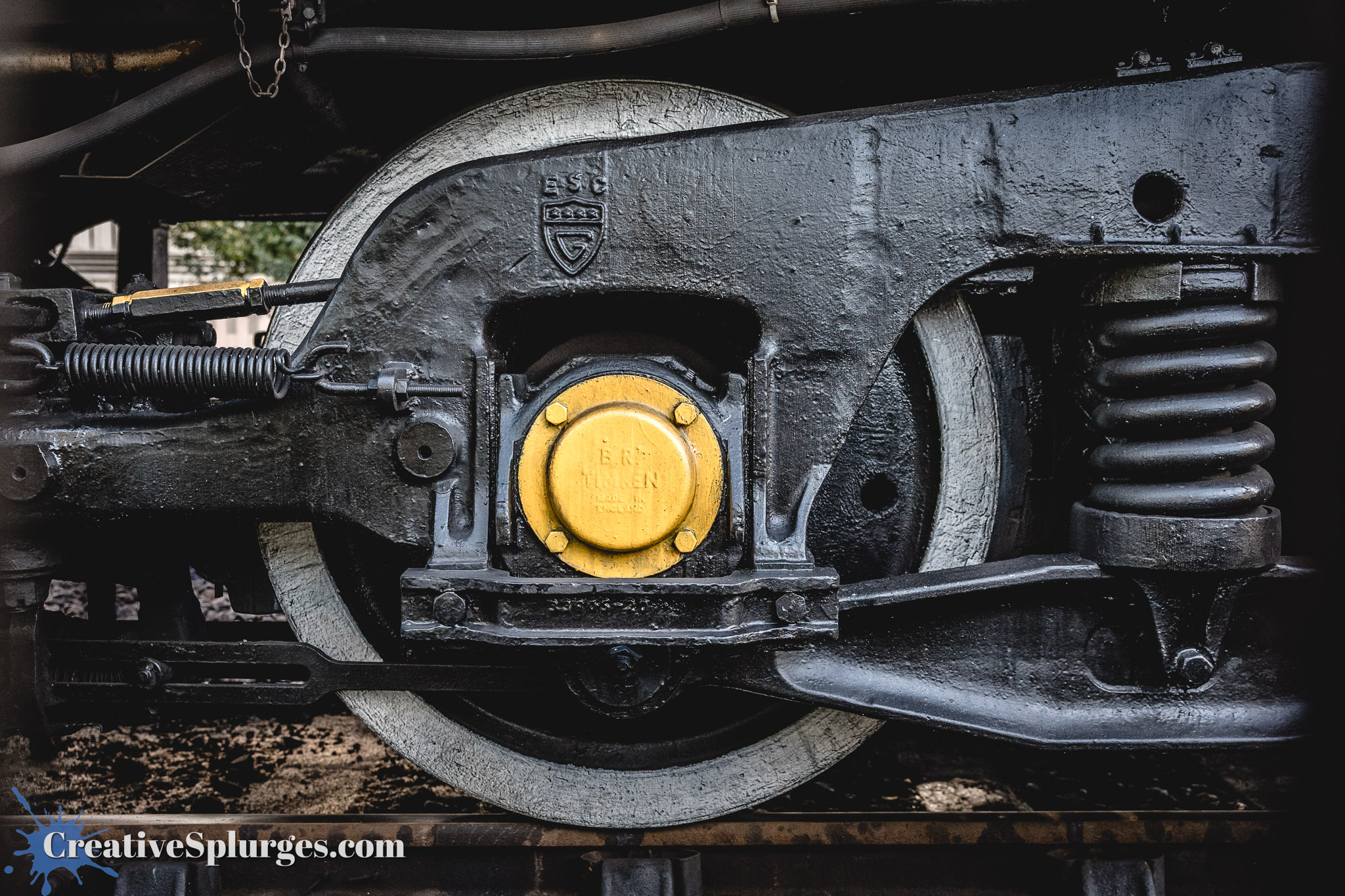
I also got a shot of The Bluebell Railway as she sat patiently waiting.
We also headed out to the loco shed to take a look. Just outside, 32424 Beachy Head was sitting in a siding.
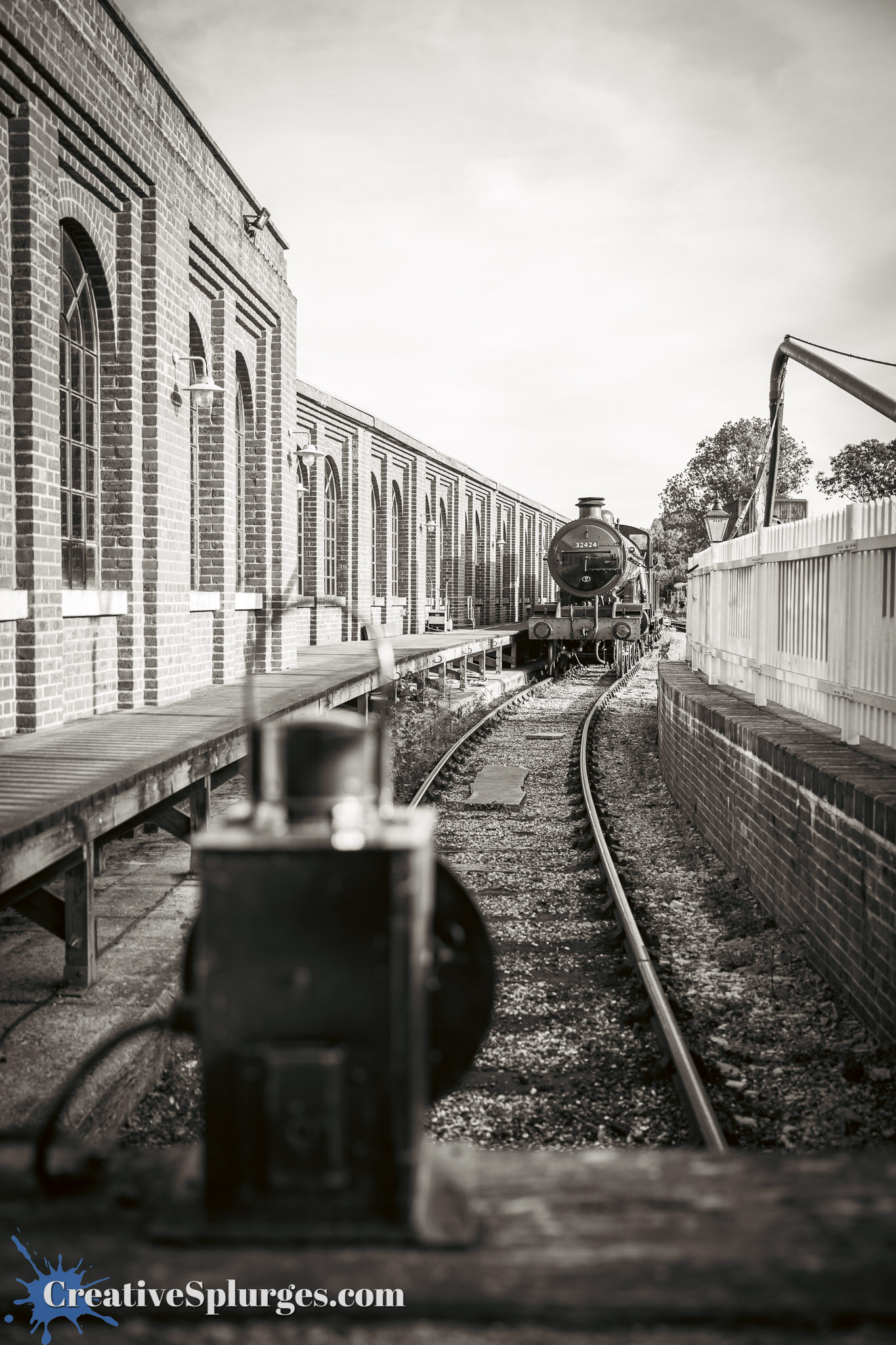
Even at a diesel gala I can’t help photographing steam engines.
Out the back of the loco shed is the loco yard, where a lot of the railway’s steam locomotives were enjoying the weekend off, including 801051.

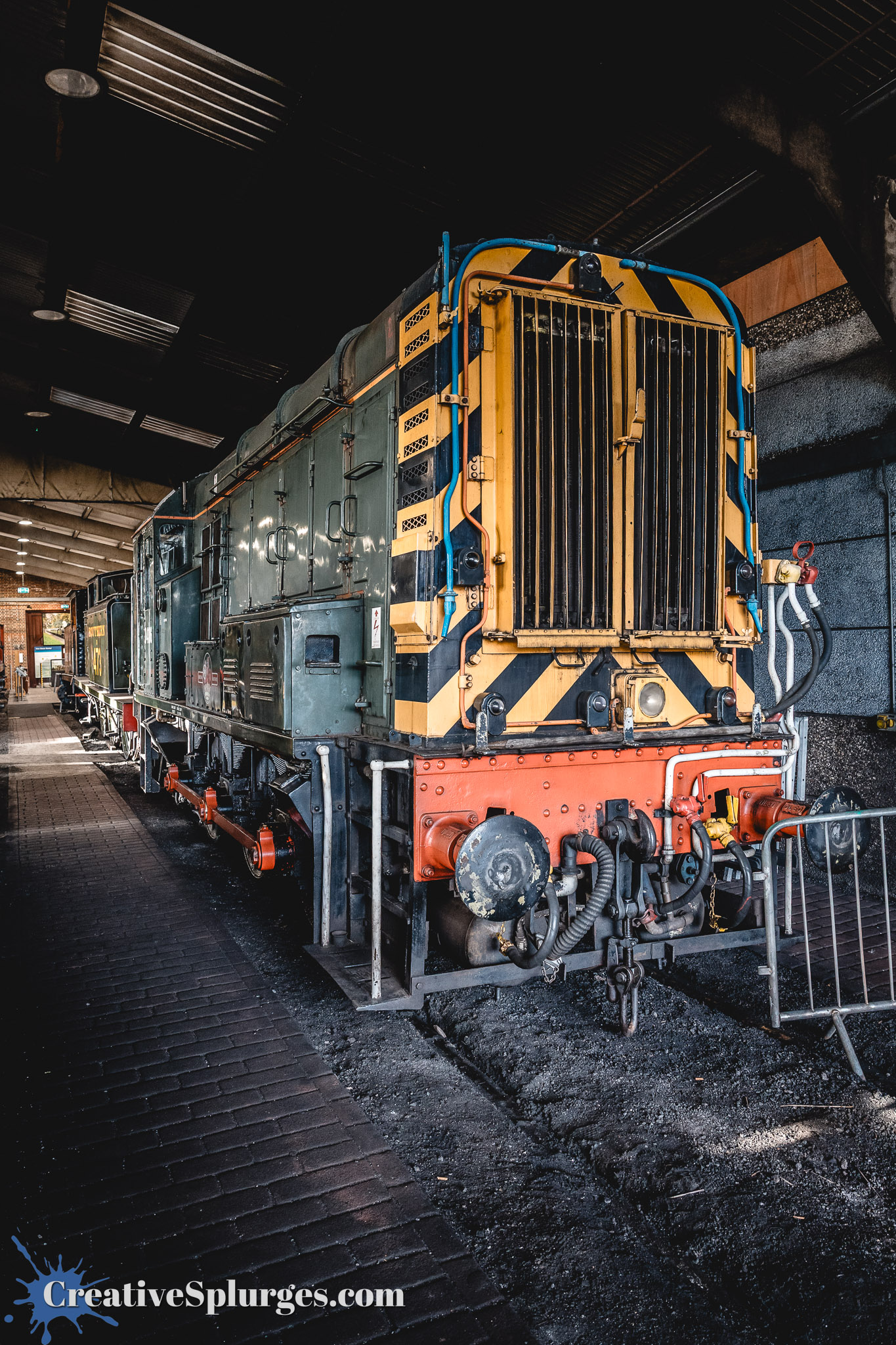
One of the railway’s diesels was also having a rest – Class 09 D4106.
With that, we parted ways, planning to meet up the next morning for another day of shooting.
Unfortunately, 72b wasn’t able to join Sharpthorne Steam and I on the Sunday. We had also realised that the Hastings unit, that we hadn’t seen much of on Saturday because it was mainly running between Sheffield Park and Horsted Keynes, would only be running between Horsted and East Grinstead on the Sunday, whereas we were planning on spending the day between Sheffield Park and Horsted. This meant that we changed up our plans a little bit.
Our original plan had been to do the walk we often do, but in reverse, and walk from Horsted Keynes back to Sheffield Park. Because we also wanted to get some shots in of the Hastings, we decided to start at Horsted and then wander slightly north to begin with, before then turning south and walking to Sheffield Park. Unfortunately, probably because I was running a little late, we got to Horsted just in time to hear – but not see – the train depart. We still make our way north, to find a spot and wait for her to come back south again. We picked a spot a little south of Horsted House Bridge and waited.
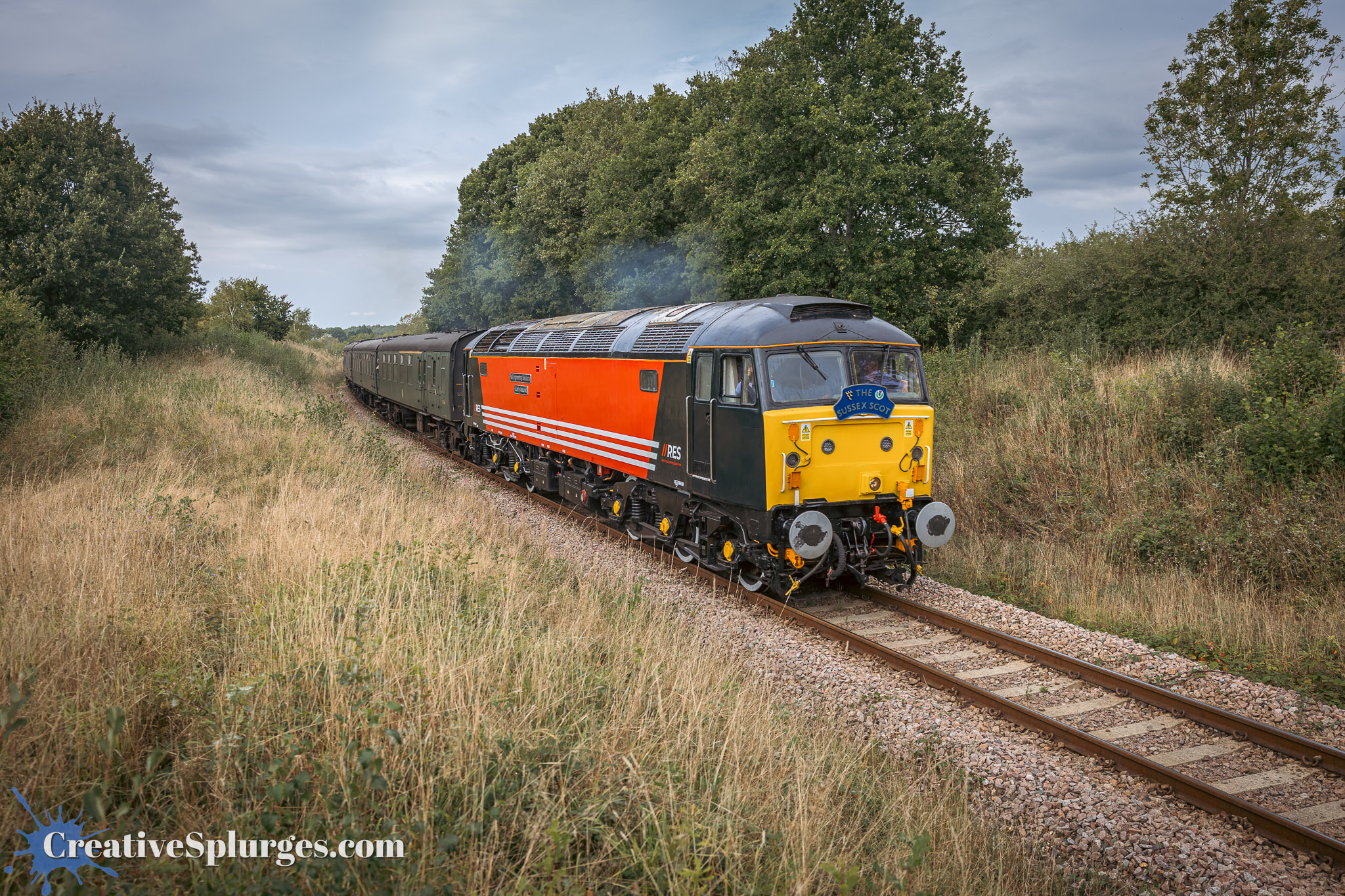
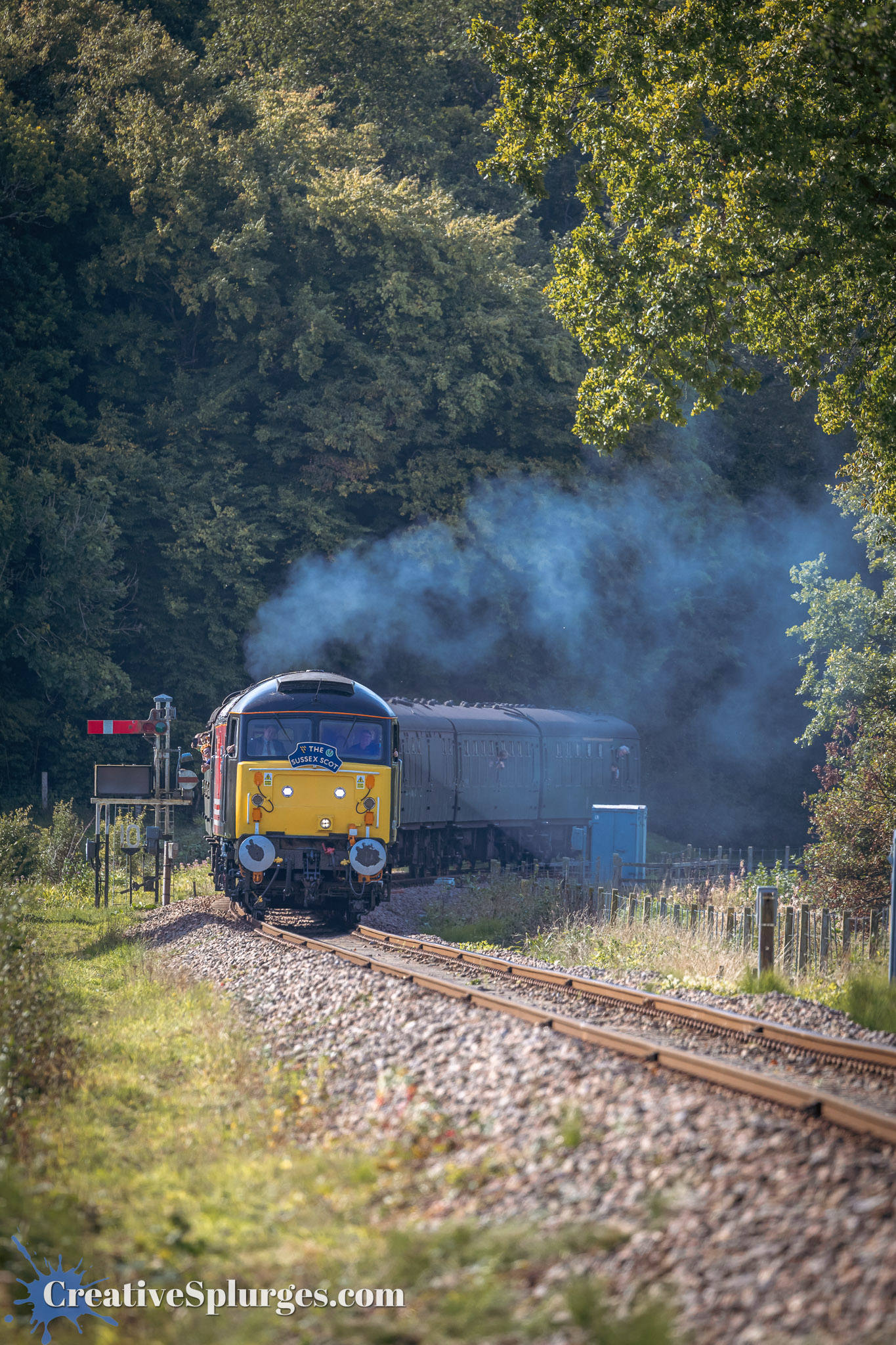
We then returned southwards, to take a shot of the next locomotive, 47715, at the long straight just outside of Horsted. With it being such a long stretch I decided to make use of my telephoto.
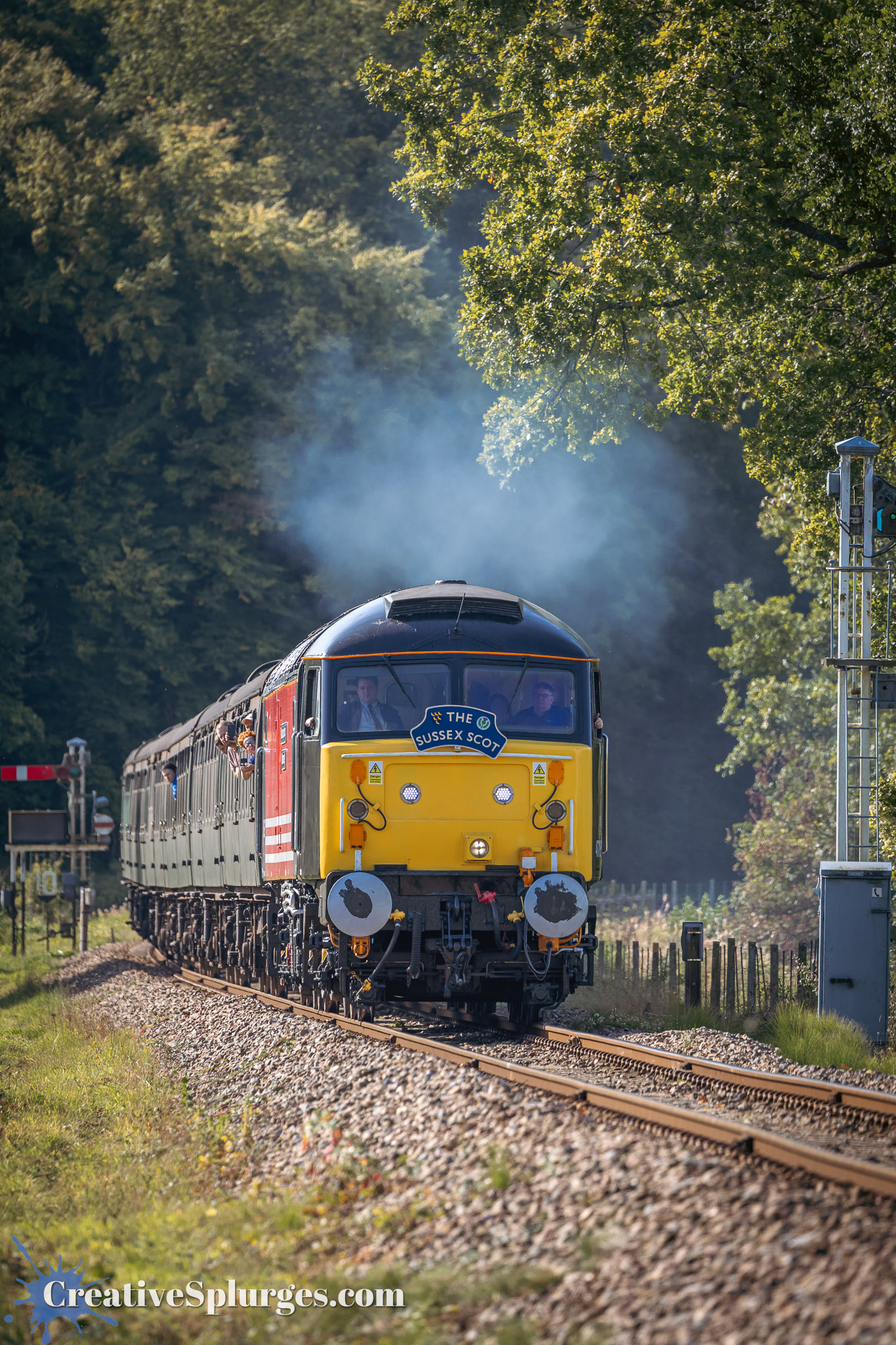
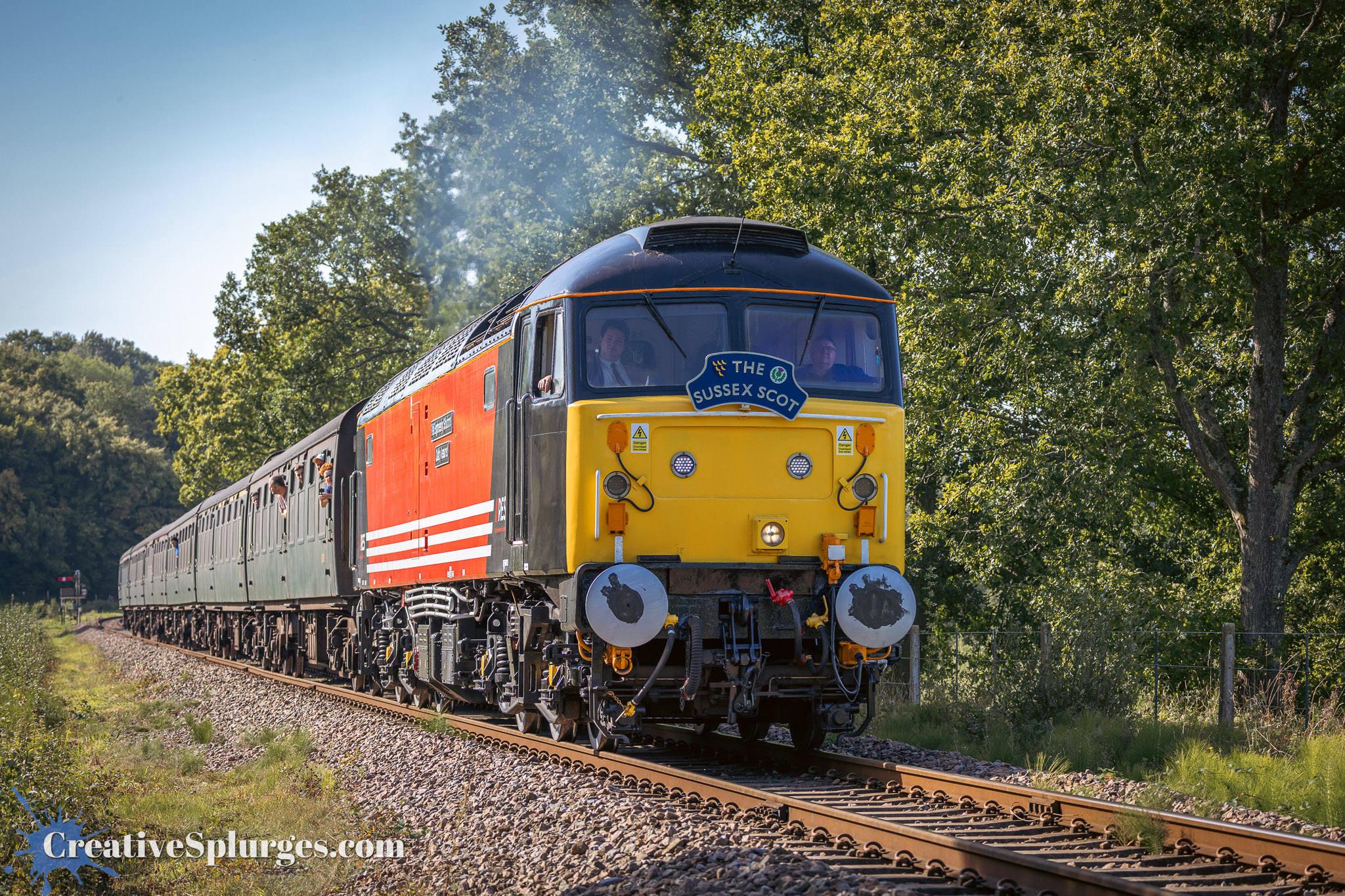
We hadn’t expected to shoot that much of the Class 47 this day, because she was only timetabled for a few services in the afternoon. However, the Class 50 was still out of action and so the Class 47 took up most of her services.
The next train would be the Hasting unit coming back up north, so for that train we headed further south to get a shot of her coming out of the bend.
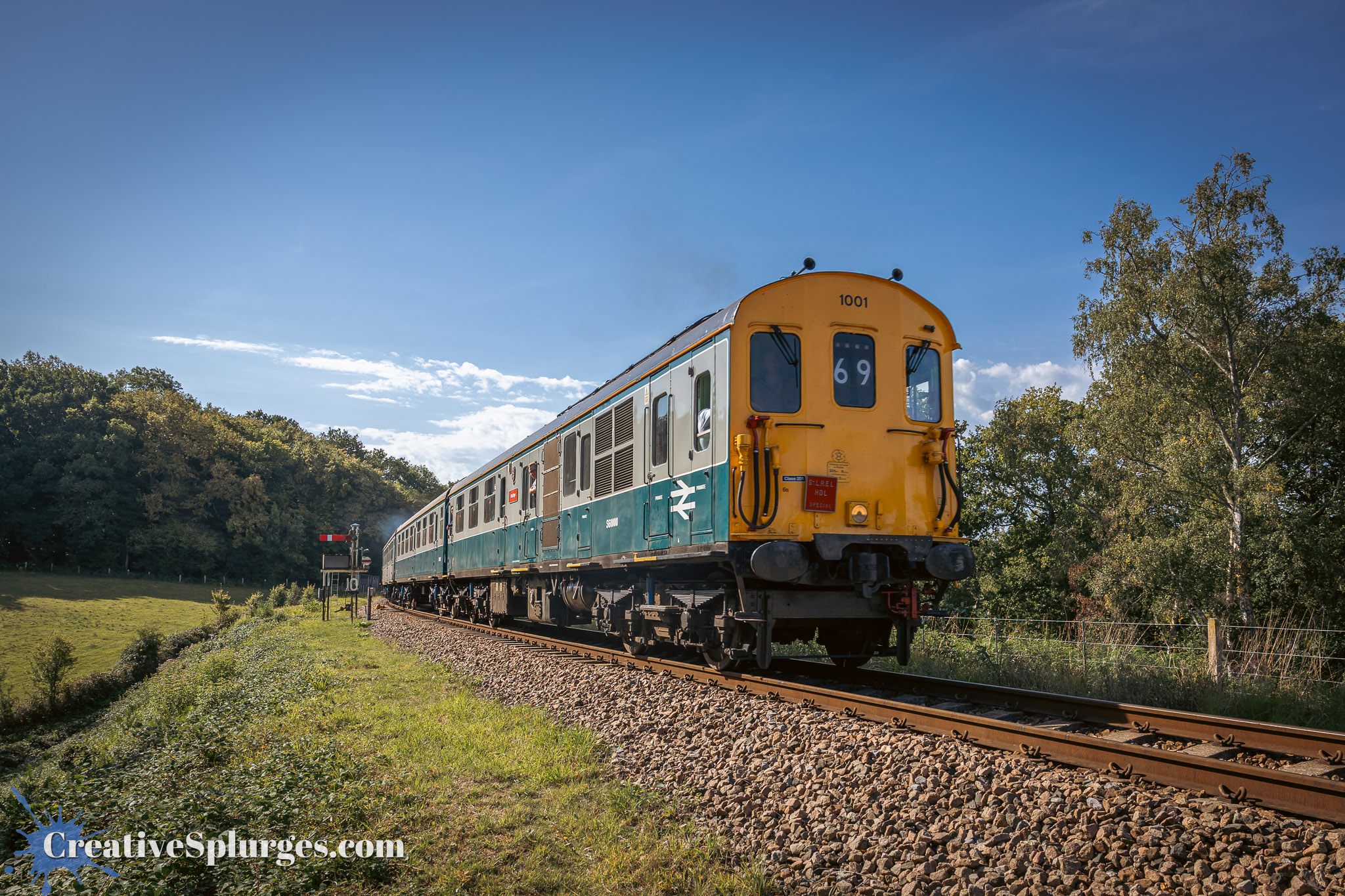
After this, we headed south of Horsted Keynes, to set up a shot on the southern end of the loco yard to see the Class 25 approaching up from Sheffield Park. Whilst we waited, I took some shots of the goods wagons in the yard.
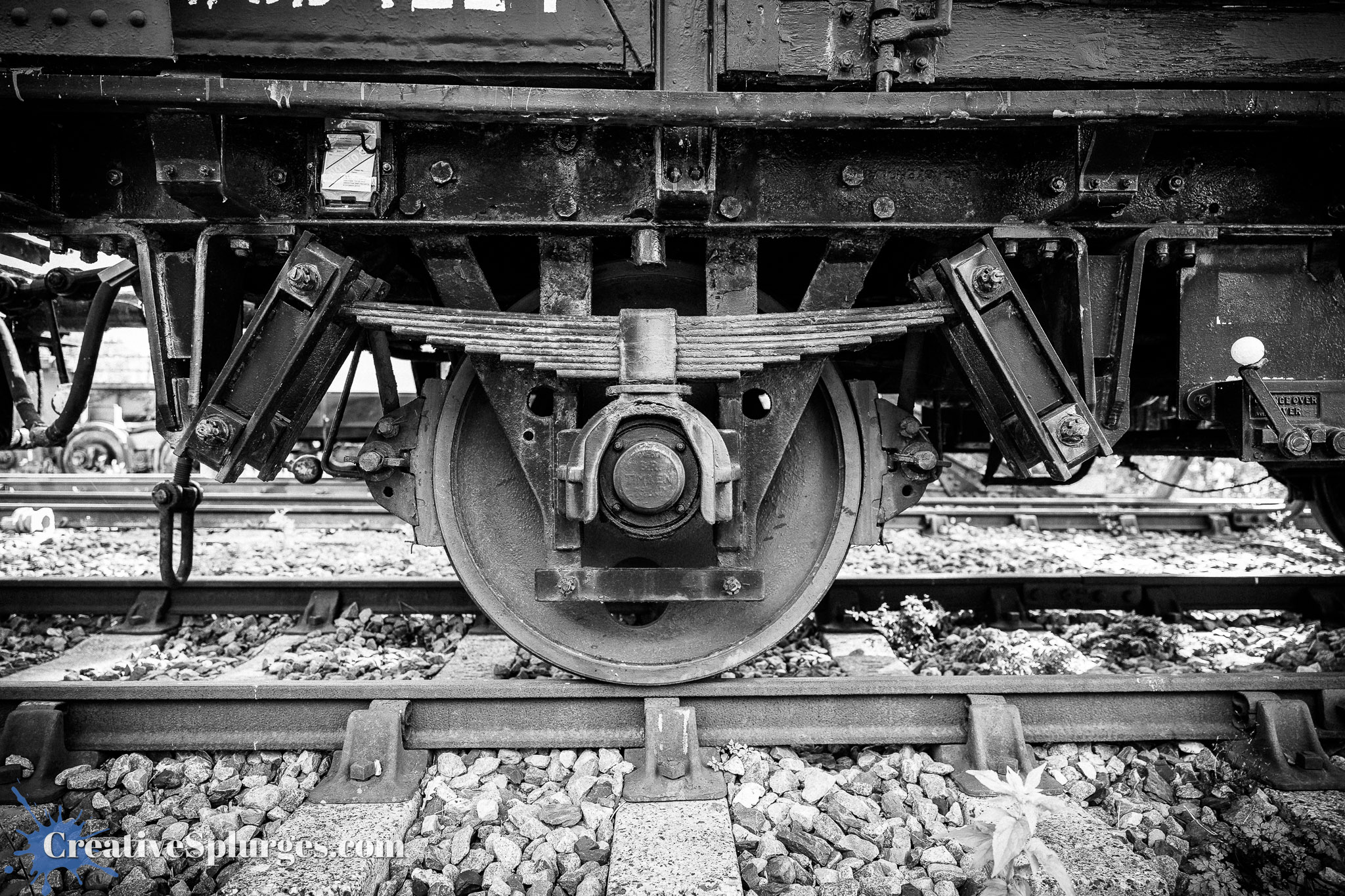
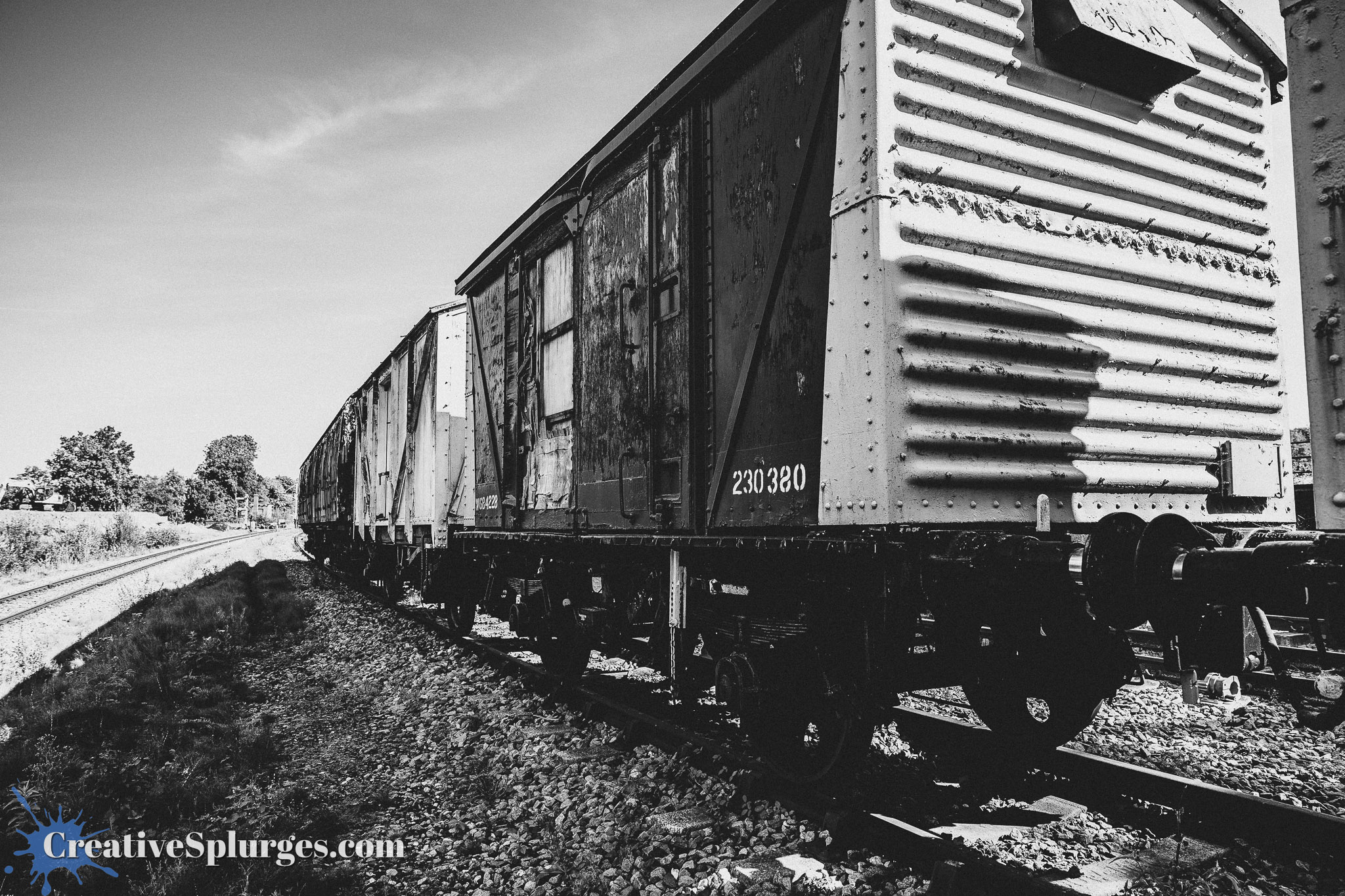
As well as the down signal outside of the station.

Soon, the Class 25 came up, and I used the signal as a framing device.
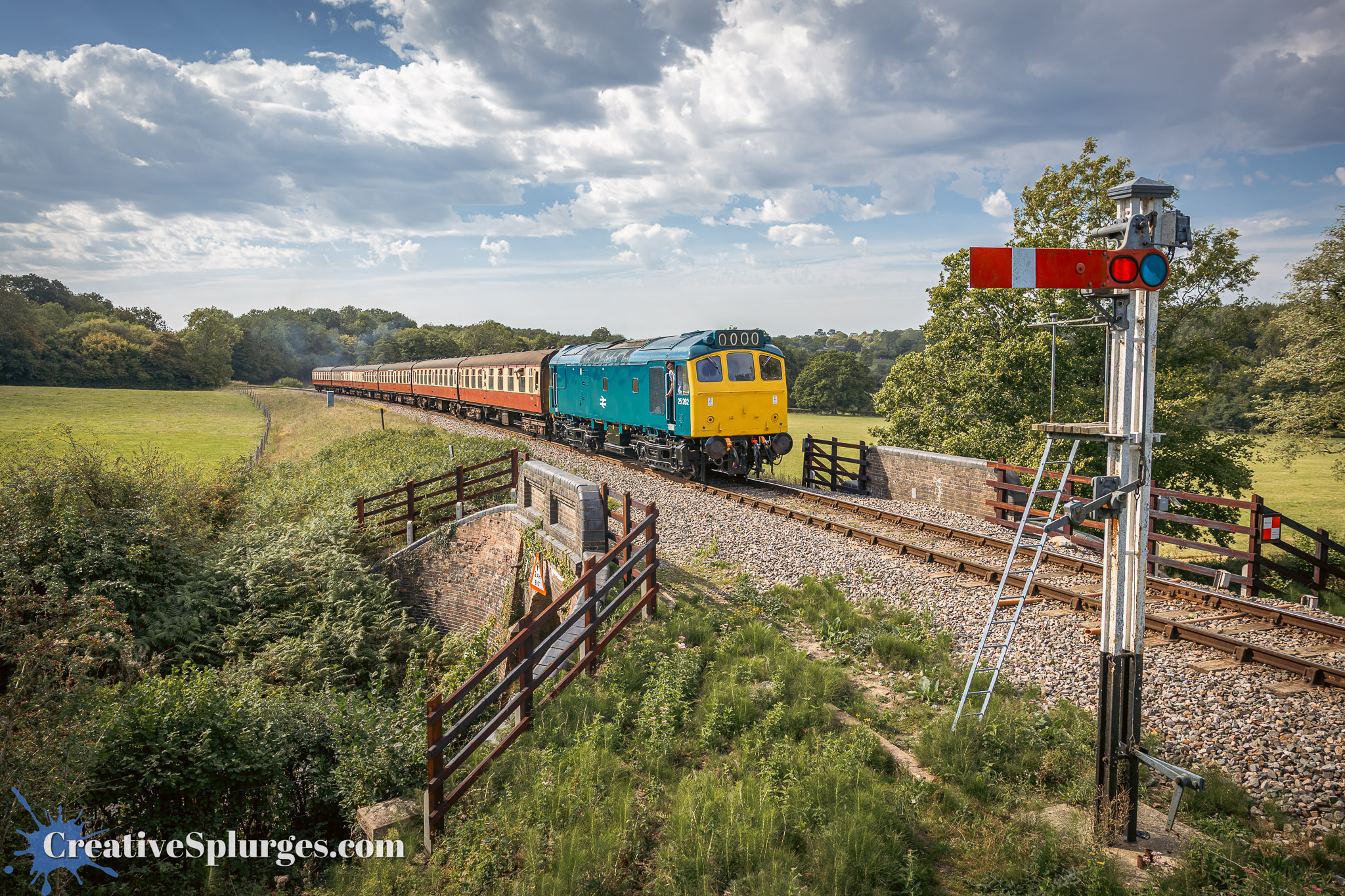
I quite like this spot, and it’s one I’ve not used much yet. I am hoping to get some nice morning shots of a steam train with lots of puffy smoke here later in autumn.
This shot was also featured in the Bluebell Railway’s September e-newsletter, which has only happened a few times and is still a novelty.
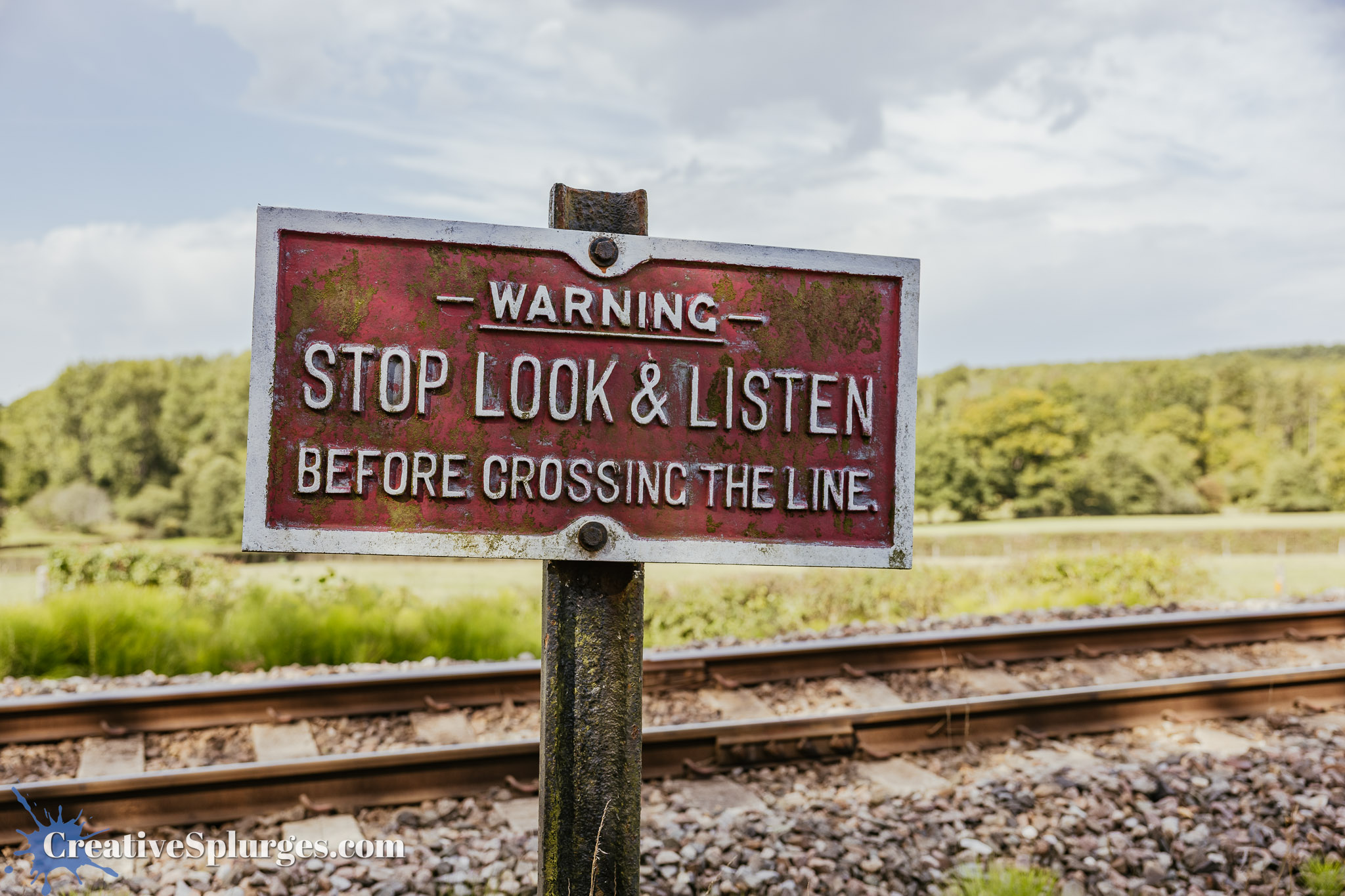
We began the long walk south. First stop was just at the other end of the shot above, where we waited for 47715 to come back south again. I decided to use the weathered sign that’s here to frame the shot, replicating one I did last month at the 65th Anniversary gala.
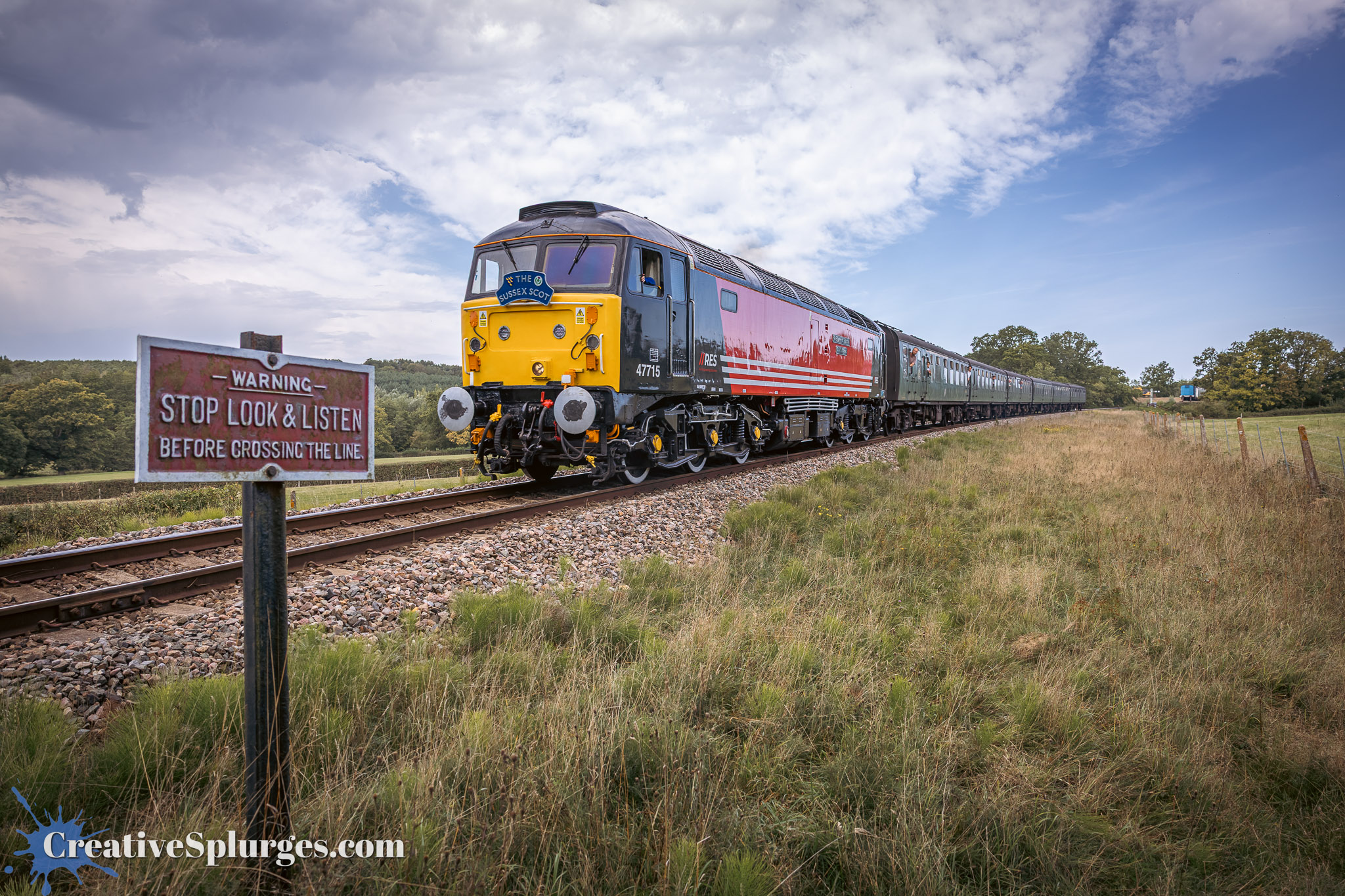
We continued south, shooting the odd passing train (which you can find in the gallery below). Soon we found ourselves in Lindfield Wood. With the Class 25 due imminently, we decided to shoot from up an embankment. I’ve shot from up there before, but a summer of fern growth made it hard going this time. They did at least add to the shot.
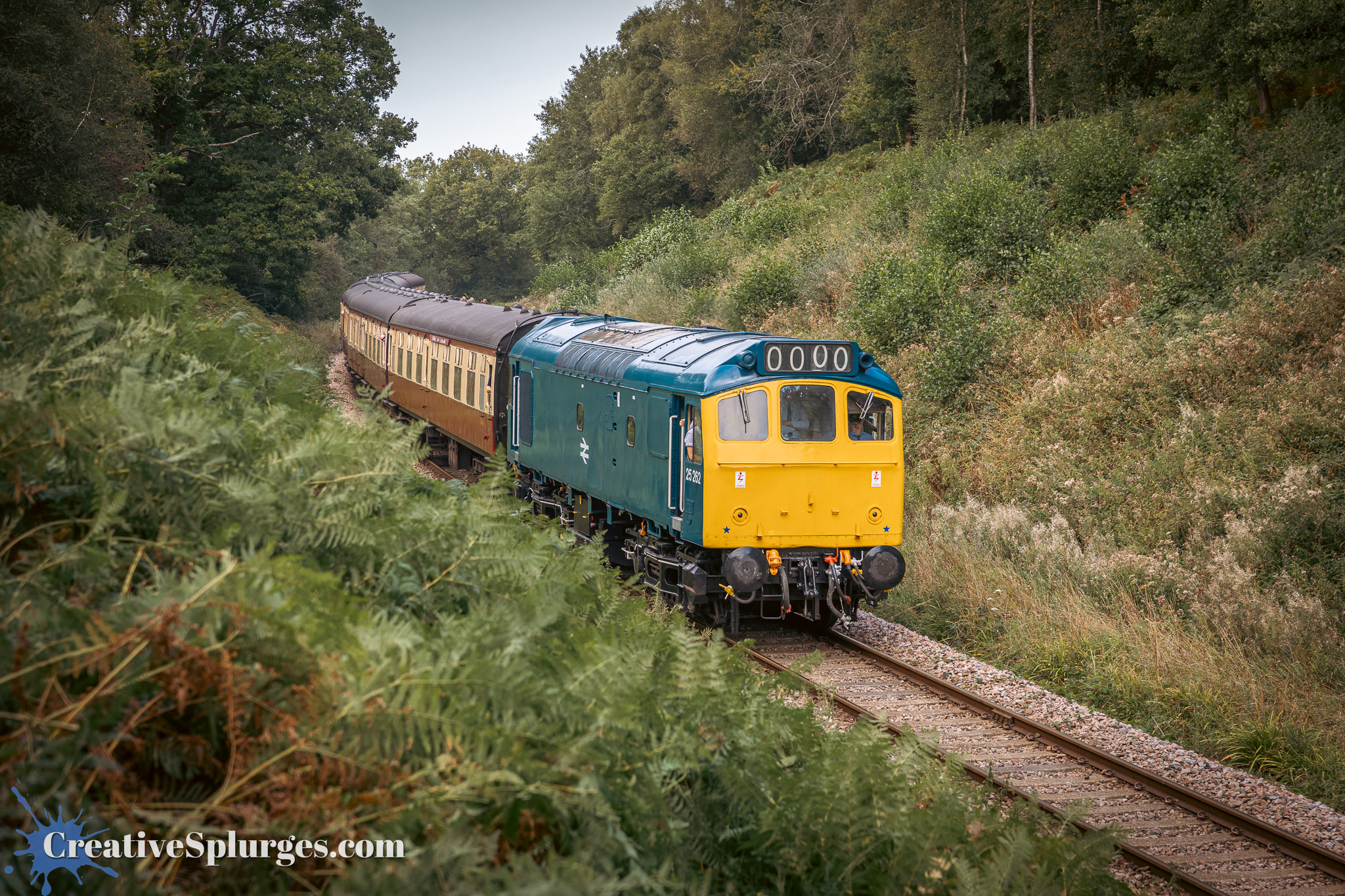
We kept on, aiming to get to the broken bridge in time for the Class 25 to come back up. I’m not sure I’d say we made it in plenty of time, but we made it.
We stayed in this spot for the Class 47 to return down to Sheffield Park.
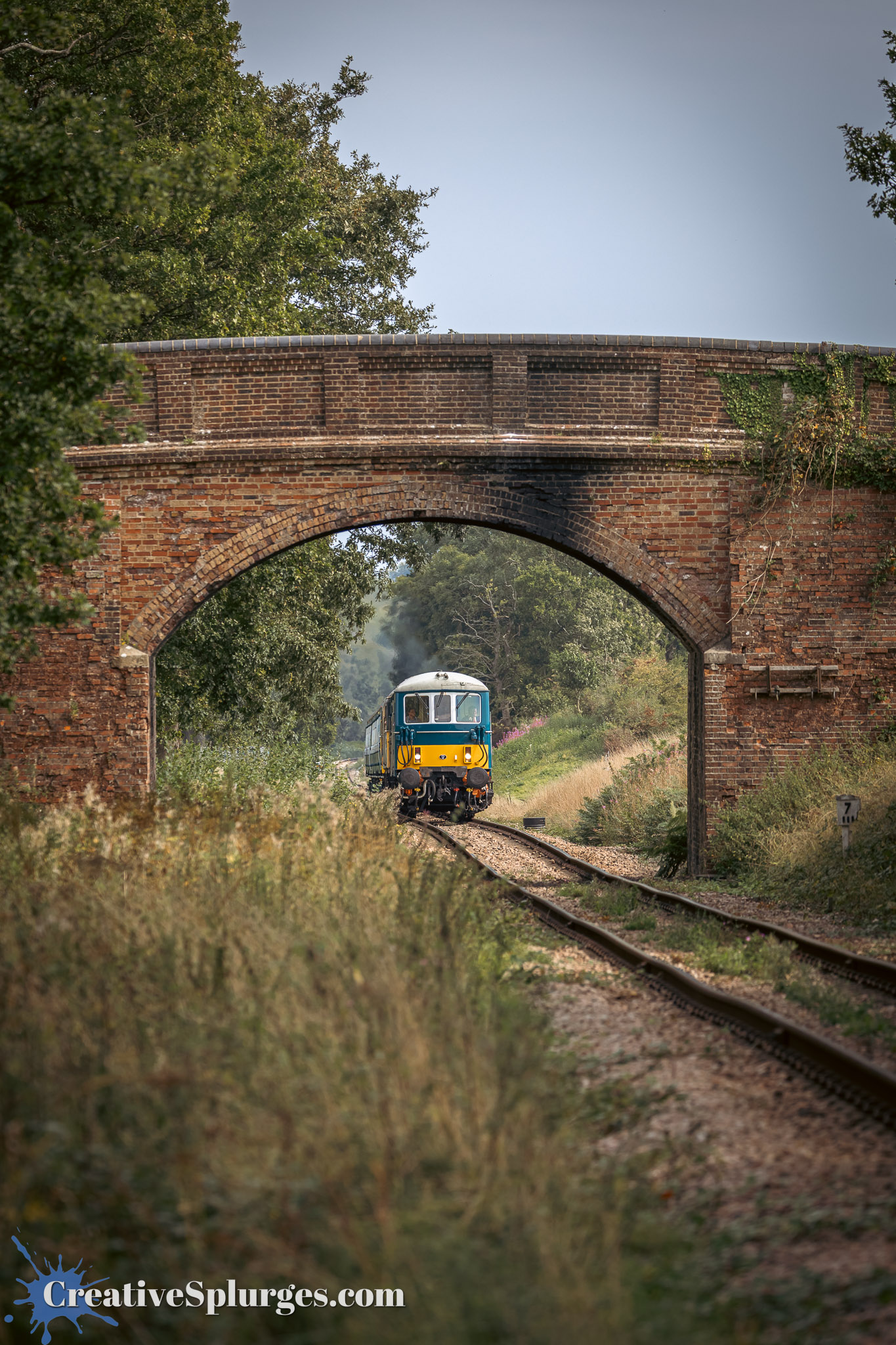
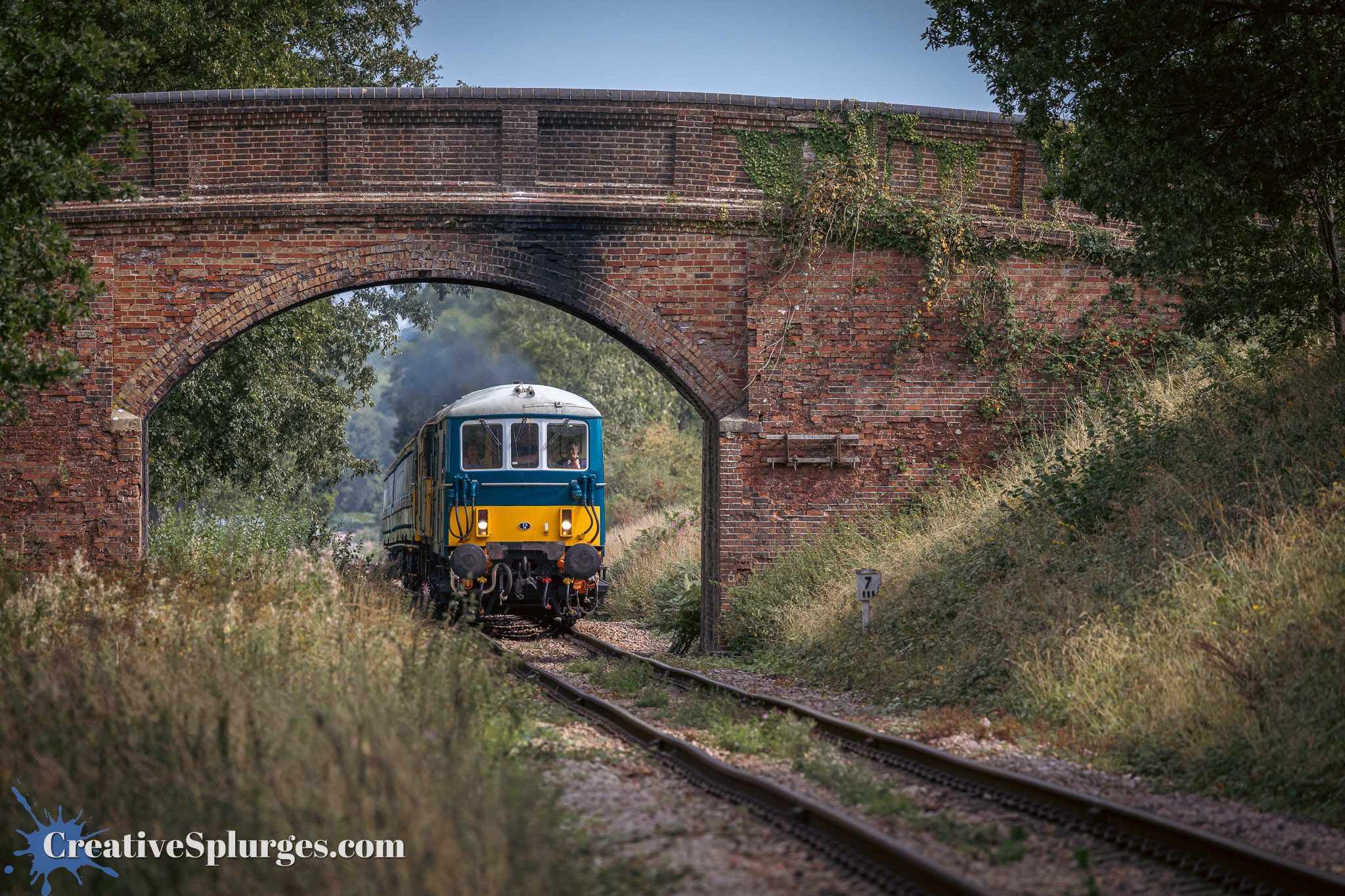
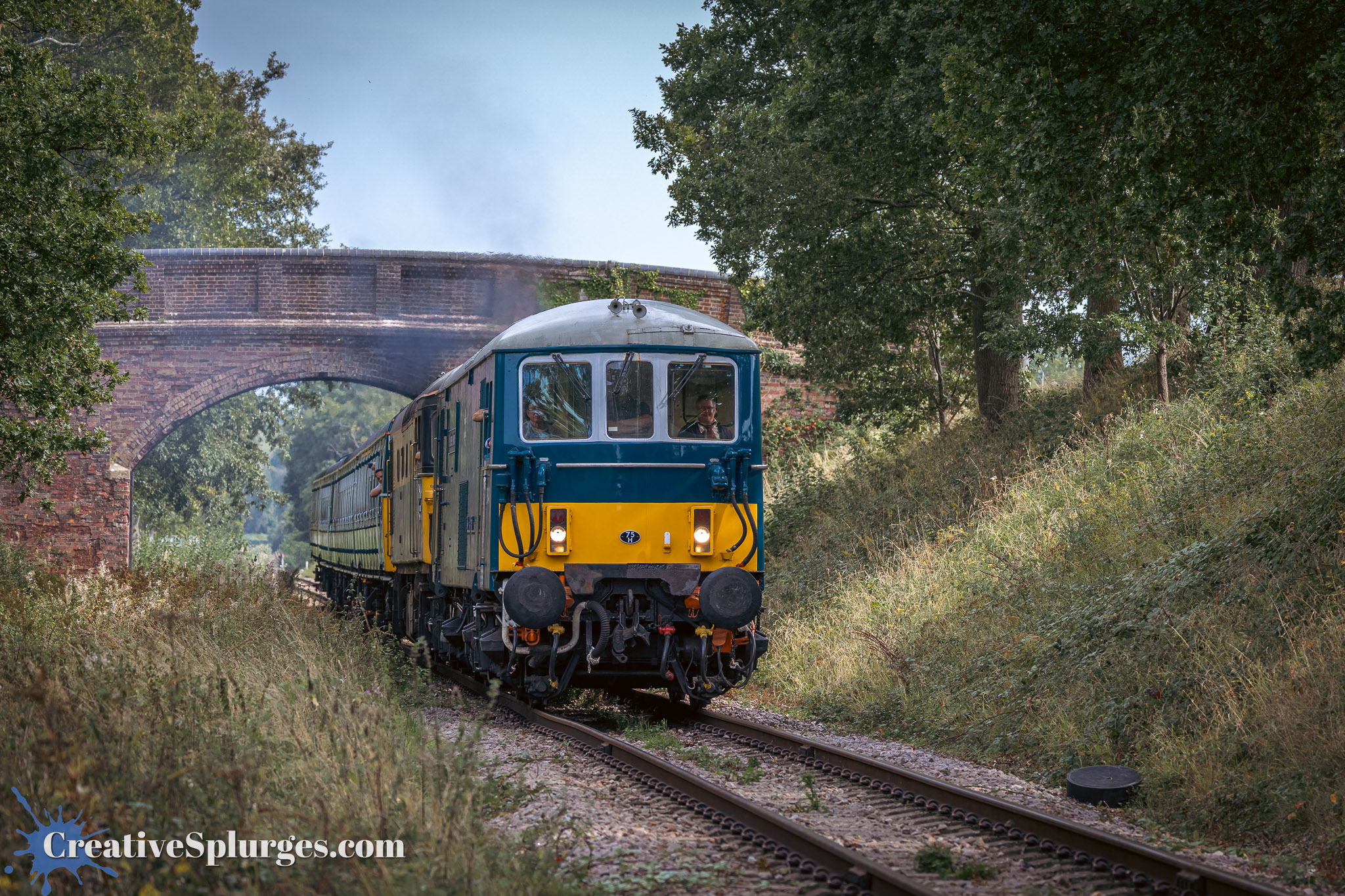
Our journey south continued. As we approached Freshfield Bank, I suggested we stop and use Town Place Bridge as a backdrop for the next train coming up north, rather than stand up by the bridge and shoot south as we normally would. The next train was the Class 33 and the 4VEP, but they had gained a new friend in The Bluebell Railway, which had nothing else to do with the failure of the Class 50 the previous day.

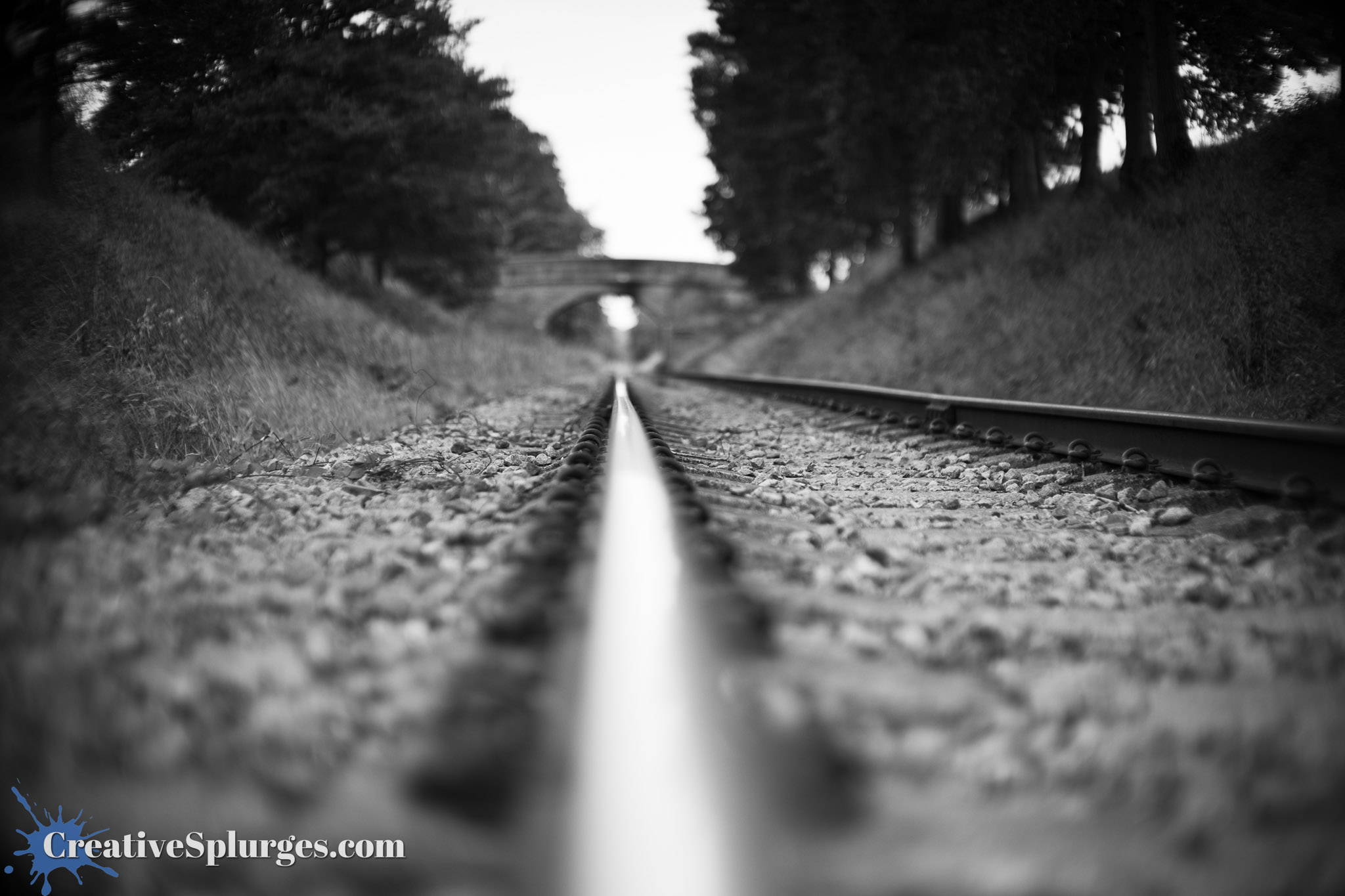
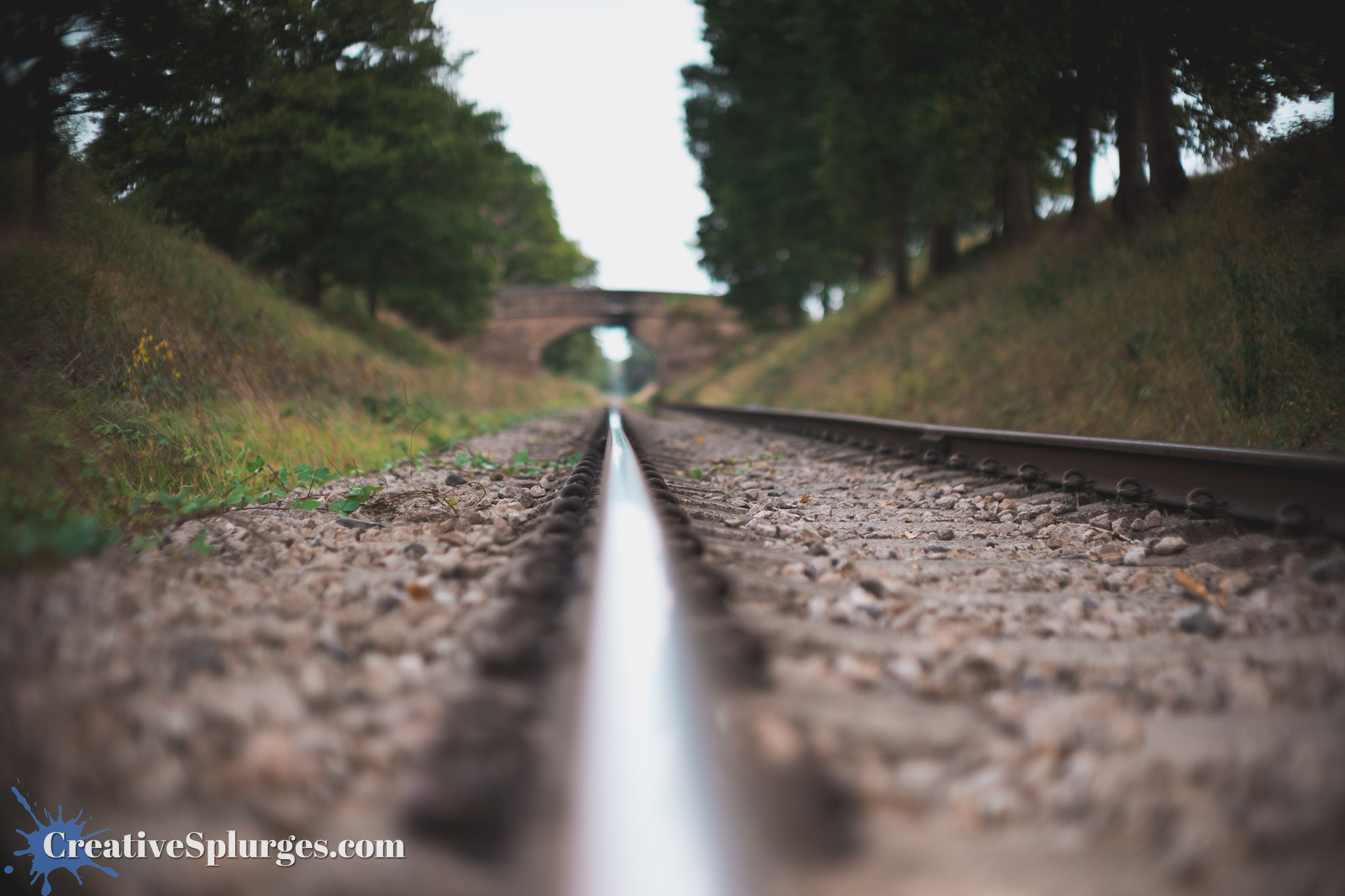
With the line clear, I decided to emulate a photo I’d seen on Instagram some time previously, making use of the latest lens to find a home in my kit bag: the TTArtisan 50mm f/0.95. With a long clear view of the track in both directions and Sharpthorne to spot for me, I took a photo at maximum aperture along one of the rails towards the bridge. I can’t quite decide which one I prefer: the shot where the focus is on the bridge, or the one where it’s on a point on the rail much closer to the to the camera. Take a look at both below and let me know what you think.

Having got the shots without losing my head, we continued on. We picked a spot at the southern edge of Freshfield Bank for the 4VEP to come back up, and I decided once again to try a dramatic panning shot.
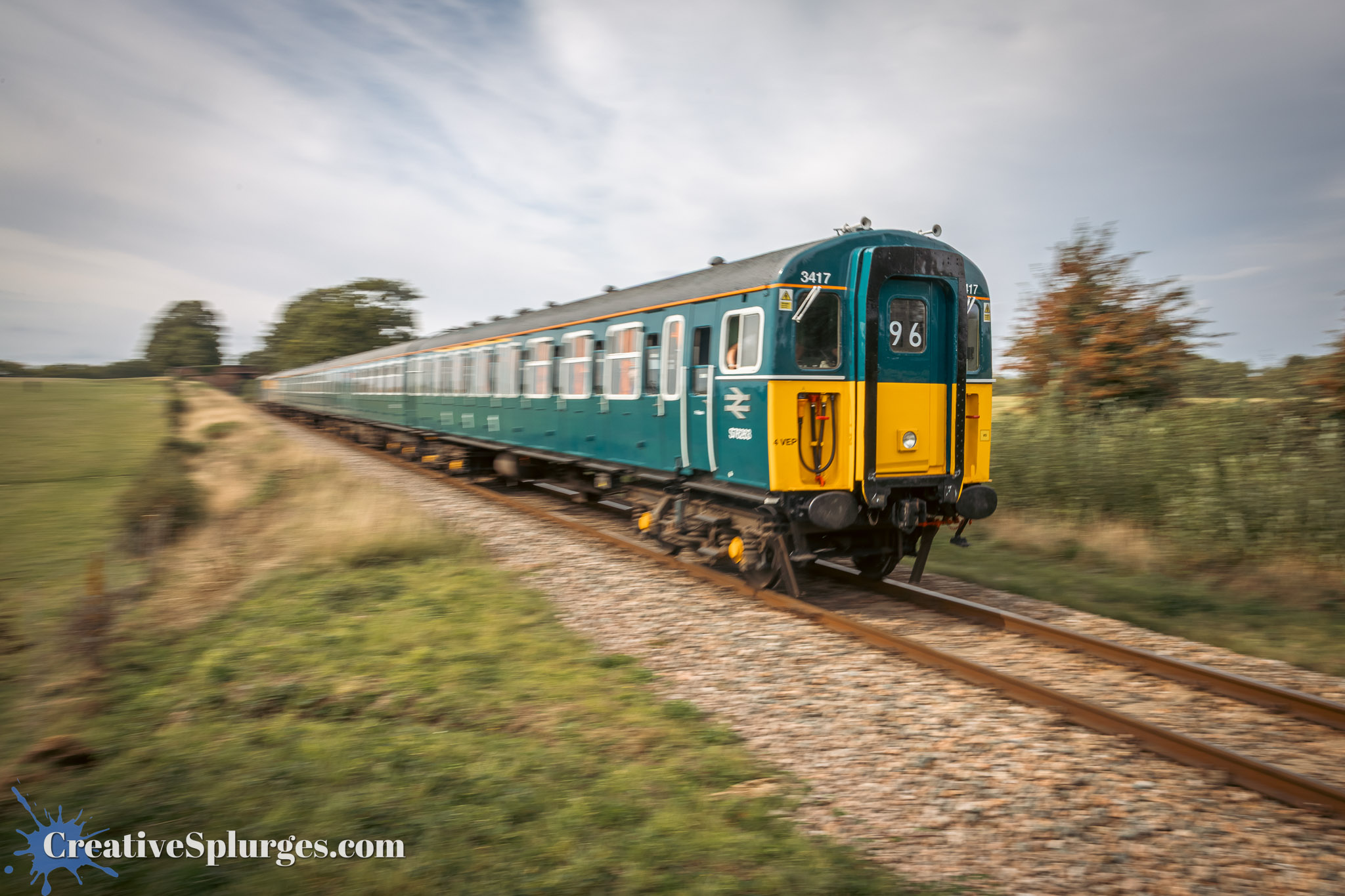
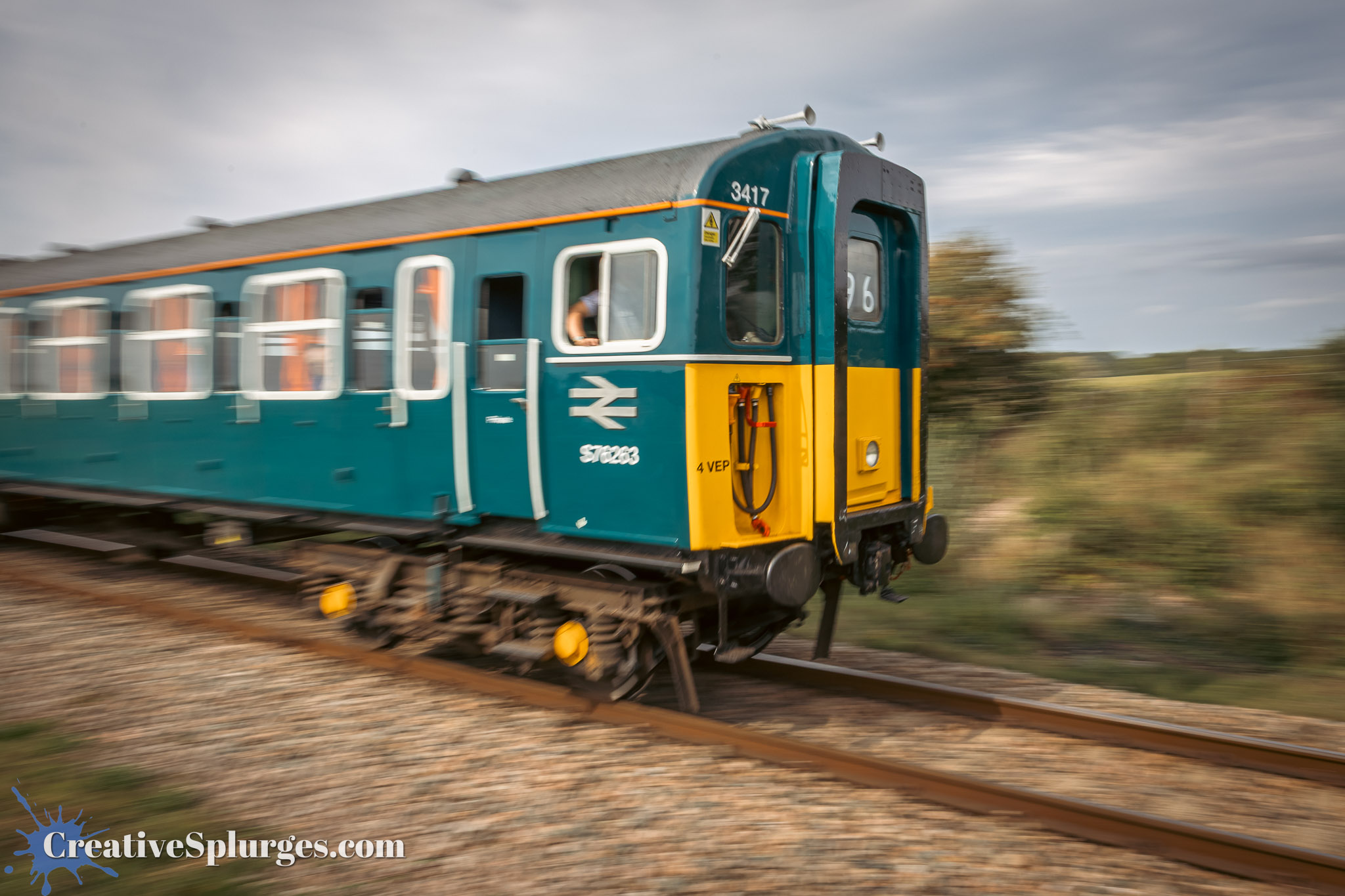
Once again they didn’t turn out too bad, but the panning has left much of the train out of focus due to parts of it moving towards the camera as I panned.
We then walked slightly back north towards the bridge in order to get the Class 47 coming up north.
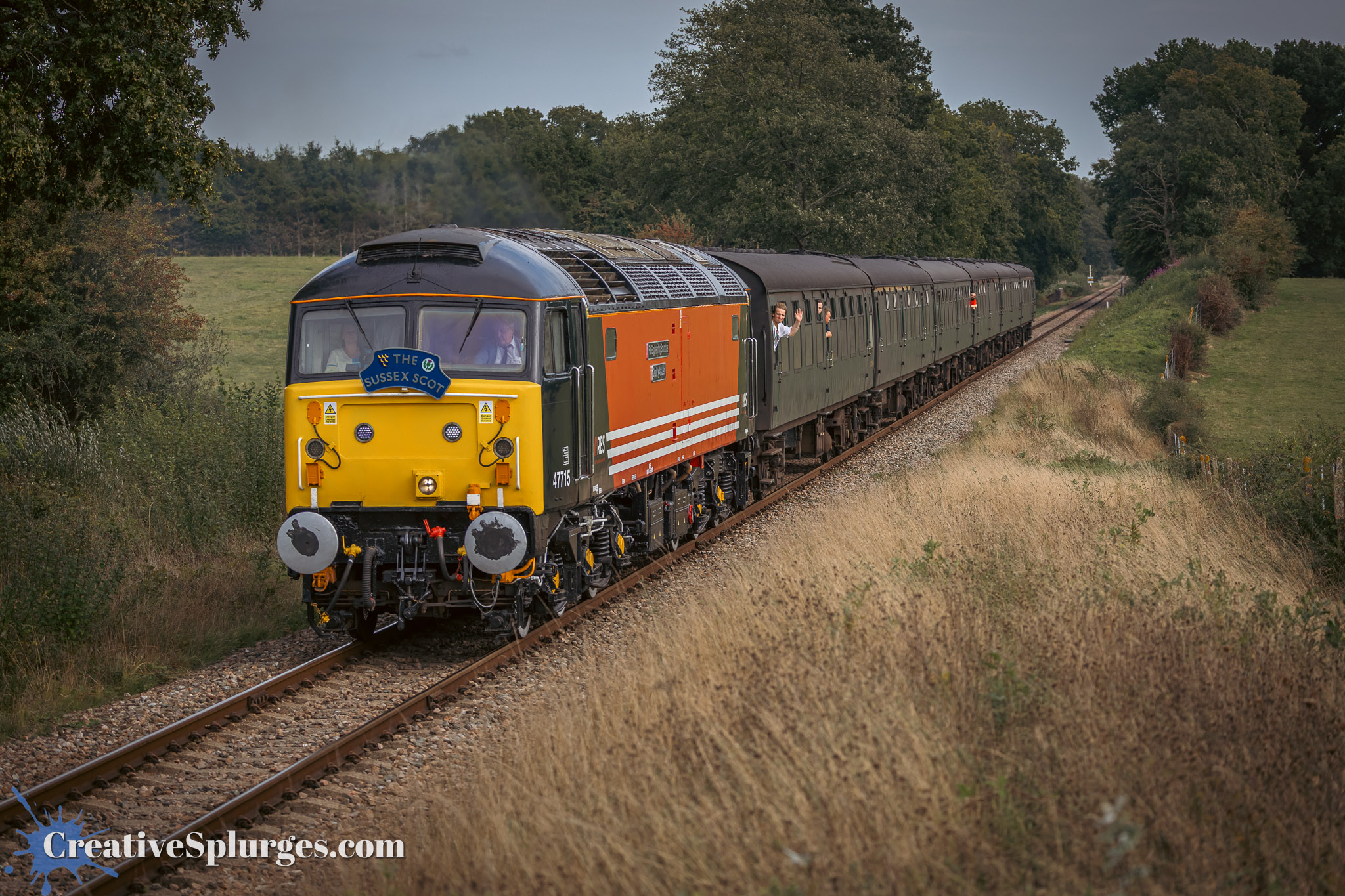
We continued south. For the next train we decided to shoot from a steeper angle, which involved us climbing up a steep embankment holding on to some fence posts. Not recommended.
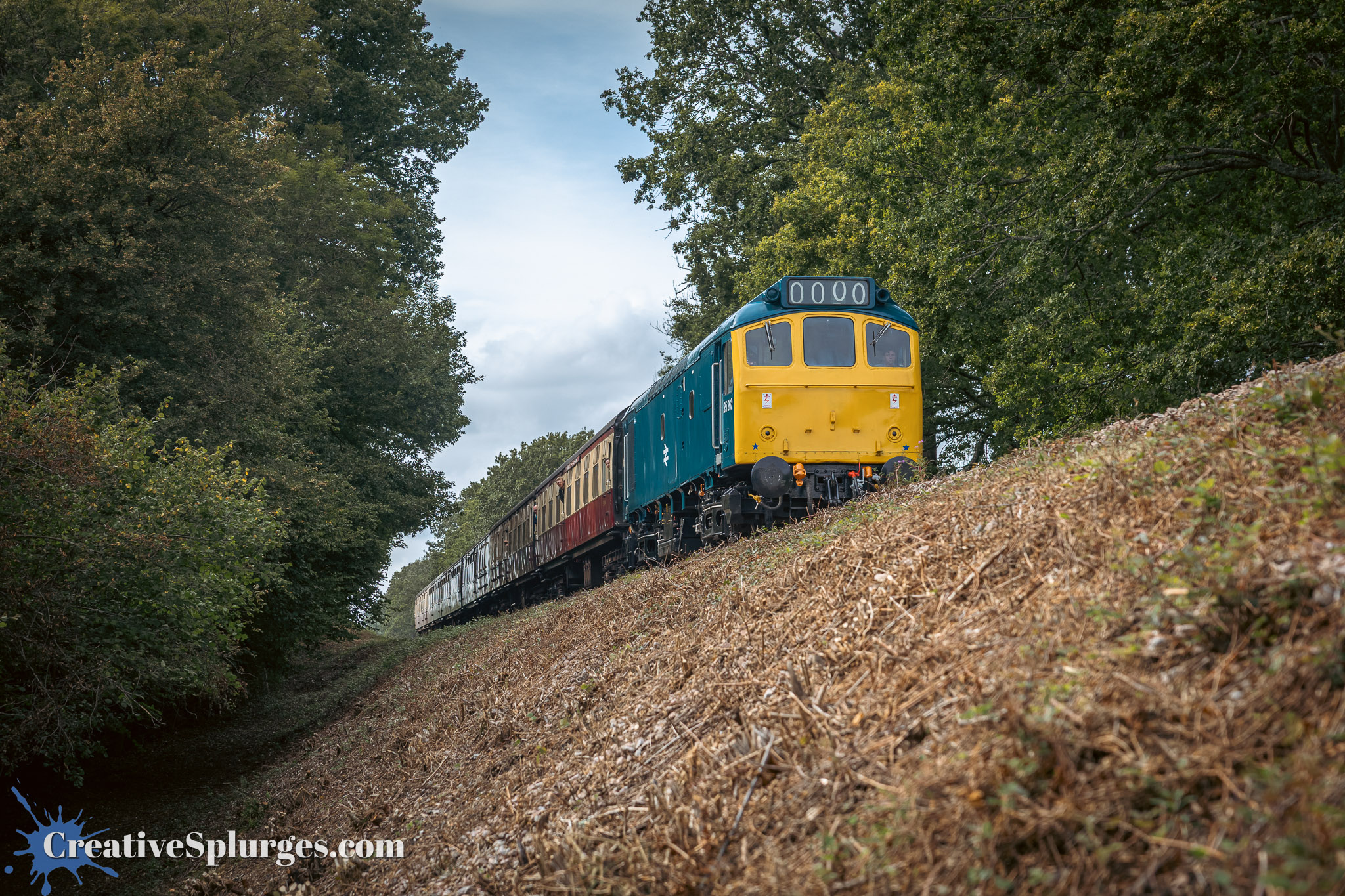
Such was the steepness of the embankment we couldn’t actually make it out over the top to resume our journey, and had to backtrack down to carry on south. Soon we were in Ketches Wood, a spot I’ve often used for steam locomotives heading north, but virtually never for ones heading back south (because they’re usually pointing north, and the ones facing south are usually coasting downhill). I was able to break that tradition by photographing the Hastings unit coming south into Sheffield Park.

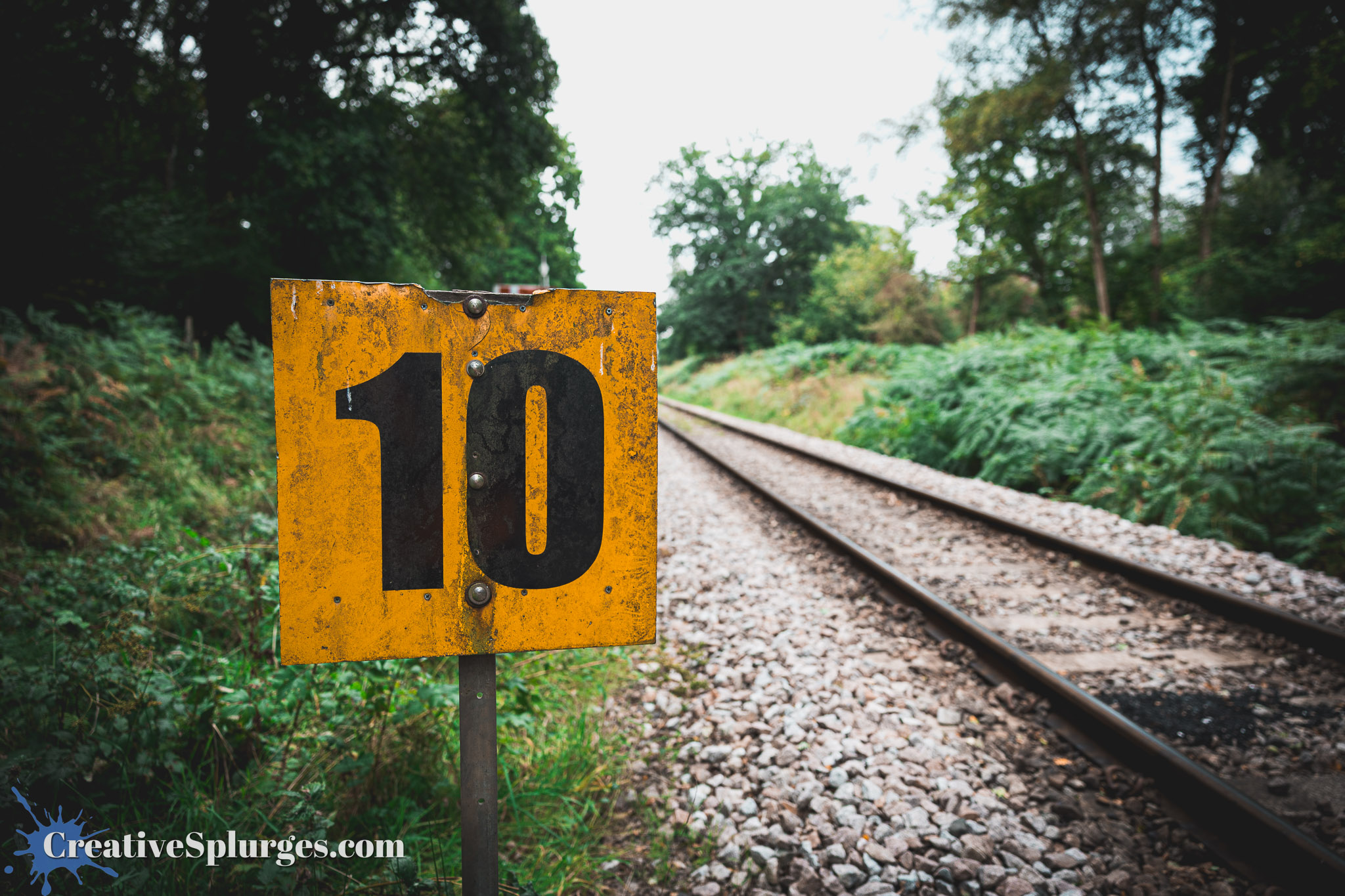
Whilst I was here I decided to photograph the 10mph speed limit sign that marks the temporary speed restriction that’s helped me get some lovely photos on this corner.
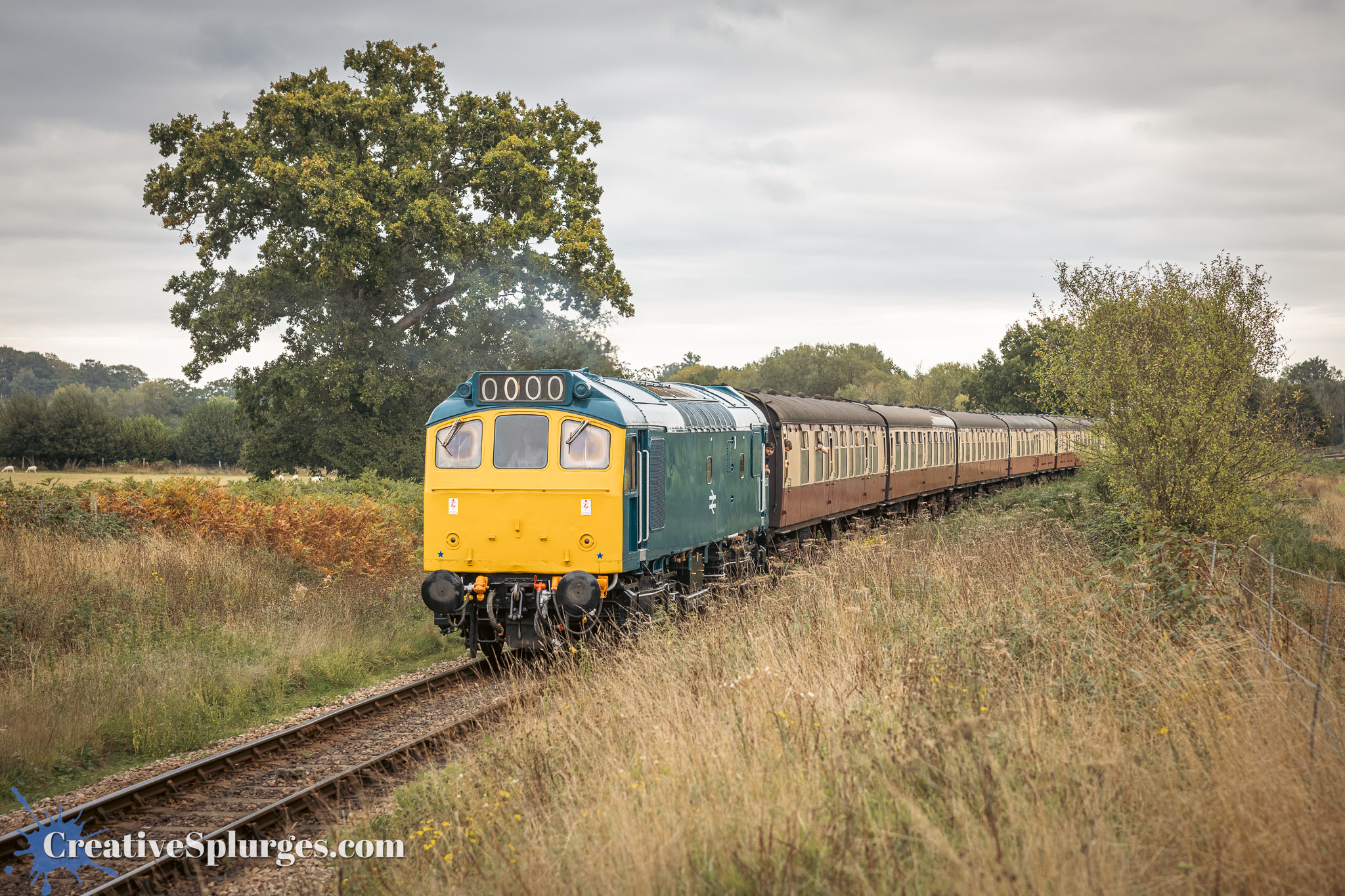
Our final train of the weekend would be the Class 25 coming back north out of Sheffield Park. We decided the spot for this would be on the inside of the curve out of Sheffield Park, where I took my last photograph of 60007 Sir Nigel Gresley last year. We first caught sight of her across a field.
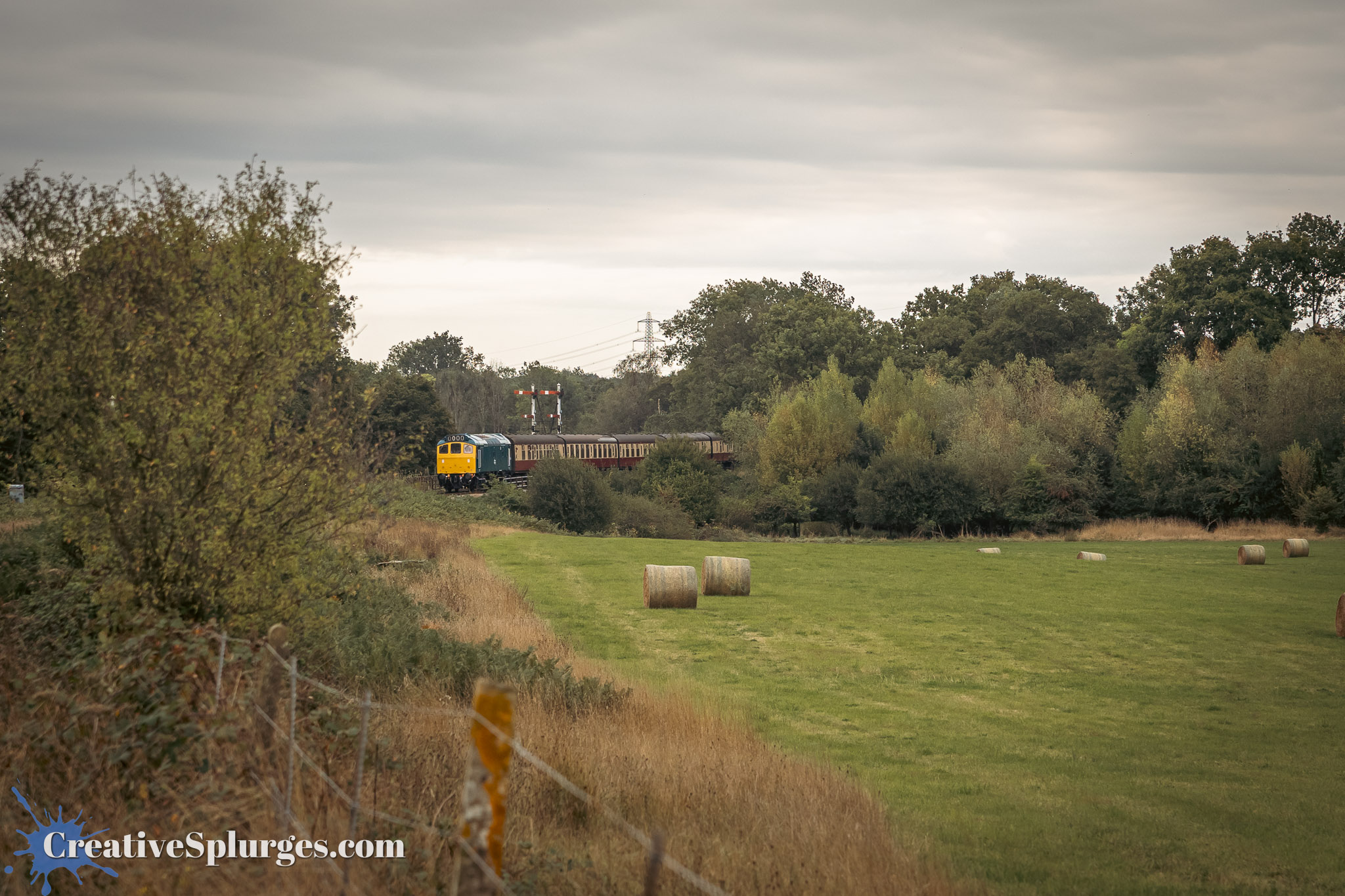
Soon she was a bit closer.
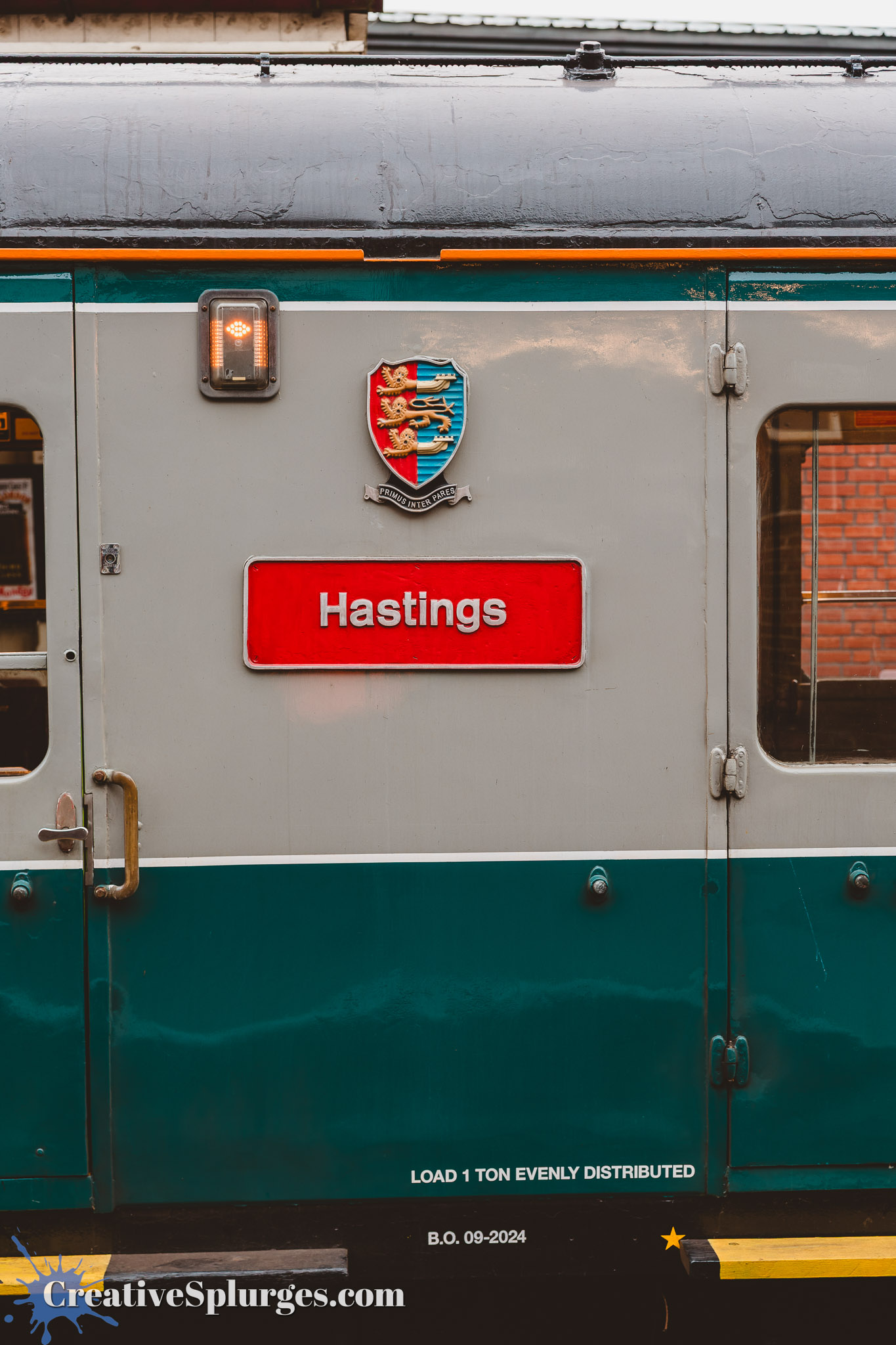
We made it back to Sheffield Park, where the Hastings was on platform ready for its final run north.

With that, we called it a day, and turned in our vests.
As much as I really enjoyed spending a few days photographing something a little different, I am looking forwards to the locomotives going back to being steam-powered – which for me will be Giants of Steam in October, if not sooner.
As always, the post above is a selection of shots, and there are a few more in the gallery below.







 Creative Splurges