
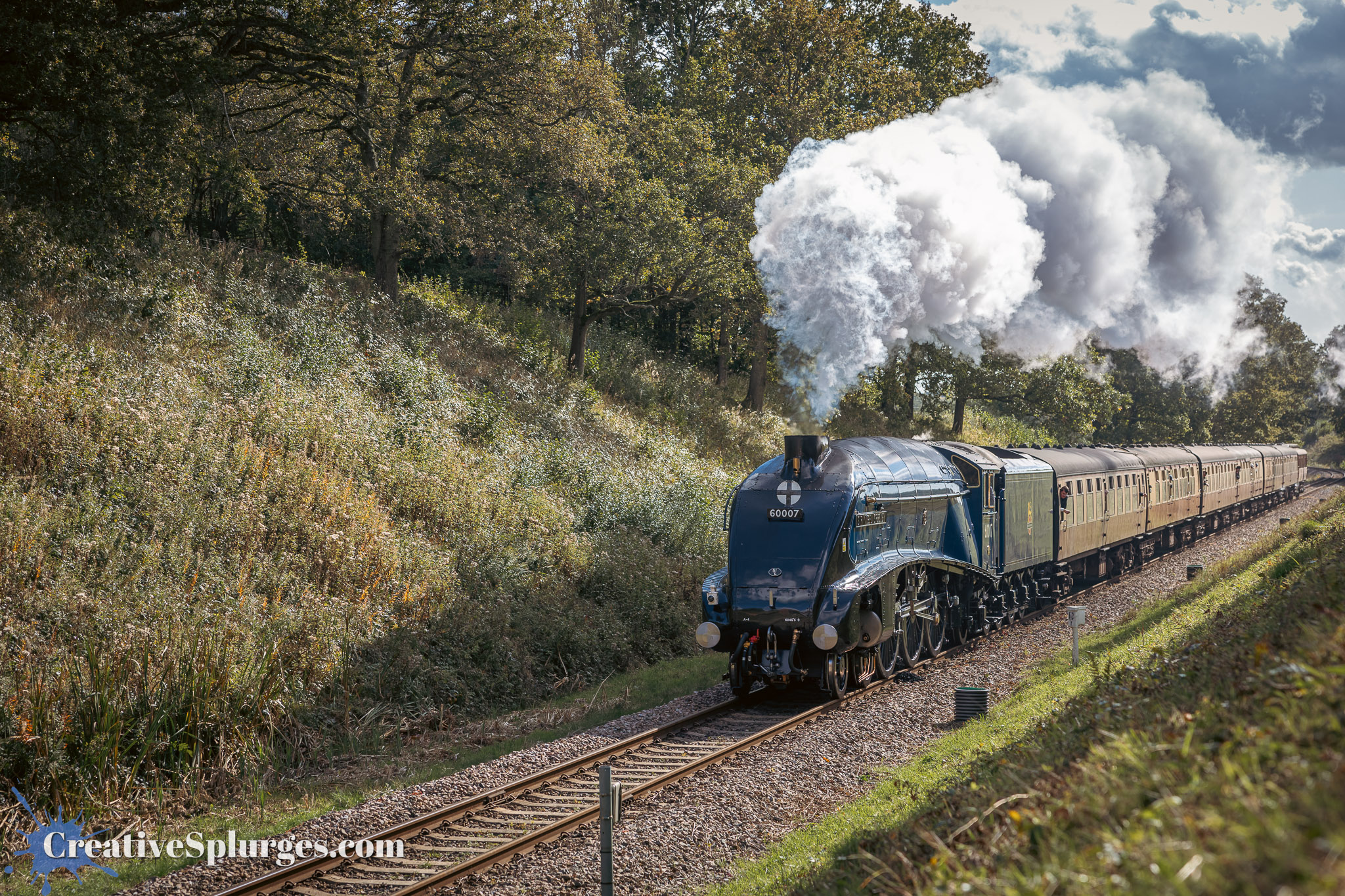
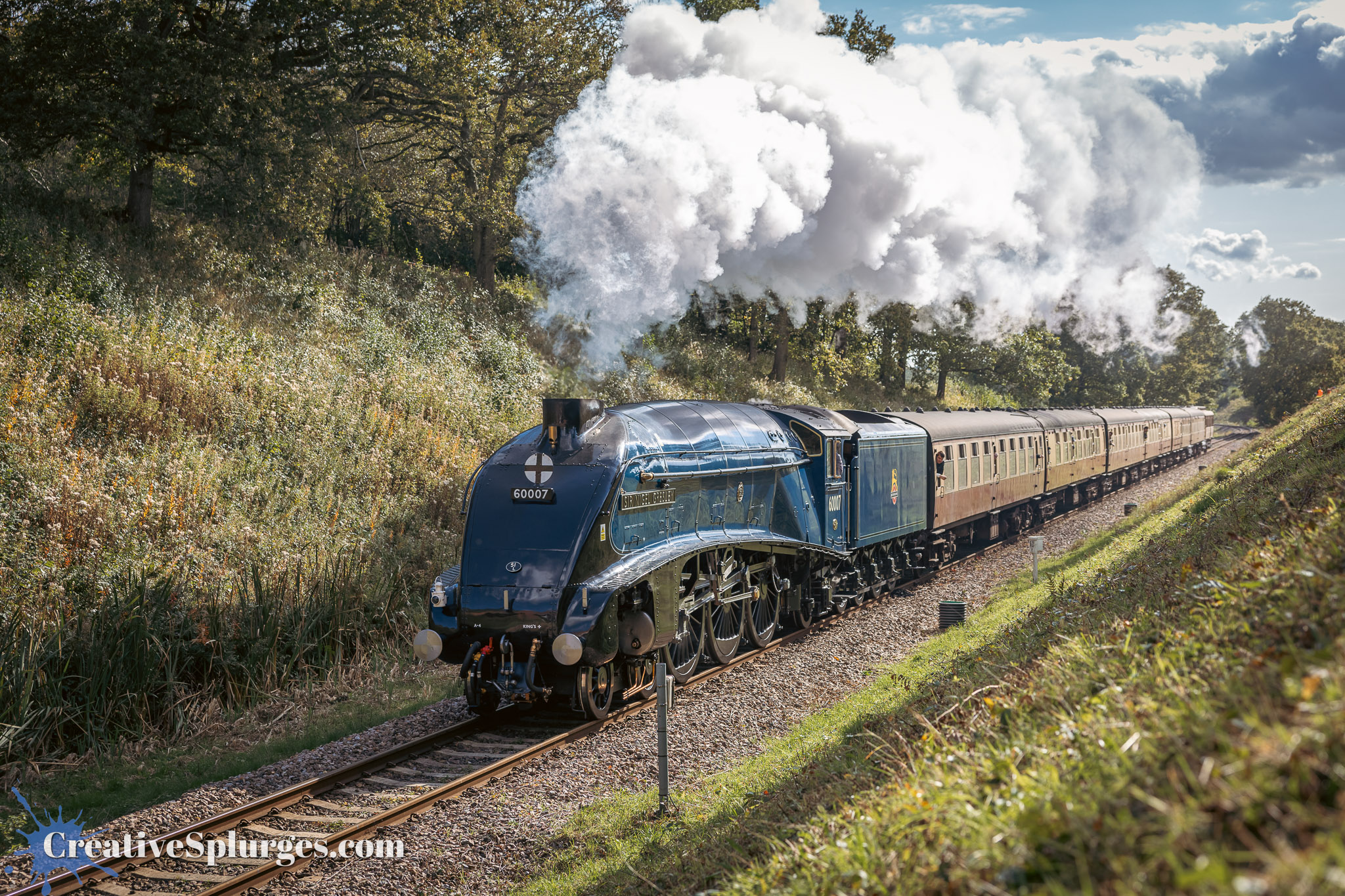
It is finally time for Giants of Steam, the heritage railway gala that, if you’ve been following my visits to the Bluebell Railway over this year, you will know I have been working towards since I secured a lineside permit in March. Giants of Steam is dedicated to the larger and arguably more impressive mainline engines – no pesky tank engines allowed. At this event four of the Bluebell’s own locomotives would be joined by the headline visitor, 60007 Sir Nigel Gresley.
Let me pause for a moment, if you’ll indulge me, to explain why I’ve been so excited to see Sir Nigel Gresley (if you’d rather not, then you can always skip all the words and go to the gallery at the end of this post, and go straight to the pictures).
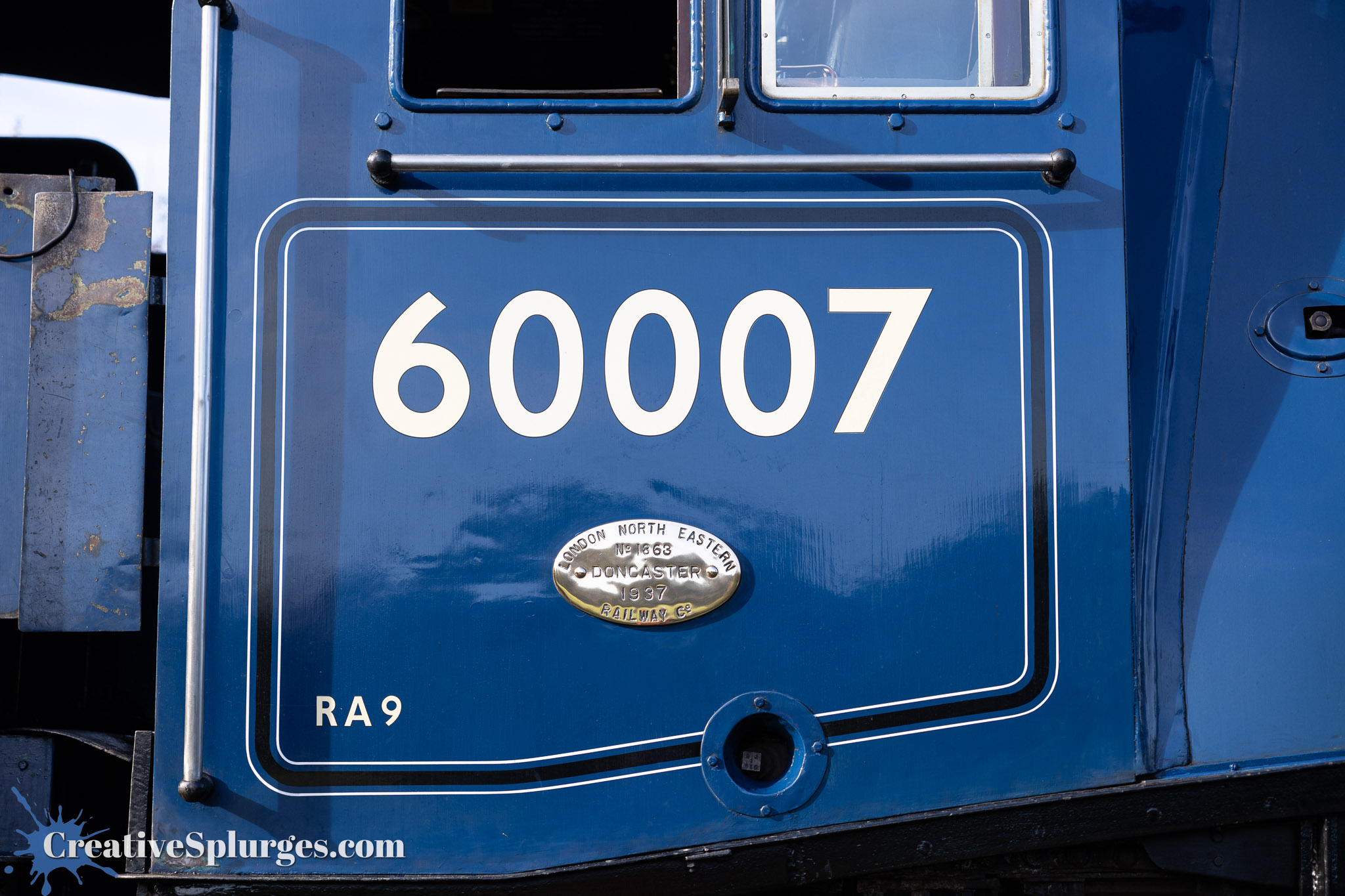
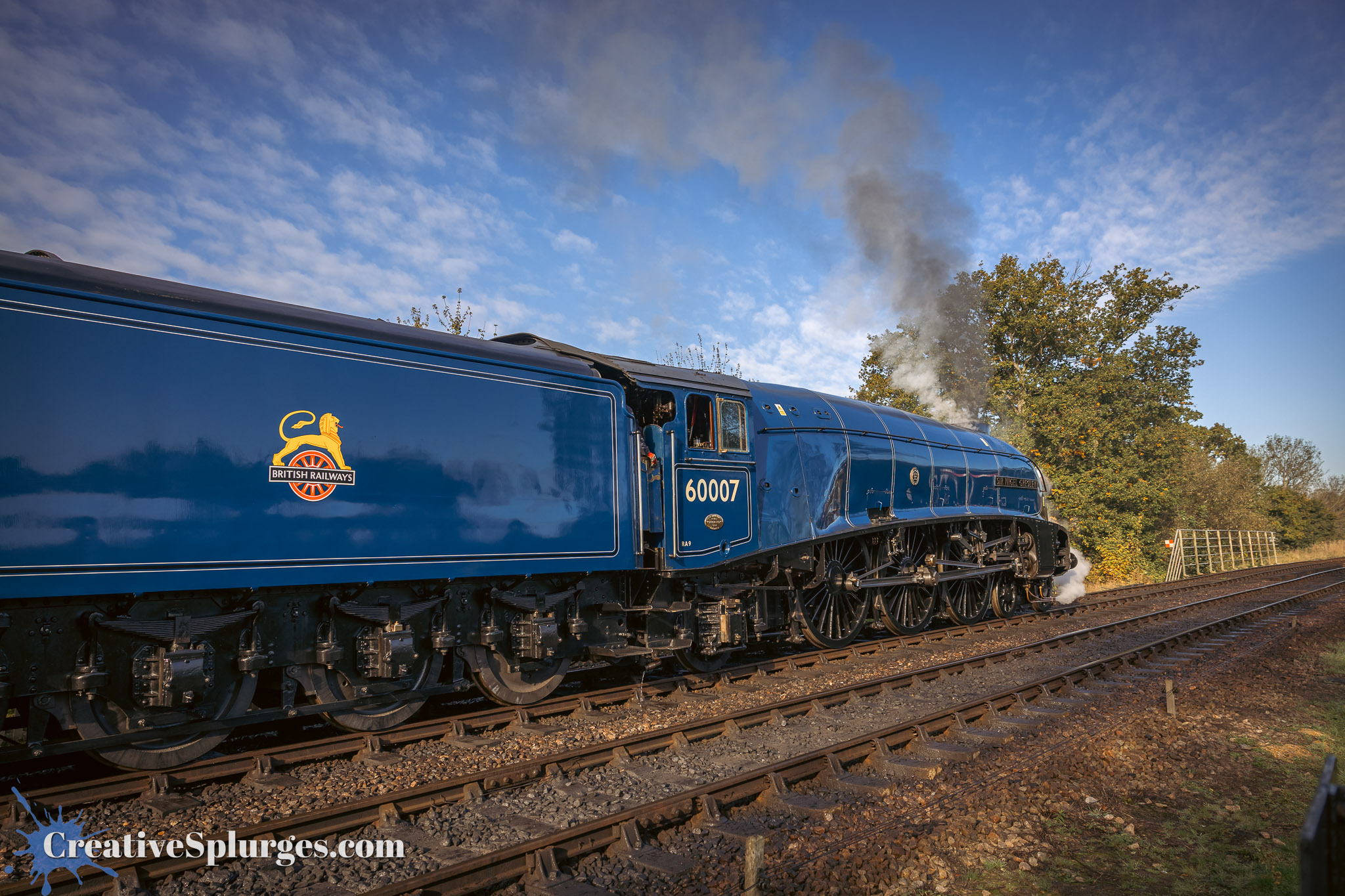
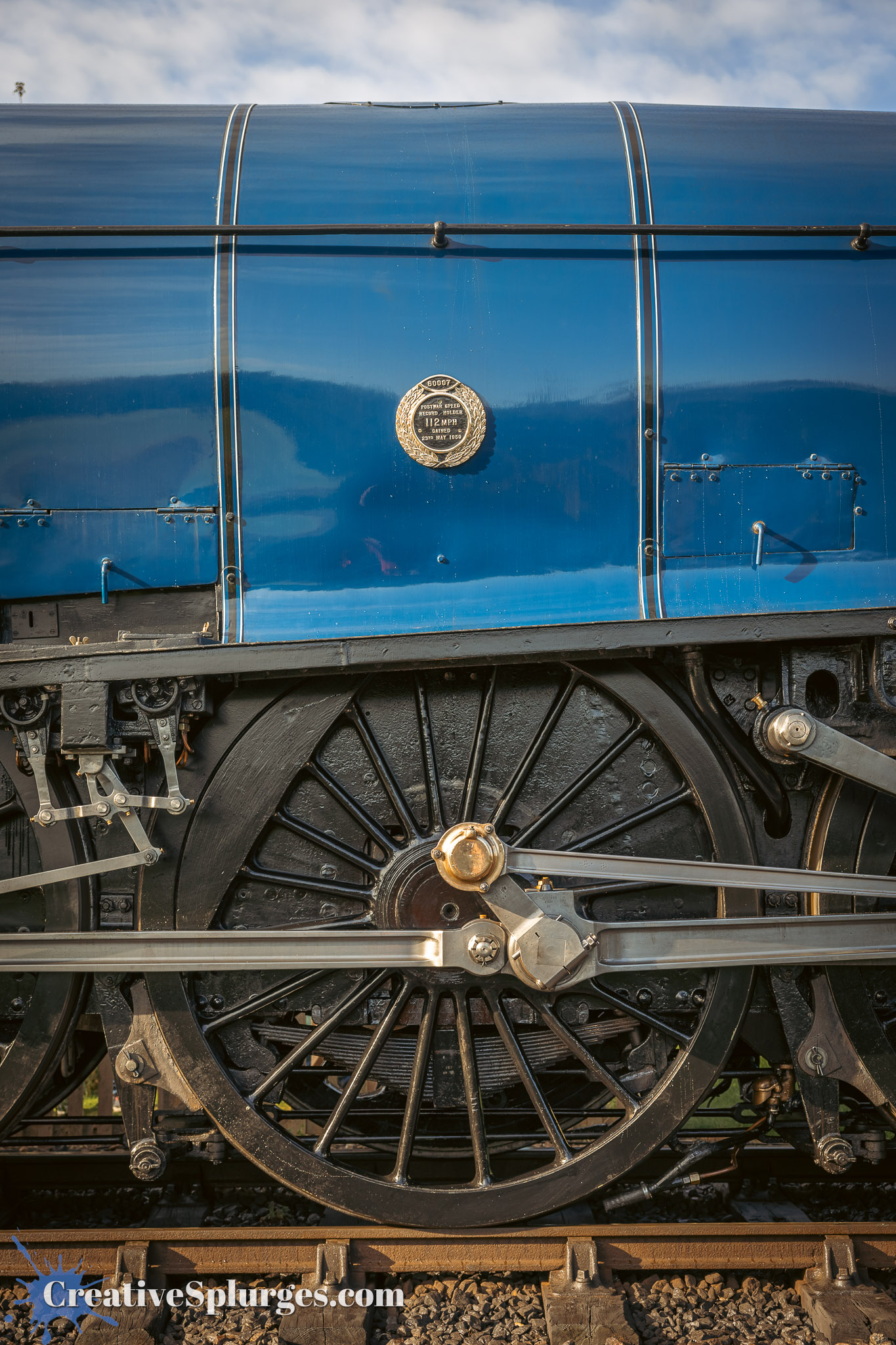
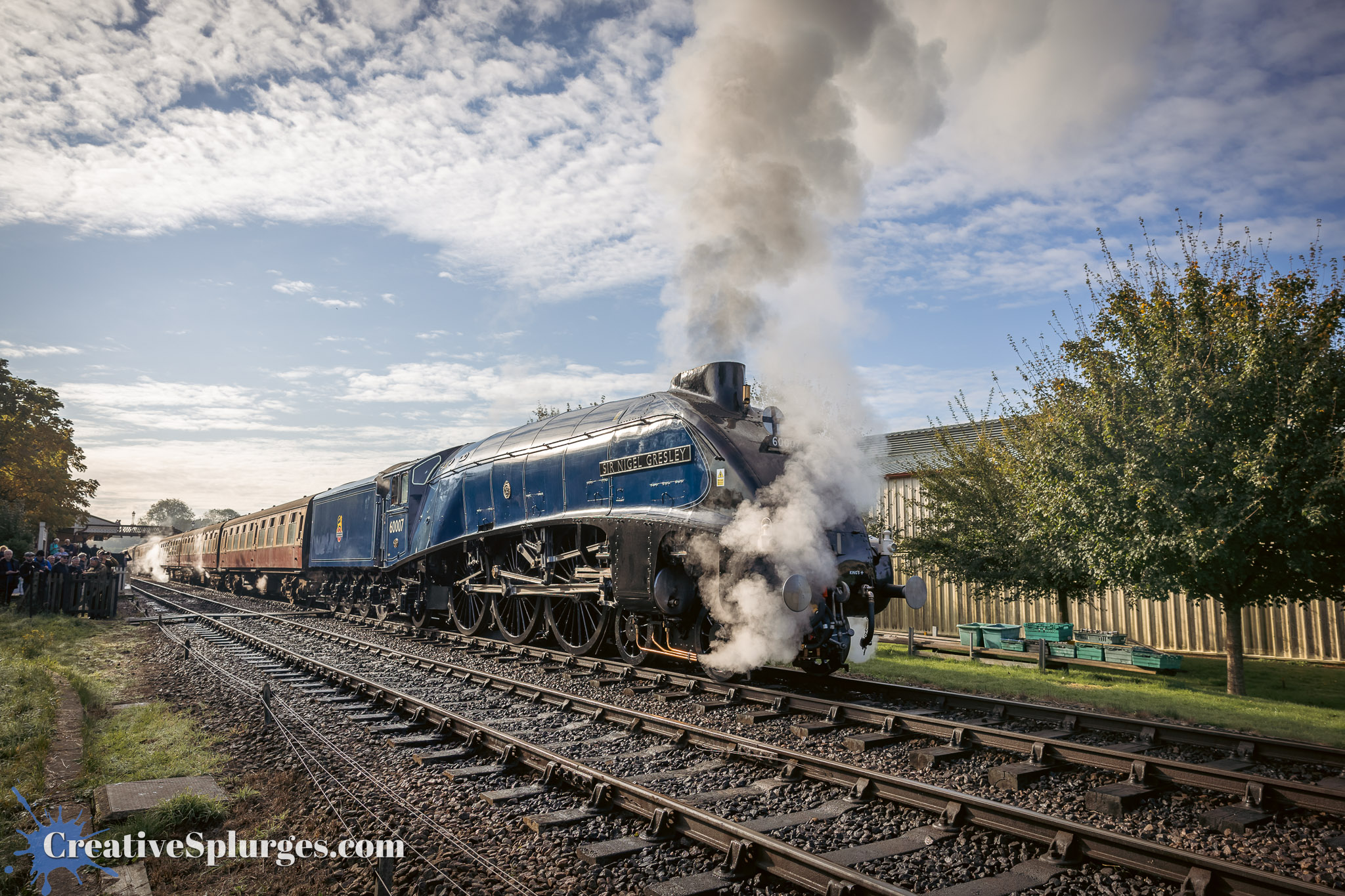
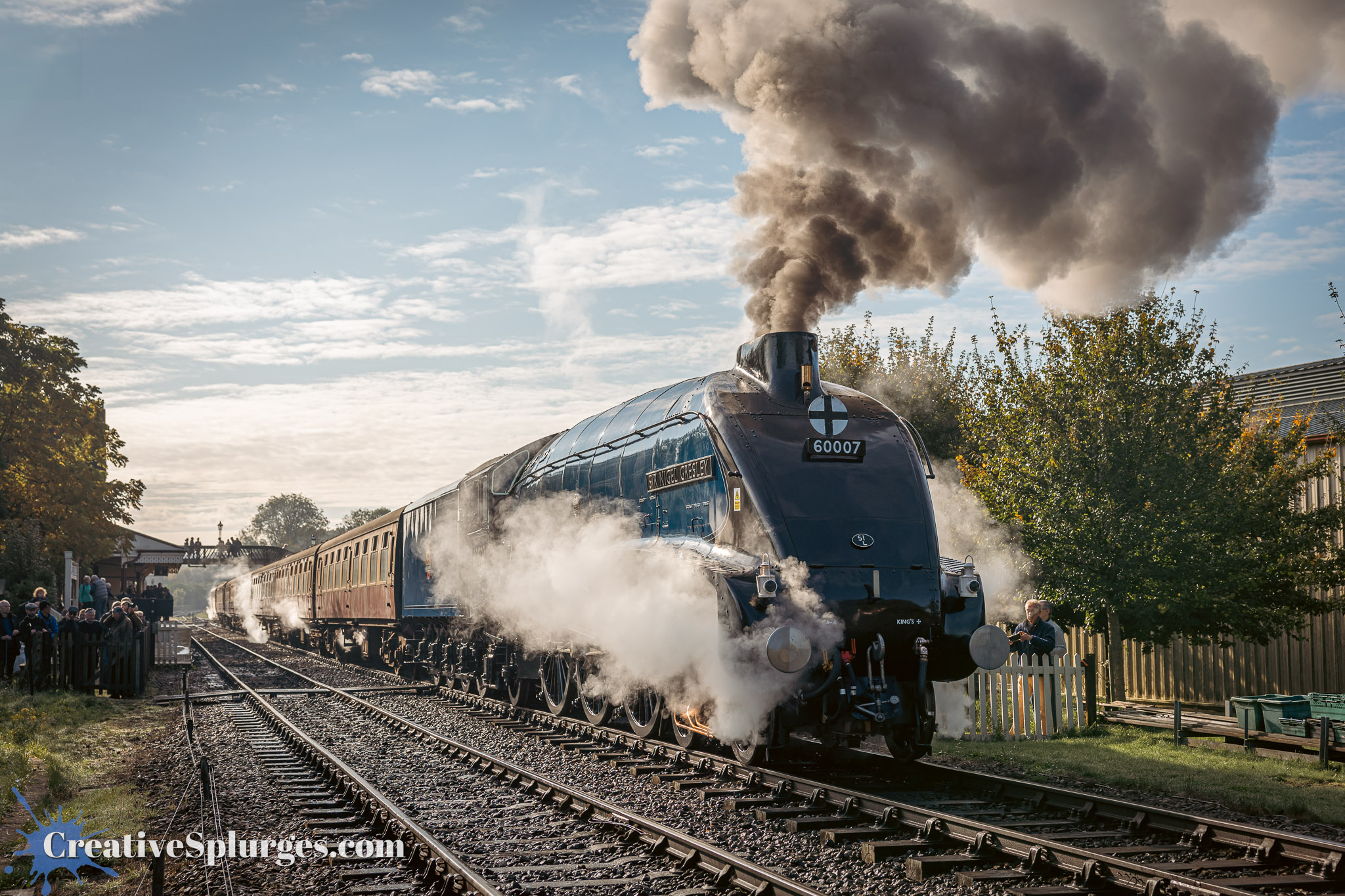
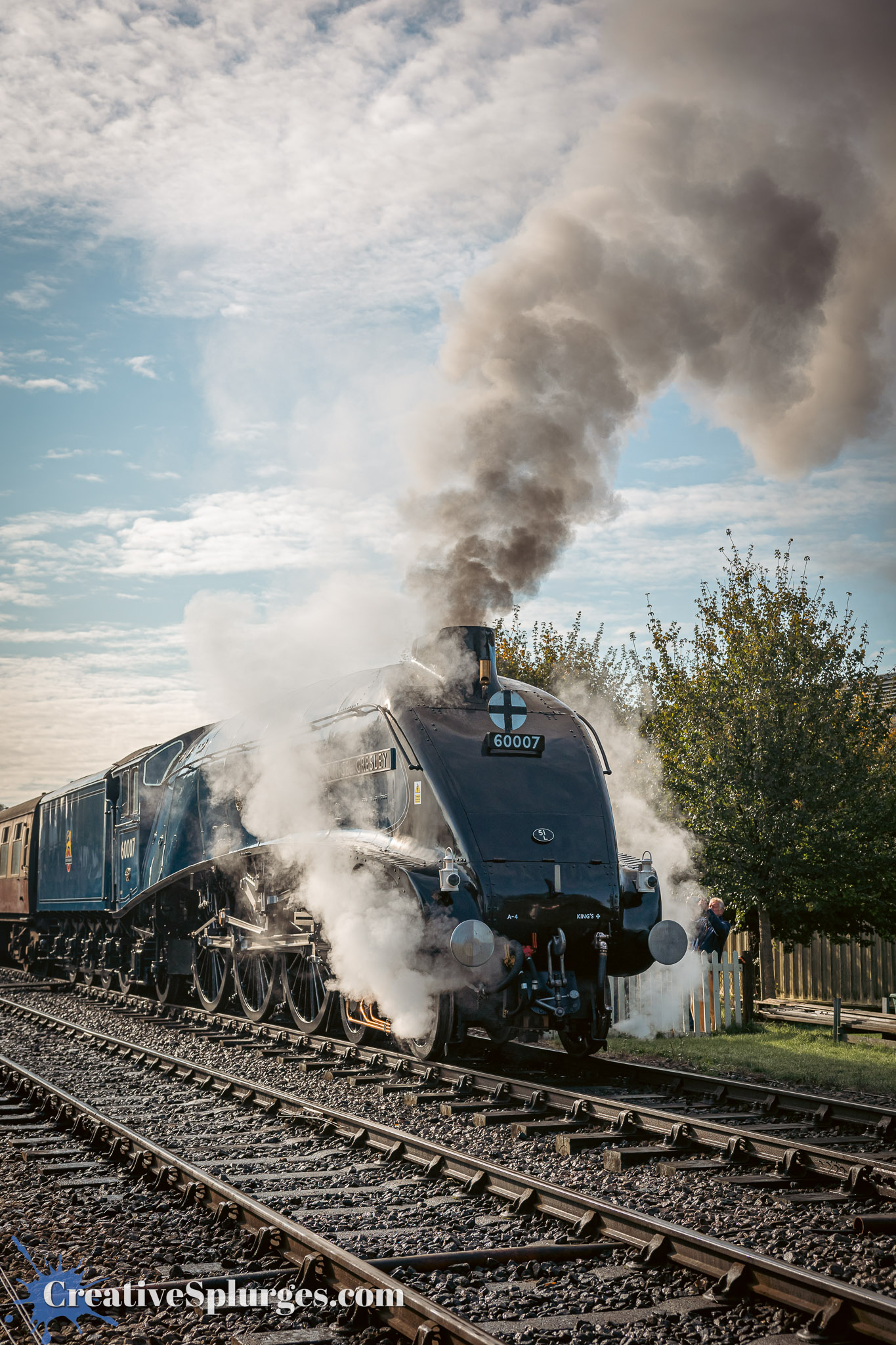
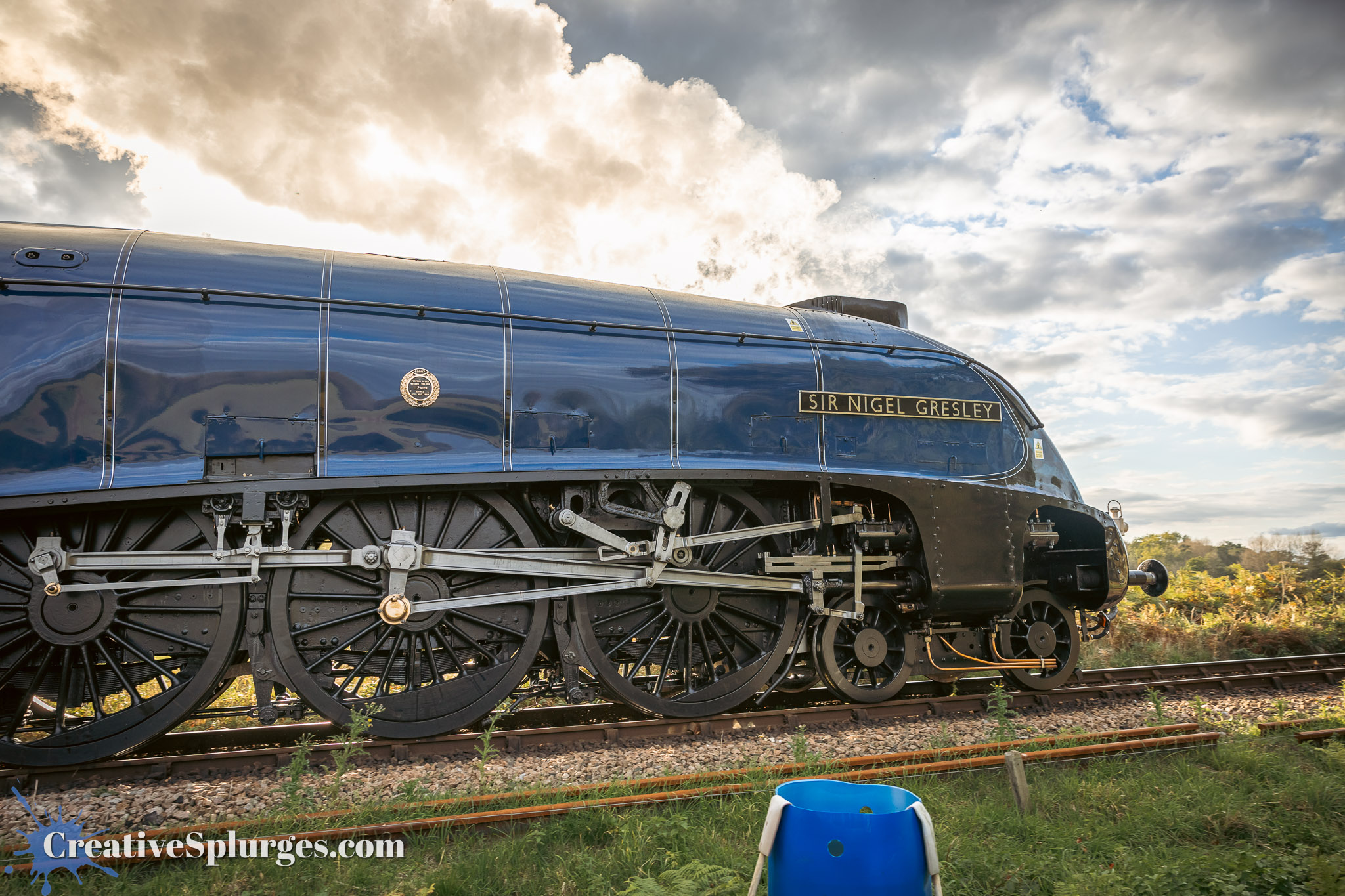
Growing up, my favourite steam train was always 60022 Mallard, partly because it was the fastest steam train of them all, but mostly because it was blue and its sleek design meant that it looked nothing like any other kind of steam train I’d ever seen. Everything else – even Flying Scotsman, perhaps the most famous steam train of them all – looked by and large pretty much the same, or at least followed the same playbook. Sir Nigel Gresley is a sister to Mallard, of the same A4 Pacific class and named after their designer. There are only six left in the world, and of those only Sir Nigel is currently still operational and not on static display (although another, 60019 Bittern, is due to start an overhaul this year). With Mallard being on display at the National Railway Museum up in York, I’ve never had a chance to even see one of these locomotives, let alone one in action.
Which brings us to last weekend, and Giants of Steam. I would have a select number of opportunities to see and photograph Sir Nigel Gresley during the event and I wanted to take everything I’d learned over my visits to the Bluebell Railway this year to make sure I made the most of each of those opportunities. To that end I planned to spend the whole of the Friday and Saturday of the three-day event trackside.
This turned out to be a great call, because the weather on Friday was damned near perfect.
I started out at Sheffield Park. Going in, the one photograph I knew I wanted to try to get was a repeat of a photograph I got of a different engine back in May, so I figured I owed it to myself to try that first – and the morning light was lined up just right for it. It would also give me the opportunity to photograph Sir Nigel whist it was static at the station before it set off, rather than only getting fleeting shots of it steaming past.
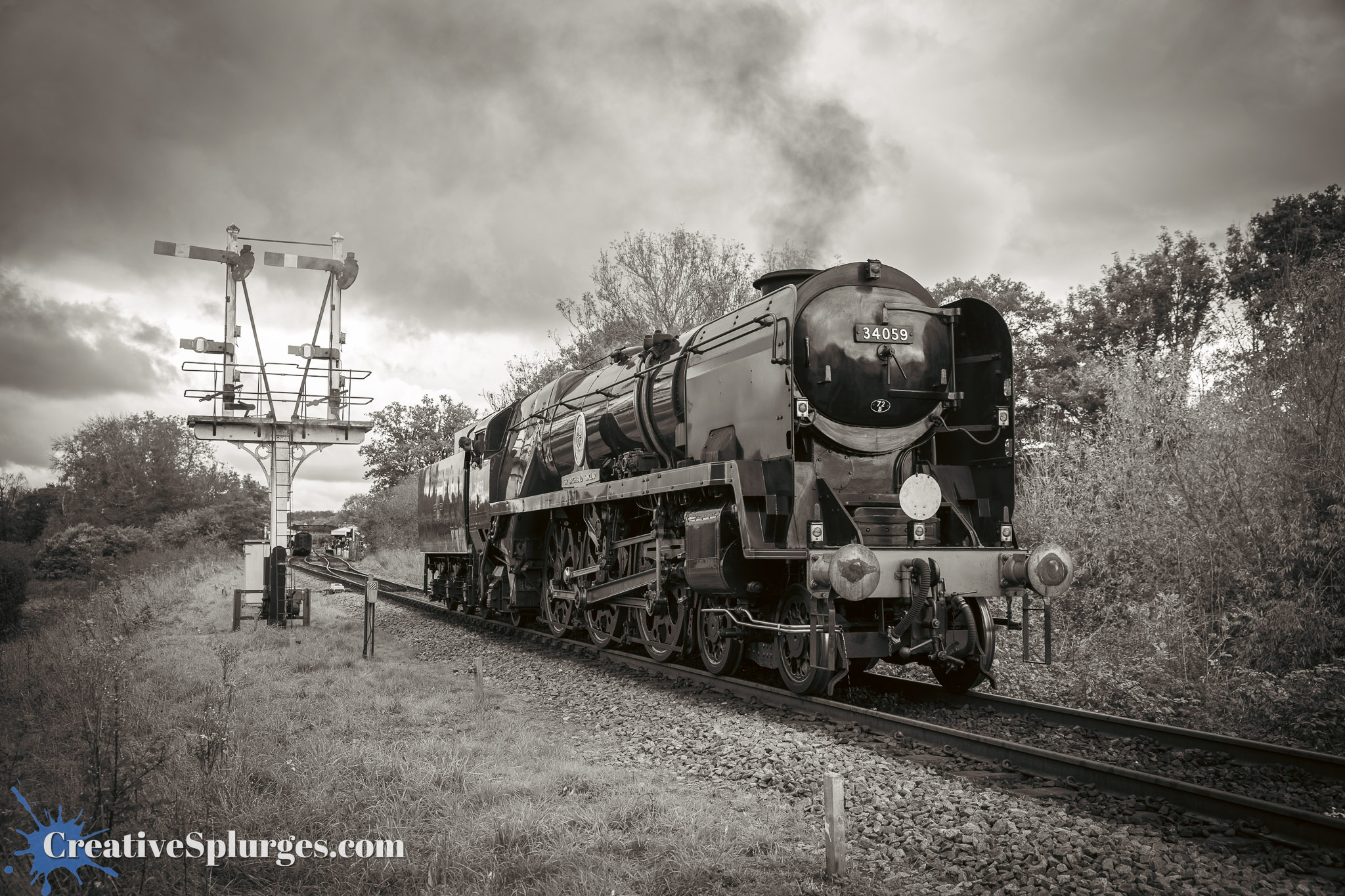
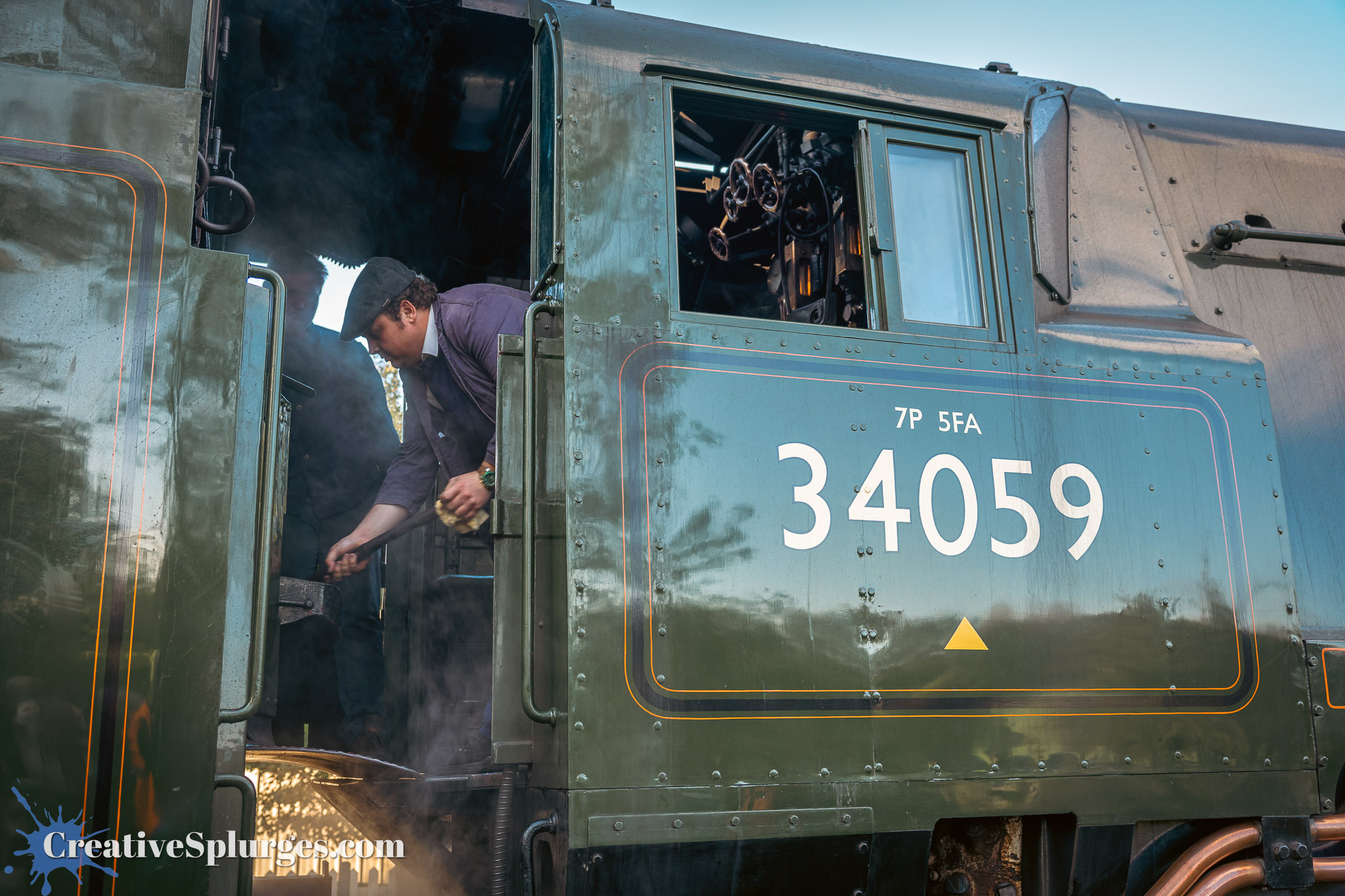
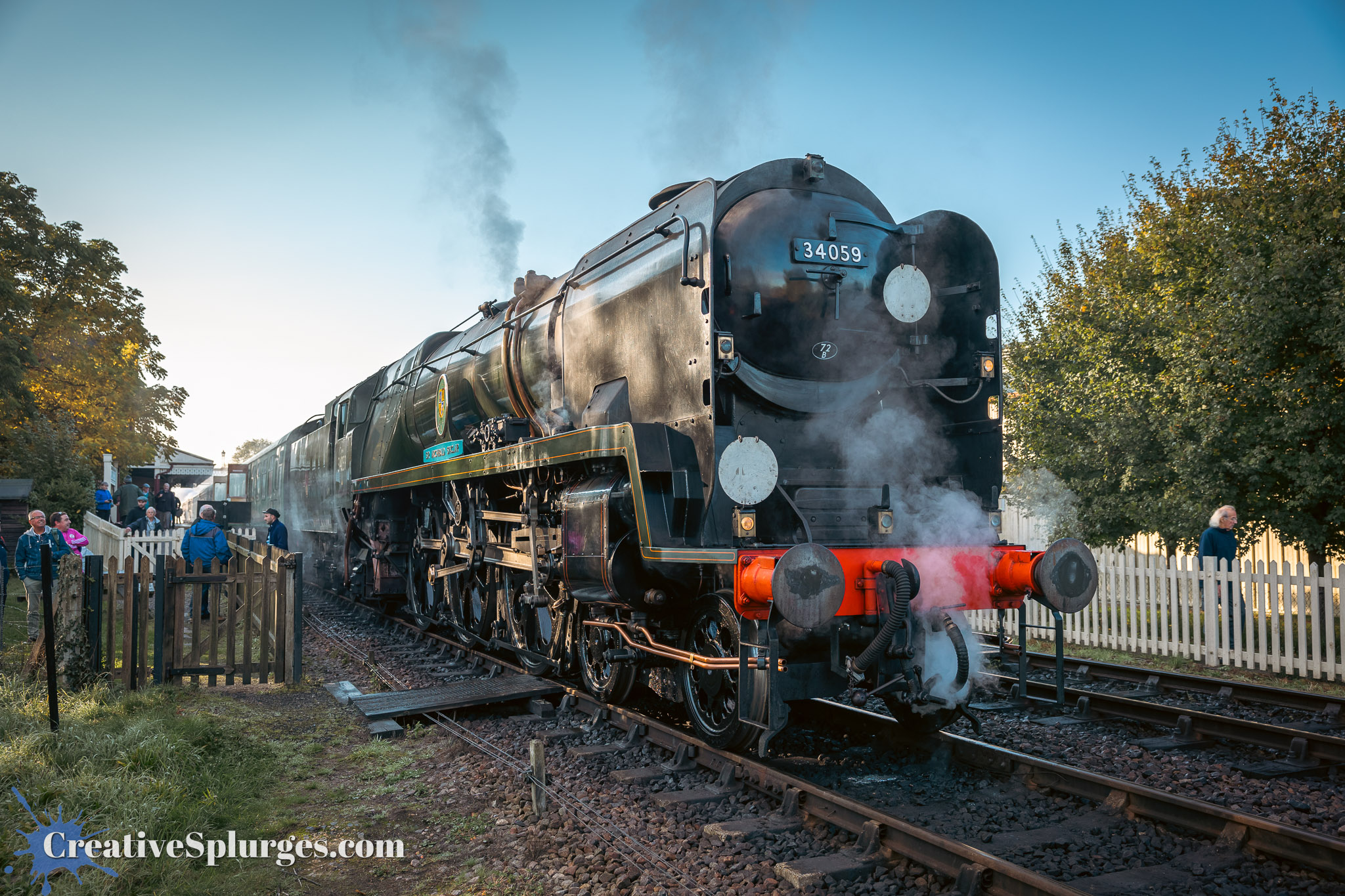
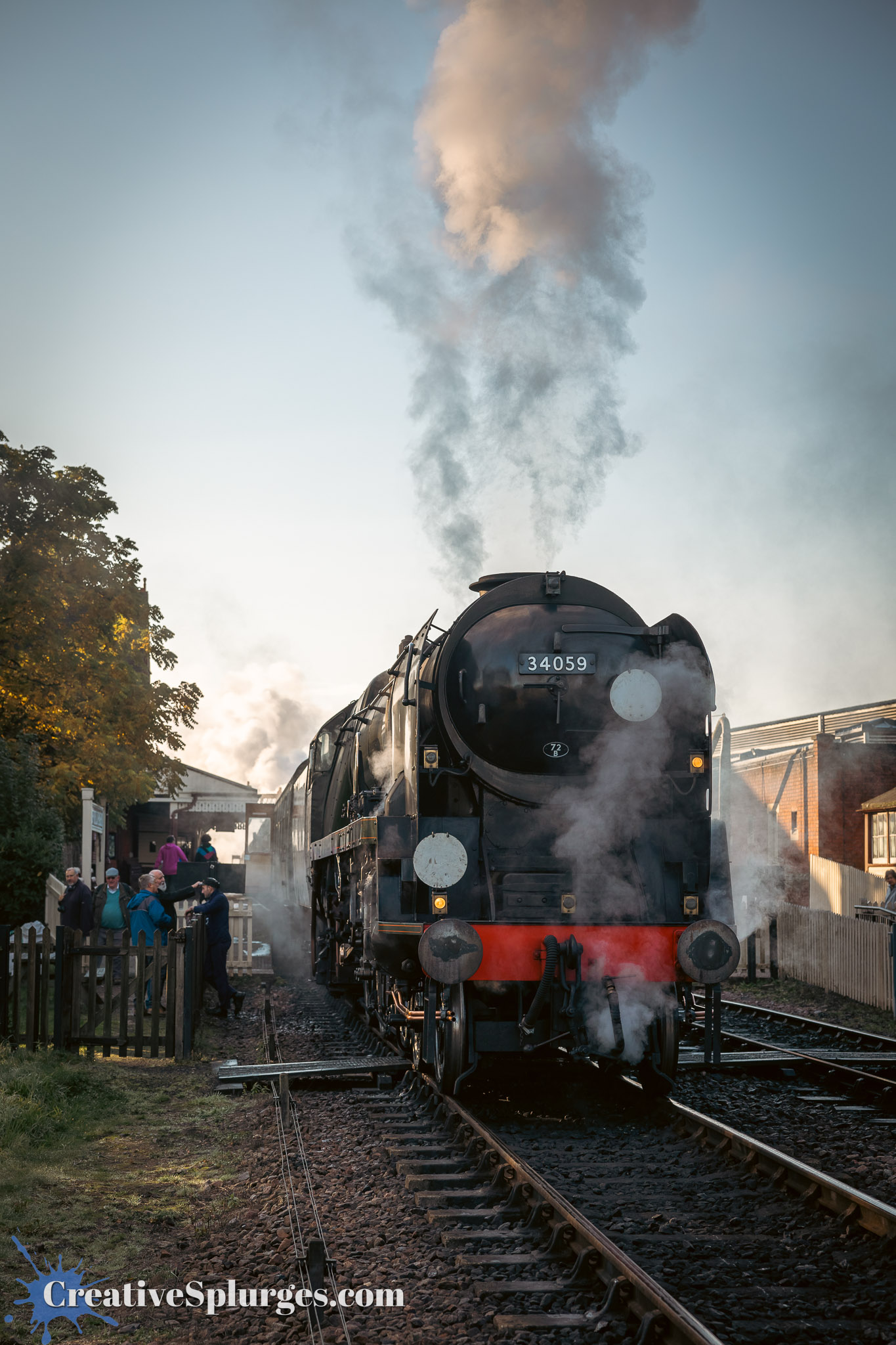
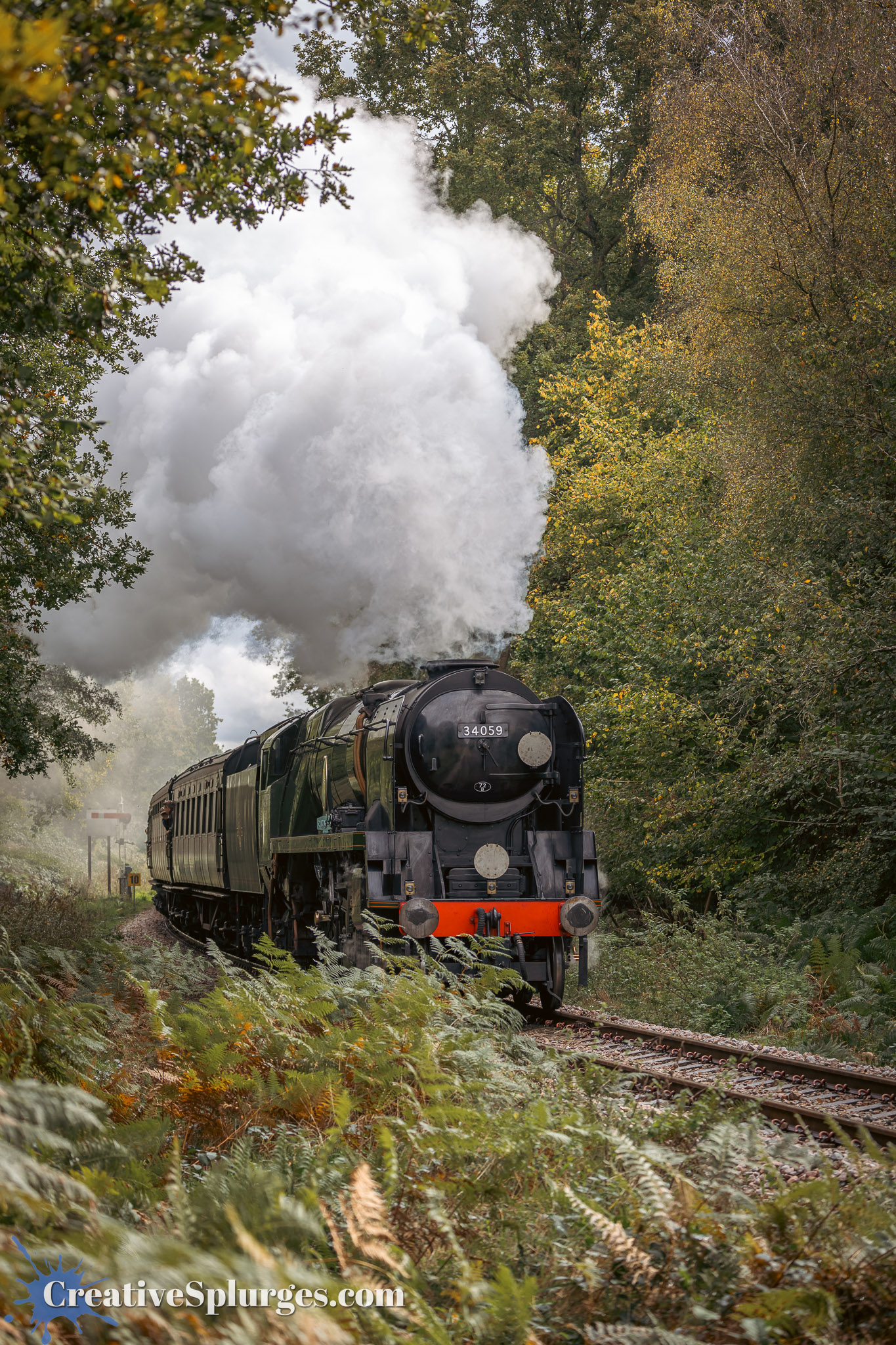
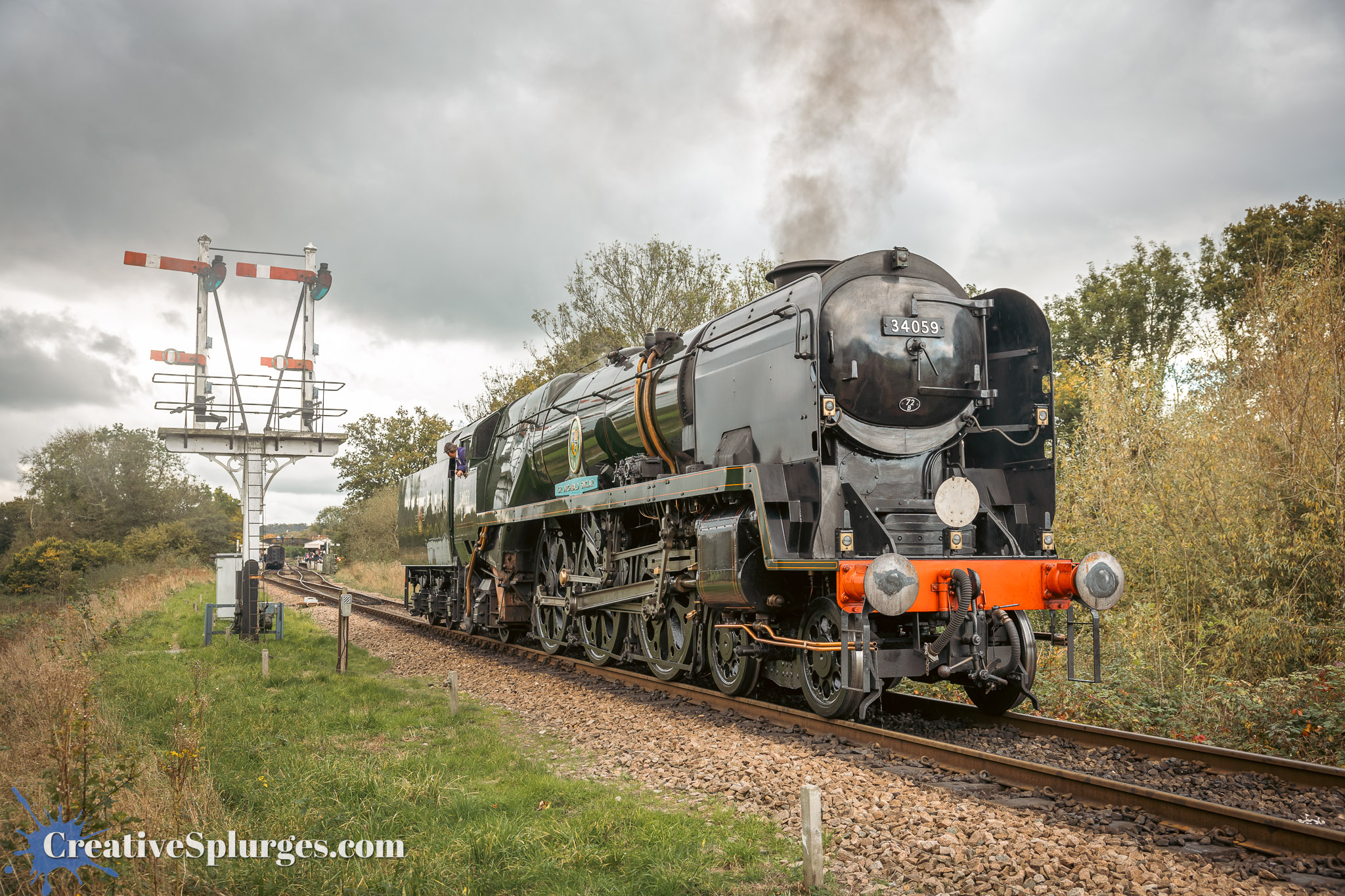
That would still be to come, however. Sir Nigel would be the third service of the day. The first was 34059 Sir Archibald Sinclair, who was looking resplendent in the golden morning light.

As Sir Archie began to build up steam I made my way across Ouse Bridge.
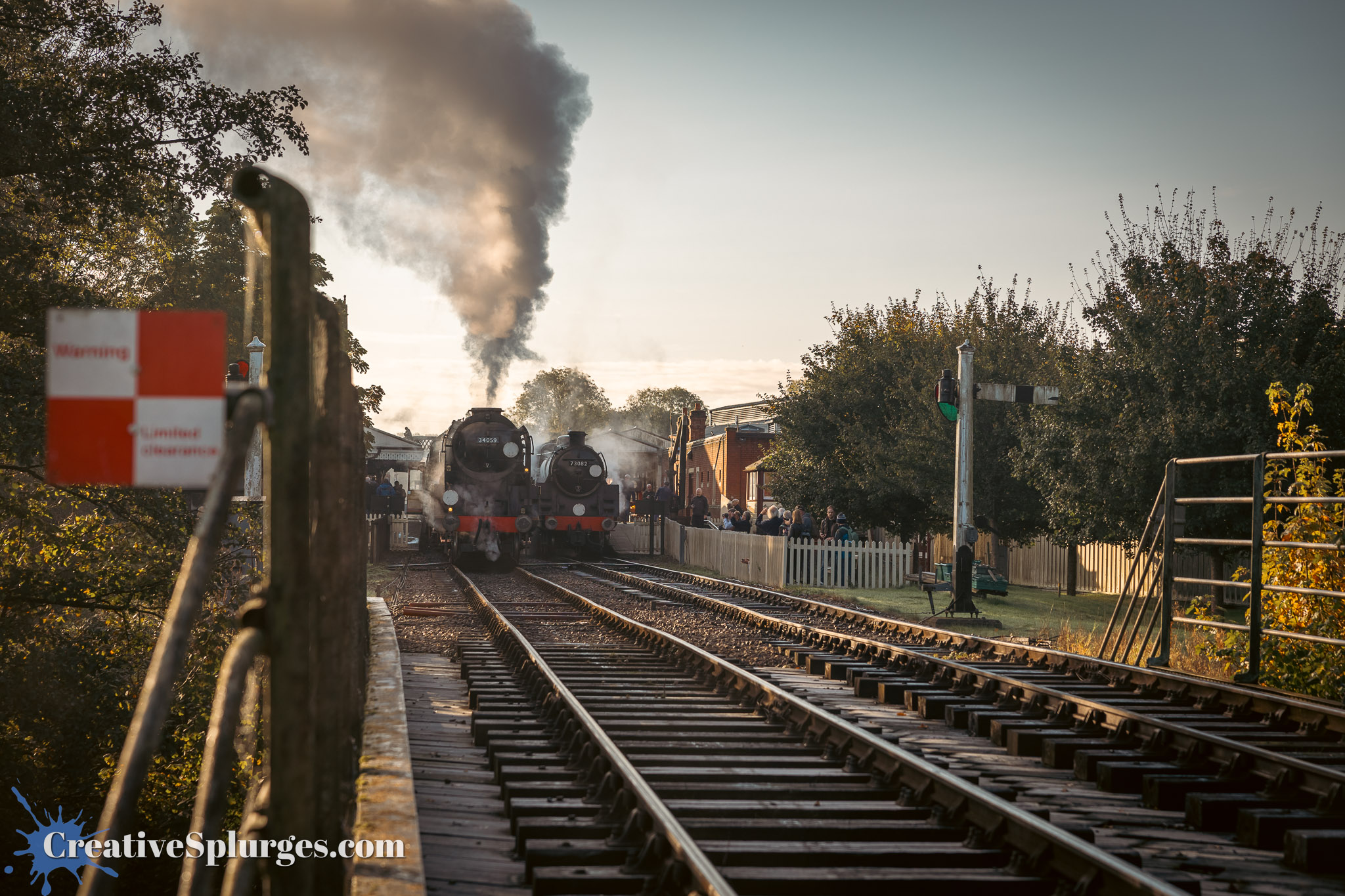
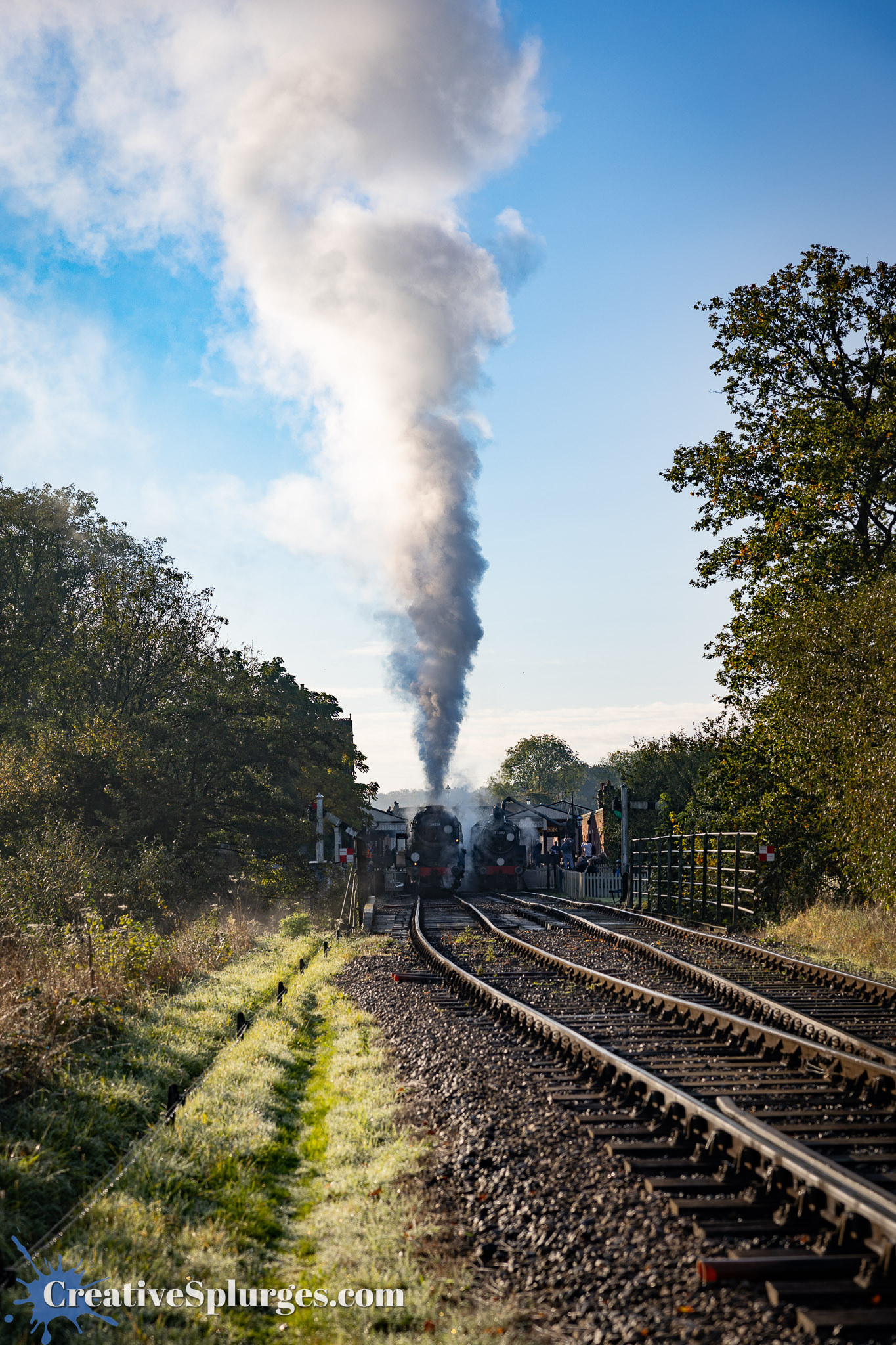
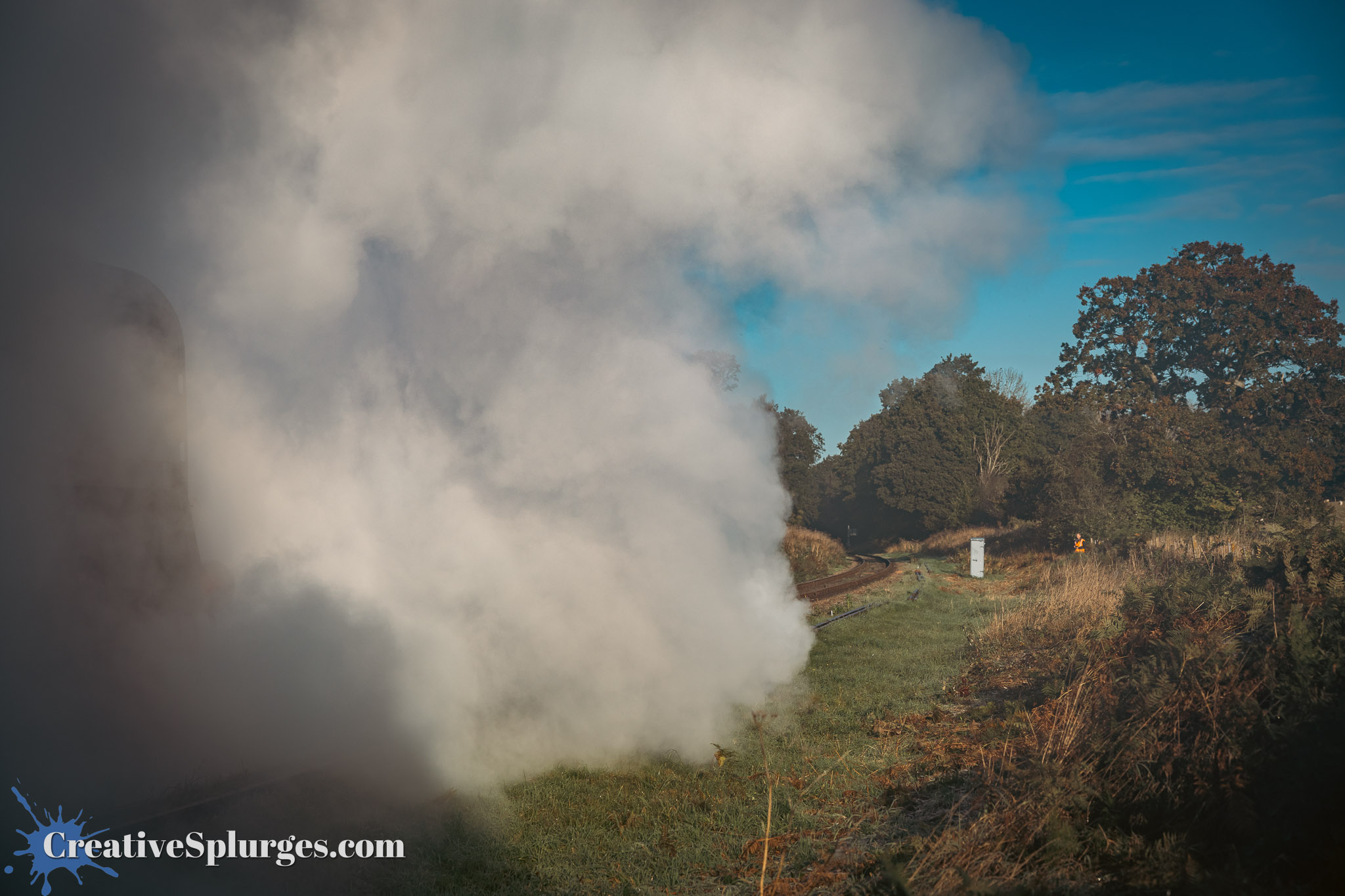
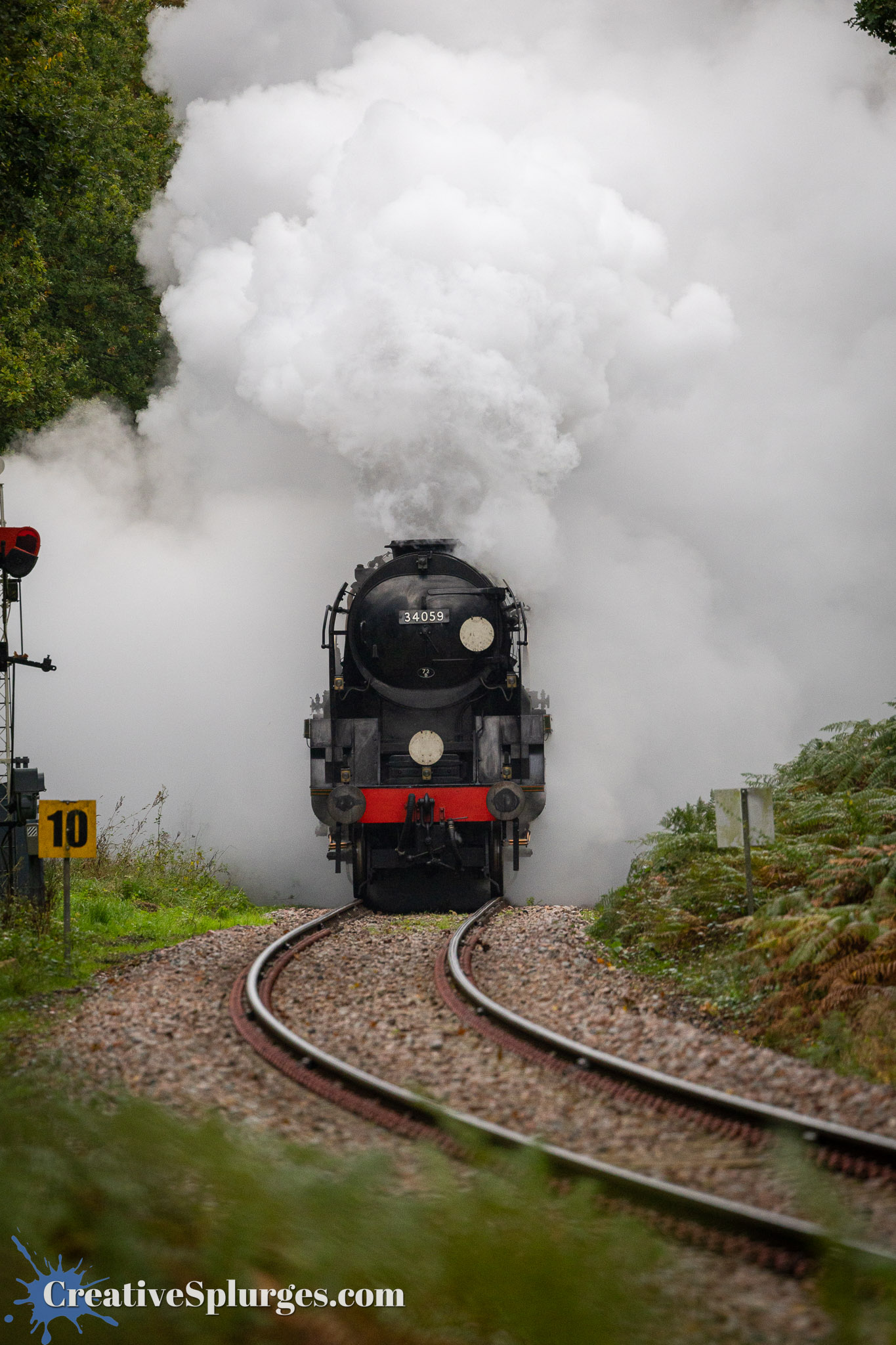
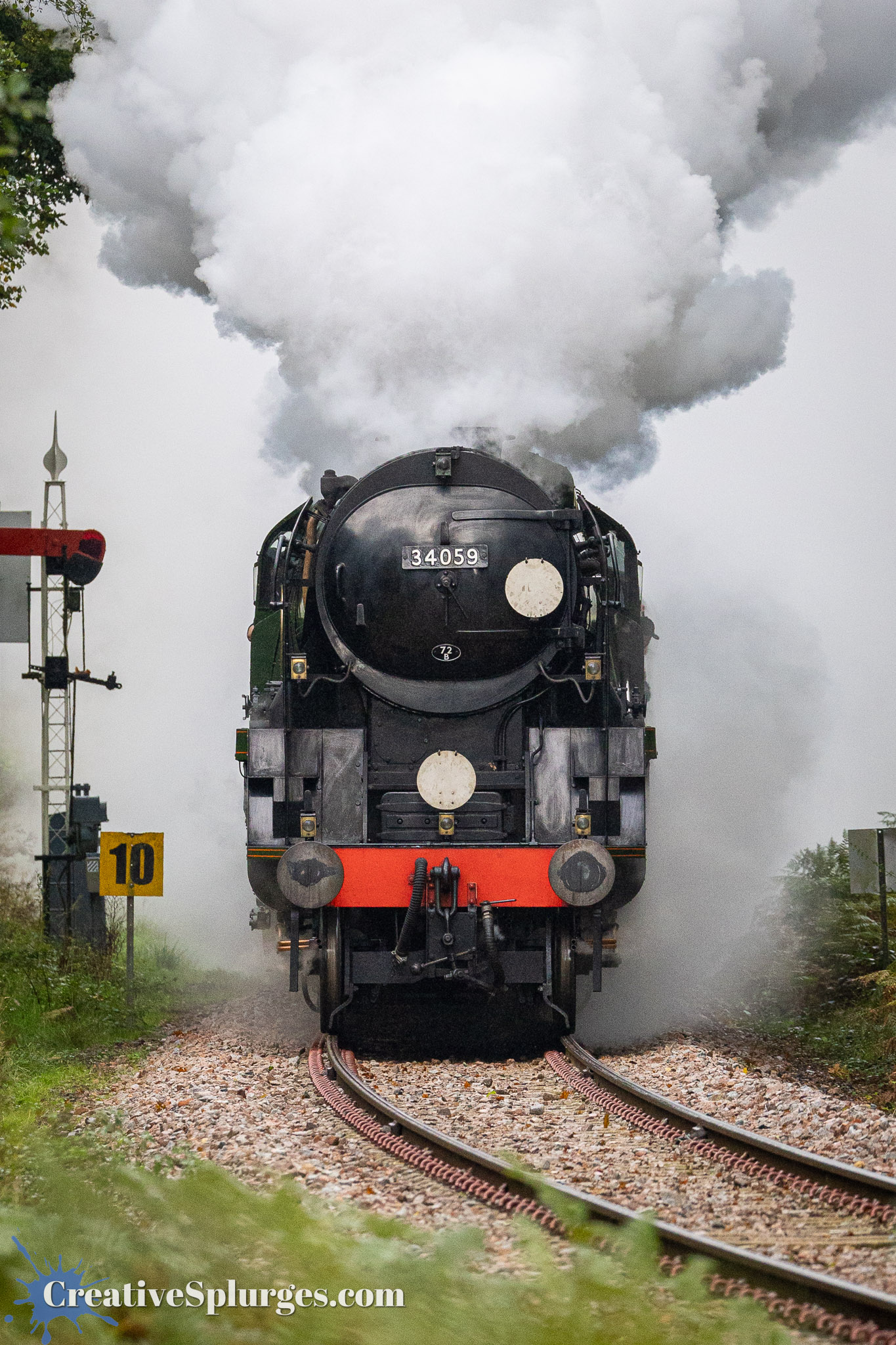
I made my way to my planned spot ready for Sir Archie to set off, a spot I intended to use for Sir Nigel Gresley a little while later. Presently Sir Archie was underway. It had a very steamy start, and as it rounded the corner towards me it was just a column of steam and smoke. For a brief moment it poked out from the steam.
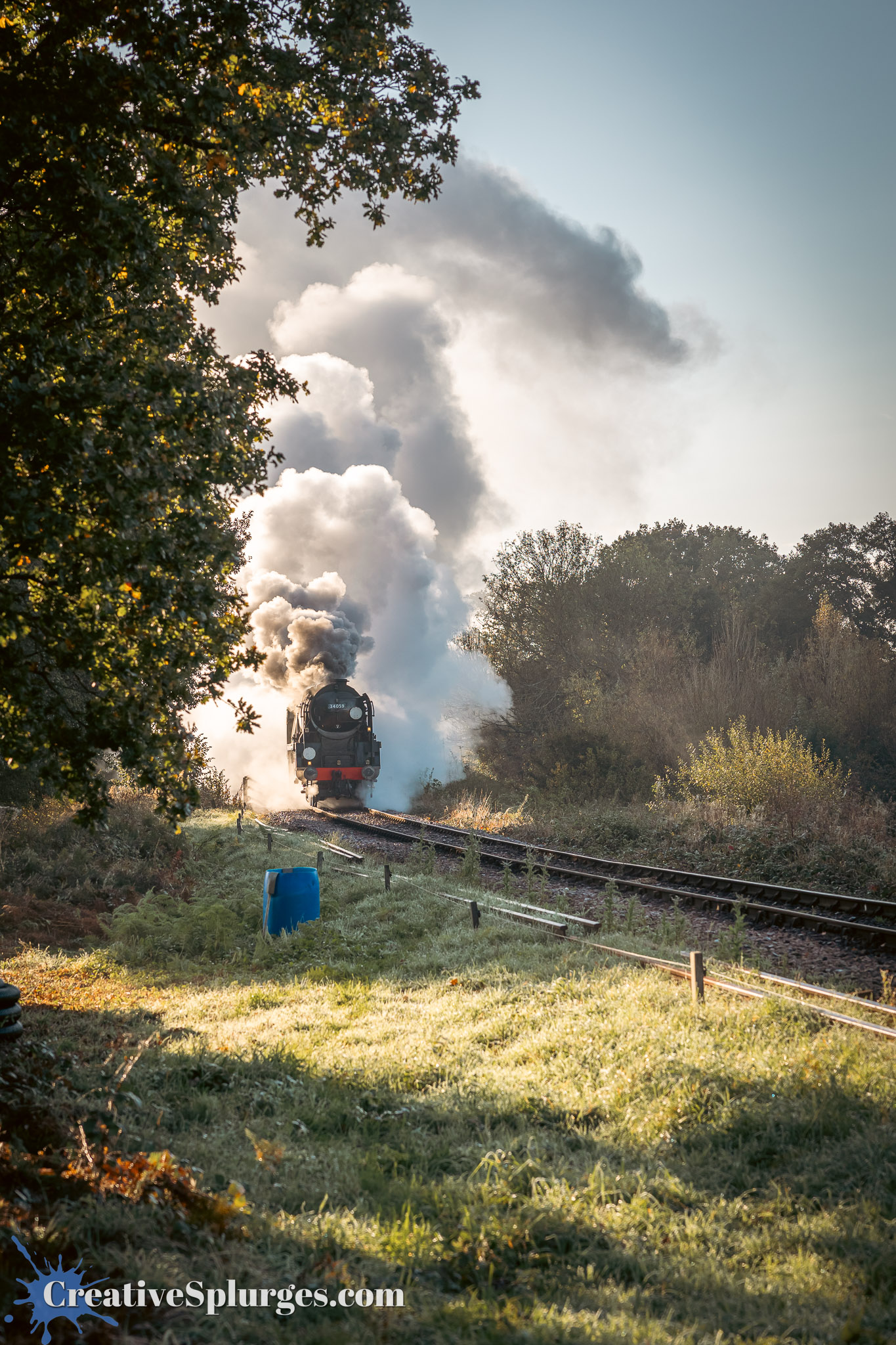
But soon it was letting off another burst of steam from its front pipes (which I’m sure have a technical name, but I’ve not been able to find it out), which made for a dramatic photo, although I’d have very much preferred for it to have happened closer.
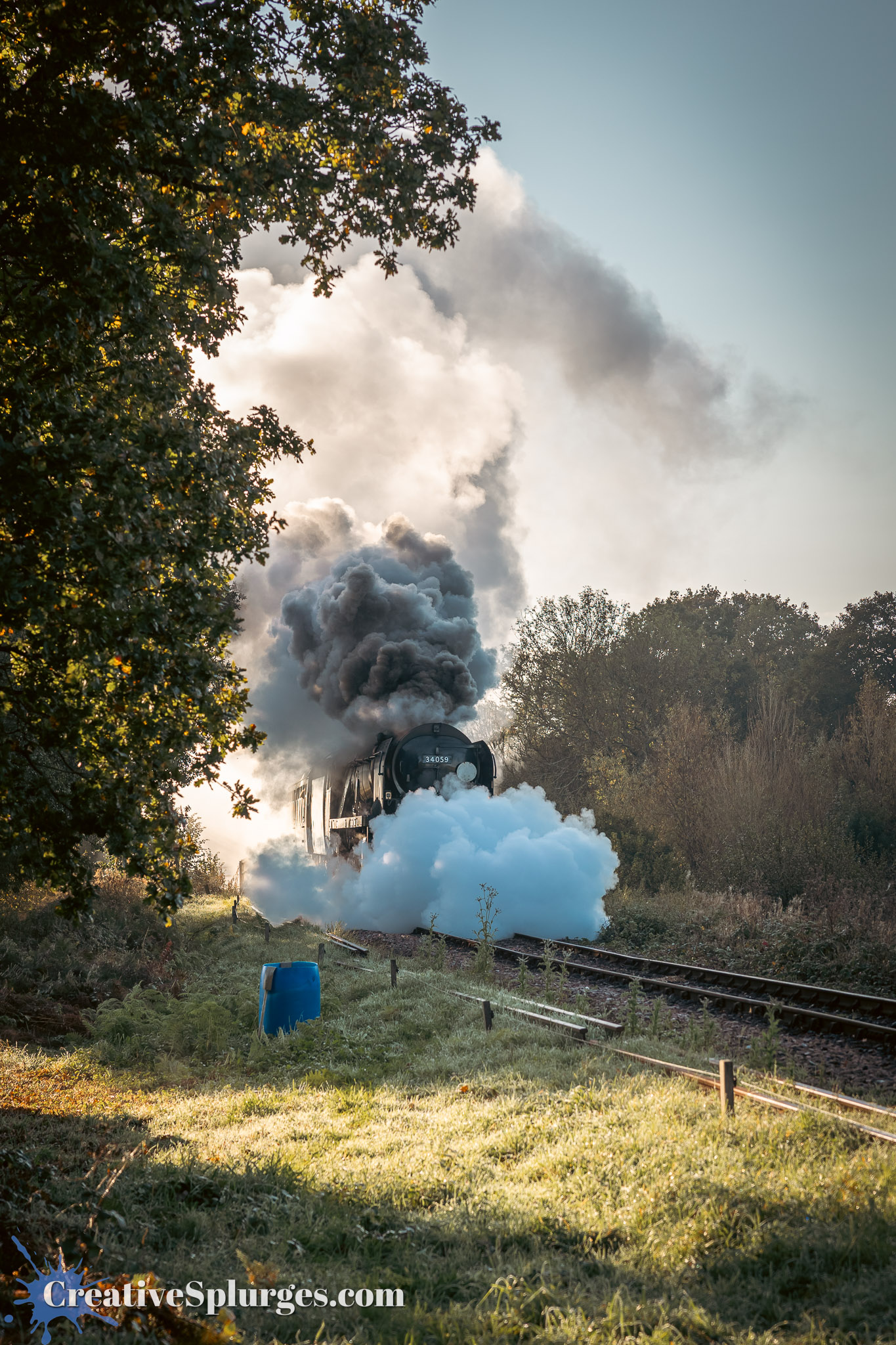
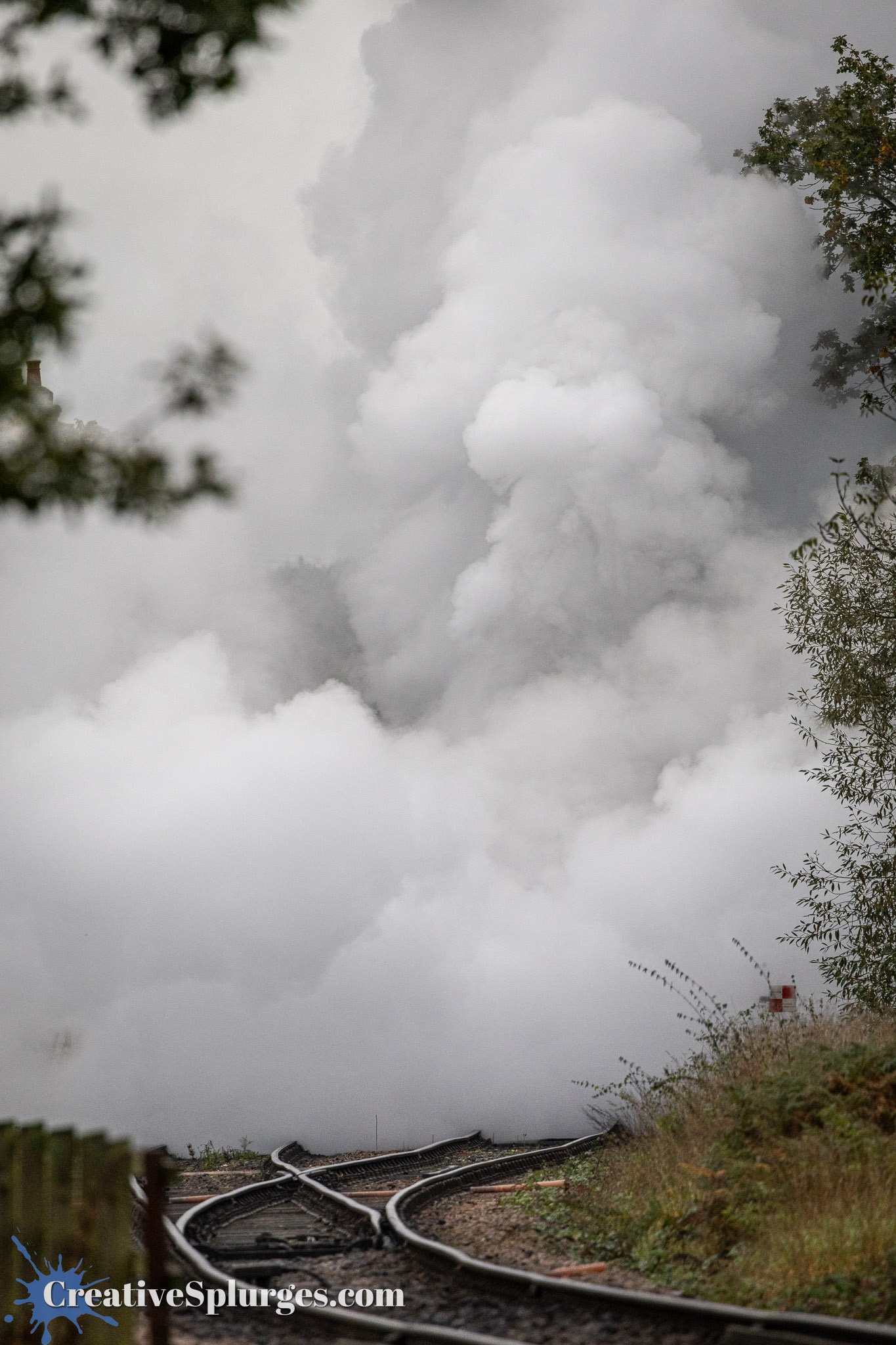
And when it went past the spot I was waiting for – and that I had the right lens for, frankly – it was nothing but a cloud.

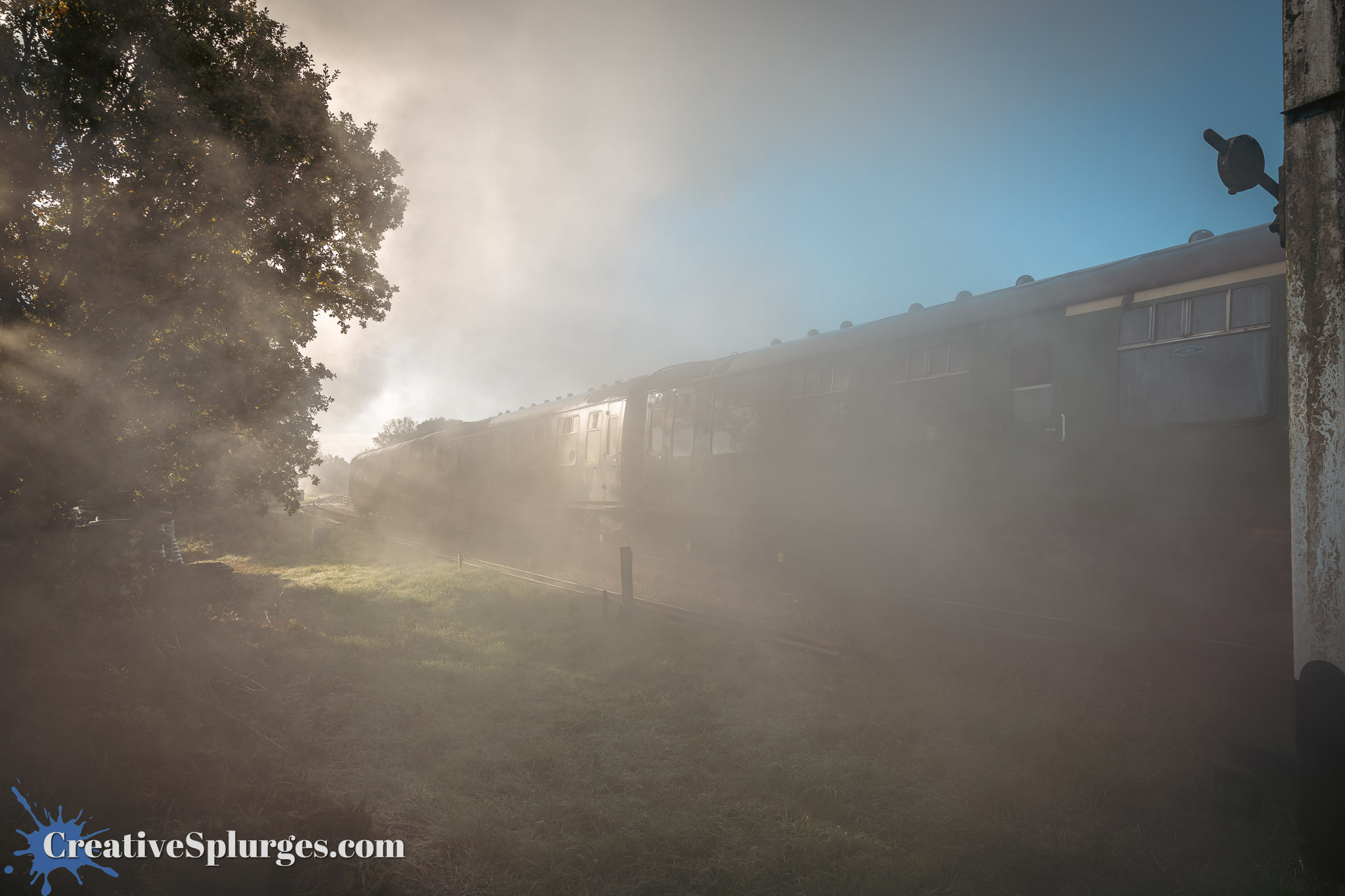
It was a bit disappointing, although the images were a bit dramatic, and as the smoke and steam cleared the carriages making up the train caught the light nicely.
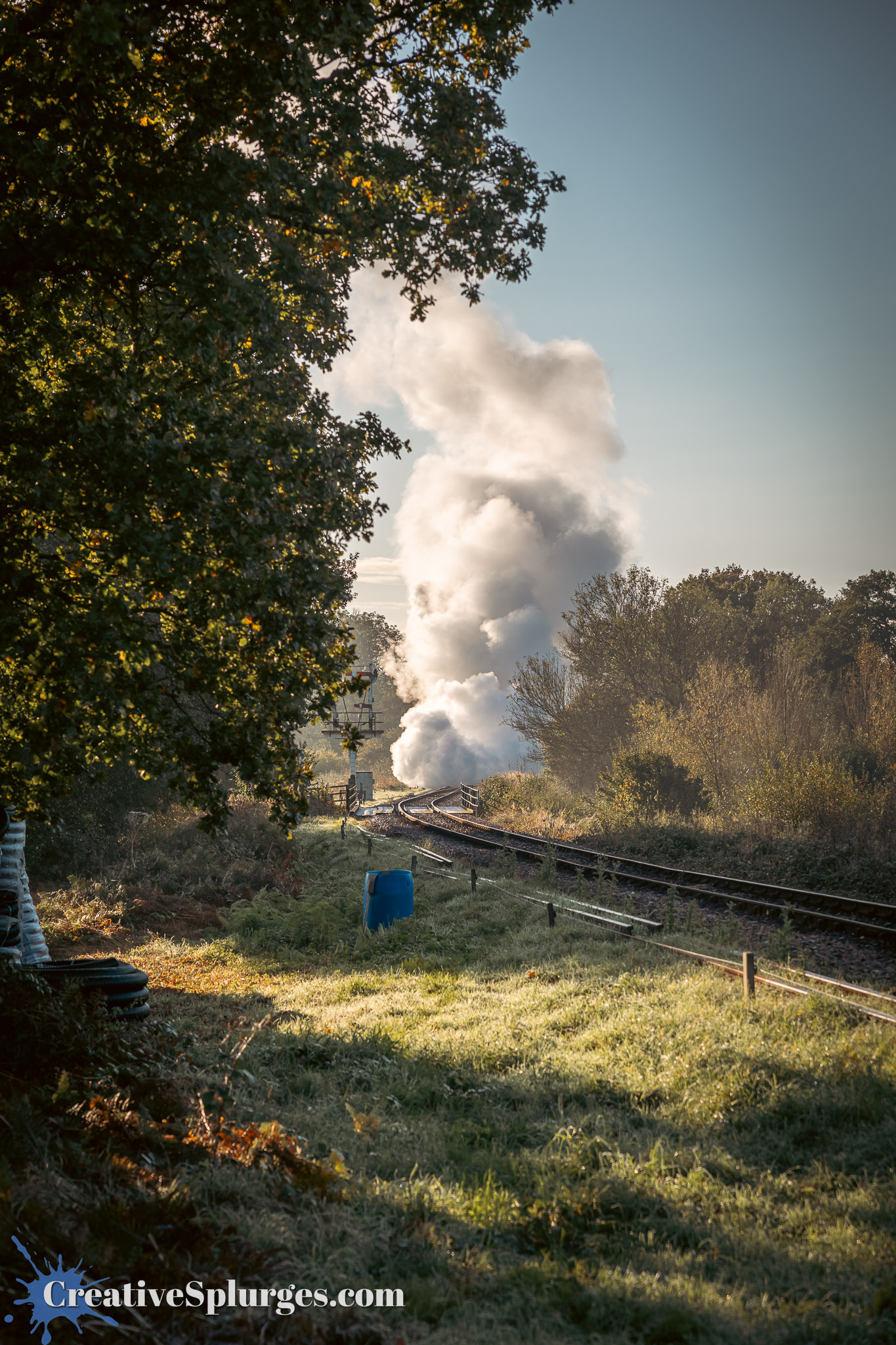
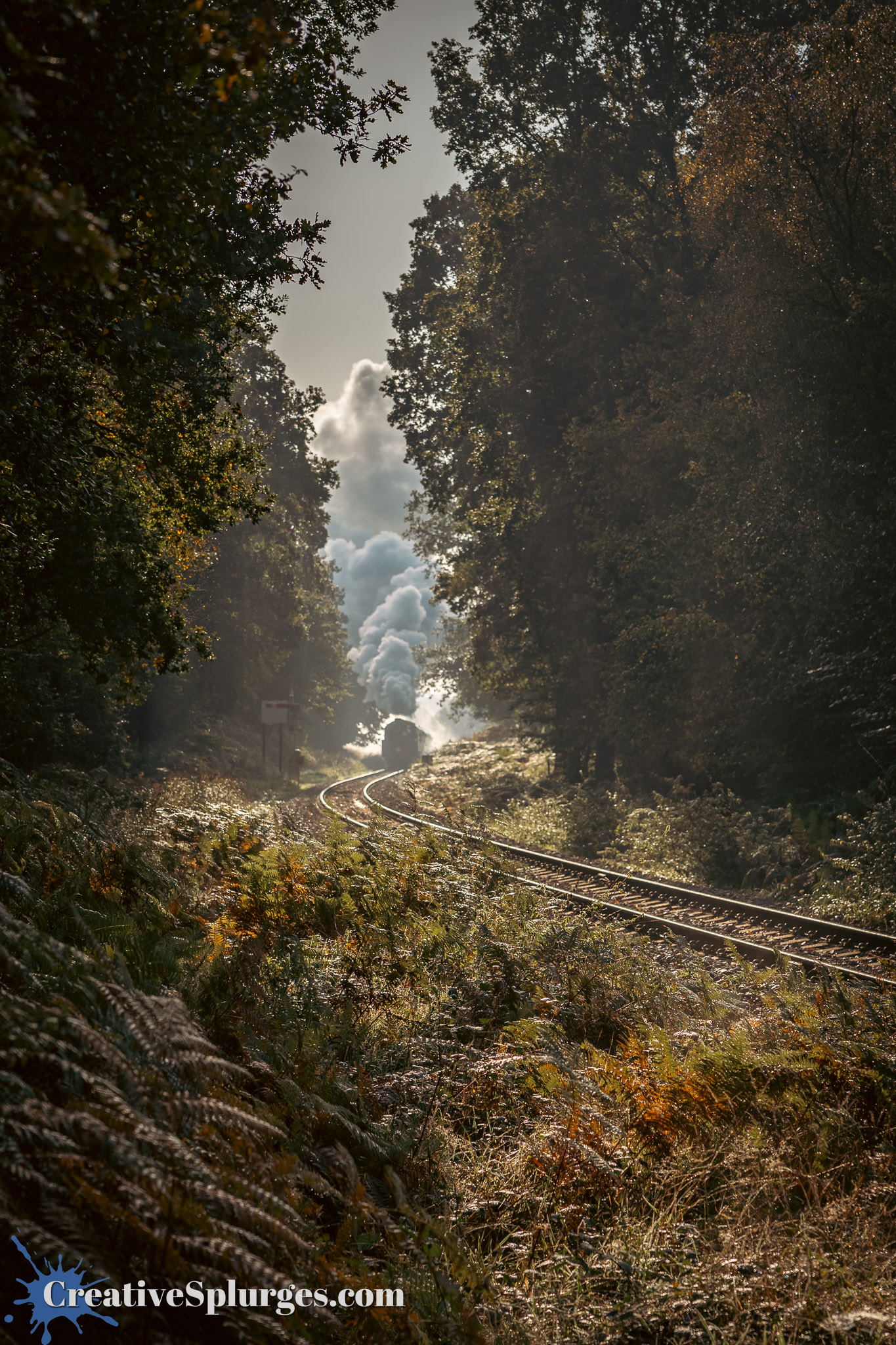
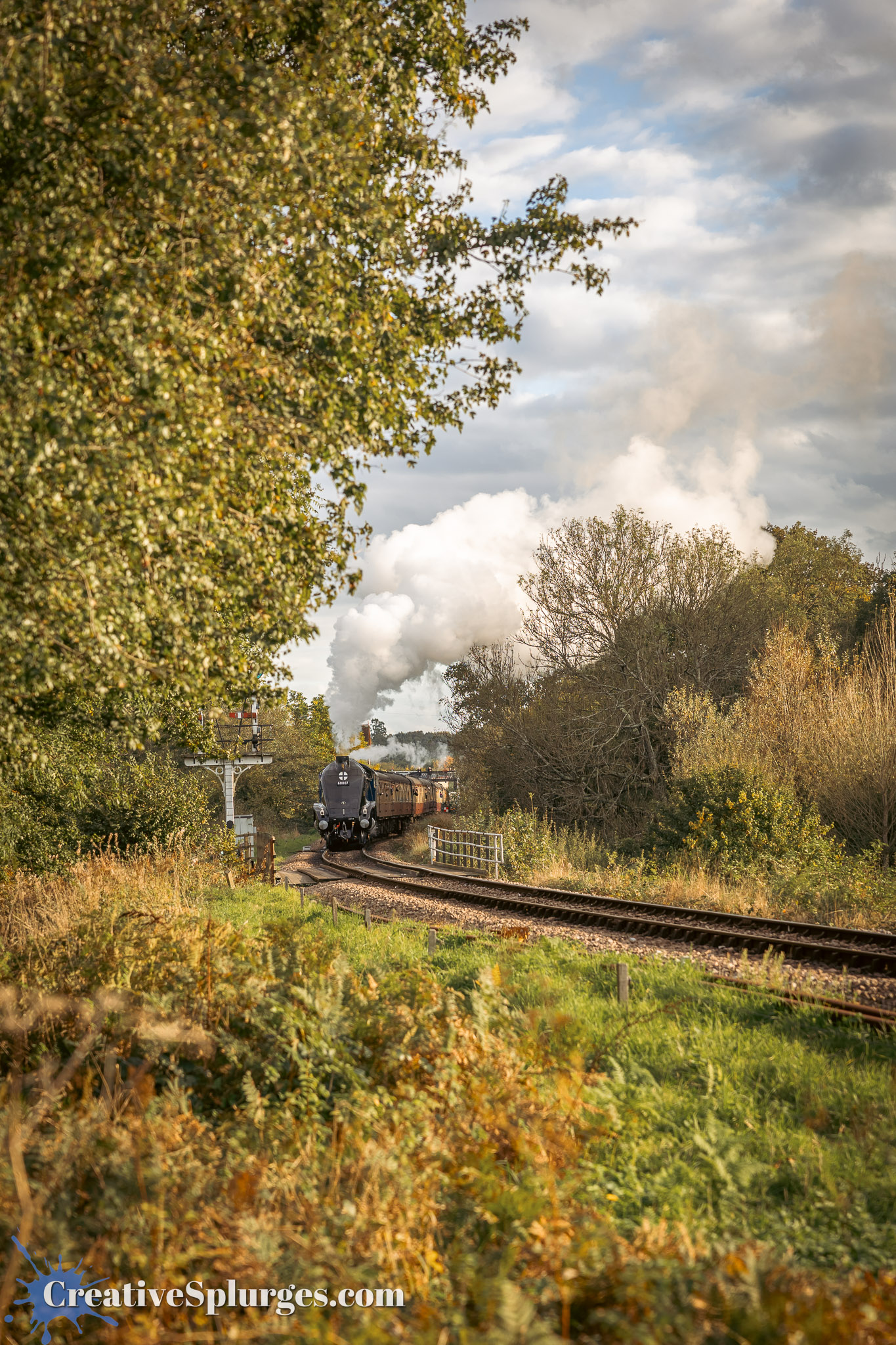
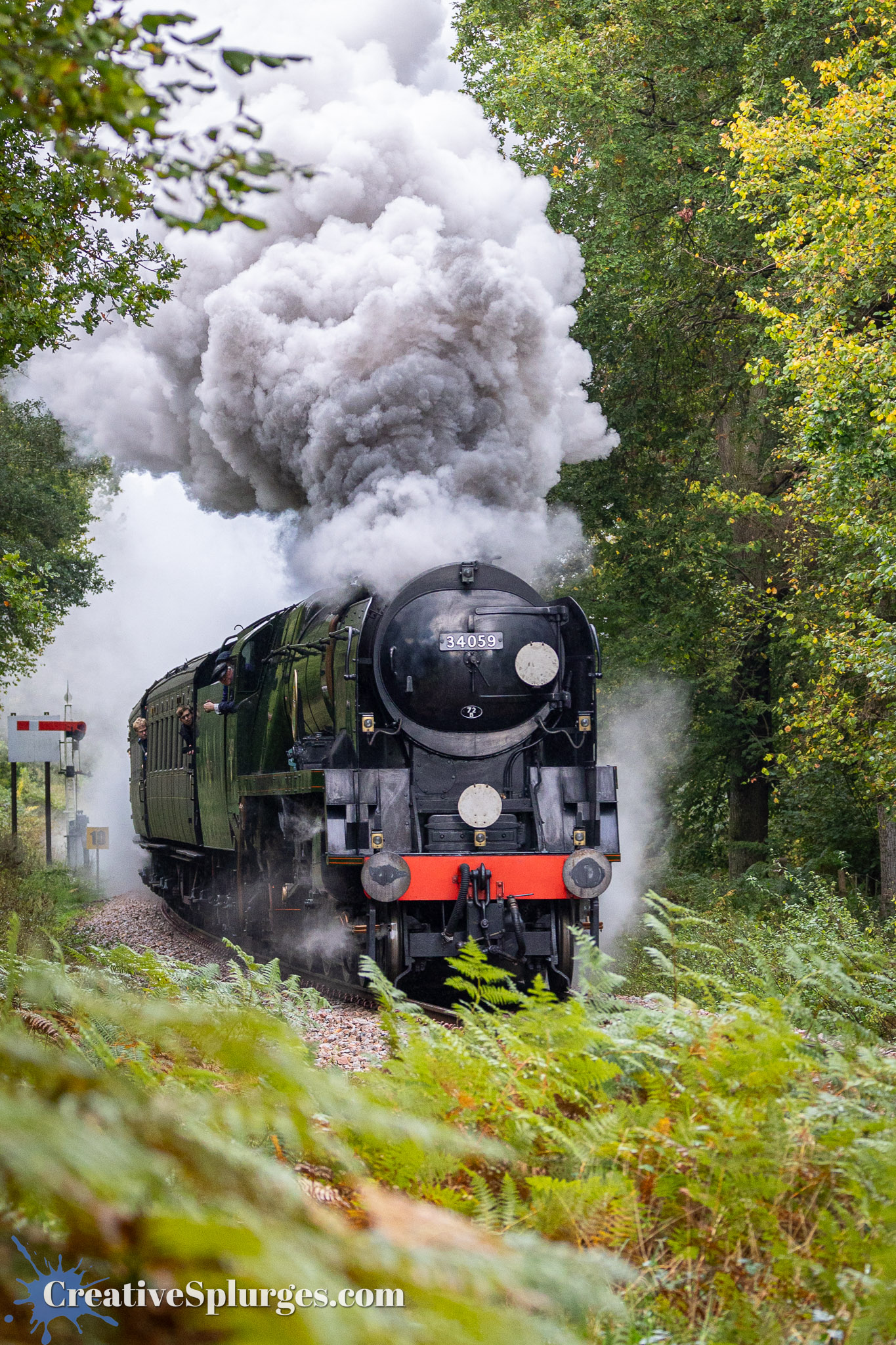
I decided to trek a little further up the track and try another spot for the next train. I found a lovely wooded corner a hundred metres or so further on, which was catching the light brilliantly, especially as there will still some smoke left from Sir Archie.
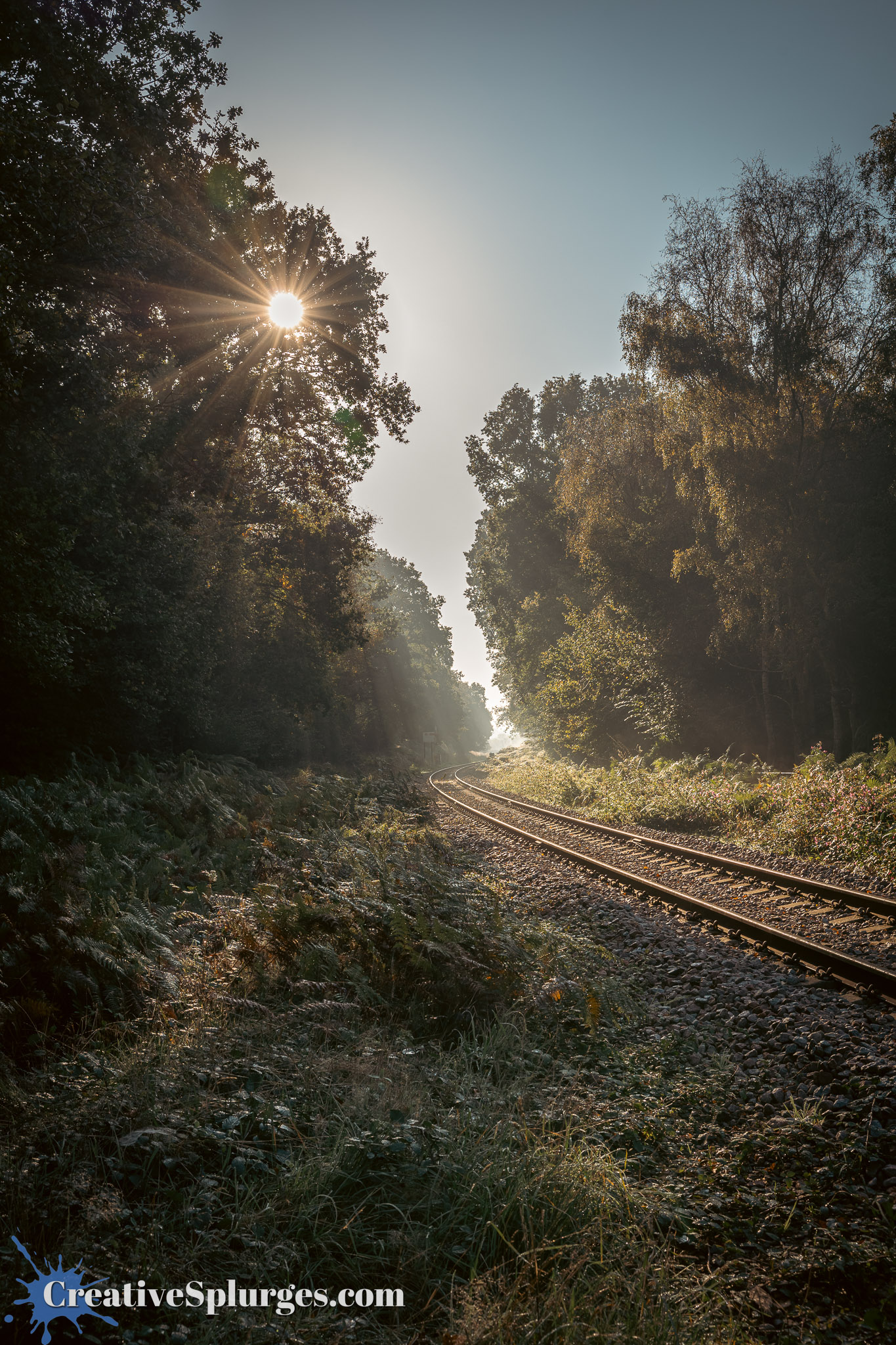
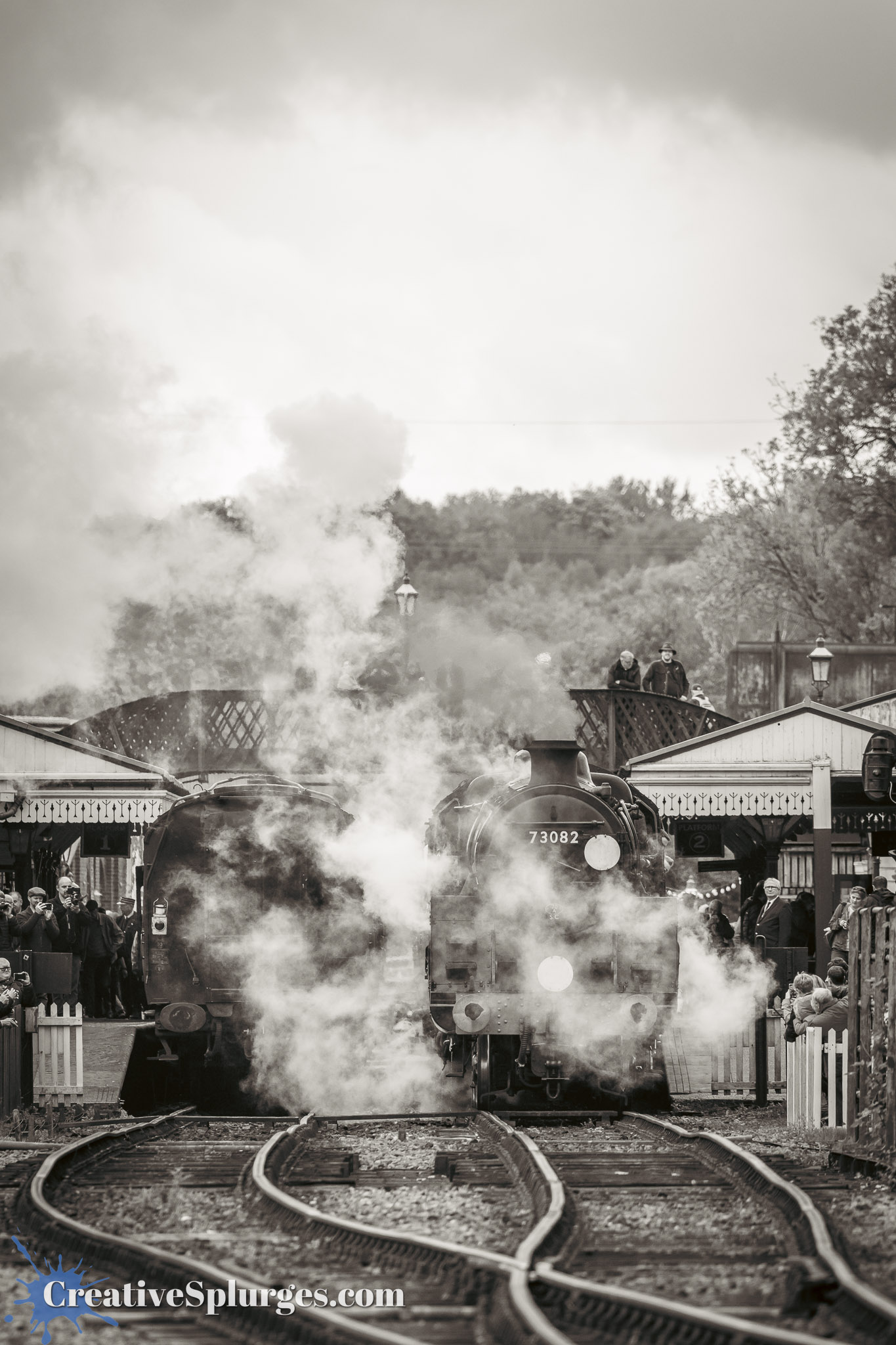
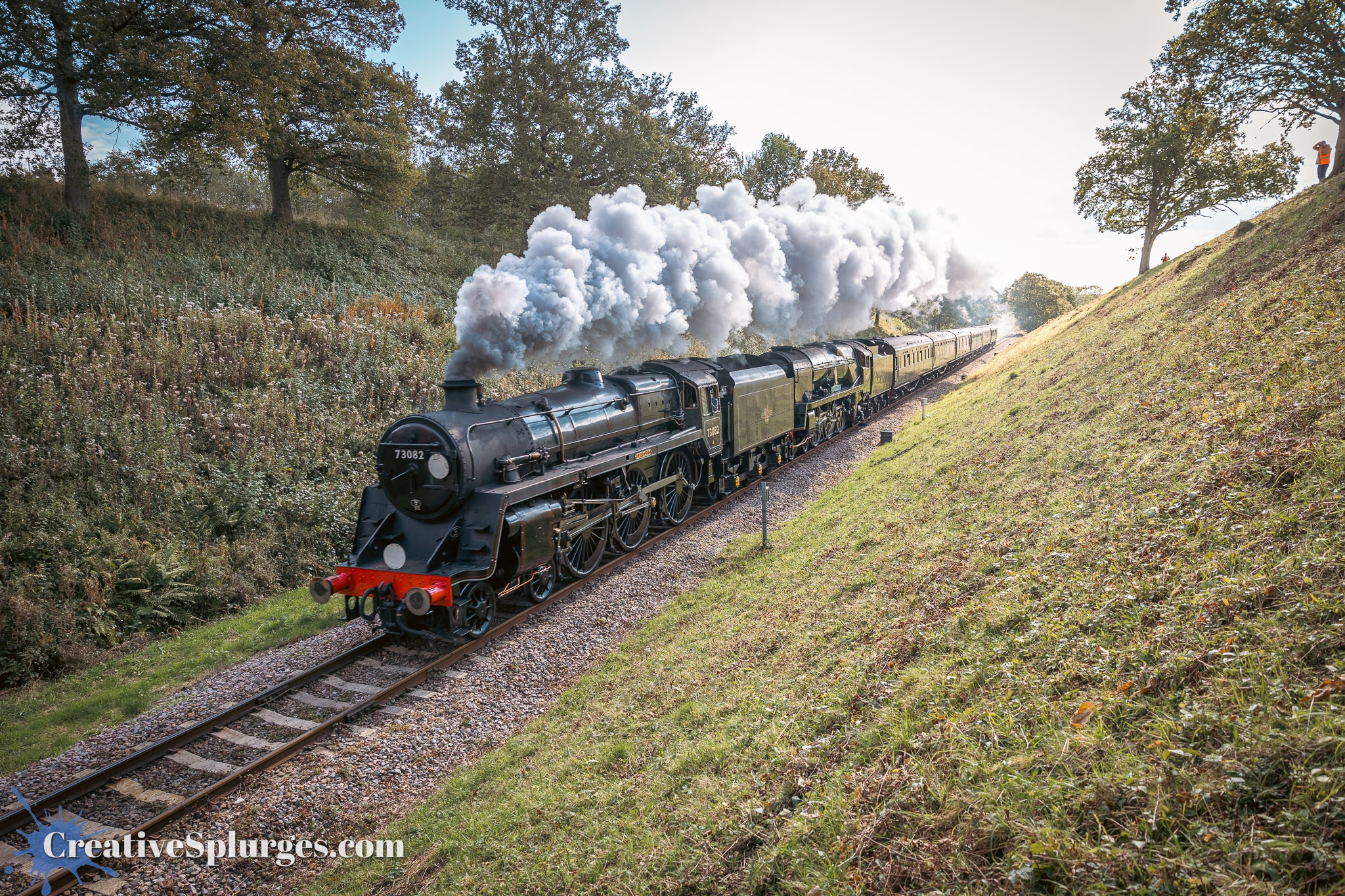
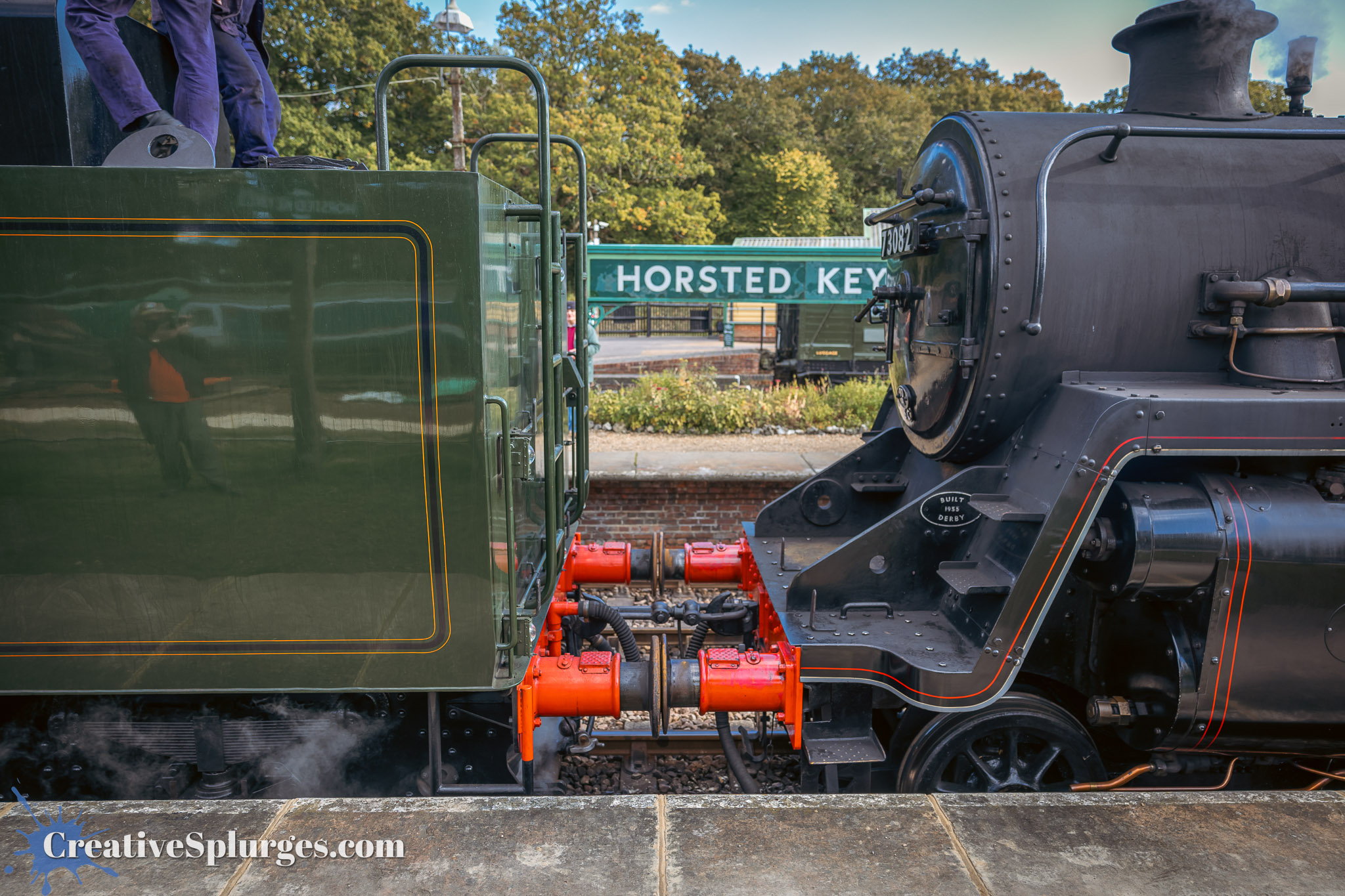
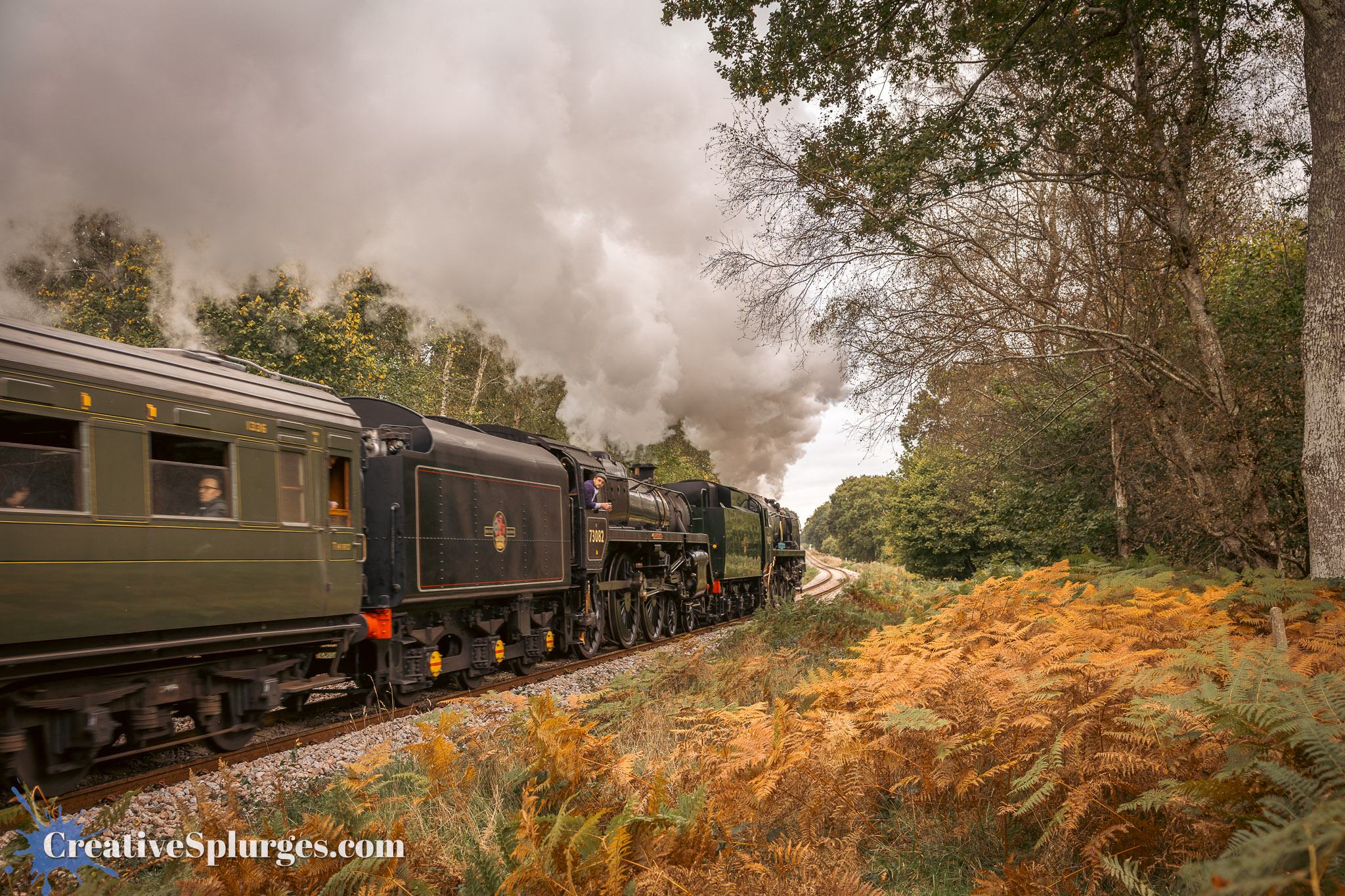
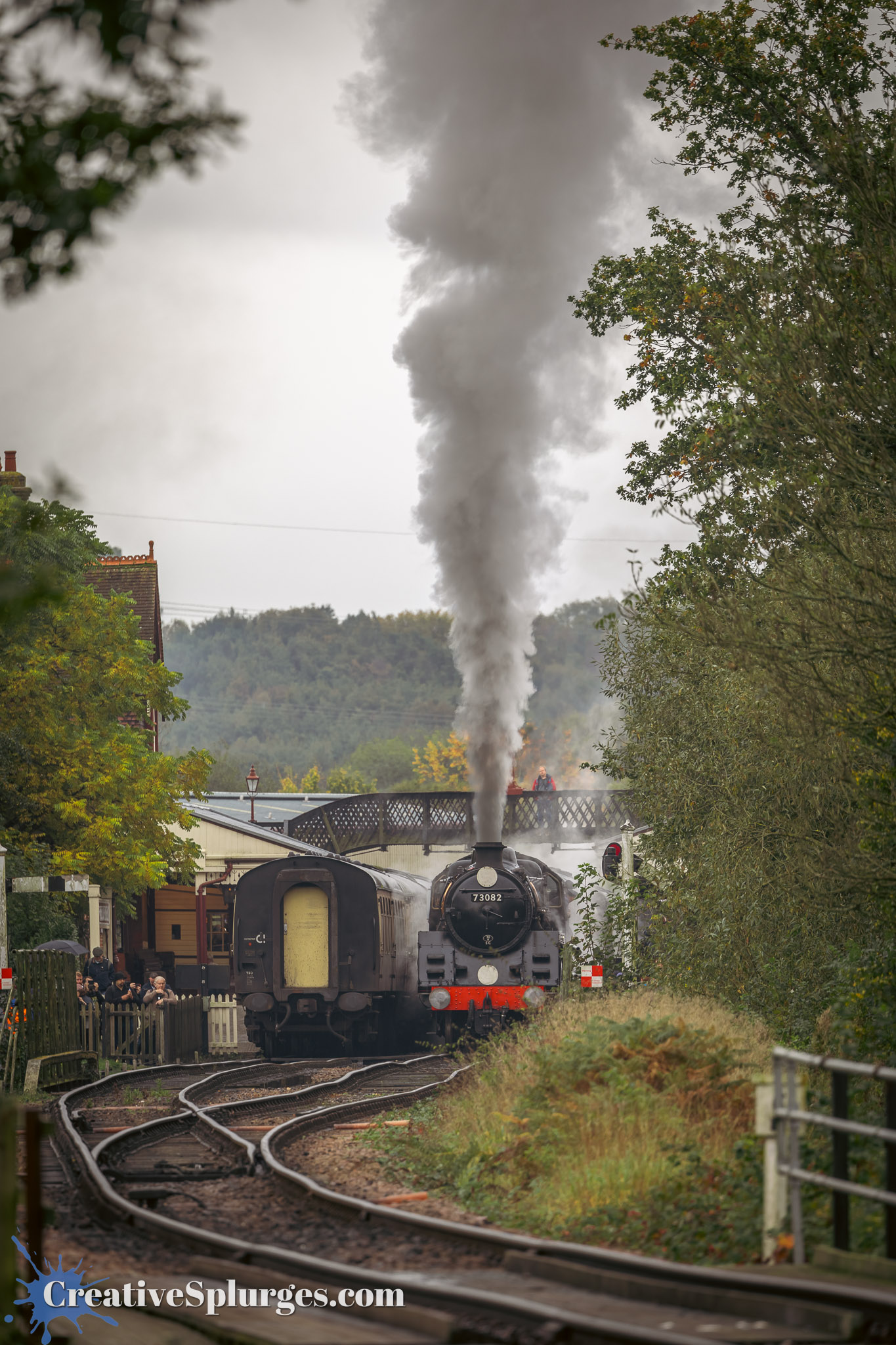
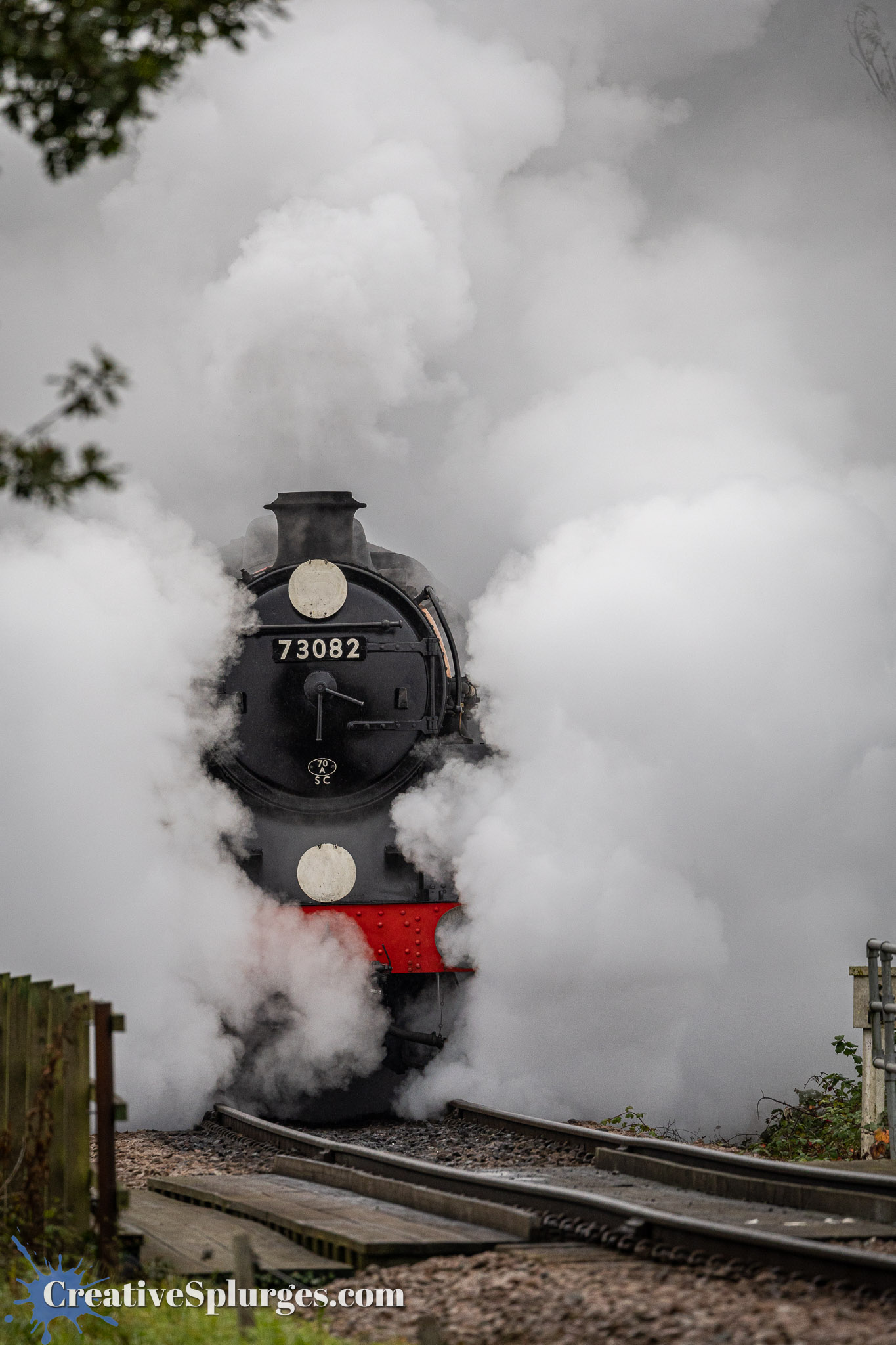
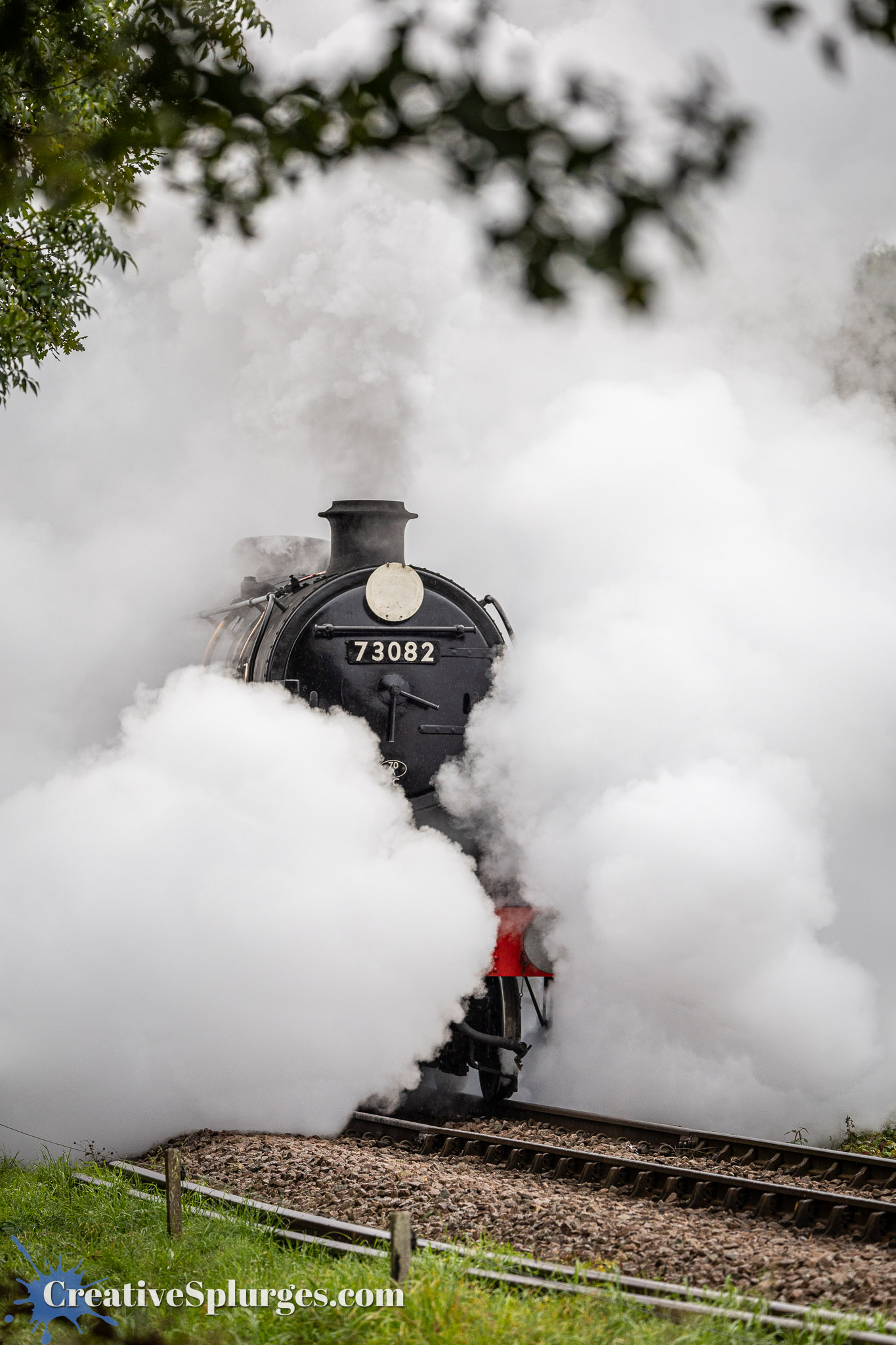
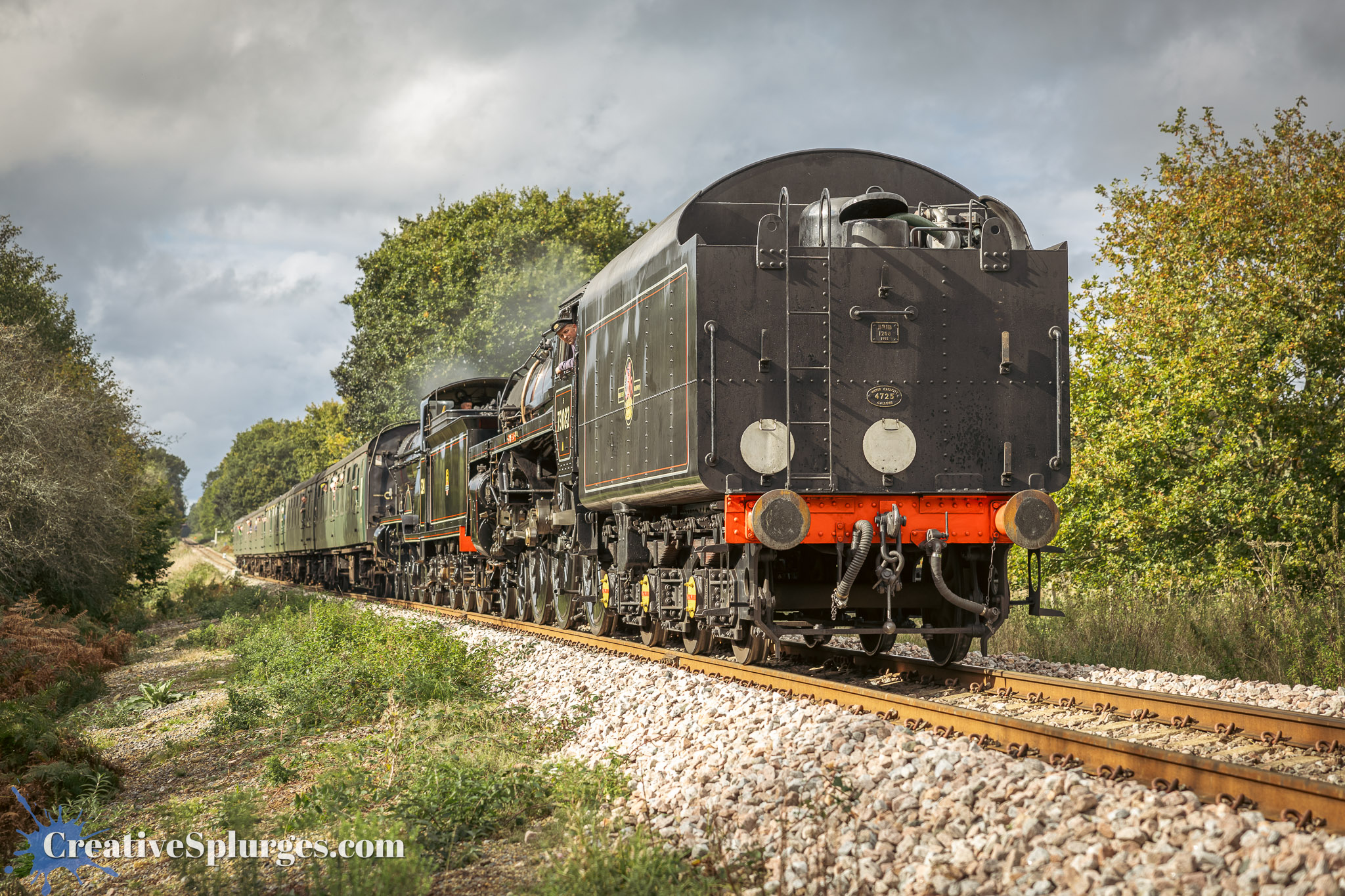
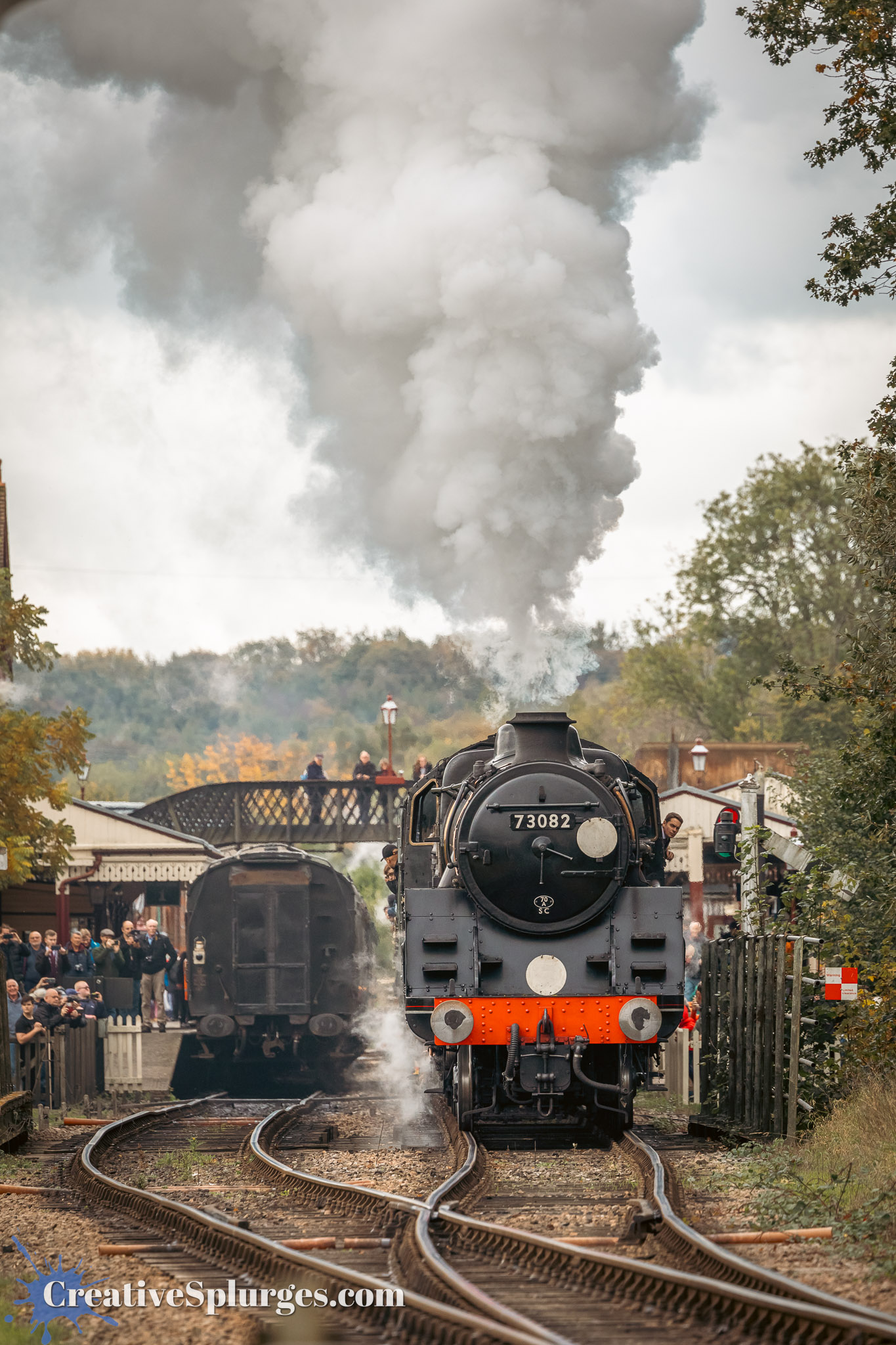
I decided to hold here for the next train. I was shortly joined by another lineside photographer, who had photographed Sir Archie’s departure from much closer to Sheffield Park. We shared the spot for the next train, which was 73082 Camelot. It turned out this was a good spot, as not only did we not have the problem of trains disappearing into clouds of steam, but as it was just past where the speed limit on the line changes and just before the incline up to Freshfield Bank, the locomotives were working a bit harder which meant the smoke coming out their stacks was impressive.

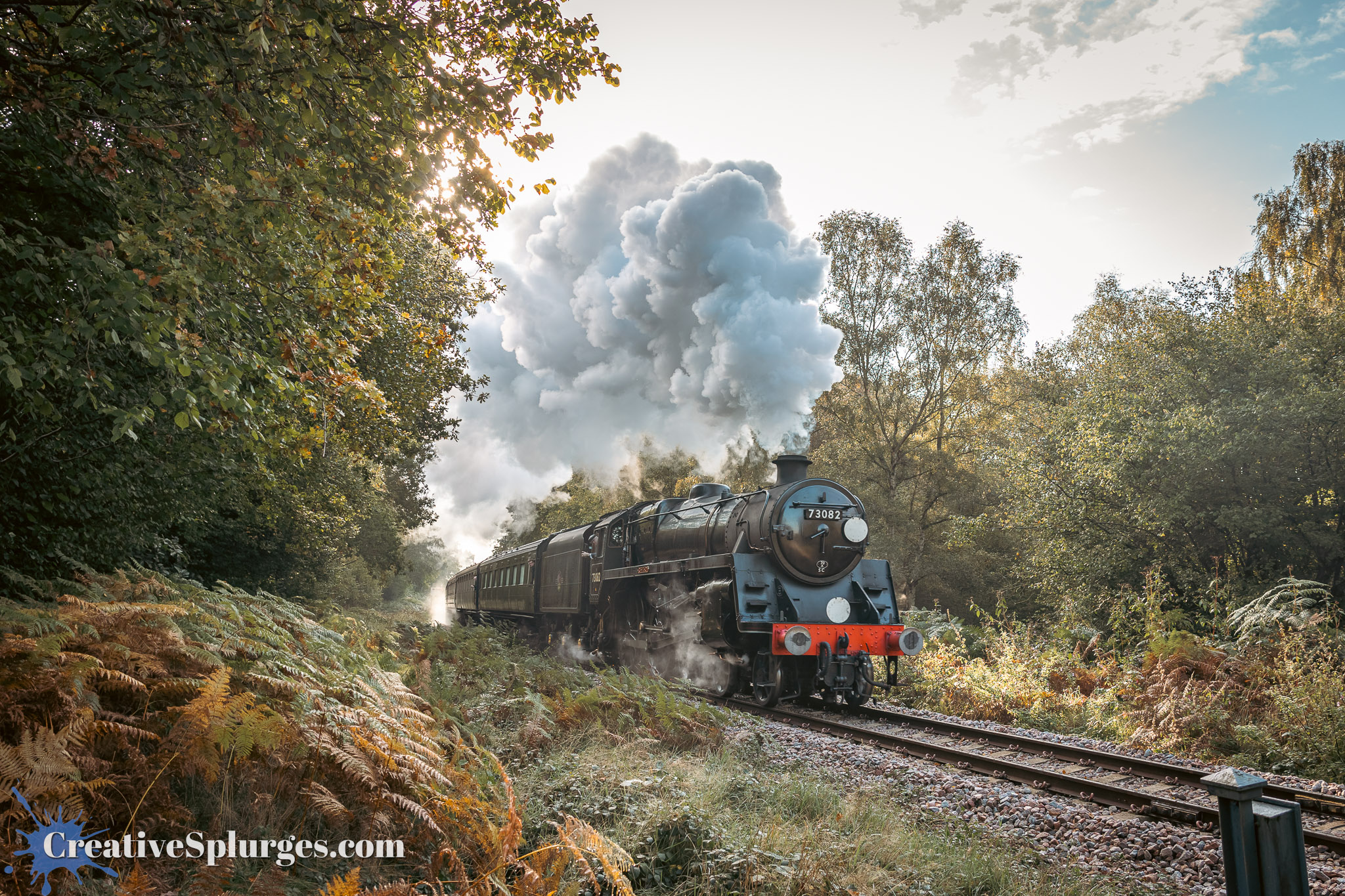
With Camelot gone by, my new photographer friend decided to head on up the track. Meanwhile, despite losing the first run of Sir Archibald Sinclair to a cloud of steam, I decided to take my chances and stick to my original plan, and headed back to Sheffield Park to take a look at Sir Nigel Gresley and try for the shot I was after.
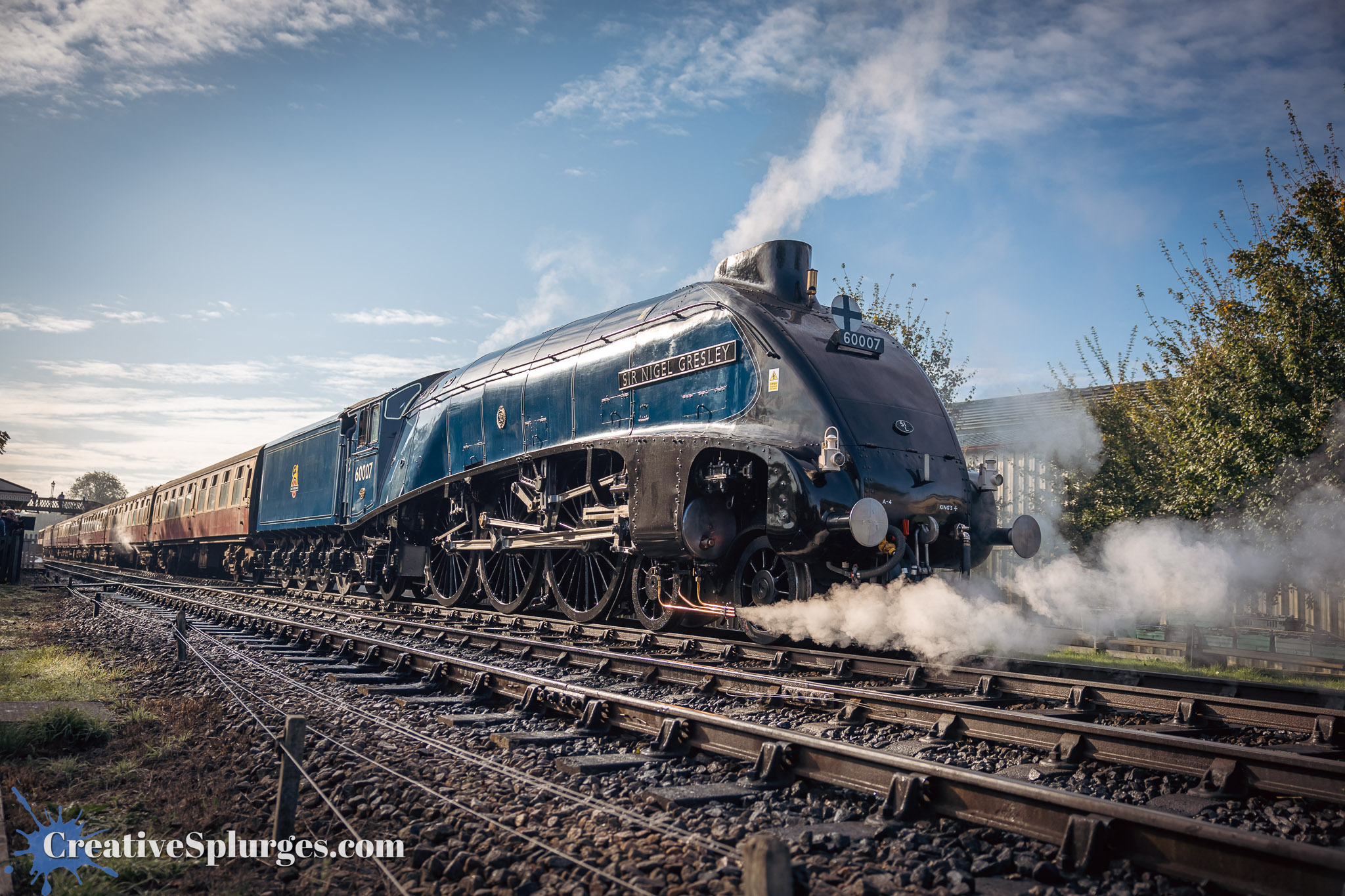
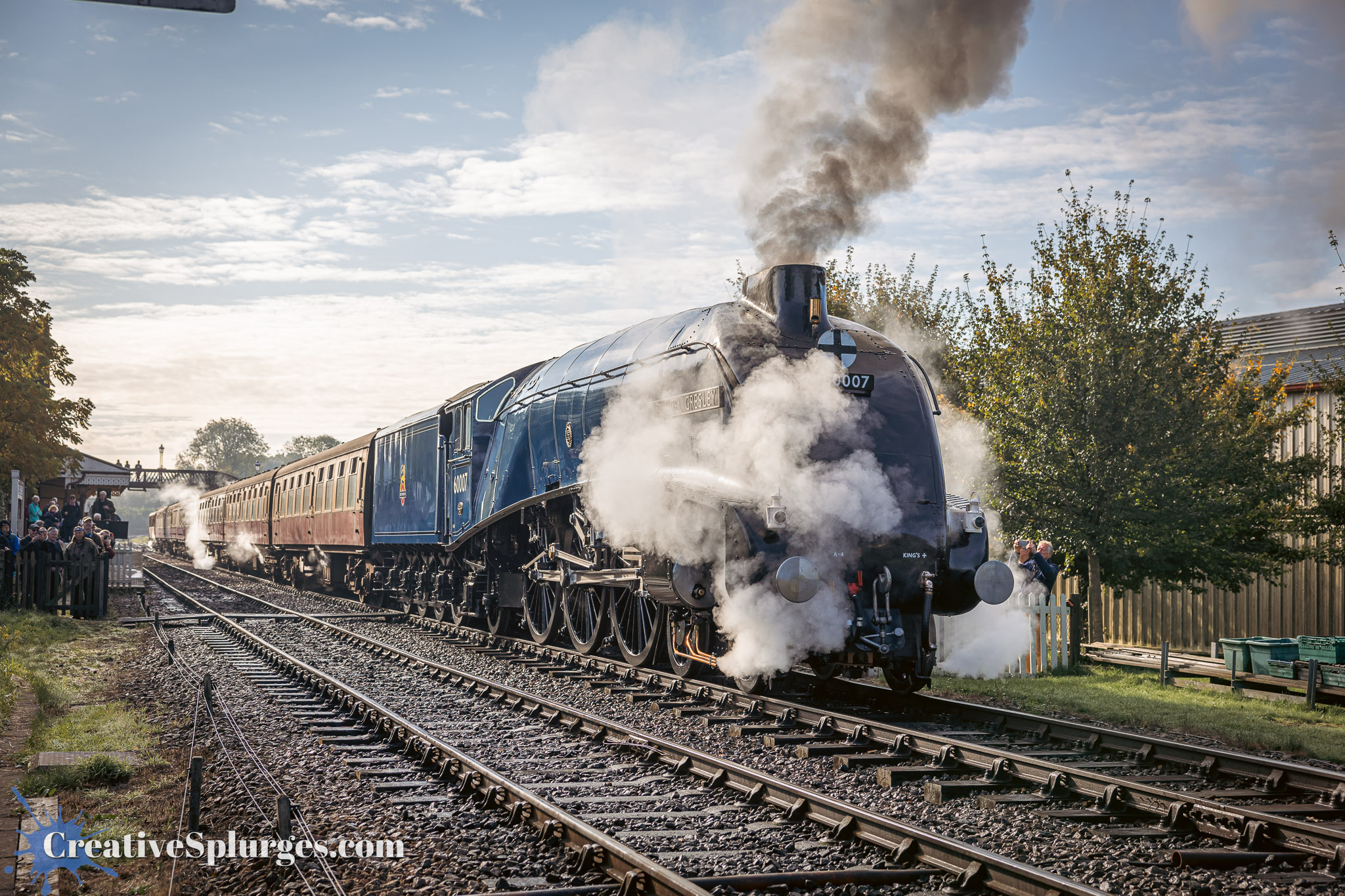
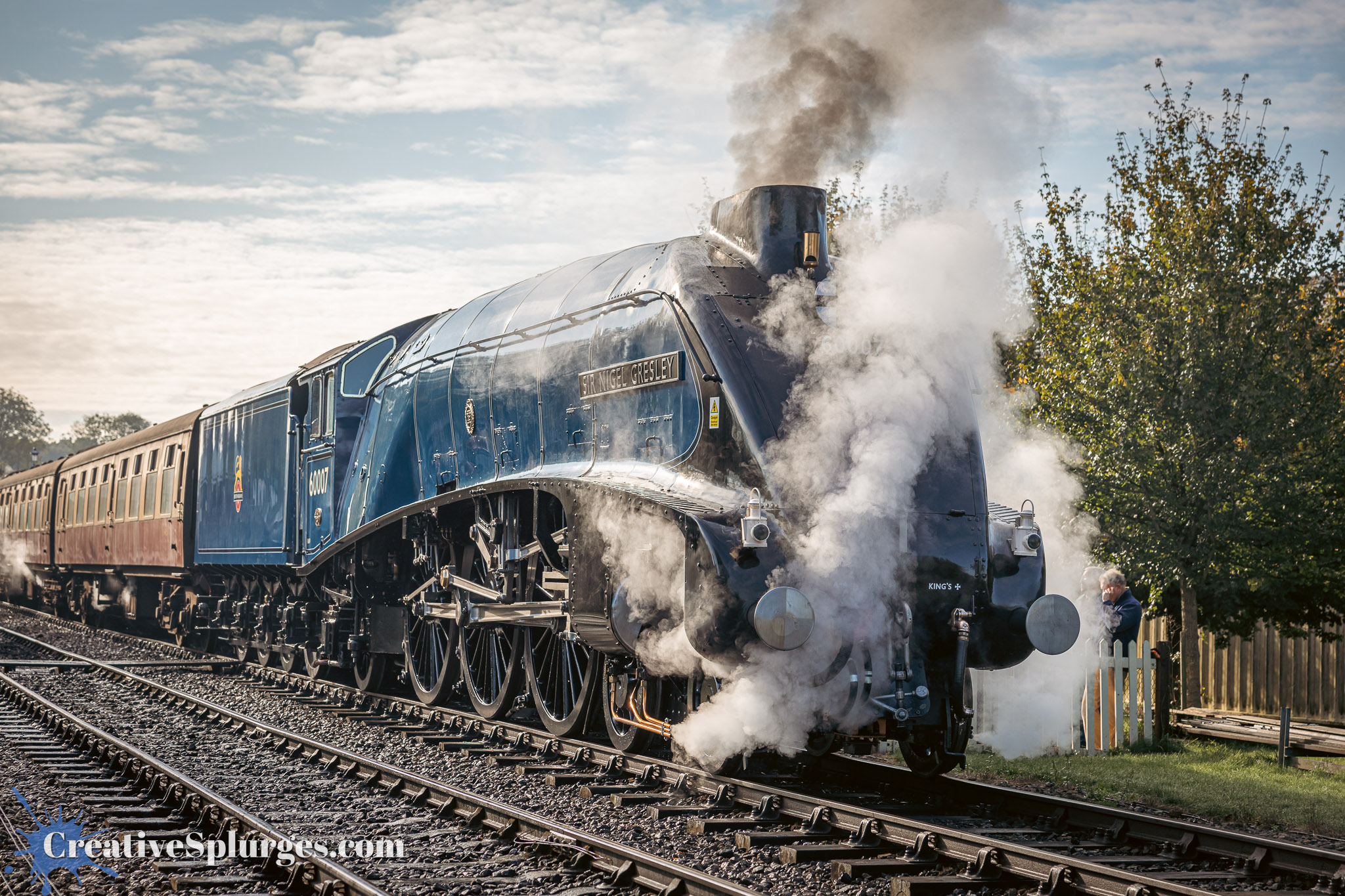
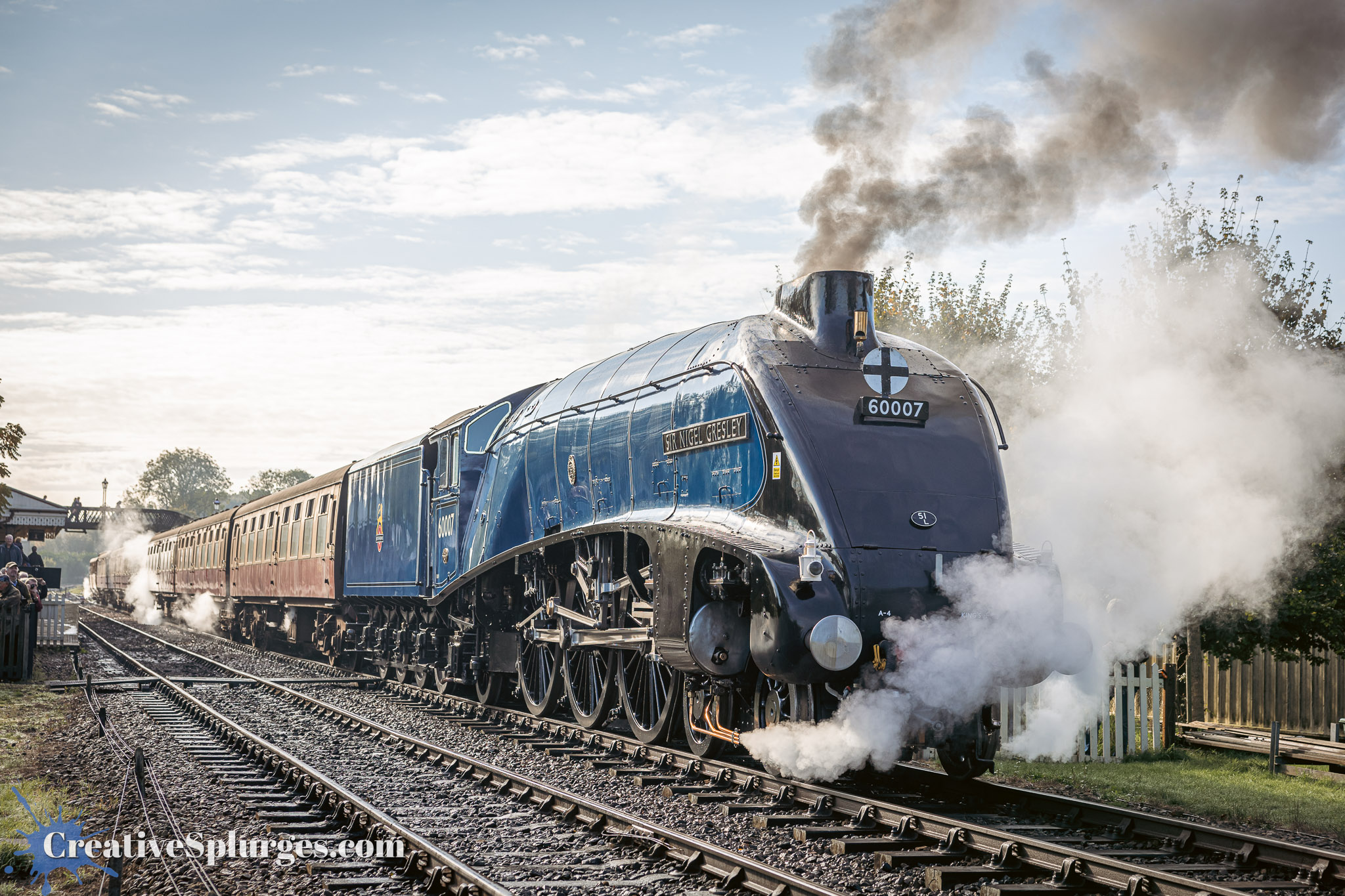
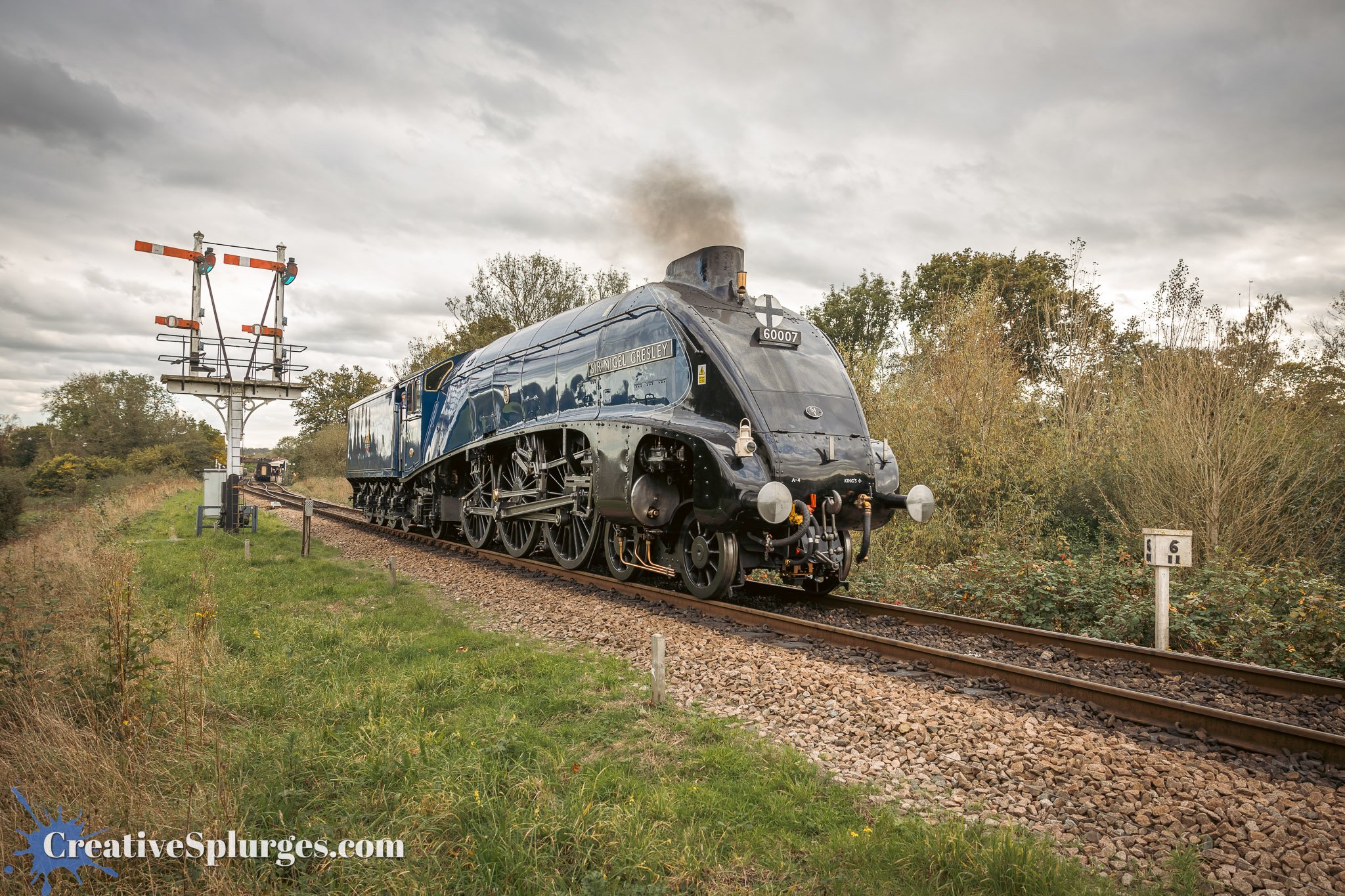
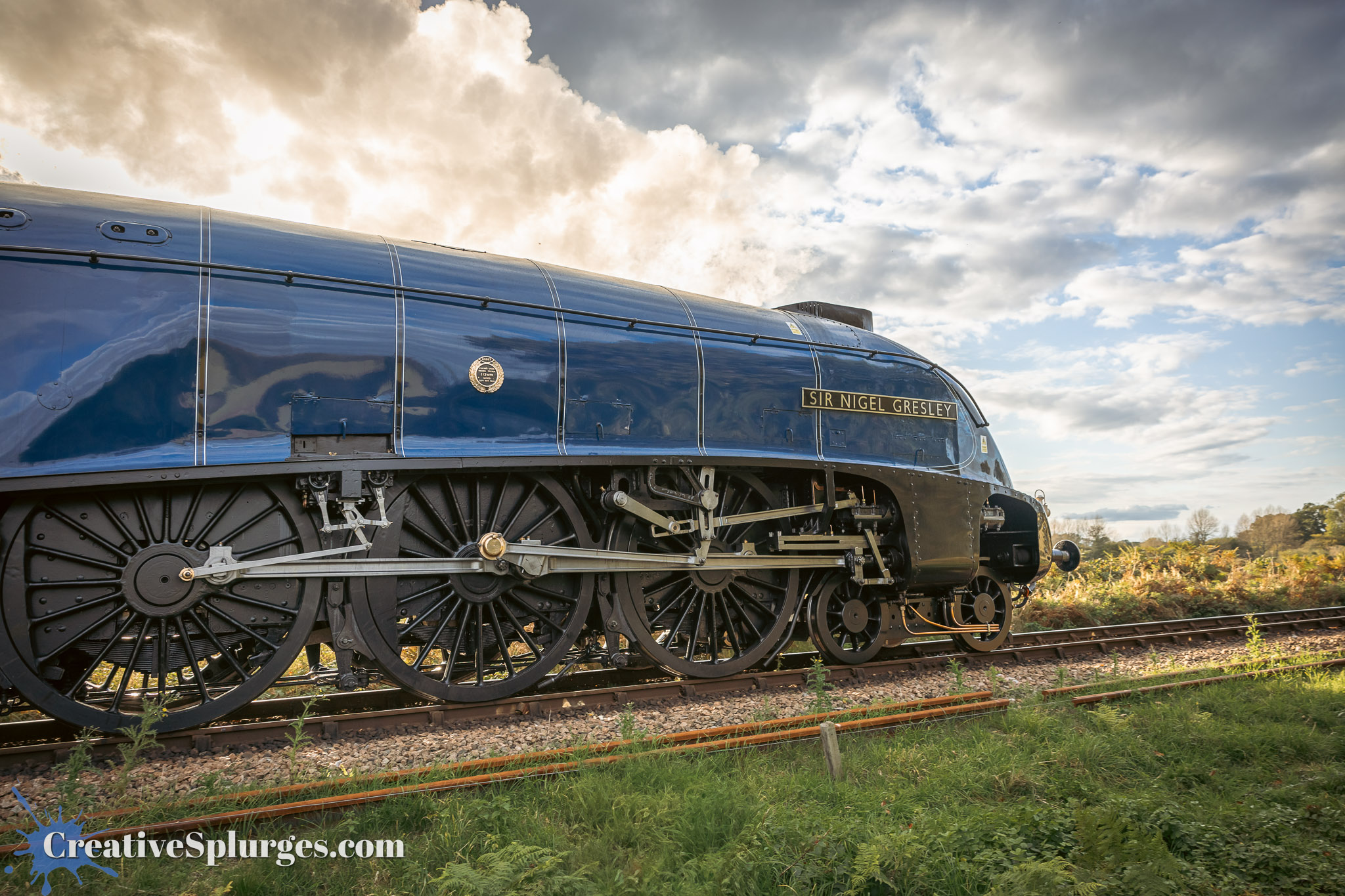
I will admit I was not quite prepared for my reaction as I rounded the corner and saw Sir Nigel for the first time. I let out an involuntary gasp. It is a stunning engine to see in person.
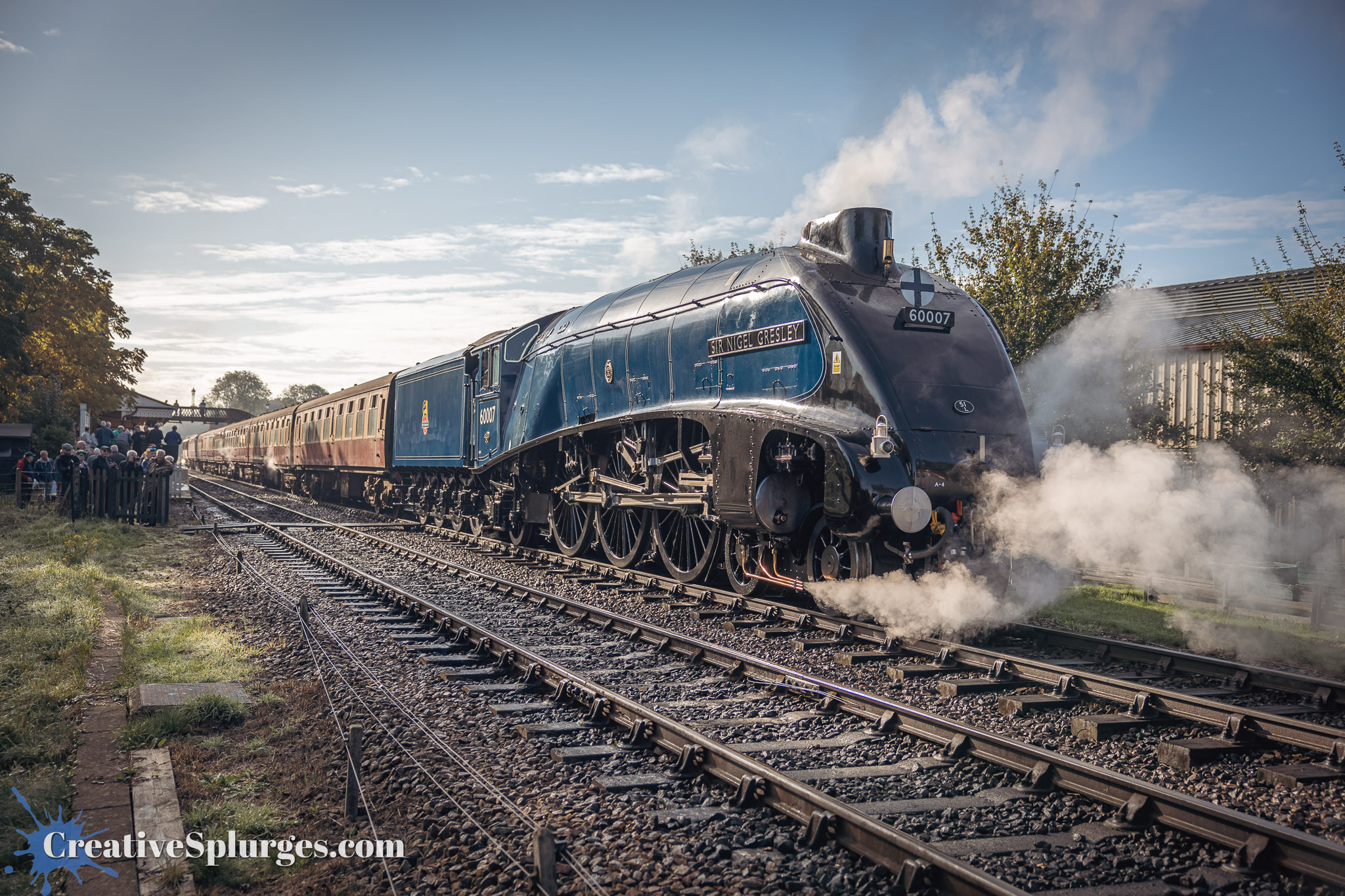
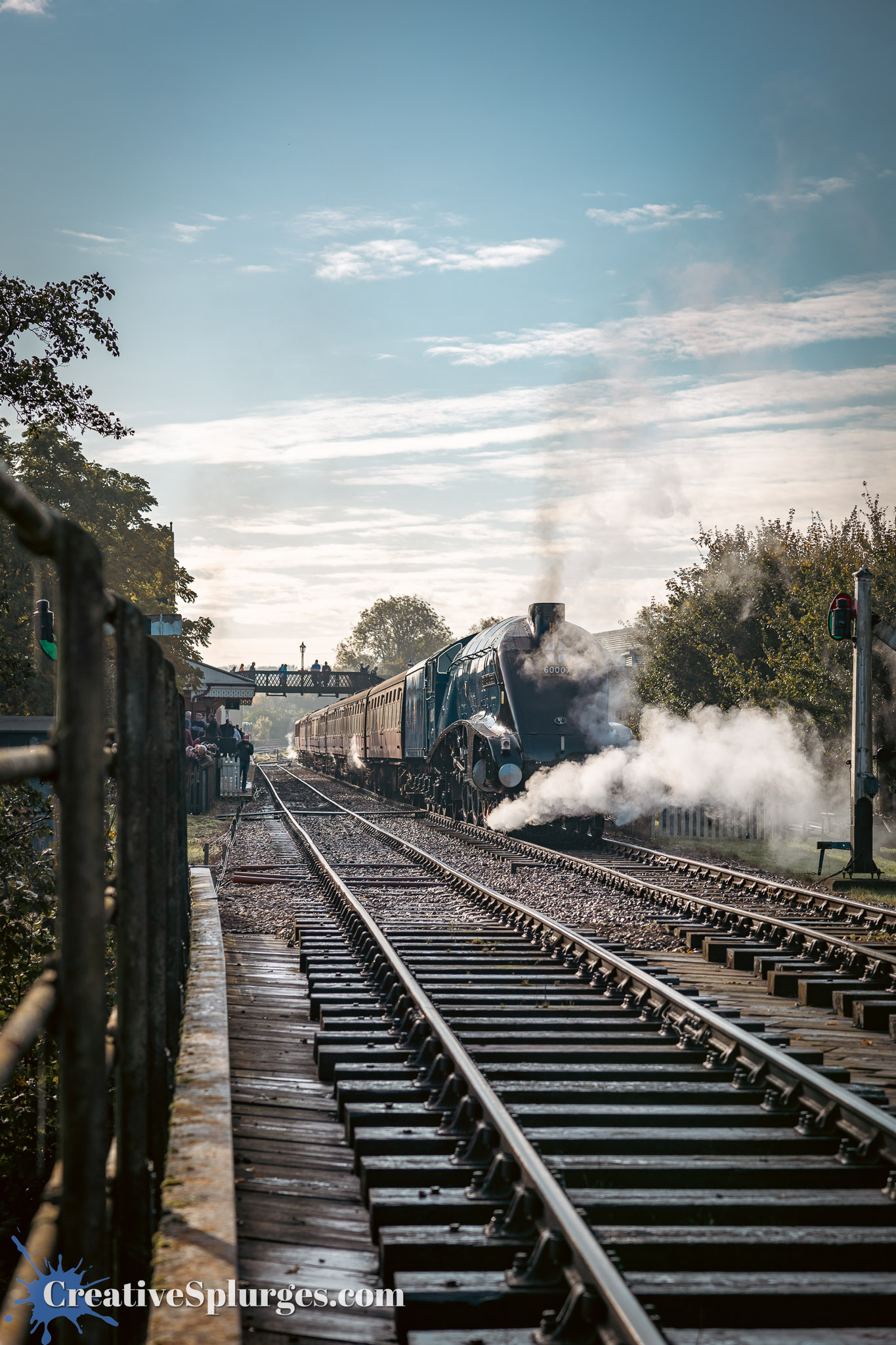
I spent a little while taking an assortment of photos of Sir Nigel from a handful of angles, and as the venting steam caught the light in different ways.

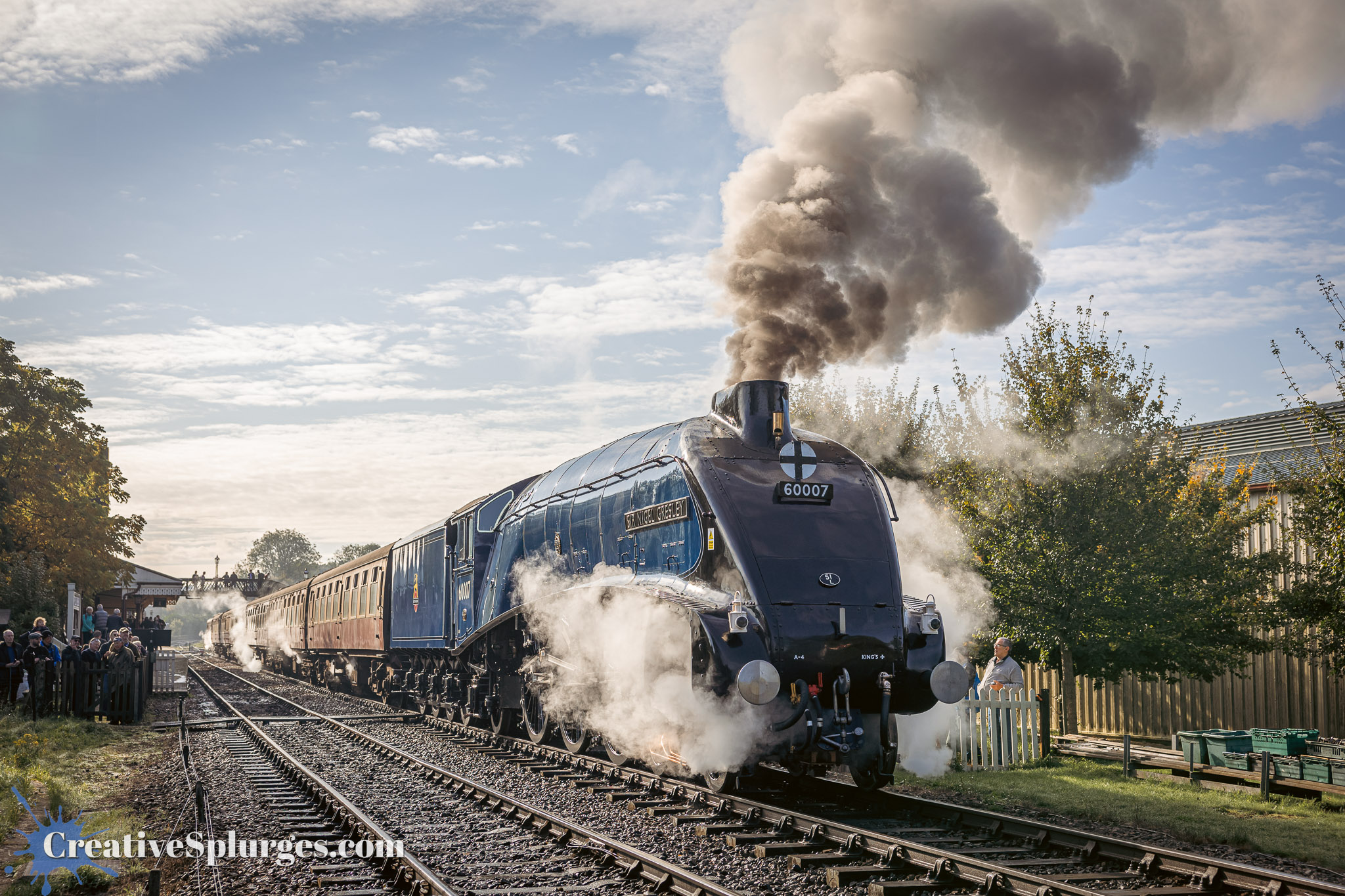
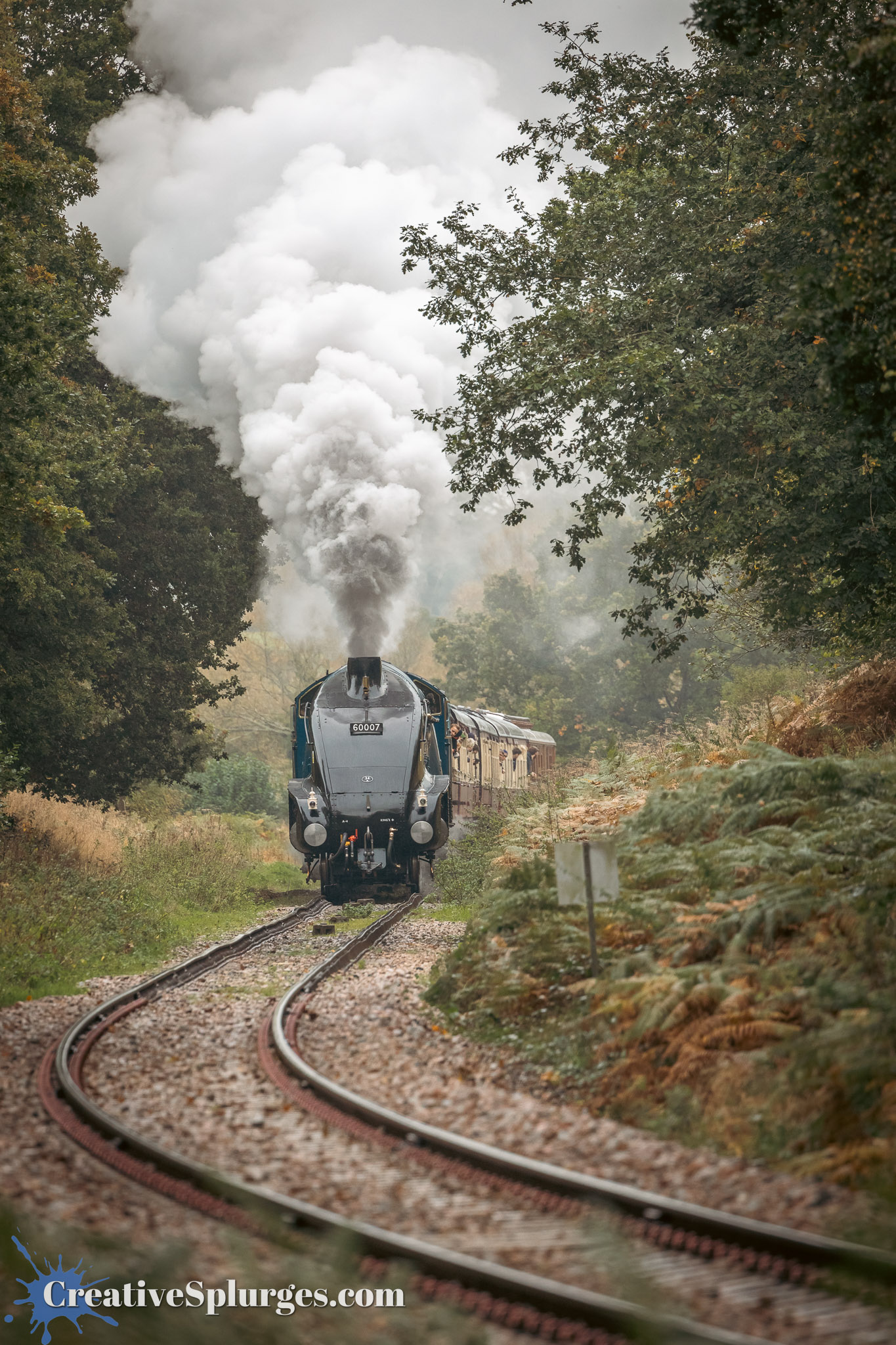
I soon made my way up the track to the spot where I wanted to take the shot I was after. Despite the lack of luck with Sir Archibald Sinclair I decided I owed it to myself to give it a try.
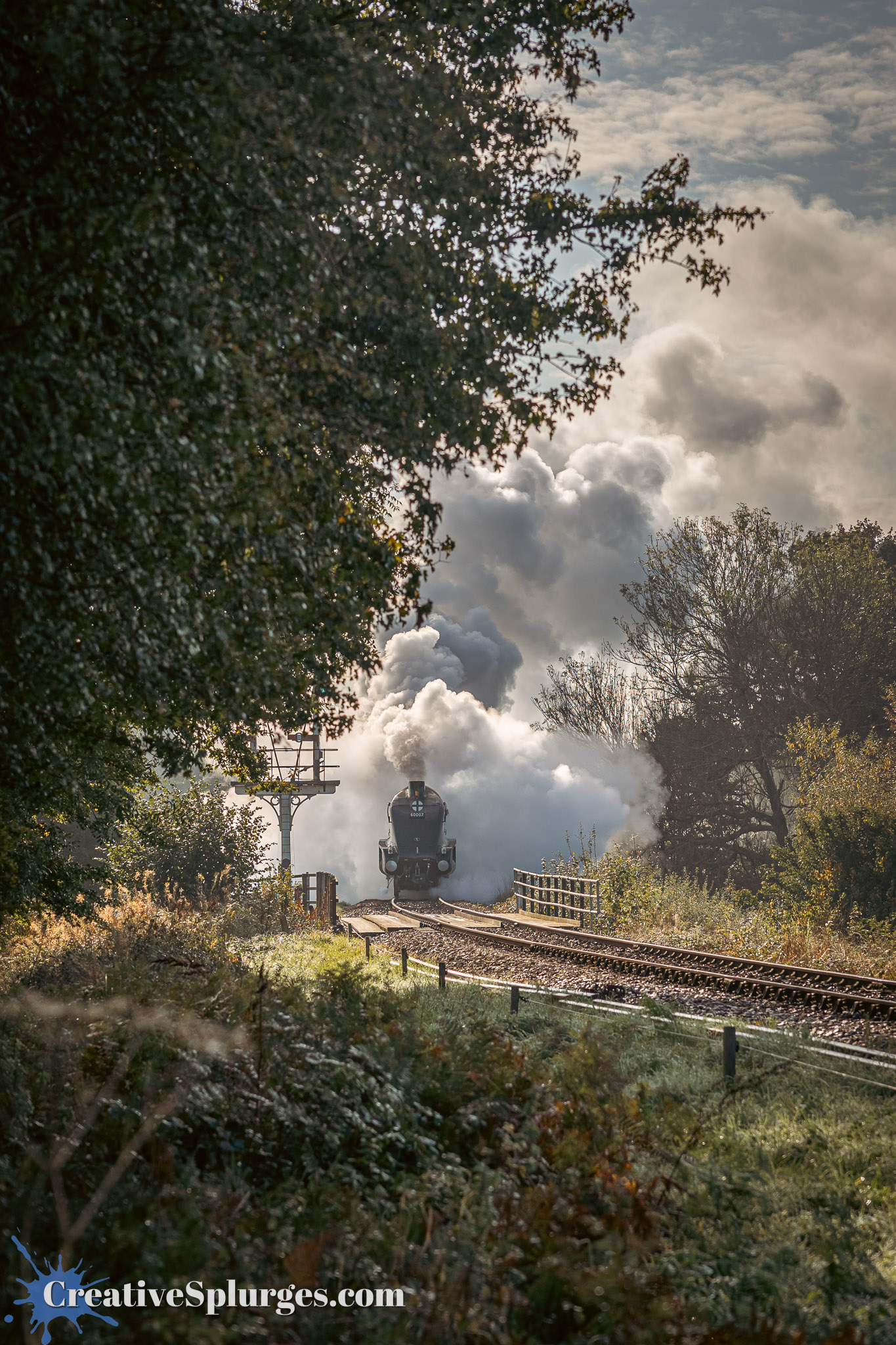
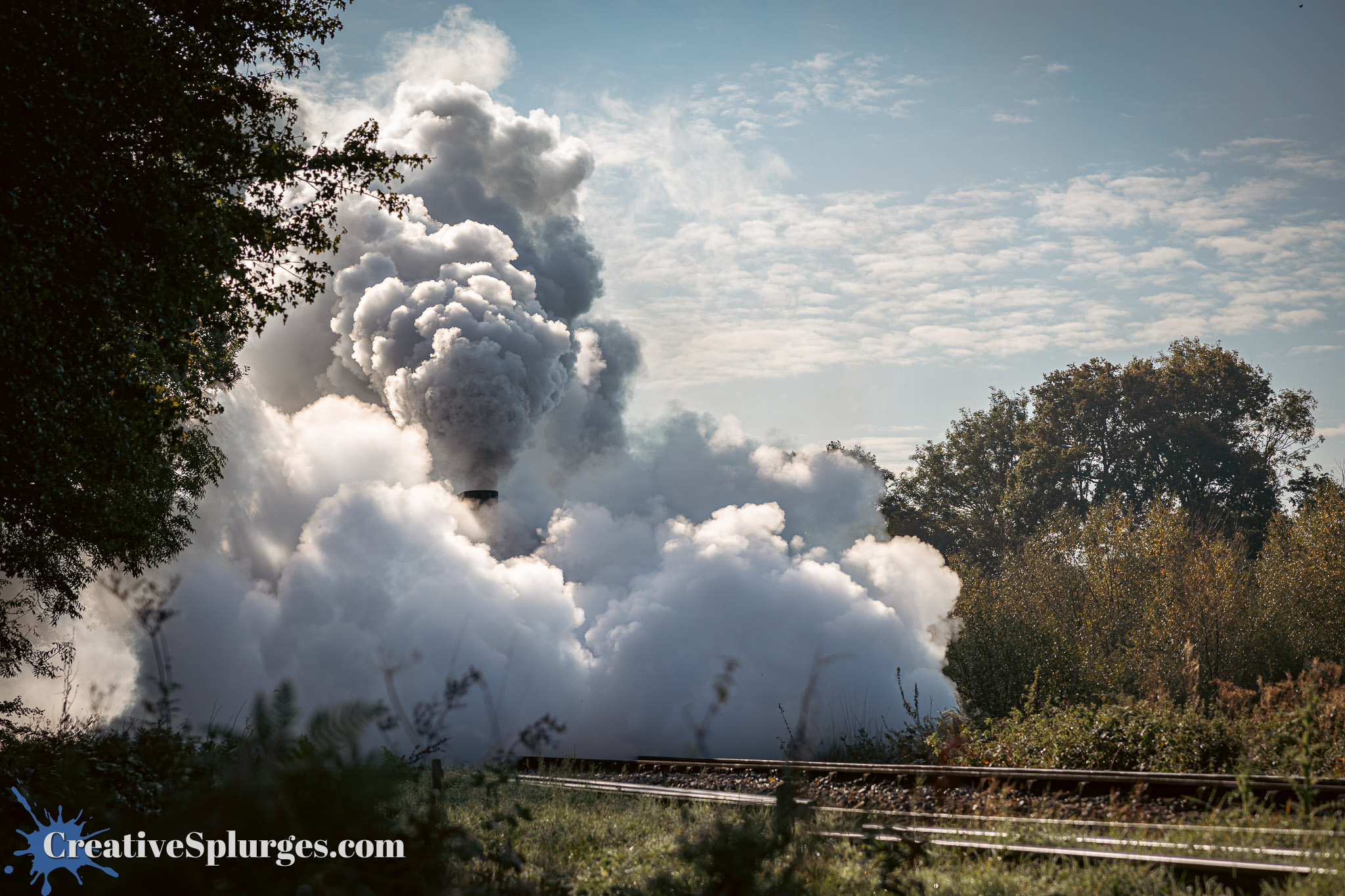
Sir Nigel emerged from a plume of steam and I hoped for the best, but very shortly thereafter once again it started letting off steam.
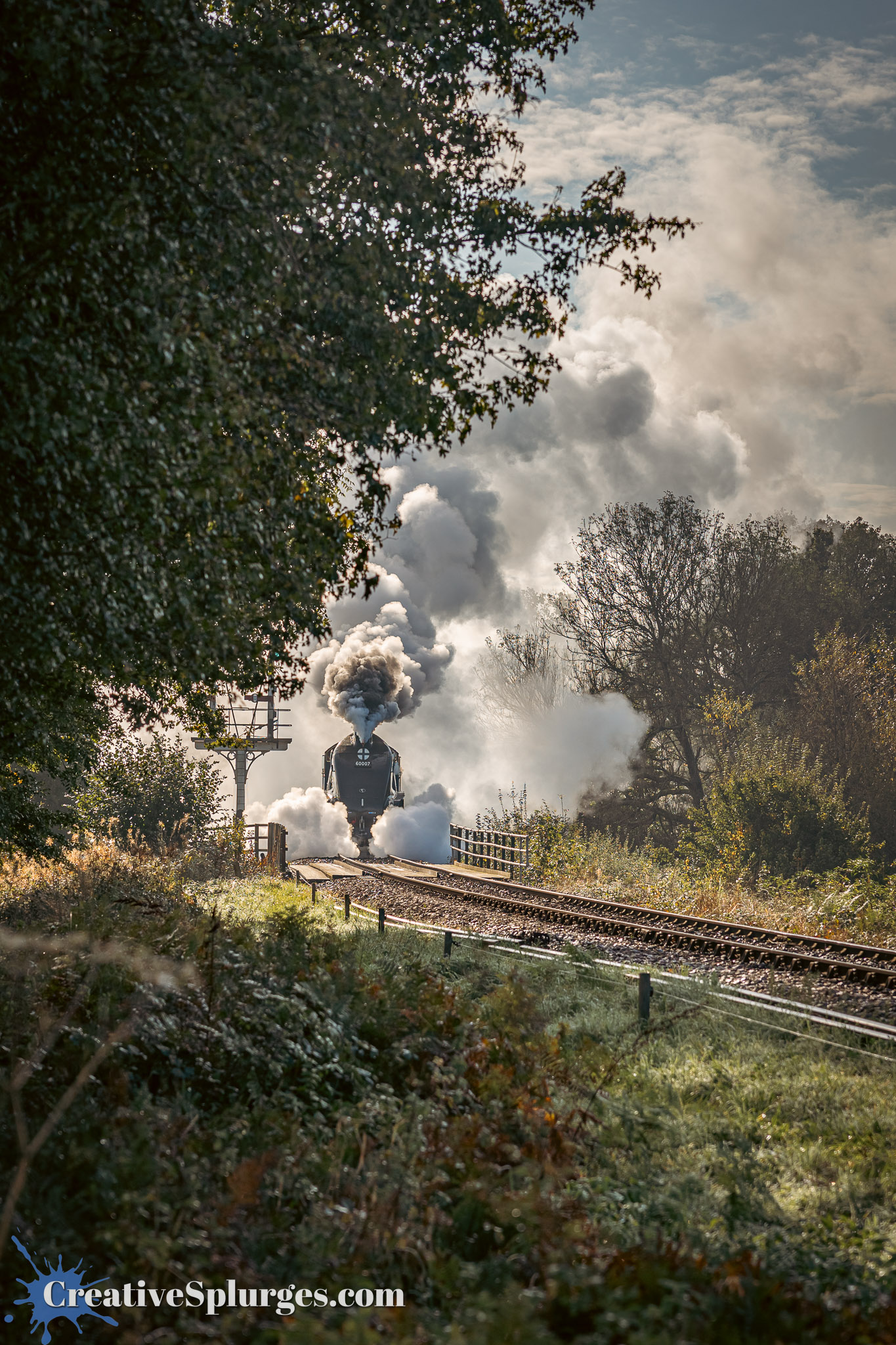
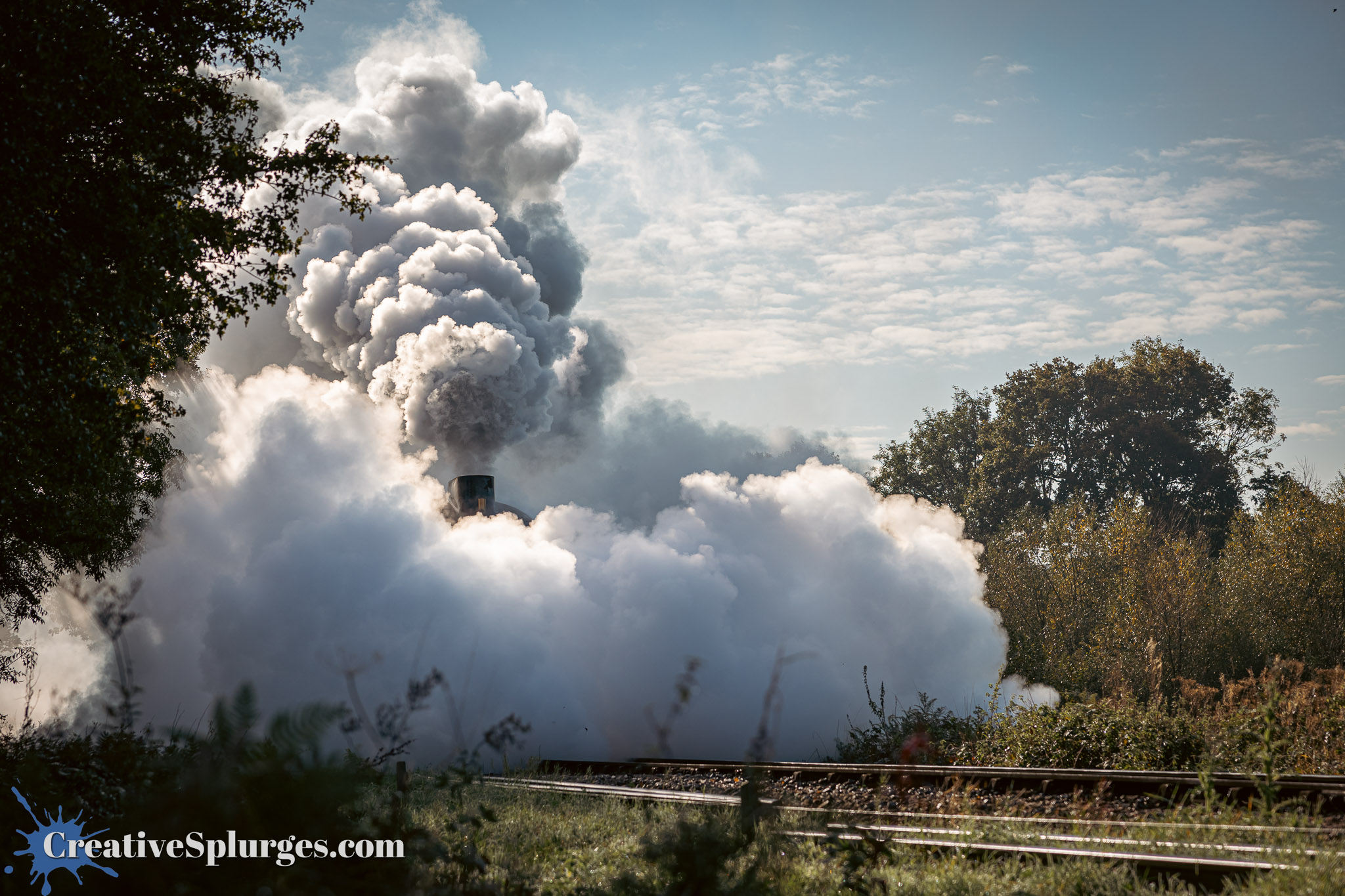
And as it went past the spot I was at, it was mostly a cloud again. Well, almost. The chimney poked out the top of the cloud making for a really dramatic shot.
I headed back to Sheffield Park. The next step on my plan for the day was to catch the next service up to Horsted Keynes and then trek back down the track to Three Arch Bridge, a spot I’ve only photographed without any trains.
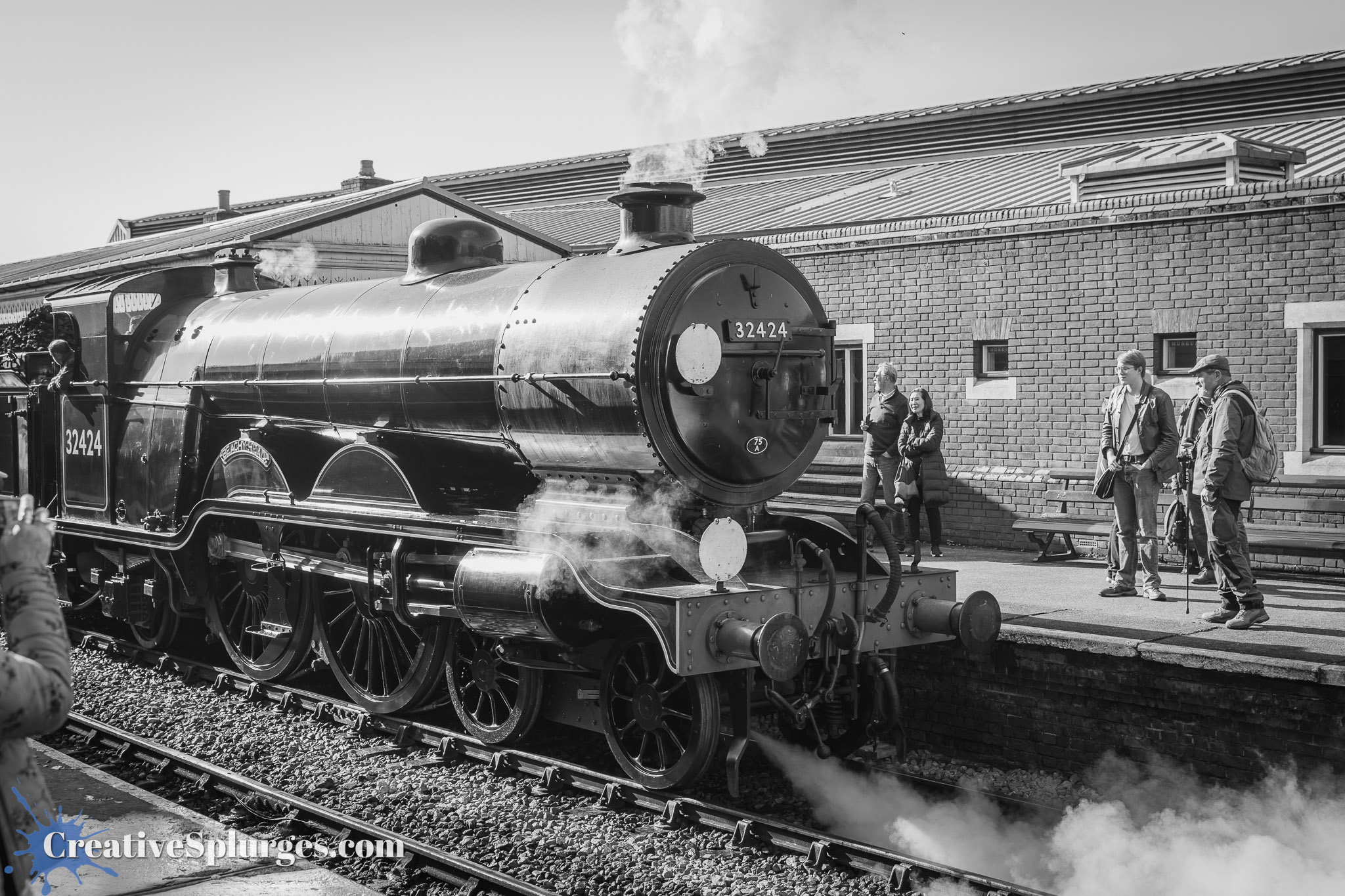
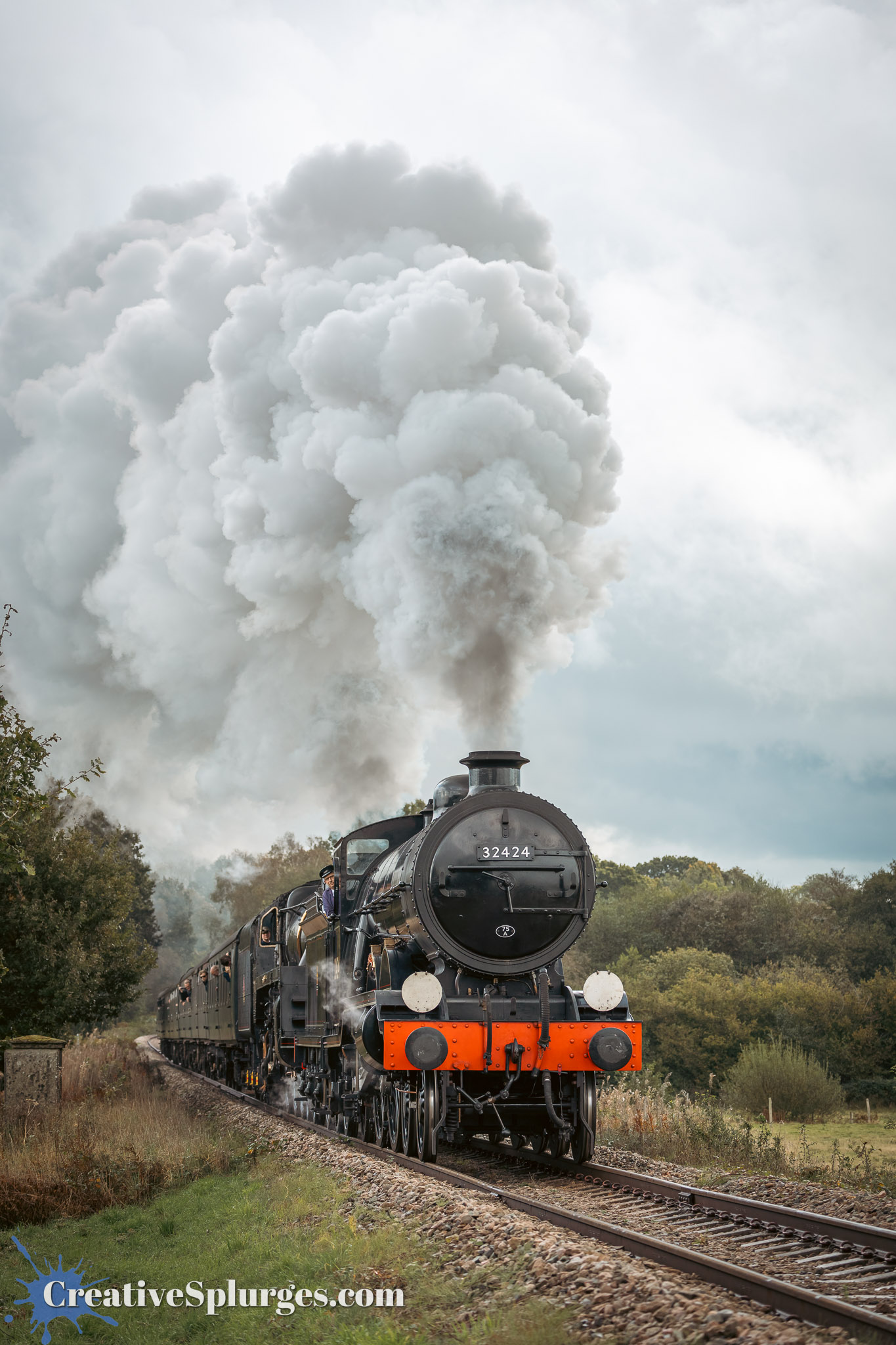
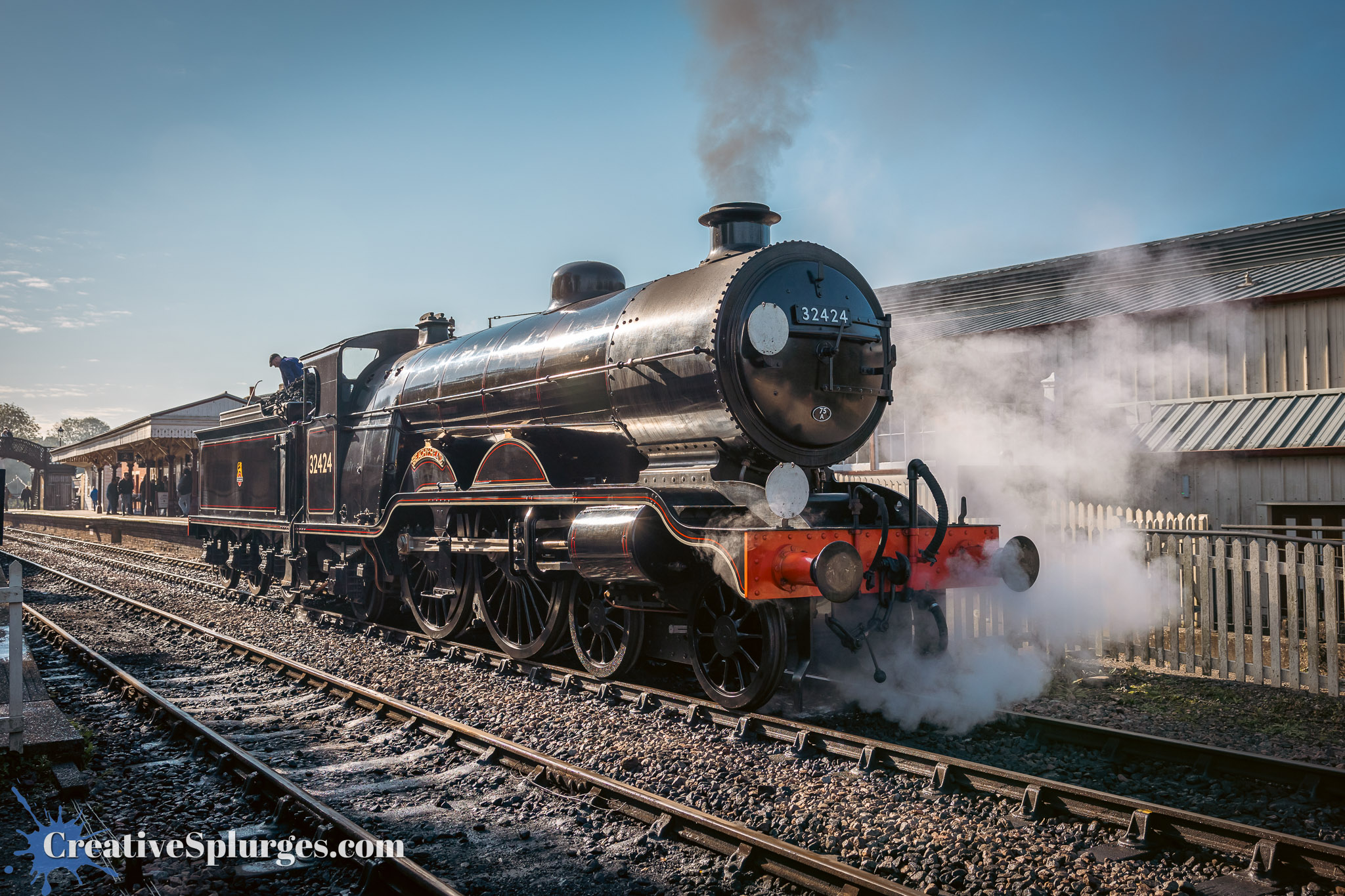
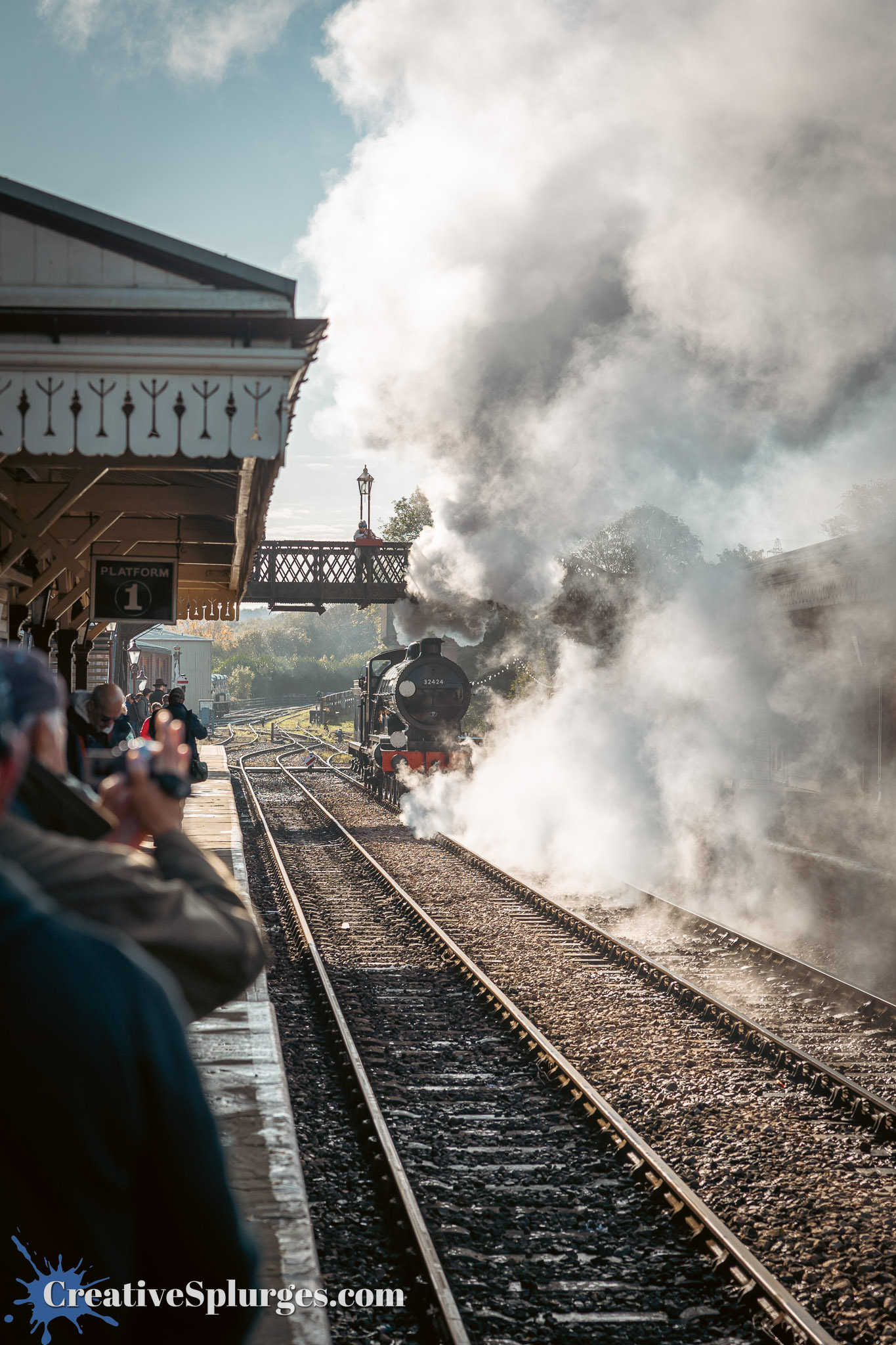
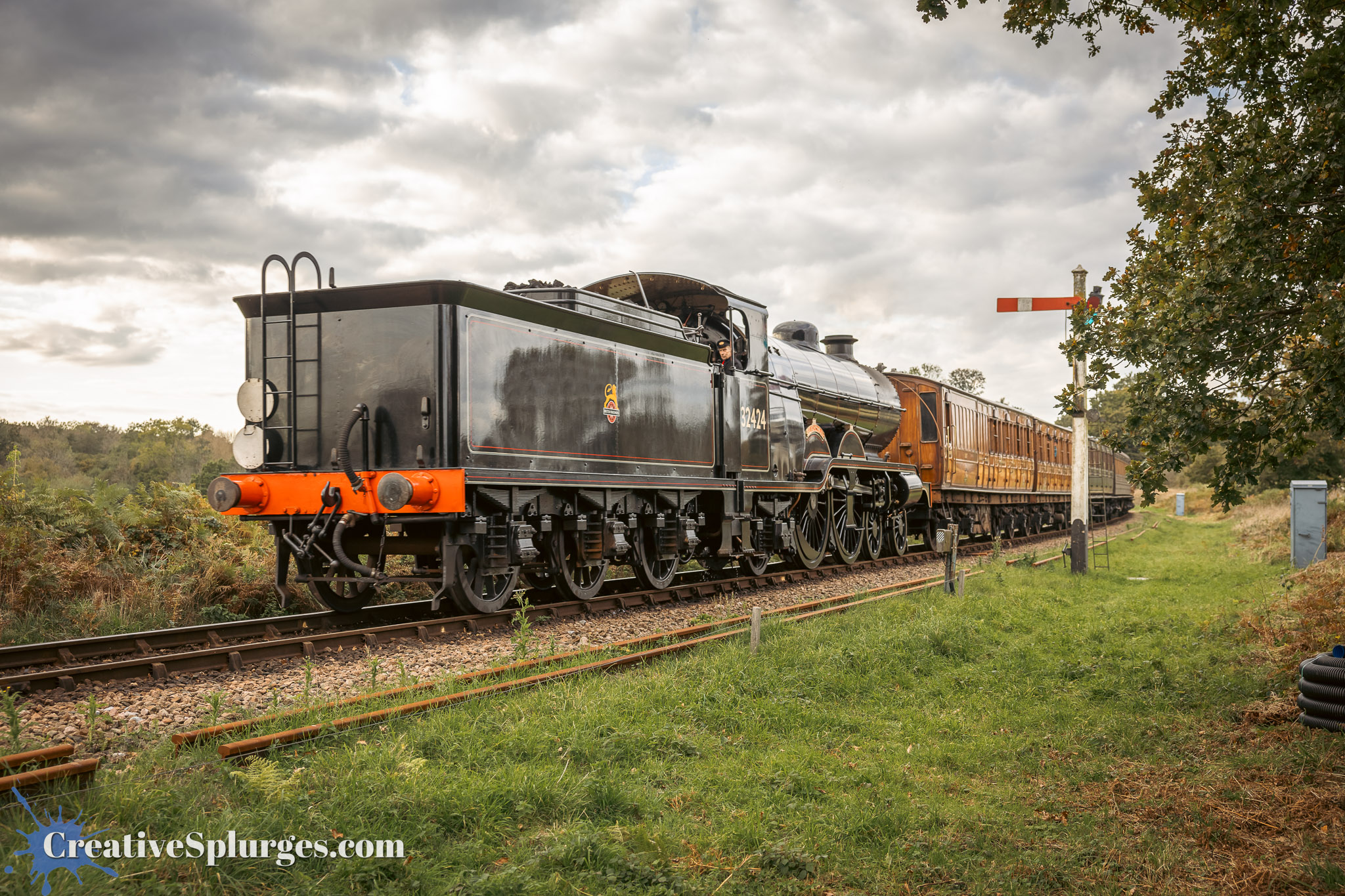
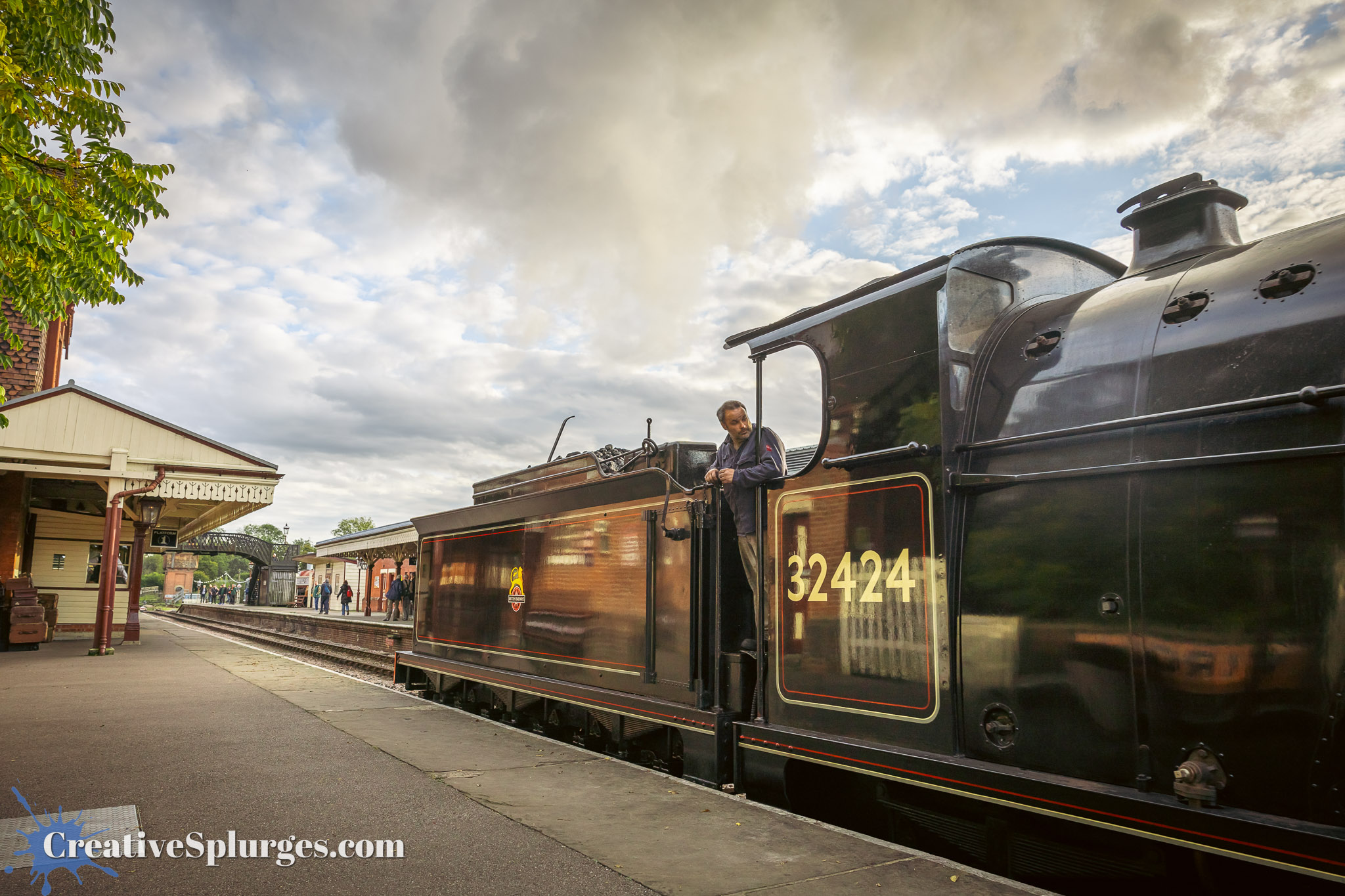
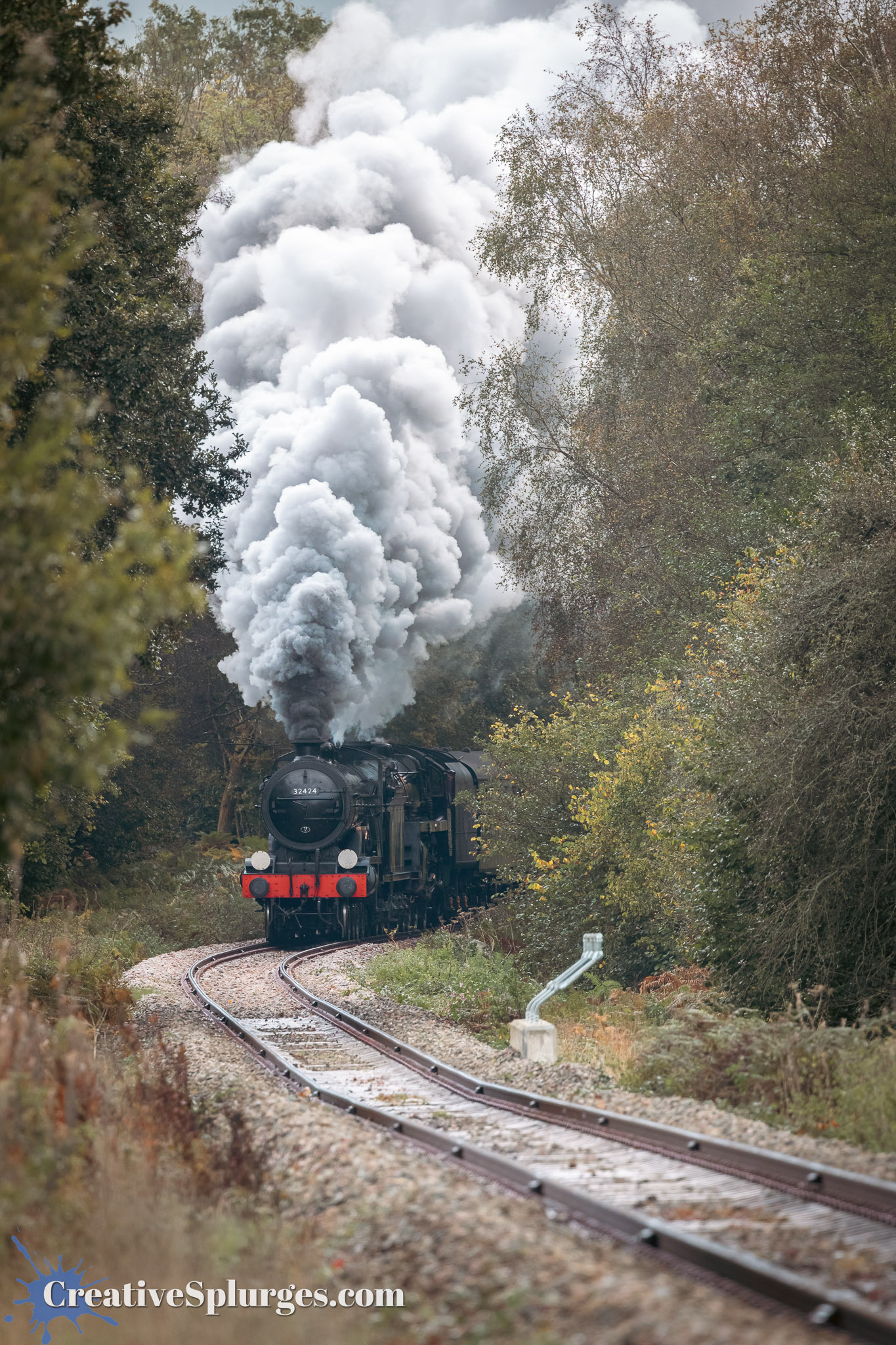
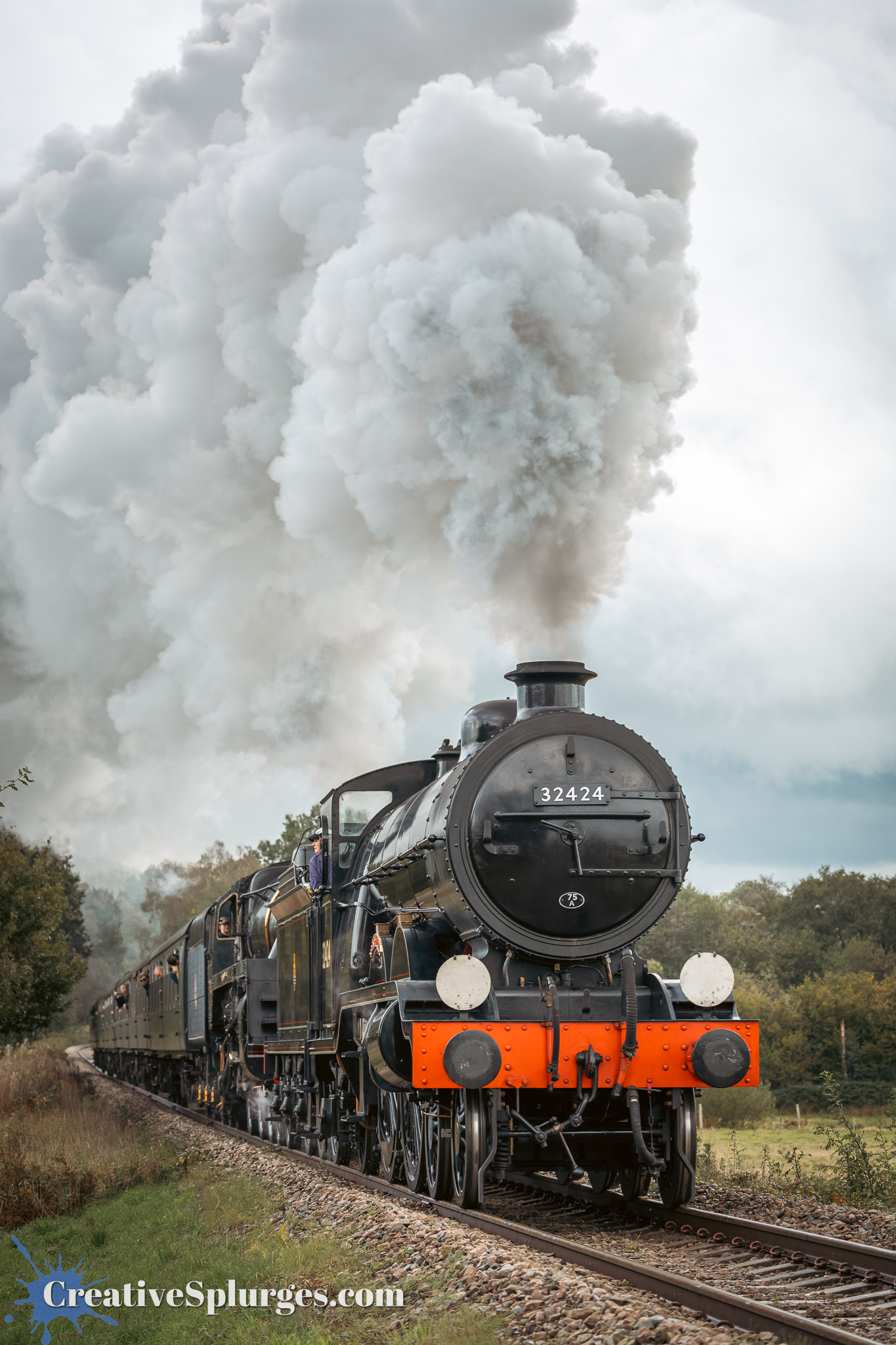
When I got back to the station, 32424 Beachy Head was taking on water and getting ready to head the service I was going to catch.
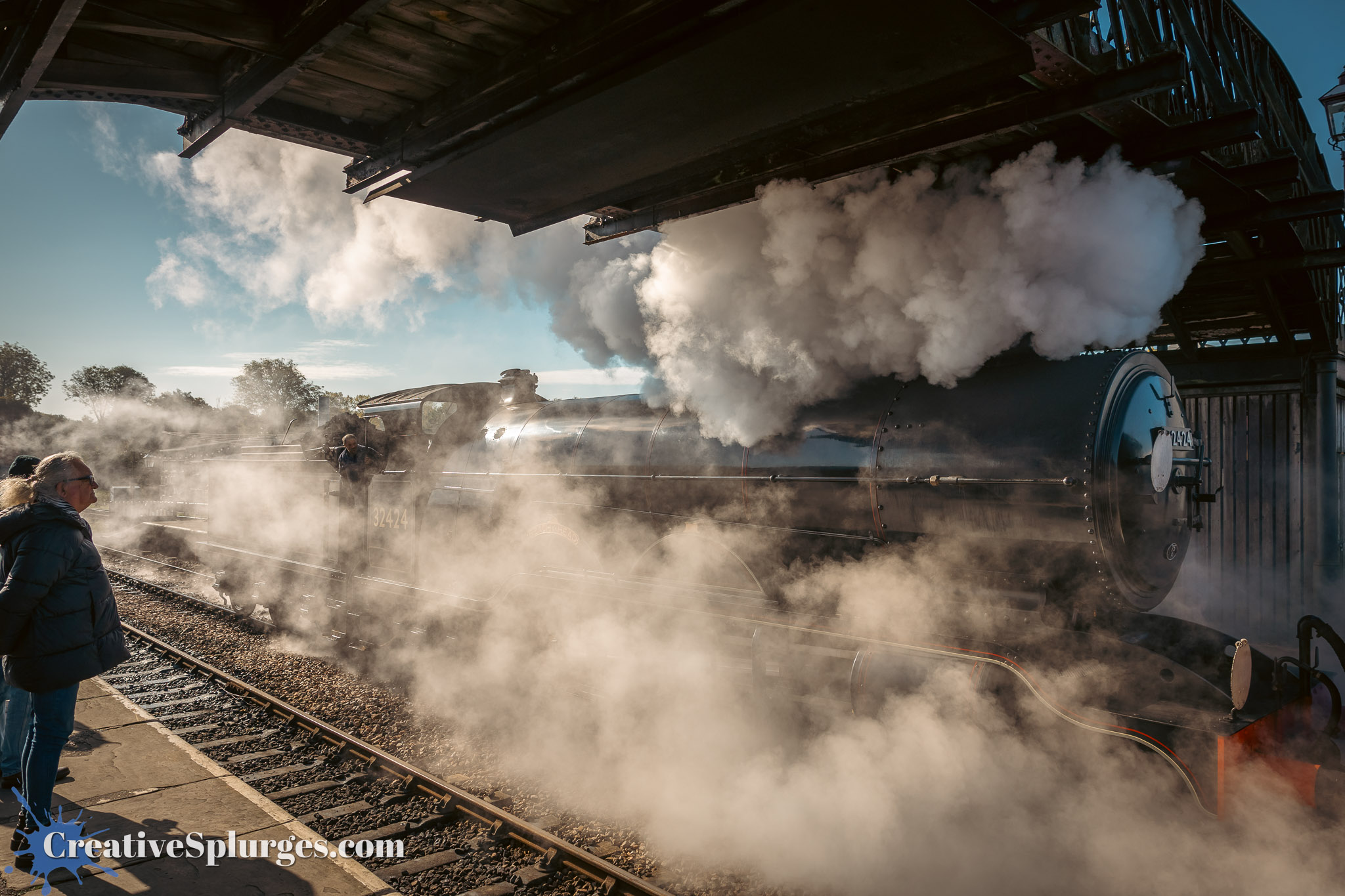
It soon fetched its coaches from the carriage shed, and I grabbed a shot of its cool smoke formations as it passed under the footbridge.
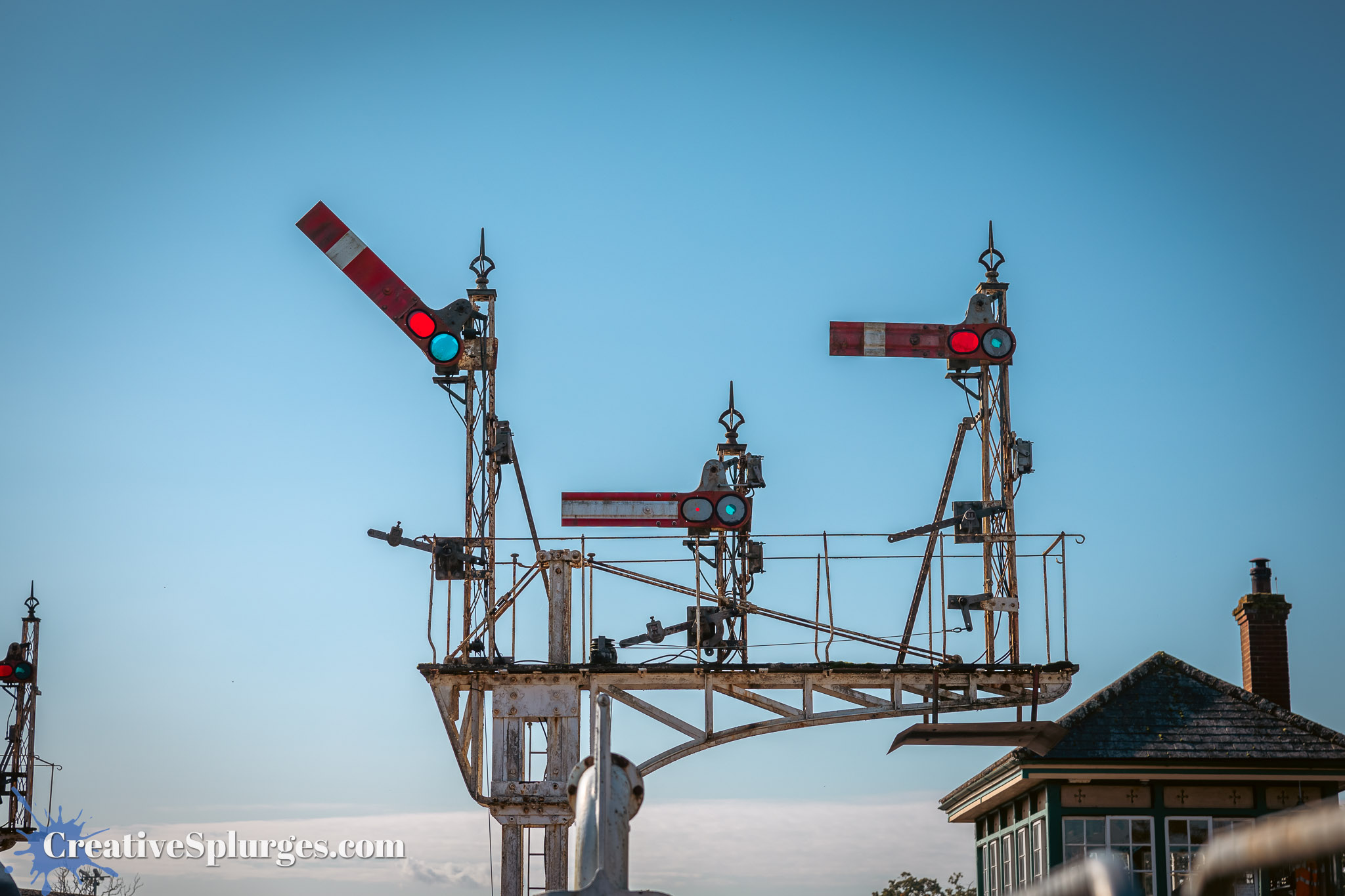
The journey to Horsted Keynes only takes 15 minutes on the train, not the four hours it took me when I made the journey on foot during the Branch Line Gala. From there it was only a short walk back south to Three Arch Bridge. Originally I had planned to include the bridge in my photos, but the trains were all coming out of the sun and so the side of the bridge I’d be shooting would be in shadow, so instead I chose to position myself under the bridge, and shoot south down the embankment. This also gave me the opportunity to include an old semaphore signal in the shot.
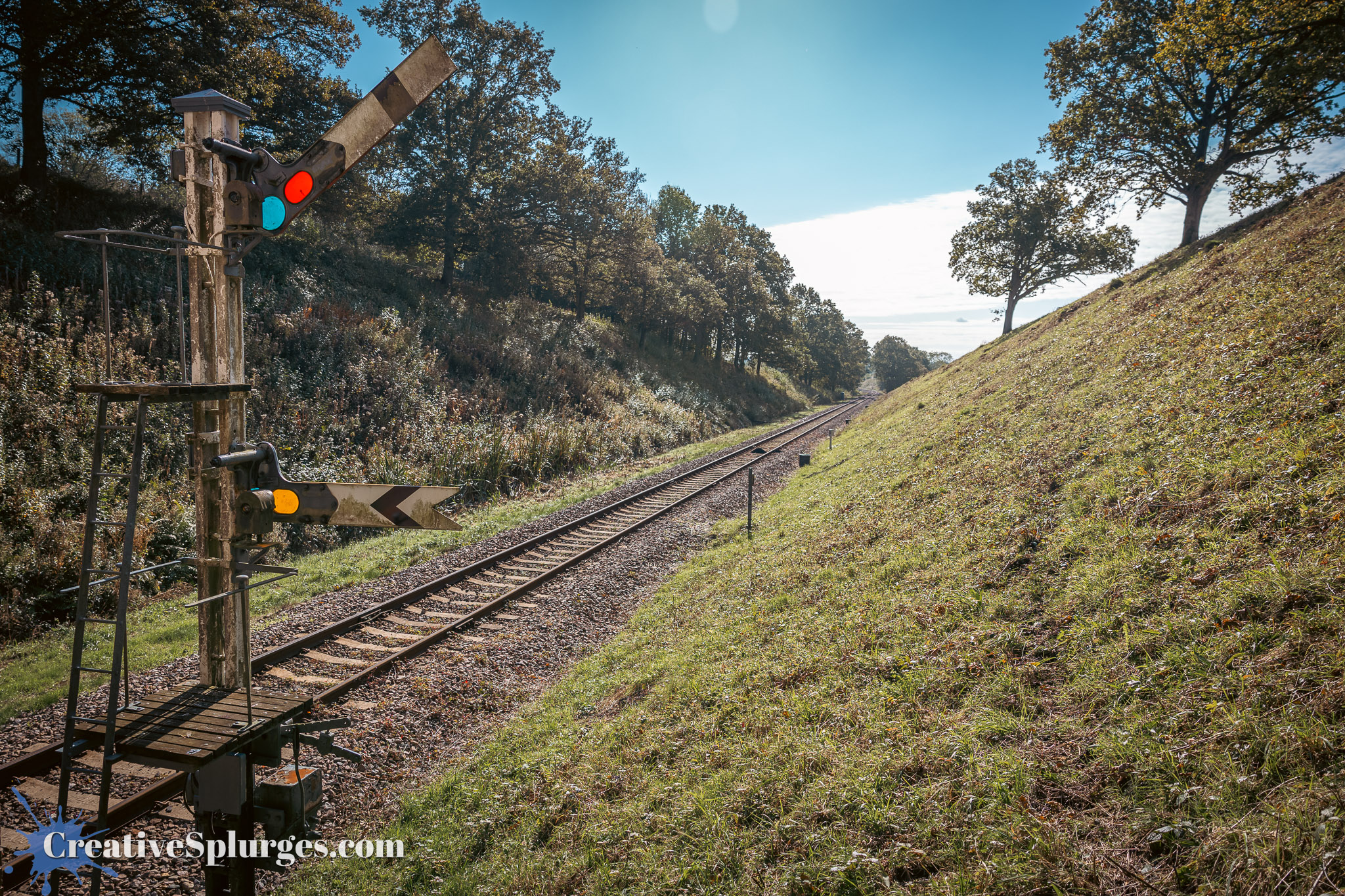
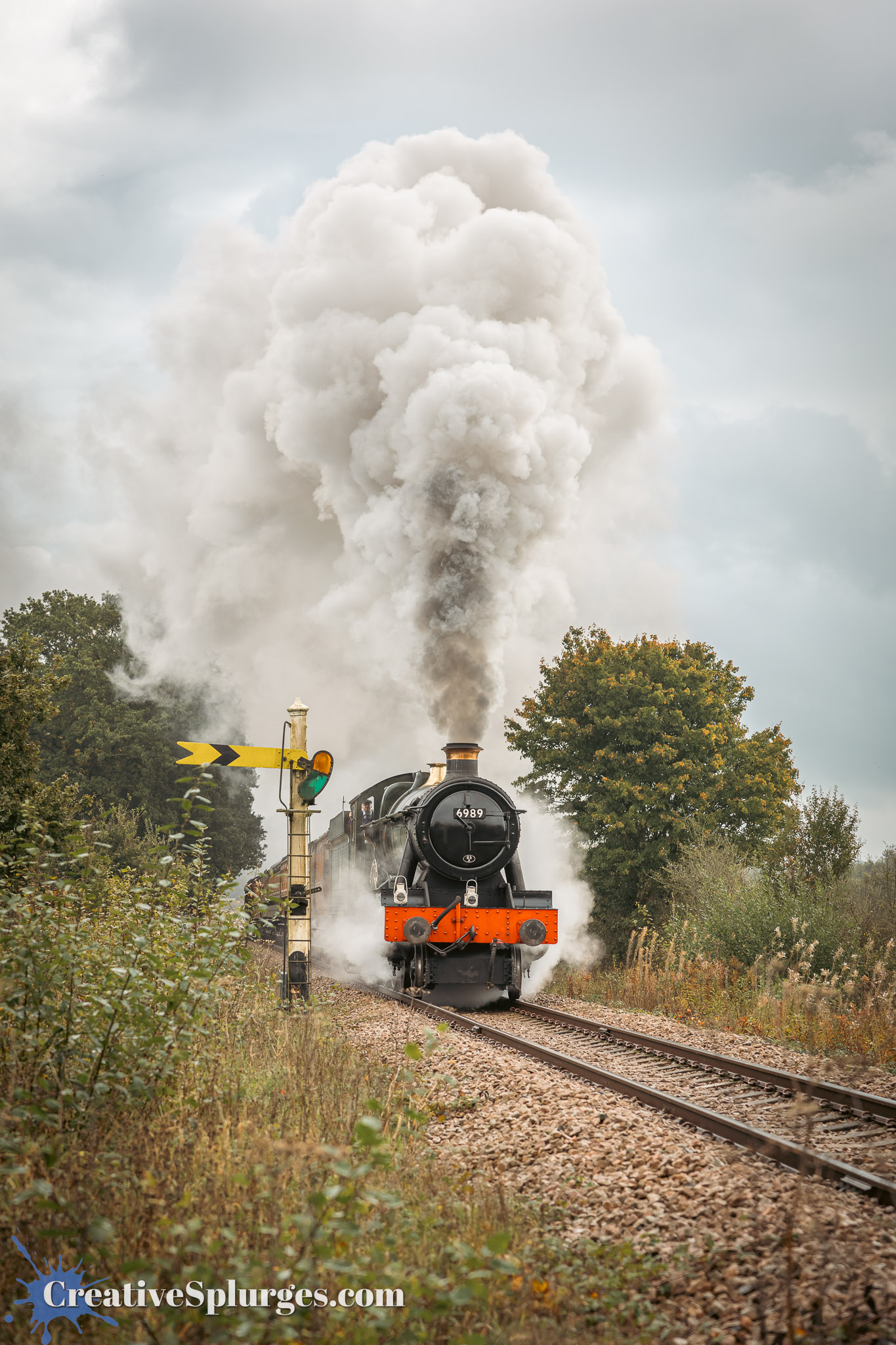
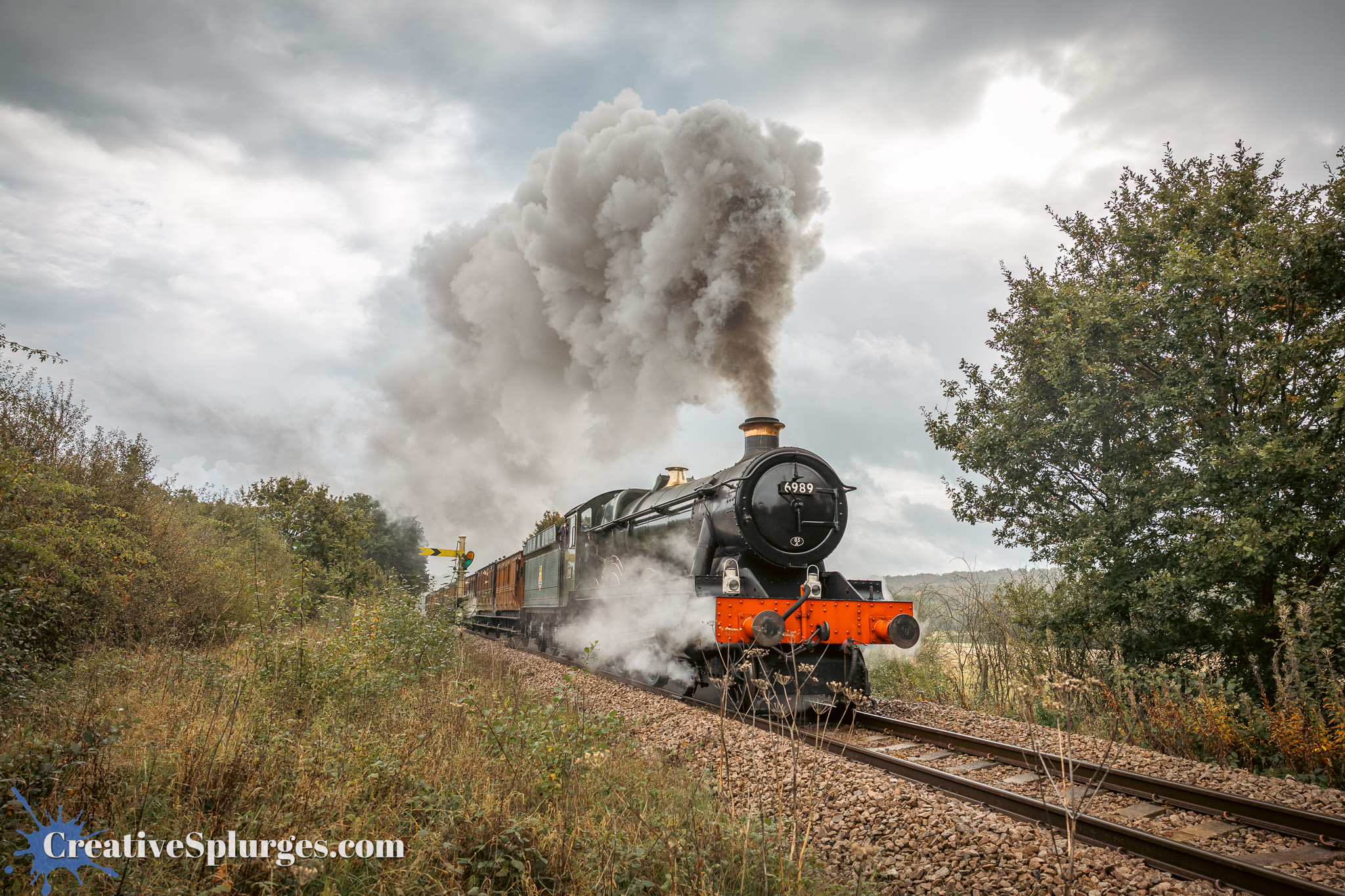
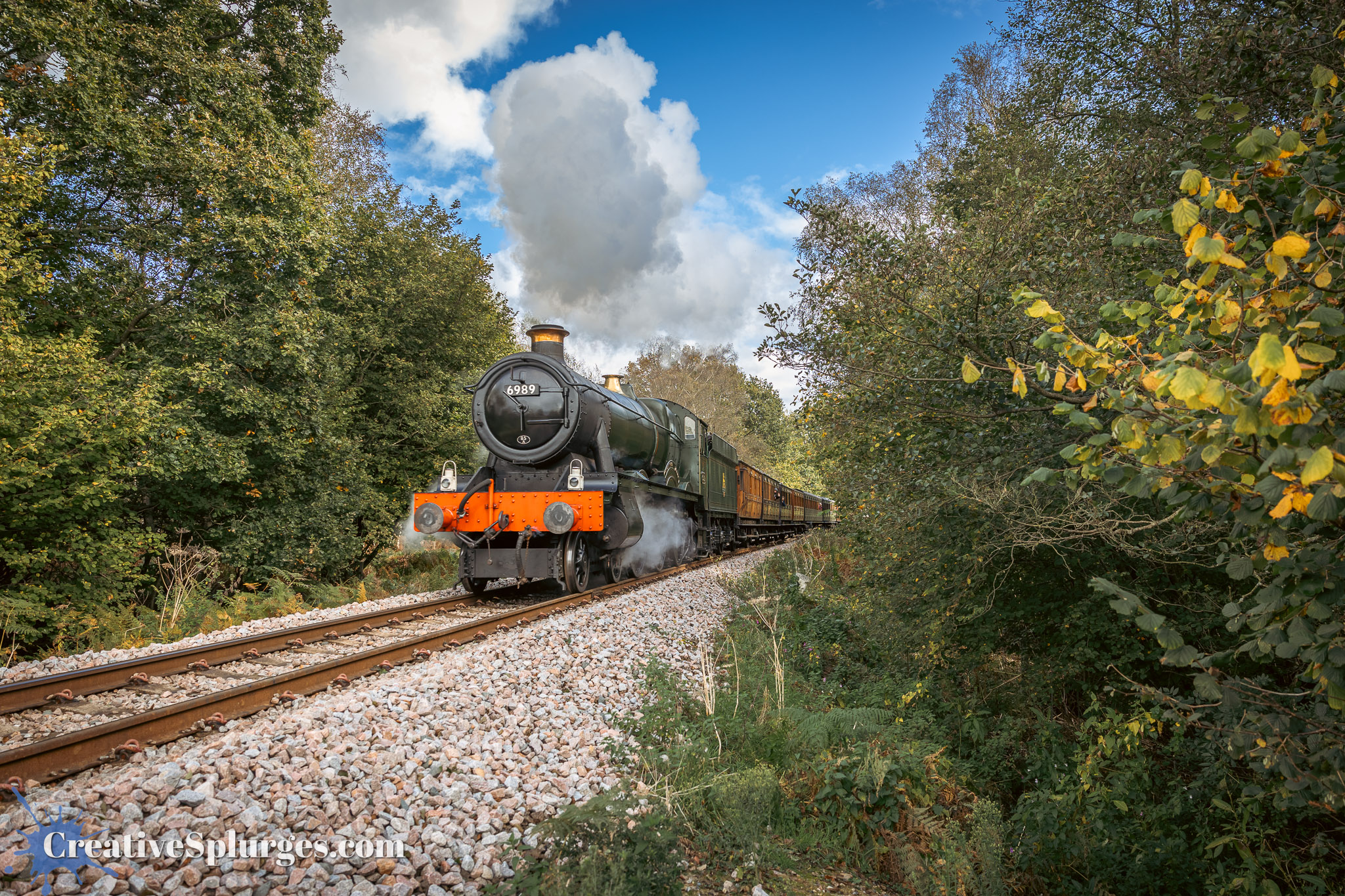
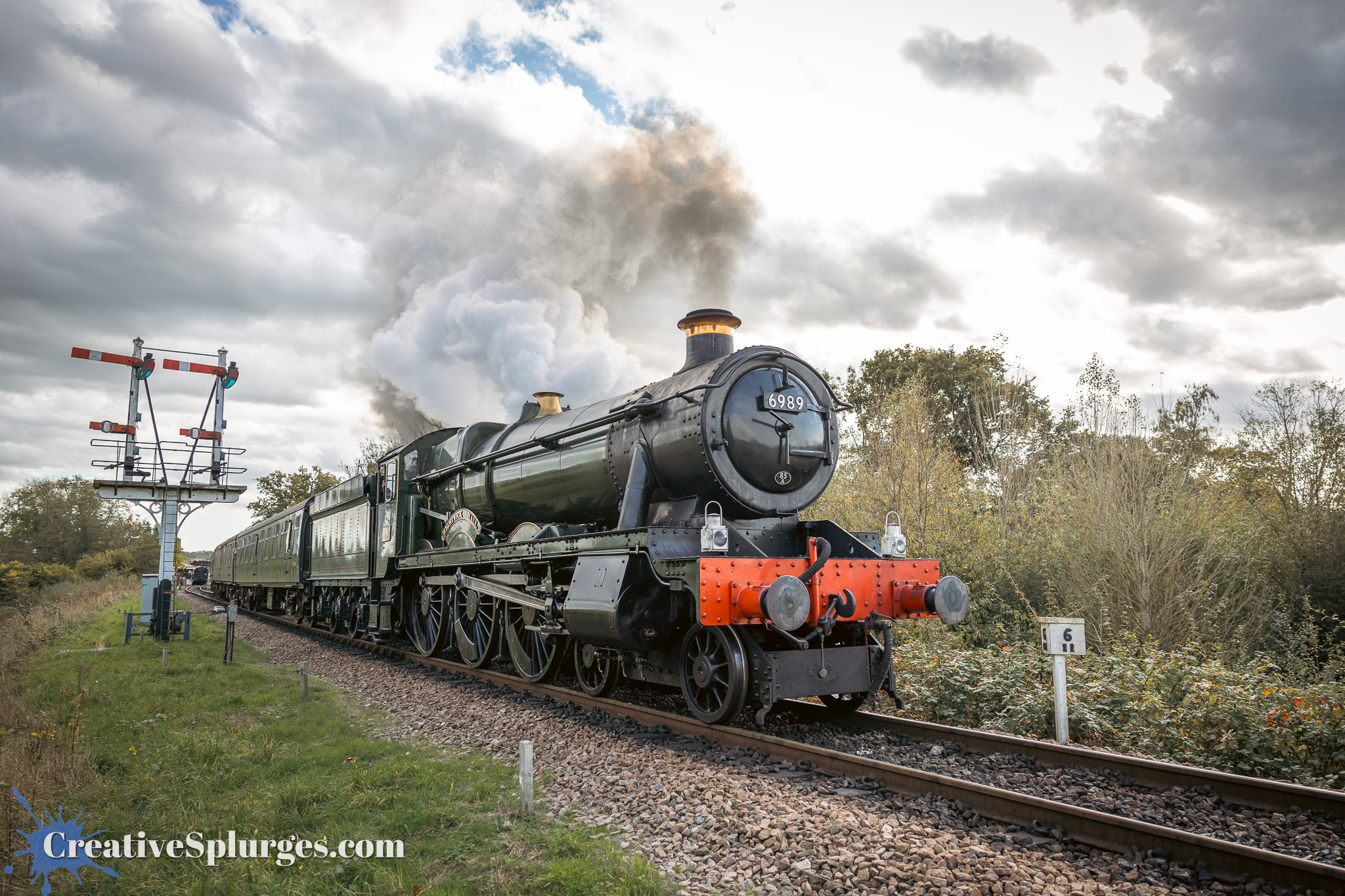
The first train to come by whilst I was here was 6989 Wightwick Hall.

I chose to frame the signal in the shot, but reviewing it right after shooting I decided it was a bit too much of a distraction. I was also a bit worried about the light as it was coming from the wrong side of the train, but it was about midday at this point and I reasoned that in the 90 minutes until the next Sir Nigel Gresley service came through, the sun would move in my favour.
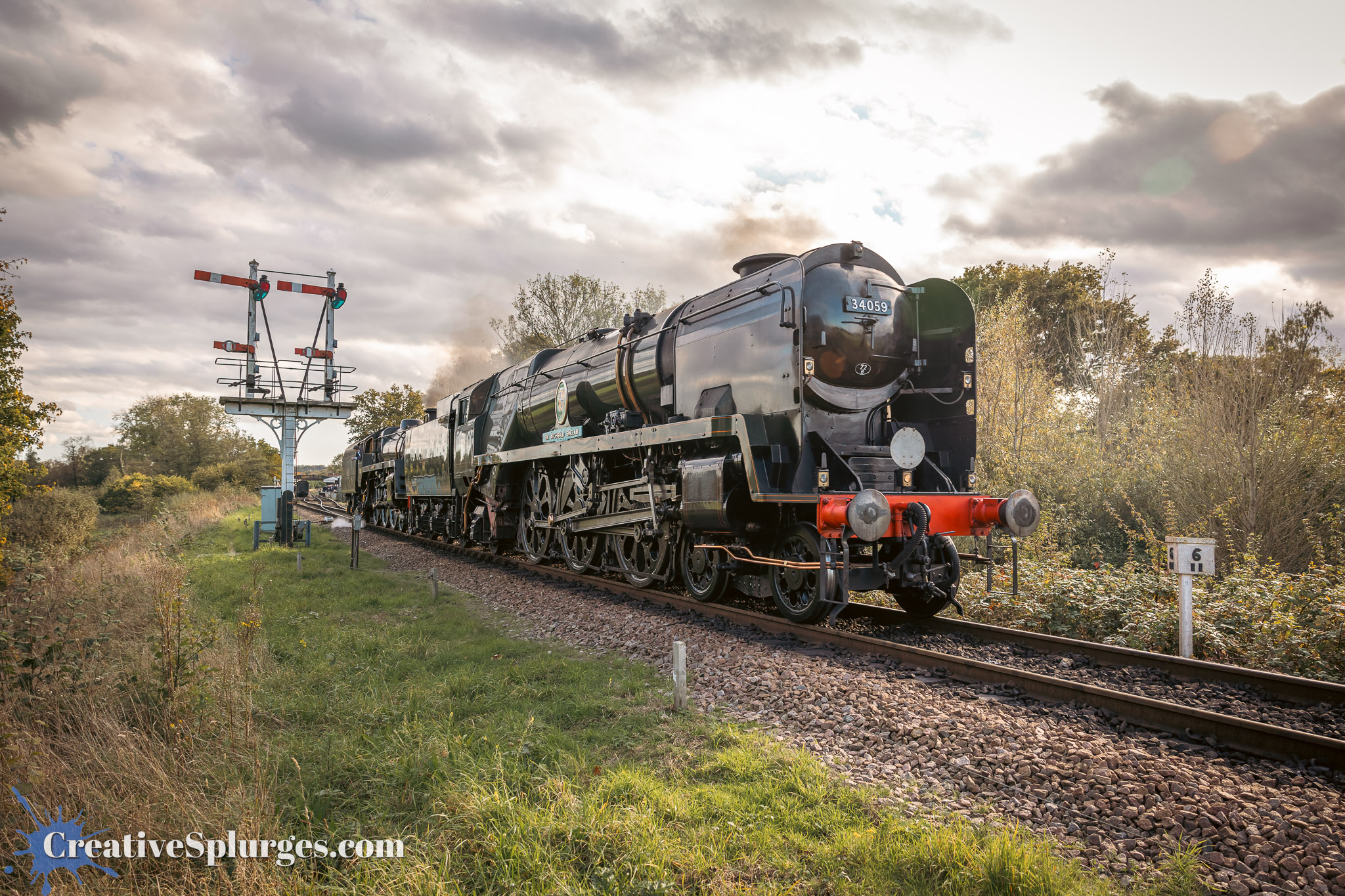
When the next service came through – Camelot leading Sir Archibald Sinclair in a double header – I decided against framing for the signal.
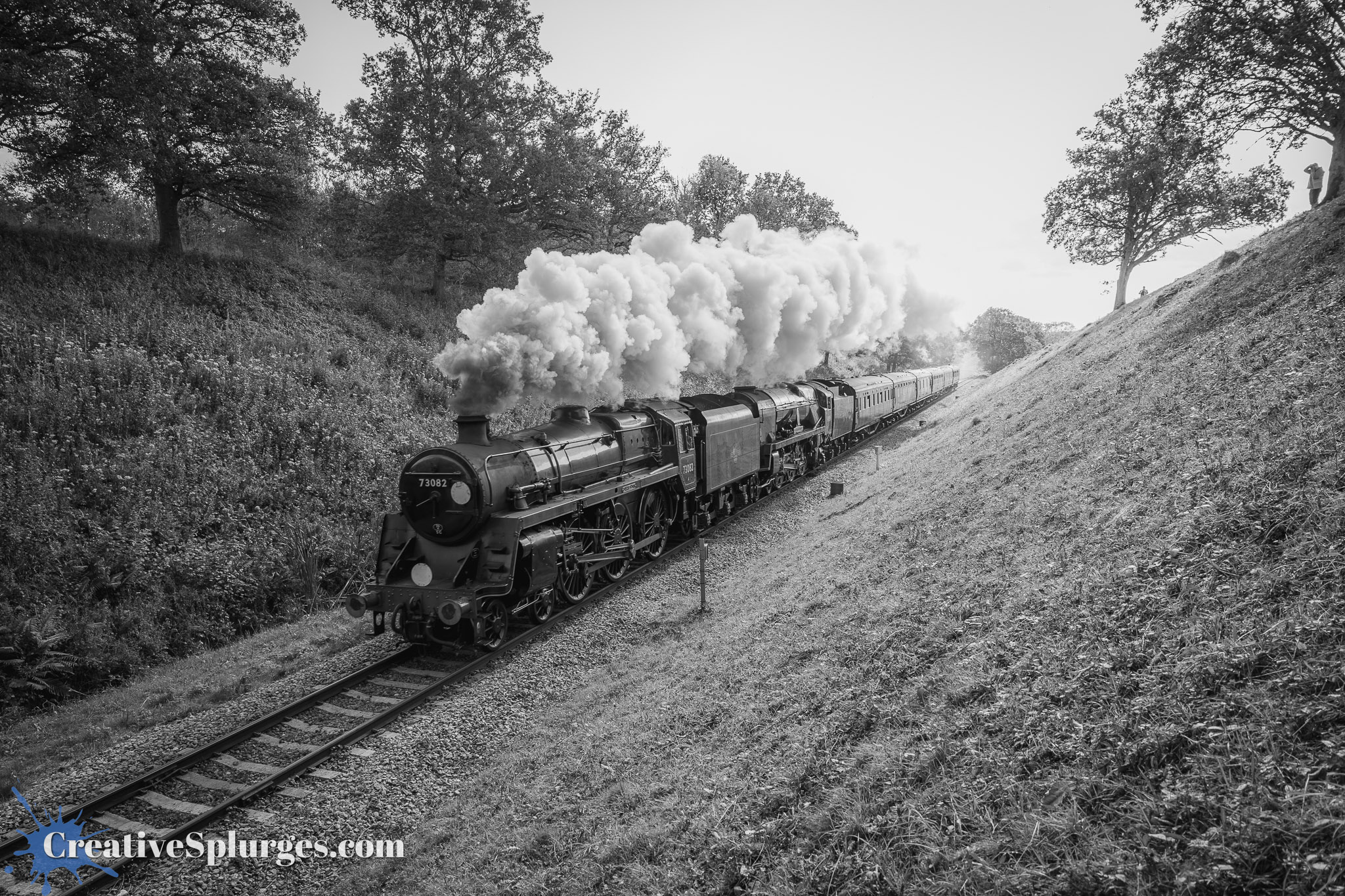
That said, as the trains went by I photographed them moving by the signal, and I liked how it captured the motion of the train.

Although I will admit, the motion blur is solely the result of the Auto ISO setting not being fast enough for the amount of movement I was photographing.
I was happier with how the shots of Camelot and Sir Archie came out, so all there was to do at that point was wait for the next train, which would be Sir Nigel Gresley on its second of three runs that day.
Luckily, when the time came, the light had indeed turned in my favour.

I again kept shooting as it went past, but this time the shutter speed ended up a lot higher.
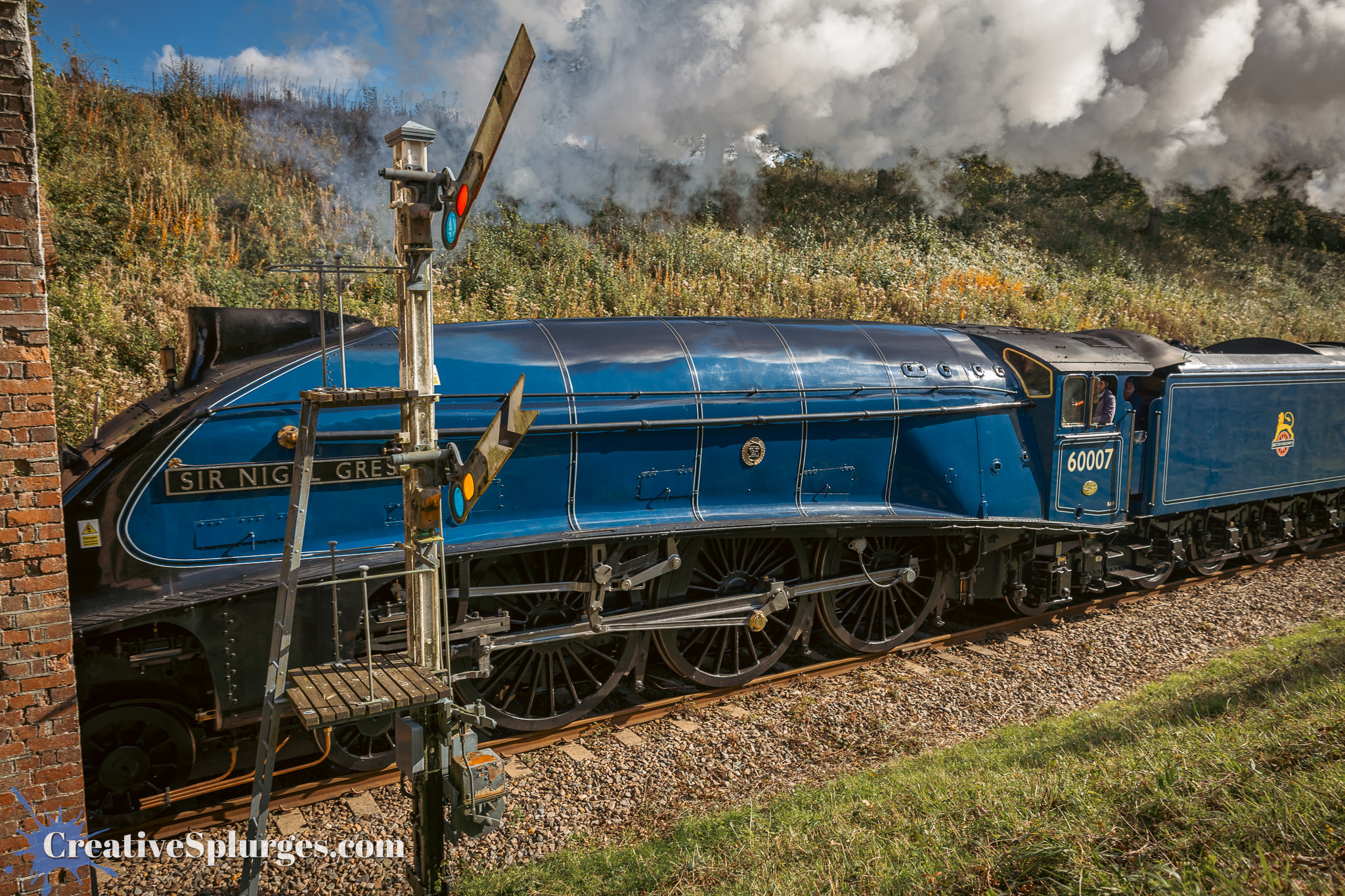
After Sir Nigel had gone by I reviewed the shots in my viewfinder, and was so very delighted, and perhaps a little relieved, that I’d gotten the sort of shot I’d come there for.
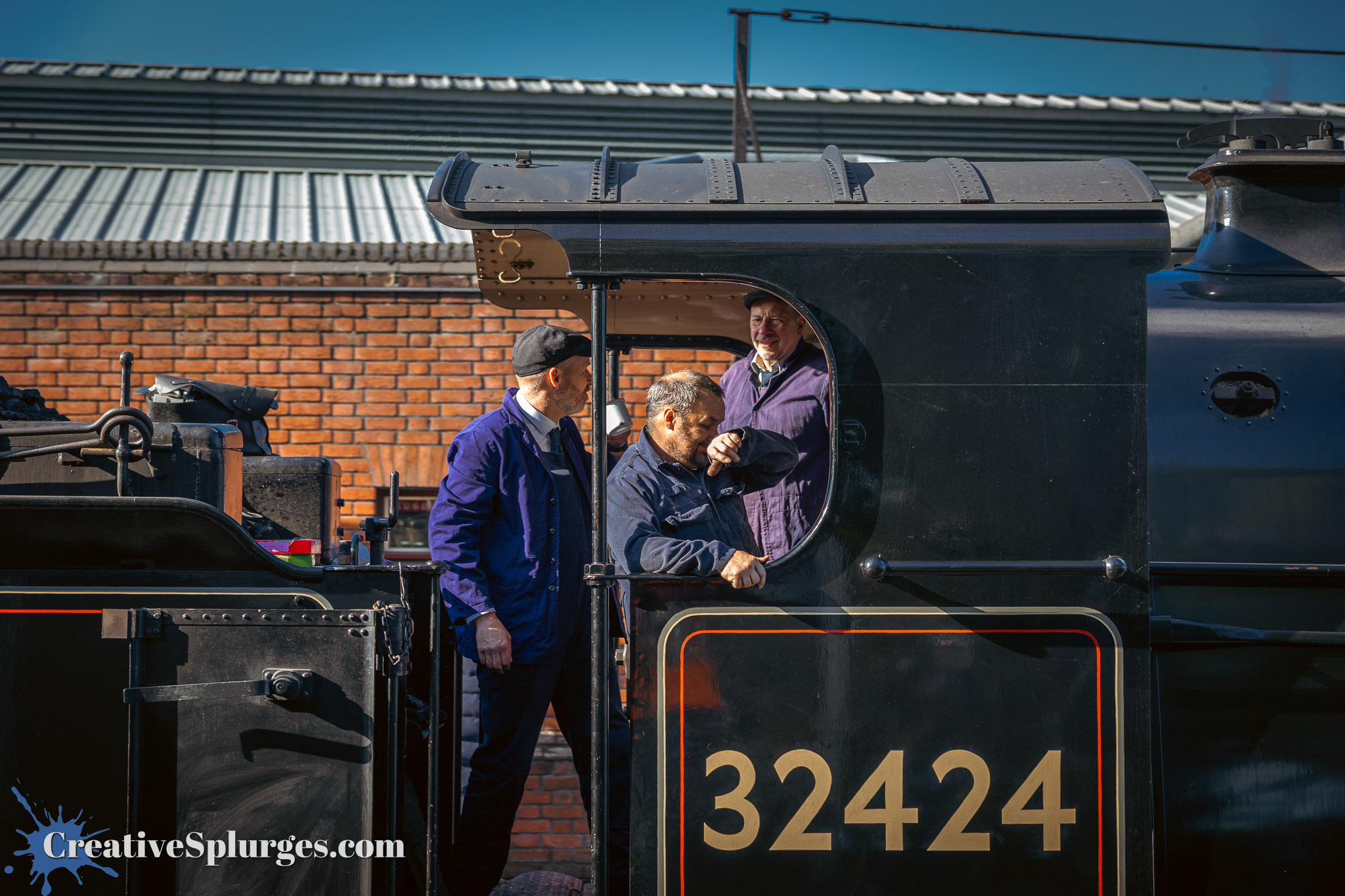
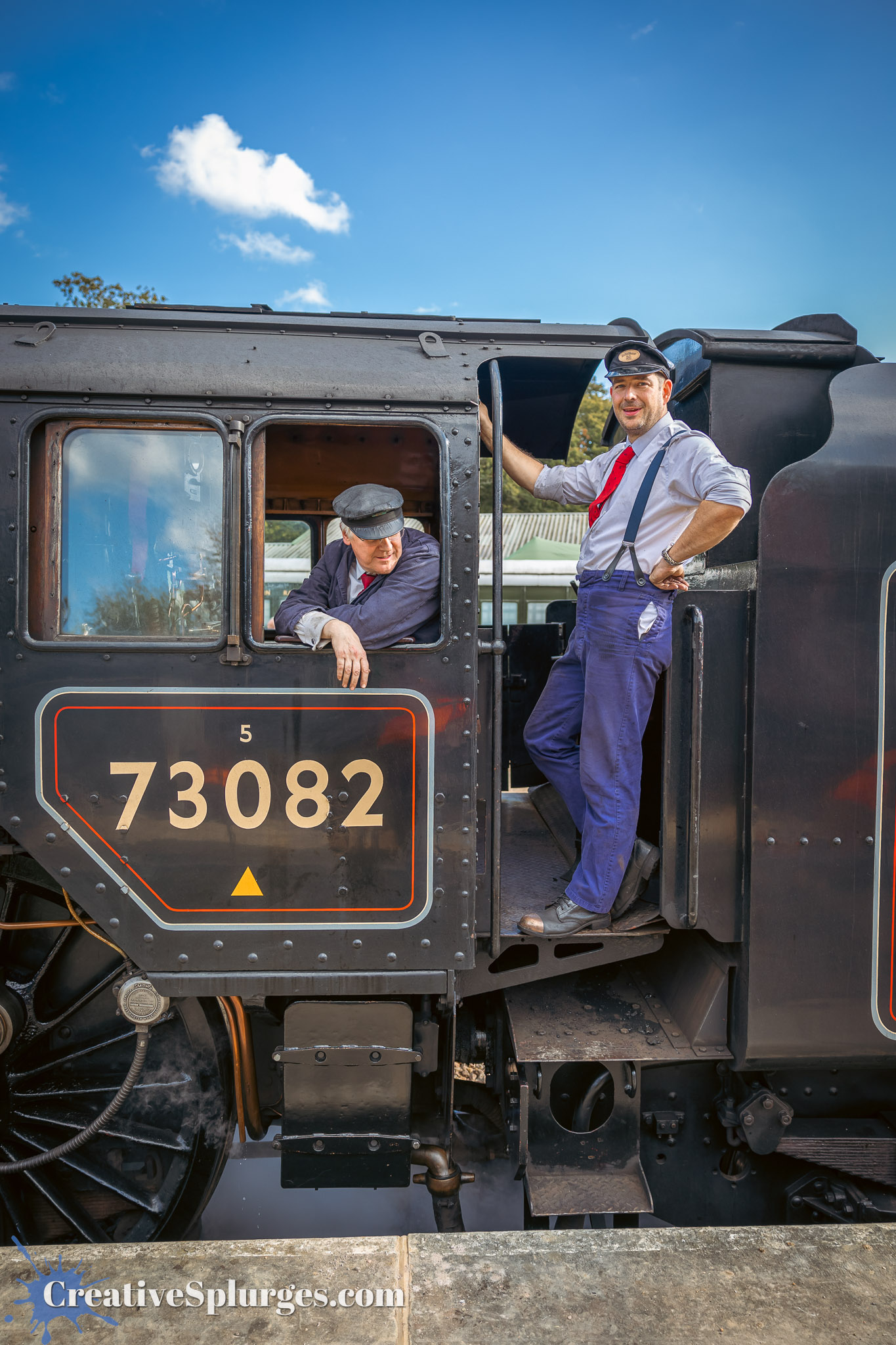
I walked back up to Horsted Keynes in order to catch a train back to Sheffield Park. Shortly thereafter Camelot and Sir Archibald Sinclair brought the next service back south. There was a little wait before they set off, so I could take some time to get some photos, starting with one of Camelot’s crew.
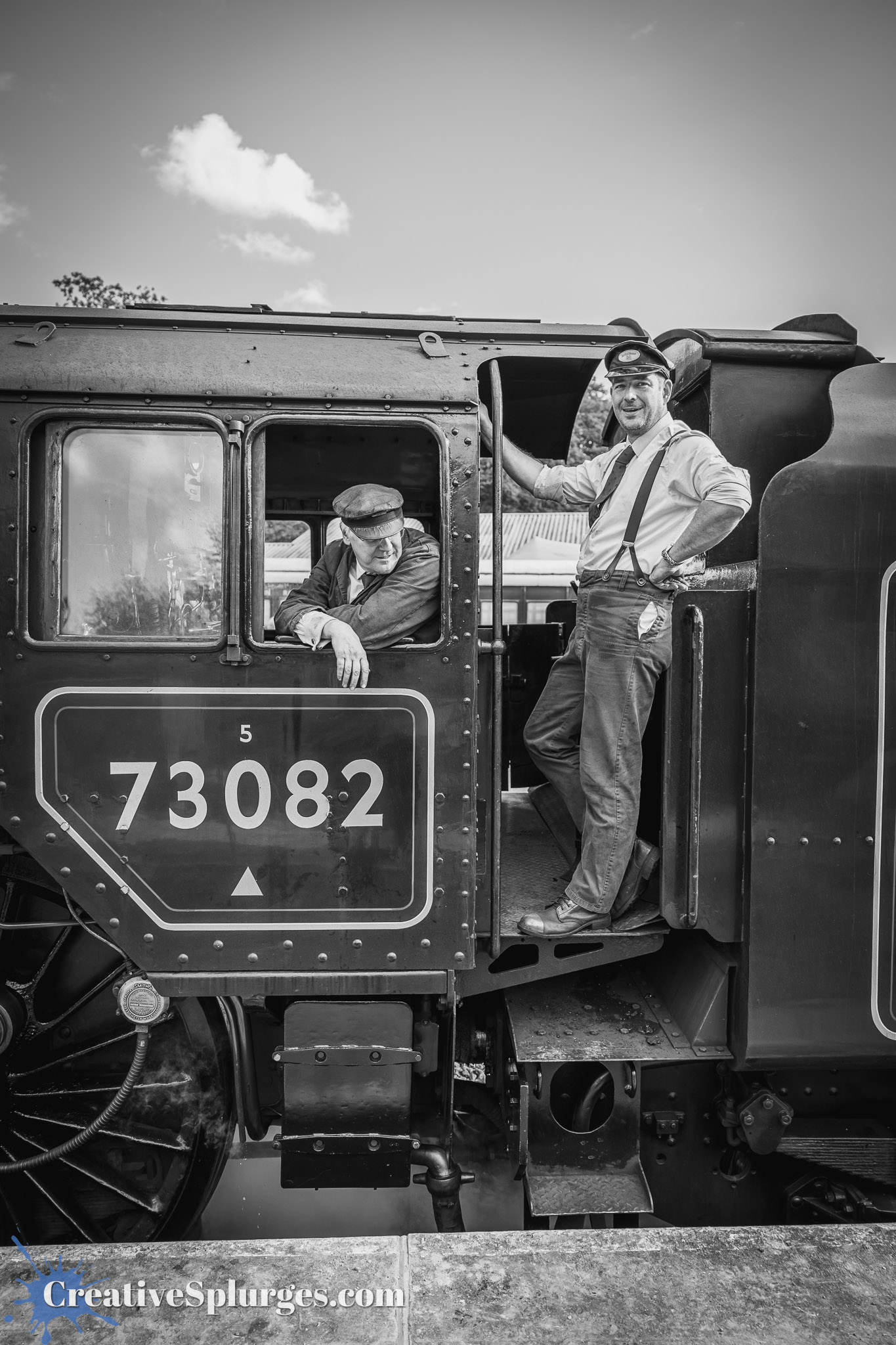
And the same with Sir Archie’s crew.
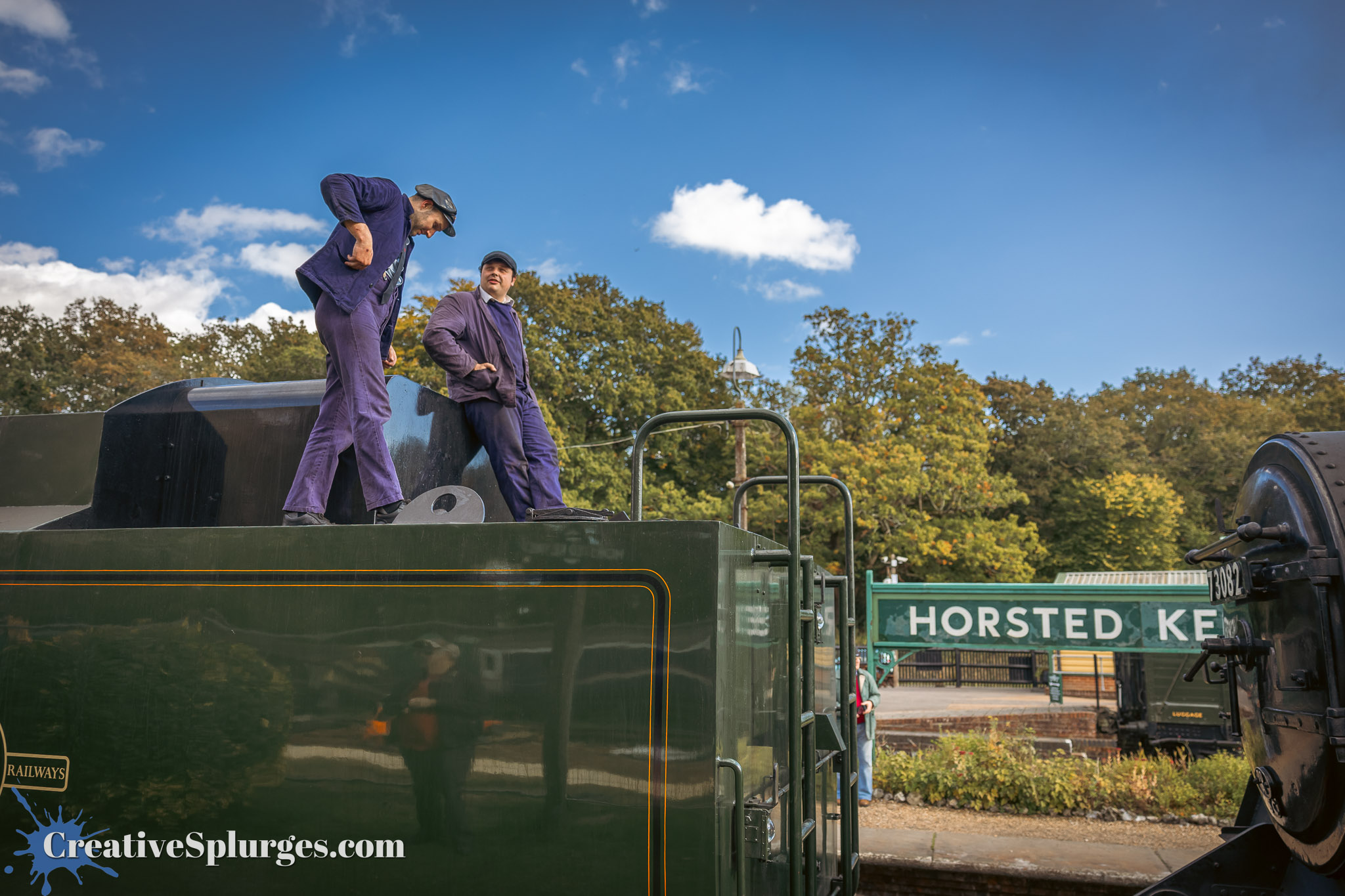
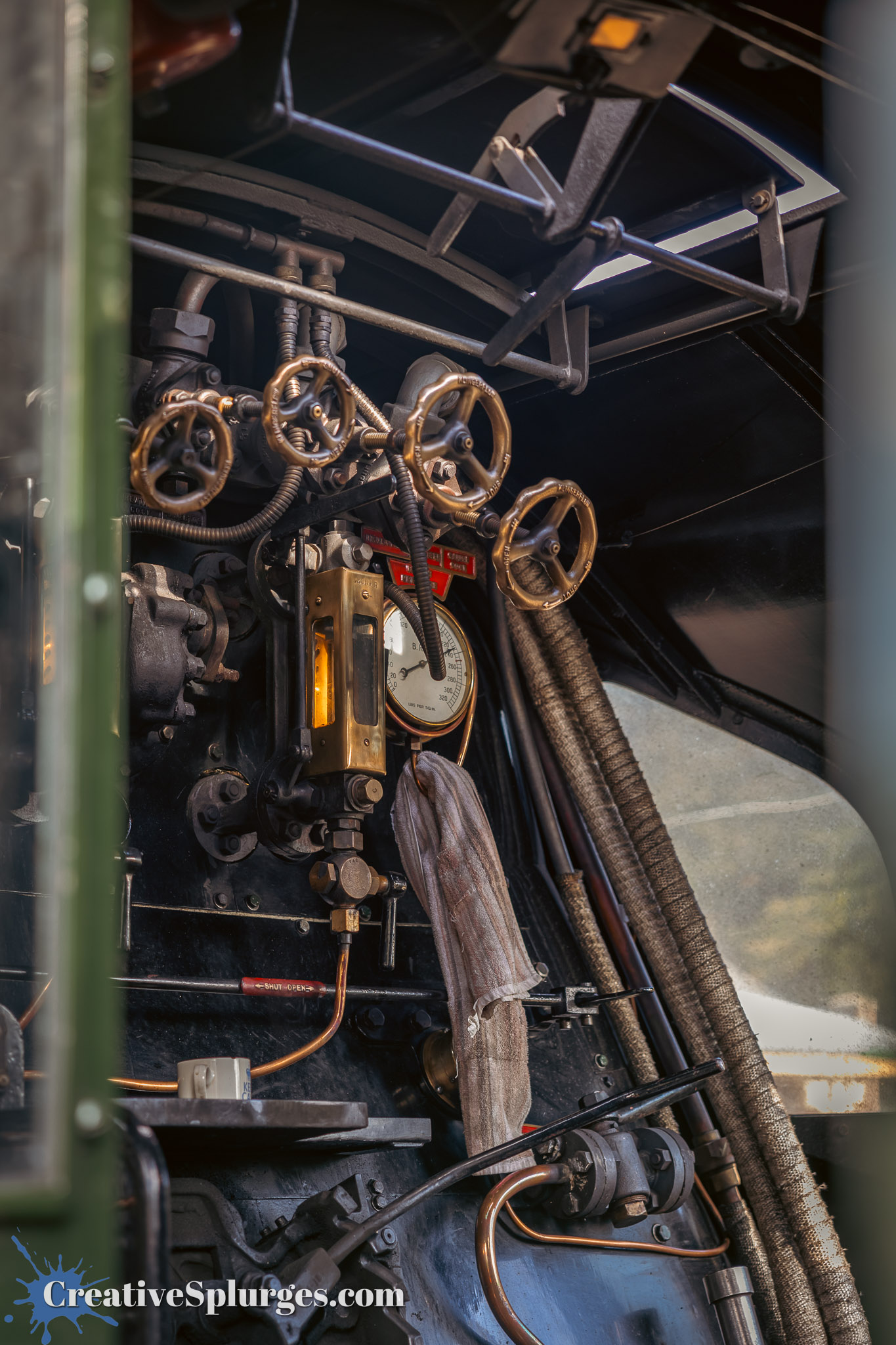
I also took a few photos inside Sir Archie’s driving cab, although it was a bit tight.

I headed back to Sheffield Park where Wightwick Hall was preparing to depart.

I headed up the track a little, not wanting to cross the second bridge until Wightwick Hall had departed, and Camelot and Sir Archibald Sinclair had ran around their coaches.
Whilst Camelot and Sir Archie were running around I grabbed a shot of one of Camelot’s crew.

I then headed up the track to the corner I’d used previously ready for Camelot and Sir Archie to depart.
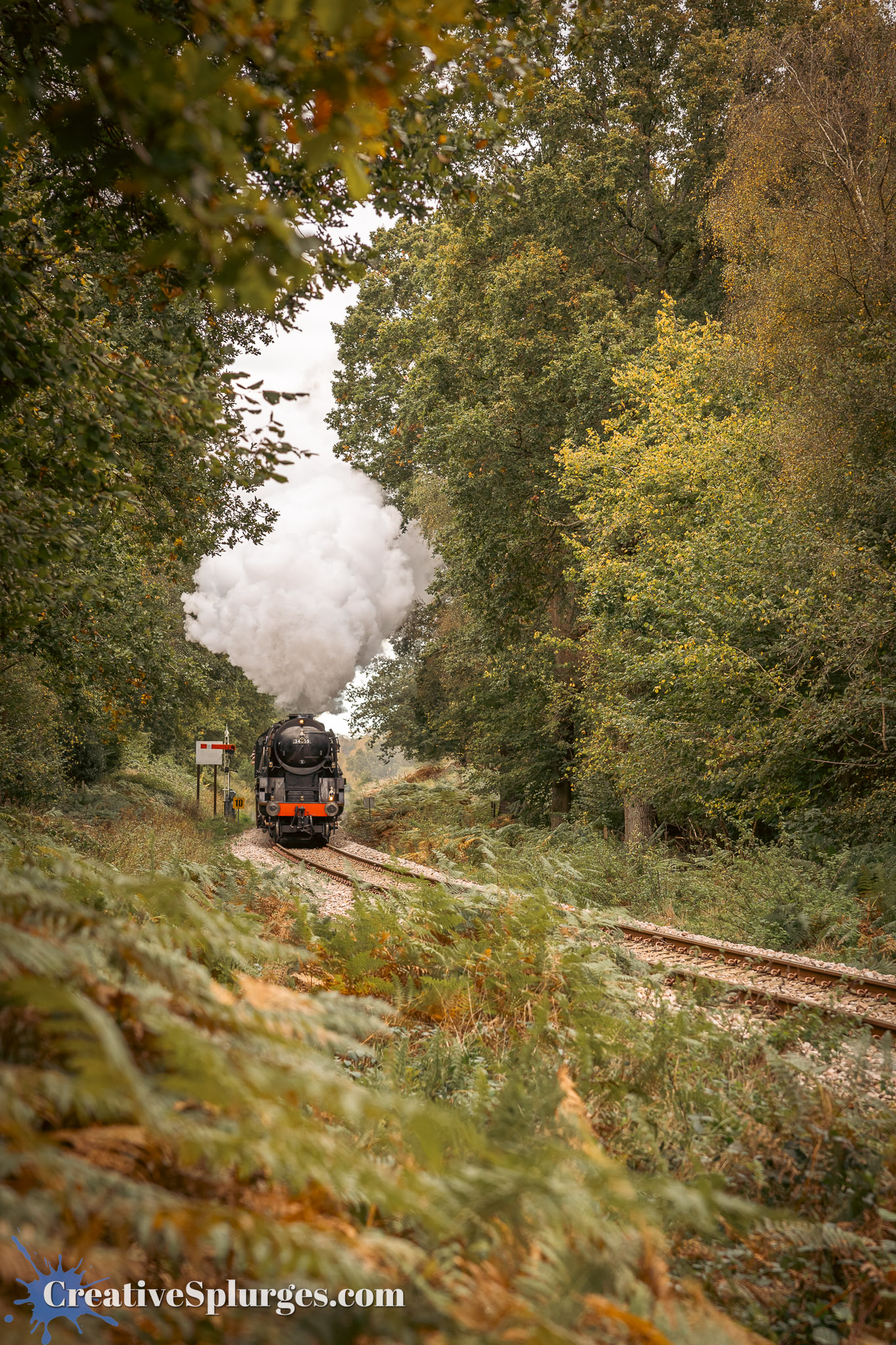
I headed back towards Sheffield Park. By this point Sir Nigel Gresley had returned and was running around its coaches, giving me a chance to take some photos of it light engine.

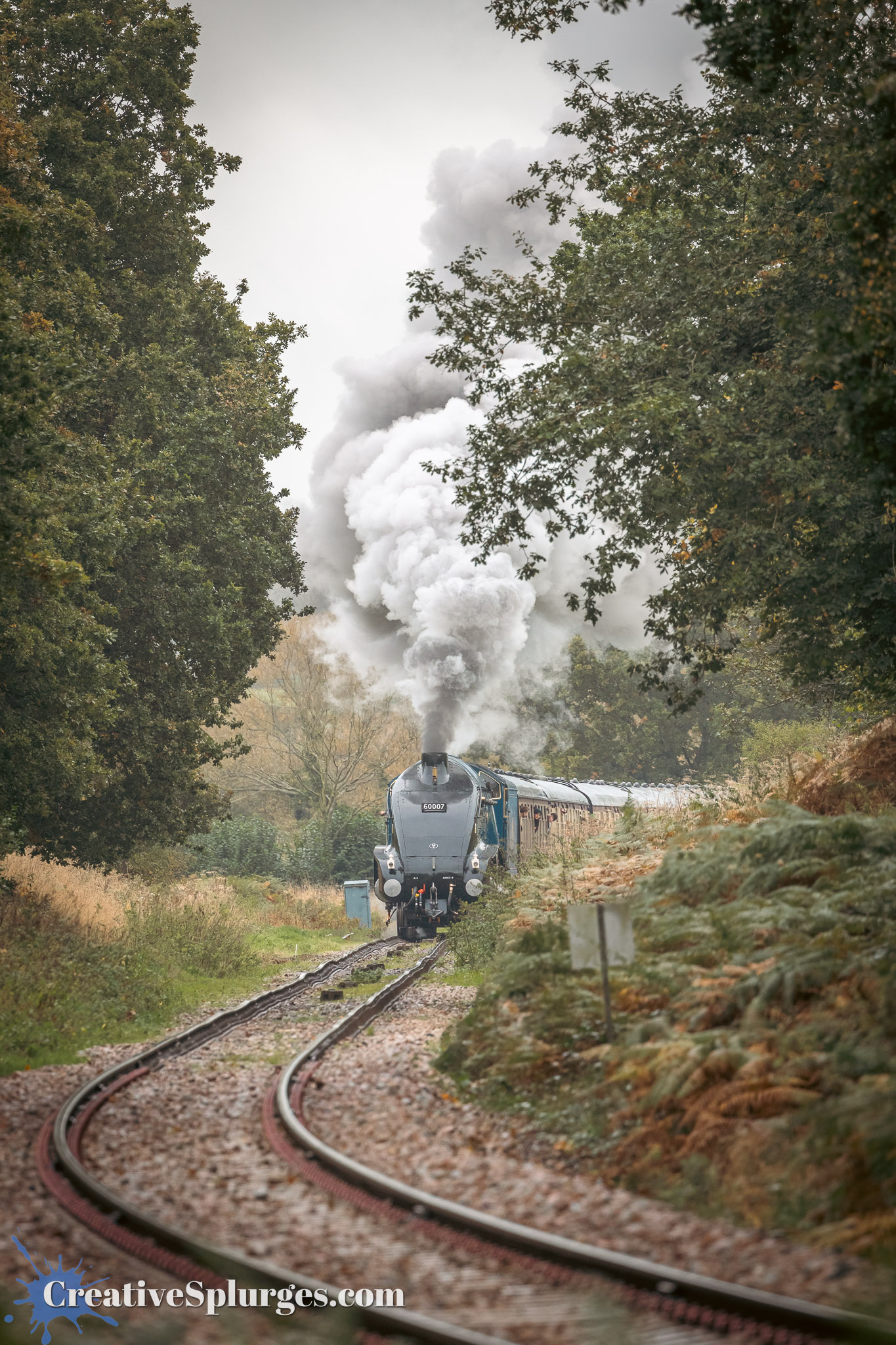
As you can see the clouds had rolled in by this point. For Sir Nigel’s last run of the day I decided to return to the spot where I had tried to photograph it that morning. With it being later in the day and the locomotives having been running all day I was reasonably sure I wouldn’t get a repeat of photographing nothing but clouds of steam.
As I waited in my spot, the clouds parted, and I was treated to some lovely golden late afternoon sun which timed perfectly with Sir Nigel departing. Presently it was upon me and I had my moment.

Got it.
This was the last train of the day. When I got home I immediately imported the day’s pictures and applied a quick edit to this shot, and rejoiced. It was near enough exactly the shot I had come there for. An absolutely fantastic end to the first day.
Having gotten the shots I was after on the Friday, on Saturday the pressure was off a bit. I wouldn’t be wasting my shots by any means, but I did feel afforded the freedom to try some different things.
To this point, every photo I’d taken at the Bluebell Railway had been shot with either my 24-70mm lens or its 24-105mm predecessor. But my experiences the first morning, with some lovely dramatic steam shots happening a bit too far away, prompted me to decide to bring along my telephoto lens for the second day and get some more dramatic shots.
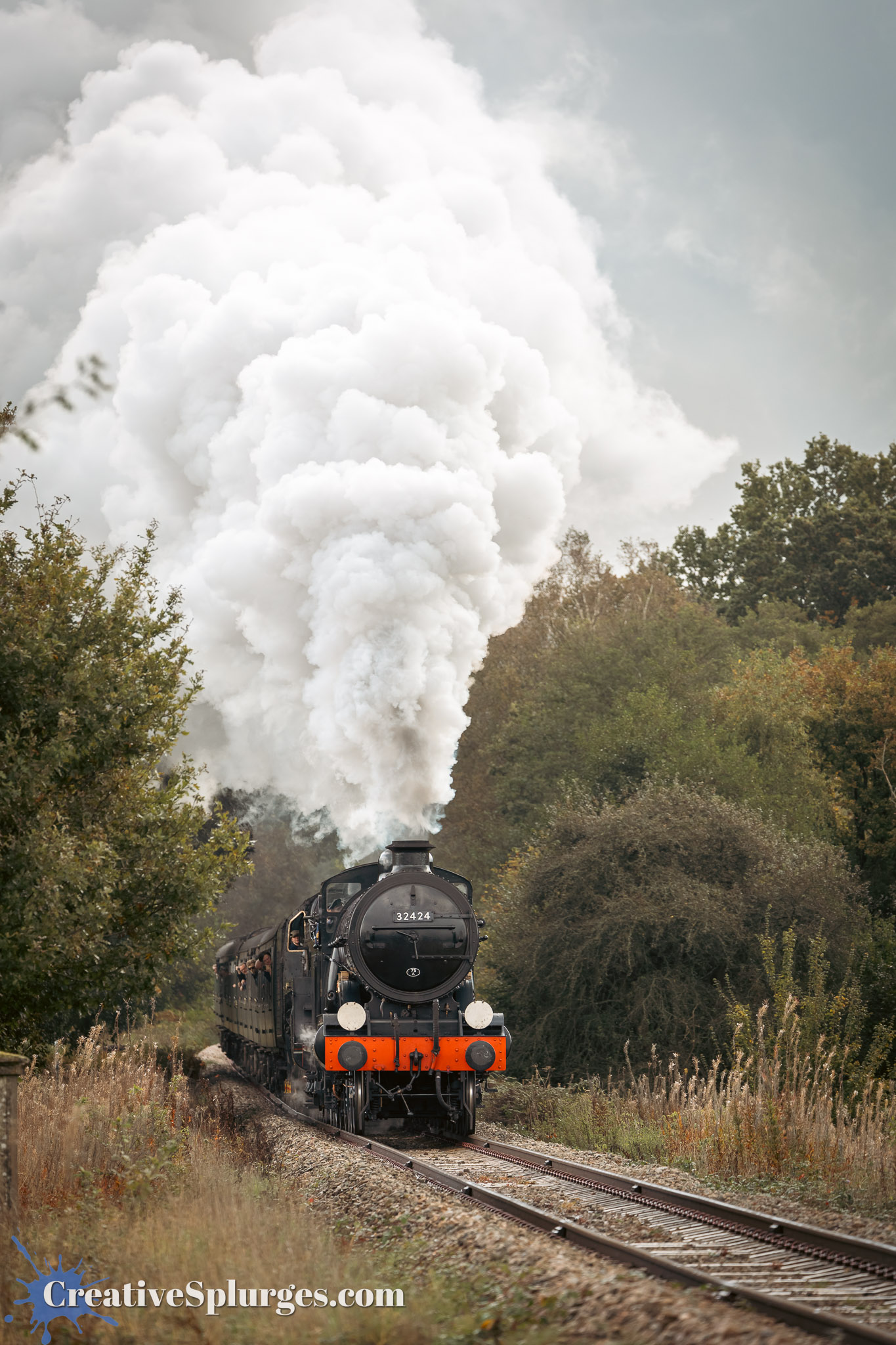
For the first service of the day, headed by Camelot, I positioned myself near the same spot where I ended the day before, but thanks to my telephoto lens the shots look completely different. I was hoping I’d get dramatic shots of trains emerging from clouds of steam, like I saw the day before (helped by the fact the day was noticeably greyer, flattening out the light).
It turned out almost exactly as I was hoping.


After Camelot went by, I decided headed up the track to the wooded corner I’d used the previous day, and continue to use my telephoto.
The next train was headed by Sir Archibald Sinclair.

As I knew would happen, the problem with the telephoto was that it didn’t open wide enough when the trains were right on me. I could still just about grab usable shots, though.

With Sir Archie gone by, I decided to hold position for the next train, which would be headed by Sir Nigel Gresley, and keep shooting with my telephoto.
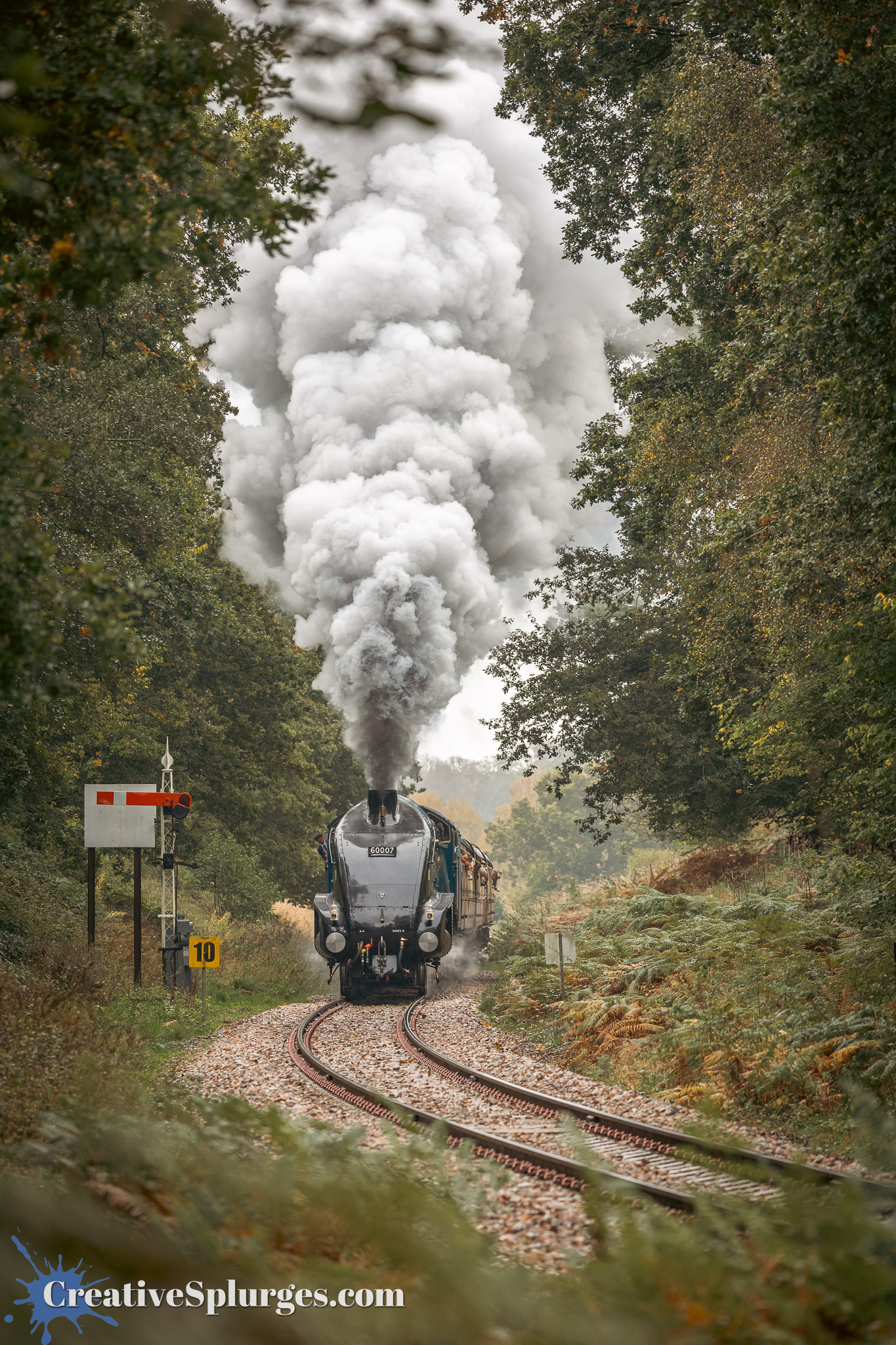
I had been hoping that Sir Nigel would let off steam from its front pipes for a dramatic shot, but unfortunately for me it was all let out of a vent on its roof. It did at least mean I got to see the locomotive, but not emerging from smoke and steam in the way I was hoping.


Originally my plan had been to catch the train up to Kingscote, to use some of the locations I’d used during the Brighton Works Weekend. However because the weather wasn’t great I decided it wasn’t worth the time to ride up there to get shots potentially very similar to what I’d already got. So instead I decided to play it by ear, and continue walking up the track from where I was.
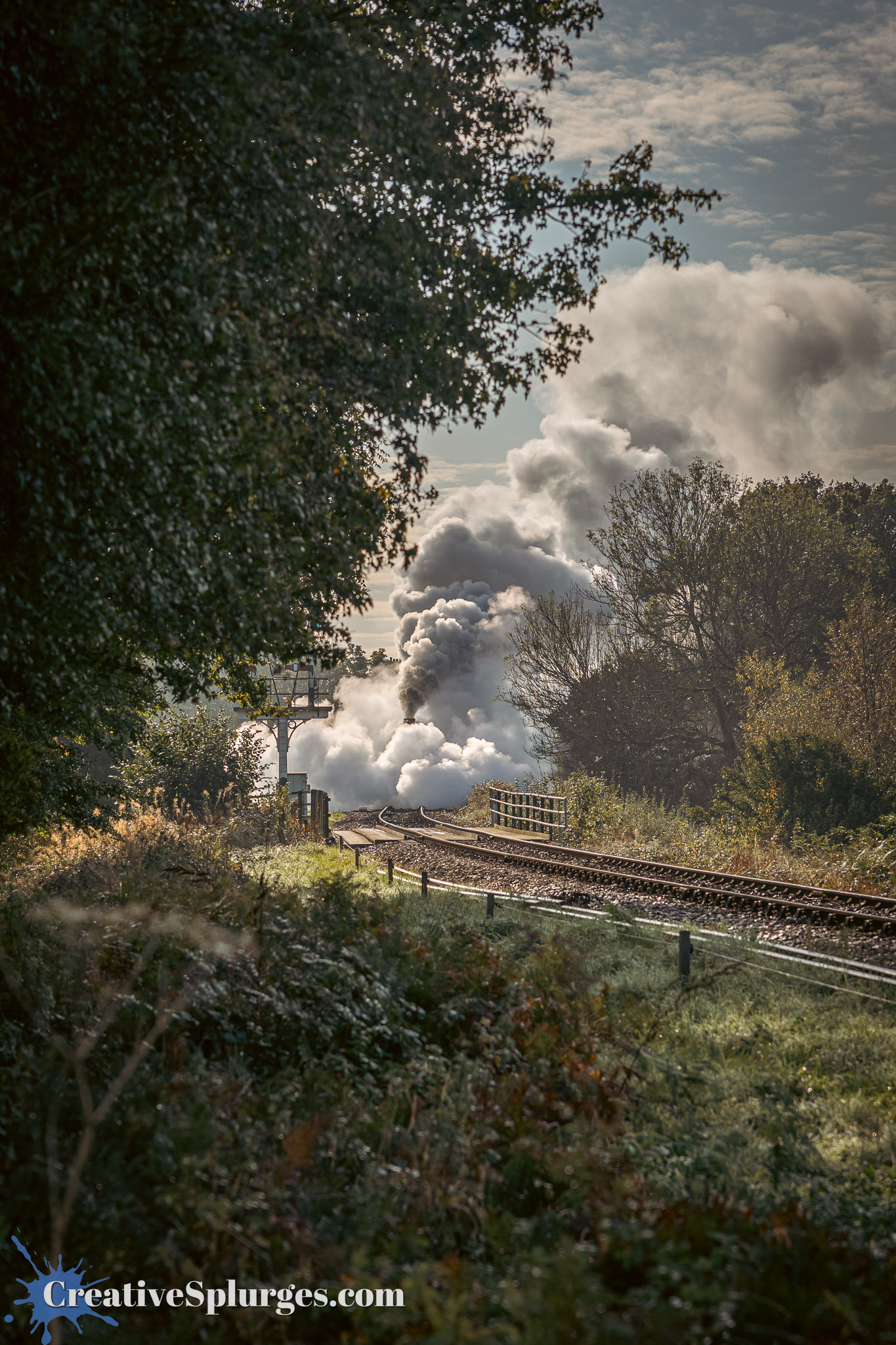
As I headed up towards Freshfield Bank I saw a distant signal. I decided to try using it as a framing device for the next service, which would be headed by Wightwick Hall. This turned out to be a decent spot, as the trains were working hard to get up the hill. For this shot I switched back to my standard wide zoom lens.
Seeing how hard the engines were working up the hill, I decided to head back down the hill a little bit, and switch back to the telephoto so I could have more opportunity to get the trains chugging hard towards me.
The next train I could try this on was a double header formed of Beachy Head leading Camelot – although admittedly it was hard to see that because I was shooting almost head-on with a long lens.

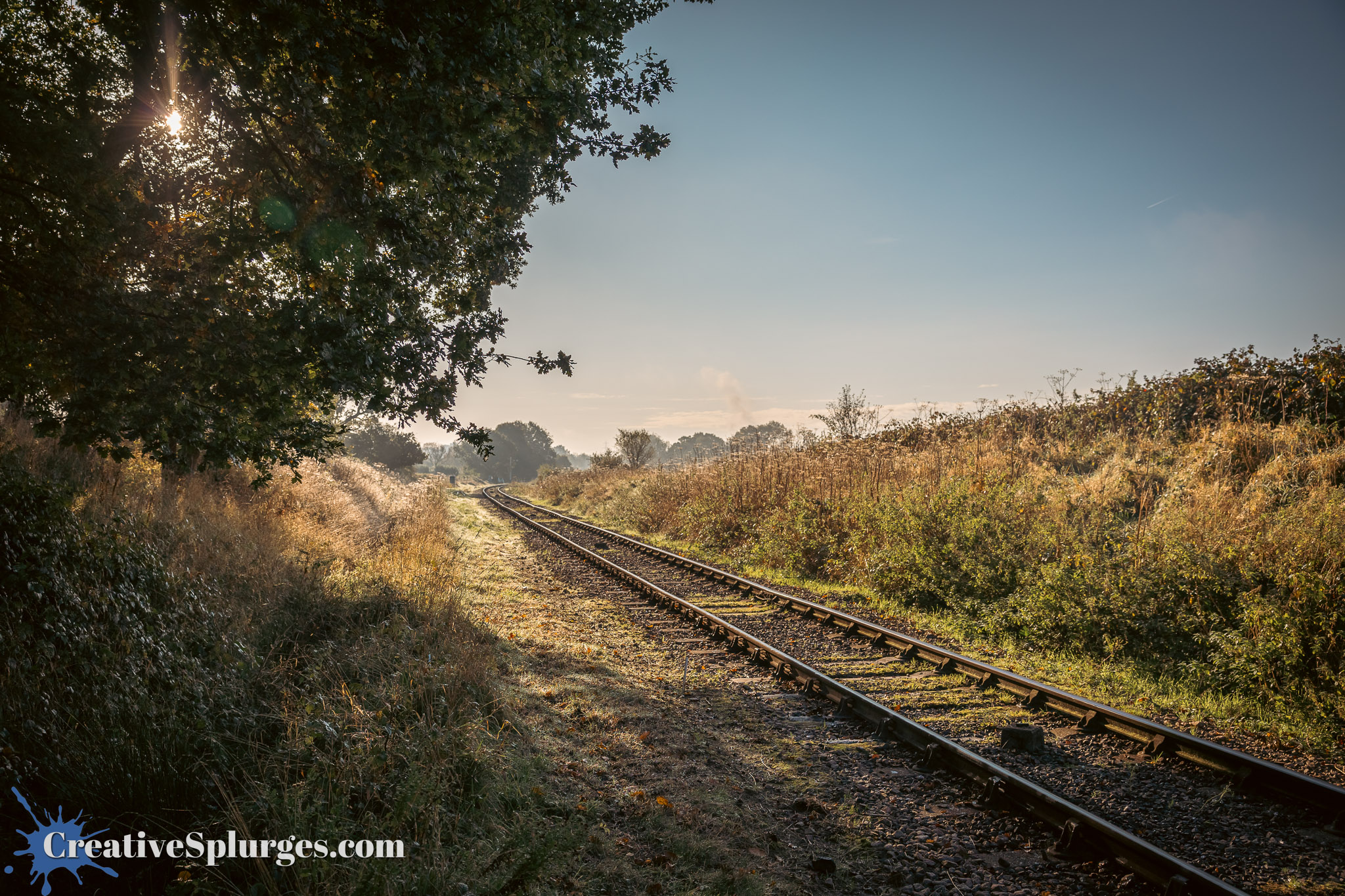
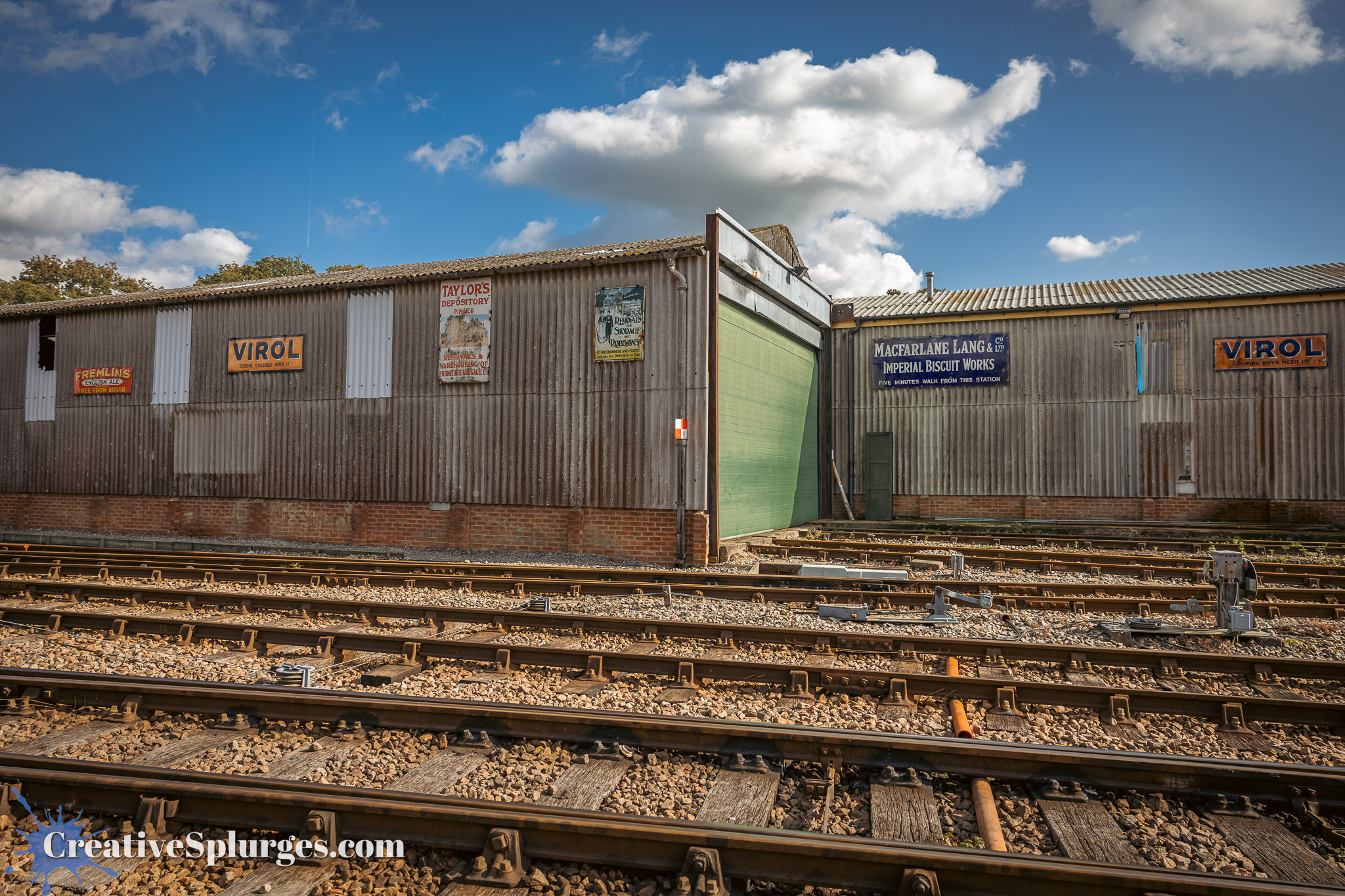
This was a decent open spot on the line. I considered heading further up the track towards Freshfield Bank, but I could see another photographer up there, and it’s also a popular spot for the public outside the boundaries of the track, so I figured I’d likely be getting in the way. Instead, having shot with my standard zoom and a telephoto, I decided to wait here until the next return service and use it to gauge how my 16mm wide angle lens behaved. Firstly, though, I used it to take a shot of the track.

The train that came by was Sir Nigel.

Wanting to keep mixing things up, I headed back south seeing if there were any other spots that could work. I ended up back at the wooded corner with my telephoto for the next train, headed by Sir Archie.


There was a spot on an inside curve that I scoped out as I walked past. I was originally thinking it’s give it a go when Sir Nigel came past next, but decided instead to return to the area up the hill, which was a bit less risky considering I knew this would be the last Sir Nigel service I’d be shooting that weekend. I also elected to use my standard lens, just because I wanted to take fewer chances with the shot.
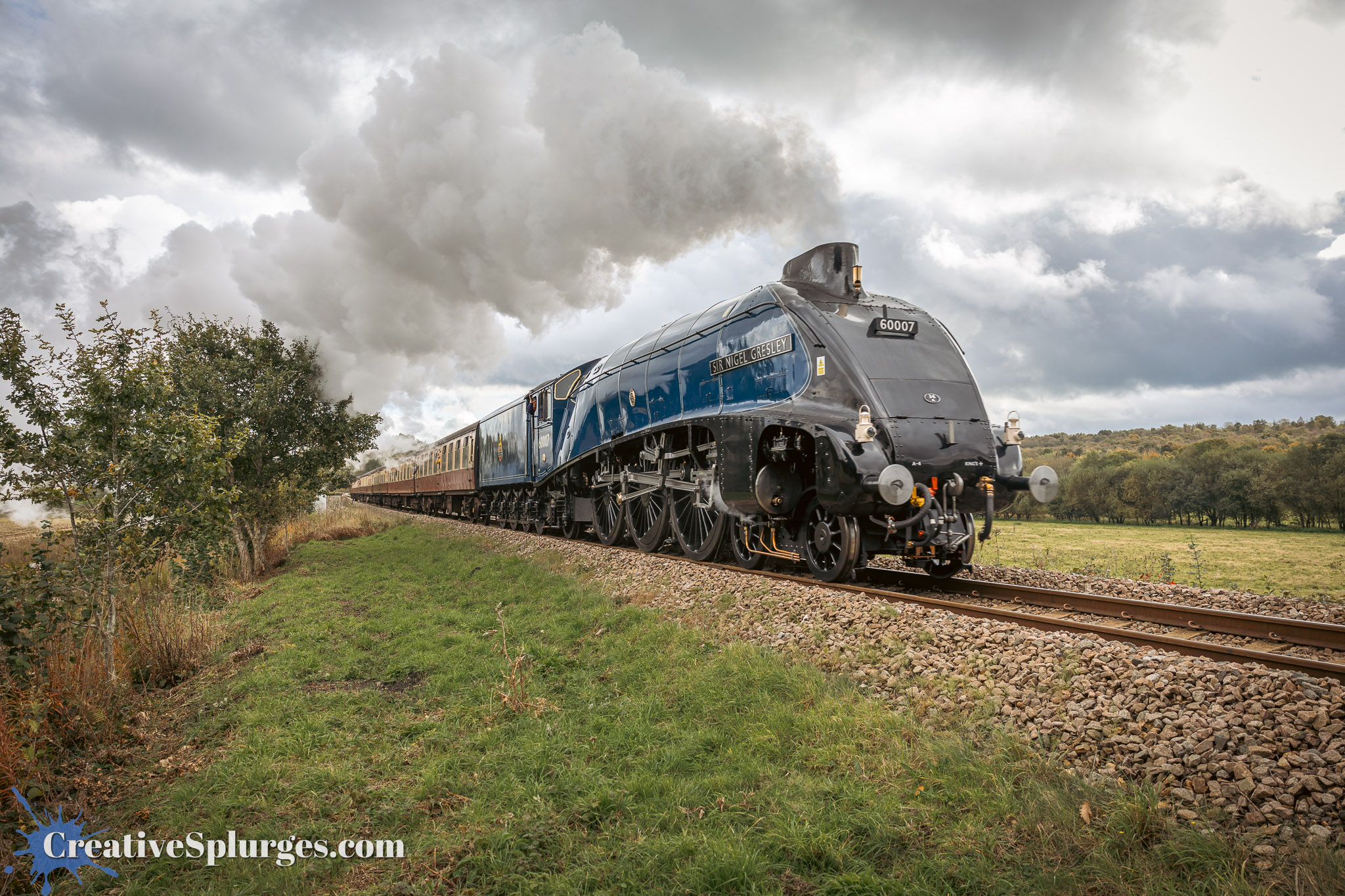
I’m actually pretty pleased with that shot. It’s not overly dramatic or anything like that but it ticks all the boxes.
There was a little bit of sadness once the train had gone by, because I knew it could be the last time I’d photograph Sir Nigel for the foreseeable future. Still, there were still a few trains left for me to shoot before I went home.
The next train was Wightwick Hall, and I decided to shoot it on the inside corner I saw earlier. At this point the clouds were beginning to part so I got some blue sky.
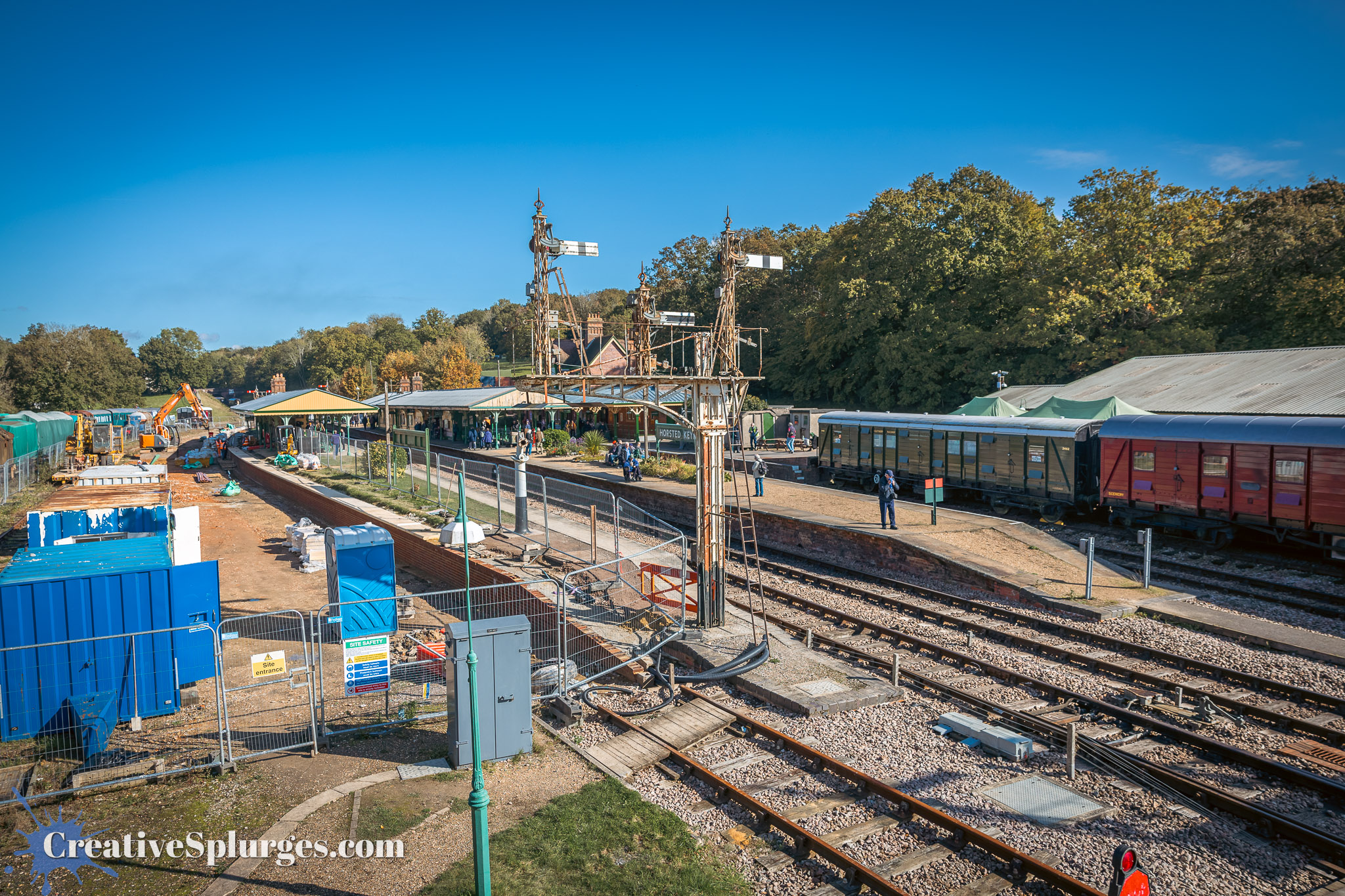
I walked back towards Sheffield Park. I took a shot from a distance of the station, as Camelot made preparations to depart.
Once it left, Sir Archibald Sinclair came up light engine to run around its coaches.
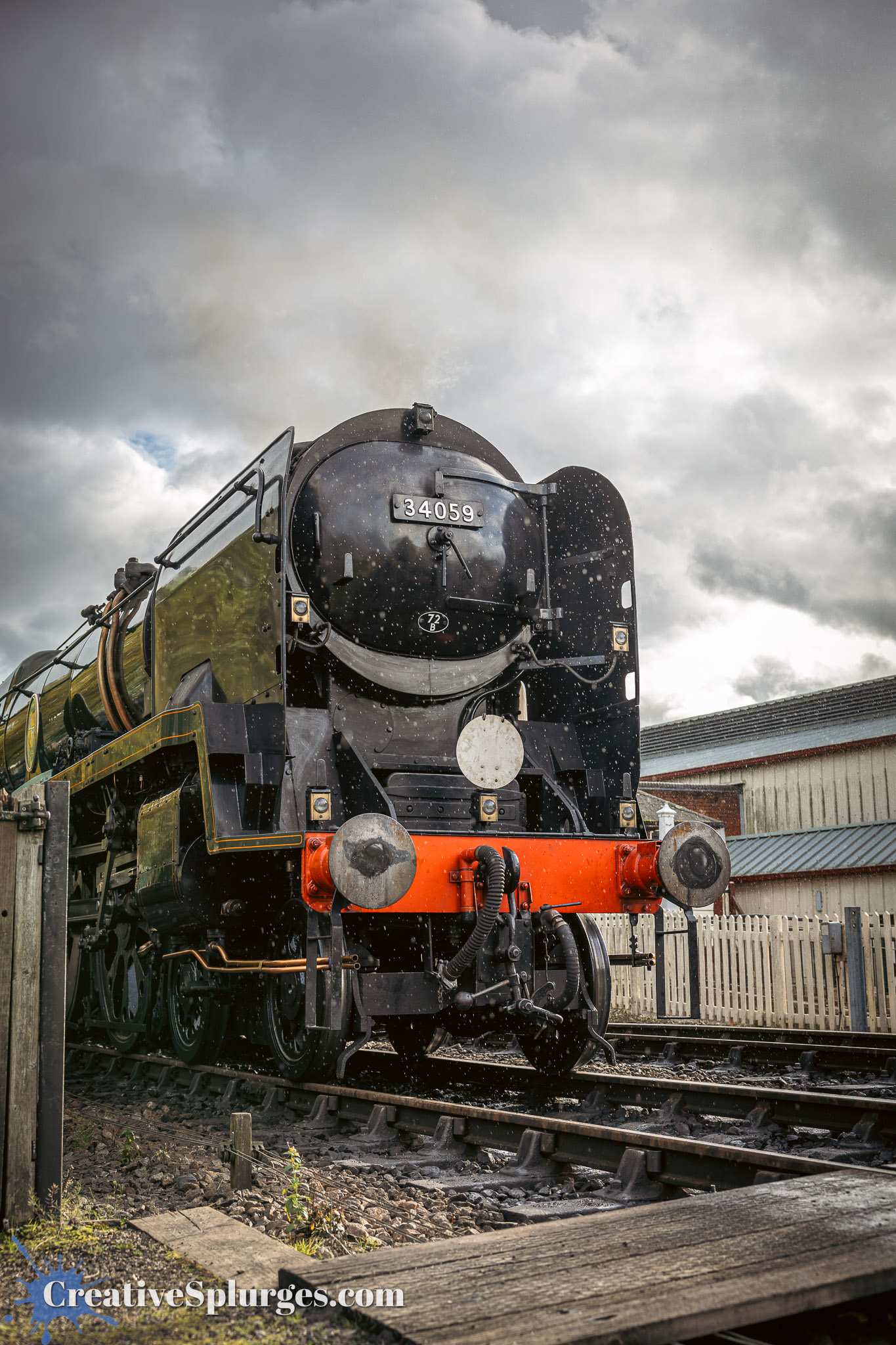
By this point, I had decided I was done photographing the moving trains, as none would be leaving for a little while. I did, however, hang around until Sir Nigel came back to see it once more. As I waited it started to drizzle a little bit, so I shot the waiting Sir Archie in the rain.
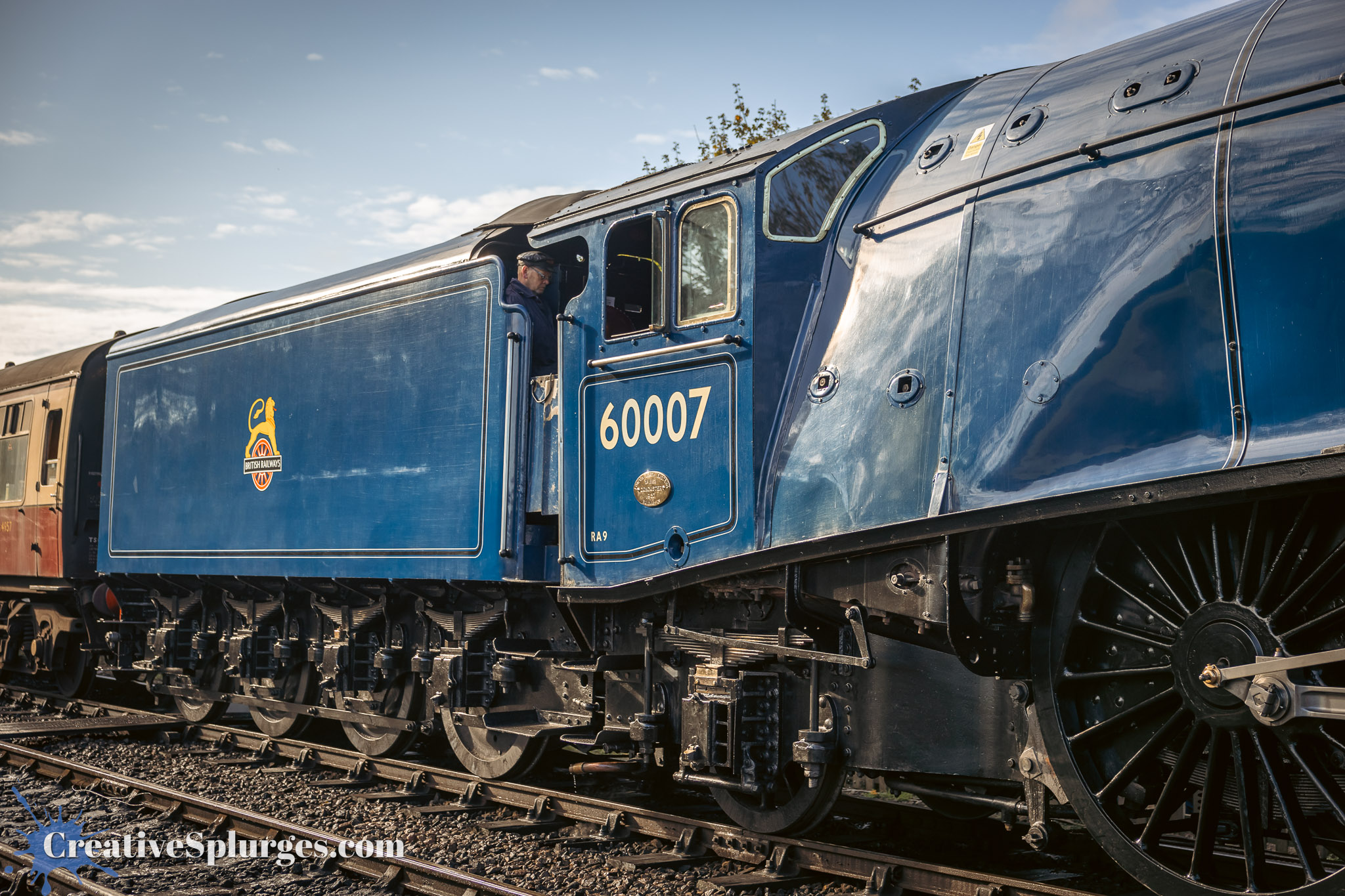
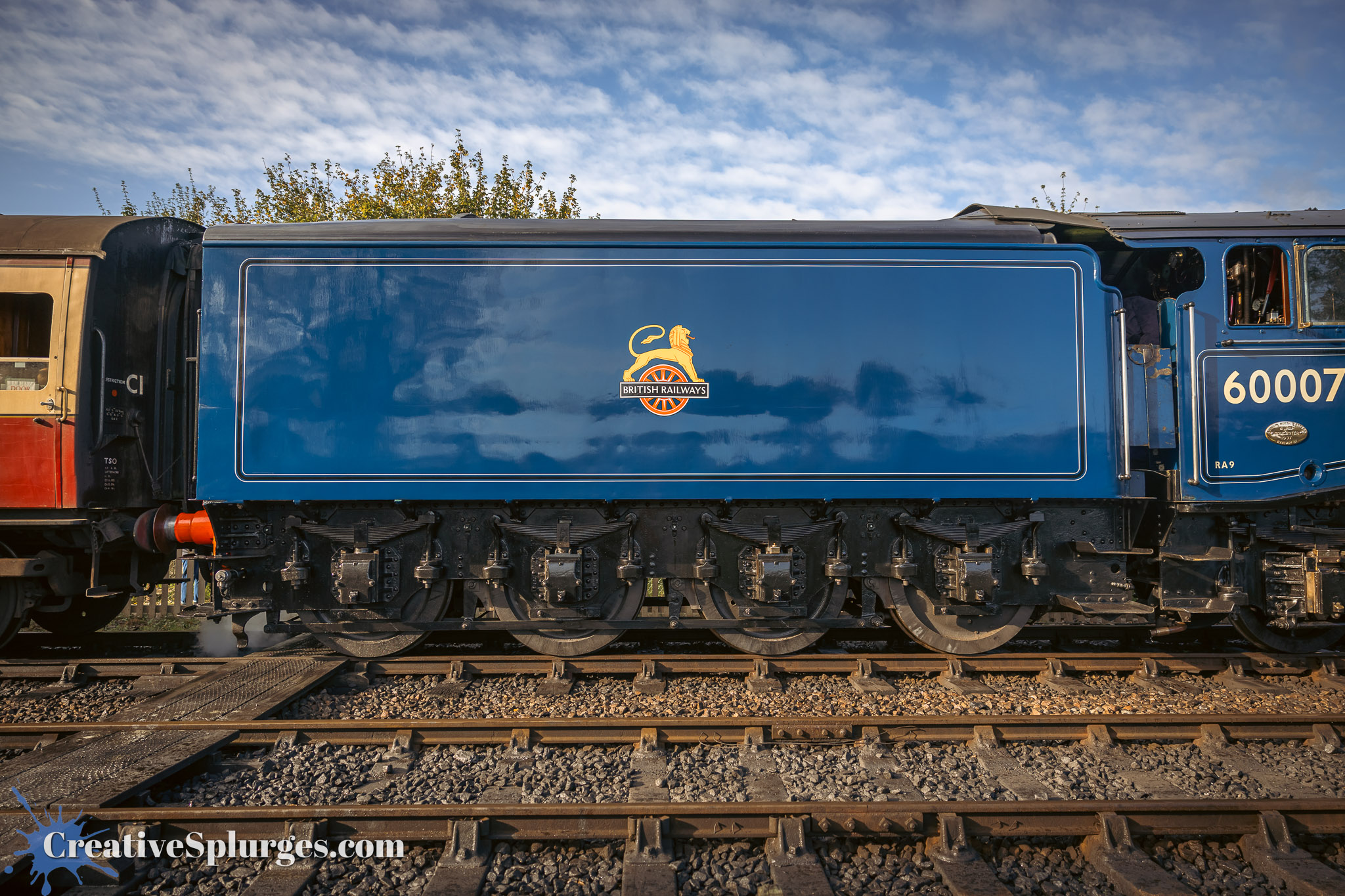
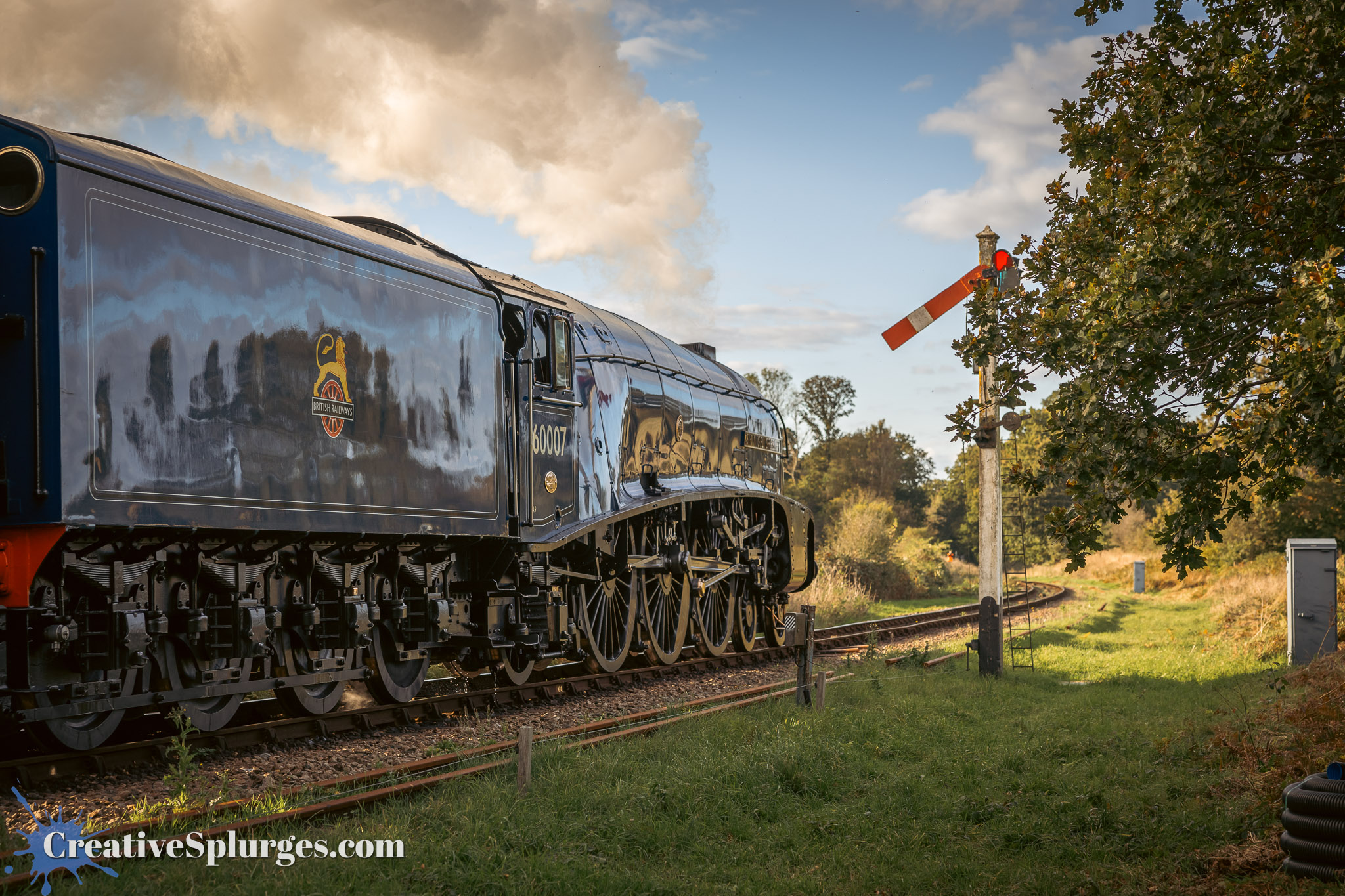
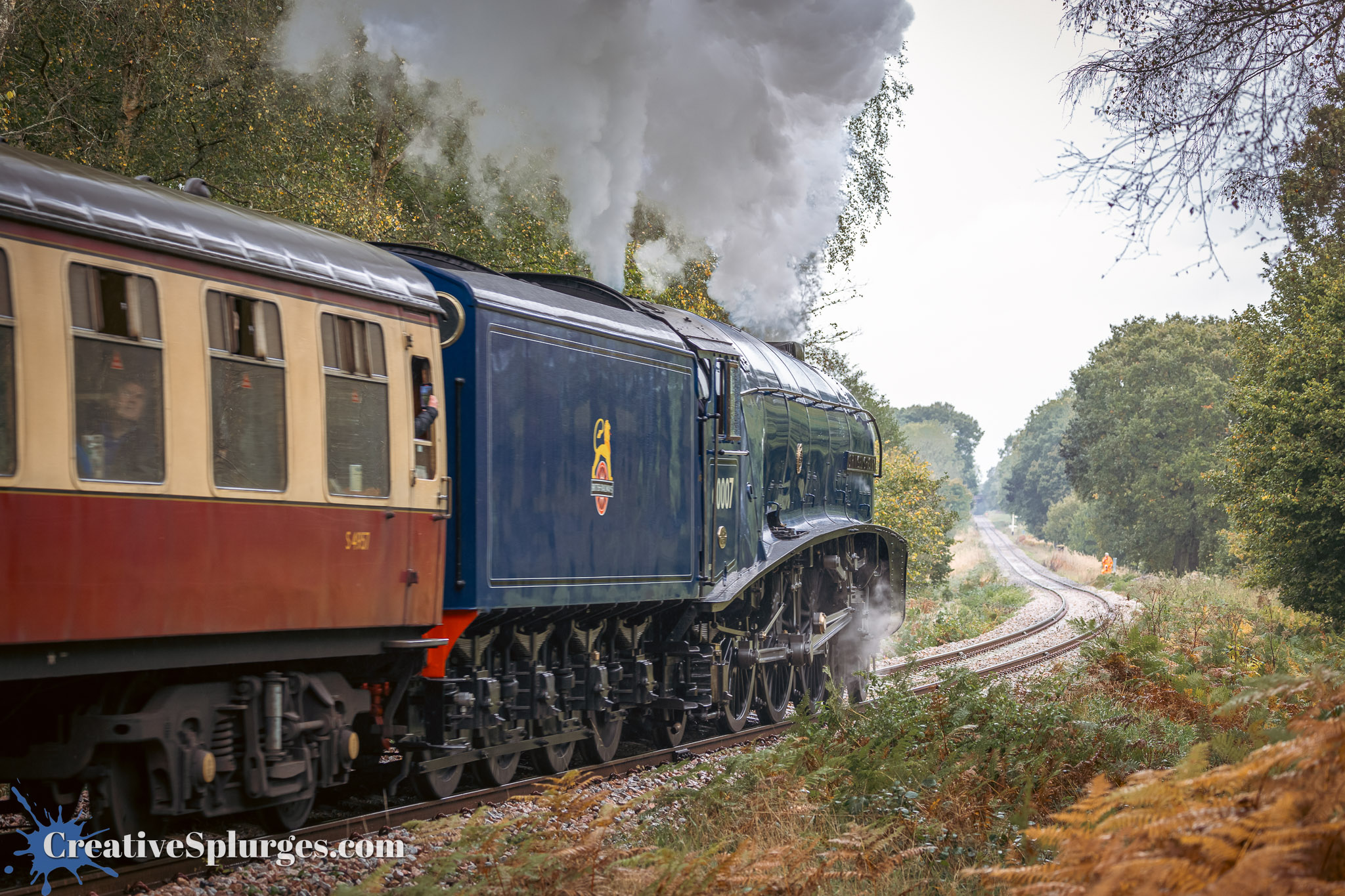
Although there aren’t many pictures of them here (there are a couple in the gallery below), throughout the weekend I encountered many locomotives running tender-first. Because it’s not that aesthetically appealing, and there were plenty of trains running frontwards, the reversing trains were mainly something to avoid being run over by (I did use them to frame up shots in preparations for trains facing the right way). There isn’t much interesting about a box on rails. The slight exception to this is Sir Nigel; because it’s a mainline express engine, it has a corridor tender, which we don’t see that often.
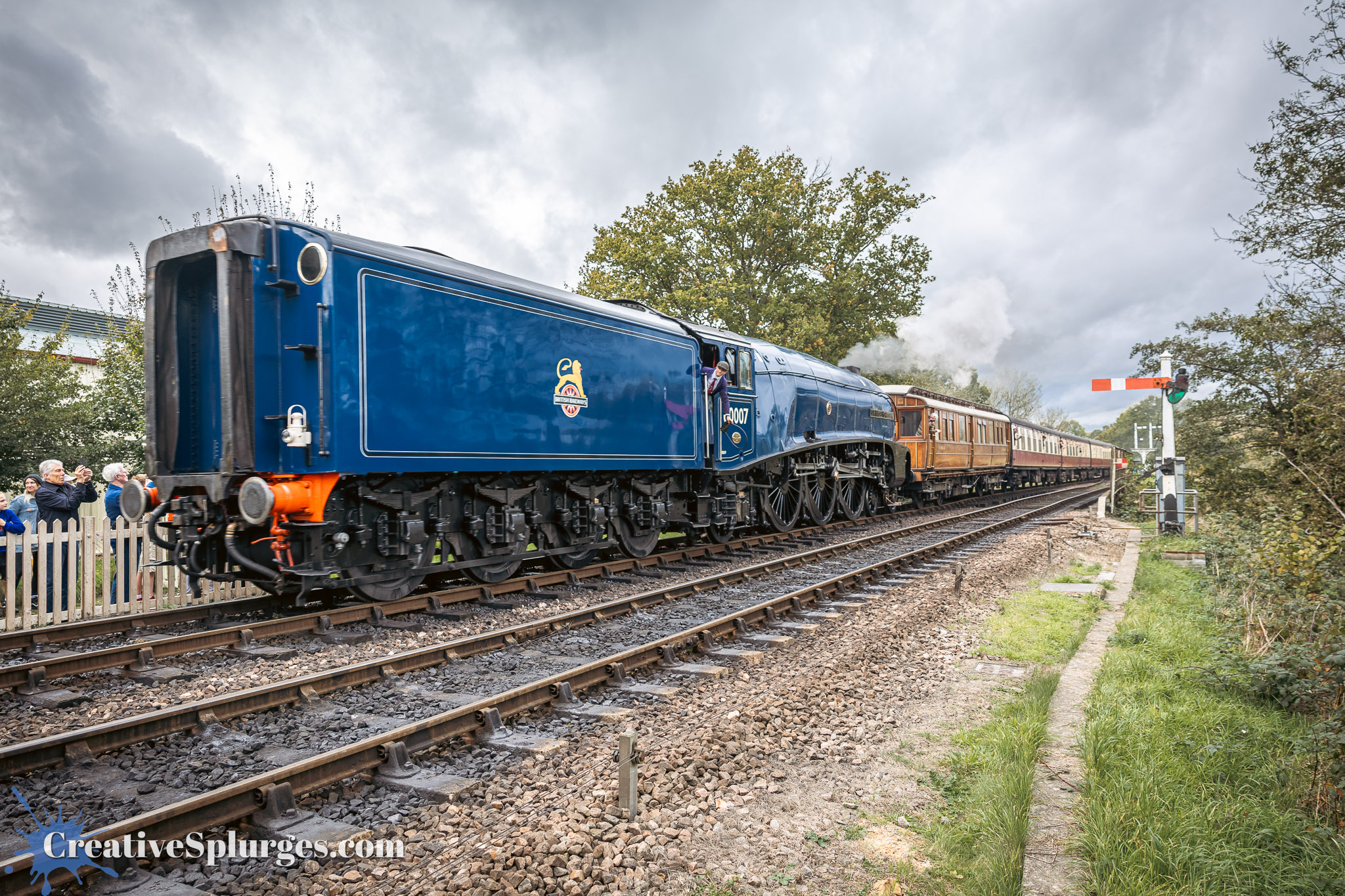
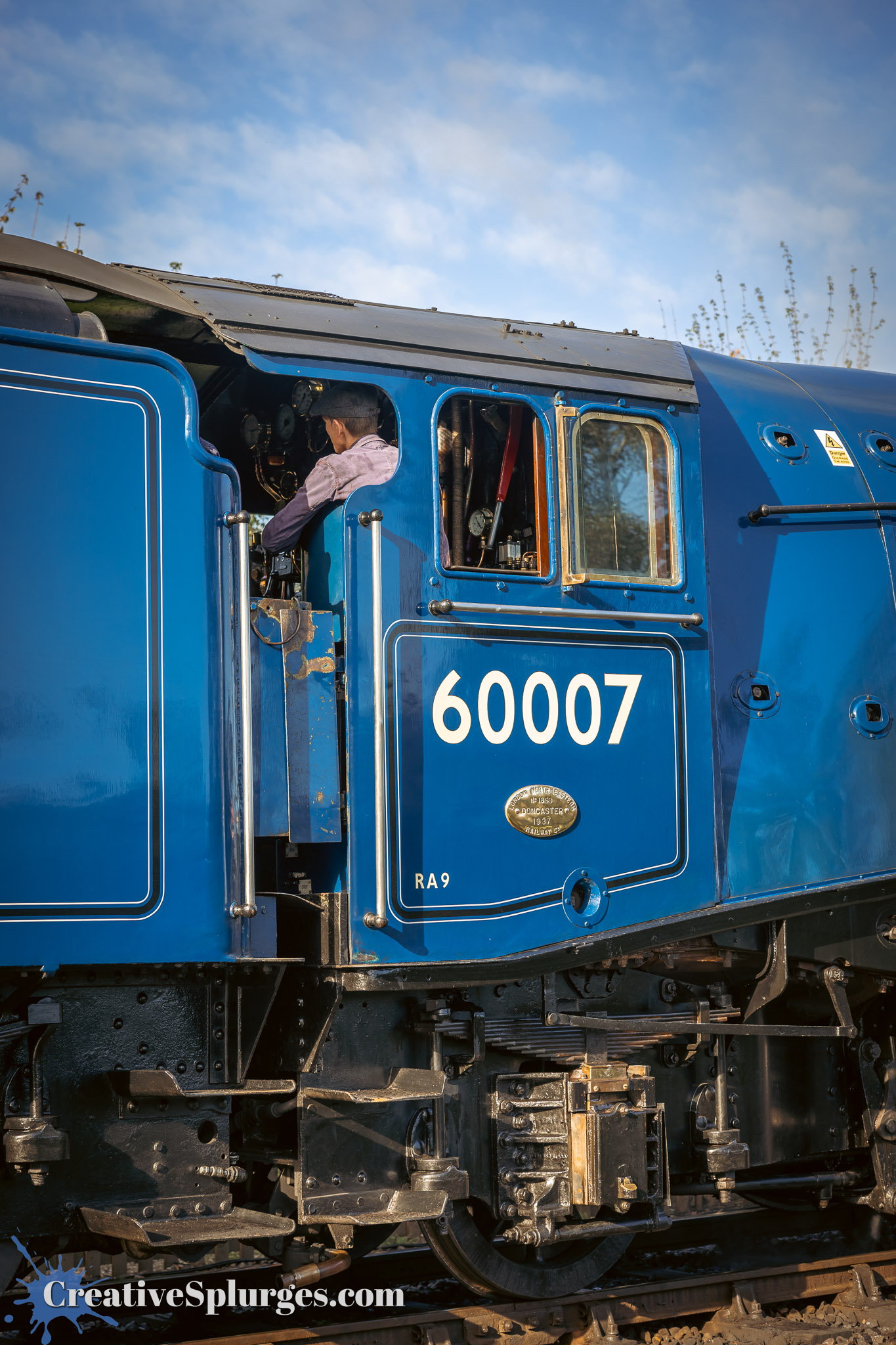
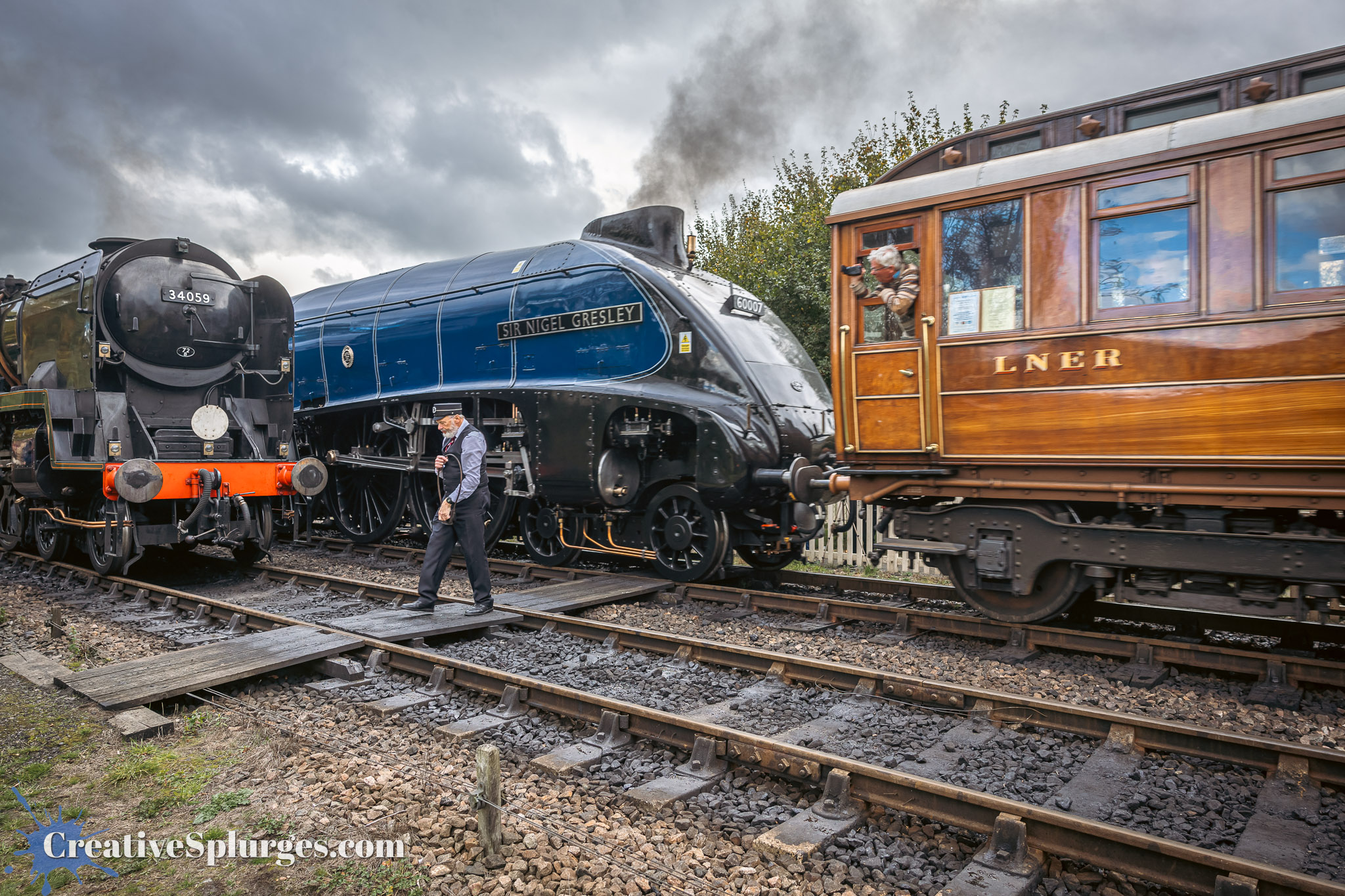
The signalman collected the token from the driver, which a bit scary to watch the handover as it’s done whilst the train is in motion.

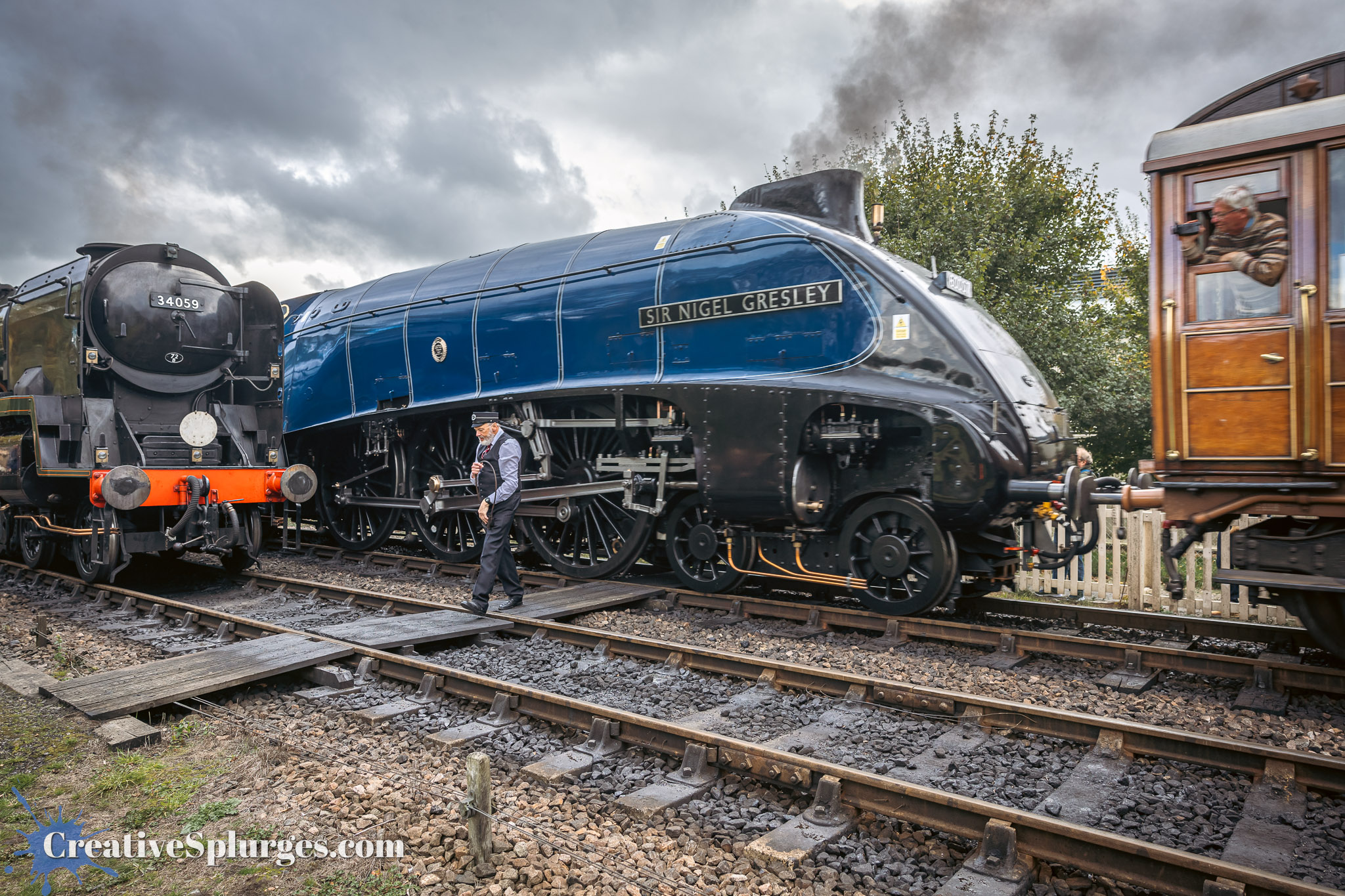
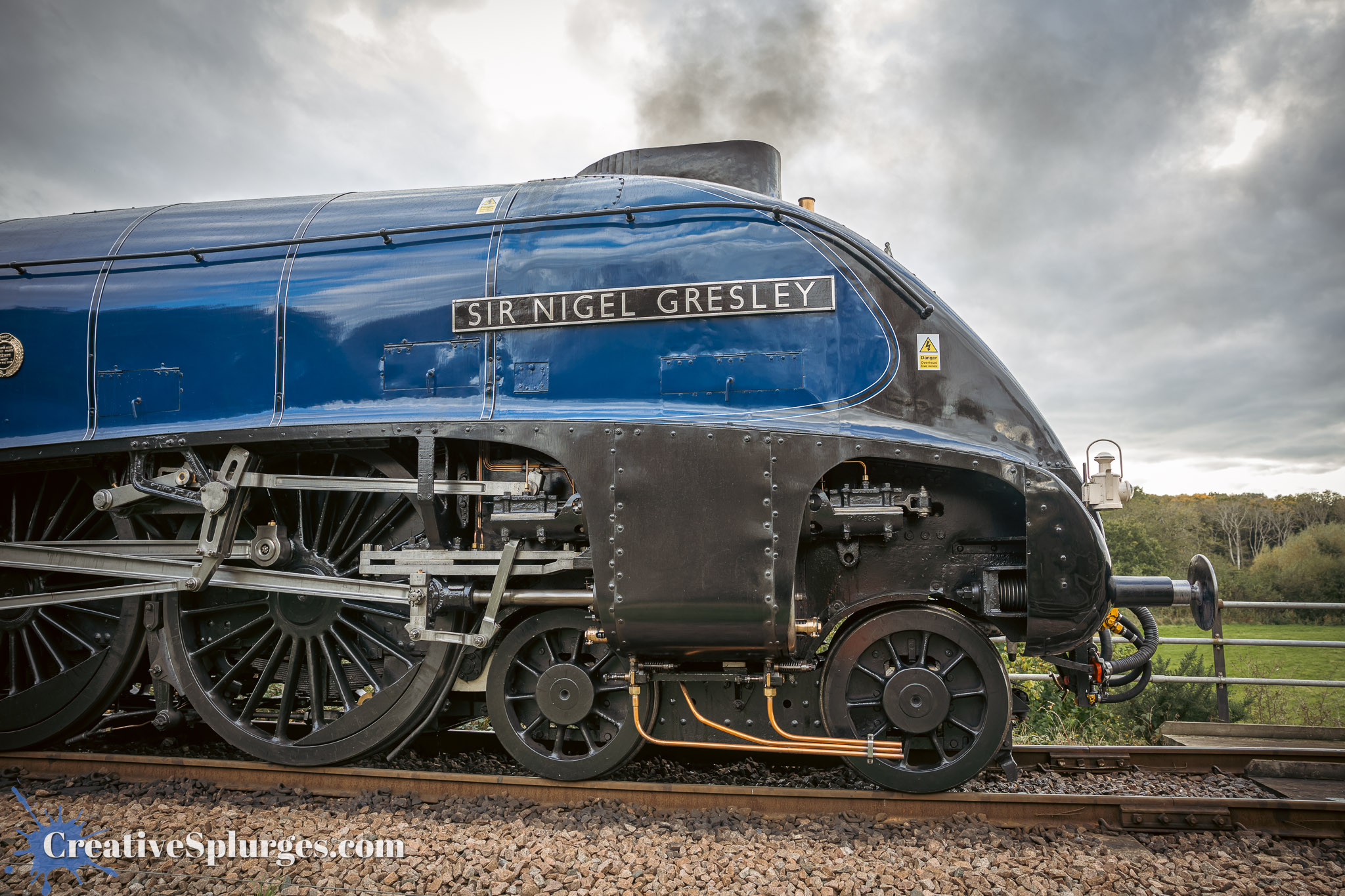
I kept these shots in to help show the scale of the locomotive. Wikipedia tells me those driving wheels are 6’8” in diameter.
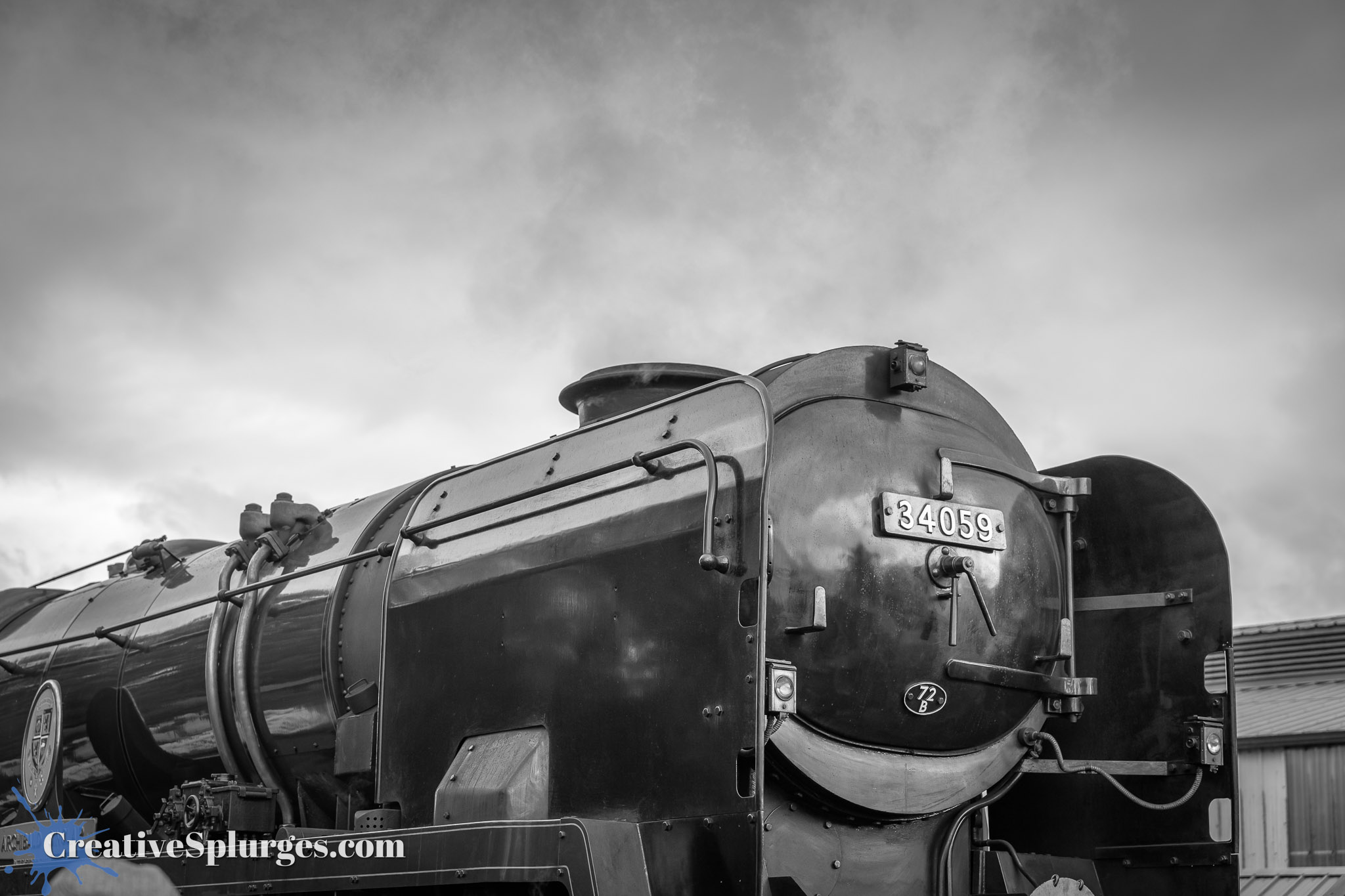
As a closer to the event, I took a few closeups of Sir Archibald Sinclair.
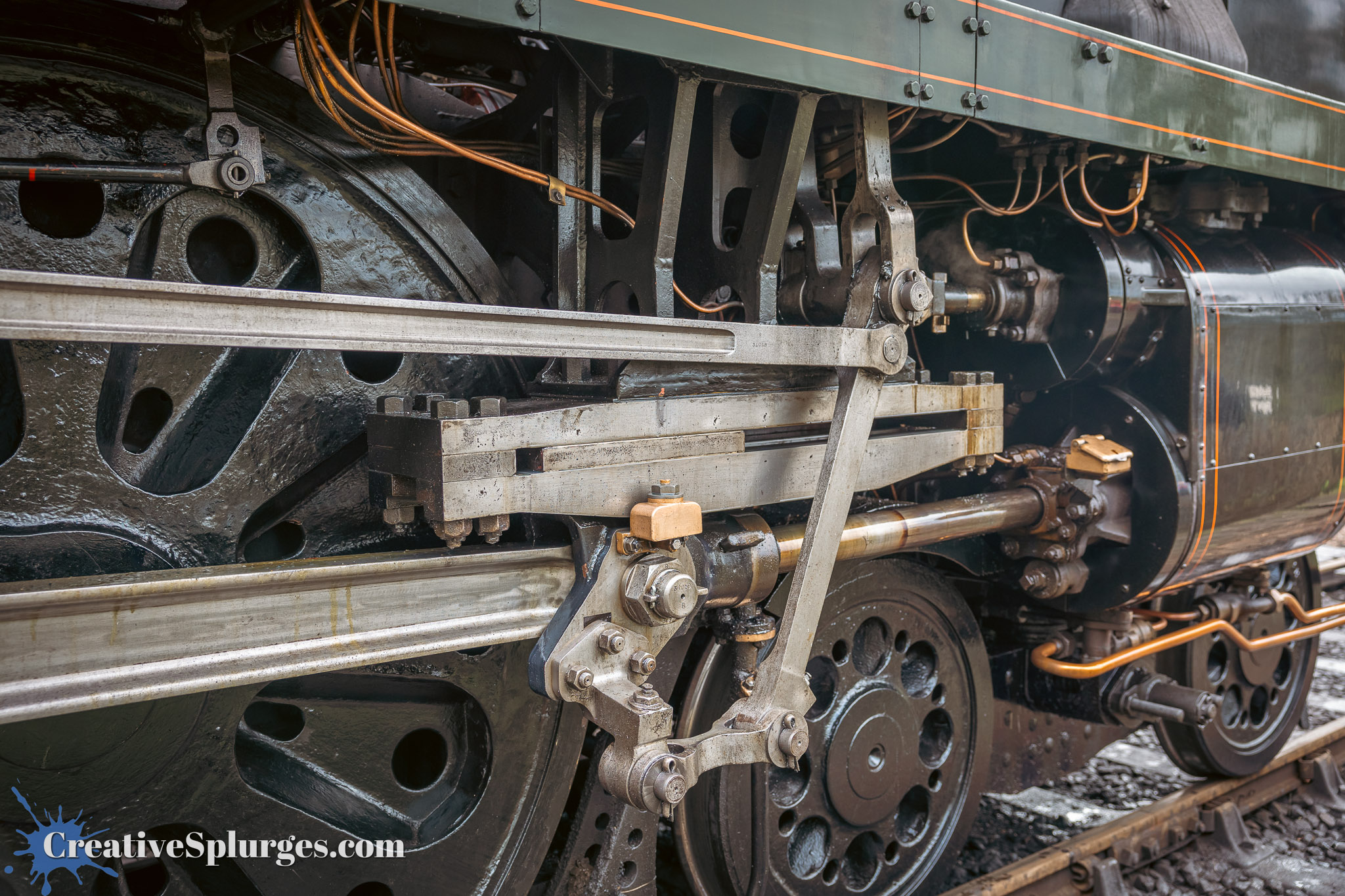
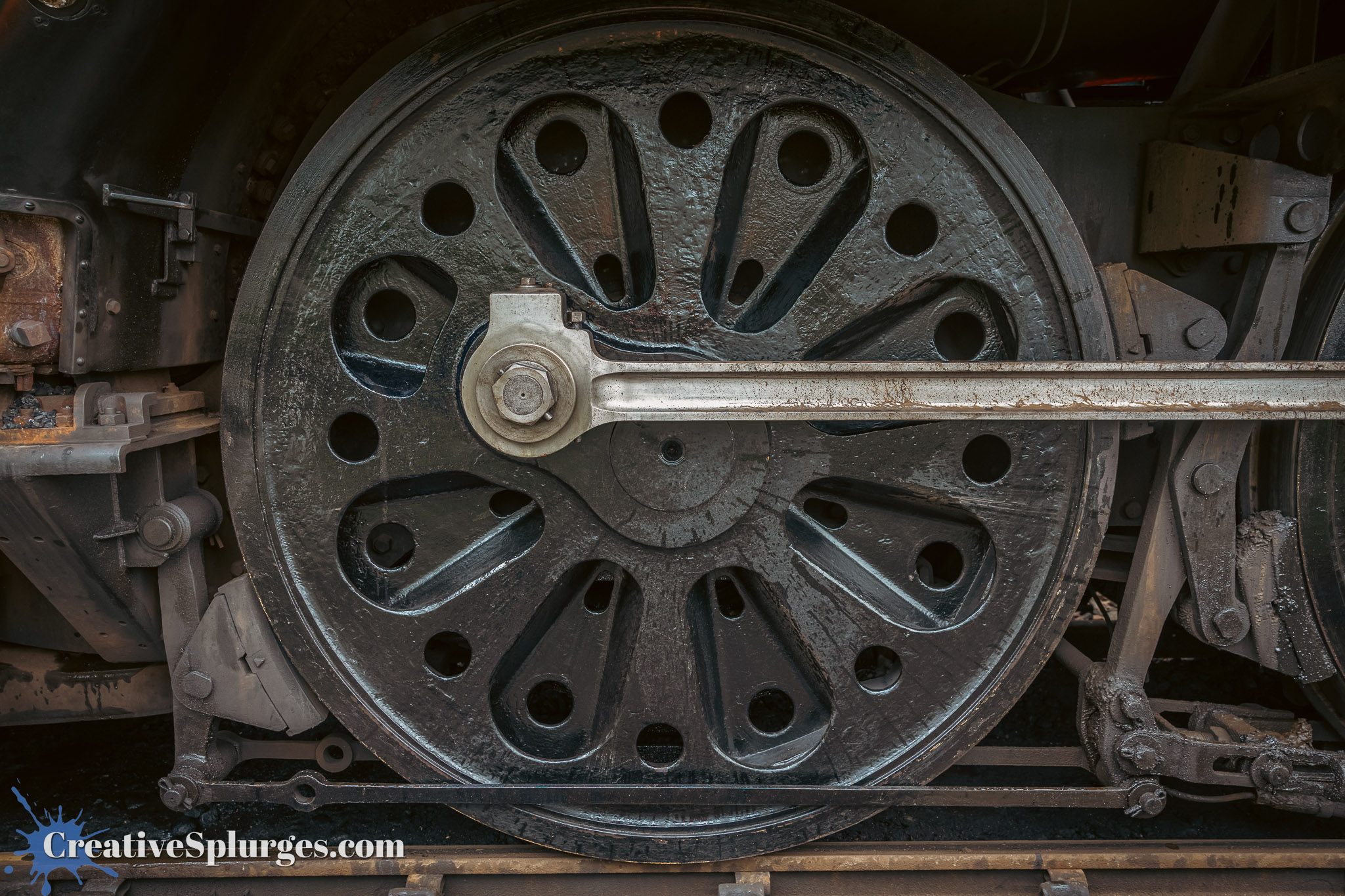
I also made sure to get a straight-on shot of one of its iconic Bulleid drive wheels.
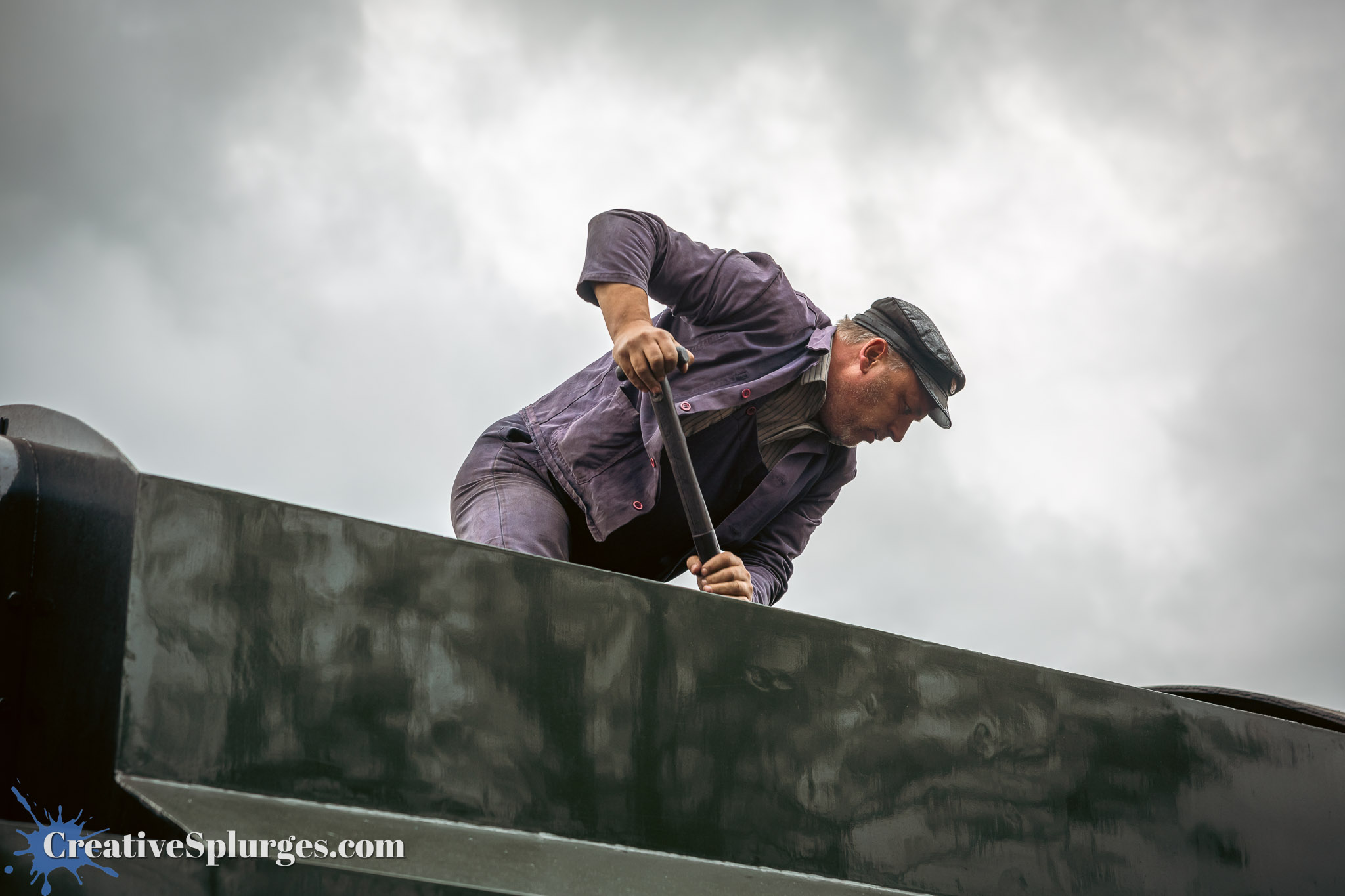
My final shot was of one of the crew up on the tender redistributing coal.
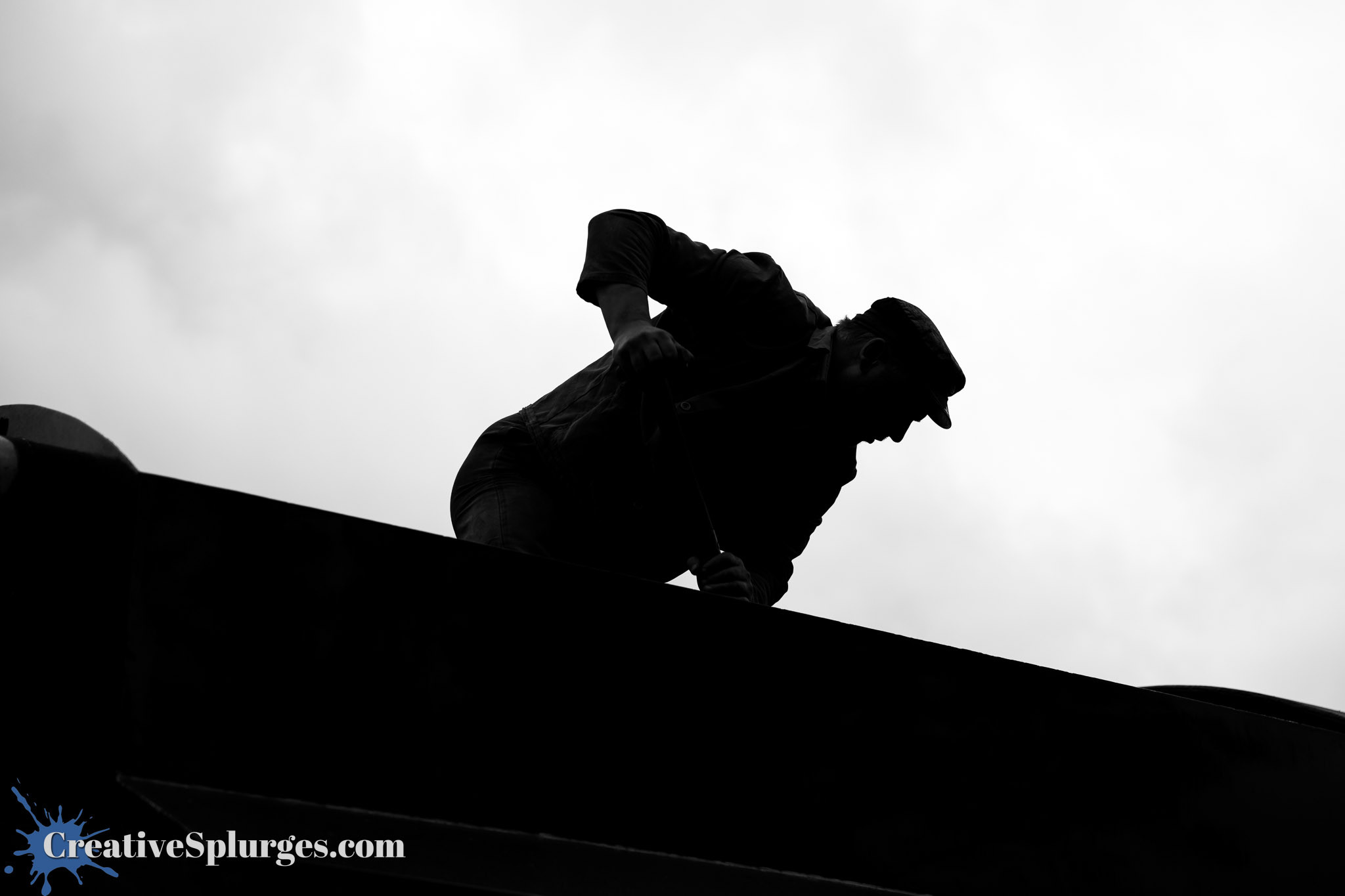
I am really pleased with how these images turned out. It’s a great set, and very rewarding to have gotten the shots I set out to get, and complete a project I’ve been thinking about for over six months. I am delighted. A larger gallery of images is below.
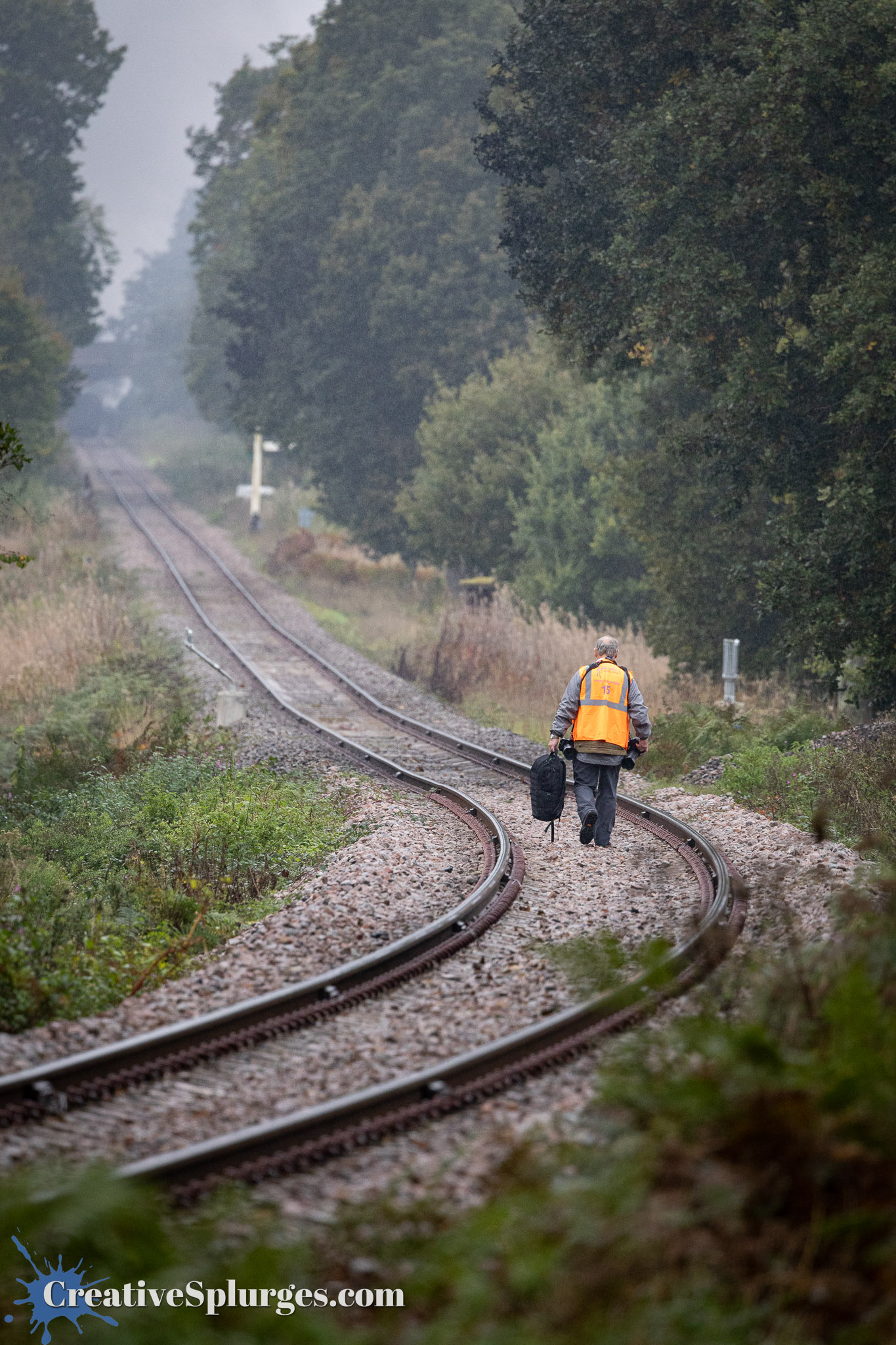
I don’t have too many truly happy places. Places I can forget about everything and just take great pleasure in simply being there. For lack of a better phrase, places that are good for my soul. [Dorset] is one of them. This year, I think I’ve added being beside a railway in the middle of rural Sussex in a high visibility vest with only my camera and a copy of the day’s timetable to the list.
As I have done on a few of my visits, for the times I saw Sir Nigel Gresley, I set up my phone to shoot some video as well. I’ve edited them together into this video.
And as is becoming standard for my posts from the Bluebell, the images above are a bit of a selection. For the full set of images check out the gallery below.

















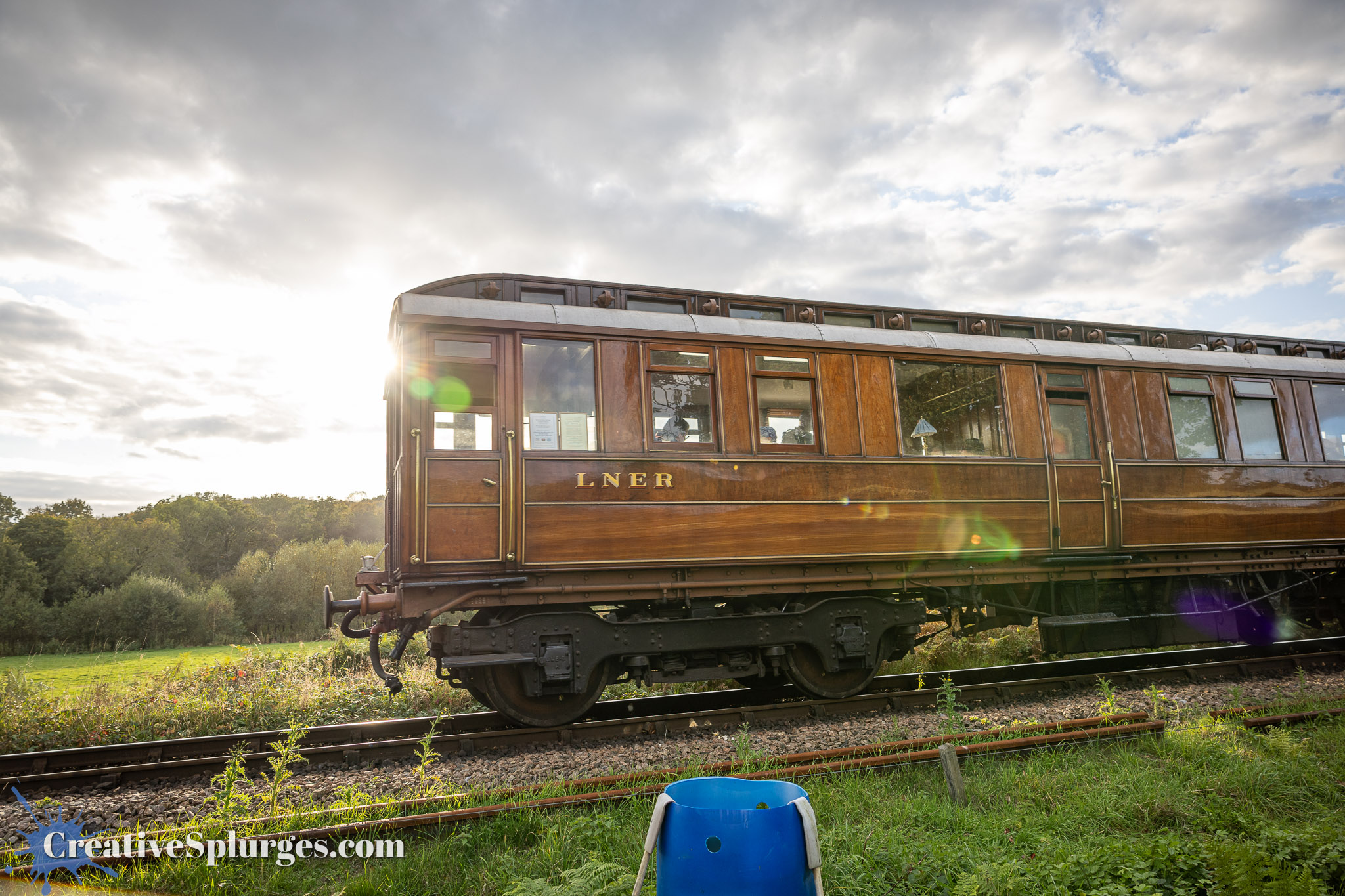
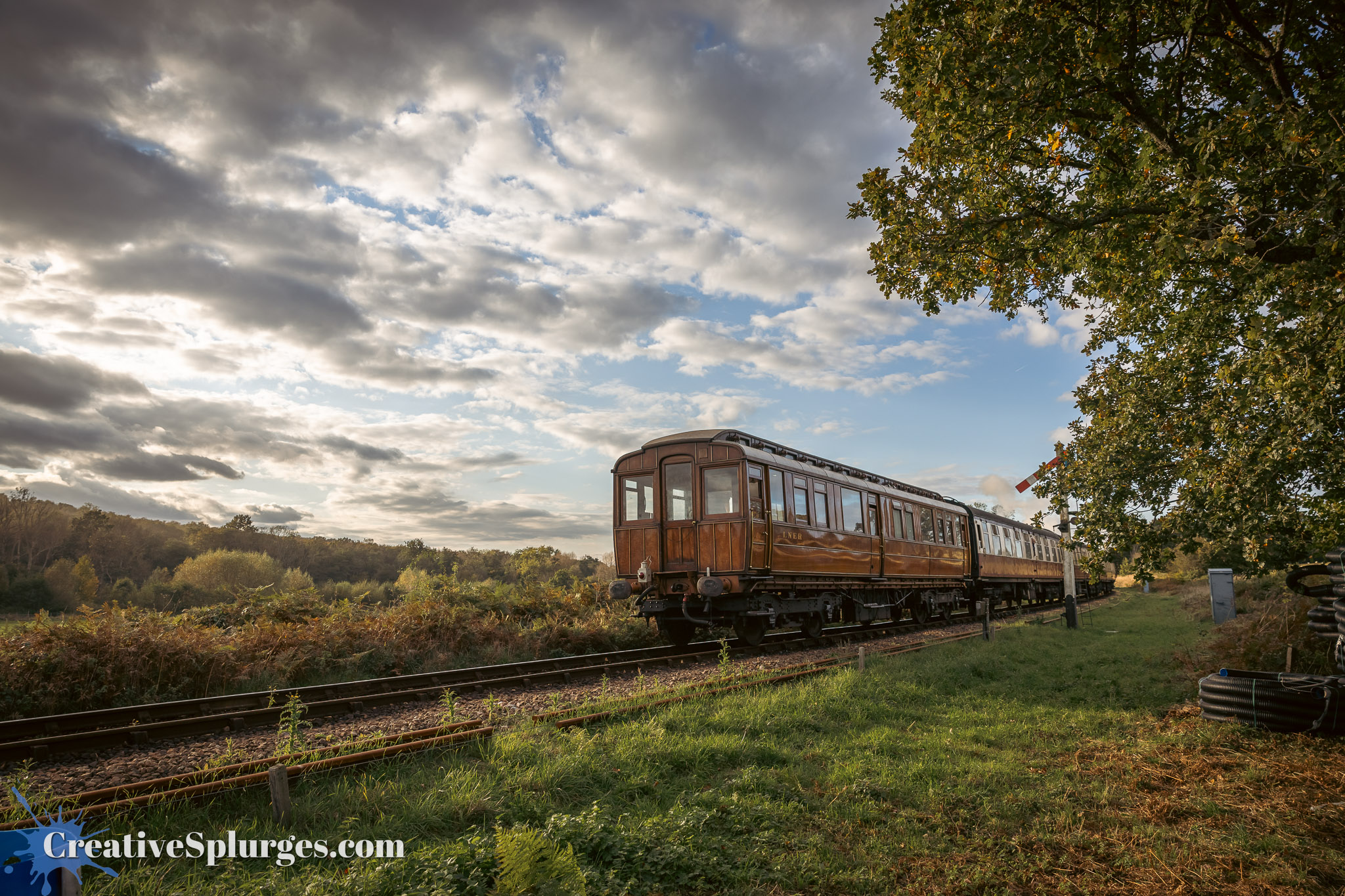




 Creative Splurges
So cool to see Sir Nigel actually running – serious steam history.
LikeLike
It really was amazing having it pass by only a few metres away. Such an impressive and beautiful machine.
LikeLiked by 1 person